The Short Answer
A homage watch is a watch that borrows the general design language of a famous reference (case shape, bezel style, dial layout) while using its own brand name and its own model name. It is legal in almost every real-world case, because the things it copies (a round case, a rotating dive bezel, a certain hand shape) are generally not protectable the way a logo or a brand name is.
A counterfeit is different. A counterfeit uses the actual trademarked name and logo of the original brand to deceive a buyer into thinking they are getting the real thing. That is illegal, and it is the reason companies like Steinhart, Baltic, and San Martin can sell openly while a fake Rolex seller cannot.
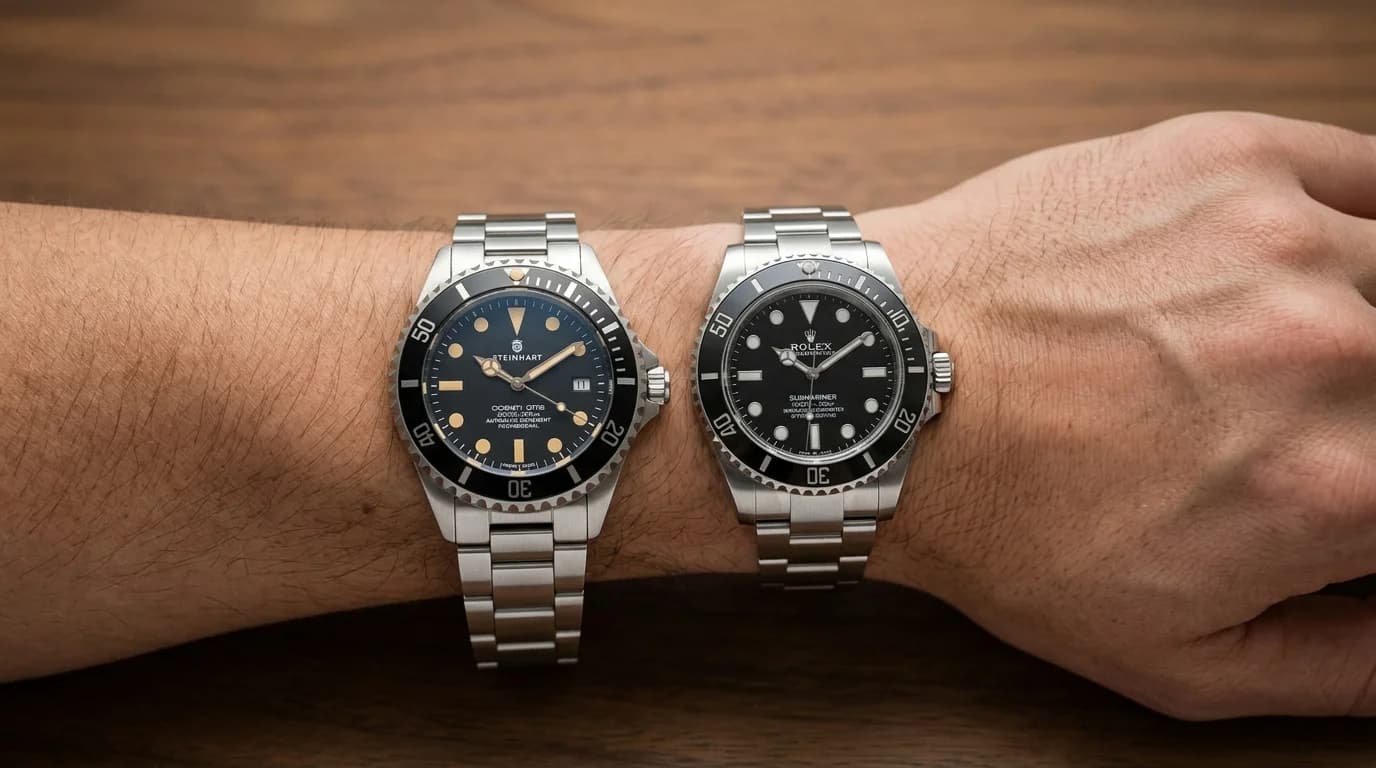
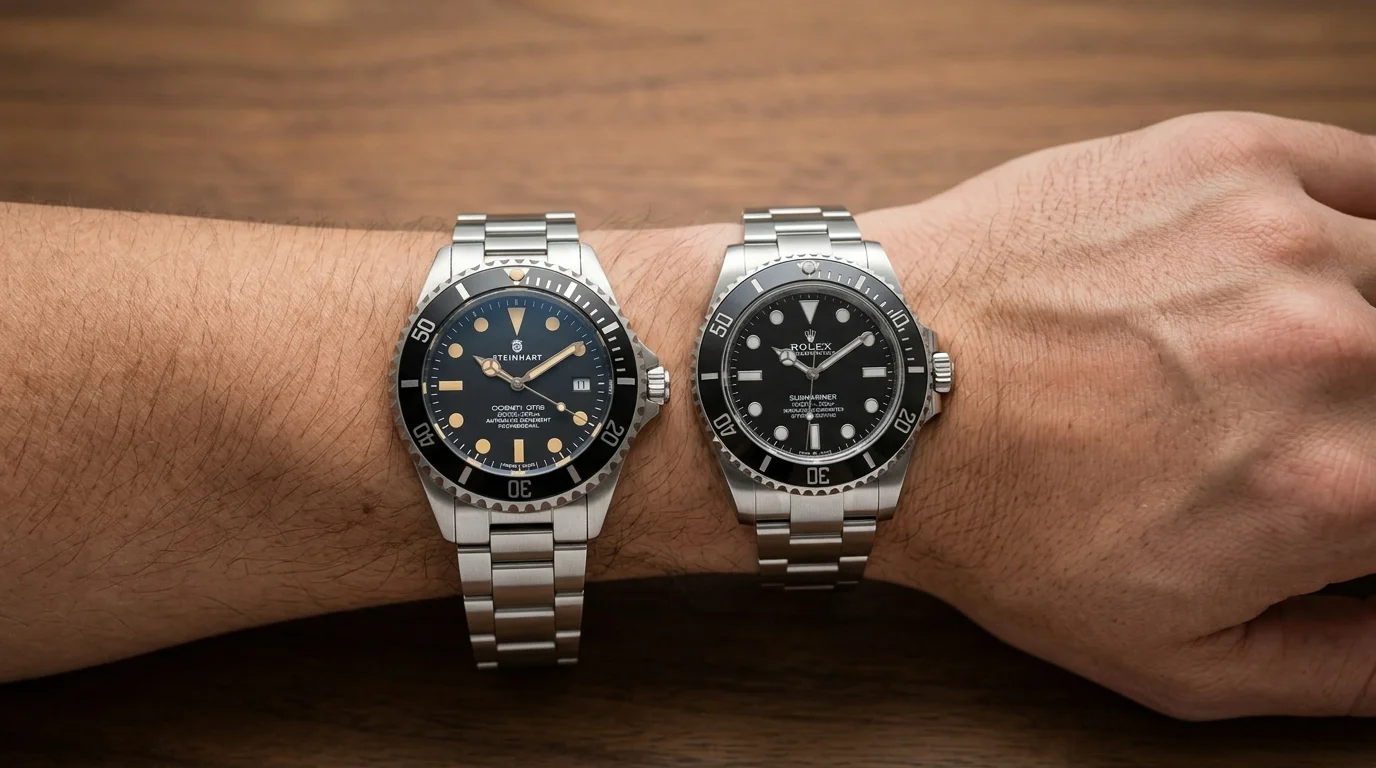 Similar silhouette, different name on the dial. That distinction is most of what keeps a homage on the right side of the law.
The watch photos in this article were generated with AI image tools, conditioned on real reference photography of dive watch designs so the case shapes, dial layouts, and proportions shown are accurate representations of the styles discussed.
Homage, Replica, and Counterfeit Are Not the Same Word
These three terms get used interchangeably online, and that is exactly where the confusion starts.
A homage carries its own brand name and its own model name. It borrows a design language, not a trademark. Steinhart's Ocean One looks like a Rolex Submariner. It is not sold as one, and it says Steinhart on the dial.
A replica, used precisely, means a manufacturer re-releasing its own discontinued design, like Omega reissuing a vintage Seamaster reference. Online marketplaces have muddied this word to mean something closer to counterfeit, which is a separate problem.
A counterfeit copies the actual brand name, logo, and model designation of a real watch with the intent to deceive the buyer or a future buyer about what they are getting. That is trademark infringement and, in most jurisdictions, a criminal offense, not just a civil dispute.
Why Copying the Shape Is Usually Legal
Trademark law protects names, logos, and source-identifying marks. It does not, by itself, protect a general product shape.
A separate concept, trade dress, can protect the overall look of a product, but only if a plaintiff proves three things: the design is distinctive (or has earned distinctiveness through years of consistent use), an average buyer would likely be confused about who made the product, and the design is not primarily functional.
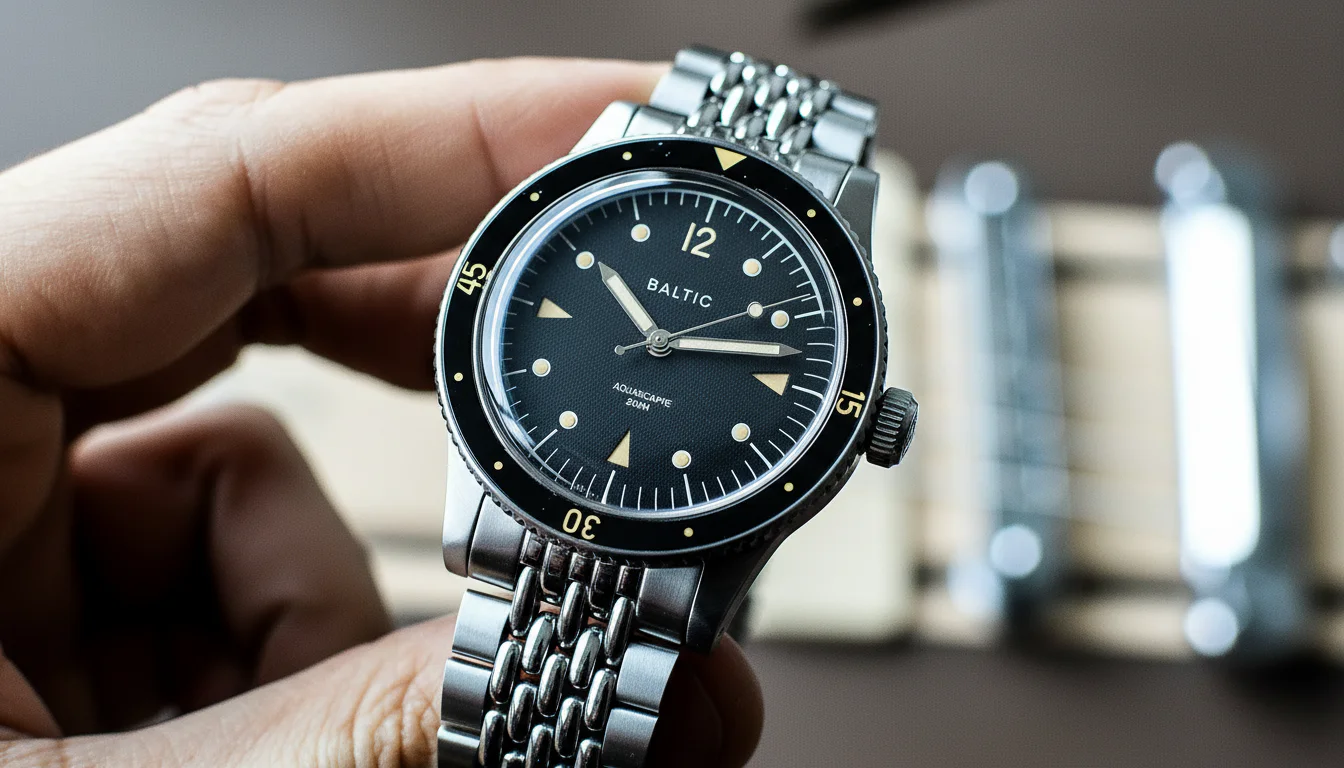 A rotating dive bezel does a job. Elements that serve a function are harder to lock up as someone's exclusive property.
The Functionality Problem
This is where most homages find their opening. A rotating bezel that tracks elapsed dive time is functional. Large luminous hour markers that stay legible underwater are functional. A round case is about as basic a shape as exists in product design.
Functional features are much harder to protect as trade dress, because trade dress exists to protect source identification, not to hand one company a permanent monopoly on a useful design.
What Actually Stays Protected
Word marks and logos are a different story, and they are protected hard. A brand's name, its wordmark font, its crown or wing logo, model names that are trademarked outright: these stay off limits. A homage that puts a five-pointed crown logo on the dial, or prints "Submariner" anywhere on the case, has crossed from homage into counterfeit territory regardless of how different the rest of the watch looks.
Where Real Homage Brands Draw the Line
The brands that have built long, uncontested track records selling homages share a consistent pattern.
They use their own name prominently on the dial. They use their own model names, not the original's. They avoid reproducing a registered logo, even a simplified version of one. And they generally do not claim or imply any affiliation with the brand they are paying tribute to.
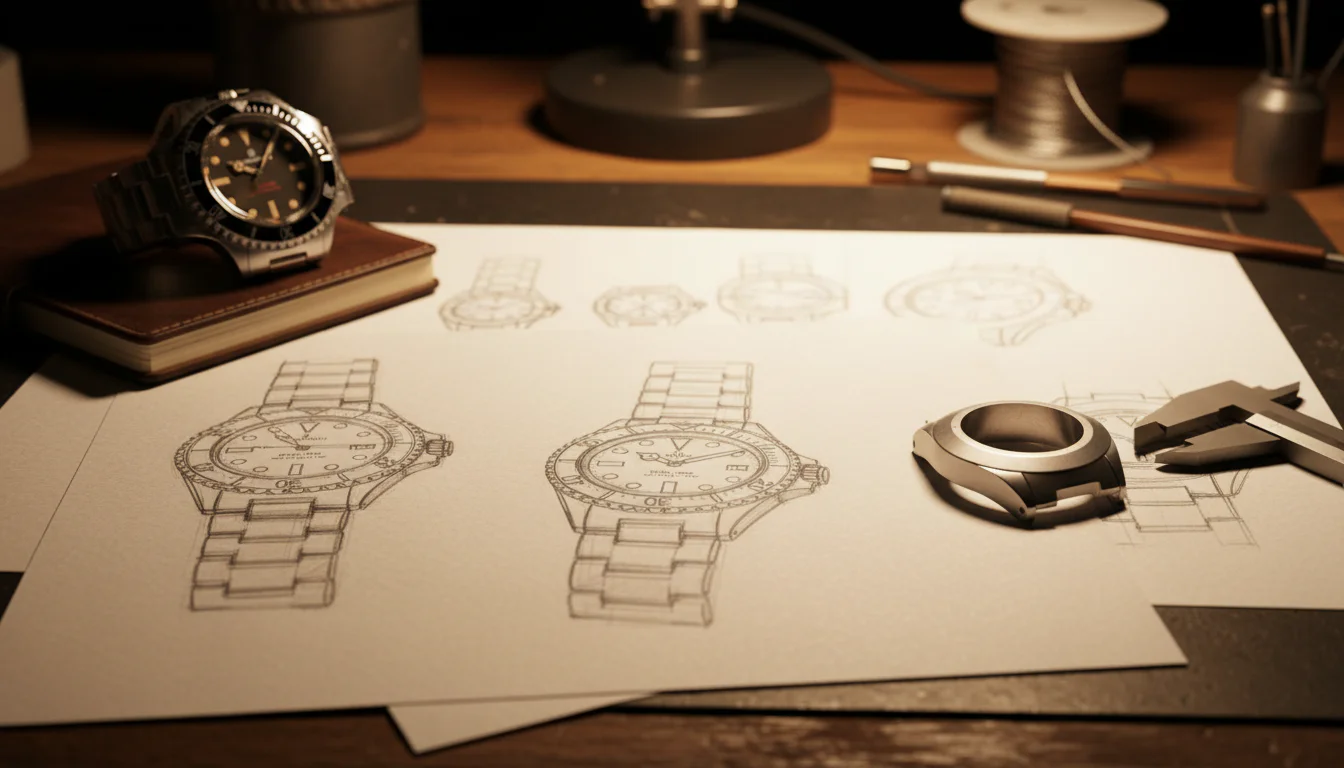 Most homage brands are small, independent operations designing openly in a borrowed style, not hiding behind someone else's name.
Why the Original Brands Rarely Sue
Rolex, Omega, and other major manufacturers have the resources to pursue trade dress claims and largely do not bother going after most homage brands. There are a few practical reasons.
Winning a trade dress case on a watch case shape is genuinely hard, for the functionality and distinctiveness reasons above. A rotating bezel and a round case are difficult to claim as exclusively theirs in court.
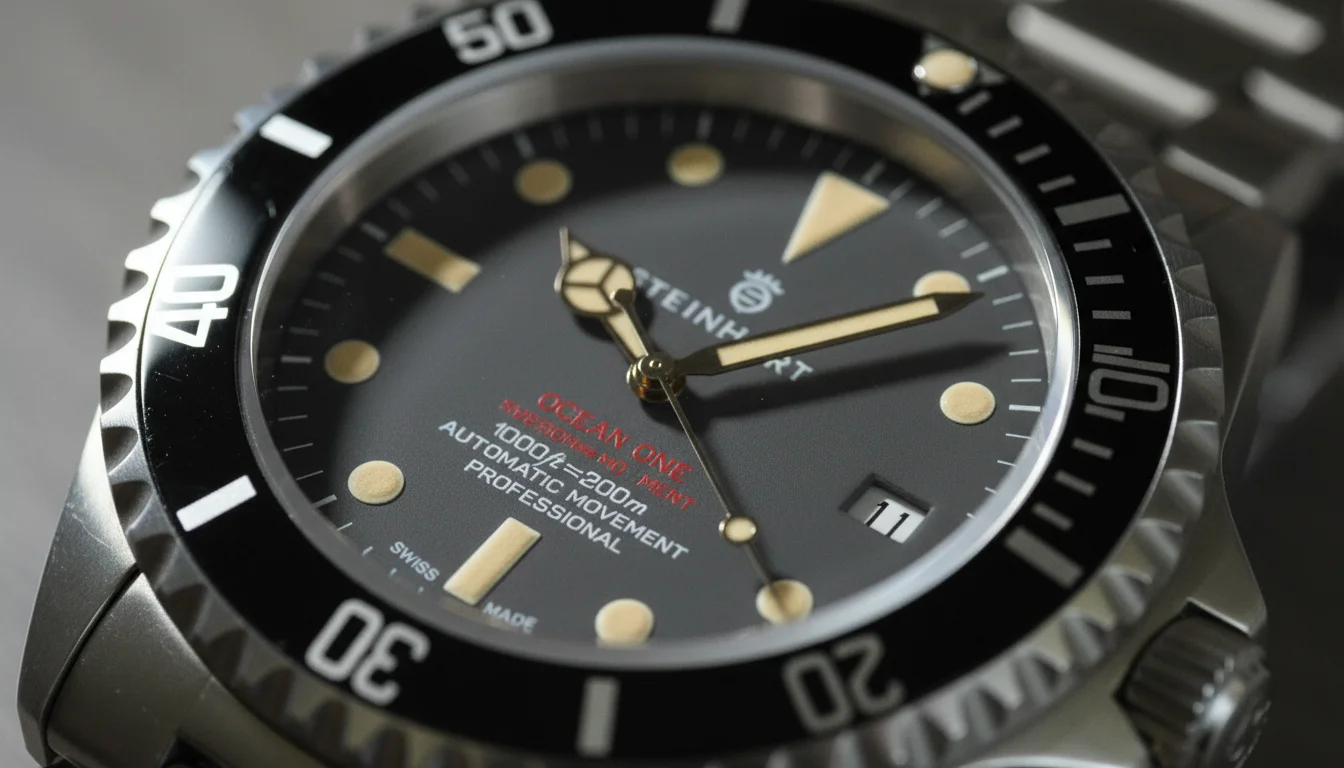 Its own name, front and center. That single choice is most of the legal difference between this watch and a counterfeit.
The commercial threat is also limited. Homage buyers are rarely people who would have bought the $9,000 original instead. Many homage owners are watch enthusiasts building a collection of styles they cannot yet afford in the original, not customers being siphoned away from authorized dealers.
And pursuing every small independent brand making a similar-shaped case is expensive litigation with an uncertain payoff, against companies with comparatively little to seize even in a win.
What Crosses the Line Into Counterfeit
A handful of specific things turn a legal homage into an illegal counterfeit.
Using the actual brand name anywhere on the dial, case, or movement. Reproducing a registered logo, even at reduced detail. Copying a trademarked model name outright, like printing "GMT-Master" or "Speedmaster" on a watch that is not one. Marketing language that claims or implies the watch is genuine, from the original manufacturer, or interchangeable with it in a way meant to deceive a buyer at resale.
Sellers who deal in these products are exposed to real legal risk, and buyers who purchase them knowingly are participating in a trade that funds a genuinely harmful counterfeiting industry, one that has documented ties to forced labor and organized crime in some supply chains.
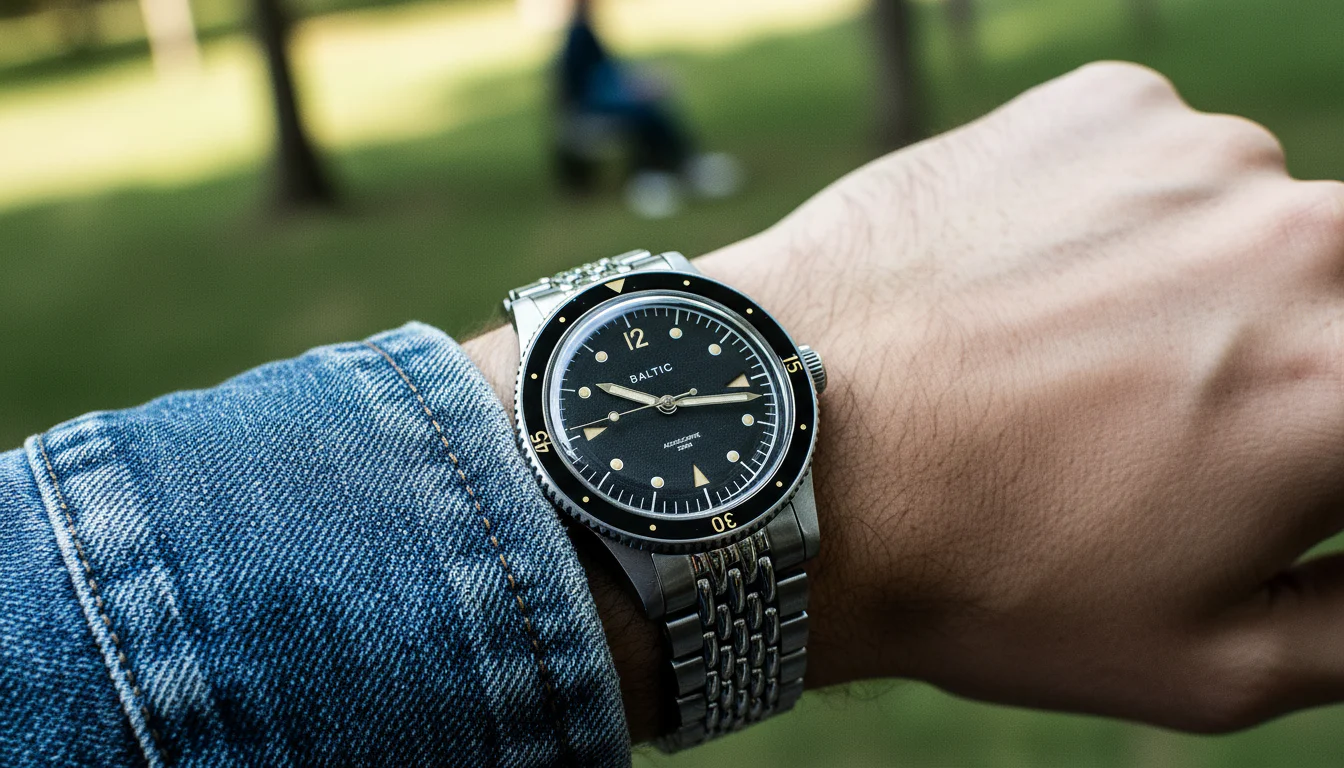 Most homage owners wear these as their own thing, a style they like, not a stand-in for a watch they can't afford yet.
FAQ
Are homage watches illegal?
No, in the overwhelming majority of cases. A homage watch borrows general design language like a case shape or bezel style while using its own brand name and model name, which does not typically infringe a competitor's trademark.
What is the difference between a homage watch and a counterfeit?
A homage carries its own brand name and does not attempt to deceive buyers about its origin. A counterfeit uses another brand's actual trademarked name and logo to make a buyer believe they are purchasing the genuine article.
Can a watch brand copyright a case shape?
Not through copyright law directly. Product shapes can sometimes gain protection through trade dress law, but only if the design is distinctive and not primarily functional, which is a difficult bar for shapes like a round case or a rotating dive bezel to clear.
Why doesn't Rolex sue homage brands like Steinhart?
Winning a trade dress claim over a general case shape is legally difficult due to the functionality doctrine, the commercial overlap between homage buyers and original buyers is limited, and pursuing small independent brands is expensive litigation with uncertain payoff.
Is it ethical to buy a homage watch?
Most watch collectors consider legal homages, ones that use their own branding and do not deceive buyers, an acceptable entry point into a design style. The ethical line most collectors draw is the same as the legal one: a homage that is honest about what it is versus a counterfeit built to deceive.