The Short Answer
There is no single best watch strap material. Leather looks the best on a dress watch and ages into a patina, but it fails outdoors and needs replacing every one to three years of hard wear. Rubber and FKM fluorocarbon straps handle water and sun without complaint and barely need maintenance. NATO and fabric straps are the cheapest, toughest option for daily rotation, and they will outlive the watch on your wrist. Pick the material for how the watch actually gets worn, not for how it looks in a product photo.
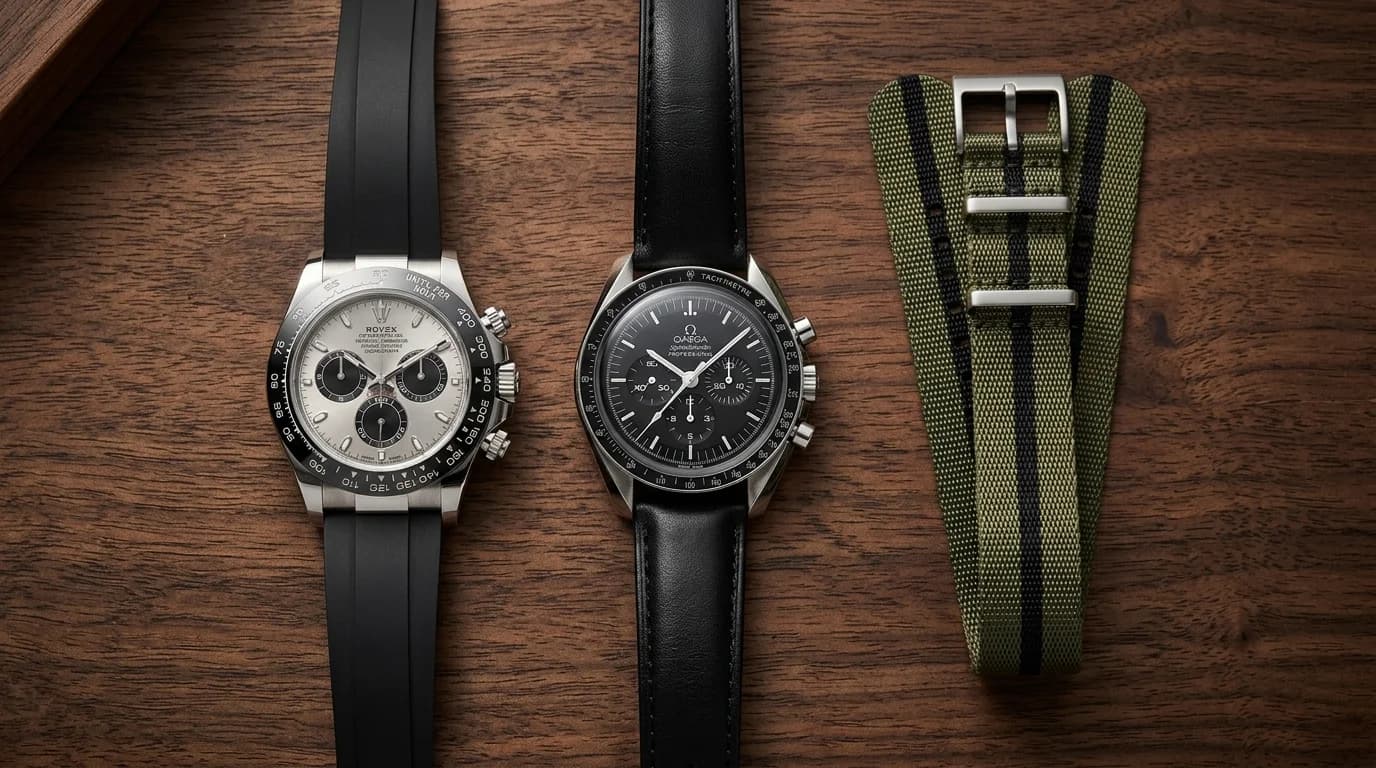
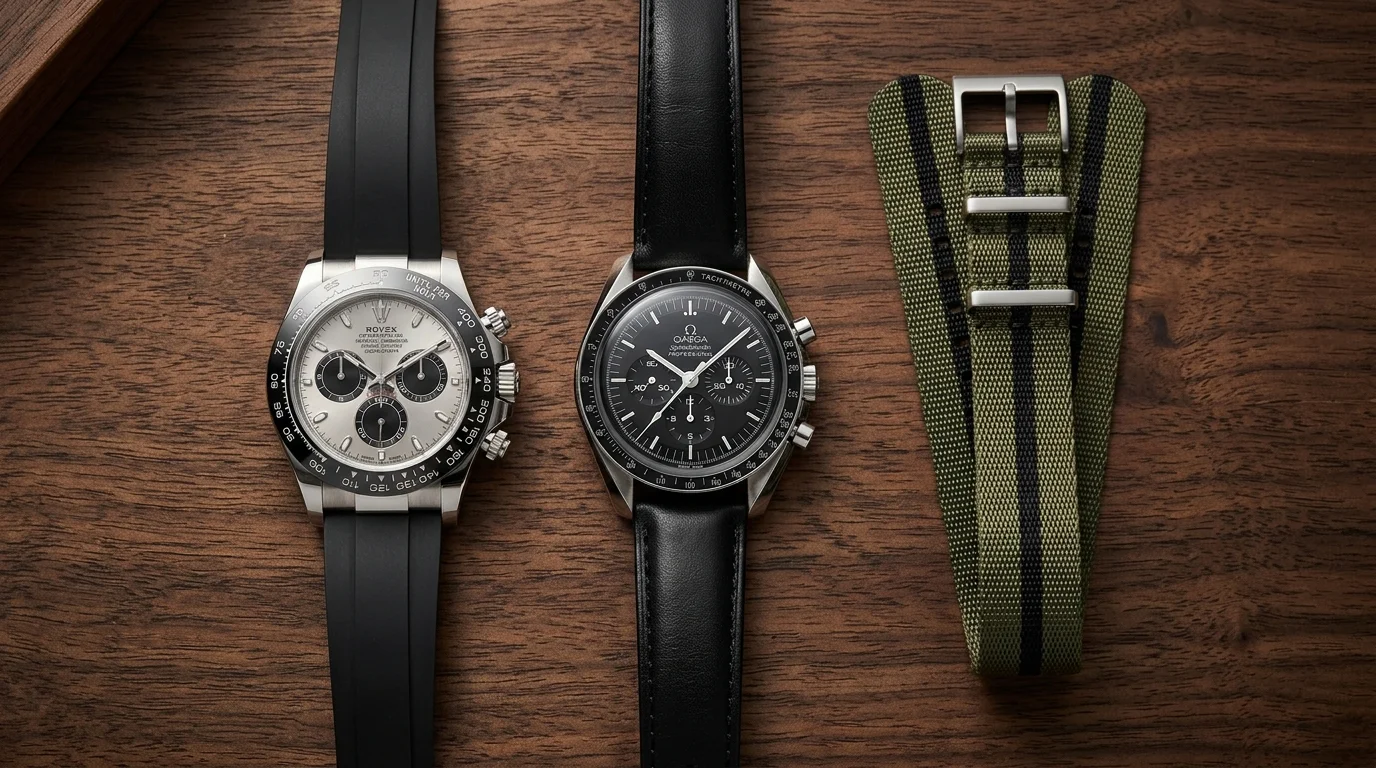 Rubber, leather, and NATO nylon side by side. Three materials, three completely different maintenance schedules.
The watch photos in this article were generated with AI image tools, conditioned on real reference photos of the Rolex Daytona, Omega Speedmaster Moonwatch, and Omega Seamaster 300 so the case shapes, dial layouts, and proportions are accurate to the real watches.
Leather: Best Looking, Shortest Lifespan
Leather is still the default strap for a dress watch, and for good reason. It molds to the wrist, ages with visible character, and pairs with a suit better than anything else on this list. It is also the material most likely to fail you.
Two tanning methods produce very different straps. Vegetable-tanned leather uses tannins pulled from tree bark and takes weeks to process. It develops a real patina over years of wear, the kind collectors pay extra for on brands like Horween shell cordovan. Chrome-tanned leather uses chromium salts, processes in a day, and comes out softer and more water resistant, but it will not develop the same depth of color over time.
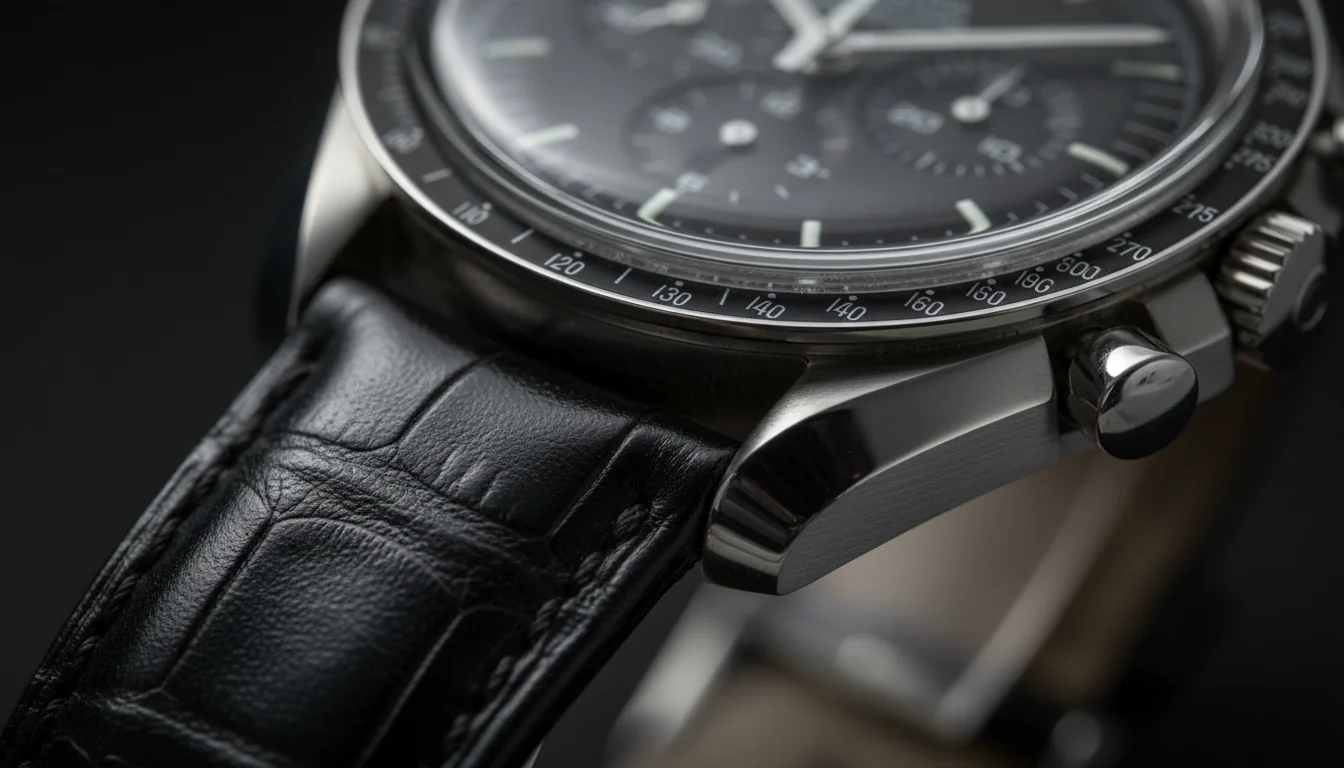 Good leather shows its stitching and grain up close. Cheap leather hides behind a heavy embossed pattern instead.
Either way, leather does not like water, sweat, or direct sun for extended stretches. A strap worn daily in humid conditions typically needs replacing within one to three years. Budget for that cost when you buy a leather strap watch, because it is not a one-time purchase.
Rubber and FKM: Built for Water and Sun
Standard vulcanized rubber, the same processing used in tires, is affordable and waterproof, but it can dry out and crack after several years of UV and sunscreen exposure. That is the trade-off with a budget rubber strap: cheap up front, replaced more often.
FKM fluorocarbon rubber is the material brands actually reach for when they want a strap to last. Rolex uses it in the Oysterflex, and it shows up across the high end of the dive watch world because it resists ozone and UV degradation far better than standard rubber. It costs more to produce, which is why it mostly appears on watches priced well above entry level, but it is the rubber option worth paying for if you actually swim, dive, or sweat in the watch.
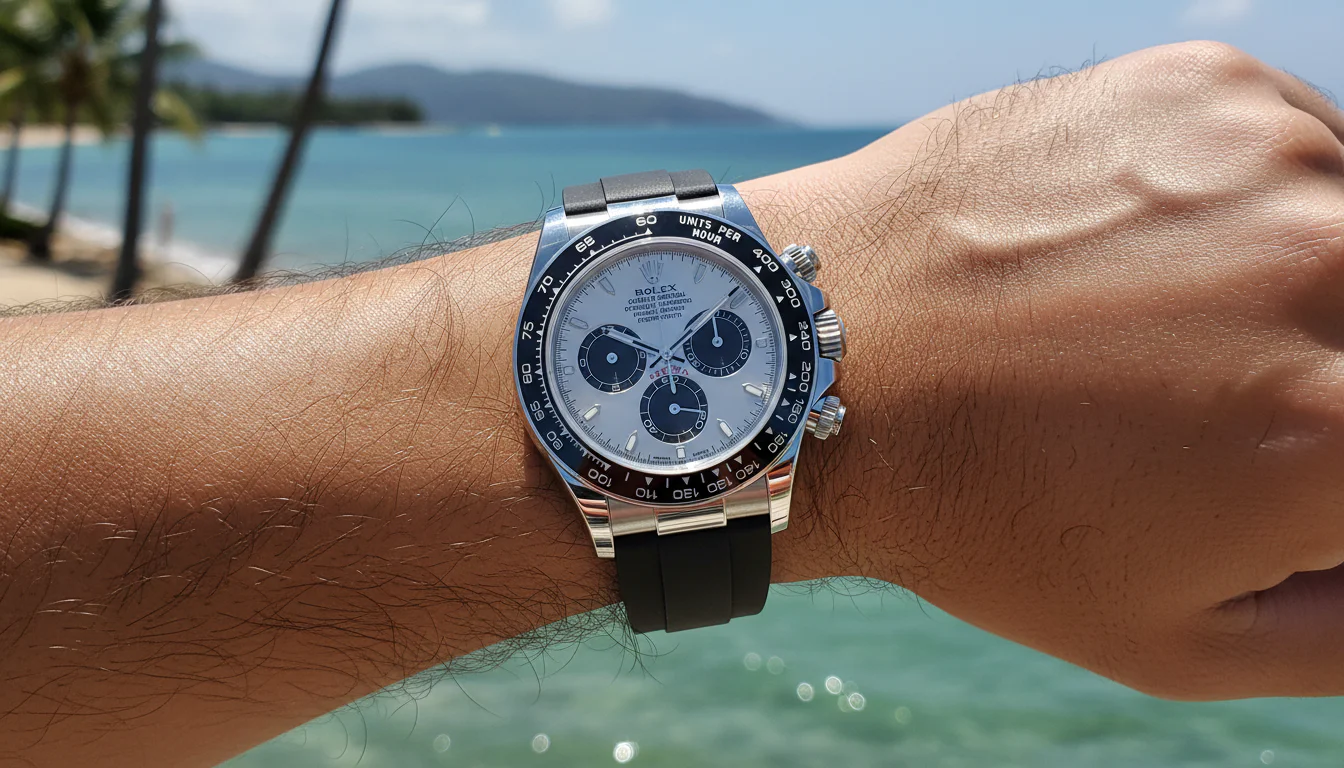 The Oysterflex is FKM rubber over a flexible steel core. This is what "buy it once" actually looks like in a strap.
Rubber's real advantage is maintenance. Rinse it under a tap and it is clean. No conditioning, no rotation schedule, no worrying about a splash at dinner.
NATO and Fabric: Cheapest, Toughest, Least Elegant
The NATO strap started as a British military-issue design, originally designated the G10 after the supply form used to requisition one, worn by UK forces starting in the 1970s. Its defining feature is not the fabric. It is the construction: a single continuous length of nylon threaded under both spring bars, so if one spring bar fails, the watch stays looped to the wrist instead of falling off. That single design detail is why NATO straps remain standard issue for divers and military watches decades later.
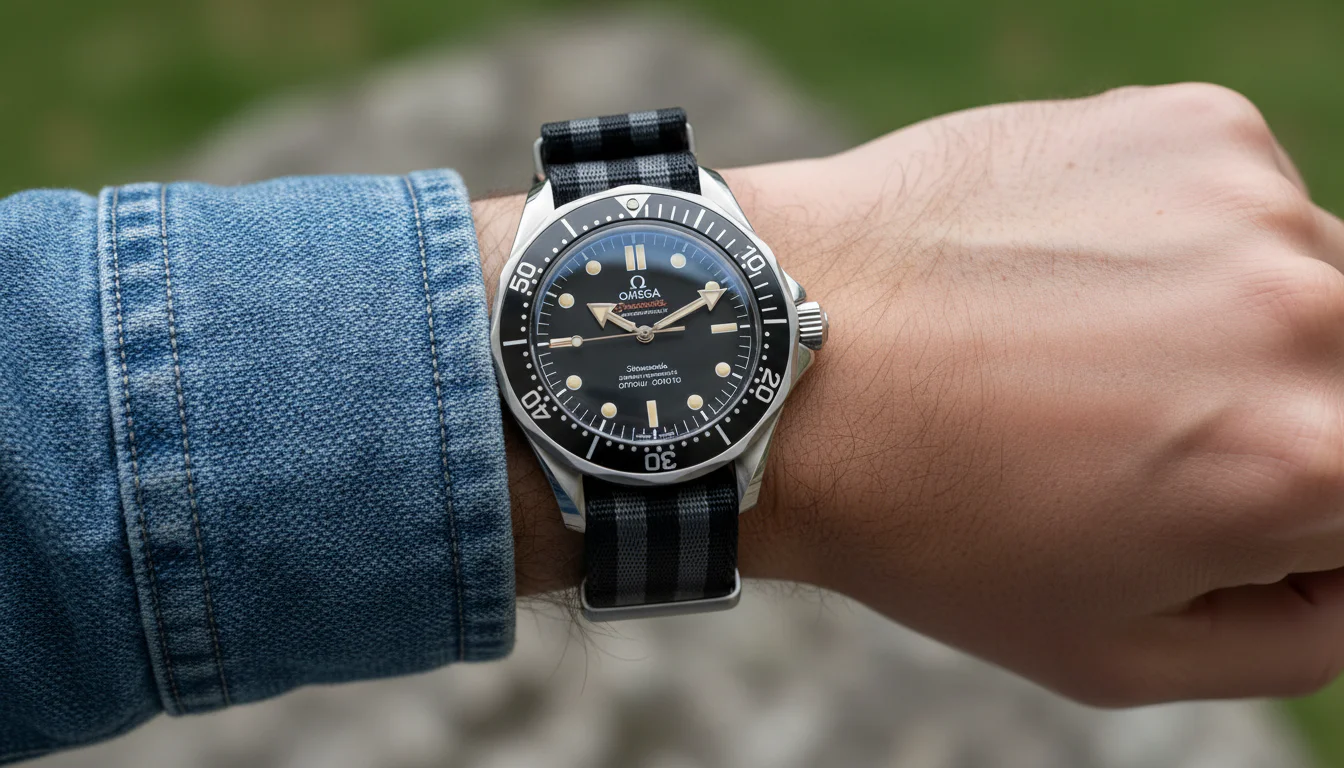 Bulkier under a cuff than leather or rubber, but a NATO strap will outlast almost anything else you can put a watch on.
Fabric and NATO straps are the cheapest option on this list and, arguably, the hardest to actually damage. They dry fast, shrug off water, and a $15 strap is easy to replace without a second thought. What they give up is refinement. A NATO strap under a suit cuff reads as casual no matter how expensive the watch underneath it is.
Aftermarket Straps: The Easiest Upgrade Most Owners Skip
Swapping a stock strap for a quick-release aftermarket band is one of the cheapest changes an owner can make, and one of the most overlooked. A $30 to $80 aftermarket strap in a better material, a genuine FKM rubber instead of the stock silicone, or a properly tanned leather instead of a bonded synthetic, changes how a watch feels on the wrist more than most people expect.
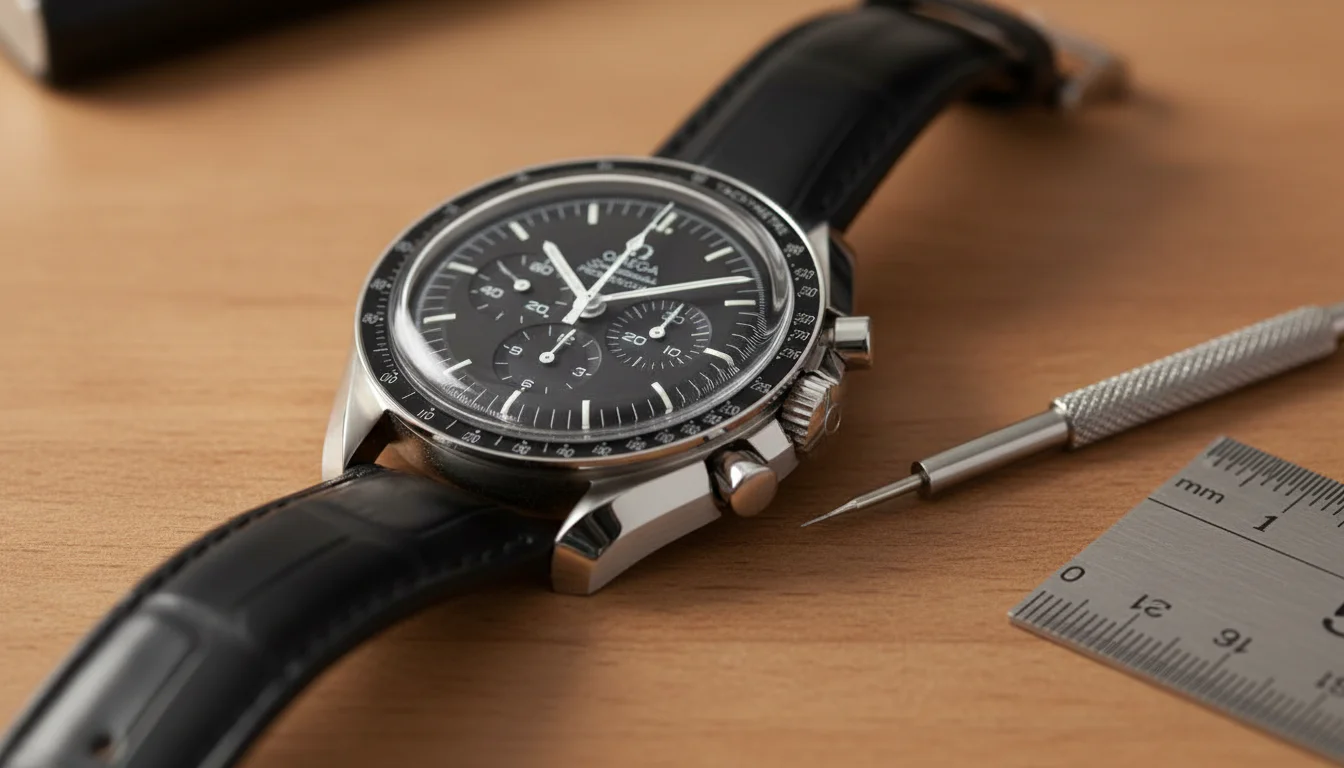 Measure lug width before you buy. A strap off by half a millimeter will not sit right no matter how good the leather is.
Lug width matters more than brand. Measure between the lugs in millimeters (common sizes run 18mm, 20mm, and 22mm) before buying, since a strap that is even half a millimeter off will sit crooked or not fit the spring bars at all. Quick-release spring bars make this a five-second swap with no tools, which is reason enough to own two or three straps for one watch instead of one strap for life.
Matching the Strap to How You Actually Wear the Watch
A dress watch worn mostly at a desk and for evenings out is the one place leather earns its keep, since it is rarely exposed to the conditions that kill it fastest. A dive watch or daily beater that sees pools, sweat, or rain belongs on rubber or FKM, full stop. A watch in daily rotation across different outfits is where NATO and fabric straps make the most sense, cheap enough to own three colors without a second thought.
Quick Reference
| Material | Best For | Water Resistance | Typical Lifespan |
|---|---|---|---|
| Leather (chrome-tanned) | Dress wear, office | Poor | 1 to 2 years, daily wear |
| Leather (vegetable-tanned) | Dress wear, patina collectors | Poor | 2 to 3 years, daily wear |
| Standard rubber | Casual, occasional water exposure | Excellent | 2 to 4 years before cracking |
| FKM fluorocarbon rubber | Diving, daily water exposure | Excellent | 5+ years, minimal degradation |
| NATO / fabric | Daily rotation, active use | Very good | Years; cheap to replace |
FAQ
What is the most durable watch strap material?
FKM fluorocarbon rubber and NATO nylon straps are the most durable overall. FKM resists UV and ozone damage far better than standard rubber, and NATO straps are difficult to tear or damage through normal wear.
Is leather or rubber better for a watch strap?
It depends on how the watch is worn. Leather looks better with dress clothing but degrades with water and sweat exposure. Rubber handles water and daily wear with no maintenance but reads as more casual.
Why do NATO straps have extra material and a loop under the case?
The single continuous strip of nylon threads under both spring bars as a safety feature. If one spring bar fails, the watch stays attached to the wrist instead of falling off, a design carried over from its original military use.
How often should a leather watch strap be replaced?
Under regular daily wear, most leather straps need replacing every one to three years, sooner with vegetable-tanned leather in humid climates or with heavy sweat exposure.
Is FKM rubber better than standard rubber for watch straps?
Yes, for longevity. FKM fluorocarbon rubber resists cracking, fading, and ozone damage significantly longer than standard vulcanized rubber, which is why brands use it on higher end dive and sport watches.