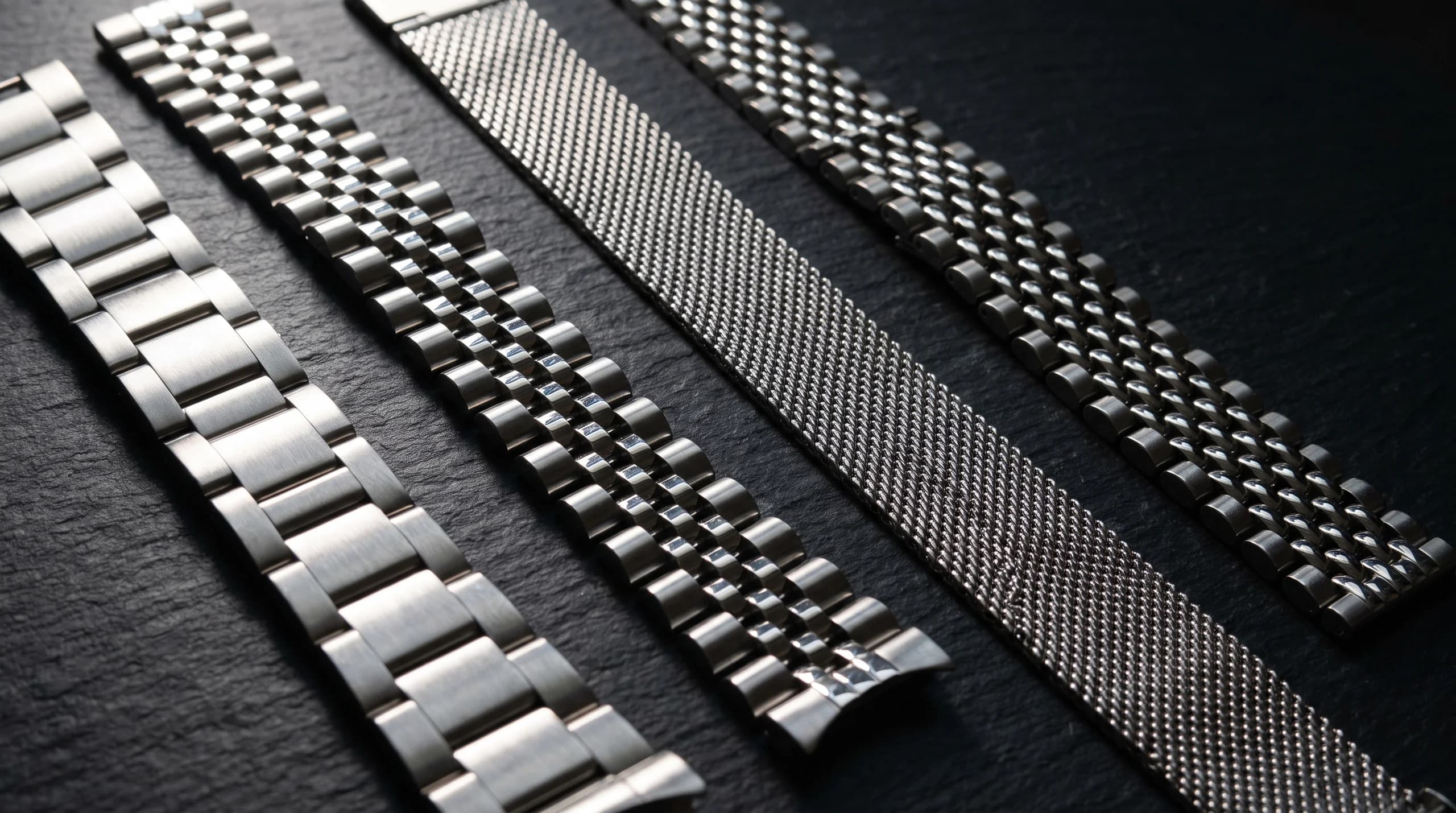
Buyers obsess over the dial, the movement, and the case, then treat the bracelet as an afterthought. That is backwards. The bracelet is close to half the watch by weight, most of what touches your skin all day, and often a real chunk of the price, and it can make or break how a watch feels and looks. A brilliant watch on the wrong bracelet is an uncomfortable watch you stop wearing.
So it pays to know the main types and what each one is actually good for. Some choices are reversible; others, like an integrated bracelet, lock you in for the life of the watch. Here is the working dealer's tour.
The images in this article are AI-generated illustrations created for editorial purposes. They are not photographs of a specific watch offered for sale.
The short answer: the major metal bracelet styles are the Oyster (sporty three-link), the Jubilee (dressy, supple five-link), the President (formal, semi-circular links), the integrated bracelet (flows from the case, cannot be swapped), and mesh or beads-of-rice styles (vintage-leaning and very comfortable). Smaller links flex more and wear more comfortably; larger links feel sturdier but stiffer. What separates a good bracelet from a cheap one is solid links, a quality clasp, and easy micro-adjustment. When metal is not the answer, leather dresses a watch up and rubber makes it a tool.
The Rolex trio: Oyster, Jubilee, President
Three of the most familiar bracelet names all come from Rolex, and they map neatly onto three moods, with finishing shifting the character as much as the link shape.
Oyster: the sporty default
The Oyster is a broad, flat three-link design from the 1930s, robust and sporty, and it is what most people picture on a Submariner or Explorer. A fully brushed Oyster reads like a pure tool watch, while polished center links dress the same bracelet up.
Jubilee: dressy and supple
The Jubilee, a supple five-link design, was Rolex's first in-house bracelet and debuted on the original Datejust in 1945. Its smaller links flex more and read dressier, which is why the Datejust is offered on both an Oyster and a Jubilee, and why mixing polished and brushed links, as on two-tone models, shifts the look further still.
President: formal and precious
The President, introduced with the Day-Date in 1956, uses semi-circular three-piece links and a concealed clasp. It is the formal option, reserved for precious-metal watches, and it trades some flexibility for that dressy, seamless look.
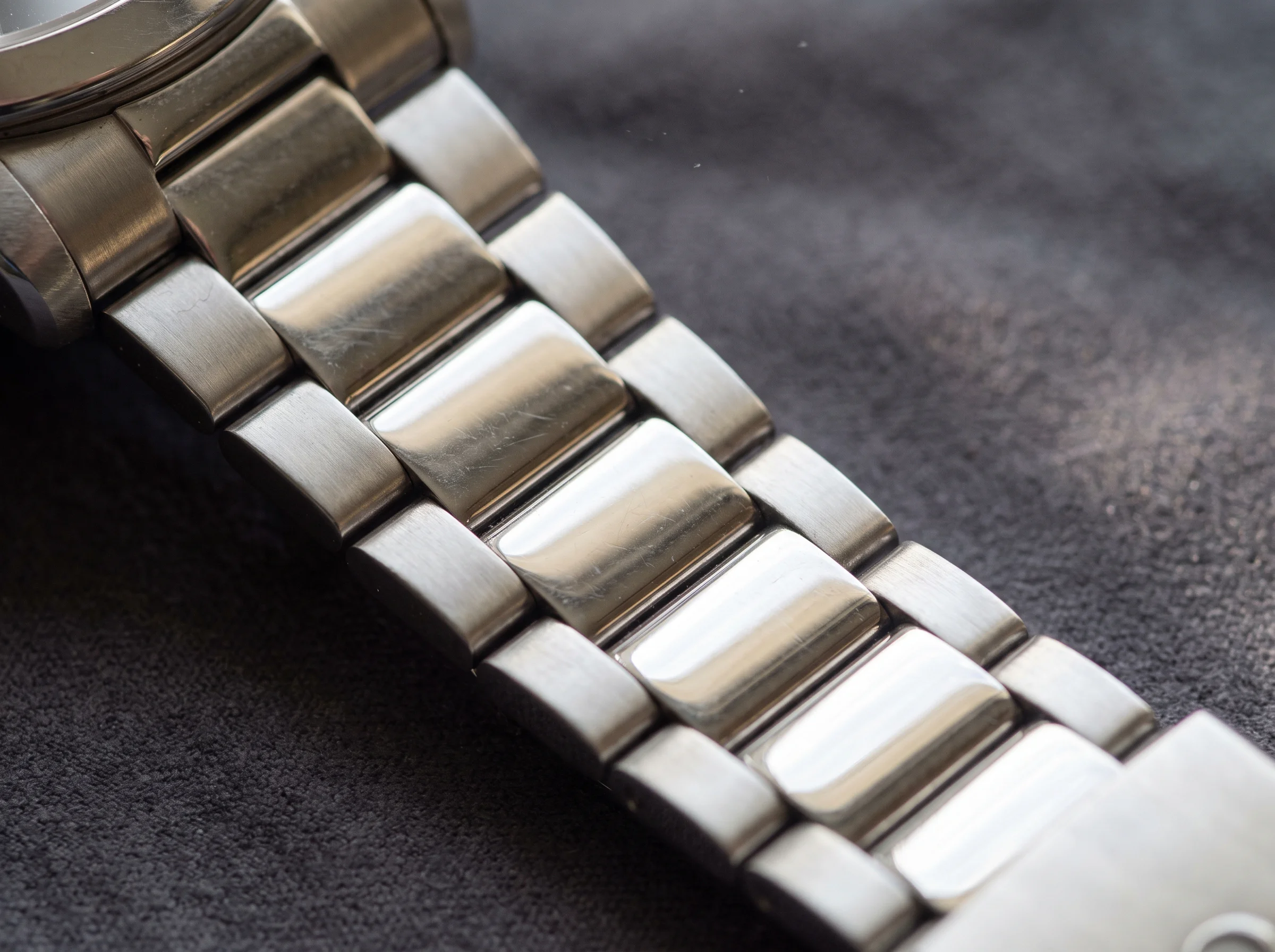 Finishing changes everything. The same link shape reads as a tool watch fully brushed and as a dress watch with polished centers.
Integrated bracelets: the ones you cannot swap
The integrated bracelet is the defining look of the sport-luxury genre, and its rules are different. Instead of attaching between the lugs, the bracelet flows straight out of the case as a single sculpted object, a design Gerald Genta pioneered on the 1972 Audemars Piguet Royal Oak and repeated on the 1976 Patek Philippe Nautilus. The upside is that seamless, architectural silhouette; the downside is total lock-in, because you cannot swap an integrated bracelet for a strap. It is a package deal, and it is a big part of why these watches, from the Royal Oak to the Nautilus and Overseas, command the prices they do.
 An integrated bracelet flows straight out of the case. It makes the watch a single sculpted object, and it means no strap swaps, ever.
Mesh, beads of rice, and the vintage options
Beyond the link bracelets sit a few styles worth knowing. Milanese mesh, woven from fine wire using a technique perfected in Milan, is arguably the most comfortable option of all, flexing uniformly with no pinch points and usually adjusting through a sliding clasp. Beads of rice, made of many small rounded links, dates to the 1940s and drapes beautifully with an unmistakably vintage, dressy character. The H-link, named for its H-shaped center pieces, shows up on integrated watches like the Nautilus and on sportier pieces alike.
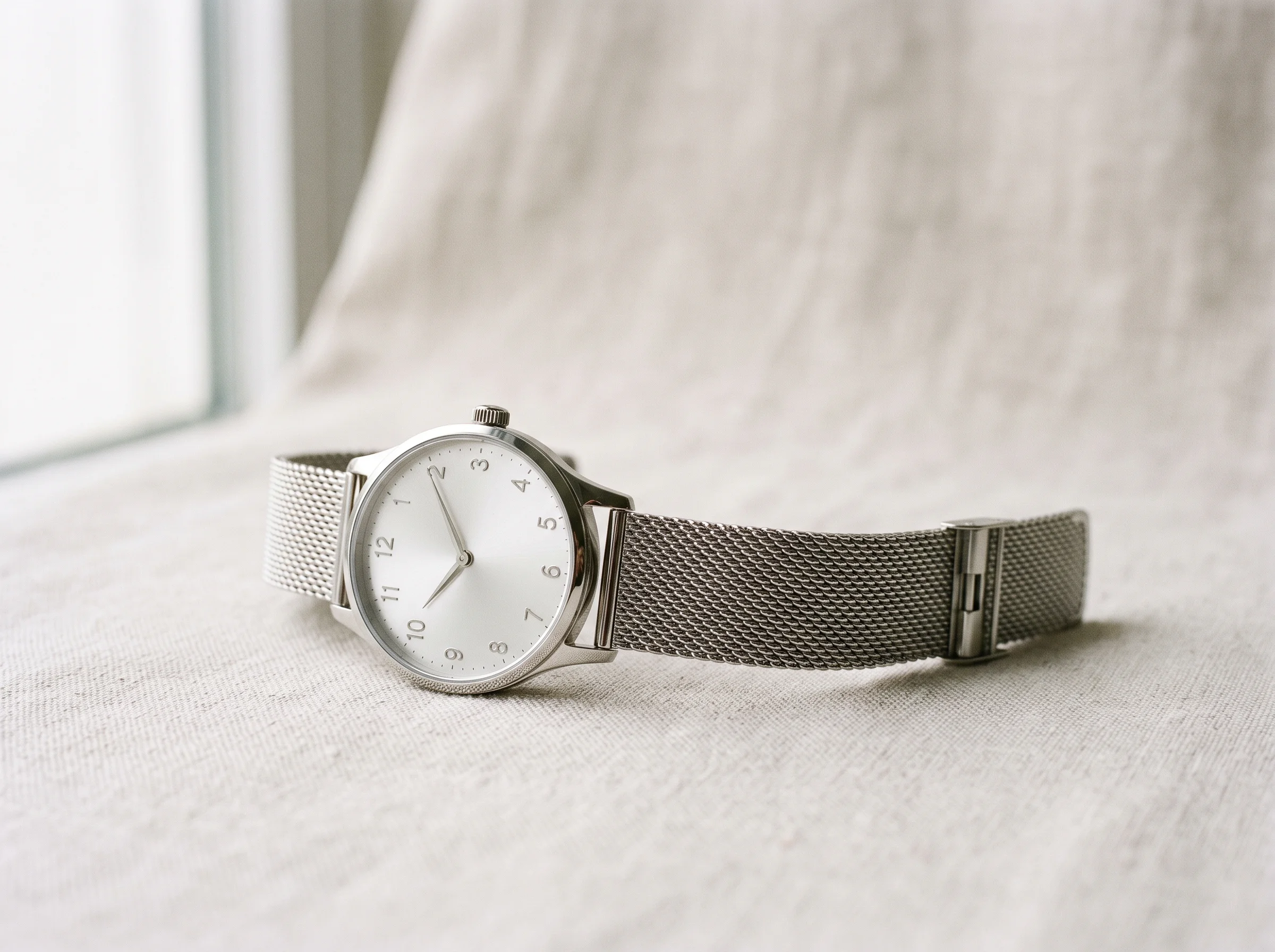 Milanese mesh flexes uniformly across the wrist with no pinch points, which is why it is often called the most comfortable bracelet going.
Straps: when metal is not the answer
A bracelet is not always the right call. A leather strap is thinner, lighter, and more formal than any metal bracelet, which makes it the default for true dress watches, though it will need replacing every year or two with regular wear. Rubber and fabric straps go the other way, shrugging off water and sweat, which is exactly what you want on a summer diver or a beater you never baby.
What actually matters when you buy
Once you know the style you want, a few details separate a good bracelet from a disappointing one. Solid links feel substantial and stay rattle-free, while hollow stamped links are lighter but tend to rattle and stretch over time, so heft the bracelet before you judge it. The clasp matters daily: look for a solid, secure closure with micro-adjustment, ideally the on-the-fly kind that lets you add a couple of millimeters as your wrist swells in the heat. Finally, match link size to your wrist, since smaller links drape better on flat or bony wrists, and remember that a heavier watch rides more comfortably on a well-distributed bracelet than the raw weight suggests.
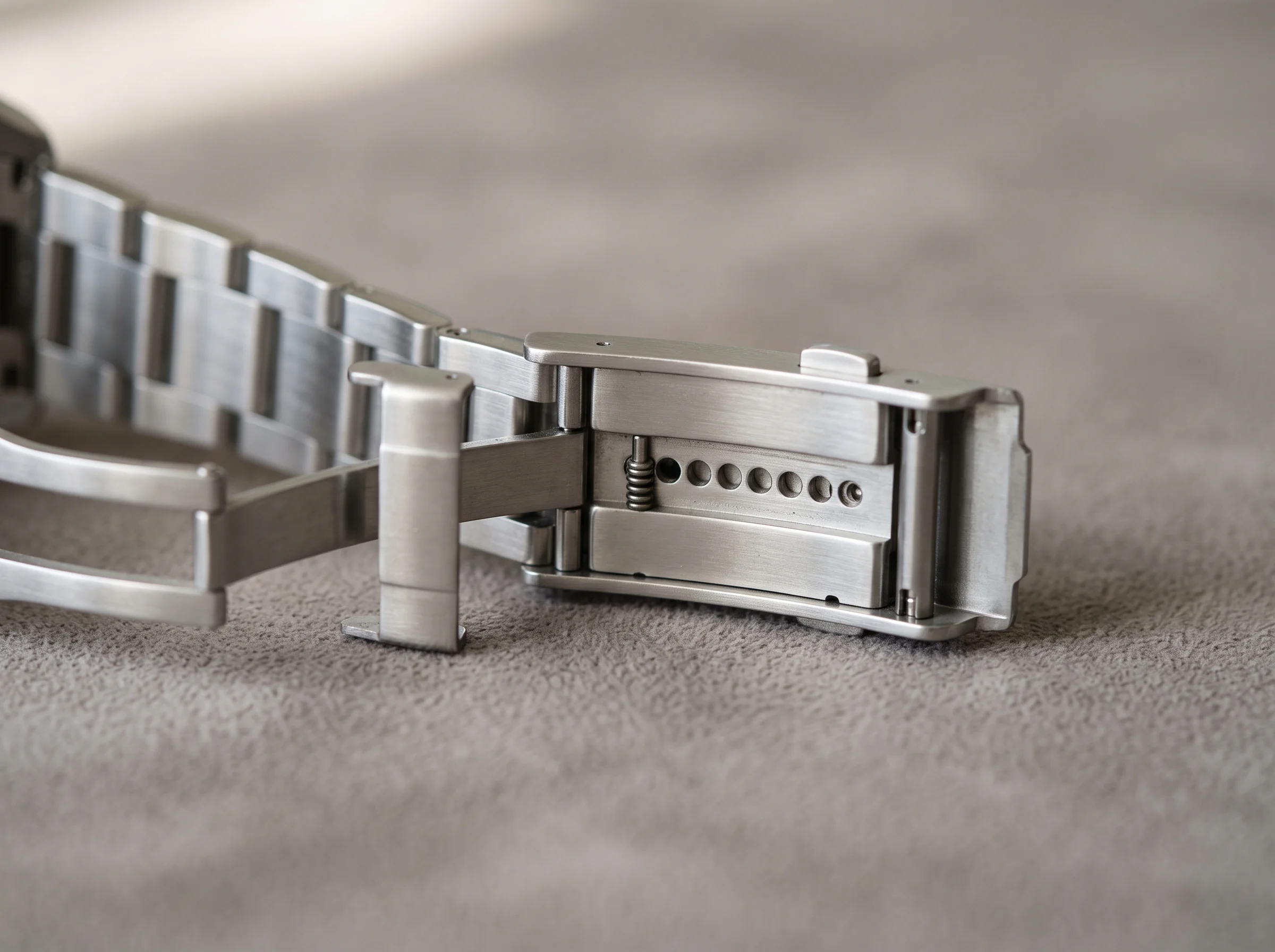 The clasp is the part you touch every day. A secure closure with on-the-fly micro-adjustment is worth more than most buyers realize.
The bracelet is half the watch, so whenever you can, try it on before you buy. Browse authenticated pre-owned Rolex, where the Oyster, Jubilee, and President all live, at 5dwatches.com.