A mechanical watch is a tiny machine running non-stop, and like any machine it needs a service now and then. The oils dry out, friction climbs, and parts start to wear. A proper service resets all of that. The hard part for most owners is knowing when it actually matters, what a real service includes, and what a fair price looks like.
So here is a working dealer's plain-English guide to watch servicing: how often you truly need it, what happens on the bench, what it costs in 2026, and the honest signs your watch is asking for attention.
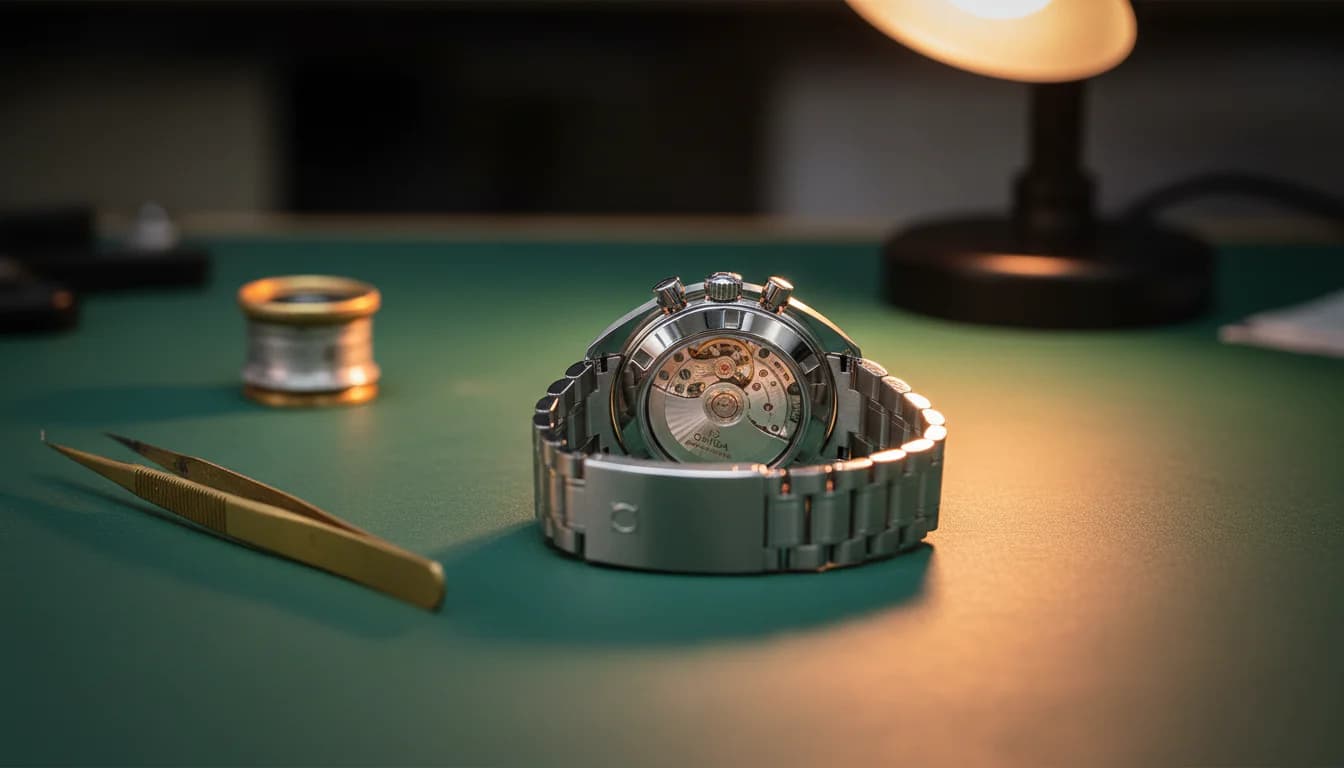
The images in this article were generated by AI from real reference photographs of watch movements and servicing tools. They are illustrations, not photos of a specific watch for sale.
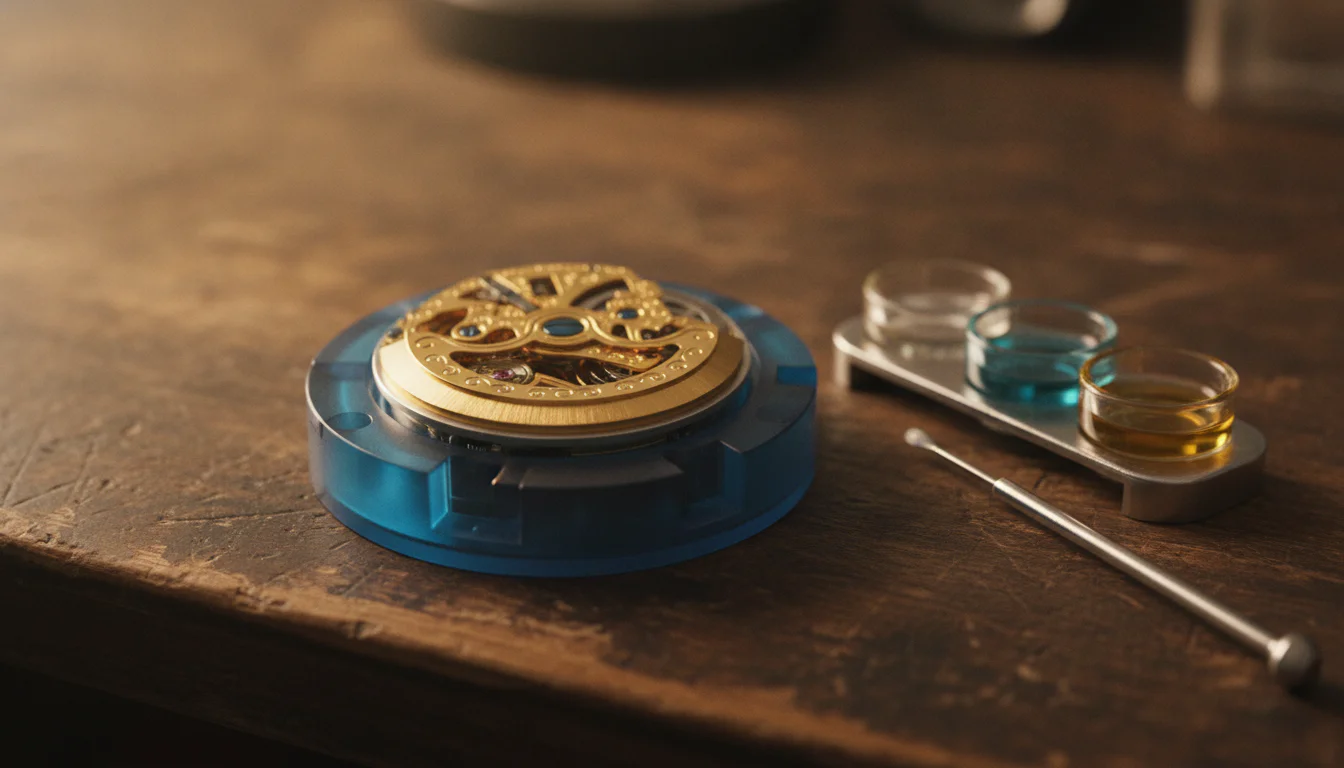
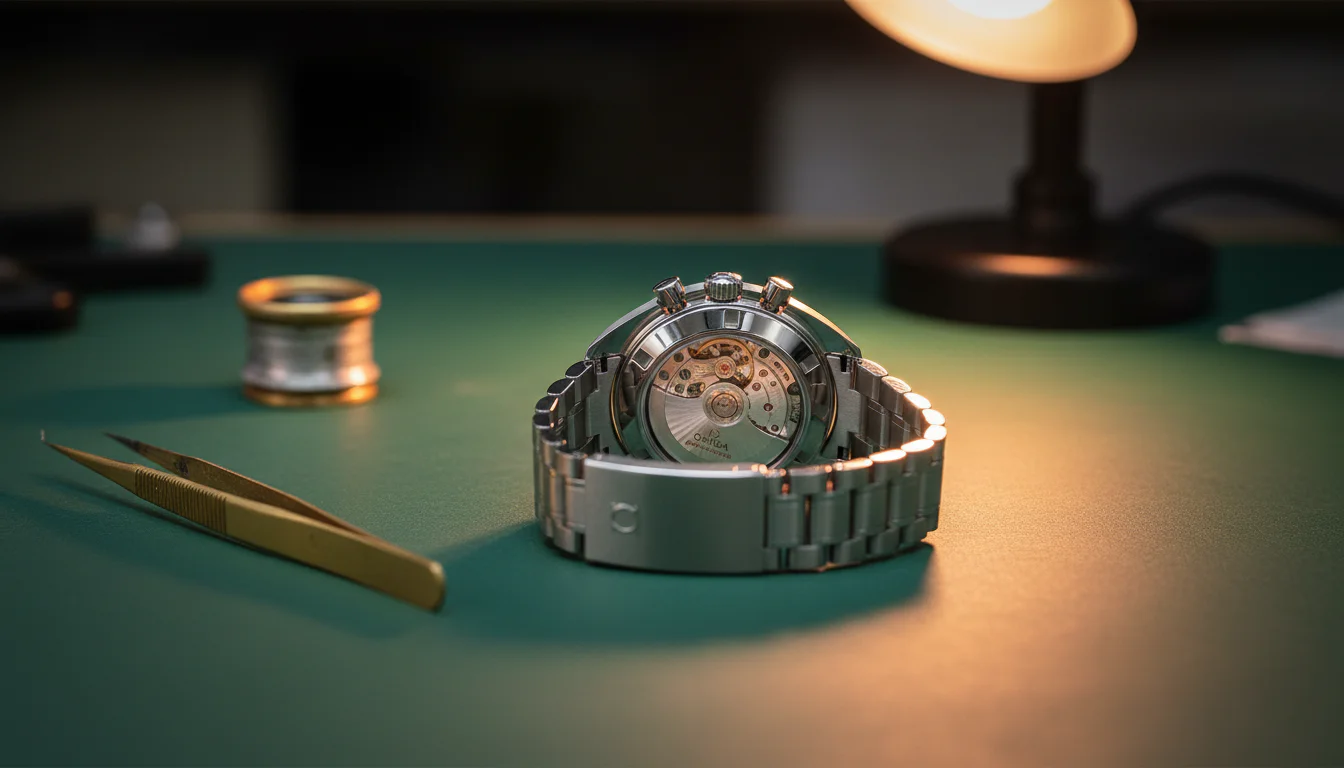 A hand-wound Speedmaster caliber on the bench, the kind of movement a full service brings back to spec.
The short answer
Most modern mechanical watches need a full service every 5 to 10 years, not every 3 to 5 as older advice claimed. A service means full disassembly, cleaning, fresh lubrication, new gaskets, and a timing and water-resistance check. Expect roughly $200 to $500 at an independent watchmaker and $600 to $1,000+ at a brand service center. Quartz watches rarely need more than a battery and a seal.
How often a watch actually needs servicing
The old rule was every three to five years. Modern synthetic lubricants and better seals have stretched that. Most current automatics from Rolex, Omega, Tudor, and the rest run fine on a 5 to 10 year interval if they are worn and stored sensibly.
The number is a guide, not a countdown. A watch that keeps good time, winds smoothly, and still passes a water-resistance check does not need to be opened just because a calendar says so. Opening a watch that does not need it introduces risk, since every case-back removal is a chance to disturb a gasket.
Signs your watch actually needs a service
Watch the behavior, not the calendar. A few real signals:
- Timekeeping drifts well beyond its normal daily rate, or changes suddenly.
- Power reserve drops, so a full wind no longer lasts the day it used to. Our power reserve explainer covers what normal looks like.
- The rotor feels rough or the winding is gritty rather than smooth.
- Moisture or fogging appears under the crystal, which means the seals have failed.
- The chronograph or date sticks, resets oddly, or hangs between numbers.
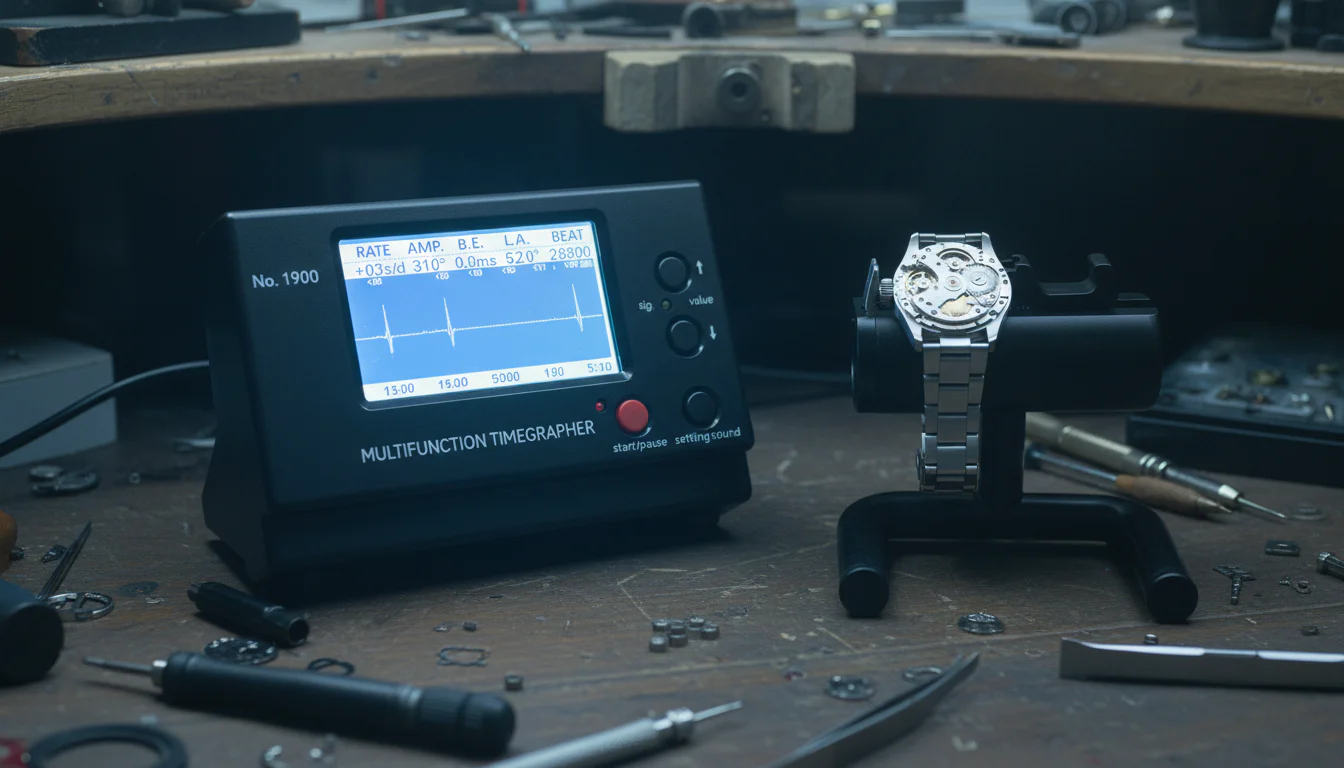 A timegrapher reads the movement's rate and beat error, the fastest way to tell if a watch is running healthy.
What a full service actually includes
A real service is not a battery swap or a quick clean. The watchmaker takes the movement apart, cleans every component, replaces the parts that wear, lubricates the whole thing to spec, and reassembles and regulates it.
The steps on the bench
- Disassembly. The movement comes fully apart, down to the mainspring, gear train, and balance.
- Cleaning. Parts run through an ultrasonic cleaning cycle to strip old oil and grime.
- Replacement. Worn parts, the mainspring, and all gaskets get replaced. Gaskets are cheap and non-negotiable.
- Lubrication. Each jewel and contact point gets the correct oil or grease. Too much is as bad as too little.
- Reassembly and regulation. The watch goes back together and gets timed on a timegrapher across multiple positions.
- Testing. A water-resistance test and a multi-day power-reserve run confirm it holds spec before it goes back to you.
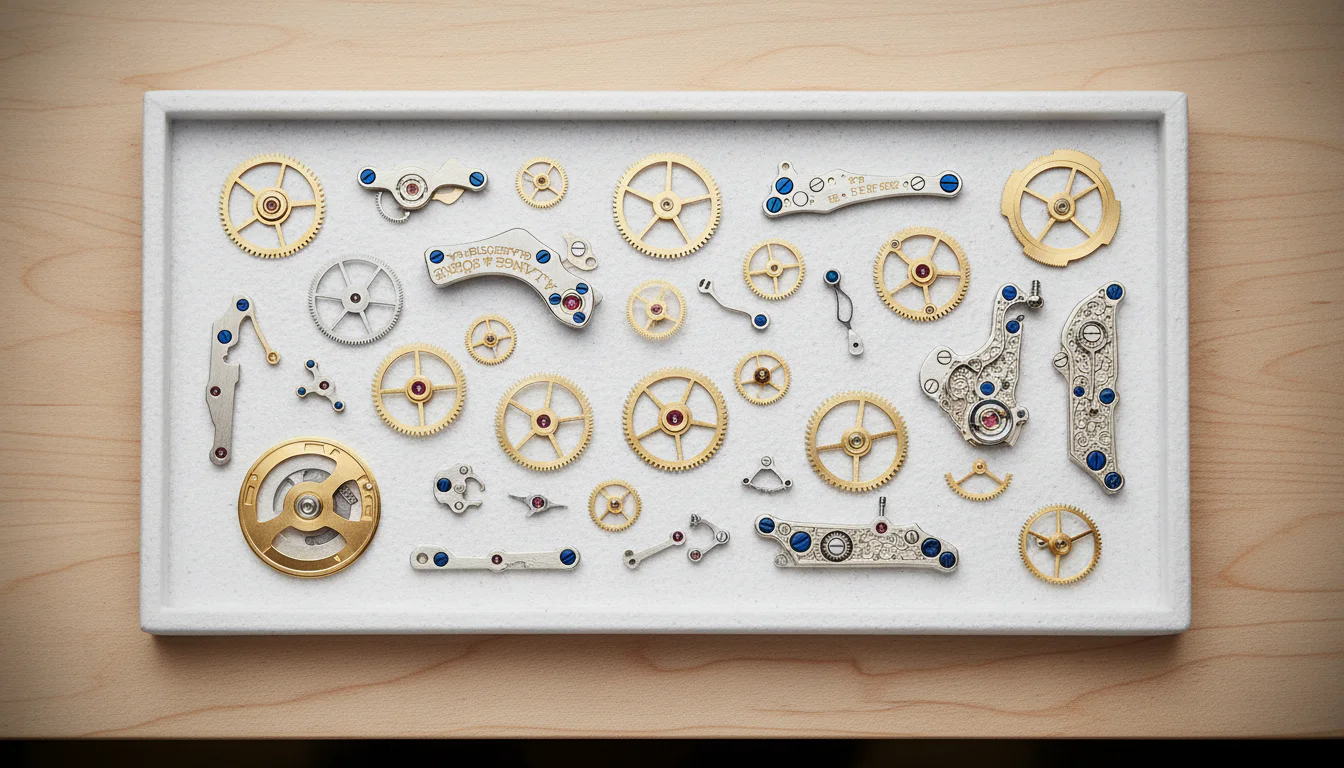 A full overhaul means every part comes out, gets cleaned, and goes back in order. There are no shortcuts.
Why lubrication is the whole point
The reason oils matter is friction. Dried lubricant lets metal grind on metal, and that wear is what turns a cheap service into an expensive parts replacement. Servicing on time is the cheapest insurance a mechanical watch has.
 Fresh lubrication at every contact point is what a service is really buying you.
What servicing costs in 2026
Price depends on the movement and who does the work. Approximate 2026 ranges:
| Service type | Typical cost |
|---|---|
| Independent watchmaker, standard automatic | $200 to $400 |
| Independent, chronograph or complication | $400 to $700 |
| Brand service center (Omega, Tudor) | $600 to $900 |
| Rolex full service | $800 to $1,000+ |
| Battery and seal, quartz | $30 to $100 |
A trusted independent watchmaker is often the better value for a standard three-hand automatic. A brand service center makes more sense for an in-house movement with proprietary parts. If you are unsure what your watch runs, our guide to in-house versus supplied movements explains the difference and why it affects service.
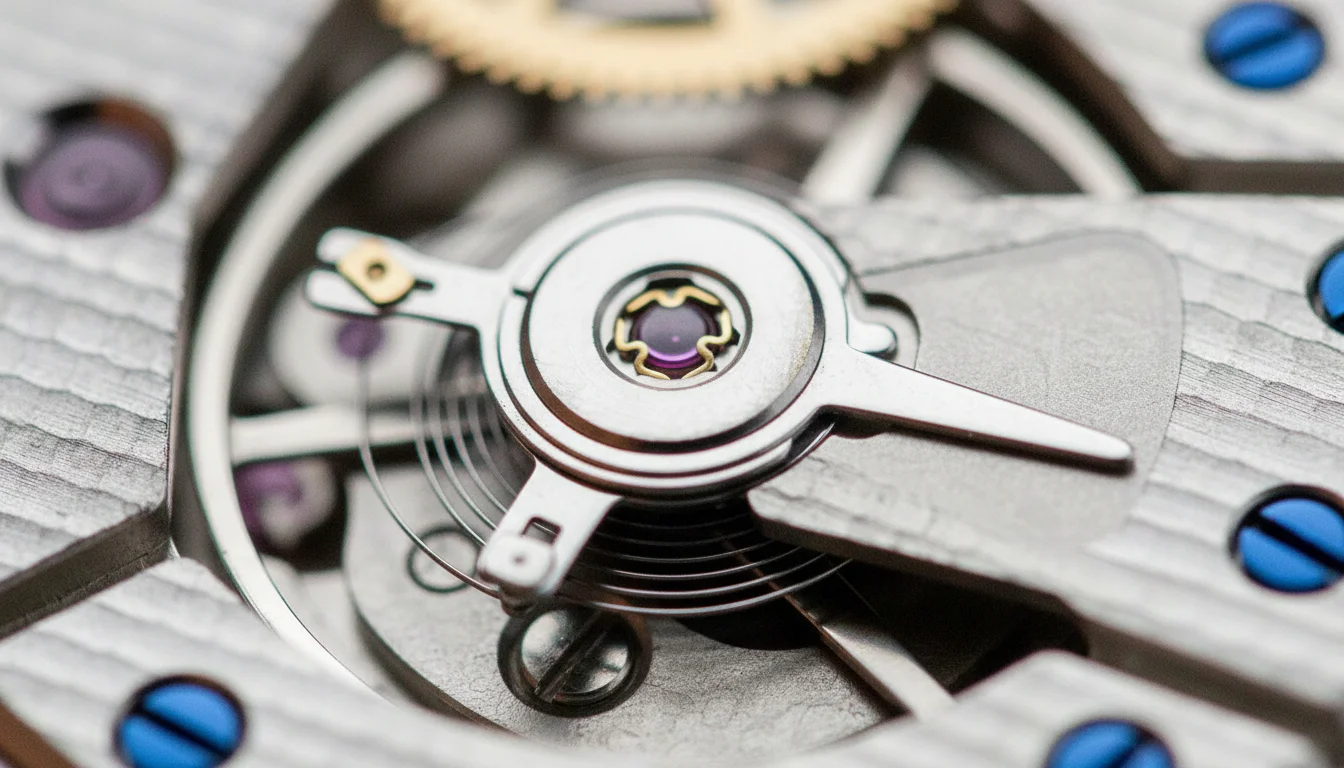 The balance and its shock protection do the delicate work, and they are where fresh oil matters most.
Servicing and water resistance
Every time a watch is opened, its gaskets are disturbed. A proper service replaces them and pressure-tests the case, which is why a fresh service is the right moment to trust a dive rating again. If you swim or shower with your watch, keep the water-resistance test current. Our guide to reading water-resistance ratings explains what the number on the dial really allows.
Frequently asked questions
How often should I service my mechanical watch?
Most modern automatics need a full service every 5 to 10 years, not the old 3 to 5. Go by behavior: if timekeeping, power reserve, and water resistance are all still good, the watch does not need to be opened on a fixed schedule.
How much does a watch service cost?
Roughly $200 to $500 at an independent watchmaker for a standard automatic, and $600 to $1,000 or more at a brand service center. Rolex full service typically runs $800 to $1,000 plus any parts. A quartz battery and seal is usually $30 to $100.
Does a quartz watch need servicing?
Far less. A quartz watch mainly needs a fresh battery and a new seal every few years, plus a water-resistance test if you swim with it. A full movement service is rarely worth it unless the watch has real sentimental or collectible value.
Should I service a watch before selling it?
Not always. A recent service adds confidence and can support the price, but the cost does not always come back in full. For most pre-owned sales, honest disclosure of the service history matters more than paying for a service right before the sale.
Can I service my own watch?
Cleaning and lubricating a movement correctly takes specialized tools, proper oils, and a dust-controlled space. A crooked oiling job can do more harm than leaving it alone. Basic care like winding and setting is fine to do yourself, and our guide to winding an automatic covers doing it right.
The bottom line
Service on behavior, not superstition. Most modern mechanical watches are happy on a 5 to 10 year interval, a real service means a full strip-down and not a quick clean, and a trusted independent watchmaker is often the smart-money choice for a standard automatic. Keep the receipts, and the watch will outlast you.
Browse authenticated, serviced pre-owned watches at 5dwatches.com.
Written by the 5D Watches desk. We buy, sell, and trade authenticated pre-owned watches every day, and we write these guides from what actually crosses the bench, not from a spec sheet.