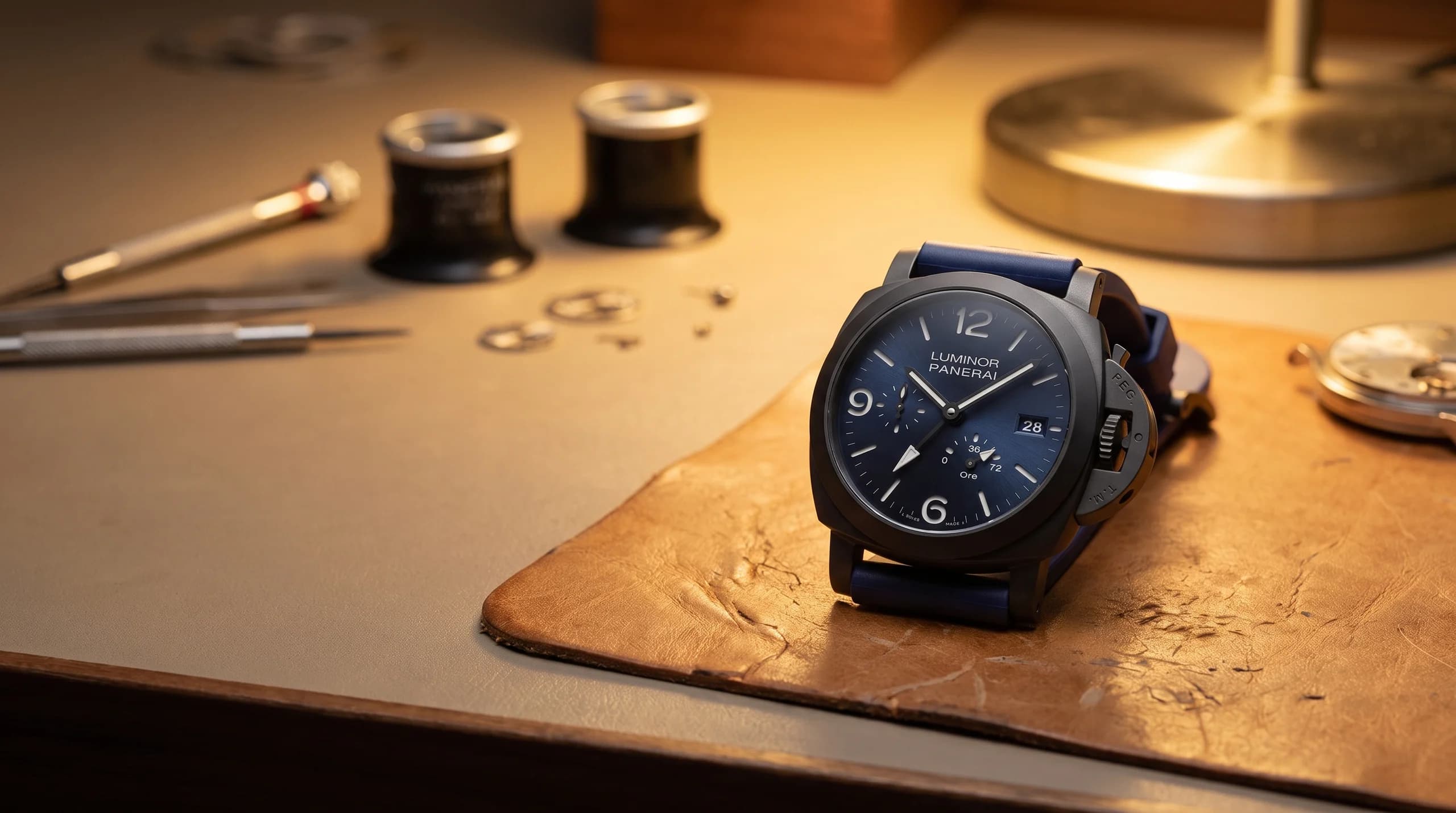
A watch power reserve is simply how long your watch keeps running after you stop winding or wearing it. Wind a mechanical watch fully, take it off, and the power reserve is the countdown until it stops. Understanding this one number tells you a lot about how a watch will fit your life, and it is the first thing a newcomer should learn before buying mechanical.
This article includes images generated with AI to illustrate watch movements and power reserve features. Every watch and component shown is based on a real, referenced model.
The short answer
Power reserve is the running time stored in a wound mainspring, measured in hours. A typical modern automatic holds 38 to 80 hours, so a watch with a 70-hour reserve can sit off your wrist over a weekend and still be ticking Monday morning. More reserve means less resetting. That is the whole idea, and everything below is the detail behind it.
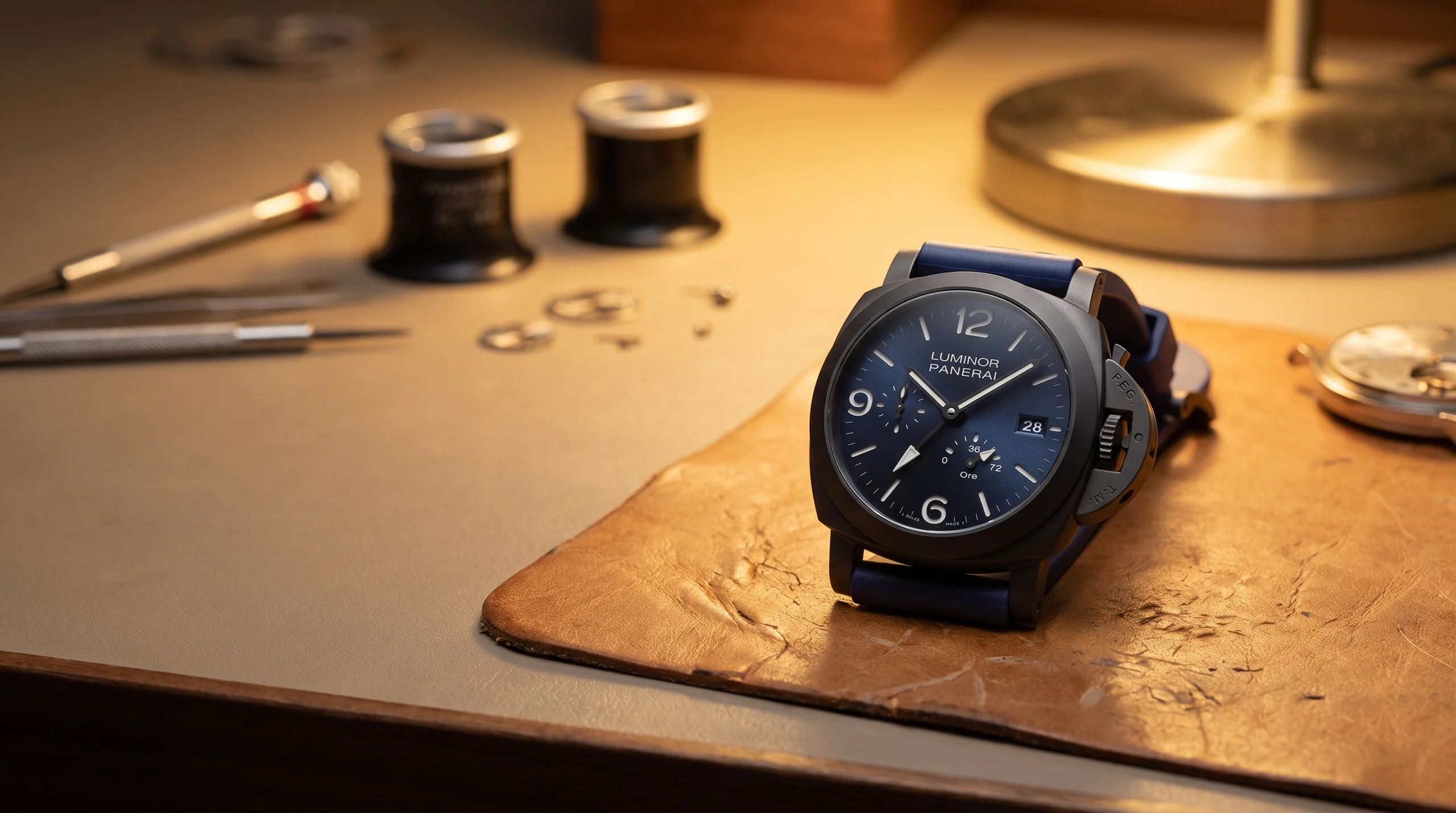 Some watches, like this Panerai Luminor, show the remaining power reserve on a dial gauge.
How a mainspring stores power
Inside every mechanical watch is a coiled ribbon of spring steel called the mainspring, sealed in a barrel. Winding the watch tightens that spring, storing energy. As the spring slowly unwinds, it releases that energy through the gear train to drive the hands.
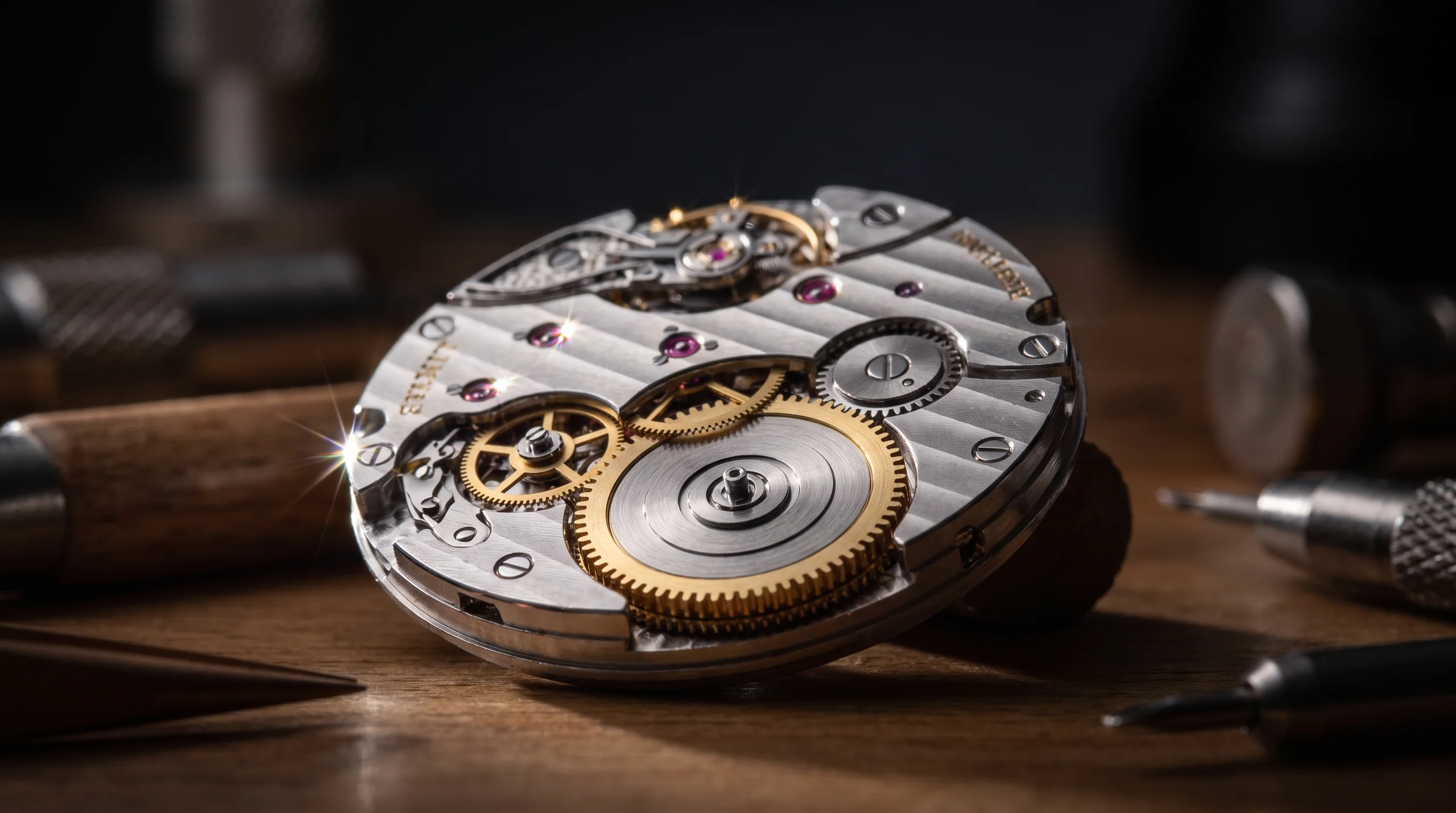 The mainspring coils inside the barrel. Its length and material set the reserve.
The reserve depends on how long that mainspring is, what alloy it uses, and how efficiently the movement runs. Longer springs and modern low-friction escapements store more running time. This is why a new caliber can hold 70 or 80 hours where an older one managed 40.
An automatic watch winds this same mainspring as your wrist moves, using a rotor. A manual watch needs you to wind the crown. Either way, the reserve is the same idea: stored energy waiting to run down.
Typical power reserve by movement
Here is what the reserve usually looks like across common movements you will meet while shopping.
| Movement | Typical reserve |
|---|---|
| Older automatics (ETA 2824, Seiko 4R) | 38 to 41 hours |
| Modern Rolex (caliber 3230, 3235) | ~70 hours |
| Powermatic 80, Tudor MT calibers | ~70 to 80 hours |
| Long-reserve pieces (IWC, Panerai) | 8 days or more |
If you want to see how these movement families differ beyond the reserve number, our guide to watch movement types covers automatic, manual, quartz, and Spring Drive in plain English.
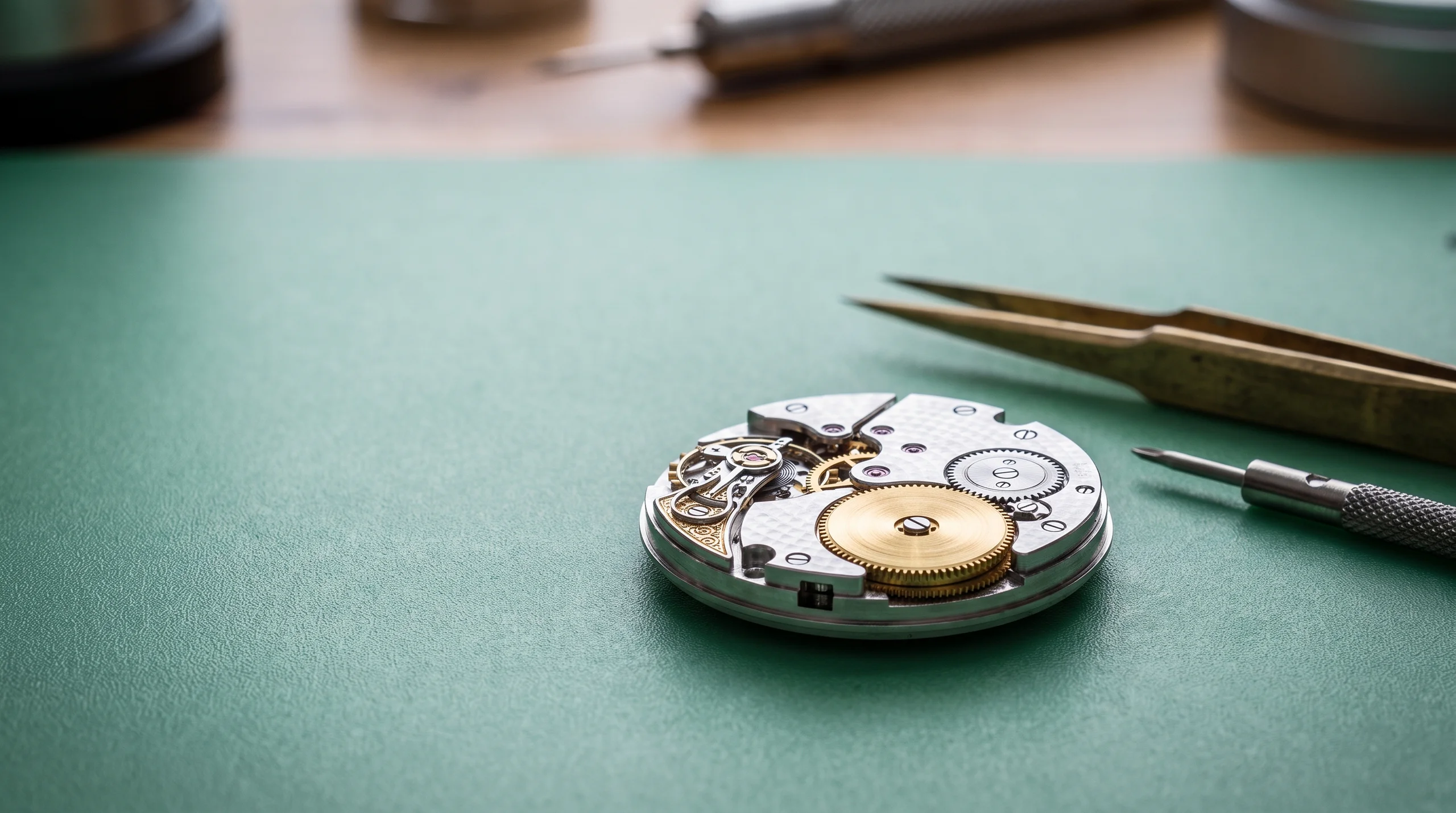 A longer mainspring and an efficient escapement are what push reserve from 40 hours toward 80.
Why the number actually matters
The practical case is simple. A longer reserve means you can rotate watches without resetting the time and date every Monday. Take off a 70-hour watch on Friday evening and it is still running when you pick it back up.
There is a quality signal too. A jump from 40 to 70 hours usually means a newer, better-engineered movement, which is why long reserves became a selling point over the last decade. It also affects accuracy, because a mainspring delivers its steadiest power in the middle of its wind, not at the very end.
For collectors who rotate a box of watches, this is where a winder or a long reserve earns its keep. Something like the Tissot PRX Powermatic 80, with roughly 80 hours, survives a weekend off the wrist without a second thought.
 A power reserve indicator tells you at a glance how much running time is left.
Power reserve indicators
Some watches show the remaining reserve on the dial with a small gauge or hand, like the Panerai Luminor Power Reserve. It is a useful complication on manual-wind watches, where you cannot rely on your wrist to keep the mainspring topped up.
On automatics the indicator is more of a nice-to-have, since daily wear keeps the spring wound. It is a lovely detail, but do not pay a large premium for it unless you genuinely wind by hand. The reserve itself matters more than the gauge that displays it.
Frequently asked questions
What is a good power reserve for a watch?
Around 70 hours is a strong, practical figure for a modern automatic because it covers a full weekend off the wrist. Anything from 40 hours up will work day to day, and 80 hours or more is a genuine convenience if you rotate watches.
How long does an automatic watch last when not worn?
It runs until the mainspring unwinds, which is the power reserve. Most automatics last 38 to 80 hours off the wrist depending on the movement, then stop and need rewinding and resetting.
Does a longer power reserve mean a better watch?
Often, but not always. A longer reserve usually signals a newer, more efficient movement, which is a good sign. It does not guarantee better accuracy or finishing on its own, so judge the whole watch.
How do I know my watch's power reserve?
Check the manufacturer's specification for the caliber, which lists the reserve in hours. If the watch has a power reserve indicator on the dial, it shows the remaining running time directly.
Do quartz watches have a power reserve?
Not in the mechanical sense. A quartz watch runs on a battery or capacitor rather than a wound mainspring, so it does not stop after a set number of hours. The power reserve concept applies to mechanical watches, automatic and manual.
The bottom line
Power reserve is one of the easiest specs to understand and one of the most useful when you own more than one watch. It is stored energy in a wound mainspring, measured in hours, and a longer figure means less fuss. Learn the number, match it to how you actually wear watches, and you will buy smarter.
Want help choosing a movement that fits your routine? Talk to a 5D Watches specialist and we will point you to the right reference.