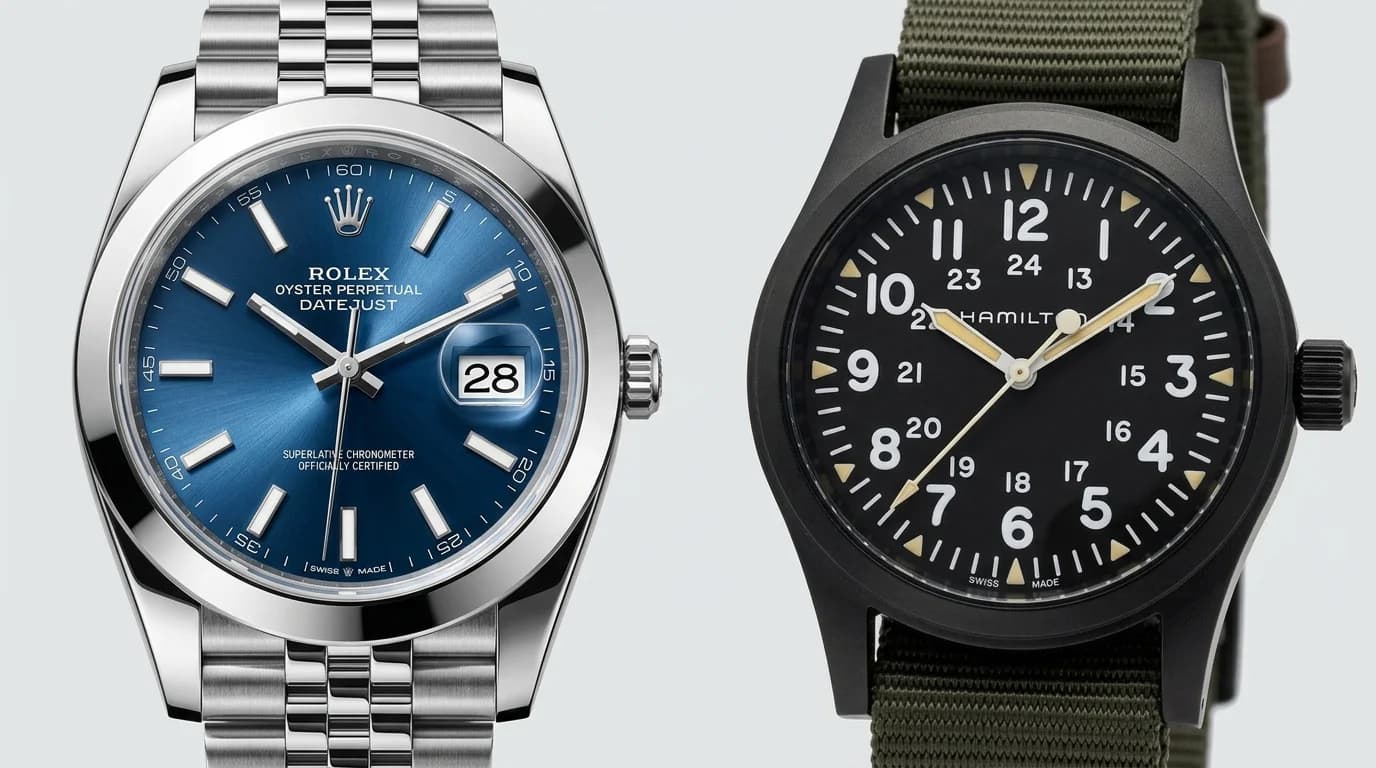
Two dials, same photo lighting, completely different personalities. One throws light back at you in a bright radiating burst the second it catches the sun. The other absorbs everything and gives nothing back. Neither is better. They are built for different jobs, and the difference is not subtle once you know what you are looking at.
This post includes AI-generated images built from real reference photography of the watches discussed, verified by our team for accuracy before publishing.
The short answer
A sunburst (or sunray) dial has fine grooves radiating out from the center, cut by machine or on a rose engine lathe, that catch light and create a dynamic brushed shine that shifts as you tilt your wrist. A matte dial has a flat, non-reflective surface that stays visually consistent under any light. Sunburst dials feel more alive and dressier; matte dials read faster in bright conditions and give off a more purposeful, no-nonsense look. Neither finish affects the movement or accuracy underneath. It is purely a visual and manufacturing choice.
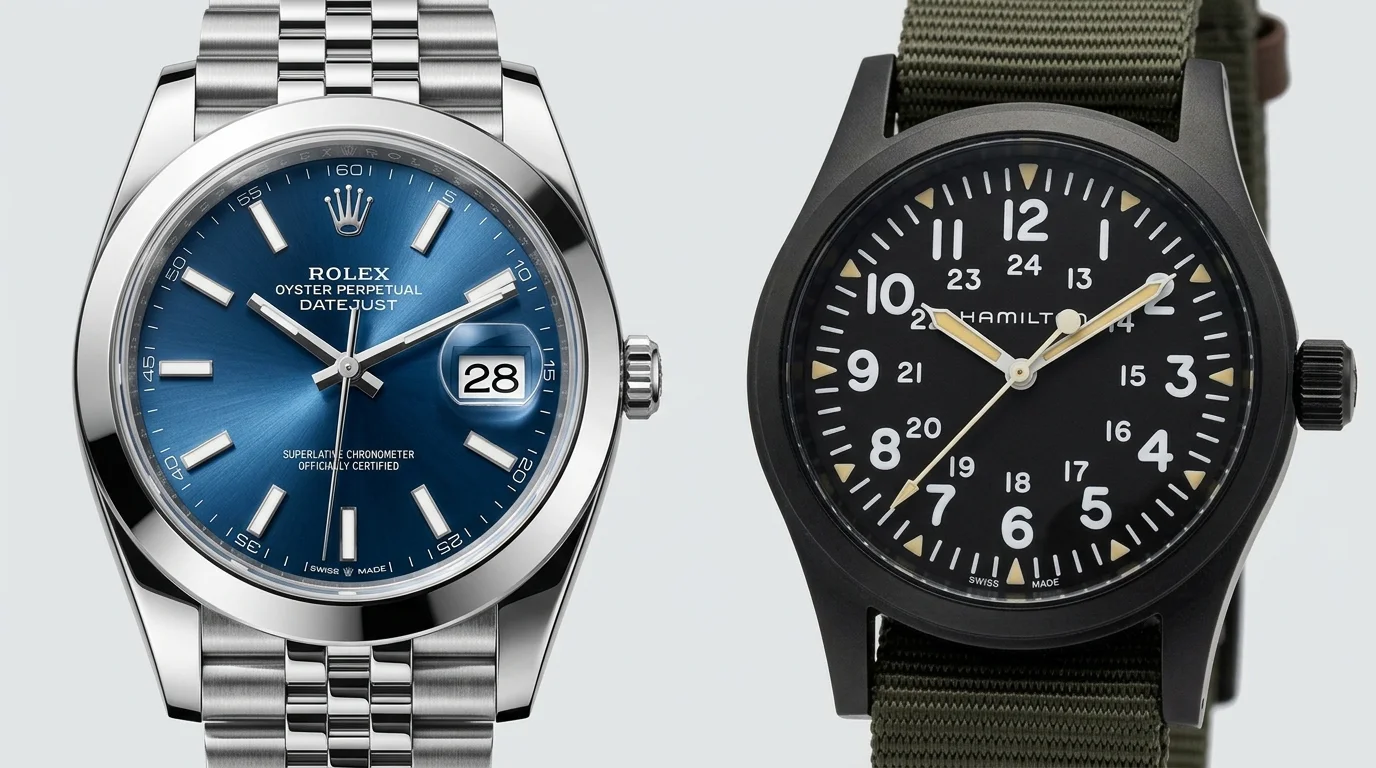 Same studio lighting, two completely different results. The Datejust throws light back in a radiating burst. The Khaki Field absorbs it and stays flat.
How a sunburst dial is made
Sunburst dials get their name honestly: the finish radiates outward from the center of the dial like rays from a sun. Modern manufacturing cuts this with machine-guided engraving tools that carve ultra-thin grooves radiating from the dial's center point, then apply metallic paint or lacquer over the top. Higher-end pieces sometimes use a rose engine lathe instead, the same centuries-old hand-cranked technique used on historical guilloche dials, which produces a more organic and less perfectly uniform result.
Once finished, those grooves do the work. They catch and reflect light differently depending on the angle you view the dial from, which is why a sunburst dial seems to shift in brightness and even shade as you move your wrist. A dark navy sunburst dial can look nearly black at one angle and bright electric blue at another. That movement is the entire appeal. Panerai's Luminor Due is a good example of just how dramatic that shift can be on a deep blue dial.
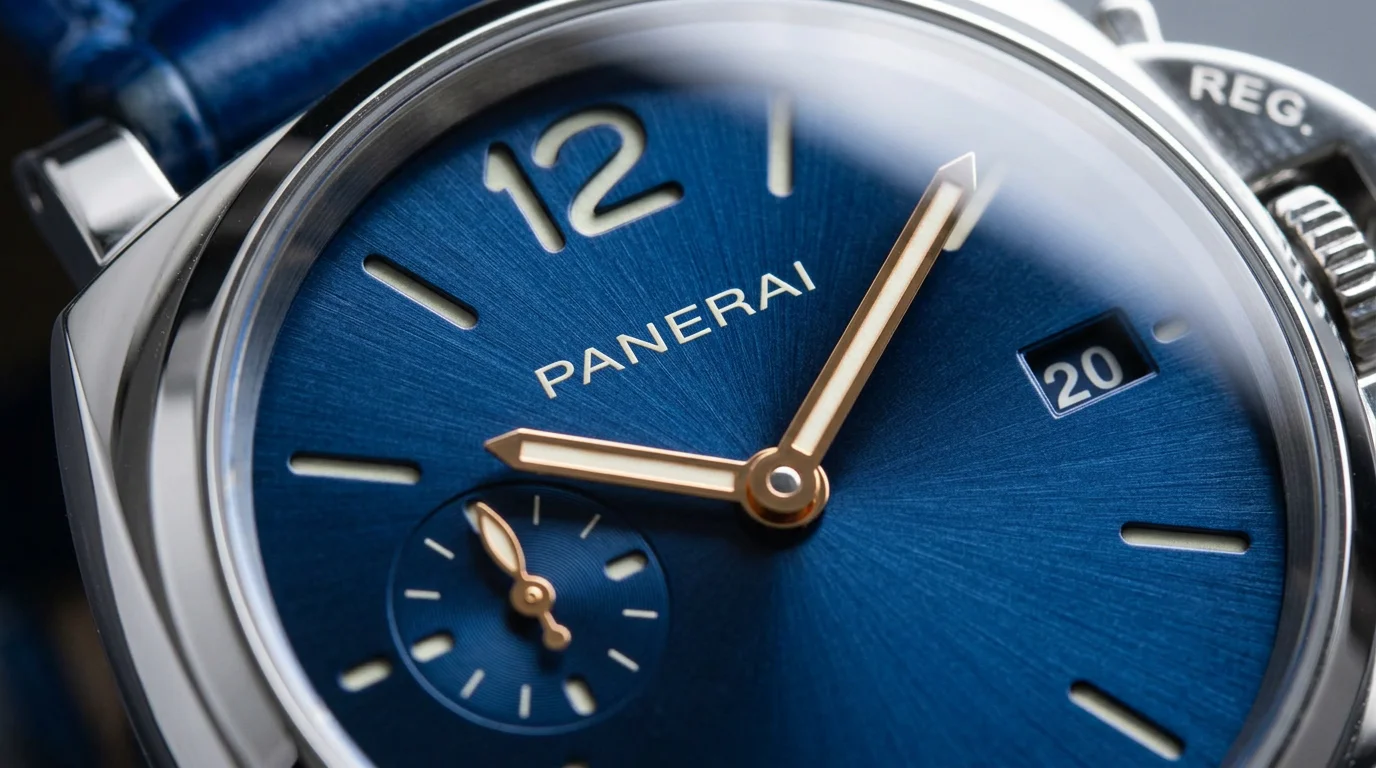 A Panerai Luminor Due sunburst dial up close. The grooves radiate outward from the center, invisible until light hits them at the right angle.
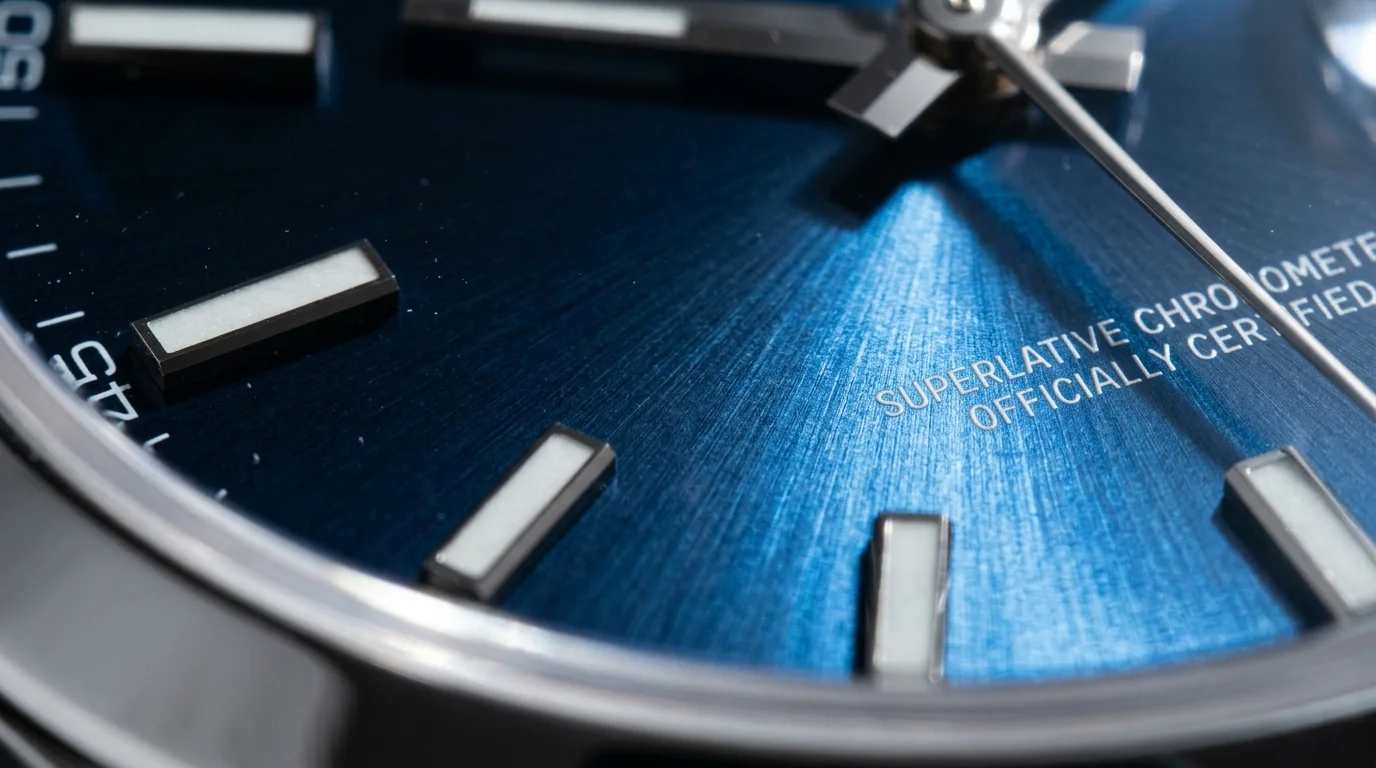 A sunburst dial at a raking angle, this time on a Rolex Datejust. Notice how the brightness shifts across the surface, dark near the edge and blazing bright toward the center of the light source. This is what a photo on a listing page cannot fully capture, on any brand.
How a matte dial is made
A matte dial does the opposite job on purpose. Rather than cutting a reflective texture, the surface gets a flat treatment, similar in concept to matte photo paper: light hits it and scatters evenly instead of bouncing back in one direction. There is no radiating pattern, no shift with viewing angle, no dramatic catch of light.
The result reads as understated and subdued. Text and markers are typically printed rather than applied, since a matte surface does not need the same reflective contrast tricks a glossy or sunburst dial relies on for legibility. A matte black field watch dial, for instance, prioritizes maximum contrast between the dial and the printed numerals over any visual flourish.
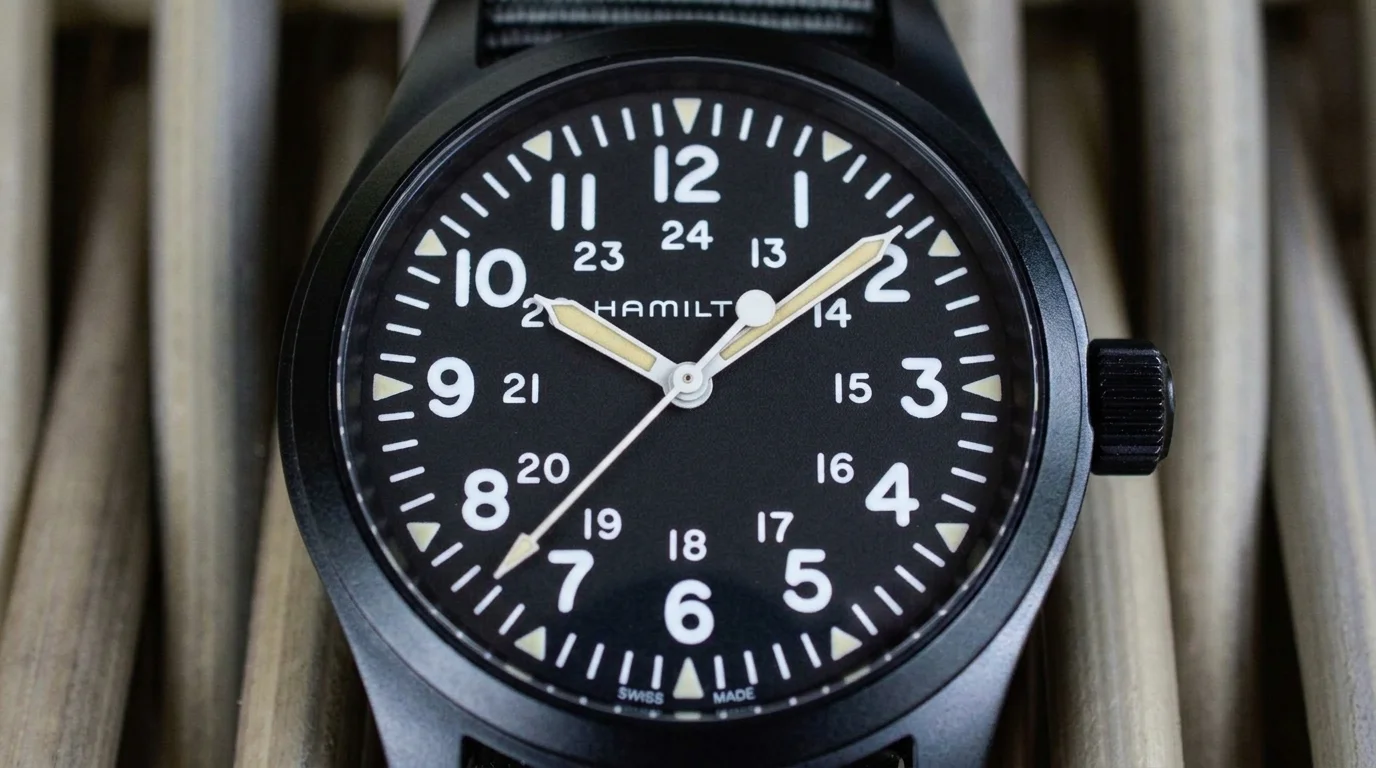 A Hamilton Khaki Field matte black dial. No shine, no shift, no radiating pattern. Every ounce of visual energy goes into legibility instead.
Why it actually matters when you buy
The finish is not just aesthetic trivia. It changes how a watch behaves in daily wear.
Legibility in bright light: A sunburst dial can occasionally wash out or glare under direct harsh sun, briefly making the hands harder to read against the reflective surface. A matte dial stays consistently legible no matter how bright the light gets, which is exactly why field watches and tool watches lean matte.
Photographing and selling: Sunburst dials are notoriously difficult to photograph accurately. A listing photo taken at the wrong angle can make a $3,000 watch look flat and lifeless, while the same watch in hand looks completely different. Matte dials photograph consistently because there is no angle-dependent shine to chase.
Everyday character: A sunburst dial gives you a small daily reward, watching the dial shift and catch light as you move through your day. A matte dial gives you consistency and a purposeful, understated read every single time you glance down.
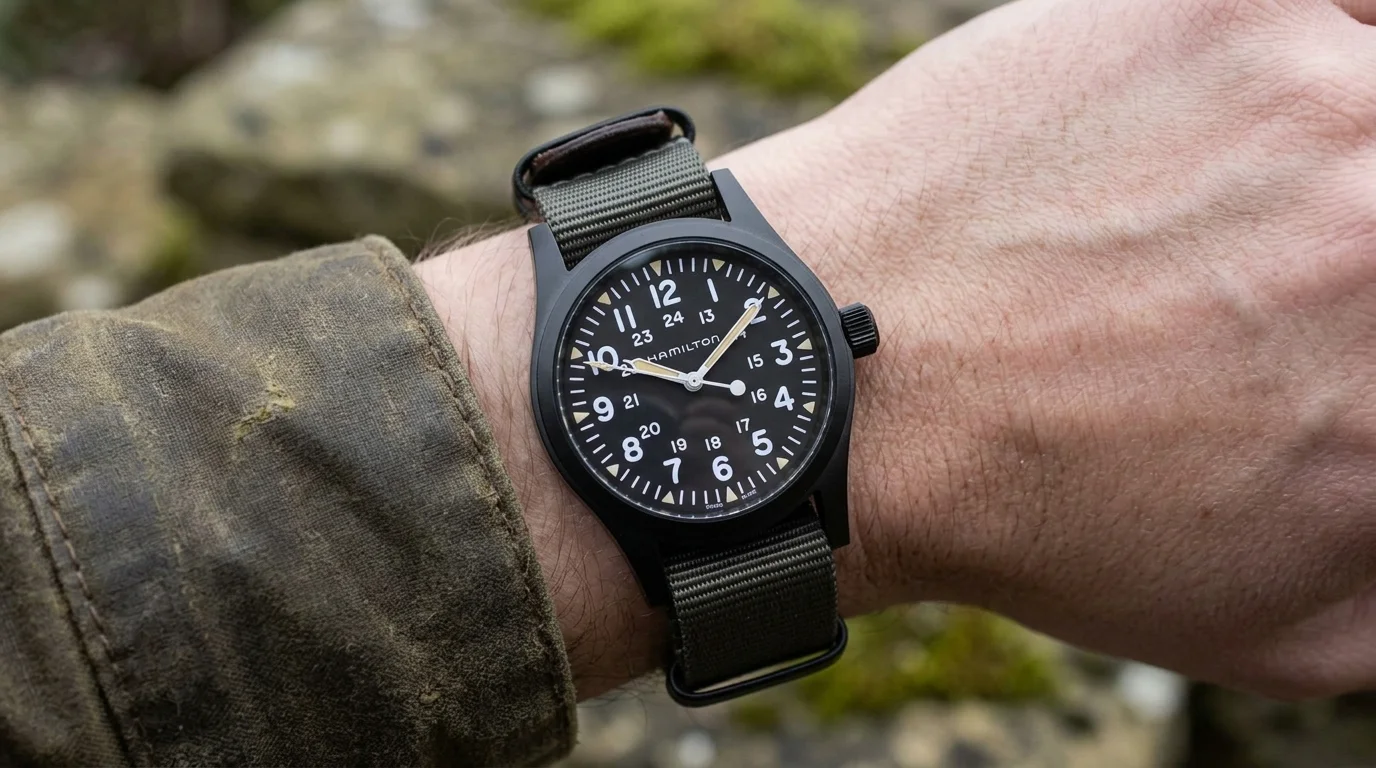 Outdoors, in variable light, is exactly where a matte dial's consistency shows its value. No glare to fight, no angle to chase.
Sunburst vs matte at a glance
| Sunburst / sunray | Matte | |
|---|---|---|
| Light behavior | Reflects and shifts with angle | Absorbs evenly, no reflection |
| Manufacturing | Machine-cut or lathe-engraved radiating grooves plus lacquer | Flat treated surface |
| Best in | Dress and everyday watches, indoor and evening wear | Field, tool, and dive watches worn in bright outdoor conditions |
| Photographs | Angle-dependent, harder to capture consistently | Consistent from any angle |
| Character | Lively, dynamic, dressier | Understated, purposeful, no-nonsense |
FAQ
What is a sunburst dial?
A sunburst (or sunray) dial has fine grooves radiating from the center of the dial, cut by machine or lathe, that catch and reflect light differently depending on the viewing angle, creating a dynamic shine.
What is a matte dial?
A matte dial has a flat, non-reflective surface with no radiating texture. It scatters light evenly instead of reflecting it, giving a consistent, subdued appearance from any angle.
Which is more legible, sunburst or matte?
Matte dials are generally more consistently legible in bright outdoor light since they do not glare or wash out. Sunburst dials can occasionally be harder to read at certain angles under harsh direct sun.
Does dial finish affect a watch's accuracy or value?
No. Sunburst and matte are purely cosmetic and manufacturing choices applied to the dial surface. Neither finish has any effect on the movement underneath or the watch's timekeeping accuracy.
Why do sunburst dials look different in every photo?
Because the finish is angle-dependent. A sunburst dial photographed straight-on under flat lighting can look nearly black, while the same dial photographed at a slight angle under a point light source can look bright and vivid. This is a known challenge when buying a sunburst-dial watch from photos alone.
Related reading
For another dial-construction deep dive in this same vein, see Applied vs Printed Indices: What the Difference Actually Costs You. For the layout choice on the opposite end of the dial-design spectrum, read What Is a Regulator Dial? The Watchmaker's Layout, Explained. For a roundup built entirely around dial color, see The Best Blue Dial Watches to Buy in 2026. And for a finish where the risk lives in the kiln instead of the cutting tool, read Grand Feu Enamel Dials Explained.