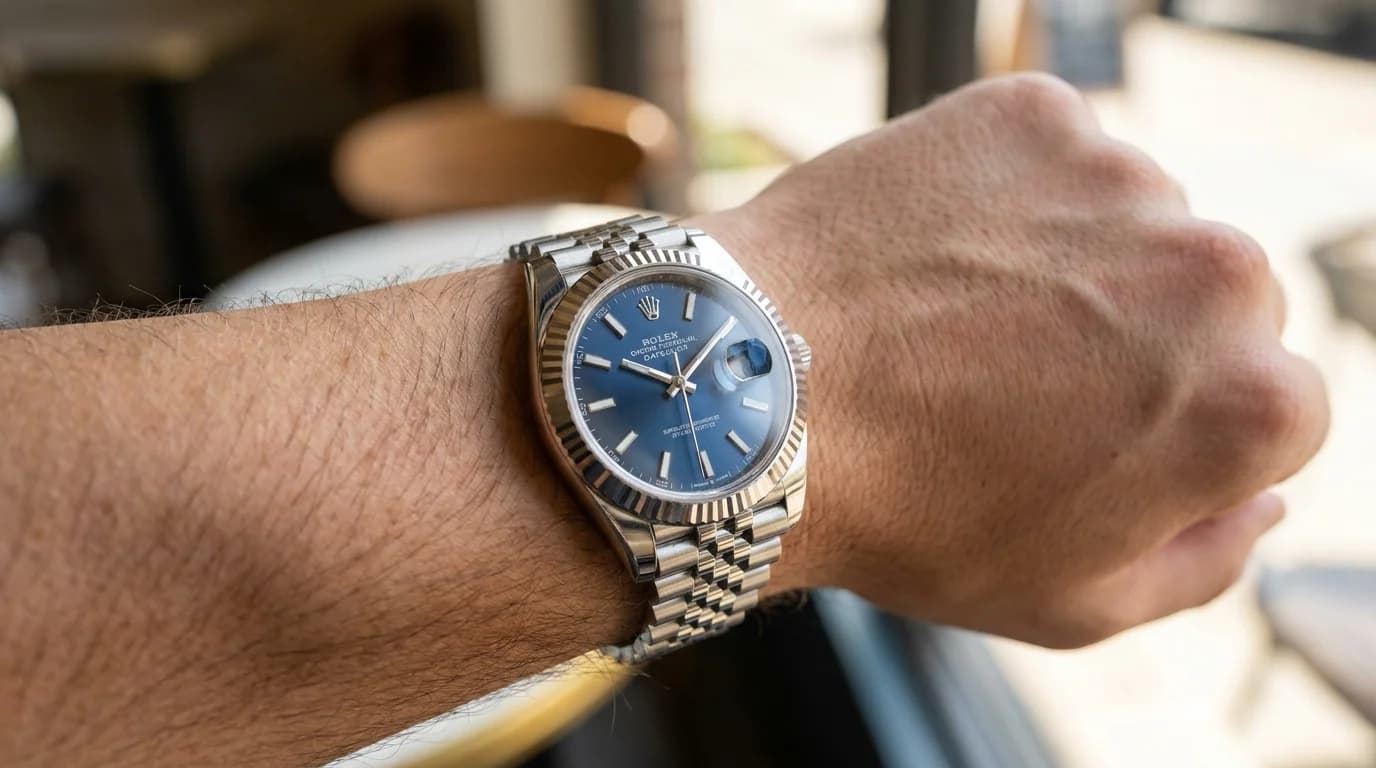
Applied indices are individual pieces of metal, stamped or machined separately and set into the dial so they stand in raised, three-dimensional relief. Printed indices are ink, pad-printed flat onto the dial surface in the same process used for the rest of the text. That's the whole difference on paper. In hand, it shows up in cost, weight of feel, legibility, and how a dial ages.
This post uses AI-generated macro and lifestyle photography to illustrate applied versus printed dial construction. Every image is built from a real reference photo of the watch shown, not an invented design.
The Short Answer
Applied indices are separate metal pieces (often polished or faceted steel, gold, or platinum) fitted into drilled holes in the dial and secured with adhesive, tiny screws, or friction pins called dial feet. They catch light, cost more to produce, and read as a step up in finishing.
Printed indices are pad-printed ink, flat against the dial, then usually painted over with luminous material. They're cheaper to manufacture, easier to keep perfectly uniform across a production run, and standard on field, dive, and tool watches where legibility matters more than dial theater.
Neither is objectively "better." They're built for different jobs.
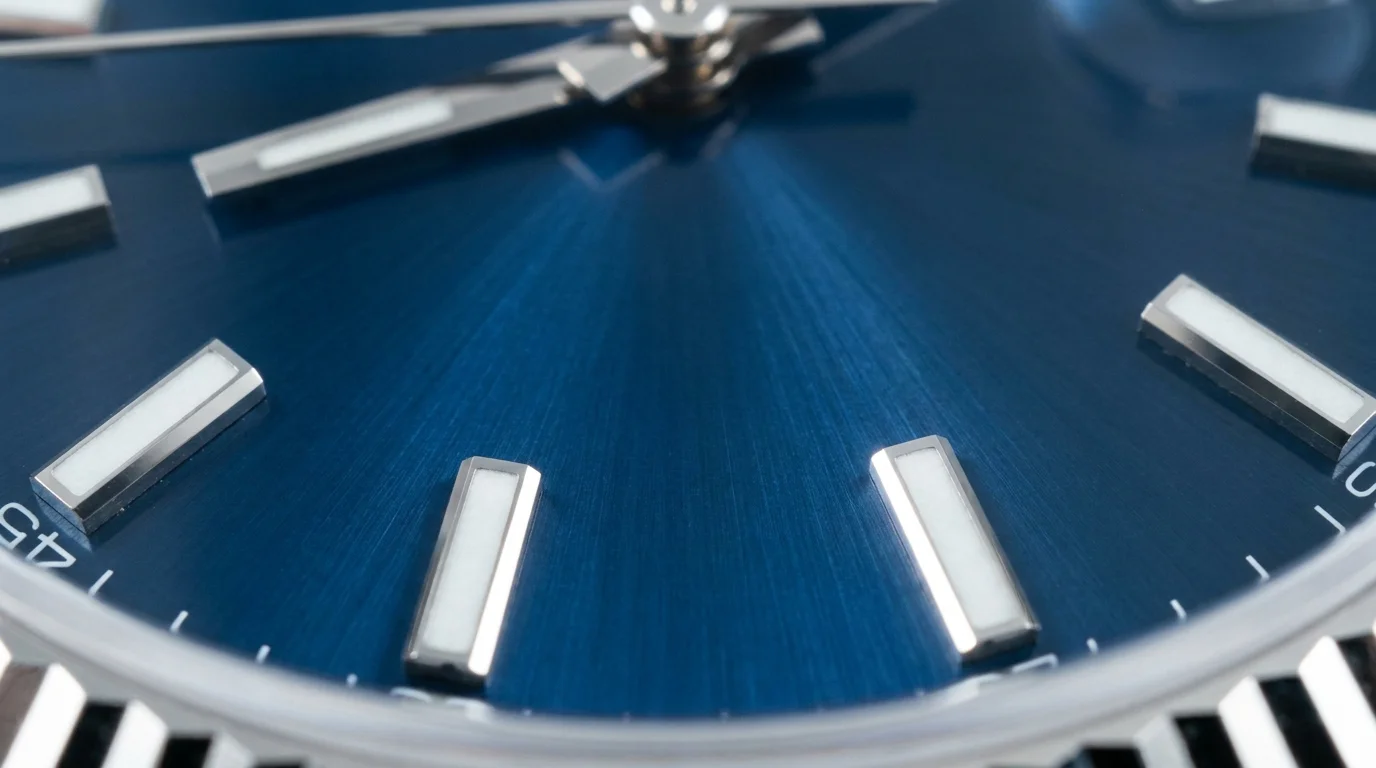 Applied indices catch light because they physically stand above the dial surface. Every facet is a separate polished plane.
How Applied Indices Are Actually Made
A dial maker starts with a sheet of metal, usually steel, sometimes solid gold or platinum on higher-tier pieces. Each index is stamped or CNC-machined to shape, then faceted and polished by hand or on a polishing wheel so the surfaces catch and throw light at different angles.
Two small pins, the dial feet, get inserted into holes pre-drilled in the dial. The index gets seated with a dot of adhesive, sometimes reinforced with a tiny screw from behind. This is done one index at a time, by hand, under magnification.
That labor is why applied indices cost more. A dial with 12 applied markers means 12 separate parts, individually placed and aligned, on top of whatever the dial finish itself costs.
What You Get for the Extra Work
Applied indices sit proud of the dial, so they cast a small shadow and catch a highlight as the wrist moves. That's the "dial has depth" look collectors talk about. They also usually hold a bigger, thicker deposit of luminous material inside the raised frame, since there's more volume to fill than a flat printed shape allows.
The tradeoff: an applied index can come loose over decades, especially on vintage pieces where the adhesive has dried out. A loose or "ghosted" index (one that's shifted and left a shadow of its old position) is a real condition issue we check for on every pre-owned dial that crosses our bench.
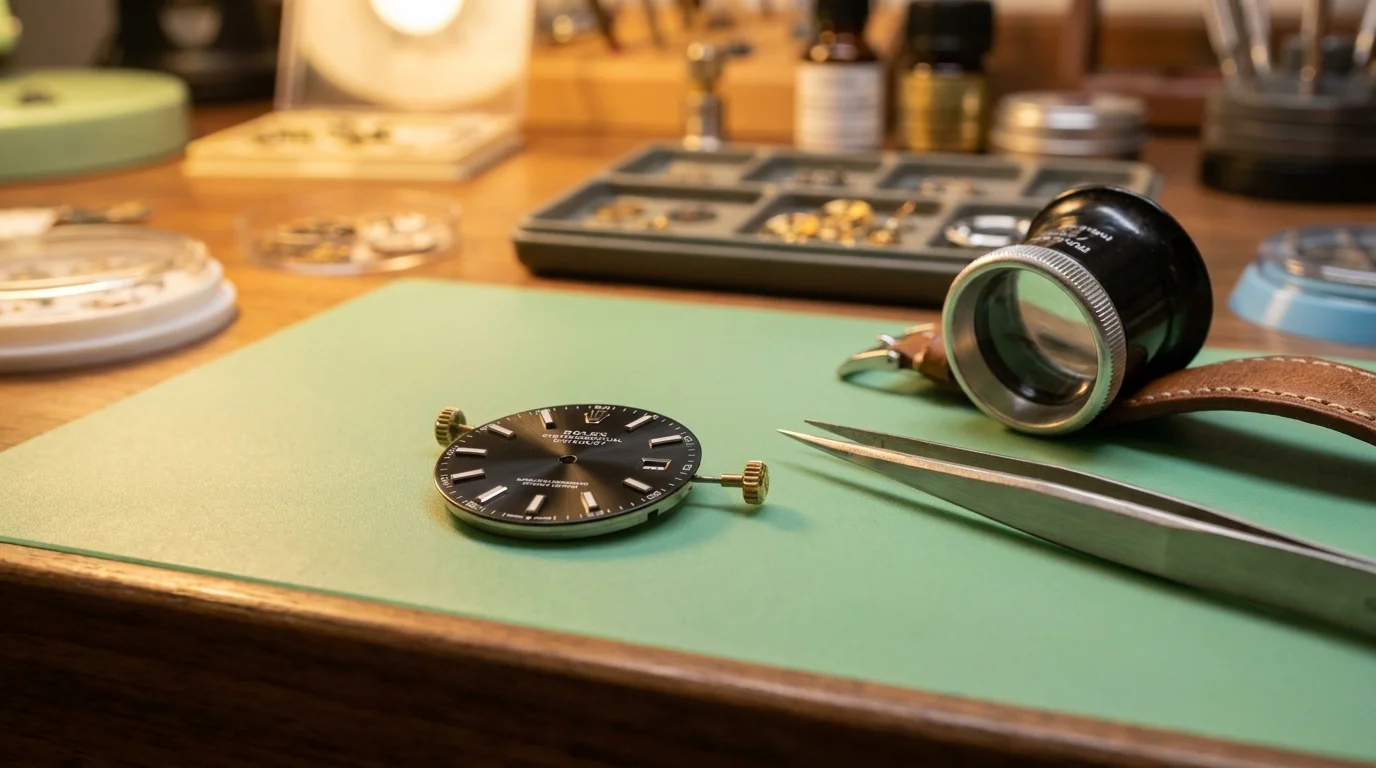 A dial off the case during service. This is where a loose applied index or a hairline crack in old lume gets caught before it becomes a bigger problem.
How Printed Indices Are Actually Made
Printed indices go on with pad printing, sometimes called tampography. A small silicone pad picks up ink from an etched plate and stamps it directly onto the dial, the same way the brand name and text at 6 o'clock go on. The process is fast, cheap relative to applied work, and produces near-identical results across thousands of dials.
Most printed dials get a second pass of luminous paint applied by hand or machine over or inside the printed shape, then a UV-cured sealant to lock it in place.
Why Printed Isn't "Cheap" in the Bad Sense
Printed indices are flat, which sounds like a downside until you look at where they're used. Field watches, dive watches, and military-style pieces lean on bold Arabic numerals or blocky markers printed directly onto the dial because flat ink doesn't cast a shadow that could throw off a reading at a glance in low light or at an angle.
Printed construction is also far less prone to a marker shifting or falling off. There's no adhesive bond to fail because there's nothing raised to come loose. On a tool watch meant to survive decades of actual use, that reliability matters more than dial theater.
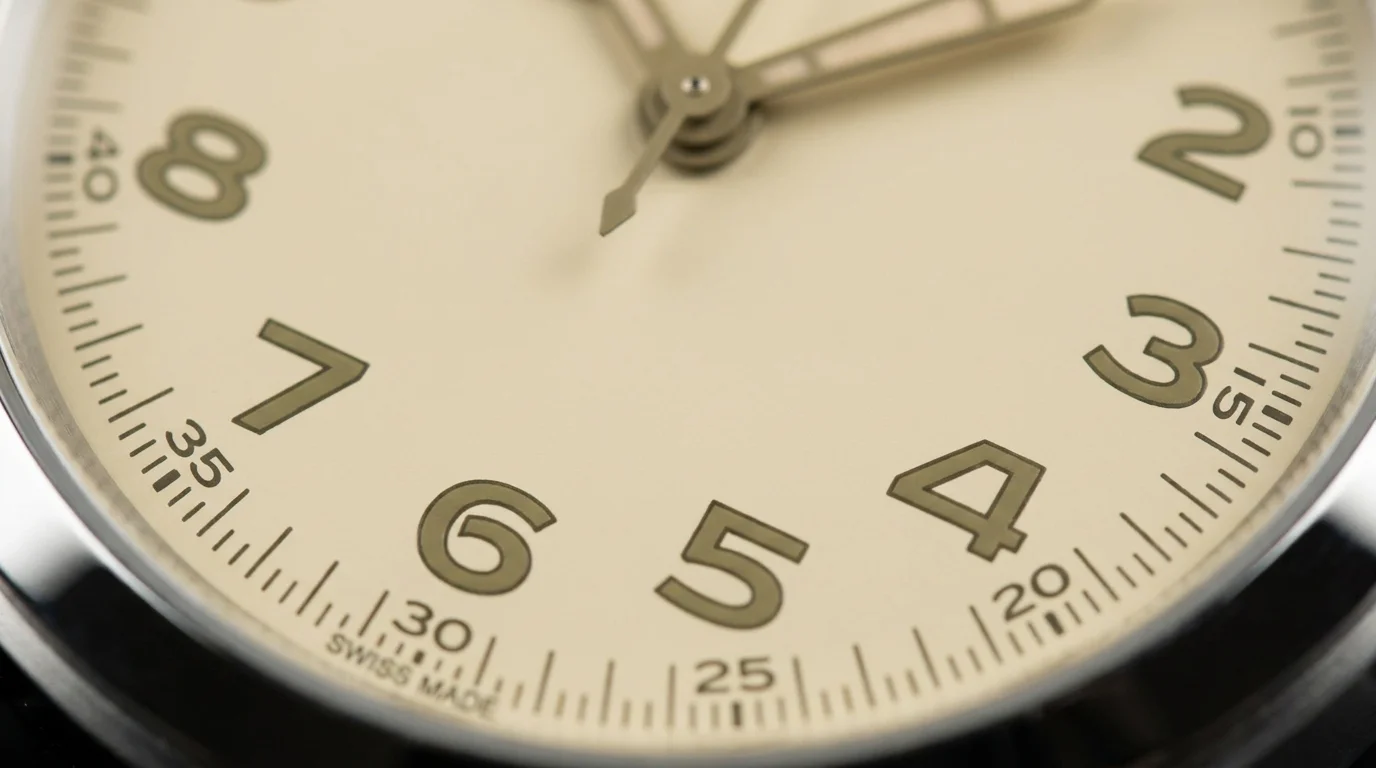 Printed numerals sit flush with the dial surface. No relief, no shadow, no separate parts to come loose.
Applied vs Printed: The Side-by-Side
| Applied Indices | Printed Indices | |
|---|---|---|
| Construction | Separate stamped or machined metal pieces, set into drilled holes | Ink pad-printed flat onto the dial surface |
| Manufacturing cost | Higher: individual parts, hand placement, polishing | Lower: fast, repeatable, minimal labor per dial |
| Visual depth | Raised relief, catches light, casts a small shadow | Flat, no shadow, uniform under any light |
| Legibility in low light | Strong once lit, but angle-dependent glare is possible | Very consistent, no reflective glare |
| Failure mode over time | Can loosen or shift (dial feet, adhesive fatigue) | Can fade or chip at the print edge, but rarely detaches |
| Typical use case | Dress watches, higher-tier sport watches, haute horlogerie | Field watches, dive watches, military-style tool watches |
How to Tell Them Apart in Three Seconds
Tilt the watch under a light. If the markers throw a highlight and a faint shadow as you rotate the dial, they're applied. If the markers stay perfectly flat and matte-consistent no matter the angle, they're printed.
A loupe makes it even easier. Applied indices show a polished bevel or facet edge. Printed indices show a slightly raised ink edge if you look close enough, nothing close to a true 3D facet.
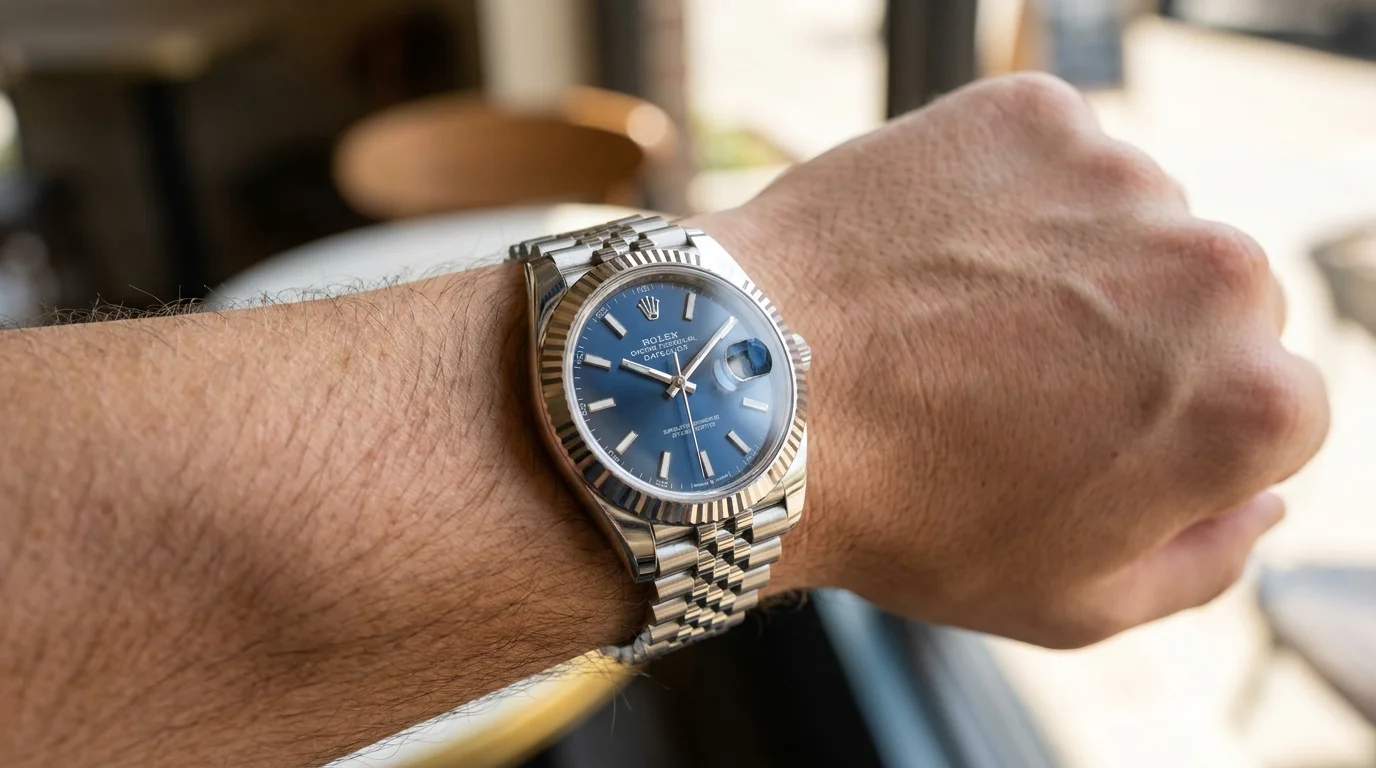 On the wrist, applied indices read as brighter and more dimensional as the light shifts across the dial.
Which One Should You Actually Buy?
If you're buying a dress watch or a sport-dress crossover and dial finishing matters to you, applied indices are worth the premium. That raised relief is a big part of why a well-finished dial photographs and wears the way it does.
If you're buying a field watch, a dive watch, or anything meant to take real abuse, printed indices aren't a compromise. They're the correct engineering choice, and a huge number of respected tool watches use them by design, not by cutting corners.
On pre-owned pieces specifically, check applied indices for looseness or shift under magnification before you buy, and check printed indices for fading or chipped edges at the paint line. Both are normal condition items we flag when authenticating a watch, not deal-breakers on their own.
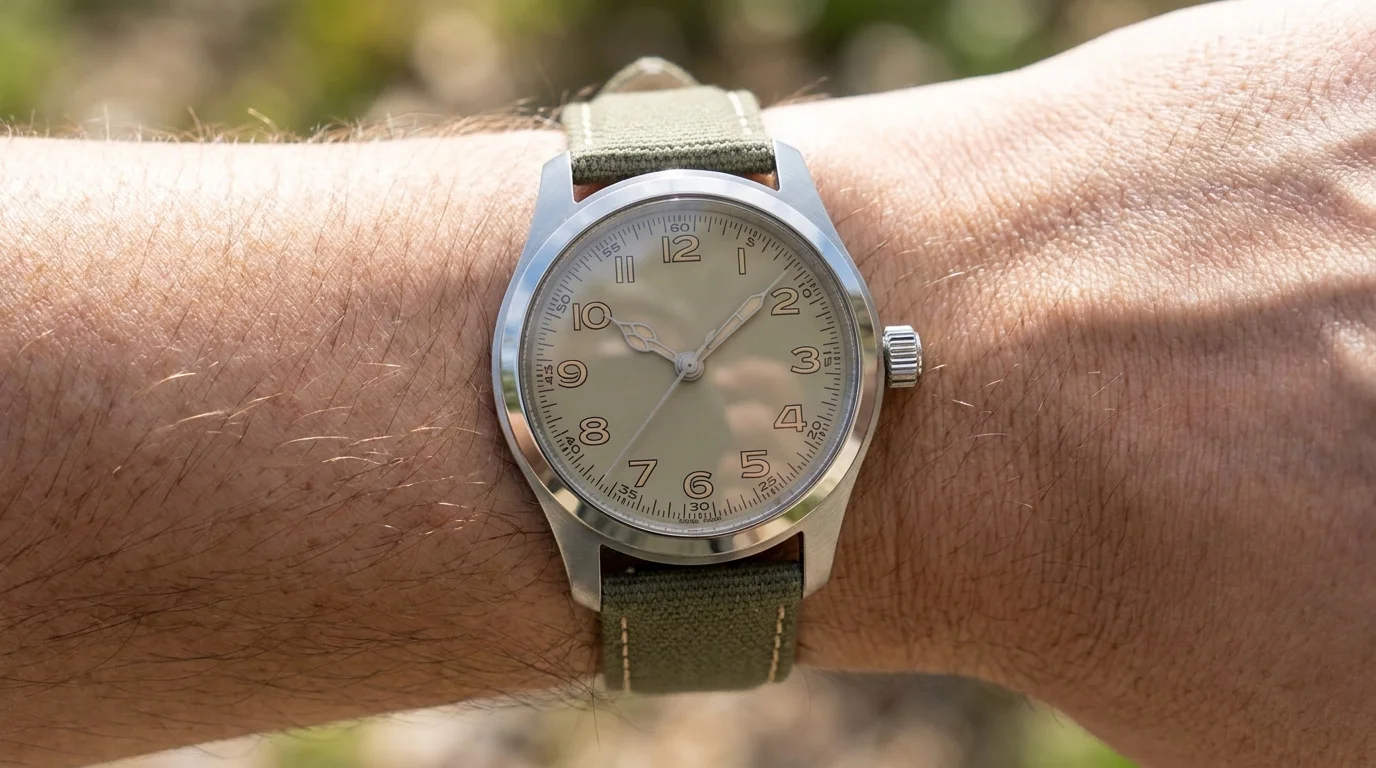 A field watch built for printed indices from the start. Flat markers, high contrast, nothing to loosen over decades of use.
FAQ
Are applied indices always more expensive to make than printed?
Yes, on a like-for-like basis. Applied indices require a separate stamped or machined part per marker, hand placement, and polishing. Printed indices are pad-printed in a fast, repeatable process. That labor difference is a real part of why watches with applied markers tend to sit at a higher price tier.
Can printed indices be upgraded to applied on an existing watch?
Not without replacing the dial entirely. Applied indices are set during dial manufacturing with pre-drilled holes for the dial feet. A printed dial doesn't have those holes, so there's no way to retrofit applied markers onto it later.
Do applied indices affect a watch's water resistance?
No. Indices sit on the dial, which is sealed inside the case behind the crystal. Water resistance comes from the case, crown, and crystal gaskets, not the dial construction. See our guide on how to actually read a water resistance rating for what does affect it.
Why do some luxury watches still use printed indices?
Because printed indices make more sense for the watch's job. Many respected pilot and field watches use bold printed Arabic numerals specifically because flat ink guarantees consistent legibility with zero glare, which matters more on a tool watch than raised relief does.
Does lume perform differently on applied versus printed indices?
Applied indices generally hold more lume because the raised metal frame has more volume to fill with luminous material. Printed indices hold a thinner, flatter layer. Both use the same modern Super-LumiNova compounds. For the full breakdown of how that glow actually works, see our guide to Super-LumiNova, tritium, and what actually glows until morning.
Related Reading
- Lume Explained: Super-LumiNova, Tritium, and What Actually Glows Until Morning
- Watch Servicing Explained: How Often, What It Costs, and What Actually Happens
- Helium Escape Valve Explained: The Second Crown Some Dive Watches Don't Need
- What Is a Chronometer? COSC Certification and the New 2026 Standard, Explained