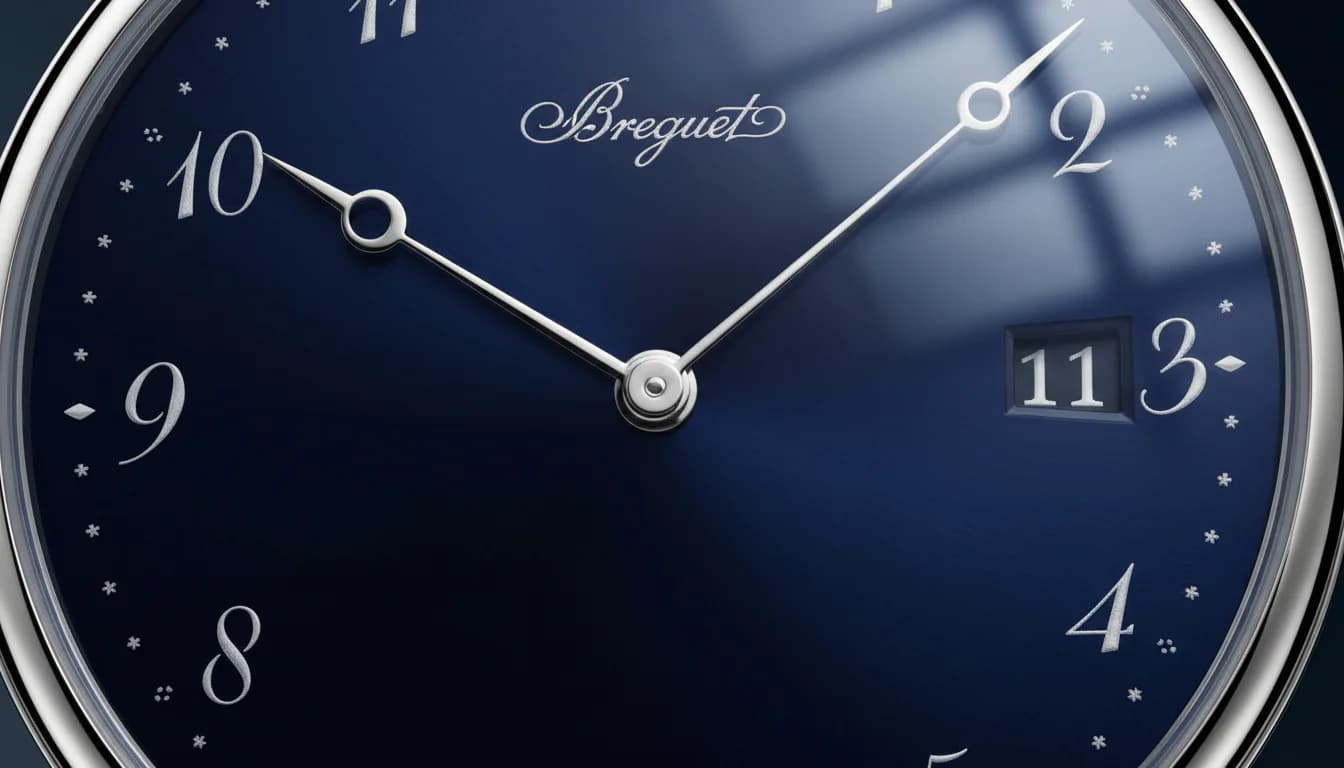
Pick up a watch with a real grand feu enamel dial and tilt it under a light. The surface has depth other dials do not, glass over metal instead of paint over metal, and that depth is the entire reason collectors will pay a serious premium for one. It is also the reason so few brands still make them.
This article was researched and drafted with AI assistance and reviewed by the 5D Watches team before publishing. Pricing, specs, and historical details are checked against primary sources.
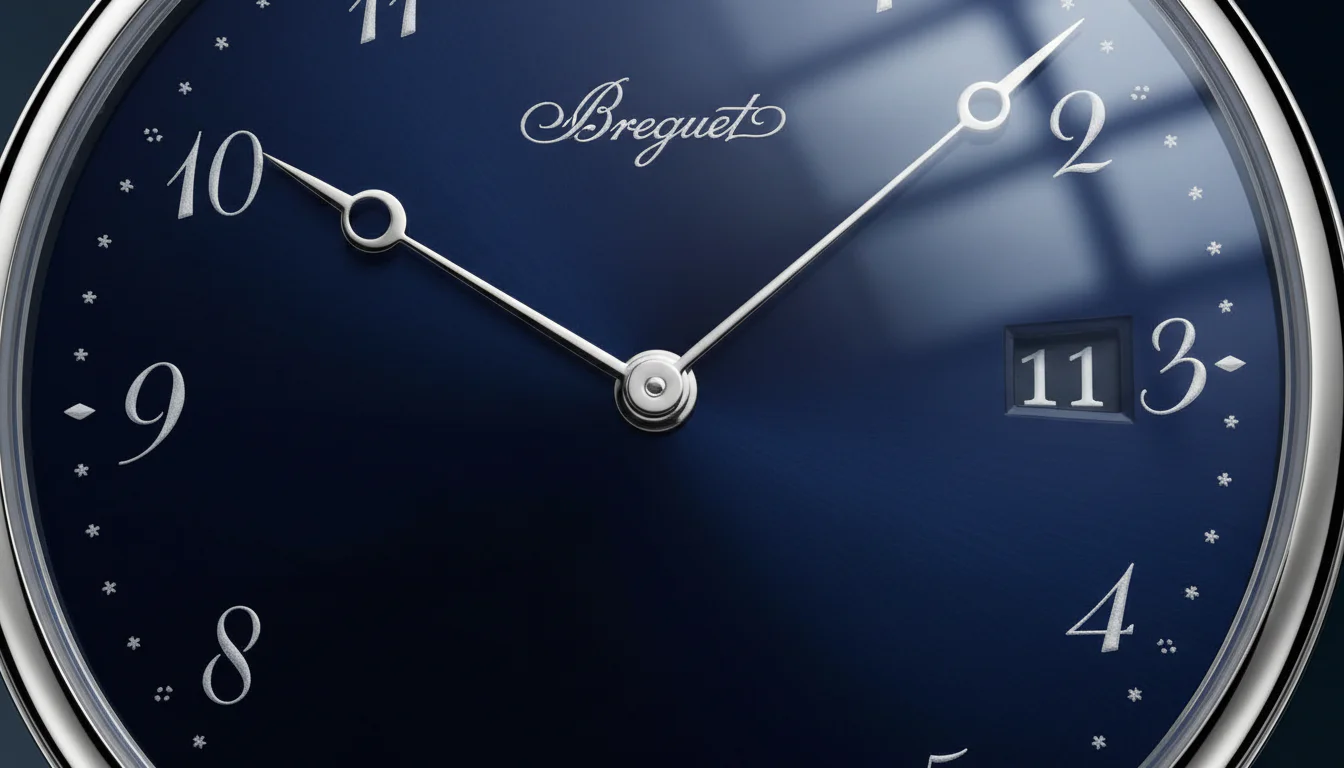 A finished grand feu enamel dial shows real depth and glassy richness under light, the result of glass fused to metal rather than paint applied to it.
The short answer: Grand feu enamel is vitreous enamel, glass powder mixed into a paste and fused onto a metal dial blank inside a kiln at roughly 800 to 900 degrees Celsius. It is not paint, not a coating, and not printed. Getting a finished dial usually takes several separate firings, one layer at a time, and any single firing can crack the piece and force the watchmaker to start over. That labor and loss rate is why grand feu dials show up almost exclusively on high-end and limited pieces from brands like Jaeger-LeCoultre, Vacheron Constantin, and Breguet.
What "grand feu" actually means
Grand feu translates from French as "great fire," and it describes the technique rather than a brand or a look. The base material is enamel, a glass compound ground into a fine powder and mixed with water or oil into a workable paste. That paste gets applied to a dial blank, usually copper, gold, or sometimes silver, and then fired.
Firing is what separates grand feu from every enamel-look alternative on the market. The kiln runs at 800 to 900 degrees Celsius, hot enough to fully vitrify the powder into solid glass fused to the metal underneath. Cheaper "enamel effect" dials use lacquer or resin baked at far lower temperatures, and they never achieve the same depth, hardness, or color stability. A real grand feu dial will outlast the watch case around it.
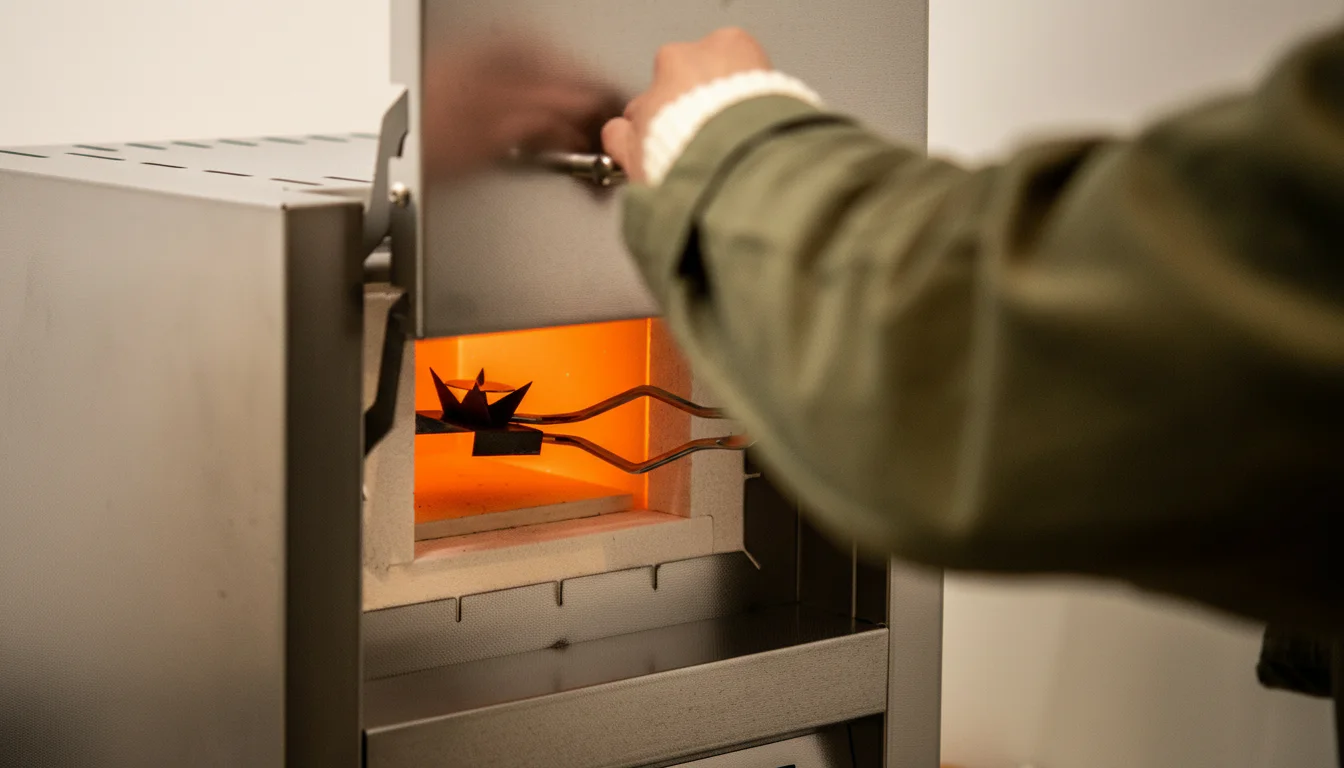 Dial blanks go into the kiln at 800 to 900 degrees Celsius. Every firing carries a real chance of cracking the piece.
Why one dial takes so many firings
A finished grand feu dial is rarely the product of a single pass through the kiln. Most dials need multiple layers of enamel, each one applied and fired separately, to reach an even, glass-smooth surface with consistent color saturation. Add printed numerals, sub-dials, or color work, like cloisonne or champleve enameling, and the firing count climbs further.
Every one of those firings is a gamble. Enamel and the metal blank beneath it expand and contract at different rates as they heat and cool, and even a slight mismatch in timing or temperature can crack the dial, warp it, or leave bubbles trapped in the glass. Watchmakers who do this by hand talk about losing a meaningful percentage of dials at every stage of production, and a crack discovered on the final firing means the entire dial, not just that layer, gets scrapped.
That failure rate is the real cost driver, more than the raw materials. A brand cannot mass-produce grand feu enamel the way it can stamp and lacquer a standard dial. Every surviving dial represents several attempts that did not survive.
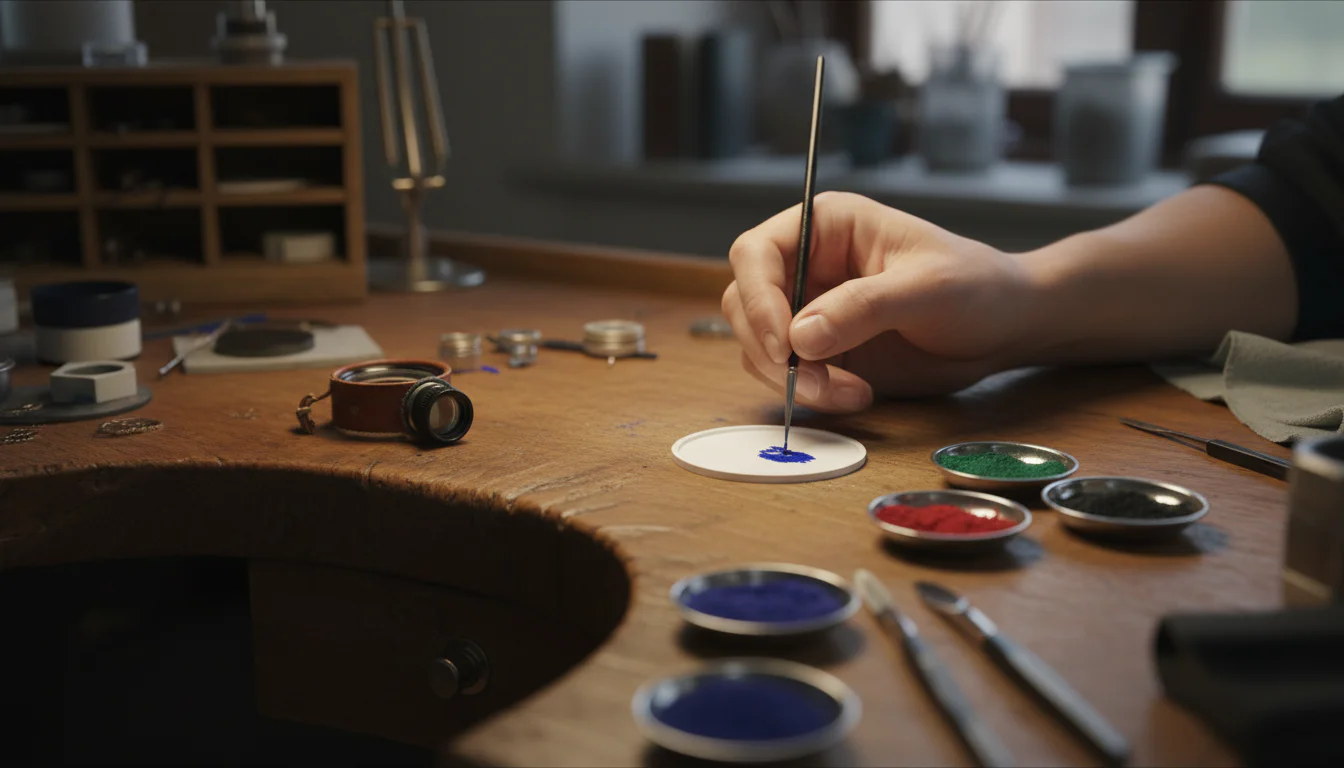 Enamel paste is applied by hand, one layer at a time, before each firing.
Which brands still do it by hand
Grand feu enameling is a specialist craft, and only a small number of manufactures keep it in-house or work with independent enamel artisans who still practice it at a high level. Jaeger-LeCoultre and Vacheron Constantin both maintain enamel workshops and use the technique on select Reverso, Master Grande Tradition, and Metiers d'Art pieces. Breguet has a long documented history with enamel dials stretching back to the brand's founding, and continues to use it on its Classique line.
Smaller independent ateliers, sometimes contracted by multiple brands, also keep the craft alive. Because the skill takes years to develop and the failure rate never fully goes away no matter how experienced the artisan, grand feu enamel stays reserved for flagship references, anniversary pieces, and limited editions rather than everyday production models.
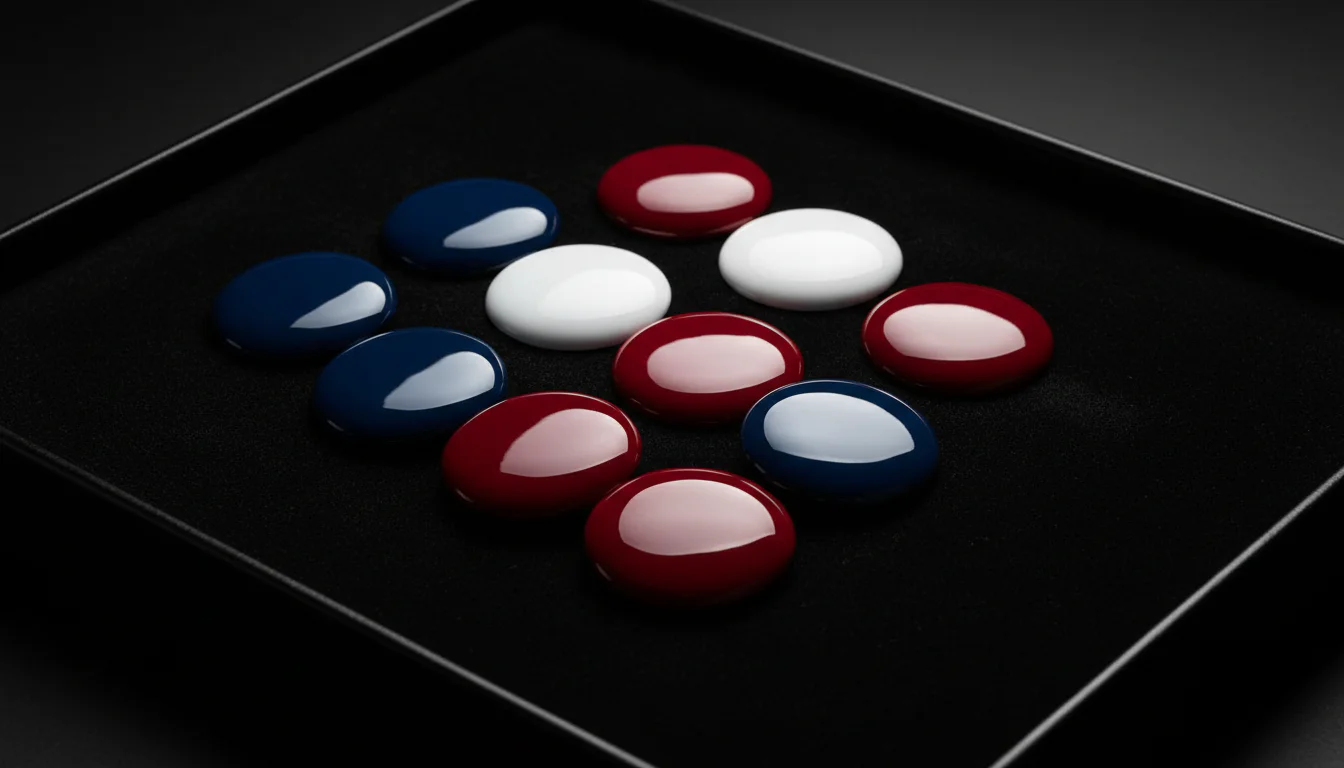 A tray of finished enamel dial blanks. Color consistency across a batch is one more thing that can go wrong in the kiln.
What to look for if you are buying one
A genuine grand feu dial has real depth under raking light: the surface sits slightly domed or textured at a microscopic level rather than perfectly flat, and colors read with a glassy richness that printed dials cannot match. Under magnification, you may see tiny variations in the enamel that are normal for a hand-fired piece, not flaws. A dial that looks completely uniform and flat under close inspection is more likely lacquer or a printed alternative marketed with enamel language.
Condition checks matter more here than on a standard dial. Hairline cracks can develop over decades, particularly near the dial edge or around printed markers where stress concentrates. Ask any seller directly whether the dial is grand feu enamel or an enamel-finish alternative, and ask for documentation or a service history if the piece is vintage. A reputable dealer will not dodge the question.
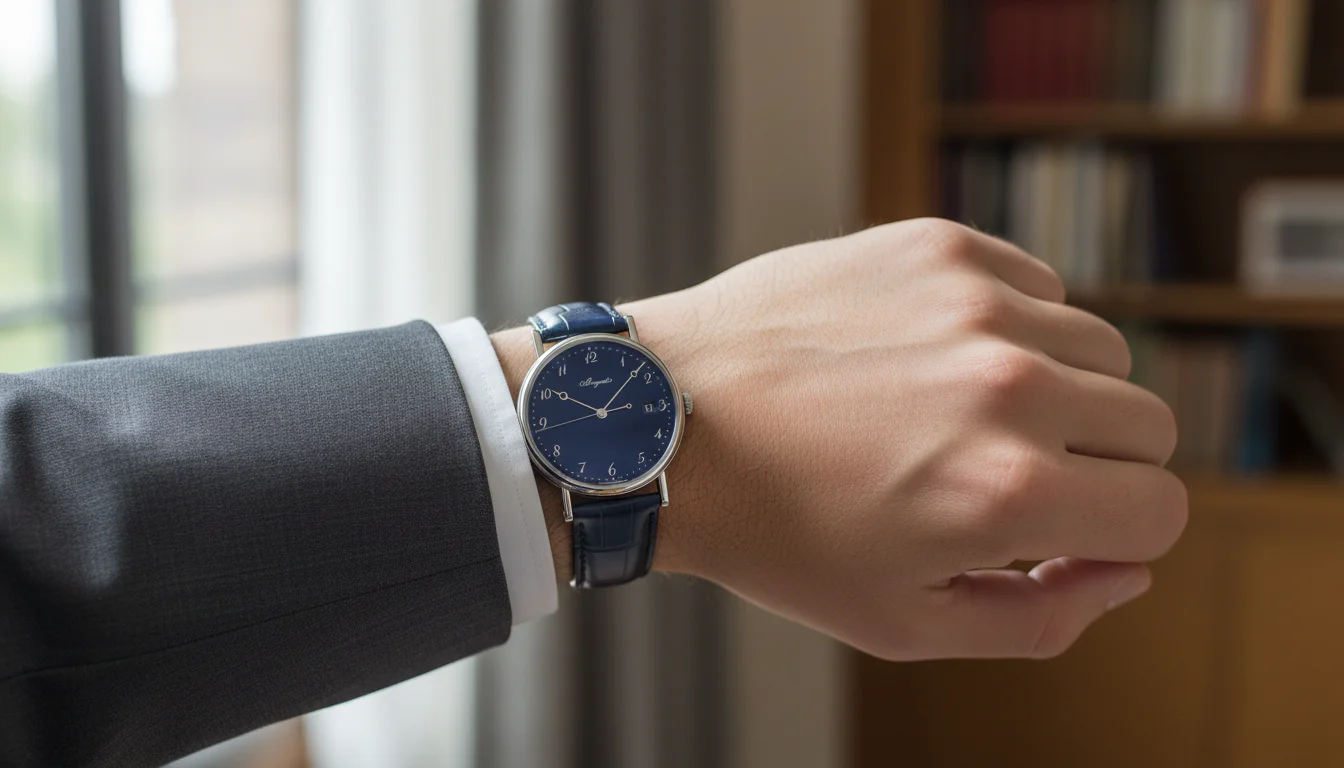 On the wrist, a grand feu dial reads with a depth and glow that printed or lacquered dials cannot reproduce.
Grand feu enamel vs cloisonne and champleve
Grand feu is the firing method, not a specific decorative pattern, and it is often confused with cloisonne and champleve, which are enameling techniques that use grand feu firing as part of their process. Cloisonne enamel uses thin metal wire soldered onto the dial to form cell walls, which are then filled with different colors of enamel and fired. Champleve carves recessed cells directly into the metal dial instead of using wire, then fills and fires those recesses the same way.
Both techniques are more complex and more expensive than a plain grand feu dial because they add metalwork on top of the firing risk already inherent to enamel. A plain grand feu dial in a single color is the baseline. Cloisonne and champleve pieces, often used for pictorial or scenic dials, sit well above that in both skill required and price.
FAQ
Is grand feu enamel the same as vitreous enamel?
Yes. Vitreous enamel is the general material, glass fused to metal, and grand feu describes the traditional high-temperature firing method used to apply it. The terms are often used interchangeably in watch marketing.
Why are grand feu enamel watches so expensive?
The cost comes from labor and loss, not materials. Multiple firings are needed per dial, each one risks cracking or ruining the piece, and skilled enamel artisans take years to train. Brands price the finished watch to absorb the dials that do not survive the process.
Can a grand feu enamel dial crack over time?
It can, though a properly made dial is very durable under normal wear. Extreme temperature shock or a hard impact is more likely to cause damage than age alone. Hairline cracks are the main condition issue collectors check for on vintage enamel pieces.
How do I tell a real grand feu dial from a printed one?
Look for genuine depth and glassy richness under raking light, along with minor natural variation under magnification. A dial that looks perfectly flat and uniform, or one described only as "enamel-look" or "enamel effect," is very likely not grand feu.
Which watches are a good entry point to grand feu enamel?
Jaeger-LeCoultre Reverso enamel editions and select Longines heritage pieces are common starting points on the pre-owned market. Vacheron Constantin and Breguet enamel dials sit at a higher price tier and typically appear on limited or Metiers d'Art references.
The bottom line
Grand feu enamel is one of the few dial finishes where the difficulty of making it is the entire point. Every firing is a real risk to the dial, every survivor represents dials that did not make it, and that scarcity is baked into the price before you even factor in the brand. If you are shopping for one, buy from a dealer who can speak specifically to the enameling process and the piece's condition rather than a listing that just uses "enamel" as a marketing word.
For more on how dial finishes affect what you are paying for, see our breakdowns on hand-cut guilloche patterns and sunburst versus matte dial finishing.