This post includes AI-generated images produced from real reference photography of the watches discussed.
The short answer
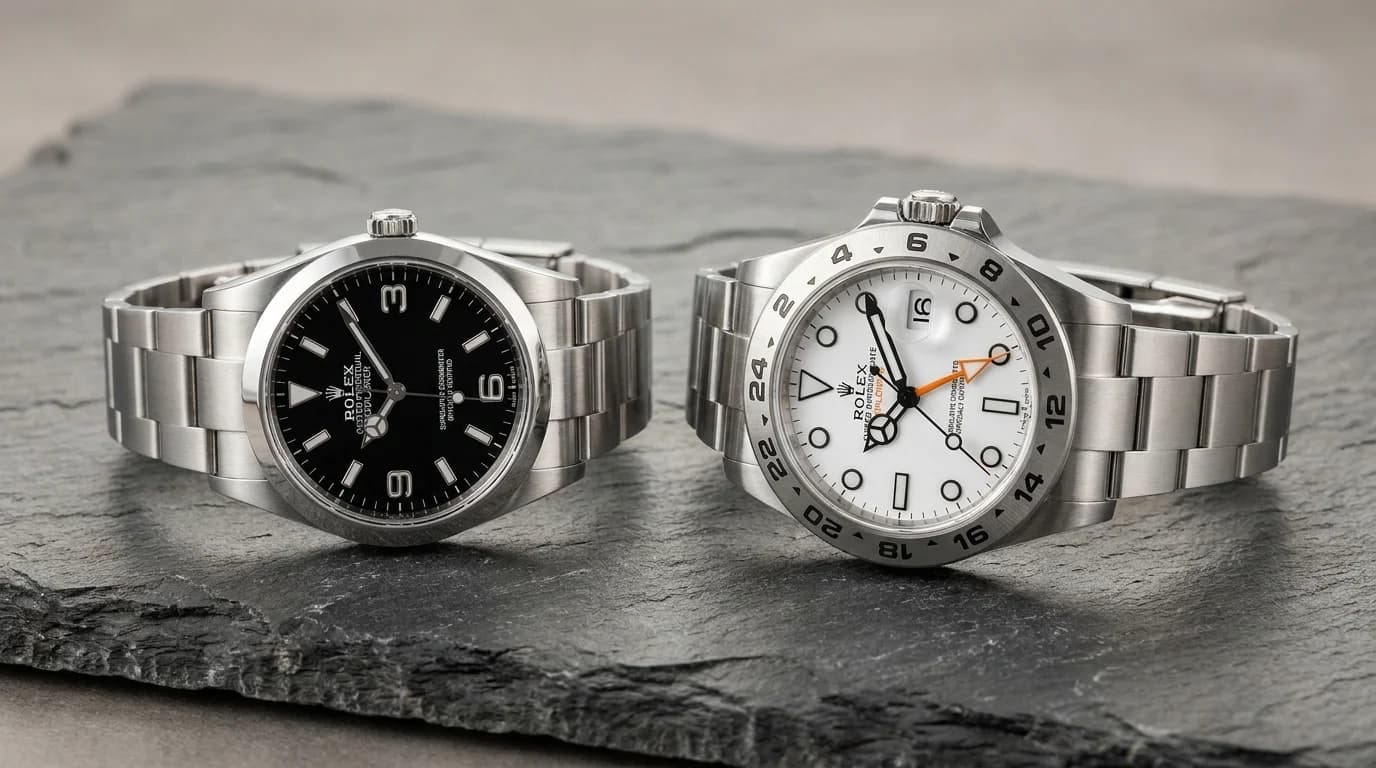
The Rolex Explorer (124270) is a 36mm, no-date, no-bezel tool watch built for simplicity. The Explorer II (226570) is a 42mm GMT watch with a fixed 24-hour bezel and a date window, built for travelers who need a second time zone. Both share the same design DNA and the same 70-hour Rolex movement family, but they solve different problems for different wrists and different budgets.
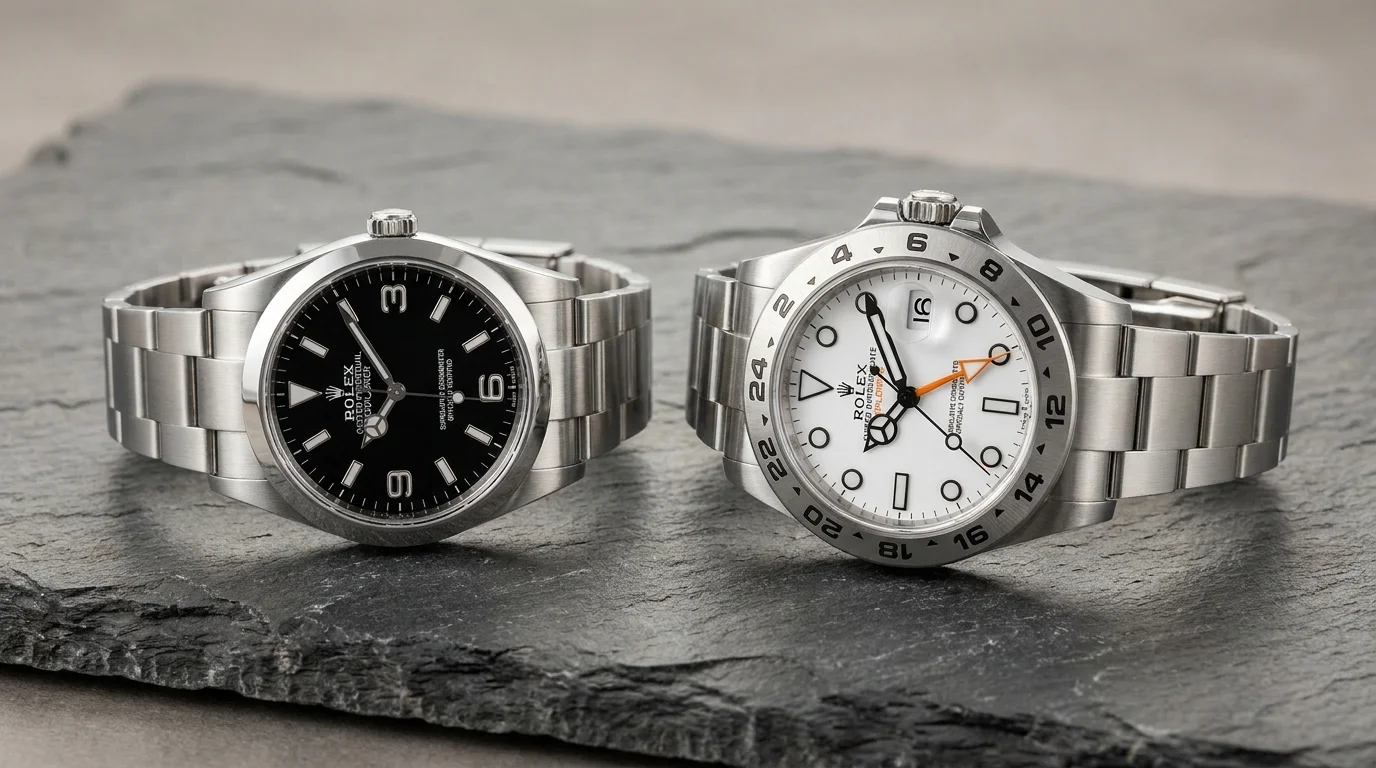 The Explorer (left, 36mm) next to the Explorer II (right, 42mm). The case size difference is the whole story here.
Where the two watches came from
The original Explorer traces back to 1953 and the first ascent of Everest. It has always been Rolex's purest tool watch: legible, tough, no complications beyond the time.
The Explorer II arrived in 1971 for cave explorers and polar researchers who could not tell day from night in permanent darkness or endless daylight. The fixed 24-hour bezel and extra GMT hand solved that problem directly. It has stayed a two-time-zone watch ever since, useful for travel today even if nobody buying one is currently spelunking.
Full spec comparison
| Spec | Explorer (124270) | Explorer II (226570) |
|---|---|---|
| Case diameter | 36mm | 42mm |
| Dial | Black, orange Explorer text | White "Polar" or black |
| Bezel | Smooth, polished | Fixed black 24-hour bezel |
| Complications | None (no date) | Date, GMT (independent 24-hour hand) |
| Movement | Caliber 3230 | Caliber 3285 |
| Power reserve | 70 hours | 70 hours |
| Water resistance | 100 meters | 100 meters |
| Retail price | $7,900 | $9,750 |
| Pre-owned range | Near retail, roughly $7,800 to $9,300 | $11,000 to $14,000, Polar dial at the top |
Why the Explorer II costs more used than new
This is the detail that surprises first-time buyers. The Explorer II regularly sells pre-owned for $1,500 to $4,000 over its own retail price, especially in the white Polar dial. Rolex simply does not make enough of them to meet demand at authorized dealers, so the secondary market sets the real price.
The standard Explorer, by contrast, trades close to retail. It is available enough at dealers that nobody needs to pay a premium for one.
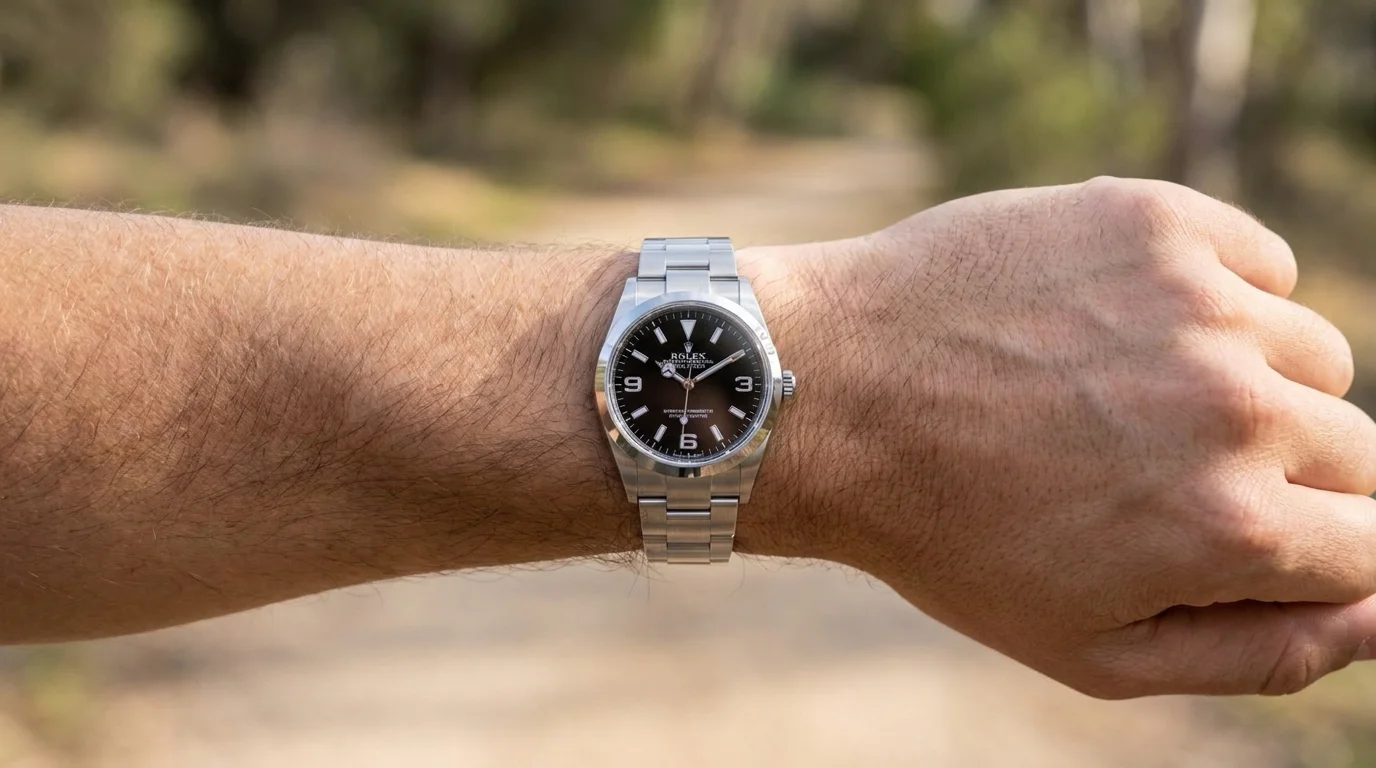 The Explorer on the wrist. 36mm wears smaller and dressier than most people expect from a Rolex sport model.
The movement difference matters more than the spec sheet suggests
Both calibers deliver a 70-hour power reserve and Superlative Chronometer certification, so accuracy is not the deciding factor. The real difference is the Caliber 3285's independent 24-hour hand, which lets you set a second time zone without stopping the watch or disturbing the main time display. That is the entire reason to pick the GMT model over the standard Explorer.
If you never leave your home time zone, that function does nothing for you. If you fly regularly, it is genuinely useful daily, not just a party trick.
Which one fits your wrist
36mm reads small by 2026 sport-watch standards, but it wears closer to how vintage tool watches were designed to sit: it slips fully under a cuff and never feels like a boulder on a smaller wrist. 42mm is a substantial watch by any measure. Try both before assuming bigger is automatically better.
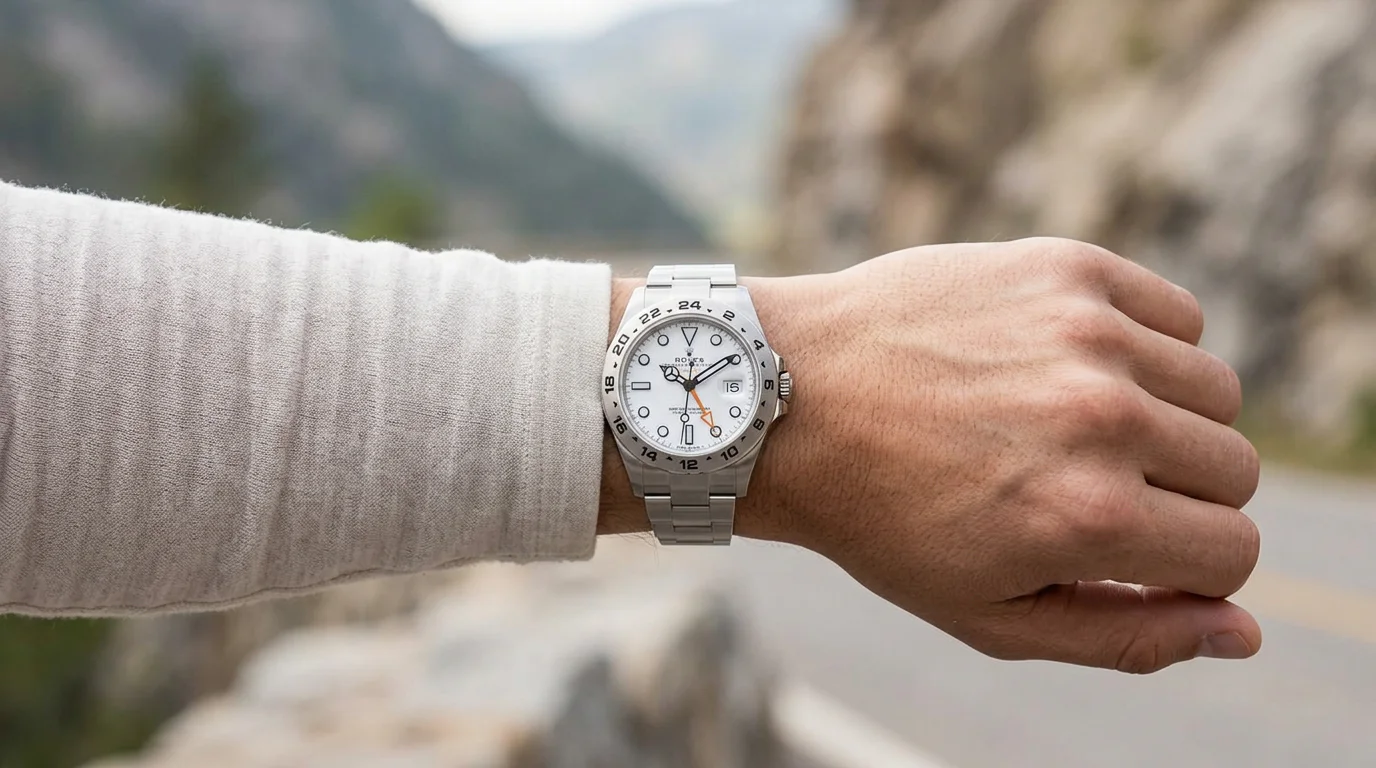 The Explorer II on the wrist. 42mm and a black bezel give it a noticeably more tool-watch presence than the standard Explorer.
What to check when buying pre-owned
- Bezel edge on the Explorer II. The engraved 24-hour numerals wear over decades of daily use. Check for chalky or faded fill on older 216570 examples.
- Bracelet stretch. Both models use the Oyster bracelet. Rolex bracelets hold up well, but a 10+ year old example should still be inspected for looseness at the links.
- Box and papers on the Polar dial. Given the market premium, full sets command a real price gap over watch-only listings on the Explorer II specifically.
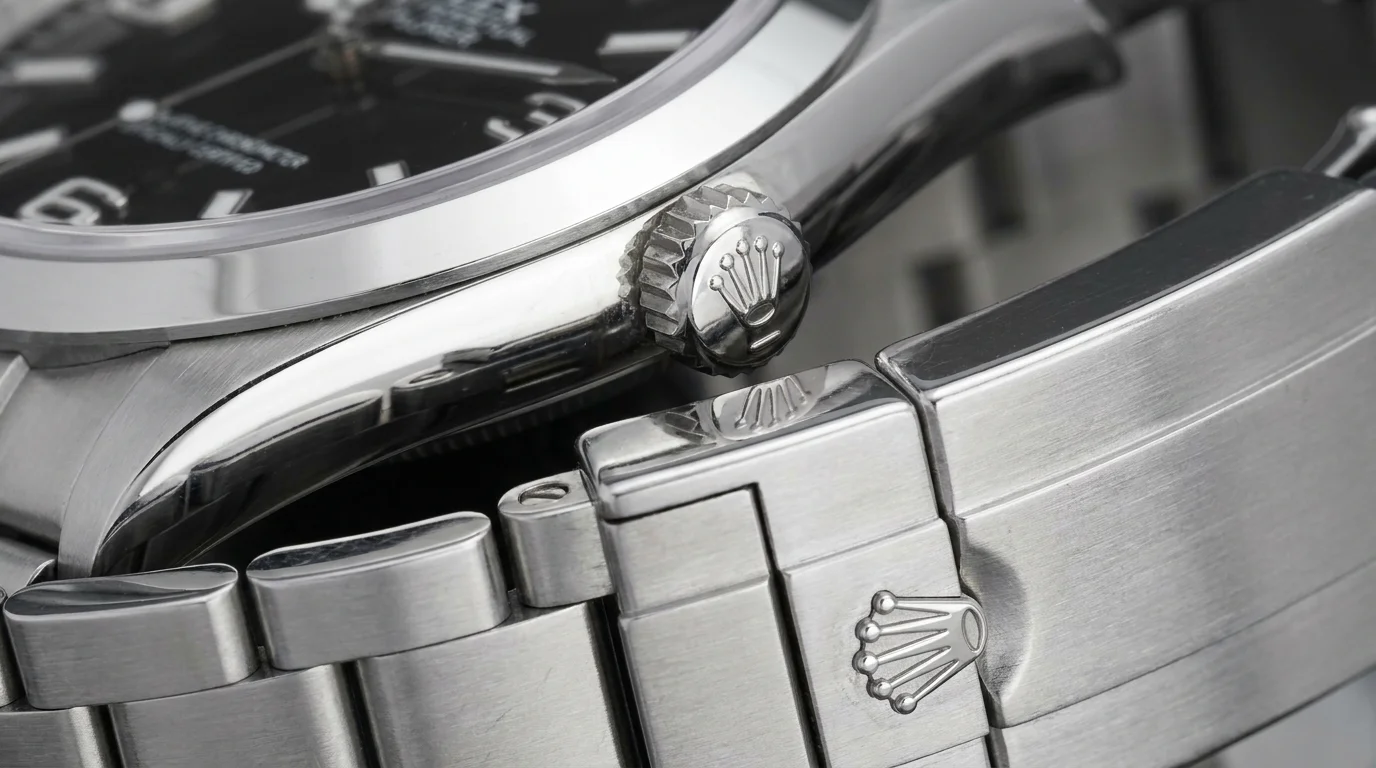 The fluted crown and folding Oyster clasp, shared design language across both models.
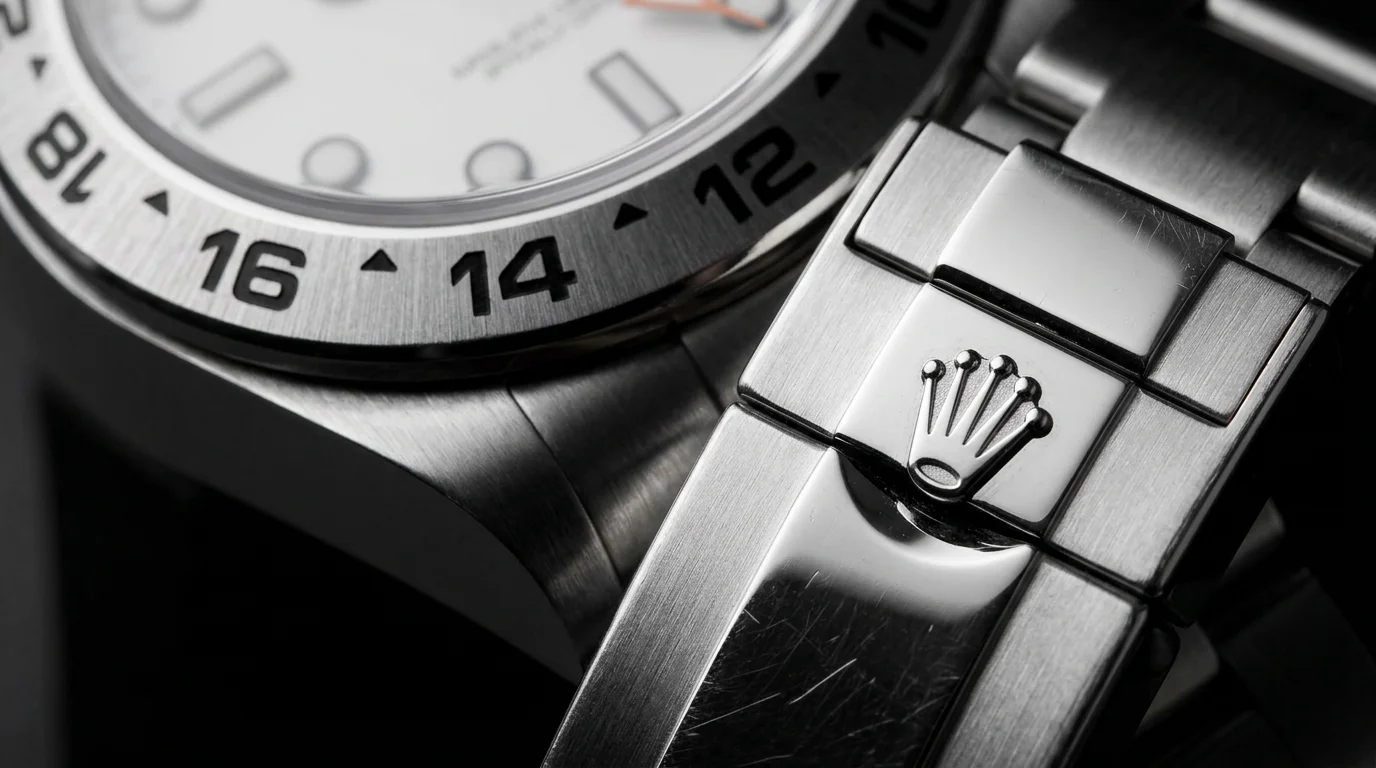 The Explorer II's fixed 24-hour bezel, the visual giveaway that separates it from the standard Explorer at a glance.
FAQ
Is the Explorer II just a bigger Explorer?
No. Beyond the case size, the Explorer II adds a date window, a fixed 24-hour bezel, and an independent GMT hand for a second time zone. The Explorer has none of these.
Why does the Explorer II cost more pre-owned than retail?
Demand outpaces Rolex's production allocation, especially for the white Polar dial. Dealers and private sellers price accordingly, typically $1,500 to $4,000 over retail.
Which one is a better daily watch for someone who does not travel internationally?
The standard Explorer. The GMT function on the Explorer II goes unused if you are not tracking a second time zone regularly, and the smaller case wears easier day to day for most wrists.
Do the Explorer and Explorer II use the same movement?
No. The Explorer runs Caliber 3230. The Explorer II runs Caliber 3285, which adds the independent 24-hour GMT hand. Both share a 70-hour power reserve and Superlative Chronometer certification.
Is 36mm too small for a men's watch in 2026?
Not for most wrists. 36mm was the standard men's sport-watch size for decades and still wears well on anyone under roughly 7 inches of wrist circumference. It is a matter of proportion, not a hard rule.