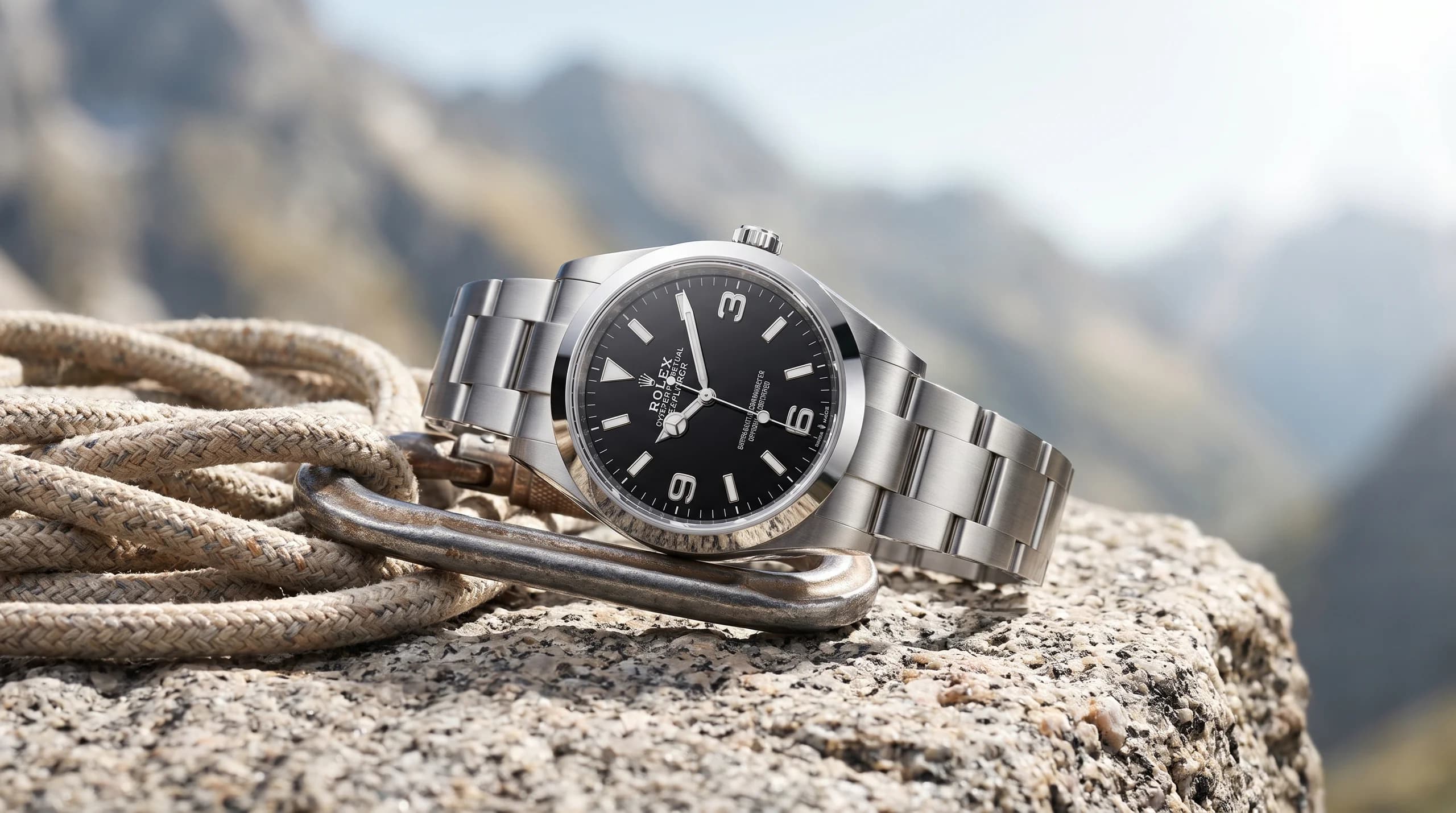
Rolex Explorer vs Oyster Perpetual is the quiet decision that trips up smart buyers. Both are steel, no-date, time-only Rolex watches. Both run the same movement family. Yet they cost different money and send very different signals. Here is how a working dealer separates them, and which one you should actually buy.
This article includes images generated with AI to illustrate specific watch models and settings. Every watch shown is based on a real, referenced model.
The short answer
Buy the Explorer 124270 if you want the adventure heritage, the fixed black dial, and the strongest secondary demand. It retails near $7,900 and trades close to that. Buy the Oyster Perpetual if you want the same Rolex core for less, starting around $6,400 in the 41mm, plus a choice of dial colors and case sizes. Same engine, different character, and roughly $1,500 between them.
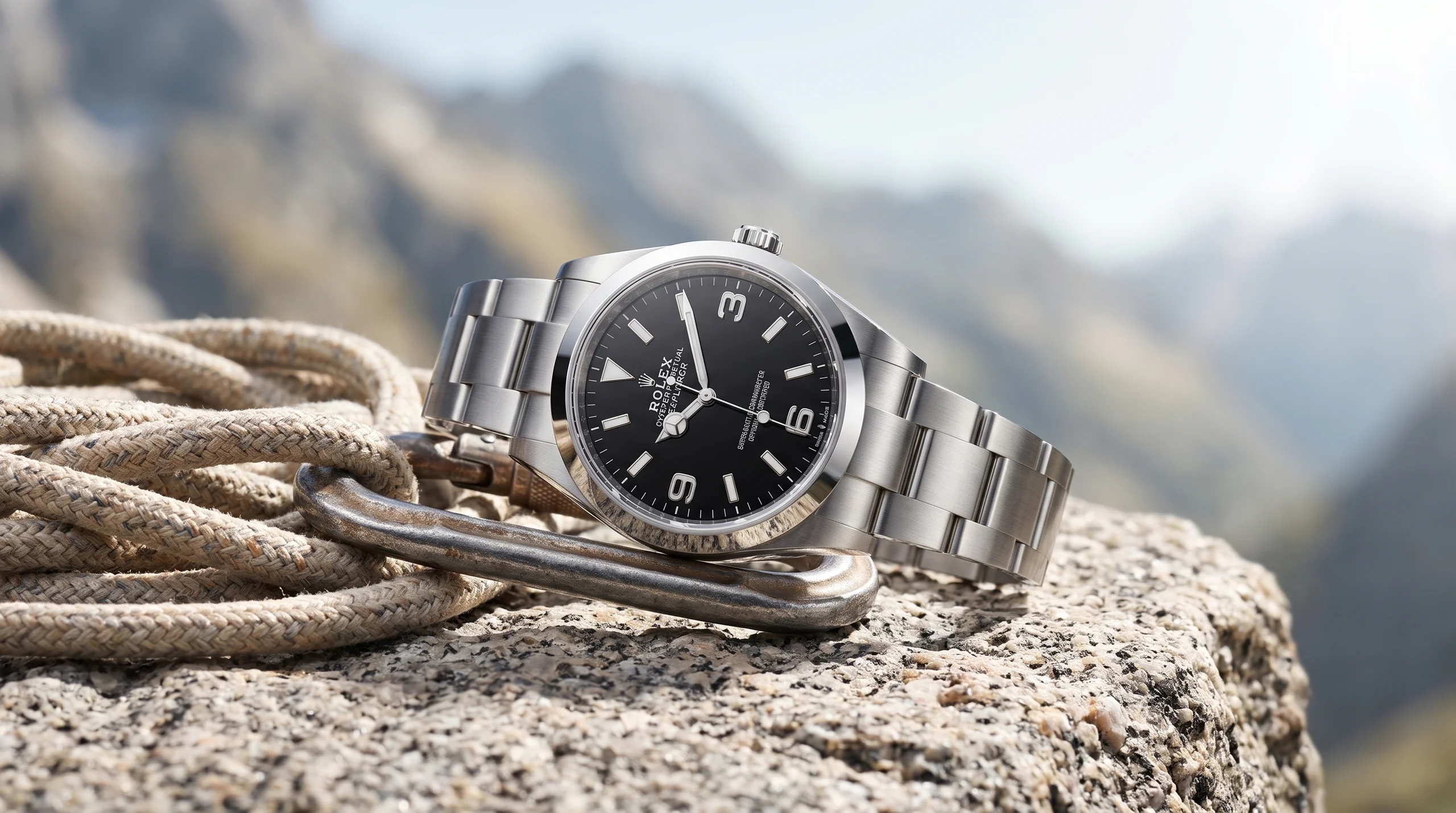 The Explorer 124270 carries real mountaineering heritage in a 36mm case.
What they share
Start with what makes this a close call. Both watches use the Oyster case, a screw-down crown, and 100m of water resistance. Both are powered by caliber 3230, the same self-winding movement with a roughly 70-hour reserve and the paramagnetic blue Parachrom hairspring.
Both are also no-date, time-only watches, which keeps the dial clean and the case symmetrical. And both wear the green Superlative Chronometer seal, so accuracy is rated to within 2 seconds a day. In pure watchmaking terms, you are getting the same Rolex either way.
Rolex Explorer 124270: the heritage tool
The Explorer is the watch that summited Everest in 1953, and it has never lost that identity. The 124270 is 36mm of Oystersteel with a glossy black dial, Mercedes hands, and the trademark 3, 6, and 9 numerals filled with lume. It is legible, tough, and quietly serious.
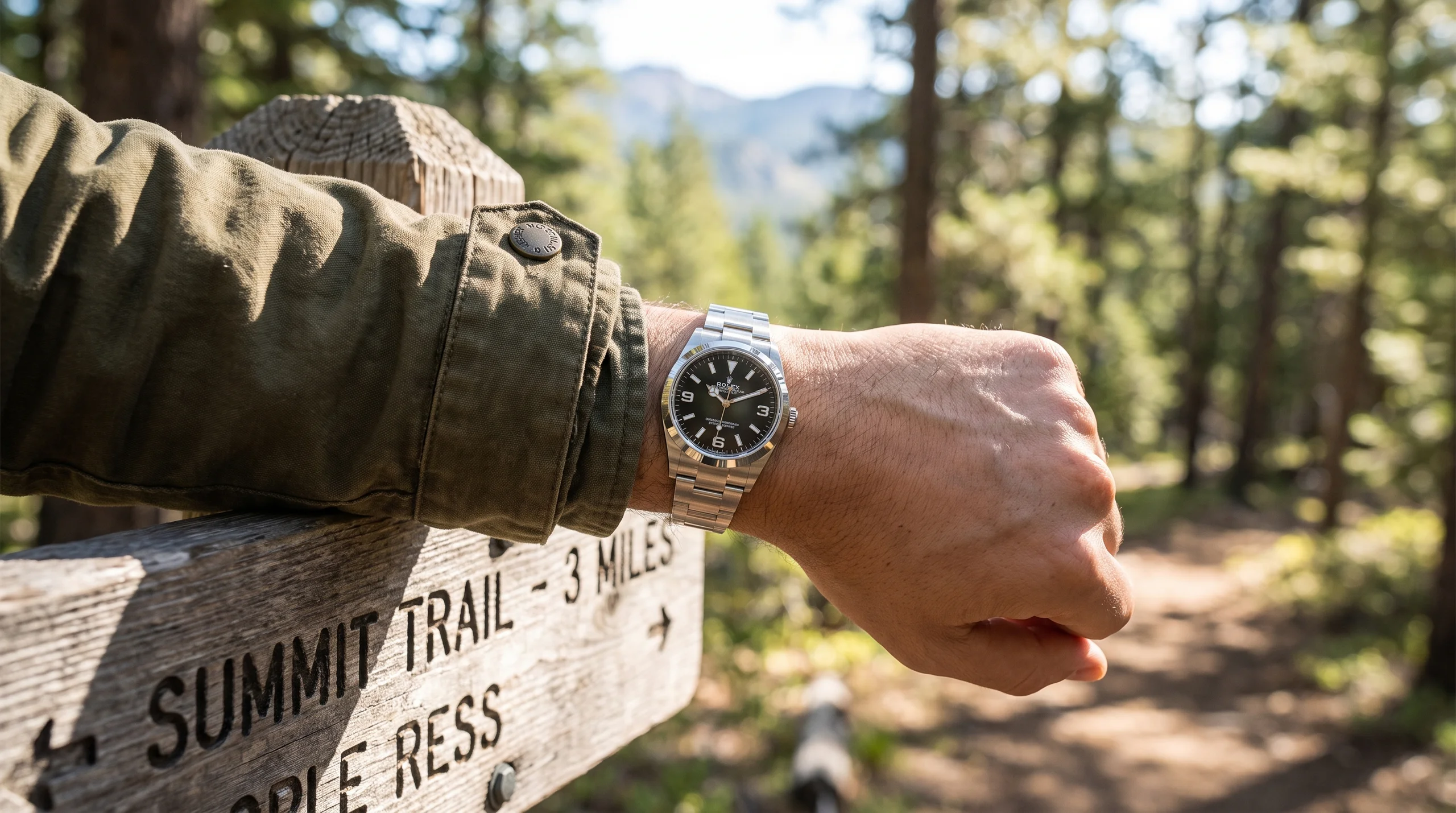 At 36mm the Explorer wears as a proper tool watch, not a dress piece.
The Explorer trades near its retail of about $7,900 with little to no waitlist, which makes it one of the more available steel Rolex sport watches. We cover the details in our read on why the Explorer is the most underrated watch in the catalog. The 36mm size is the sweet spot, though a 40mm 224270 exists for larger wrists.
The honest flaws: the black-only dial gives you no color choice, the 36mm case reads small to some modern buyers, and it costs more than an Oyster Perpetual for the same movement. You pay for the name and the history.
Rolex Oyster Perpetual: the versatile everyday
The Oyster Perpetual is the purest, most affordable way into Rolex. It uses the same case and caliber 3230 in the 36mm and 41mm sizes, but opens up the one thing the Explorer will not: dial color. Bright blue, coral red, candy pink, turquoise, green, silver, and black have all appeared across the range.
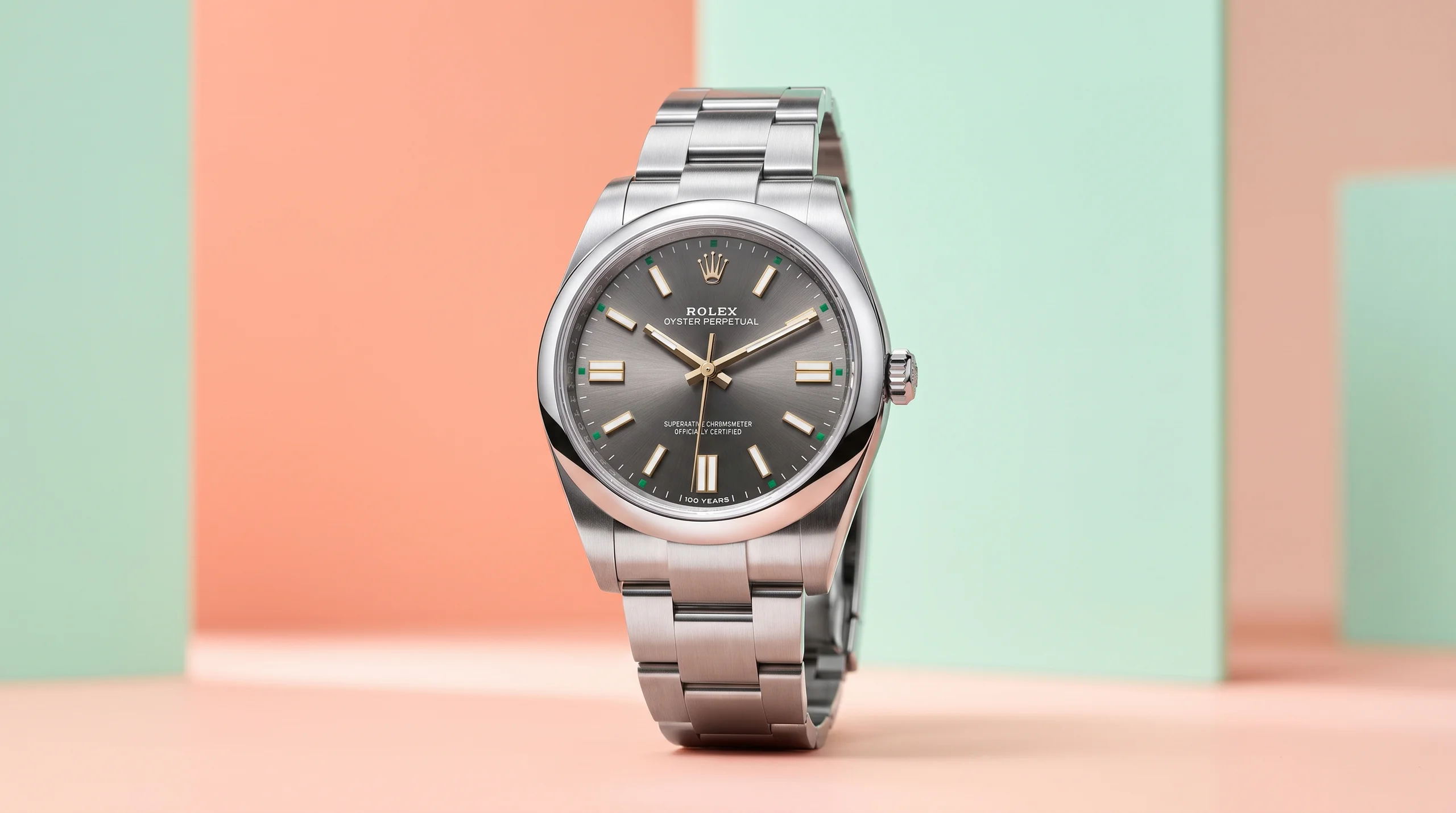 The Oyster Perpetual opens up color and size choices the Explorer never offers.
The 41mm reference 124300 starts around $6,400 at retail, and smaller sizes cost less, which makes it the value play in this pair. Rolex also released collectible anniversary versions, covered in our guide to the 100 Years Oyster Perpetual. For most buyers the standard-dial OP is the smartest entry to the crown, as we argue in our piece on the sleeper Oyster Perpetual.
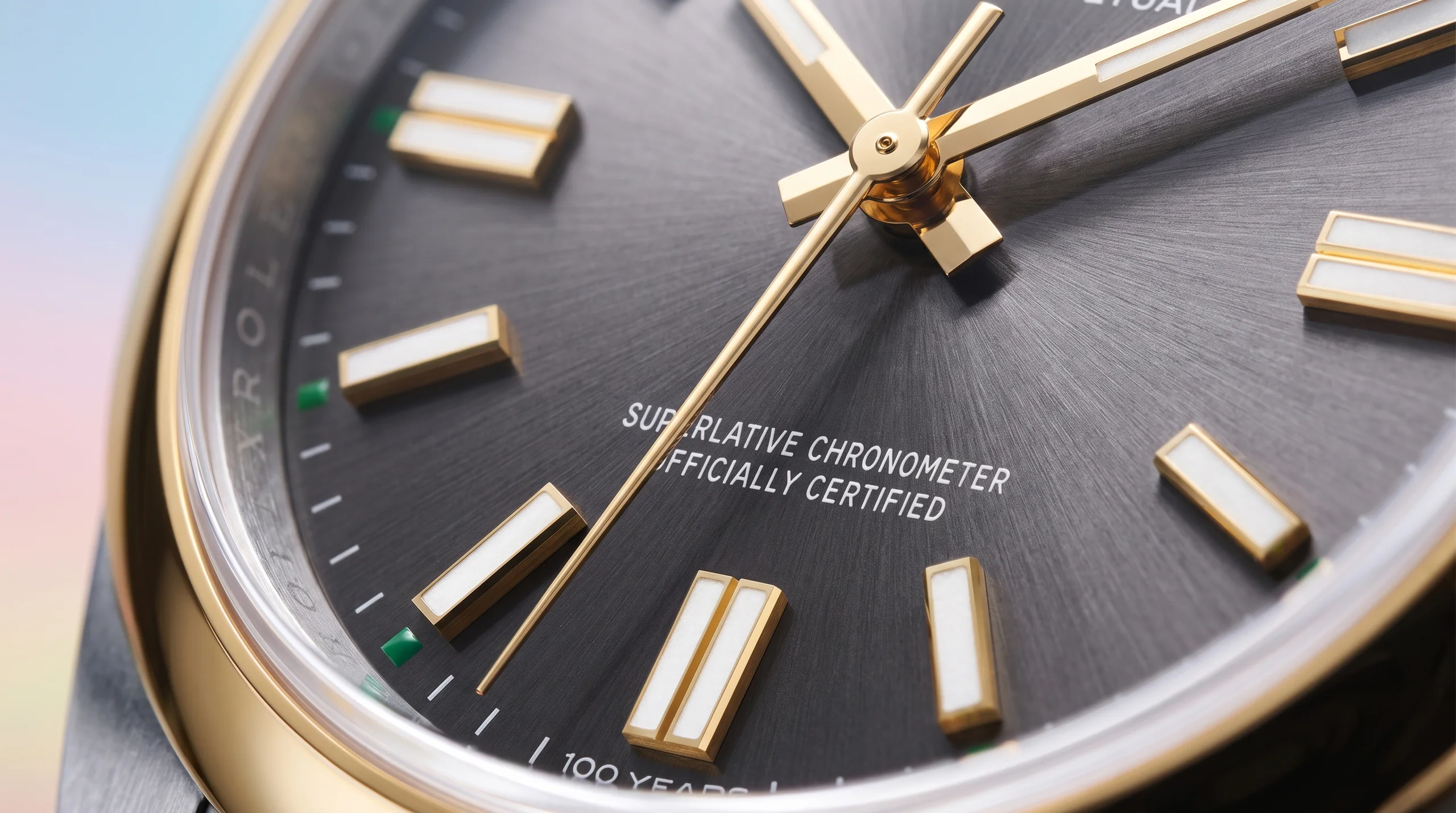 Sunburst and lacquer dials give the OP a versatility the tool-focused Explorer skips.
The honest flaws: the bright dials can hunt down a premium and sell out, the 41mm wears larger than the classic Explorer proportions, and it lacks the adventure story some buyers want on the wrist.
Explorer vs Oyster Perpetual: the numbers
| Spec | Explorer 124270 | Oyster Perpetual 41 |
|---|---|---|
| Case | 36mm Oystersteel | 41mm Oystersteel |
| Dial | Black only | Multiple colors |
| Movement | Caliber 3230 | Caliber 3230 |
| Power reserve | ~70 hours | ~70 hours |
| Date | No | No |
| Approx. retail | ~$7,900 | ~$6,400 |
Same movement, same case family, same no-date layout. The real differences are size, dial choice, price, and the story each one tells.
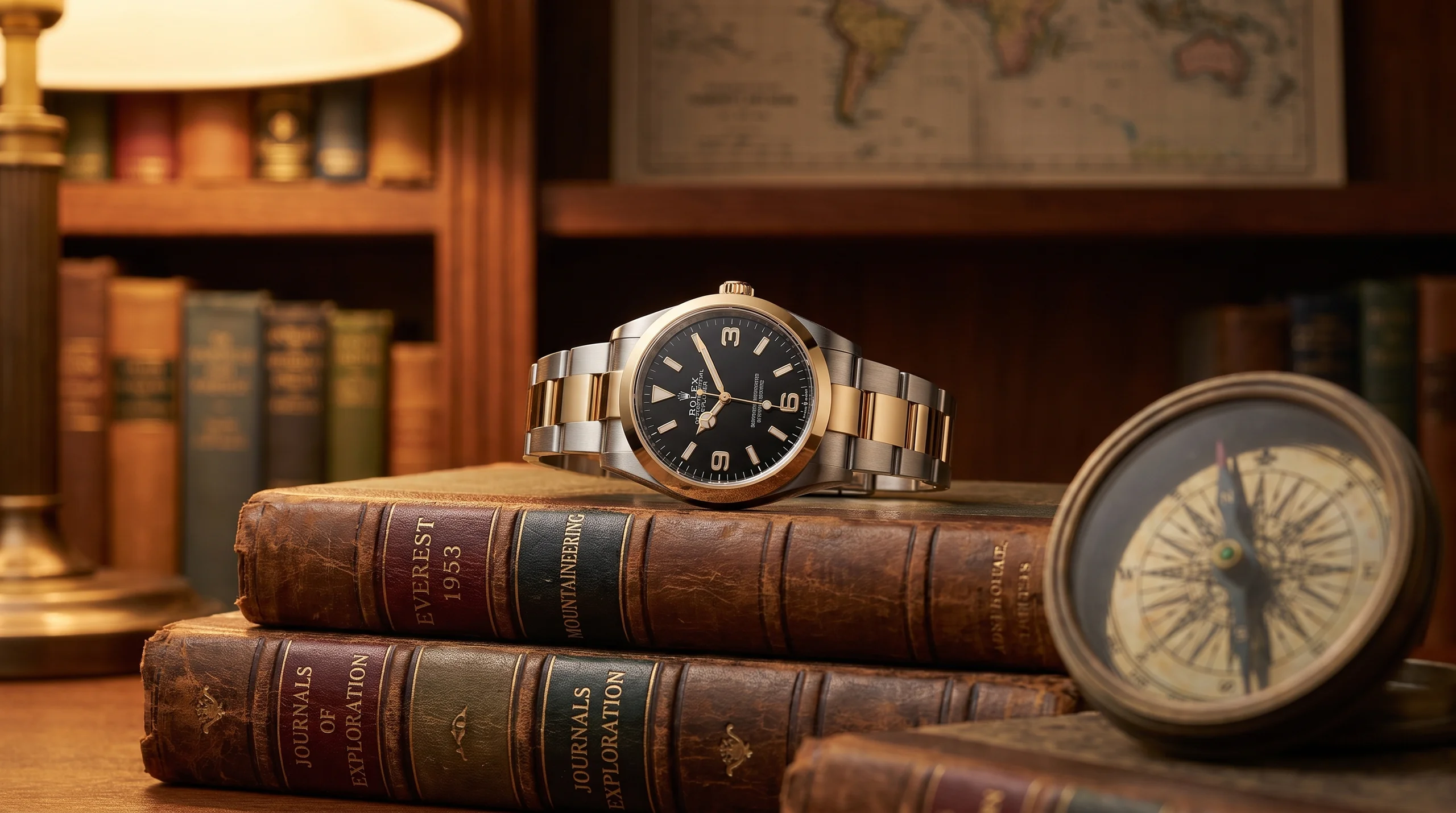 The Explorer commands a premium for heritage the Oyster Perpetual does not carry.
Which one should you buy
Buy the Explorer if the heritage matters to you, if 36mm suits your wrist, and if you want the model with the strongest, steadiest demand. It is the more focused watch, and it holds its value with quiet confidence.
Buy the Oyster Perpetual if you want maximum Rolex for the money, a size and color you actually choose, and the same movement for around $1,500 less. It is the smarter value, and for many buyers it is the more joyful watch to own.
Frequently asked questions
Is the Rolex Explorer better than the Oyster Perpetual?
Neither is strictly better. They share the caliber 3230 movement and Oyster case, so the choice comes down to the Explorer's heritage and 36mm tool-watch focus versus the Oyster Perpetual's lower price, larger sizes, and dial colors.
Why is the Explorer more expensive than the Oyster Perpetual?
You are paying for the Explorer's mountaineering history and its stronger, steadier secondary demand. The watchmaking inside is essentially the same, so the price gap is about identity and desirability, not specification.
Do the Explorer and Oyster Perpetual use the same movement?
Yes. Both the current Explorer 124270 and the Oyster Perpetual 36 and 41 run Rolex caliber 3230, a no-date automatic with roughly 70 hours of reserve and a paramagnetic hairspring.
Which is a better first Rolex?
The Oyster Perpetual is usually the better first Rolex because it costs less, offers a size and color choice, and delivers the same core watchmaking. The Explorer suits a buyer who specifically wants the tool-watch heritage.
Does either watch have a date?
No. Both the Explorer 124270 and the Oyster Perpetual are no-date, time-only watches. If you want a date in a similar package, look at the Rolex Datejust instead.
The bottom line
The Explorer and Oyster Perpetual prove that two Rolex watches can share an engine and still feel worlds apart. One is the heritage tool with a premium and a story. The other is the value champion with color, size, and the same movement for less. Pick the character you want, because the watchmaking is a tie.
Want help sourcing the exact reference and dial? Talk to a 5D Watches specialist and we will find the right one.