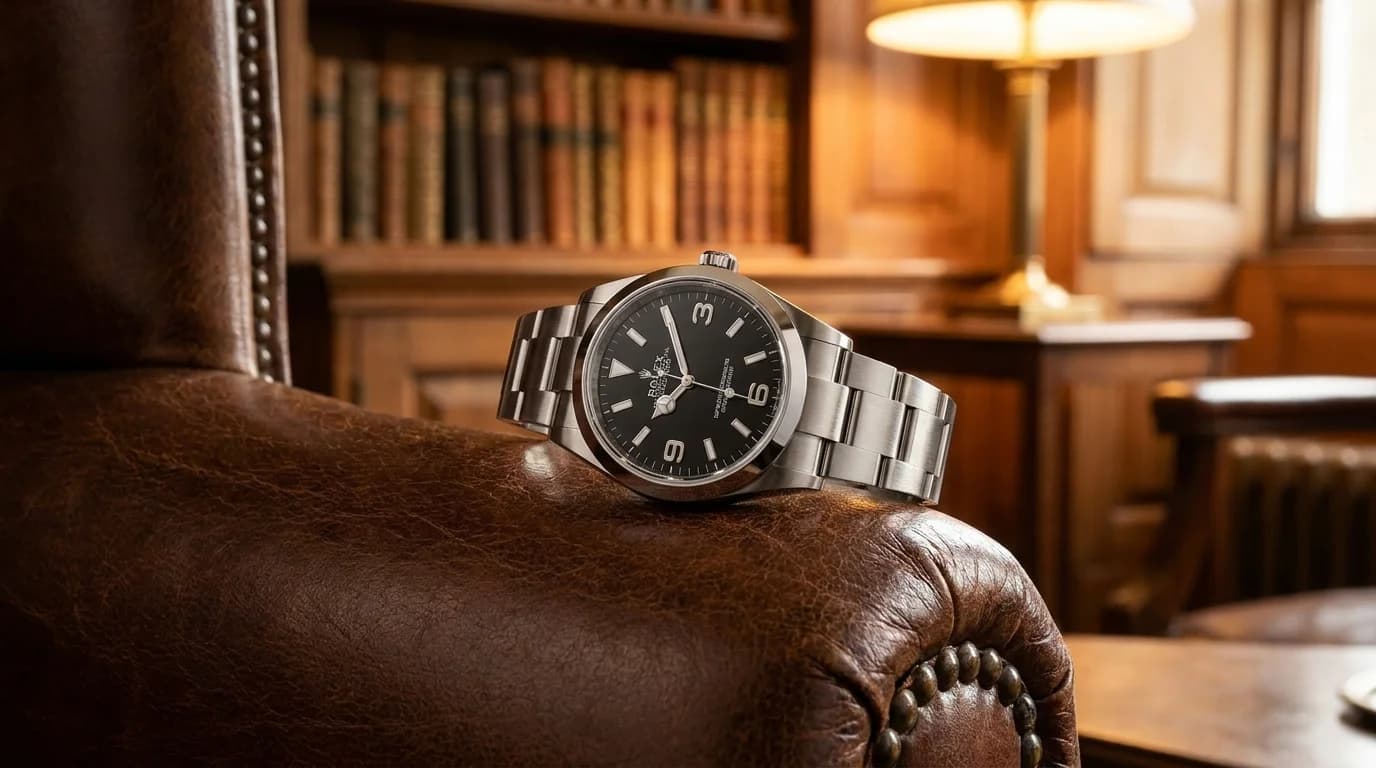
The Rolex Explorer 124270 retails at $7,900. It trades just under retail pre-owned — around $6,800–$7,500 depending on condition and papers. There is no meaningful premium. There is no waitlist in most markets. You can walk into an authorized dealer and buy one.
For a steel Rolex sport watch in 2026, that is an unusual sentence.
While buyers chase discontinued Pepsi GMTs and pay premiums on Submariners, the Explorer sits on shelves. WatchCharts puts its median days-to-sell at 14 — faster than 91% of watches on the market. The market is not ignoring it. Buyers just are not competing for it, which is exactly the point.
Images in this post are AI-generated for editorial illustration. They may not represent the exact watch configuration. For accurate product photography, visit rolex.com.
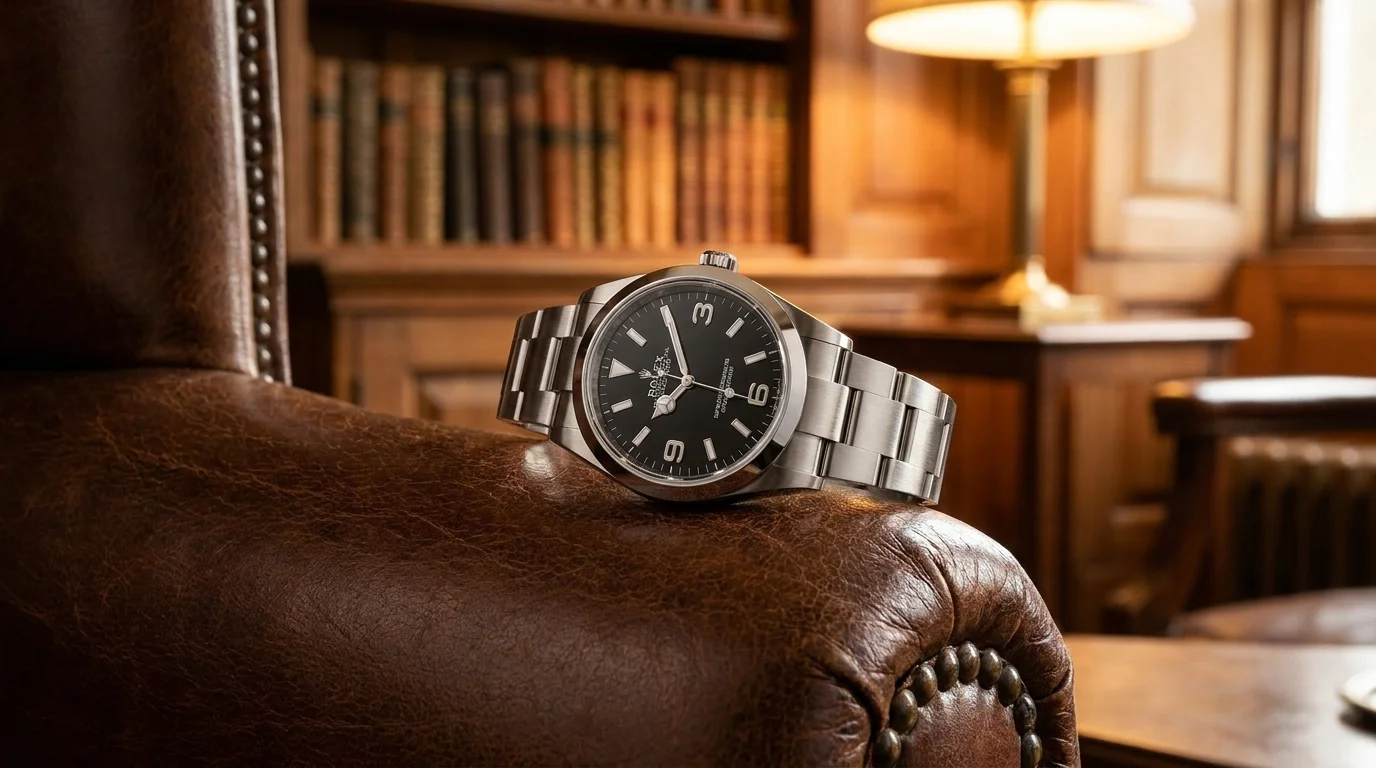 Rolex Explorer ref. 124270, Calibre 3230, 36mm Oystersteel, $7,900 retail. Secondary market ~$7,000 with papers. AI-generated editorial image.
The Watch Itself
The 124270 returned to 36mm in 2021, reversing the controversial move to 39mm (ref. 214270) that Rolex made in 2010. The case is clean Oystersteel with a polished smooth bezel — no ceramic, no color, no complications. Black dial with 3-6-9 Arabic numerals, Chromalight-filled hands and hour markers, Oyster bracelet with Oysterclasp and Easylink 5mm comfort extension.
Inside is the Calibre 3230, Rolex's current-generation base movement. Perpetual rotor, 70-hour power reserve, Parachrom hairspring in blue niobium-zirconium alloy, Paraflex shock absorbers, and a certified accuracy of +/-2 seconds per day. The movement is the same architecture Rolex uses across its sport lineup — proven, reliable, long service intervals.
100m water resistance. Sapphire crystal with Cyclops lens over the date? No — the Explorer runs no date, no cyclops. Just a clean dial.
For buyers who find the standard Submariner or GMT-Master II "too much watch" in terms of presence, the Explorer is the answer. It sits at 36mm, wears slim, and reads as a dress-capable sport watch rather than an aggressive tool watch.
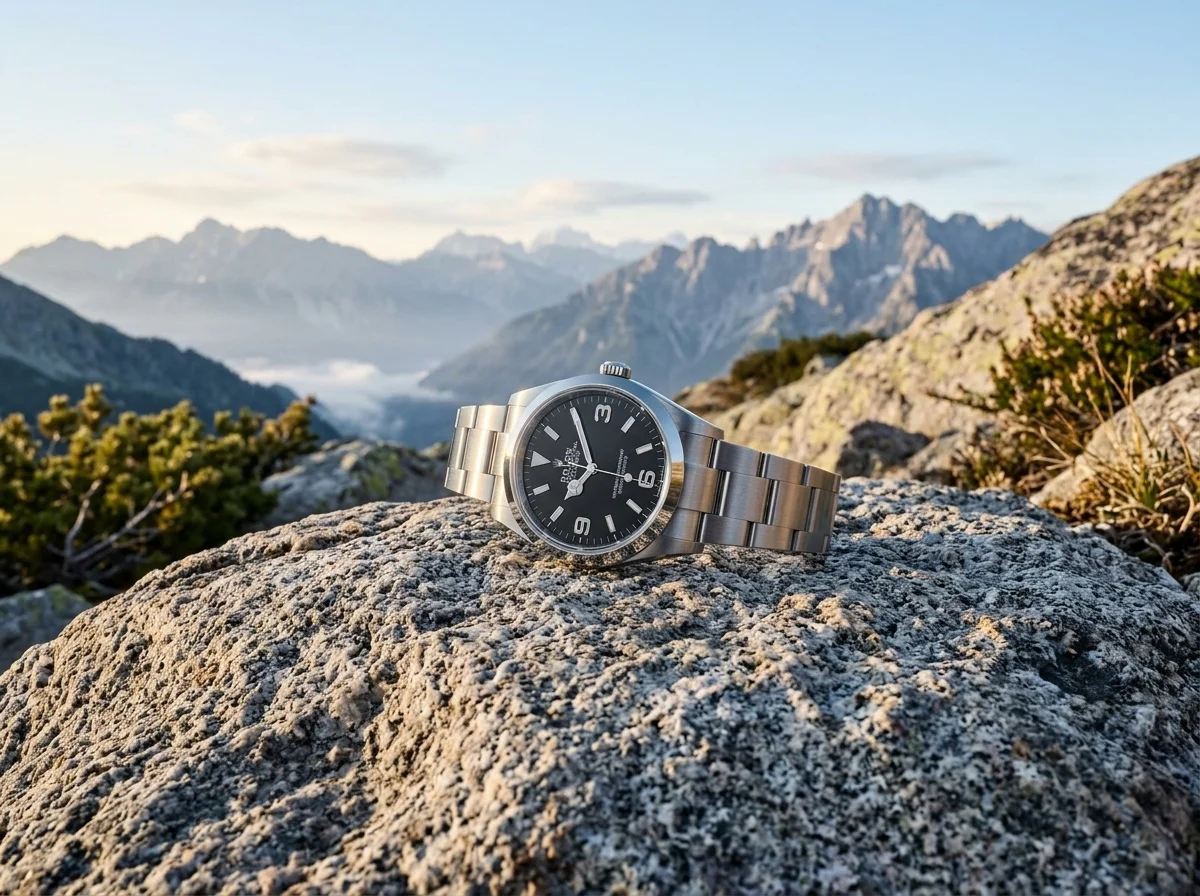 The Explorer was built for Himalayan expeditions. The 124270 still carries that no-nonsense brief. AI-generated editorial image.
The 36mm vs 40mm Decision
Rolex added the 224270 in 40mm in 2023 for buyers who wanted the Explorer proportions at a larger size. It retails at $8,350 and trades at $8,000–$8,500 — essentially at retail. The 40mm is newer but has underperformed the overall Rolex market index since launch.
The 36mm 124270 has a cleaner secondary market story. It launched in 2021, has been trading actively for four years, and its pre-owned value has stabilised just under retail. That makes it more predictable to buy and, if needed, easier to sell.
The right size is genuinely personal. At 36mm the 124270 suits smaller wrists and buyers who prefer a watch that does not dominate the wrist. At 40mm the 224270 suits buyers who find 36mm reads as small. Both are the same watch in different proportions.
The Explorer II Question
The Explorer II (ref. 226570, 42mm) is the GMT-capable sibling with an orange 24-hour hand and a fixed bezel. It retails at $9,250 and trades at or slightly above retail, with the Polar white dial commanding a premium over the standard black. If you need a second time zone, the Explorer II is the logical step. If you do not, the Explorer I is cleaner and cheaper.
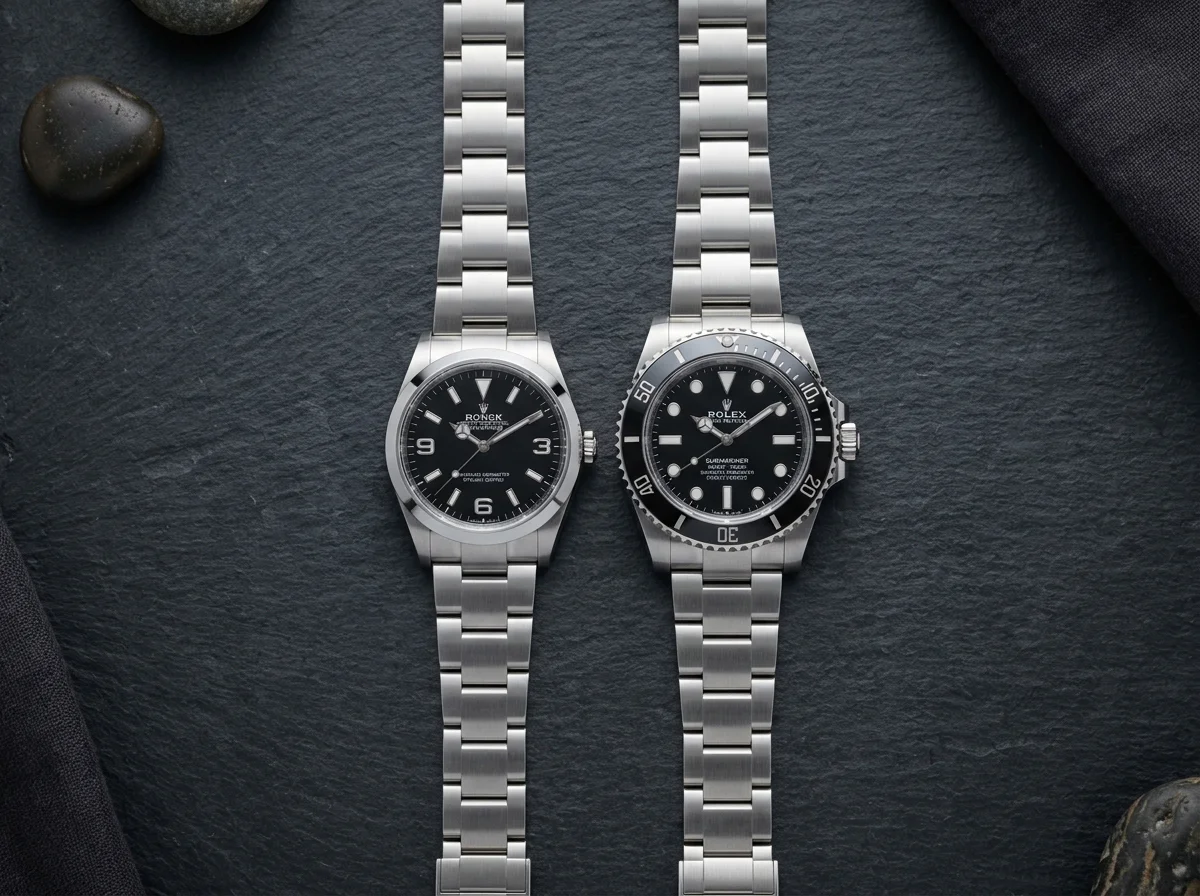 Explorer 124270 (36mm) beside Submariner 124060 (41mm). Both Calibre 3230. The Explorer is notably smaller and lighter on wrist. AI-generated editorial image.
The Pre-Owned Case
The January 2026 Rolex price hike squeezed the gap between retail and pre-owned across the whole sport lineup. On the Explorer the squeeze is relatively mild — the watch was never trading at a large premium, so the hike simply lifted the floor.
Current pre-owned pricing as of June 2026:
| Reference | Condition | Pre-Owned Range |
|---|---|---|
| 124270 with full set | Excellent | $7,000–$7,500 |
| 124270 watch only | Good–Excellent | $6,500–$7,000 |
| 214270 (39mm prev.) | Full set | $5,500–$7,000 |
| 224270 (40mm current) | Full set | $8,000–$8,500 |
The 124270 with full set at $7,000–$7,500 is effectively at retail. The argument for buying pre-owned here is not discount — it is same-day availability without the AD waitlist game.
Buying at an authorized dealer at $7,900 means joining a waitlist of a few weeks to a few months depending on your city and purchase history with the AD. Buying pre-owned from a trusted dealer means taking delivery now for $400–$700 less, or roughly the same price. The math favors pre-owned on the Explorer more than almost any other Rolex sport reference.
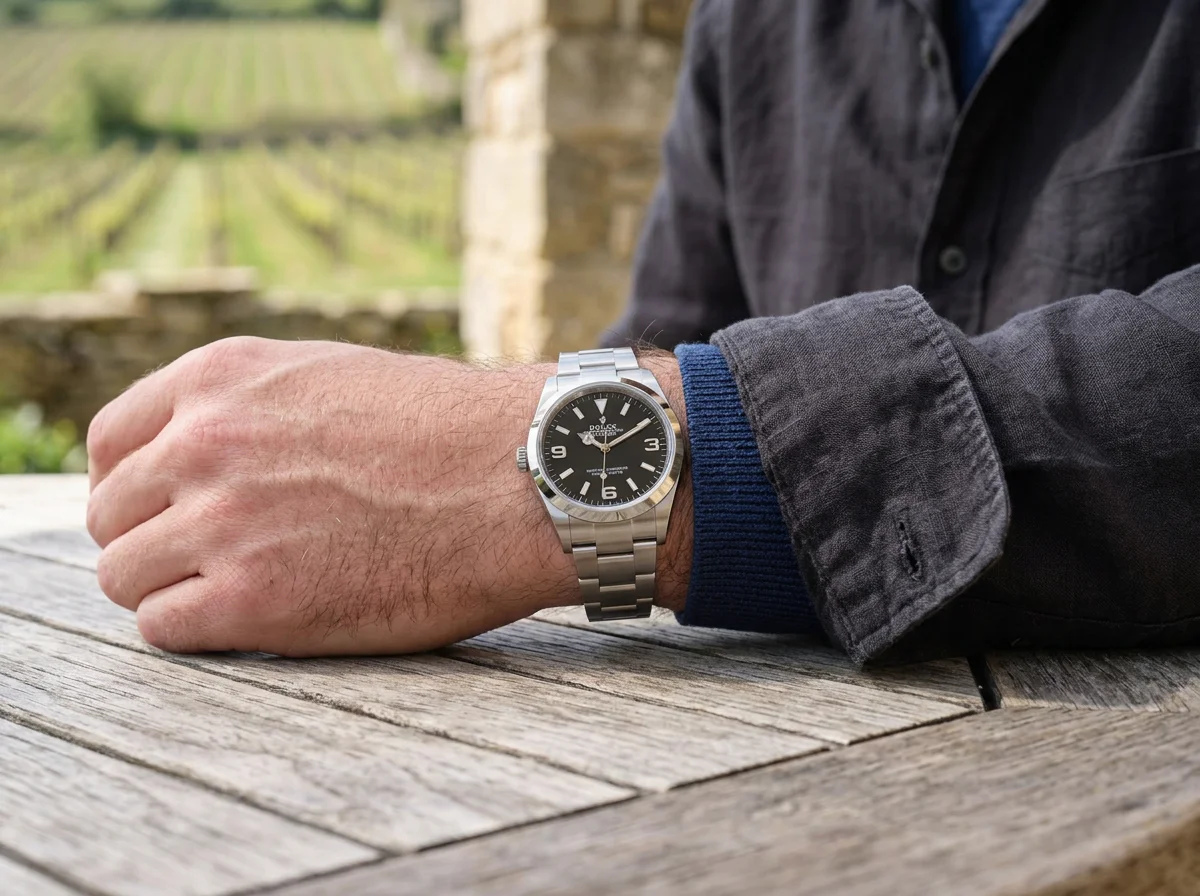 The Explorer on wrist. At 36mm it sits flat and slim — the opposite of imposing. AI-generated editorial image.
Why the Lack of Hype Is the Feature
The Explorer's weak spot as a collectors' piece is its consistency. It does not get discontinued. It does not carry a bezel premium. It does not come in a dozen colorways to argue about. The 3-6-9 dial has looked essentially the same since 1963.
That consistency is precisely what makes it reliable to own. You are not buying a trend. You are not buying allocation scarcity. You are buying a clean, properly specified Rolex sport watch that will look the same in 20 years and service the same way.
Buyers chasing hype will keep sleeping on the Explorer. That is fine — it keeps the availability honest and the pre-owned price rational.
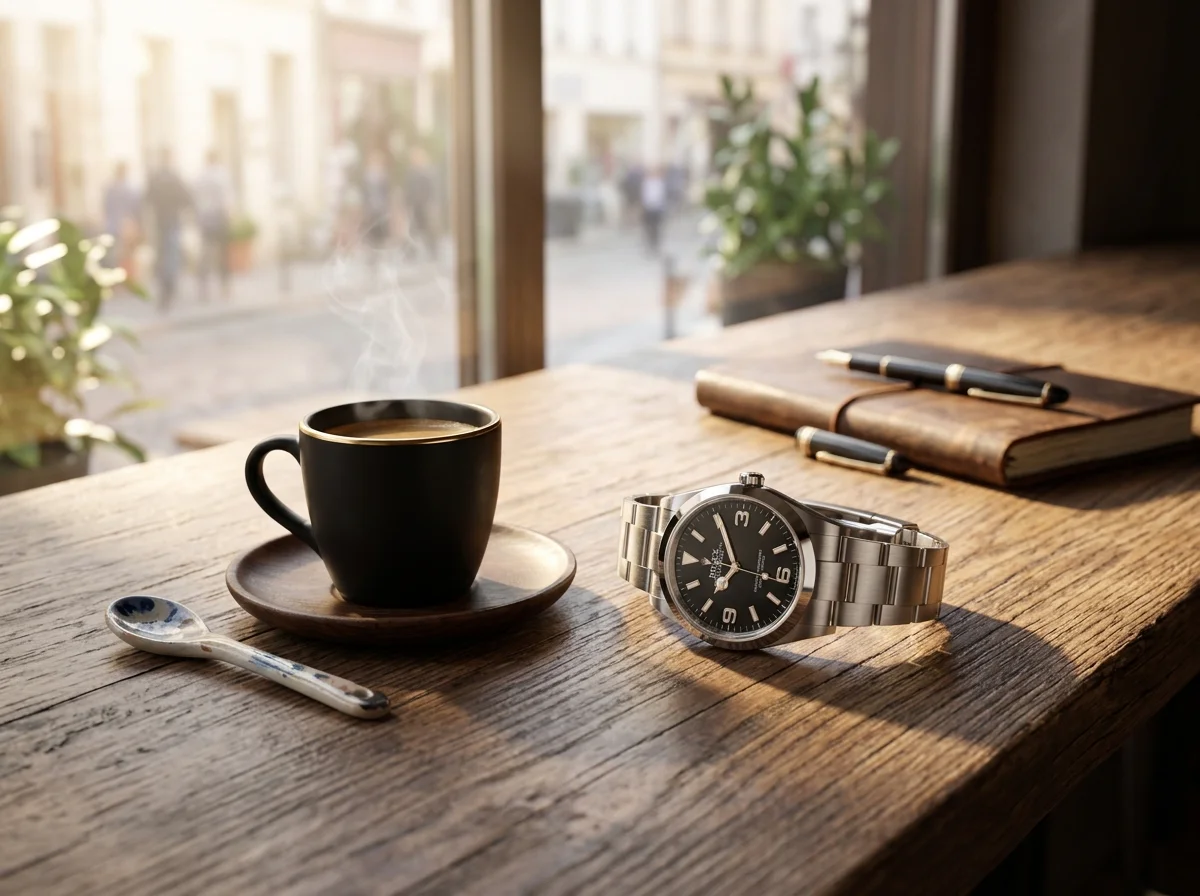 The Explorer at rest. A watch that requires no explanation to justify owning it. AI-generated editorial image.
Browse pre-owned Explorer inventory at 5dwatches.com/shop/rolex?series=Explorer. For the full Rolex sport watch value comparison across references, the 2026 pre-owned Rolex price guide has the current market data.