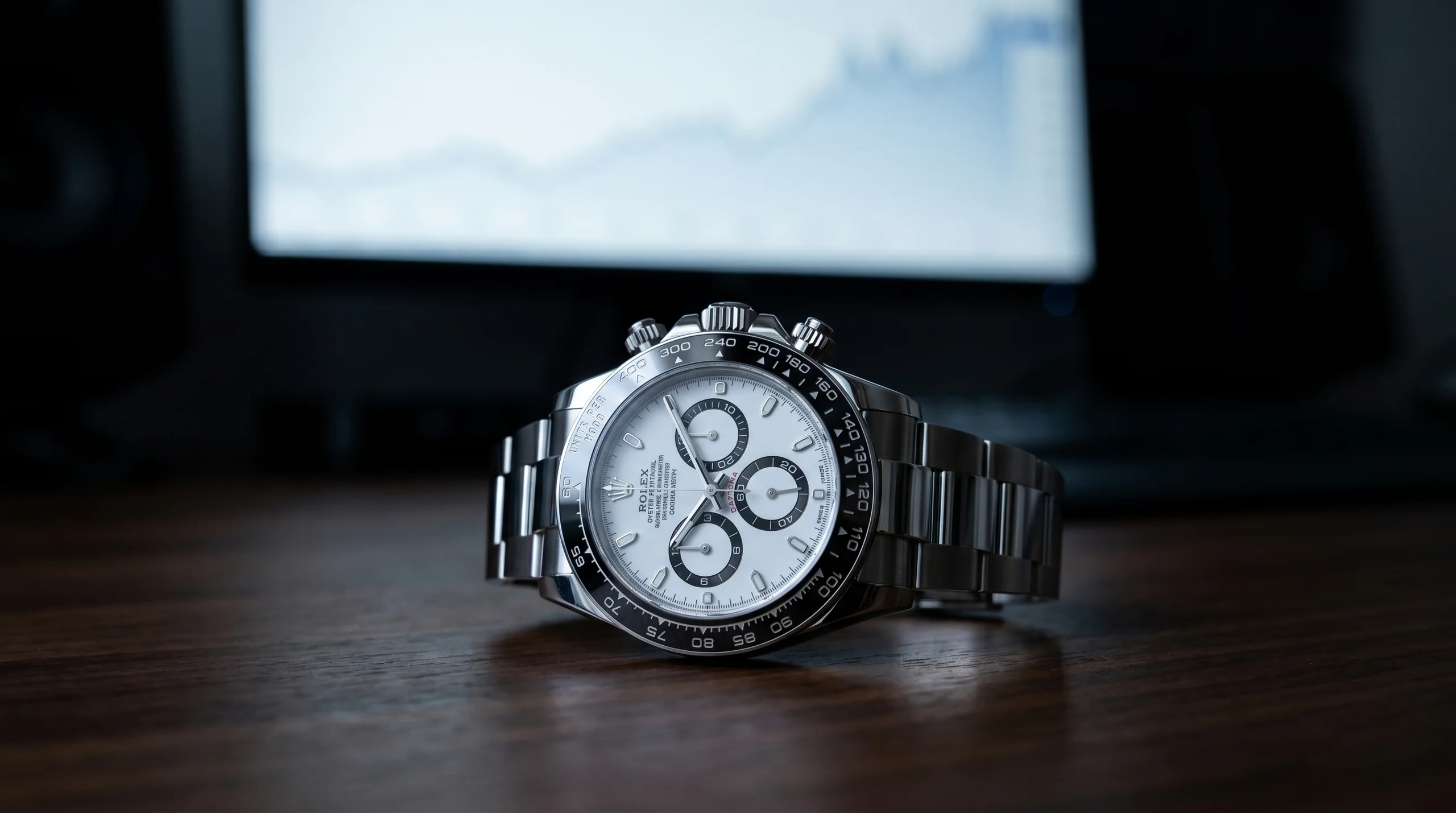
May handed the watch market its first down month of 2026, and most coverage read it as the top. The WatchCharts Overall Market Index slipped 1.4% in May, dragged down by the exact Rolex sport references that had carried the spring recovery. The takeaway wrote itself: the rally was over.
A month later, that read looks early. The dip got bought, and the index is back near where it peaked. What did not change is who is doing the carrying.
The images in this post are AI-generated illustrations for editorial purposes and may not exactly represent the actual watches or their finishing.
The short answer
The recovery resumed. As of its June 19 reading the WatchCharts Overall Market Index sits at 37,289, within about a percent of its 12-month high and up roughly 9% over the trailing year. But that strength is concentrated in a thin band of blue-chip sport references trading well above retail, while the broad middle stays soft. "The market is up 9%" is not a number most buyers can actually buy. The opening is still in the references the index is not carrying.
Where the index actually sits
The headline number is healthy, and it is back near the top of its range.
WatchCharts data puts the Overall Market Index at 37,289 on its June 19 reading, against a 12-month band of roughly 34,073 to 37,605. That places it within a percent of its yearly high and up about 9% over the trailing twelve months. In plain terms, the market has recovered the ground it gave back in May and then some.
 The index is near a 12-month high. The harder question is what is holding it there. (AI-generated illustration.)
The month-by-month path through 2026 shows how steady the climb was before May interrupted it:
| Month | Overall index move |
|---|---|
| January | +0.8% |
| February | +0.6% |
| March | +0.1% |
| April | +2.1% |
| May | -1.4% |
| June (to June 19) | back near 12-month high |
April did the heavy lifting, with the broadest positive breadth since the 2022 unwind. May paused it. June, on the live reading, has resumed it.
What May's pullback actually was
The dip was led from the top, not the bottom.
WatchCharts' May breakdown had Rolex as the worst-performing major brand at -2.2%, with three of its most speculative collections giving back the most. Patek Philippe and Audemars Piguet slipped only fractionally, ending long winning streaks rather than reversing them. This was profit-taking in the most over-retail references, not broad weakness spreading through the market.
| Collection (May 2026) | Move |
|---|---|
| Rolex GMT-Master | -2.4% |
| Rolex Daytona | -2.2% |
| Rolex Yacht-Master | -2.0% |
| Patek Philippe (brand) | -0.1% |
| Audemars Piguet (brand) | -0.3% |
| Cartier (brand) | -0.2% |
The watches that ran up fastest were the first to cool, which is exactly what you would expect near a local top. The middle of the market barely moved, because it never ran in the first place.
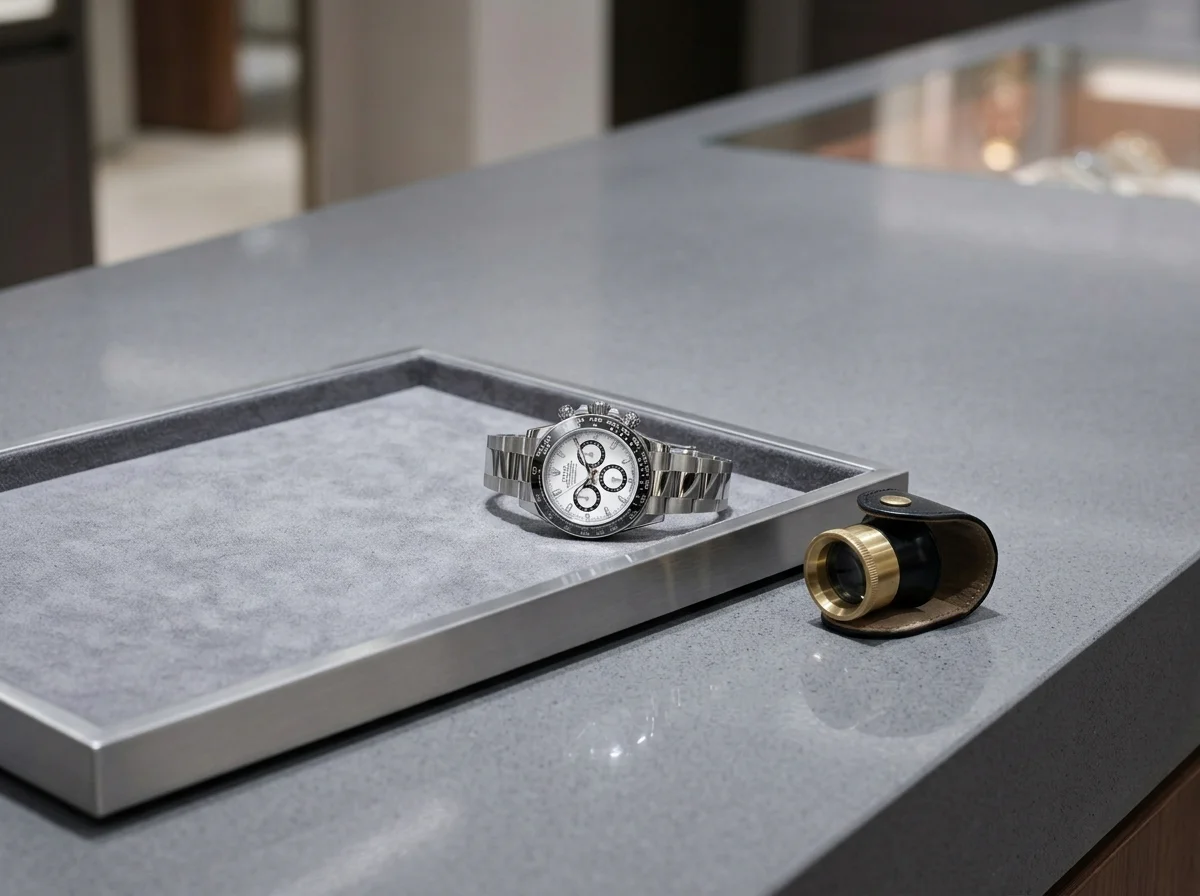 The references that gave back the most in May are the ones trading furthest over retail. (AI-generated illustration.)
The recovery is real, and it is narrow
This is the part the index number hides.
A rising overall index implies a rising market. The reality is more lopsided. Writing for SJX and drawing on Morgan Stanley figures, analysts have shown that an outsized share of secondary-market value accrues to a small set of references: the Patek Nautilus and Aquanaut, the Rolex Daytona and GMT-Master, and the Audemars Piguet Royal Oak. The Royal Oak ref. 16202 alone trades at an average premium near 25% over retail.
The same concentration shows up in the live numbers. The steel Daytona 126500LN lists around $16,900 at retail and changes hands in the upper $30,000s pre-owned, roughly double sticker. The discontinued Pepsi GMT 126710BLRO sits near $22,500. Patek's Q1 told the same story, up 3.0% on the back of the Nautilus and Aquanaut, which were up 17.2% and 16.0% year over year.
When a handful of references move like that, they pull the whole index with them. The average looks like a broad recovery. The tradeable reality is a short list of crowded winners and a long, quiet tail.
 A few references carry the index. Most of the catalog does not. (AI-generated illustration.)
A working dealer's read
An index near its high tells you about sentiment, not about opportunity.
The watches lifting the average are the ones you pay the steepest premium to own. Buying the Daytona or the Royal Oak at today's prices is buying the crowded end of the trade, at or near where it has historically topped out. That is a momentum bet, not a value one.
The value sits where the index is thin: the references it underweights or leaves out entirely. That is the same two-tier pattern I worked through in the piece on a market splitting in two, and it has only sharpened since May's dip first looked like a turn. The blue chips recovered loudly. The soft middle never corrected because it never spiked, and that is where a patient buyer gets paid.
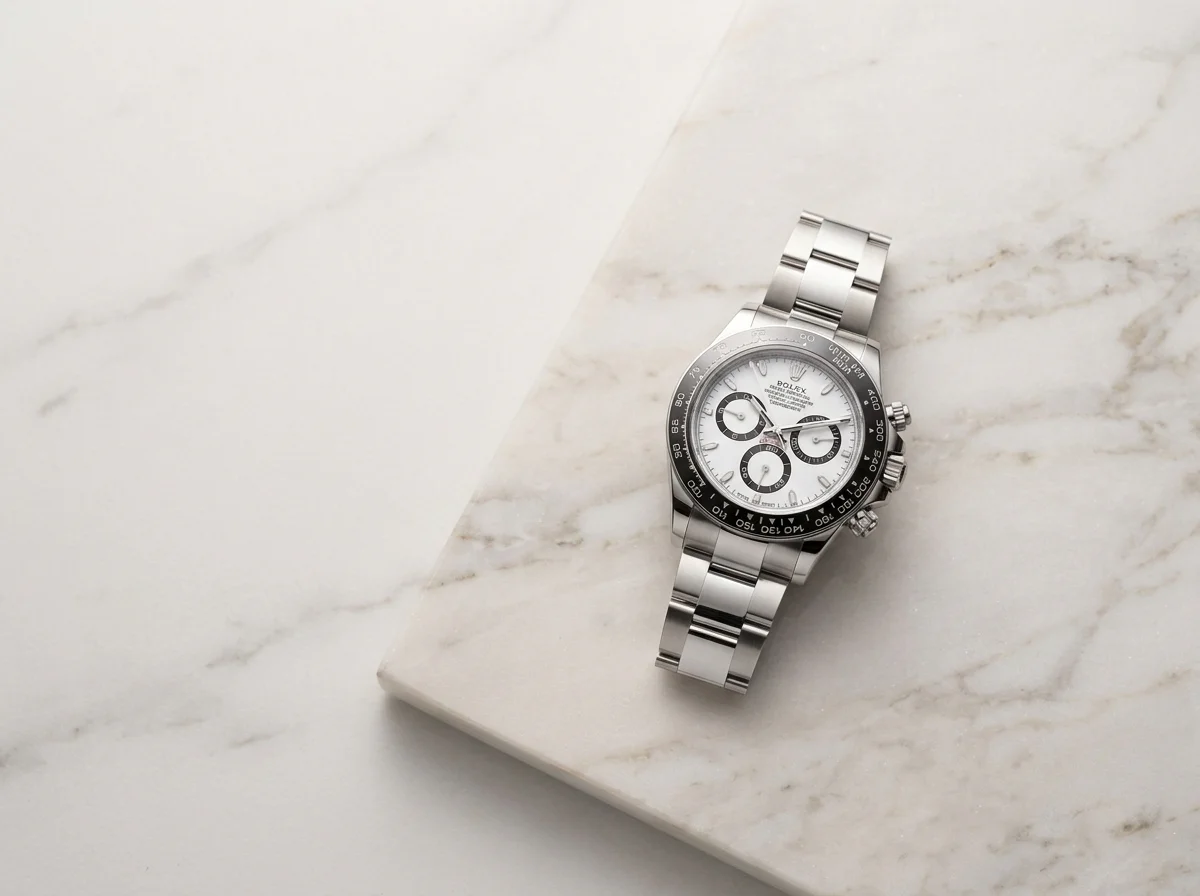 Near a high, the discipline is buying what the index leaves out. (AI-generated illustration.)
If you are shopping that quieter middle rather than chasing the references everyone already prices at a premium, that is exactly what our floor is built around. Browse the authenticated pre-owned range at 5dwatches.com.