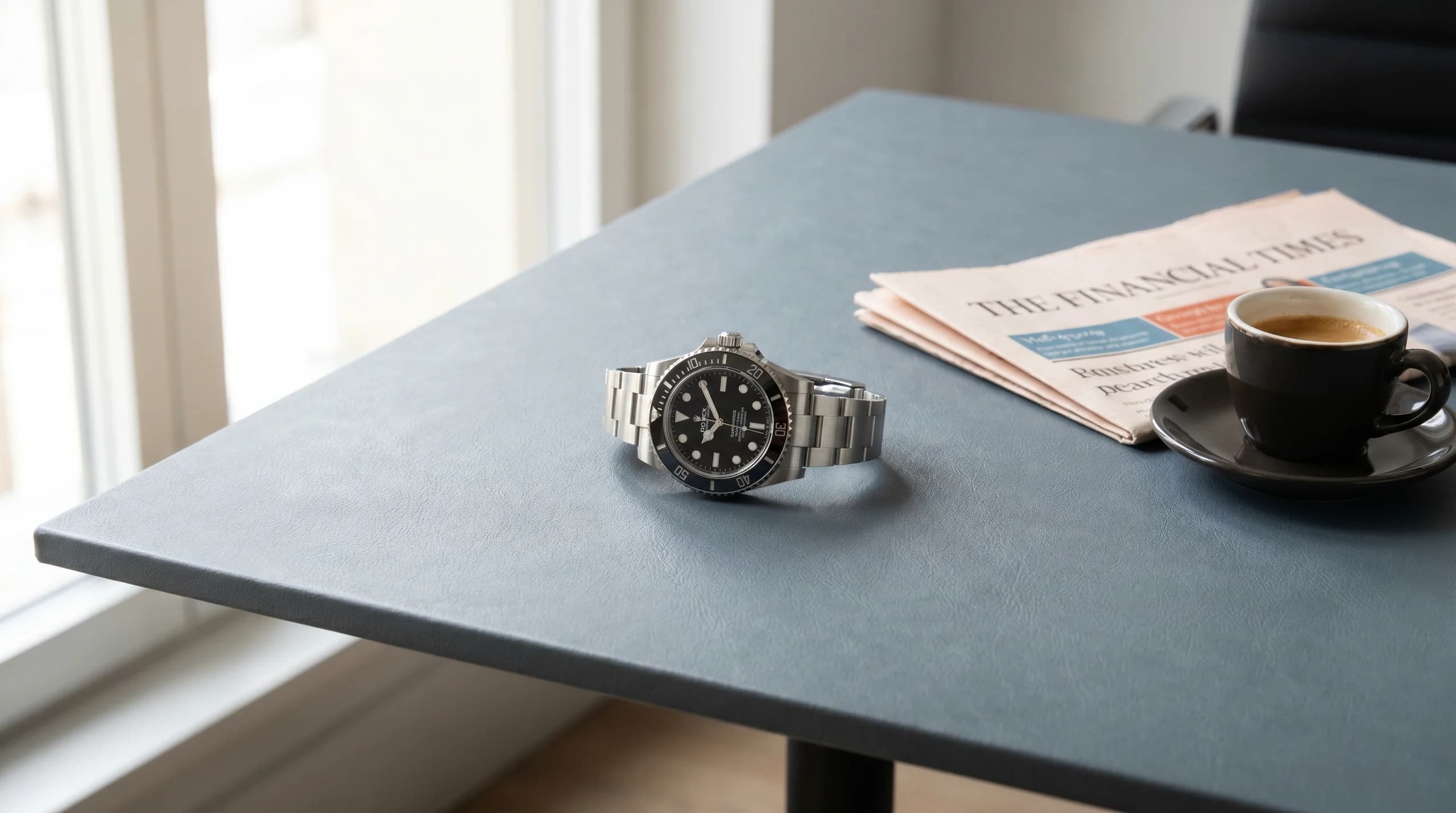
The short answer: Swiss watch exports fell about 4% over the first four months of 2026, and one ugly April print made the headlines look worse. But the average hides the real story. The market is splitting in two: the very top and the big three hold firm while almost everything in the middle contracts. For a pre-owned buyer, that split is a map. It tells you where value is protected and where discounts are quietly widening.
Read the headline and you would think Swiss watchmaking is in trouble. Exports are down, April cratered, and the unit numbers are at a multi-decade low.
Read the detail and a different picture appears. The decline is not spread evenly across the market. It is concentrated, and the parts that are holding tell you exactly where demand still lives.
The images below are AI-generated illustrations created for this article and do not represent specific watches offered for sale.
The headline number, and why it misleads
Swiss watch exports declined 3.9% over January through April 2026, according to Federation of the Swiss Watch Industry data. April alone fell a startling 16.6%.
That April figure is mostly an illusion. Exports to the United States dropped 56.4% for the month, but only because April 2025 was wildly inflated, when brands rushed inventory into the US ahead of the tariff hikes. Measured against two years ago, this April is actually up close to 9%. The Federation's own data carries the same caveat.
The longer trend is real but mild. Full-year 2025 exports fell 1.7% to CHF 25.6 billion, and unit volume hit a multi-decade low of 14.6 million watches. The Federation noted the highest price segments held steady while the majority of products softened. That sentence is the whole story.
A market splitting in two
This is the part the average obscures. The strength and the weakness are sorting themselves by price and by brand.
Retailers and brands speaking to WatchPro describe a market propped up by watches priced over CHF 50,000, while everything below that point contracts for all but Rolex, Audemars Piguet, and Patek Philippe. Morgan Stanley's read is consistent: the top four privately held brands capture roughly 76% of the entire industry's profit.
| Segment | 2026 trend | What it means for a buyer |
|---|---|---|
| Over CHF 50,000 | Steady demand | Resilience is already priced in |
| Rolex, AP, Patek (any price) | Holding firm | Value holds pre-owned, too |
| Mid-luxury below CHF 50,000 | Contracting | Pre-owned discounts are widening |
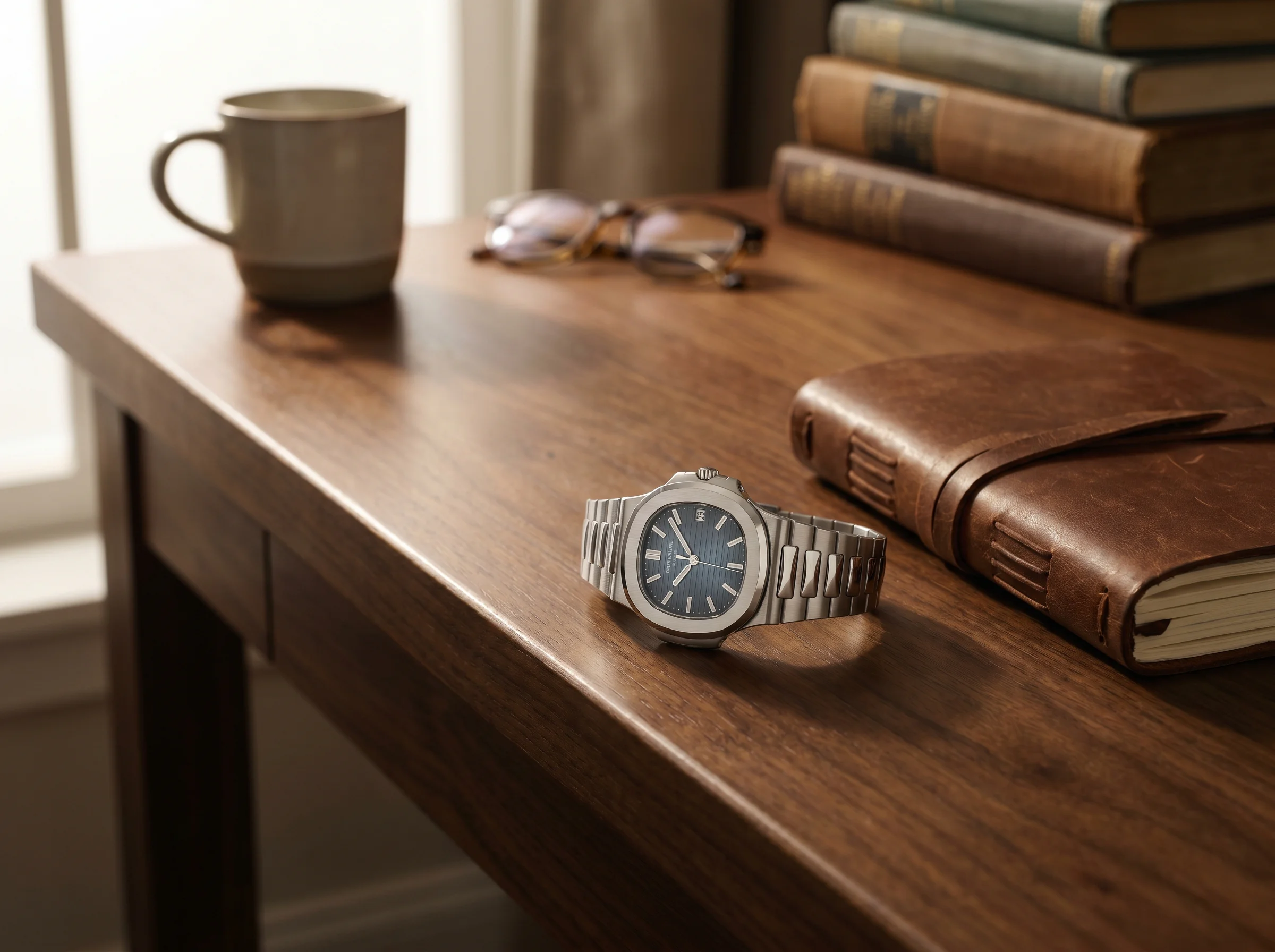 The big three hold firm while the rest of the market softens. Patek's Nautilus shown.
The top is doing fine
The brands at the very top are not participating in the downturn in any meaningful way. Precious-metal and high-complication watches keep moving, and the names with genuine waitlists do not need a healthy macro backdrop to clear inventory.
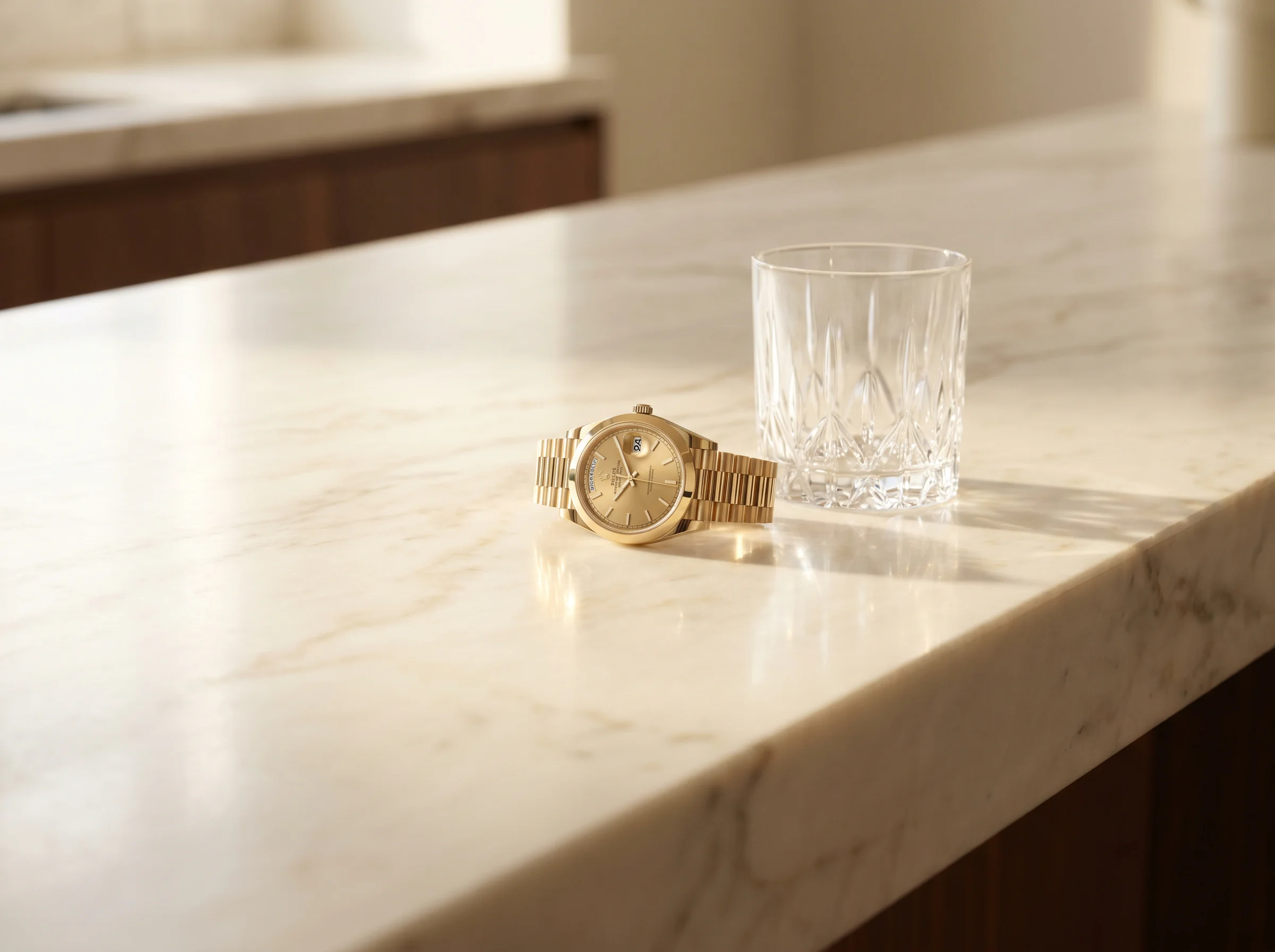 Watches over CHF 50,000, like a gold Day-Date, are the segment holding the market up.
Where the weakness actually is
The contraction lives in the middle. Strong Swiss brands that sell mostly between CHF 3,000 and CHF 15,000 are the ones feeling the squeeze, because their buyer is the most sensitive to price increases and economic noise.
That is not a reason to avoid those brands. It is the opposite. We have argued before that Breitling depreciates hard, and that the depreciation is the entire reason to buy one pre-owned. A softening new-watch market widens that gap further.
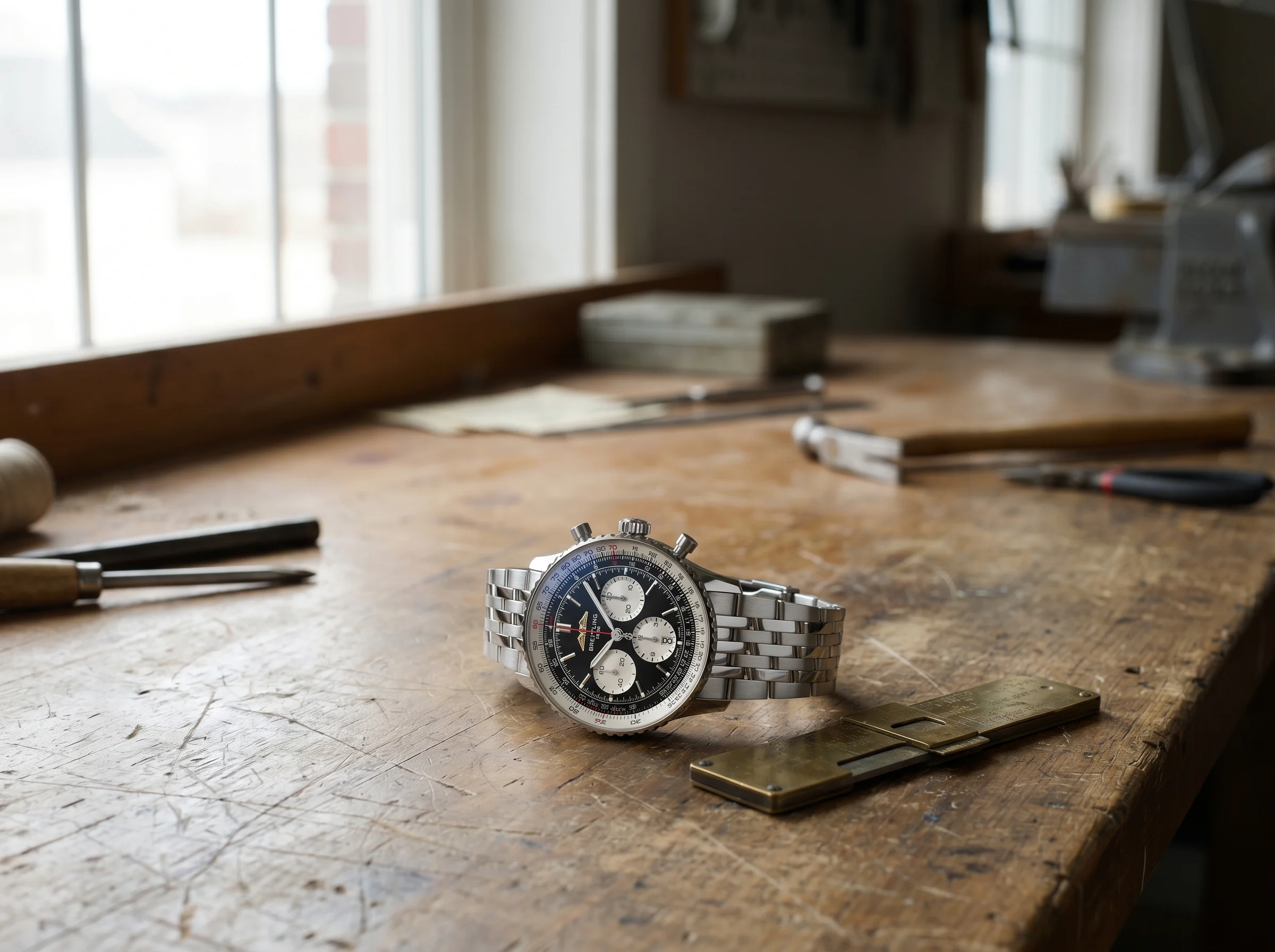 The contracting mid-luxury segment is where pre-owned discounts are widening.
The same logic reaches into brands like Omega, where the new-retail story and the pre-owned story diverge sharply. When the middle of the market cools, the secondary buyer is the one who benefits.
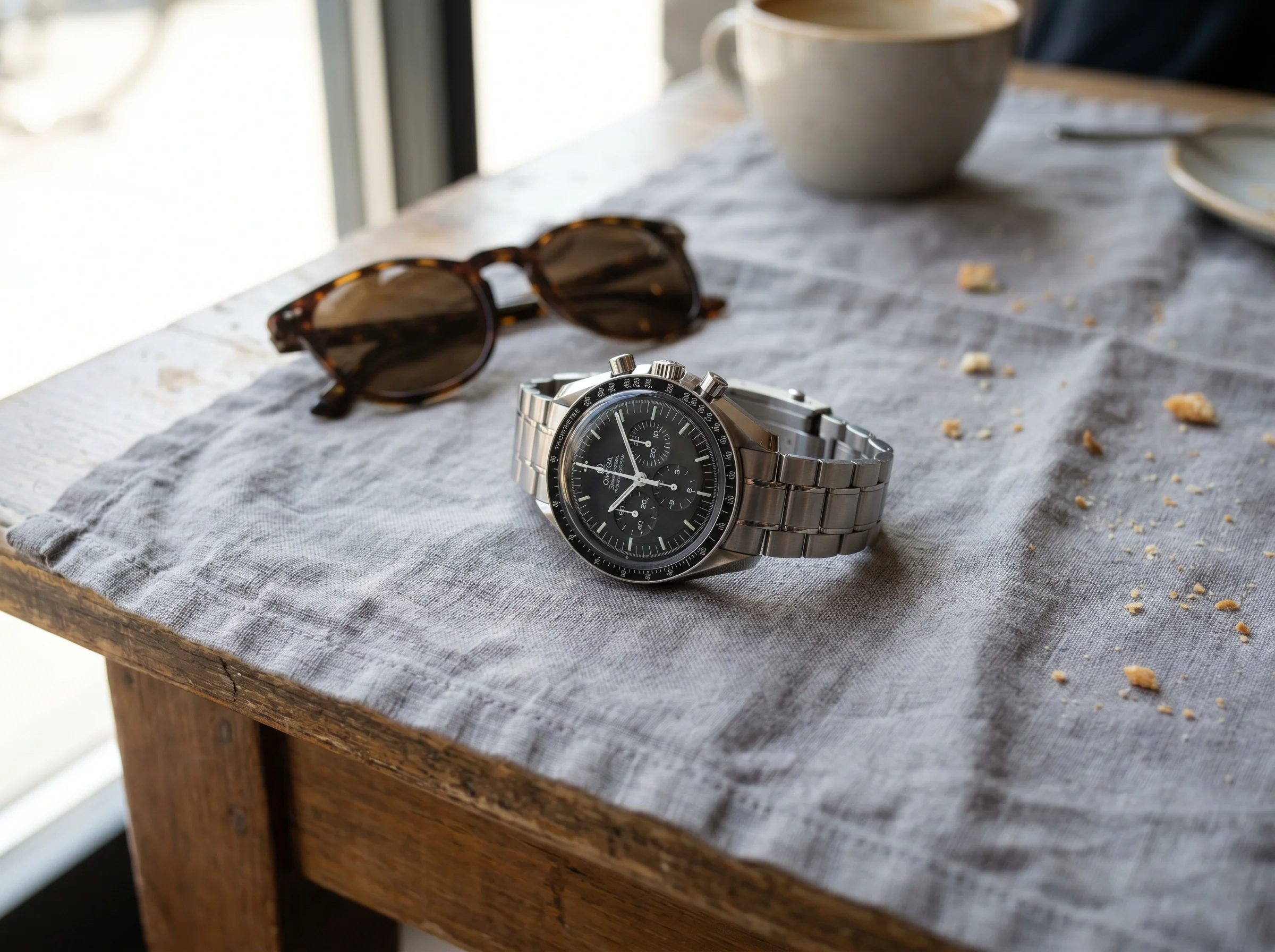 Mid-luxury softness is a discount for the pre-owned buyer, not a warning.
The United States is holding the whole thing up
One market matters more than any other right now. The US imported CHF 1.53 billion of Swiss watches in the first four months of 2026, nearly three times Japan's CHF 583 million and the UK's CHF 534 million.
The US accounted for 17% of all Swiss watch exports in 2025 and remains the number one destination by a wide margin. The analysis from The Hour Markers makes the same point: the April collapse was a base-effect distortion, not a demand failure. For buyers and dealers in the US, that strength supports both inventory and pricing.
The market is not weak. It is concentrated. The money is flowing to the top and to the US, and thinning everywhere in between.
The dealer's read
Treat the split as a map, not a warning.
If you want a watch that protects its value, the resilient names hold pre-owned just as they hold at retail, and you pay for that protection. If you want the best pre-owned value, the contracting middle is where the discounts are widening right now, and a softer new-watch market only helps.
The one thing not to do is read a 4% headline as a reason to wait. The decline is real but mild, secondary prices actually rose in 2025, and the references that hold are not getting cheaper. We made the broader version of that argument in our look at why the index moves should not run your decisions.
Browse our authenticated pre-owned collection at 5dwatches.com.