The Short Answer
Not every watch changes its date the same way. Some flip instantly at midnight, snapping from one number to the next in a fraction of a second. Others creep, with the date disc inching forward for hours before it finally settles into place. The difference comes down to whether the movement stores energy in a spring-loaded cam that releases all at once, or whether the date disc is simply geared straight to the hour wheel with nothing in between to hold back the motion.
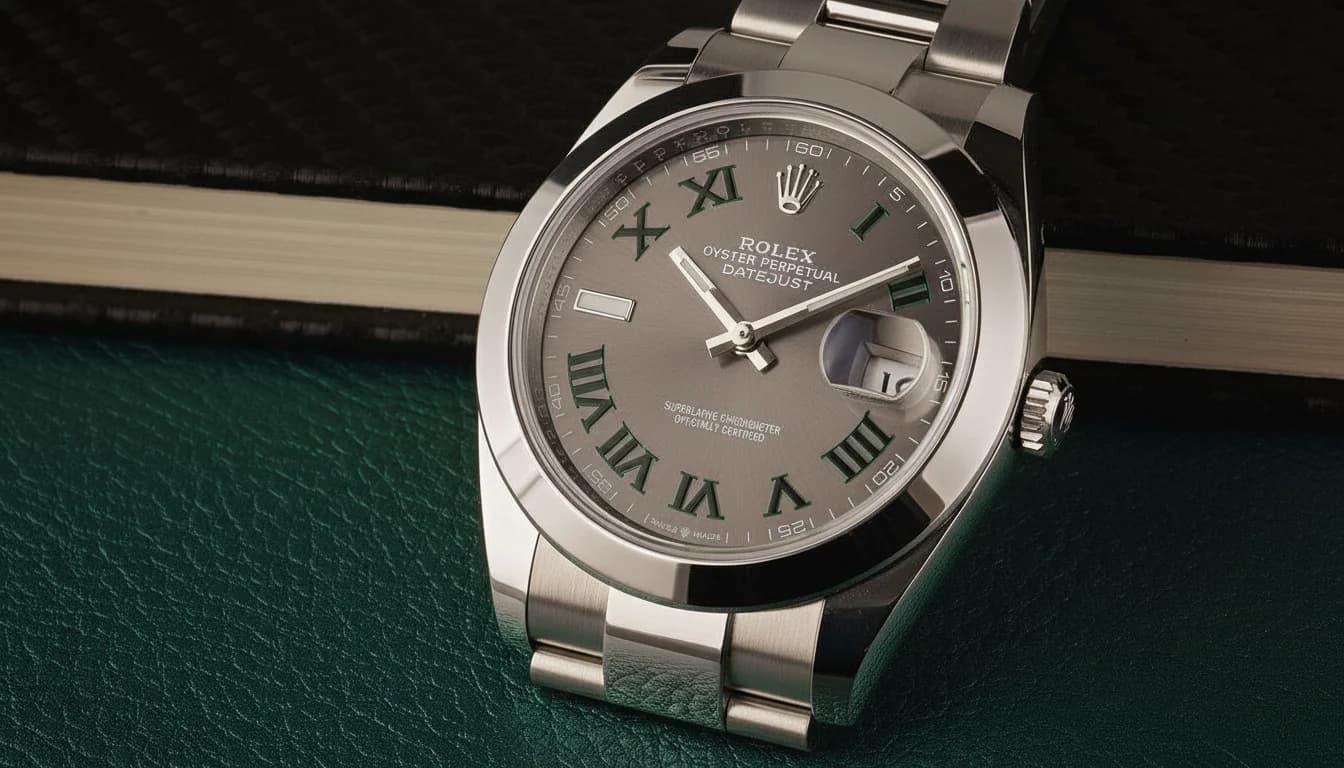
Rolex is the watch most associated with getting this right. Monochrome traces the brand's instantaneous date mechanism back to the Datejust references 6604 and 6605, built between 1956 and 1959, and it remains a defining feature of the modern Datejust, Day-Date, and Sky-Dweller lines. Plenty of watches using ETA-family movements creep instead, and that is a design tradeoff, not a defect.
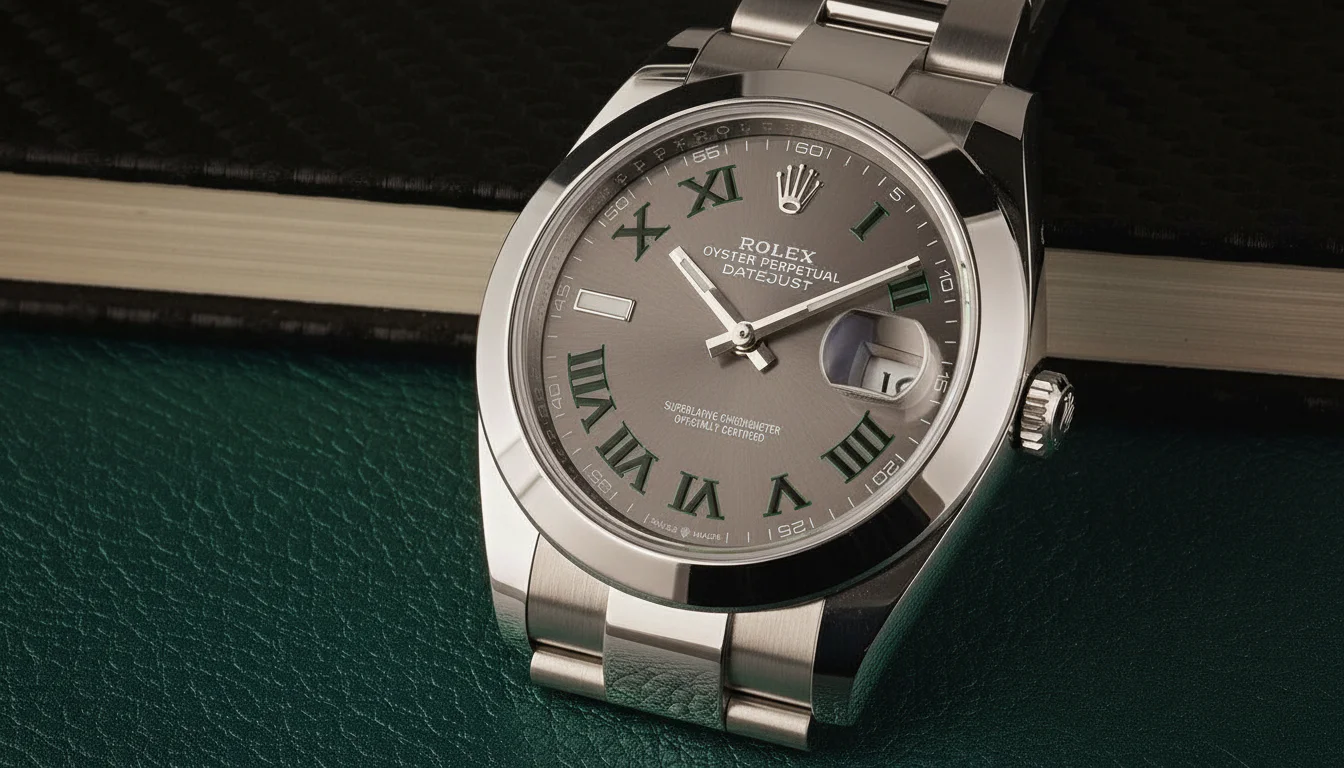 A cyclops lens does not make the date change faster. It just makes it easier to read once it has.
The watch photos in this article were generated with AI image tools, conditioned on real reference photography of Rolex Datejust references and automatic watch movements so the case shapes, dial layouts, and mechanical details are accurate representations.
The Three Ways a Date Can Change
Watchmakers generally split date-change mechanisms into three categories, not two. At one end sits creeping, sometimes called drag: the date disc is geared directly to the hour wheel with no spring or cam stored in between, so the disc visibly inches forward for several hours before midnight and only fully settles once the hour hand reaches roughly 1 or 2 a.m.
In the middle sits semi-instantaneous, a step up that adds a spring-loaded jumper. The date disc still drags slightly as a tooth tip catches and holds, but once the mechanism passes its point of no return, the jumper snaps the rest of the way forward, faster than a pure creeping mechanism but not locked precisely to midnight the way a true instantaneous system is.
At the far end sits true instantaneous, where a spring loads gradually over roughly 24 hours while a cam tracks the hour wheel's position, then releases at midnight, snapping the date disc forward in a fraction of a second with no drag beforehand or after.
How True Instantaneous Actually Works
The mechanism inside a true instantaneous date system stores energy the same way a mousetrap does. A cam tied to the going train slowly winds a small spring as the hours pass, and the cam profile holds that spring under tension right up until the moment it reaches a drop-off point at midnight. Once the cam clears that point, the spring releases all its stored energy at once, and the date disc jumps forward in one clean motion instead of dragging.
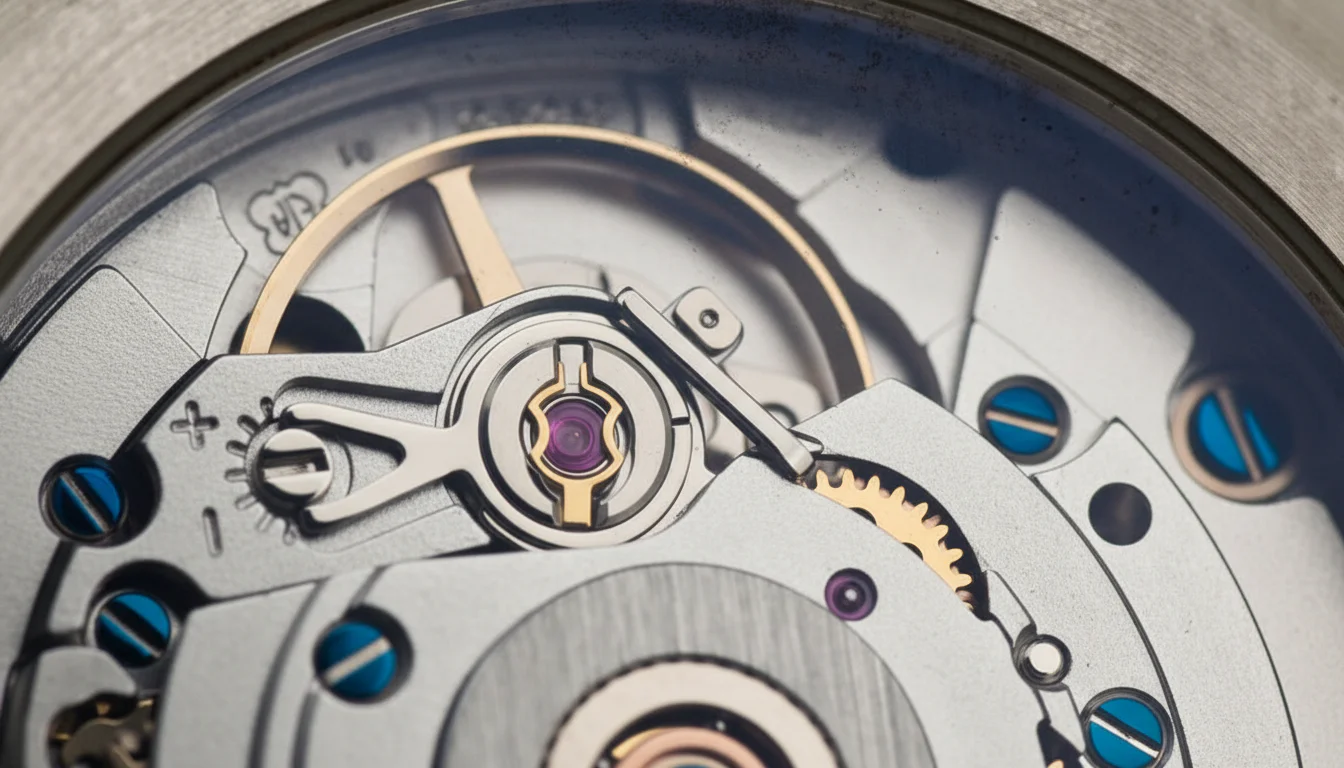 The lever riding against the cam edge is the same basic principle whether the mechanism drives a date disc or a chronograph reset.
Rolex Made It Famous
Rolex built its instantaneous date mechanism into the Datejust starting with references 6604 and 6605 between 1956 and 1959, according to Monochrome's history of the model, and the feature has stayed core to the Datejust line ever since. It also shows up in the modern Day-Date and Sky-Dweller collections, both of which share the same design philosophy of a date that changes at midnight rather than drifting toward it.
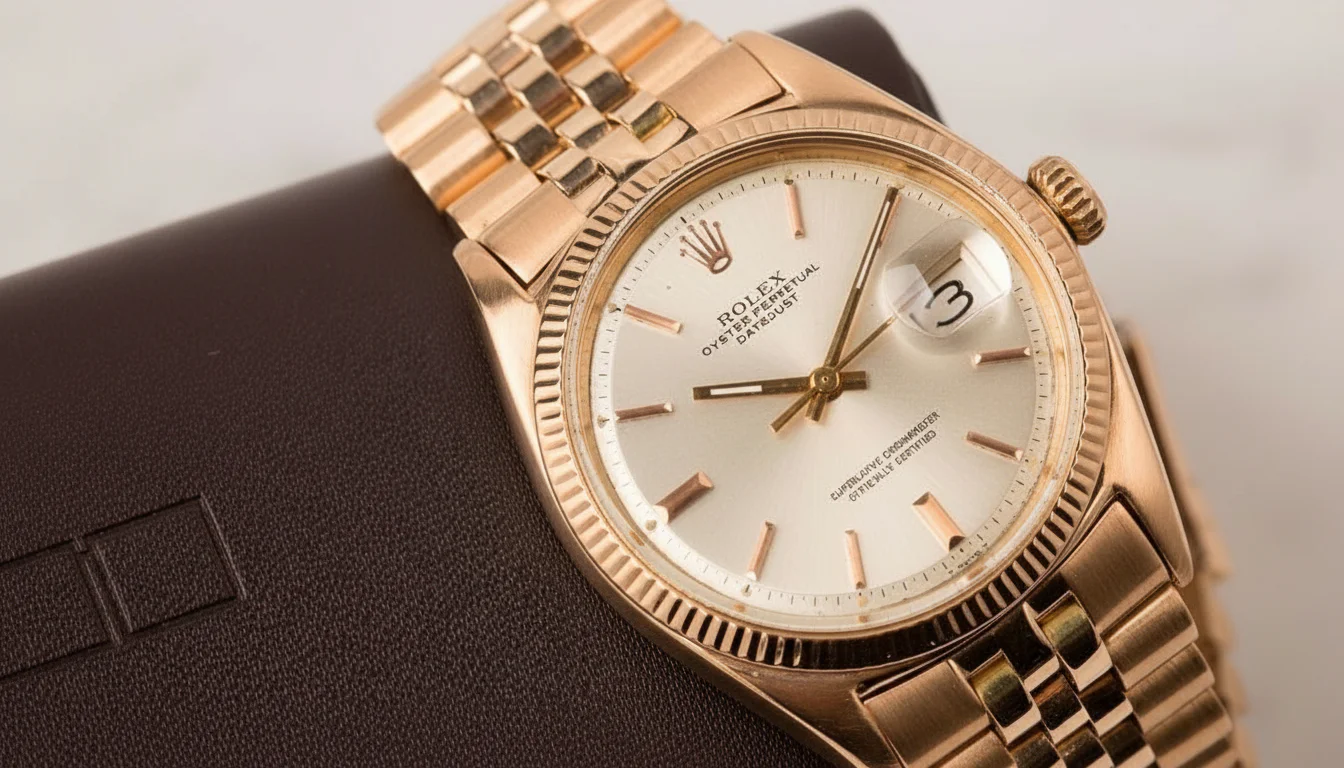 Rolex has been refining this same basic date mechanism for close to seven decades.
What Creeping Actually Looks Like in Practice
A lot of watches built on ETA-family automatic movements do not use a true instantaneous mechanism. The ETA 2824-2, one of the most widely used automatic calibers in the industry, is documented by Grail Watch Reference under its "semi-instantaneous date change" category rather than a pure creeping design, the same category the reference gives the related ETA 2892-2A. In practice, that means the date on a watch built around this movement creeps or shifts gradually over several hours rather than either dragging continuously for the whole evening or snapping cleanly at midnight the way a Rolex does.
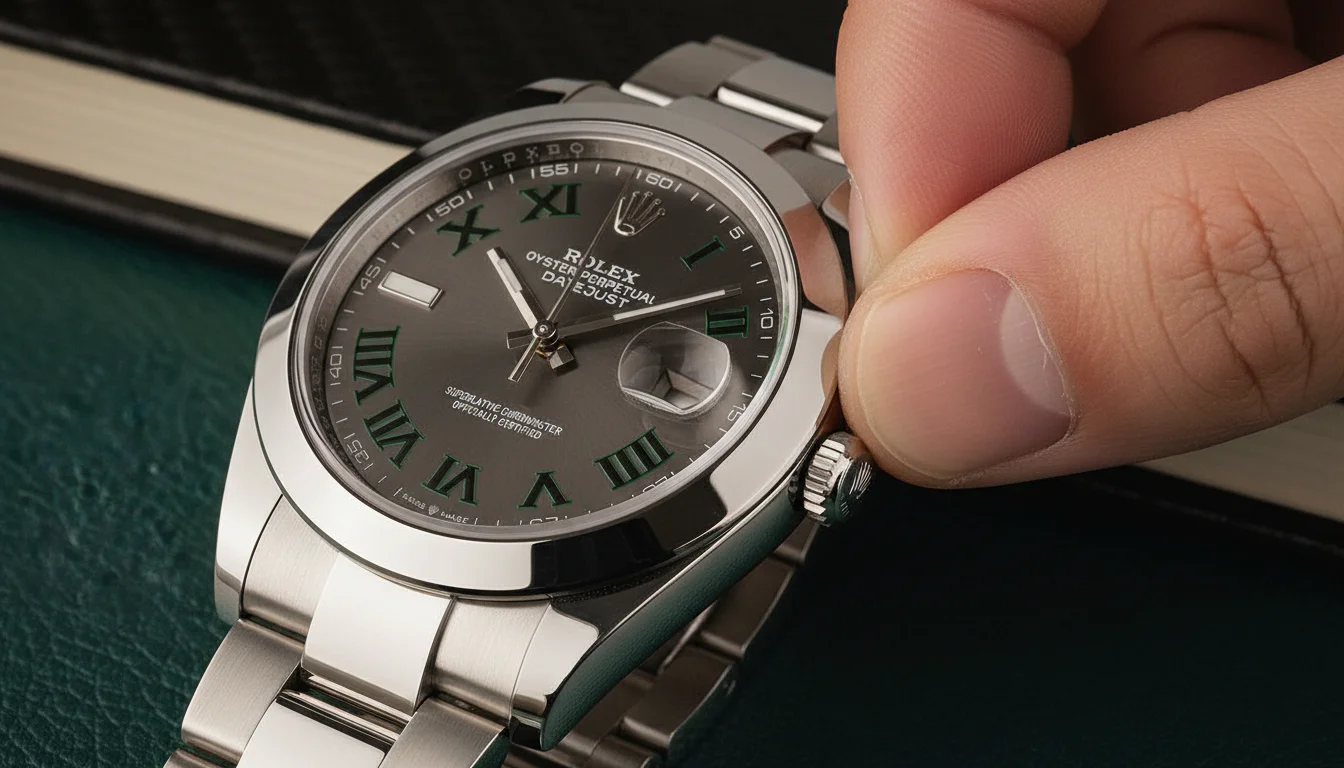 Setting the date manually works the same way regardless of which category the movement falls into. The difference only shows up as midnight approaches on its own.
Does It Actually Matter
There is no well-sourced claim that a creeping date wears out a movement faster or that it signals a cheaper build in any meaningful mechanical sense. It is more accurate to call it a cost and design tradeoff than a defect: an instantaneous mechanism adds parts, complexity, and assembly time, so brands that skip it are making a reasonable engineering choice rather than cutting a corner that will cause problems down the road.
 Whether the date snaps or creeps, it still needs the same manual correction after a short month.
For a buyer, the honest takeaway is that this is a nice-to-have detail rather than a dealbreaker. If a clean midnight snap matters to you, it is worth checking before you buy, since plenty of respected movements simply were not built to do it. If it does not matter to you, a creeping or semi-instantaneous date will not cause any problems the rest of the watch's life.
FAQ
What is the difference between an instantaneous and a creeping date change?
An instantaneous date change snaps from one number to the next in a fraction of a second at midnight, powered by a spring-loaded cam. A creeping date change moves gradually over several hours because the date disc is geared more directly to the hour wheel, without the same stored-energy release.
Does Rolex use an instantaneous date change?
Yes. Rolex built the mechanism into the Datejust starting with references 6604 and 6605 between 1956 and 1959, and it remains standard on the modern Datejust, Day-Date, and Sky-Dweller lines.
Is the ETA 2824-2 an instantaneous or a creeping movement?
Neither in the strictest sense. Grail Watch Reference classifies the ETA 2824-2 under a semi-instantaneous date change category, meaning the date shifts gradually over several hours rather than dragging continuously or snapping precisely at midnight.
Does a creeping date mean a watch is lower quality?
No. There is no solid evidence that a creeping date change indicates a cheaper build or causes extra wear. It is a design and cost tradeoff, since an instantaneous mechanism requires more parts and assembly time.
Are there three types of date-change mechanisms, or just two?
Watchmakers generally recognize three: creeping or drag, semi-instantaneous, and true instantaneous, with each adding progressively more mechanical complexity to control how and when the date disc moves.
Related Reading
- The Rolex Datejust Buying Guide: Every Generation, Every Size, Every Configuration
- Perpetual Calendar Explained: How a Watch Knows It's Not February 30th
- What Is an Annual Calendar? The Complication Between Simple Date and Perpetual, Explained
- Perpetual, Annual, or Triple Calendar: Which Complication Is Actually Worth Your Money