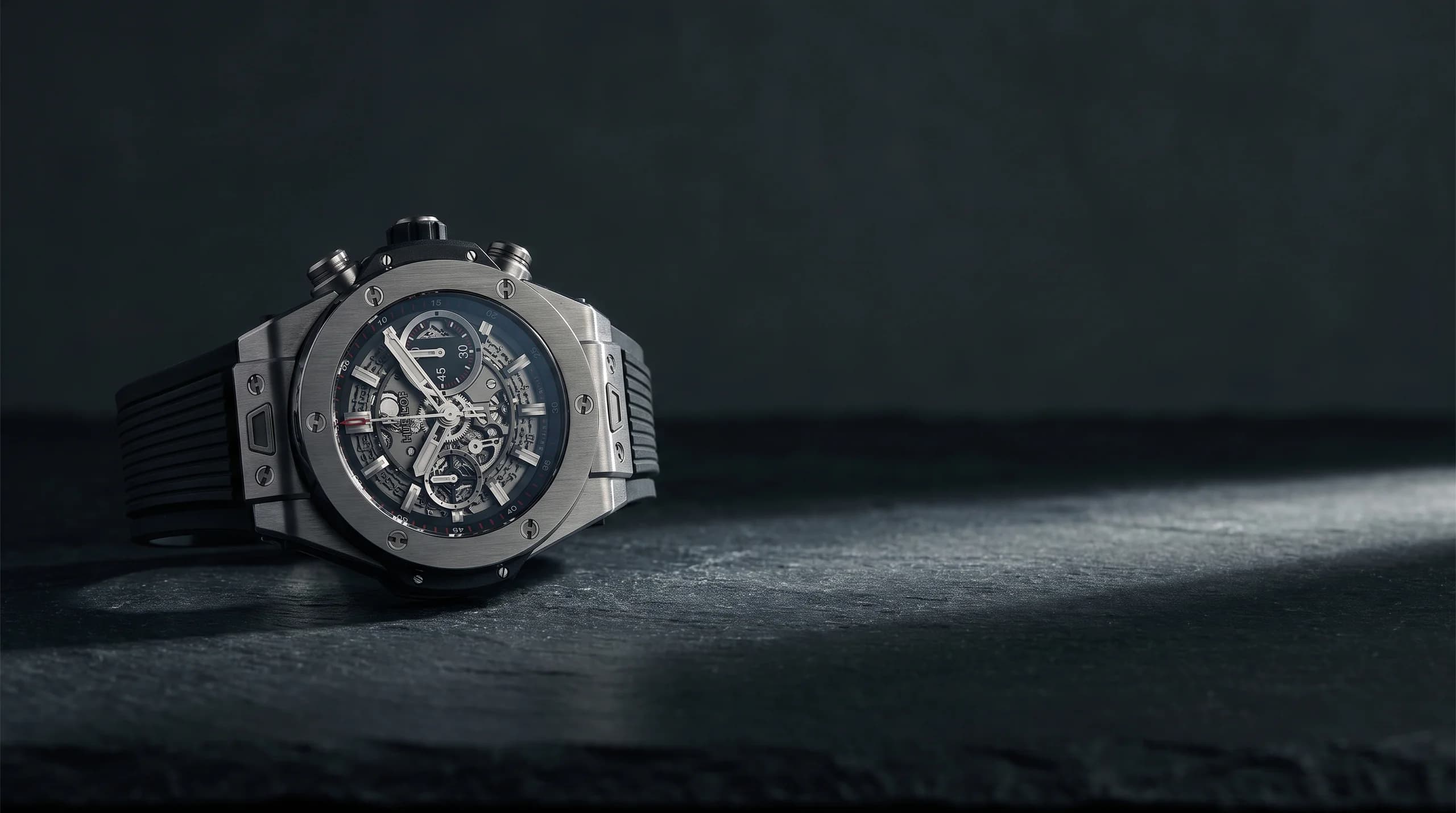
No brand splits a room like Hublot. Its fans love the bold sandwich case, the exposed movements, and the material science; its critics point to the noise and, above all, to the depreciation. Both camps are right, and for a pre-owned buyer that combination is the whole opportunity. Hublot loses a punishing amount of value the moment it leaves the boutique, which is bad news at retail and good news if you let someone else take that hit first.
Buying a Hublot pre-owned the right way comes down to capturing that discount without stepping on the traps that come with it. There are four: fakes, the wrong reference, poor condition, and service costs. Clear all four and a pre-owned Big Bang is a lot of watch for the money; miss one and the bargain evaporates.
The images in this article are AI-generated illustrations created for editorial purposes. They are not photographs of a specific watch offered for sale.
The short answer: most Hublots lose 40% to 60% of their value soon after purchase, so the only smart way to buy one is pre-owned, letting the first owner absorb the depreciation. A pre-owned Big Bang typically runs 30% to 50% below retail. The risks are authentication, because Hublot is heavily counterfeited, choosing a reference that holds up, condition, and the cost of servicing a complex movement. Buy the exact reference you want, as a full set, from a dealer who authenticates and can service it.
The depreciation is the whole point
There is no polite way around it: Hublot depreciation is steep. Analysis of the secondary market shows most models losing 40% to 60% off retail not long after purchase, with the standard Big Bang down close to 30% over five years. Retail on a men's Big Bang starts around $12,900 and climbs well past $20,000, while the same watches trade on the secondary market from roughly $7,000 to $15,000. If you buy new, that gap is your loss; if you buy pre-owned, it is your discount.
The lesson is the same one that applies to bold sports-luxury watches generally, and it is why Panerai trades below retail too. These are design-driven watches you buy to wear, not financial instruments. Go in expecting to enjoy the watch rather than flip it, and the math works in your favor from day one.
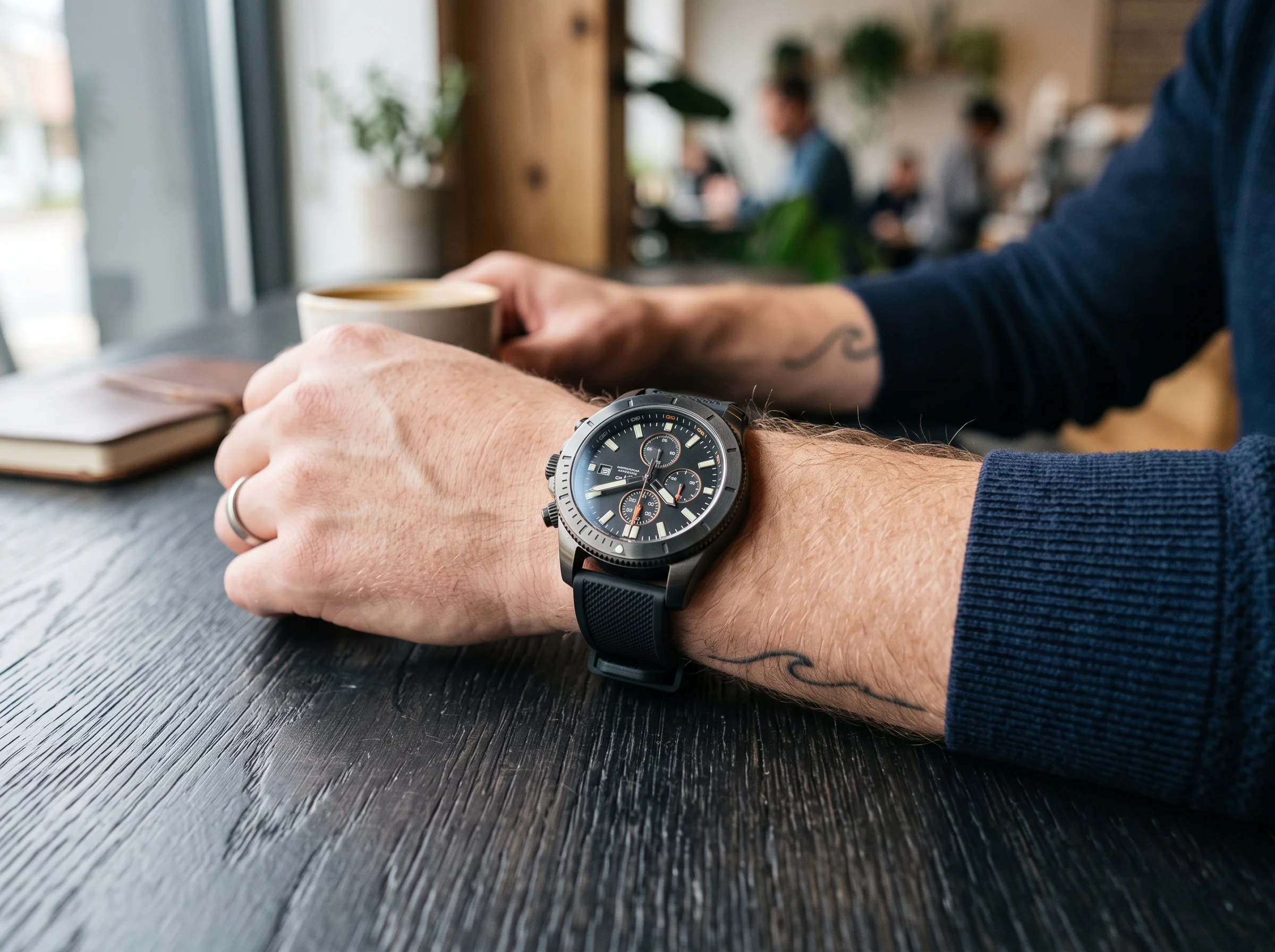 Hublot is a design-driven watch you buy to wear. Priced pre-owned, the wrist presence costs a fraction of retail.
The four traps to avoid
Capture the discount, and steer clear of these four.
Trap one: authentication
Hublot is one of the most counterfeited luxury brands, so authentication comes first, before price. The genuine article is built as a multi-layer sandwich case held together by six H-shaped titanium screws, with movement finishing and serial engravings that fakes rarely get right. The in-house Unico chronograph, visible through the dial, is especially hard to replicate convincingly. The same reference-checking discipline that catches a franken-watch applies here: buy from a dealer who authenticates every watch rather than from a stranger with a brand name and a suspiciously low price.
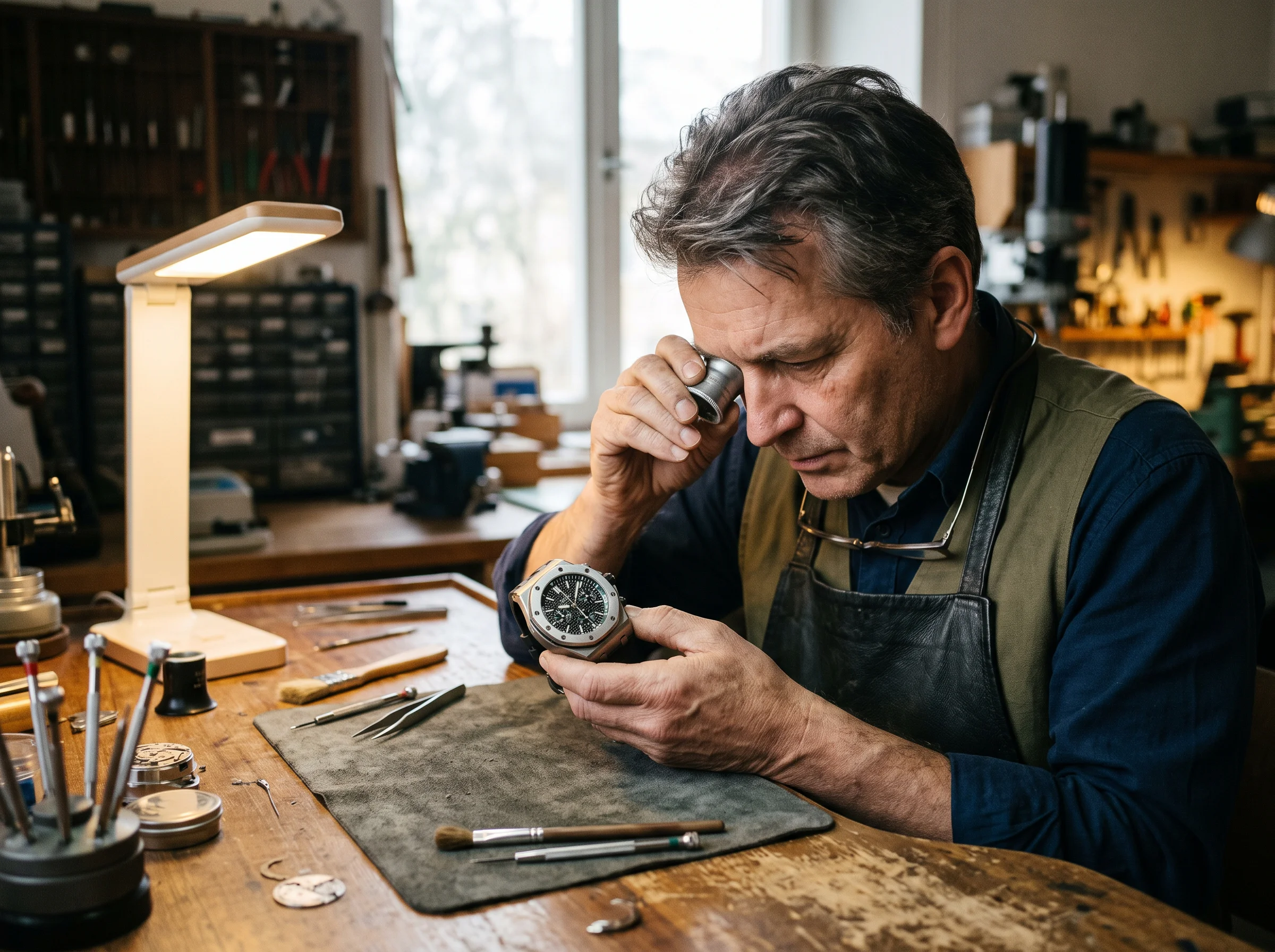 The six screwed bezel, case construction, and movement finishing are where authentication lives. Have an expert verify them.
Trap two: the wrong reference
Big Bang is a collection, not a model, and the differences between references are enormous. Identify the exact reference before you buy, because it tells you the case size, material, dial, and movement you are actually getting. The in-house Unico caliber, with its 72-hour reserve, column wheel, and flyback, is the one to want; some entry Big Bang chronographs instead use a Sellita-based movement with a shorter reserve. Materials run from ceramic and titanium to carbon fiber, King Gold, and scratch-resistant Magic Gold, and each carries a very different price, with steel Unico chronographs commonly trading around $8,000 to $14,000.
Reference choice also drives resale. The standard Big Bang and King Power depreciate hardest, while the Classic Fusion, the Spirit of Big Bang, and genuine limited collaborations like the Ferrari and Sang Bleu editions hold their value noticeably better. If retention matters to you at all, steer toward the references the market has already decided it wants.
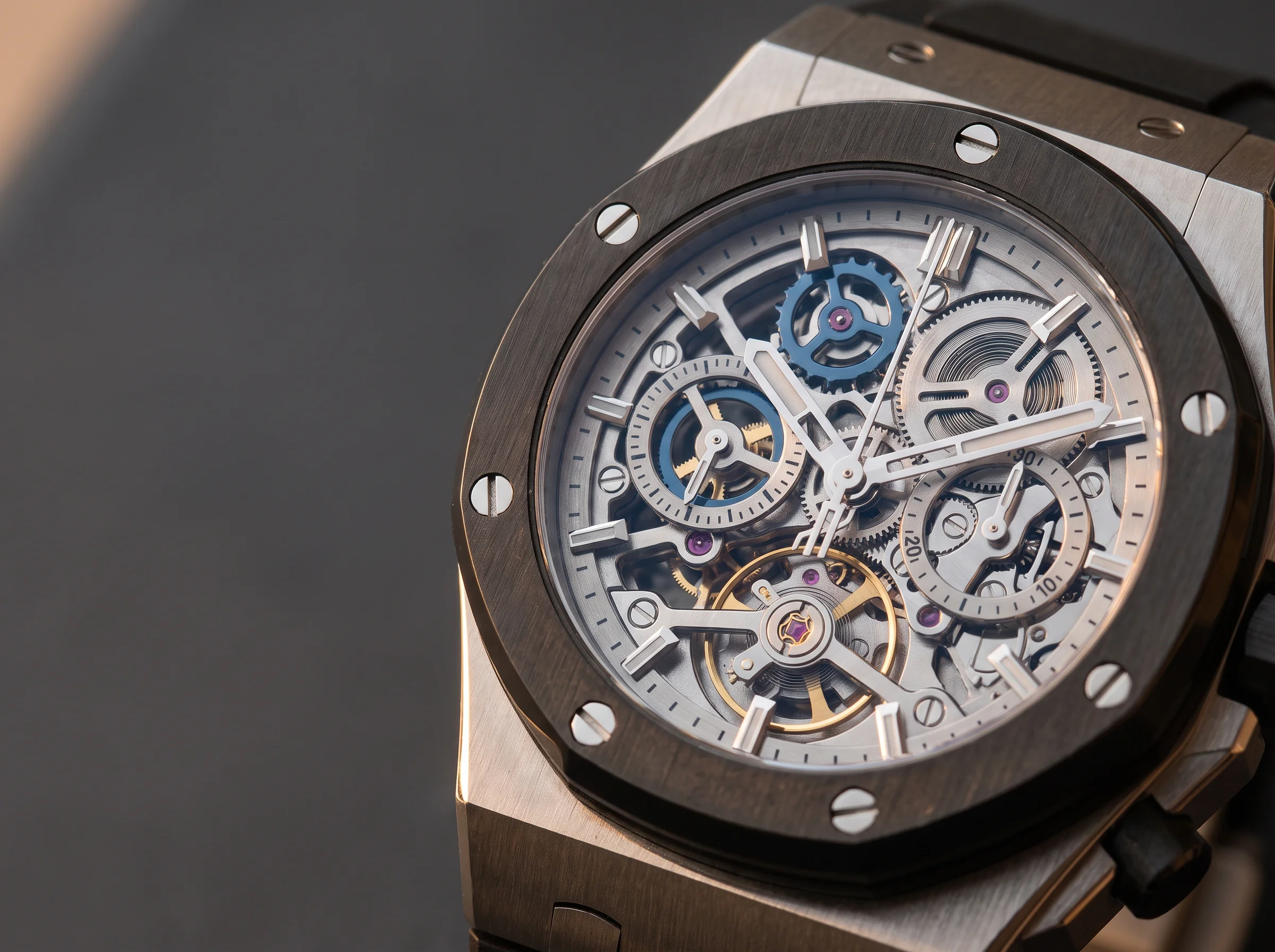 The in-house Unico chronograph is the reference to want. An entry model on a Sellita-based caliber is a different proposition.
Trap three: condition and completeness
Hublot's design lives or dies on crisp lines and material contrast, which makes condition unusually important. A heavily polished case, worn bezel, or scratched ceramic changes how the whole watch reads, so inspect the finishing, crystal, and original strap closely. Completeness matters too: a full set with box, papers, and the extra strap commands a premium and is far easier to resell later, often worth 10% to 20% over a watch-only example. With Hublot's One Click strap system, confirm the original strap and any extras are present and genuine.
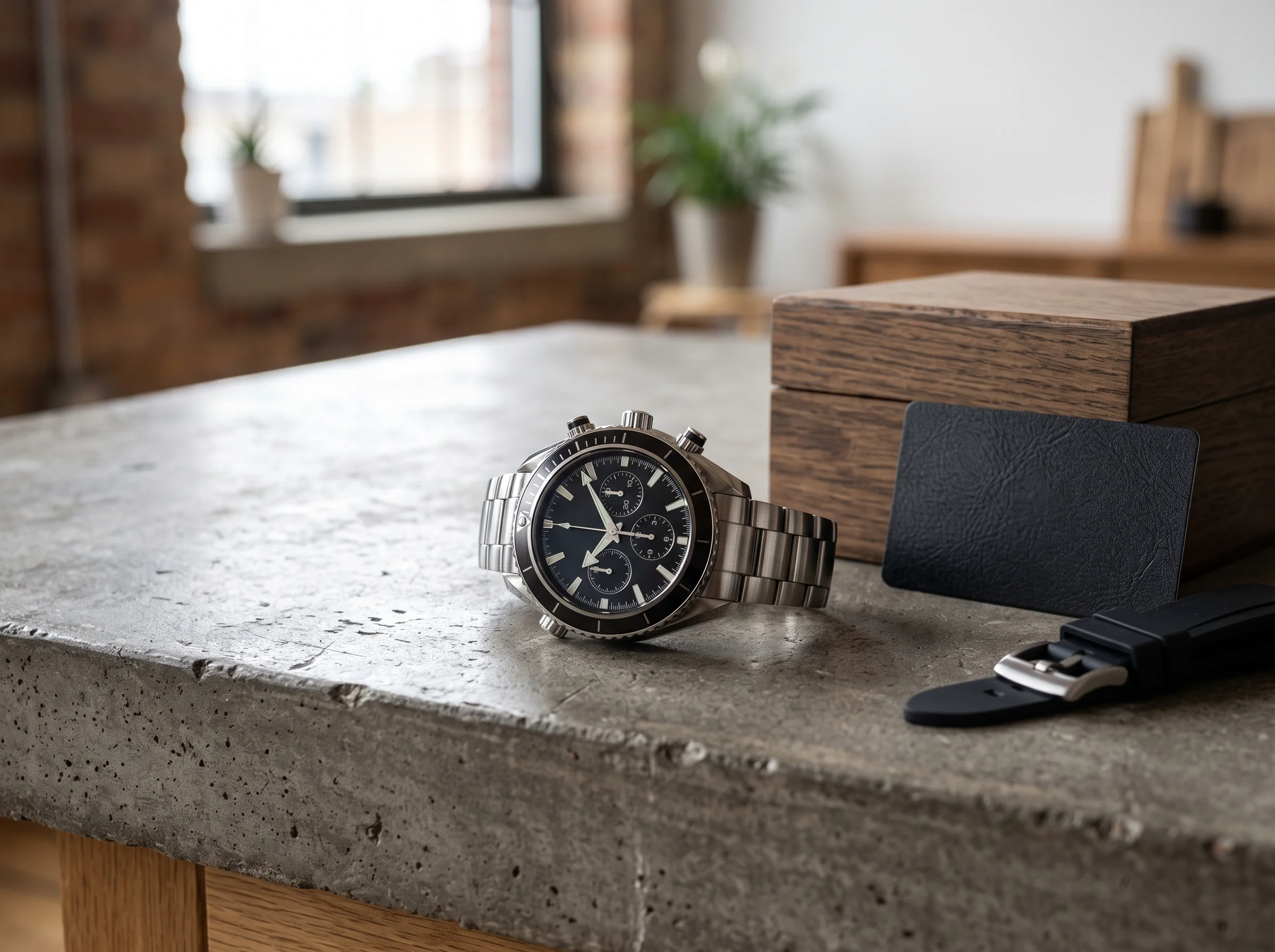 A full set with box, papers, and the original straps is worth paying for. It protects both the wearing and the resale.
Trap four: service and running costs
A Hublot is not a cheap watch to keep. The Unico is a complex in-house chronograph, service is recommended roughly every three to five years, and what that costs varies a lot by brand and movement. Buy an example with recent service history, or from a dealer who can service it, and factor that running cost into the price rather than discovering it later.
So should you buy one?
Buy a Hublot pre-owned if you love the way it looks and wears, full stop. Bought used, authenticated, in the right reference and condition, a Big Bang delivers genuine material innovation and unmistakable wrist presence for well under its original retail. Do not buy one expecting it to appreciate, and do not buy new unless you are comfortable eating the depreciation for the privilege. Get those expectations right and Hublot is one of the most rewarding bold-luxury watches you can buy for the money.
If the bold sports-luxury look is what draws you but you want a carried, authenticated alternative that also rewards the pre-owned buyer, browse pre-owned Panerai at 5dwatches.com.