The Short Answer
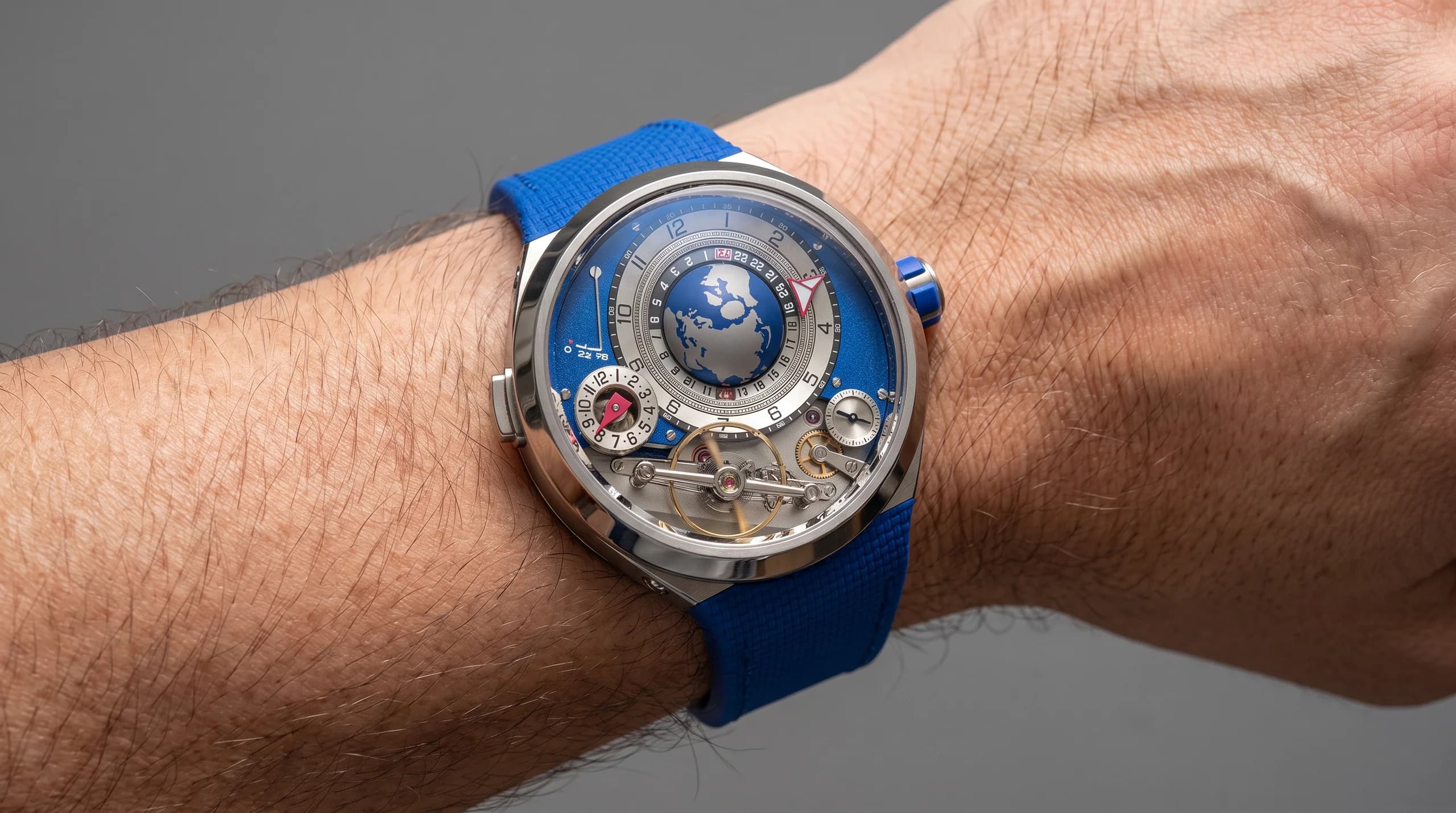
Greubel Forsey just redesigned its GMT Balancier Convexe for 2026, shrinking the case from 43.5mm to 42.9mm while adding a power reserve indicator that took 73 extra components to build in. The watch still runs a tilted 30-degree balance wheel and a rotating three-dimensional globe that shows day and night around the world in real time. It costs CHF 380,000 and is limited to 22 pieces.
This is Greubel Forsey's first appearance on this site. The brand is one of the smallest, most technically obsessive names in independent watchmaking, and the Convexe redesign is a good entry point into why collectors who already own a Patek or an AP keep circling back to it.
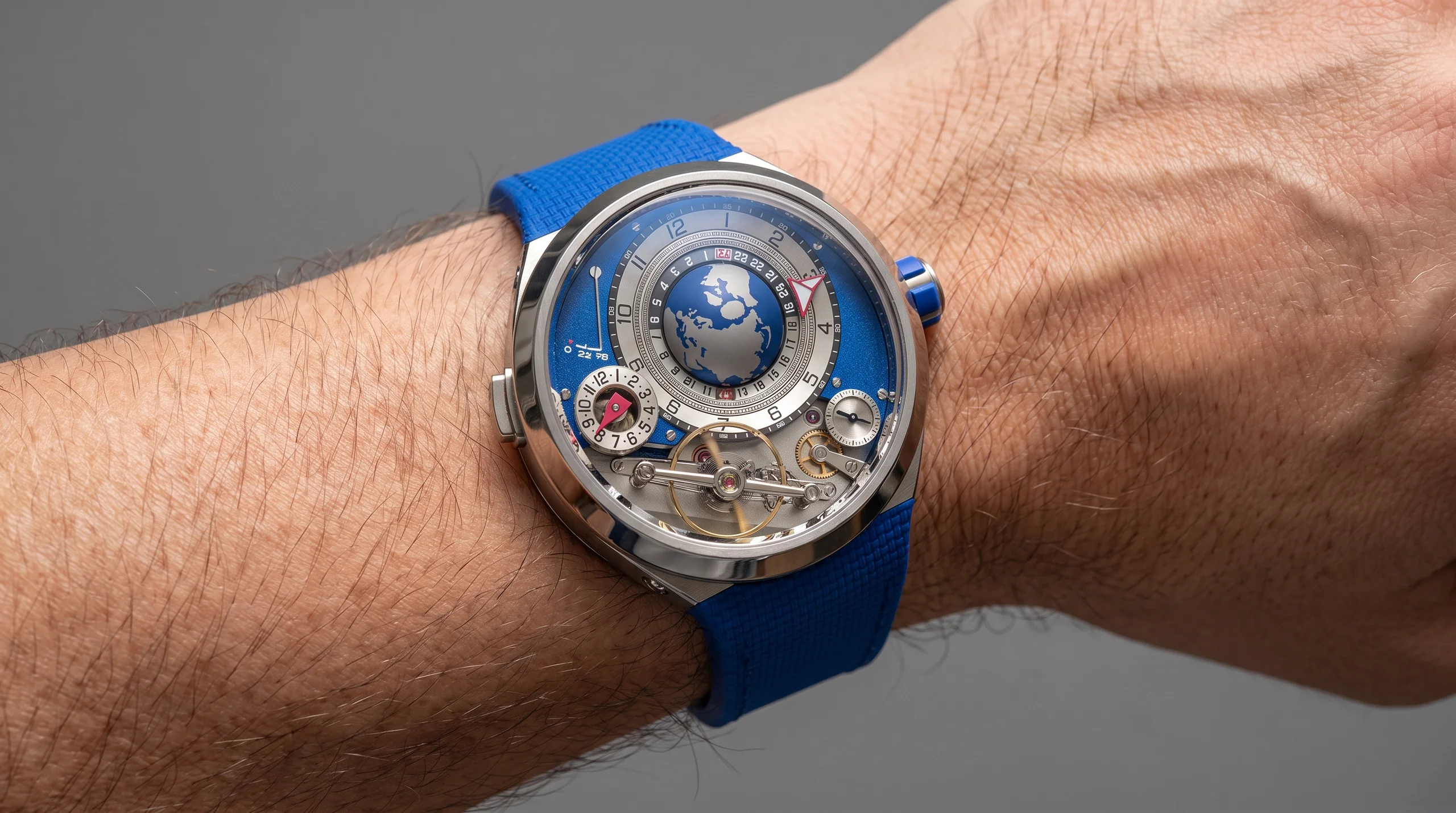 The 2026 redesign trims the case to 42.9mm from the original 43.5mm, a small change that makes a genuinely large watch feel more wearable.
The watch photos in this article were generated with AI image tools, conditioned on real reference photography of the Greubel Forsey GMT Balancier Convexe so the case architecture and dial layout are accurate to the real watch.
Who Greubel Forsey Actually Is
Robert Greubel and Stephen Forsey founded their watchmaking house in Switzerland in 2004, after both had worked on complicated movements for other manufactures. Their focus from day one was inclined and rotating balance wheels: mechanisms that tilt the escapement to fight the effect of gravity on timekeeping, the same basic problem a tourbillon tries to solve, approached differently.
The GMT Balancier Convexe sits in the brand's Convexe collection, named for the domed sapphire crystal that caps the case and gives the balance wheel room to tilt at its full 30-degree angle without a flat crystal getting in the way.
Why a Tilted Balance Wheel Matters
A standard balance wheel sits flat and level in the movement. Gravity pulls on it slightly differently depending on the watch's position on the wrist, which is part of why a watch can run faster lying dial-up than it does dial-down. Tilting the balance wheel at an angle, as Greubel Forsey does at 30 degrees here, averages out some of those positional errors across the wheel's rotation instead of eliminating them outright.
What Changed in the 2026 Redesign
The new Convexe case measures 42.9mm across, down from the outgoing model's 43.5mm, with the bezel shrinking from 46.5mm to 44.9mm. Thickness comes in at 15.1mm on the case itself, 17.6mm across the domed crystals front and back.
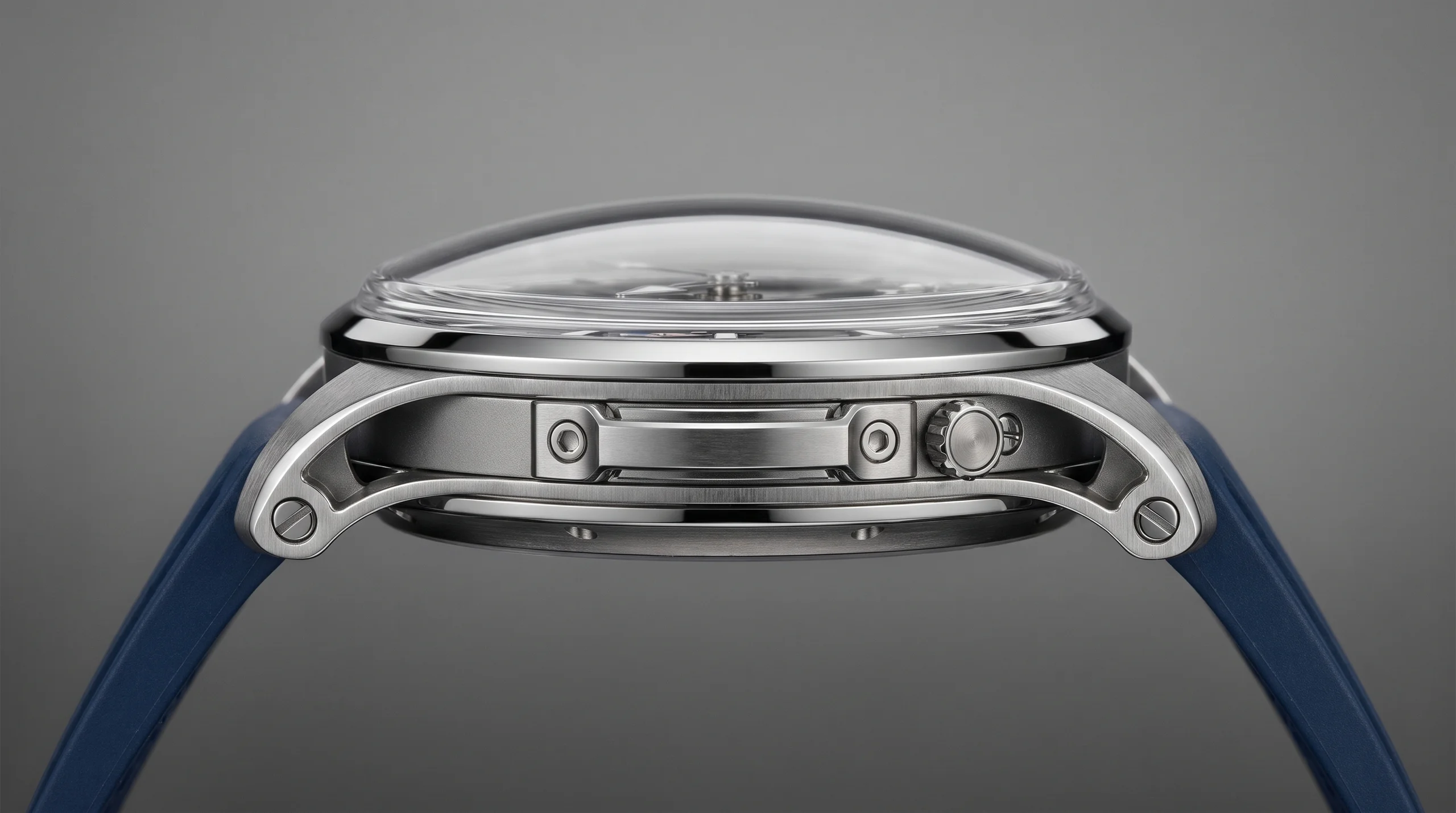 The domed sapphire crystal is not decorative. It is the reason the balance wheel can tilt a full 30 degrees without the case getting noticeably taller.
The Trade-Off: A Power Reserve Indicator for Less Water Resistance
Greubel Forsey added a power reserve indicator to the dial for this generation, a genuinely useful feature on a hand-wound watch with this much going on. Building it in took 73 additional components. Something had to give: water resistance drops from the previous model's rating to 50 meters here, a trade a buyer of a watch this technical is generally fine making.
The Dial: A Globe That Actually Turns
The GMT Balancier Convexe's signature feature is a rotating three-dimensional terrestrial globe on the dial, completing one full rotation every 24 hours and shaded to show which half of the world is currently in daylight and which is in darkness.
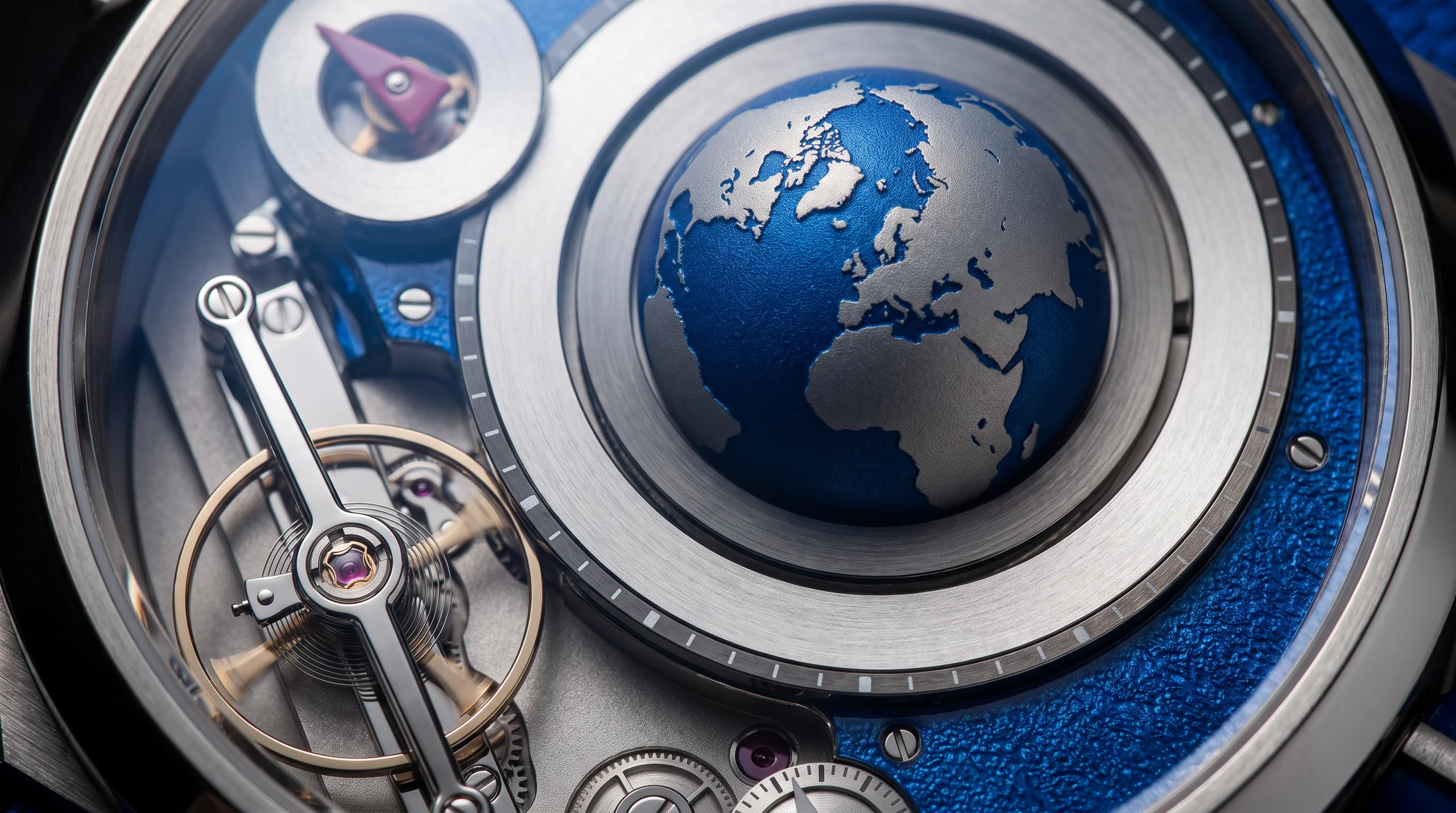 The globe is not a flat printed disc. It is a genuine three-dimensional sphere, geared to rotate once every 24 hours in sync with the second time zone indication.
A 24-hour chapter ring around the globe gives the GMT reading, and the day and night shading updates continuously rather than jumping at fixed hours the way a simpler world-time display might.
The Movement Underneath
The manual-winding caliber runs 496 parts and 72 jewels at a 3Hz (21,600 vibrations per hour) frequency, a deliberately slower beat rate than the 4Hz standard in most modern watches, chosen here to suit the tilted balance wheel's mechanics rather than for any efficiency reason.
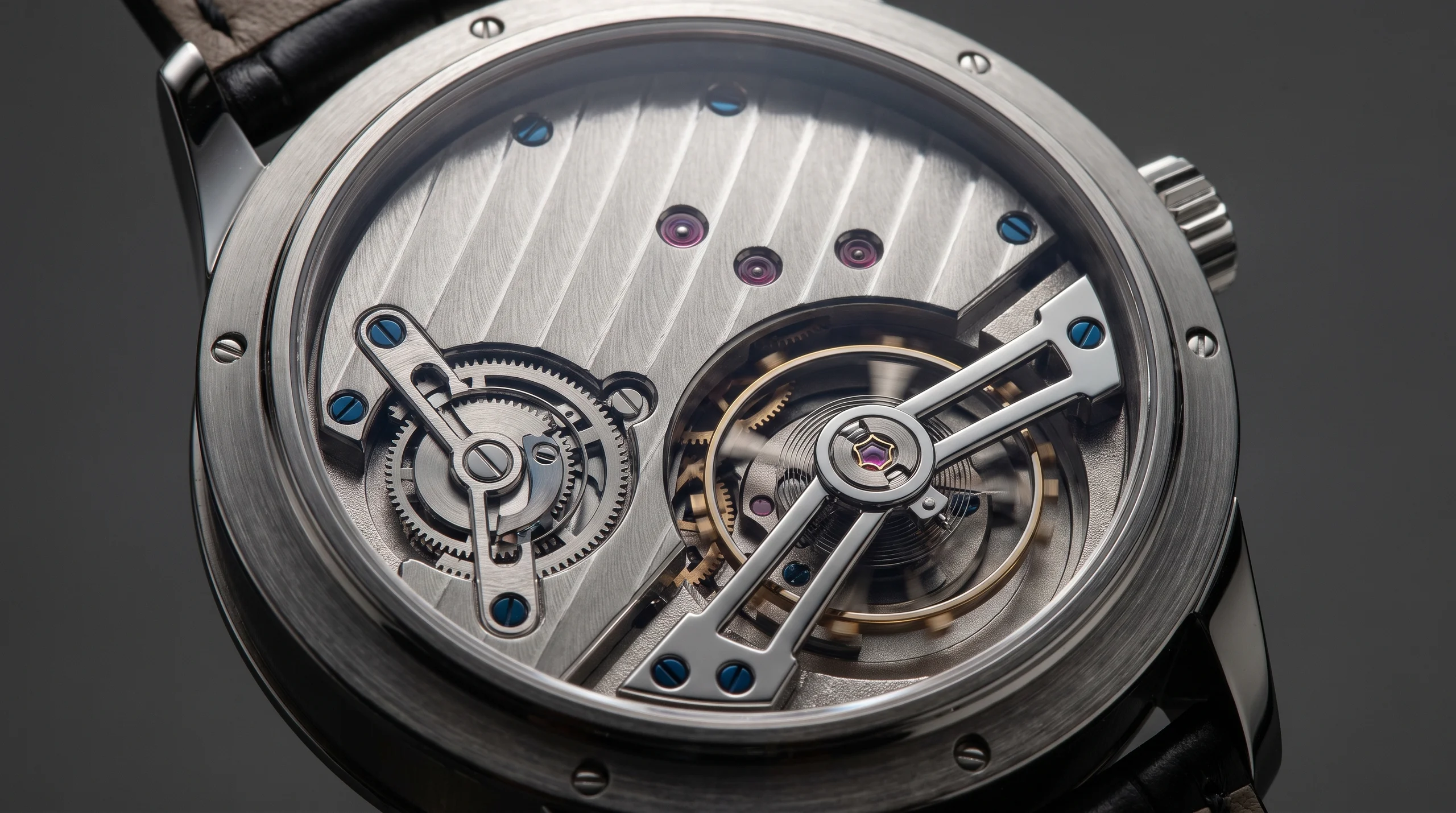 Every visible bridge and bevel on a Greubel Forsey movement is finished by hand, a large part of where the watch's price and its four-figure production number both come from.
Price and Positioning
At CHF 380,000 for 22 pieces, this is not a watch most collectors will ever handle in person, let alone buy. It matters anyway, because it shows where the technical ceiling of independent watchmaking currently sits, and because Greubel Forsey's inclined-balance patents from watches like this one tend to filter down into less extreme pieces over the following years.
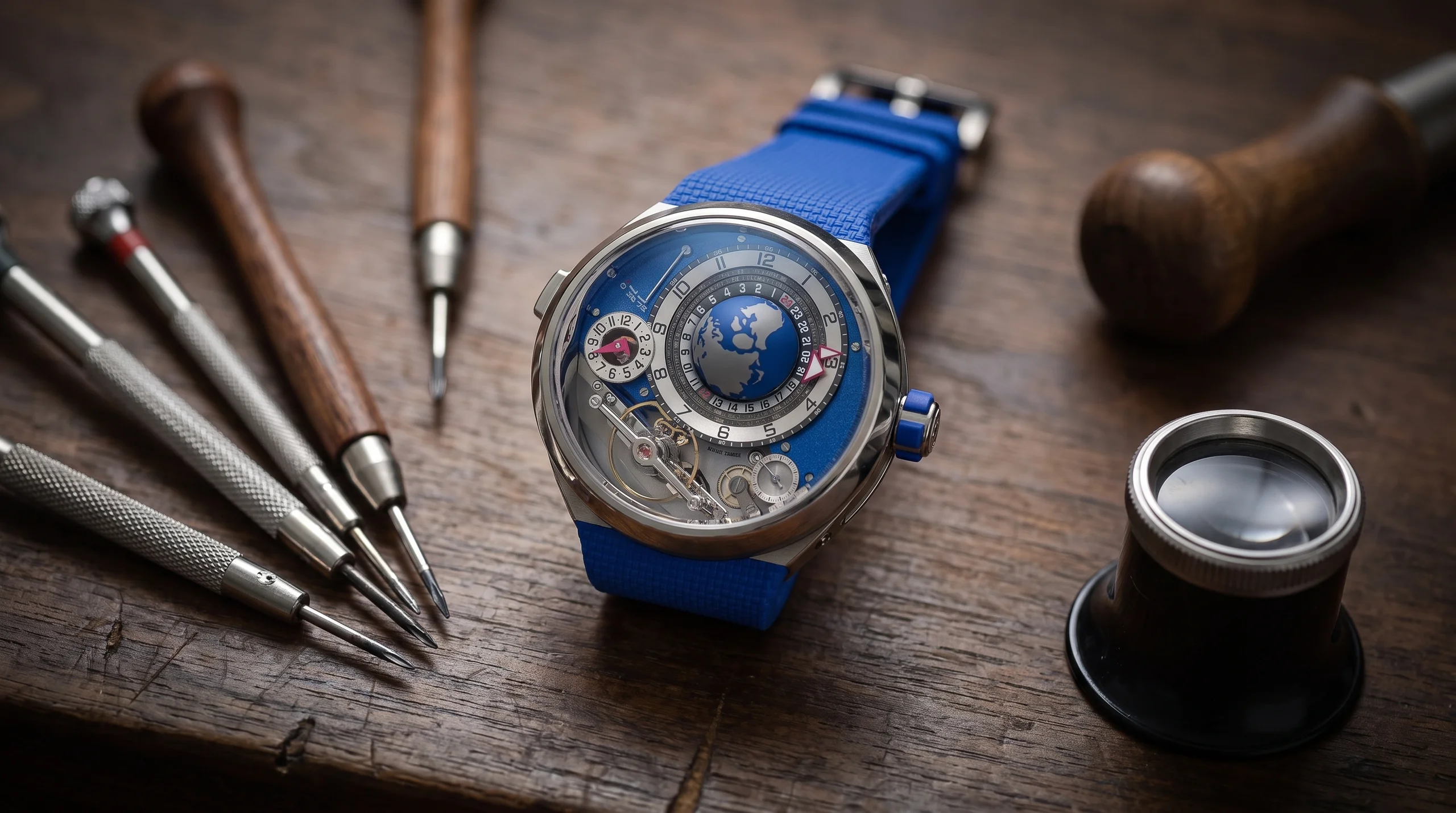 A watch at this price point is still assembled and regulated by hand on a bench like this one, not on an assembly line.
The Honest Trade-Off
Greubel Forsey watches are large, thick, and built around mechanical ideas that a simpler and far cheaper watch can approximate without ever matching outright. A GMT complication does not need a rotating 3D globe or a 30-degree tilted balance to tell you a second time zone. What this watch sells is the specific, patented way it solves that problem, not the problem itself. Buyers who want maximum technical density per dollar will find better value in a simpler GMT. Buyers chasing the mechanism itself will not find a substitute.
FAQ
What is the Greubel Forsey GMT Balancier Convexe?
It is a 2026 redesign of Greubel Forsey's GMT watch, featuring a rotating three-dimensional globe that shows day and night, a balance wheel tilted 30 degrees, and a newly added power reserve indicator. It costs CHF 380,000 and is limited to 22 pieces.
How is the 2026 Convexe different from the previous version?
The case shrinks from 43.5mm to 42.9mm and the bezel from 46.5mm to 44.9mm. Greubel Forsey also added a 72-hour power reserve indicator, which required 73 extra components, at the cost of reduced water resistance (now 50 meters).
Why does Greubel Forsey tilt the balance wheel?
Tilting the balance wheel at an angle, 30 degrees on this watch, averages out some of the positional timekeeping errors caused by gravity acting differently on the movement depending on the watch's orientation on the wrist.
How many Greubel Forsey watches are made each year?
Greubel Forsey produces fewer than 100 watches annually across its entire catalog, with individual limited editions like the GMT Balancier Convexe capped even lower, at 22 pieces here.
Is Greubel Forsey more exclusive than Patek Philippe or Audemars Piguet?
Yes, by production volume. Patek Philippe and Audemars Piguet each make tens of thousands of watches a year. Greubel Forsey's entire annual output is smaller than a single day of production at either of those manufactures.