The Short Answer
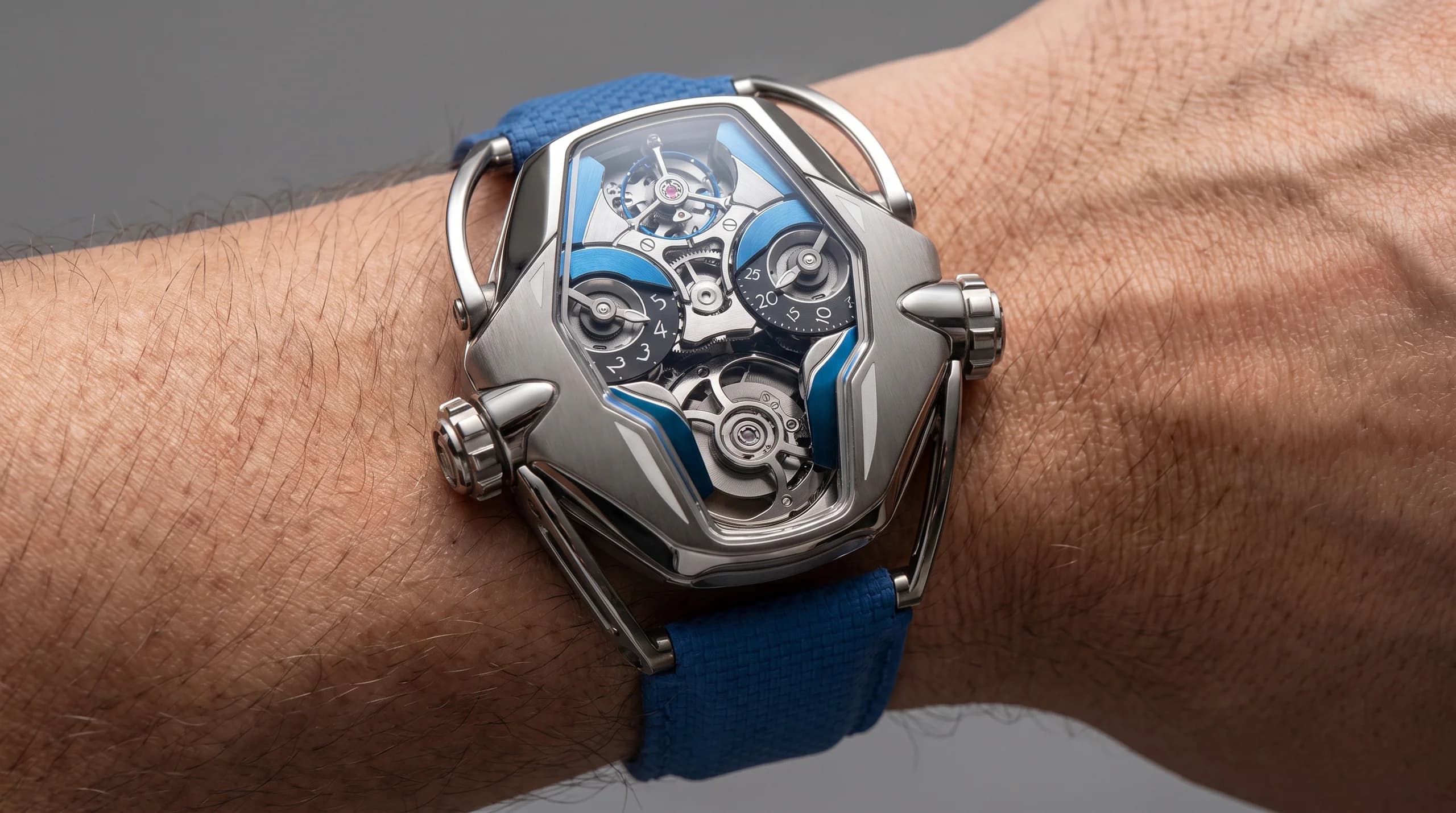
MB&F just released the HM12 "The Guardian," a titanium wristwatch built with a face on the dial (a jumping-hour and trailing-minute display for eyes, a flying tourbillon for a forehead) and, unusually, a matching 38.2cm mechanical robot companion that stands guard beside it. The watch alone runs an in-house automatic caliber with 646 components and an 84-hour power reserve. Price is CHF 280,000 plus VAT, limited to 36 pieces across three colorways.
This is not a variant or a limited colorway of an existing model. It is a new Horological Machine, MB&F's tenth in the numbered HM line since 2005, and it took over four years to build.
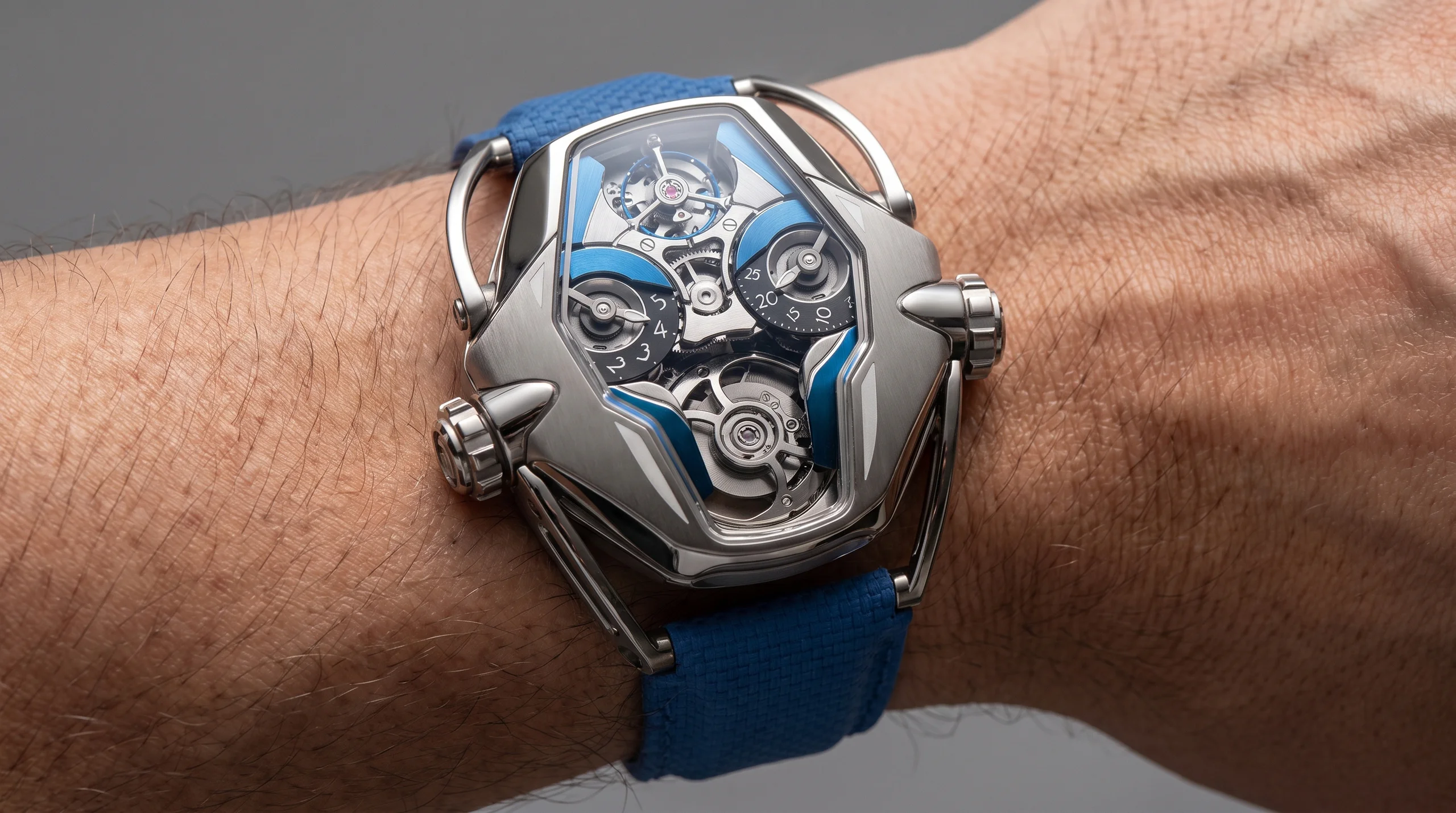 The face-shield system, over 200 components on its own, can be raised or lowered over the dial with a dedicated crown at 9 o'clock.
The watch photos in this article were generated with AI image tools, conditioned on real reference photography of MB&F's Horological Machine watches so the case architecture and mechanical layout are accurate to the real pieces.
What MB&F Actually Is
MB&F stands for Maximilian Büsser and Friends. Maximilian Büsser founded the company in 2005 after running product development at Harry Winston's watch division, with a stated goal of building "kinetic art" rather than conventional watches.
Every Horological Machine is a collaboration. MB&F designs the concept and drives engineering internally, then brings in outside specialists for specific components: independent watchmaker Kari Voutilainen's team handled the guilloché finishing on the Guardian, and case-and-robot maker L'Épée 1839 built the companion figure.
Four Years for One Watch
Büsser and co-designer Maximilian Maertens spent more than four years developing the Guardian. That is a long runway even by MB&F's standards, and it shows in the part count: nearly 1,500 components across the watch and its robot companion combined.
The Watch: A Face Looking Back at You
The HM12 case is Grade 5 titanium, 49.3mm long, 43.6mm wide, and 13.8mm thick, with mobile lugs at 12 o'clock and fixed lugs at 6. Three sapphire crystals expose the movement from multiple angles.
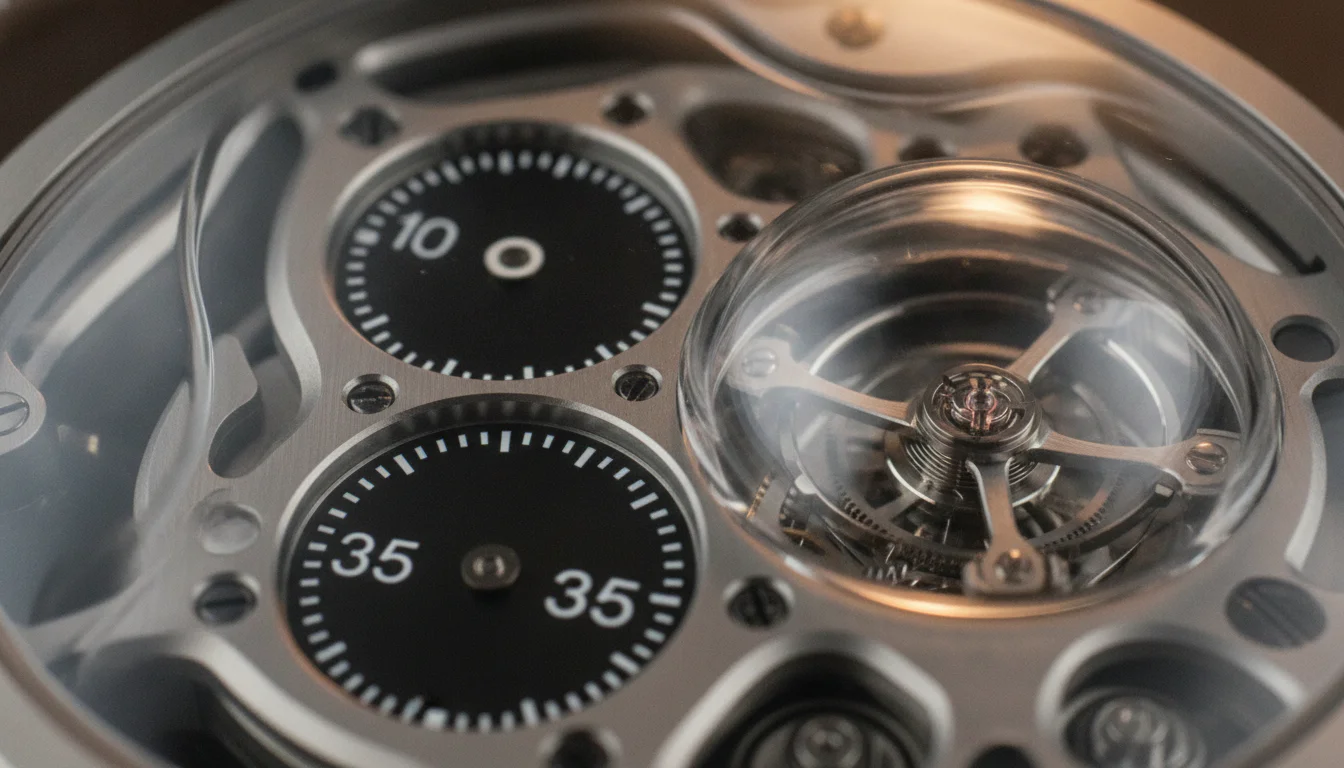 The jumping-hour and trailing-minutes discs sit where eyes would be, and a flying tourbillon occupies the "forehead" position under its own sapphire dome.
The Movement: 646 Components, 84-Hour Reserve
The in-house automatic caliber runs 646 components and 86 jewels at 28,800 vibrations per hour (4Hz), with an 84-hour power reserve. A double-sided micro-rotor shaped like MB&F's battle-axe motif winds the mainspring, visible through the case back.
The Face-Shield System
A dedicated crown at 9 o'clock operates a face-shield system, more than 200 components on its own, that raises or lowers a pair of movable shields over the dial. Disengage the crown and the shields can be adjusted without disturbing the time or the winding function, a declutching mechanism MB&F built specifically so the shield adjustment never interferes with the rest of the watch.
The Robot: Not a Display Stand
Most watch presentation boxes hold a watch. The Guardian's presentation piece is a 38.2cm tall mechanical robot built from 755 components, weighing roughly 15kg on a 22cm base.
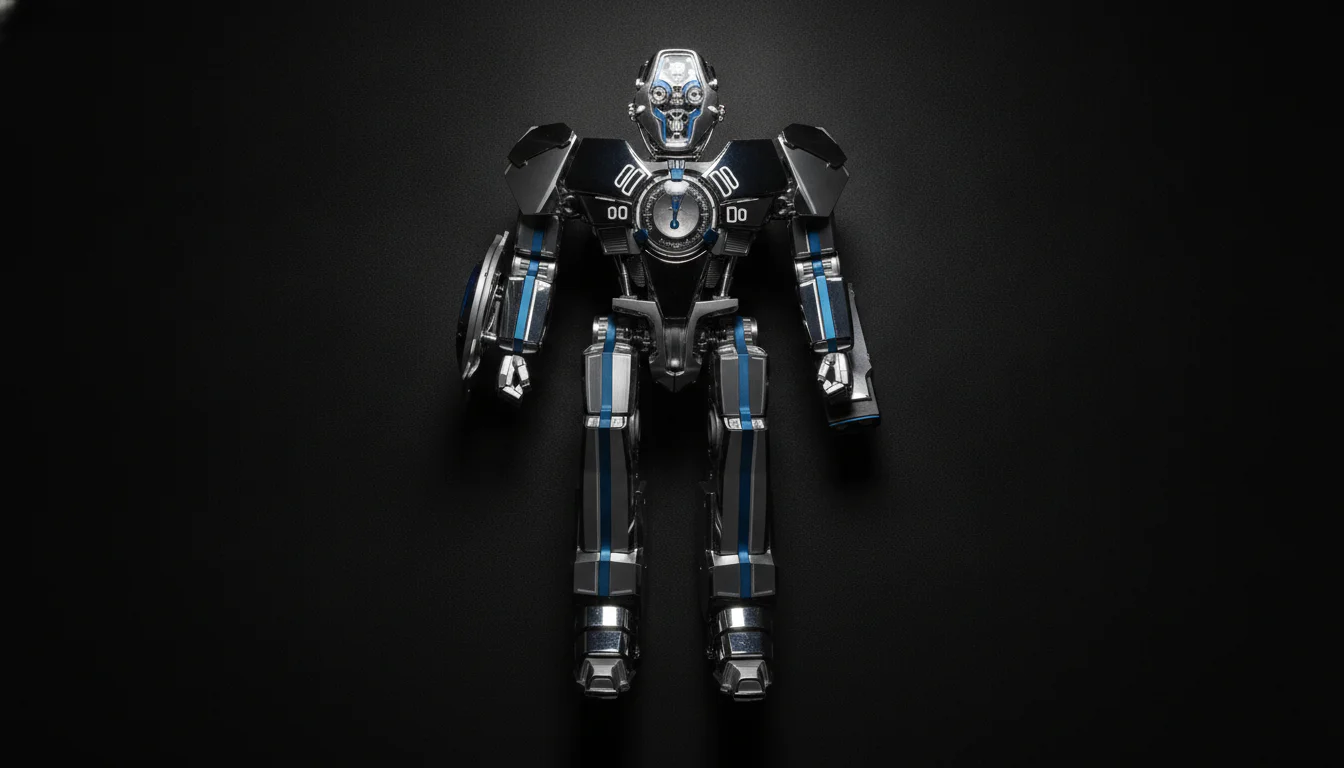 The robot carries a mechanical thermometer in its chest, a magnifying glass shield on one arm, and a detachable UV torch on the other, all functional rather than decorative.
Why a Robot at All
MB&F has built robot-shaped clocks and companion pieces before, but never one this closely paired with a specific watch's design language. The Guardian robot's stance, proportions, and shield motif echo the watch directly, which is presumably the point: MB&F is selling a complete object, not a watch with a novelty box.
Price and Positioning
At CHF 280,000, the Guardian costs more than the HM11 Architect that preceded it, and that gap is easier to justify once the robot companion is counted as part of what you are actually buying, not an accessory bundled on top.
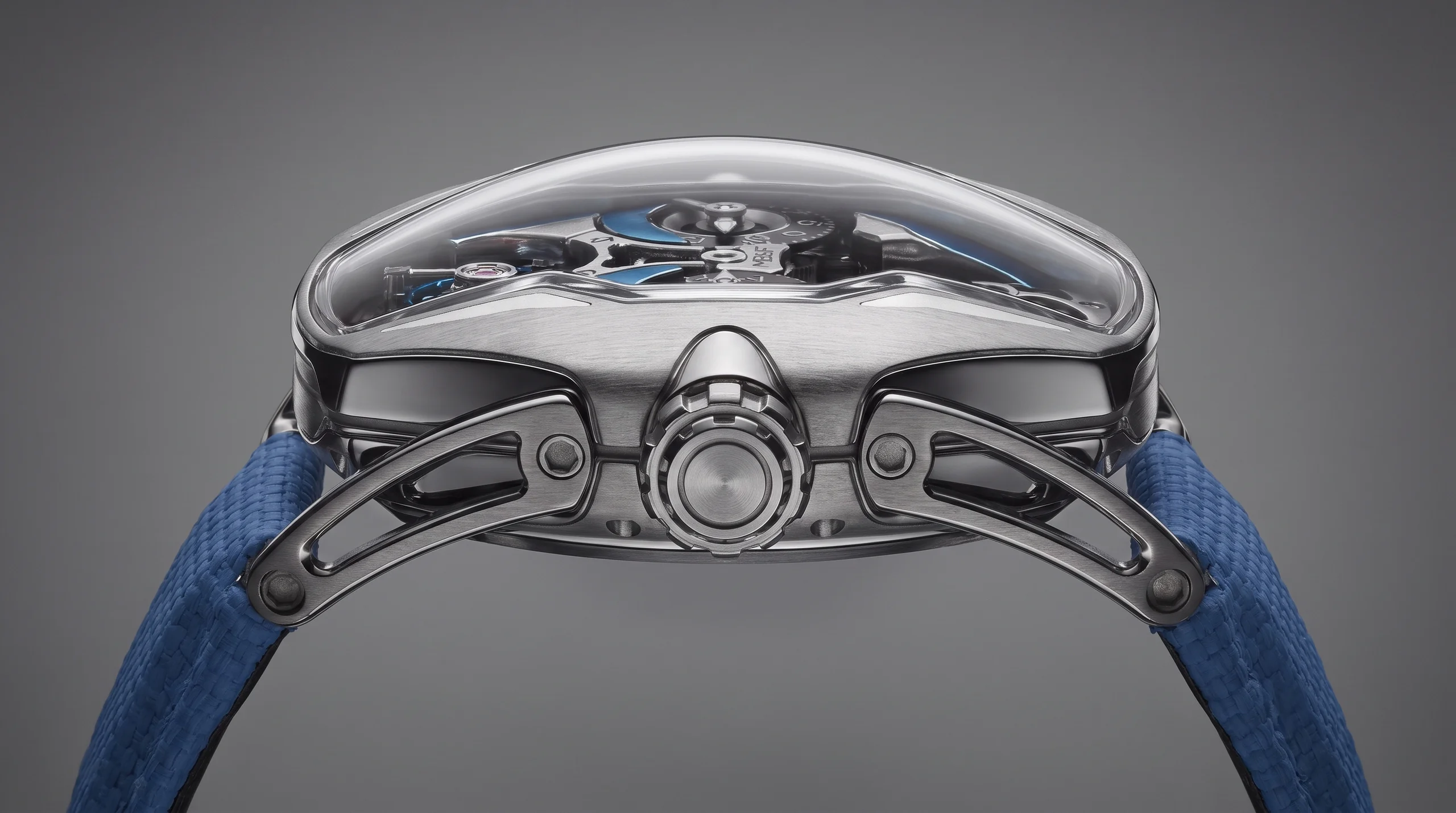 Three separate sapphire crystals expose the movement from the front, the side, and the case back, a construction choice that adds complexity well beyond a standard exhibition case back.
The Honest Trade-Off
Thirty-six pieces at this price point means the Guardian was never going to be a volume release, and MB&F is not pretending otherwise. What you are paying for is specifically the concept and the collaboration, Voutilainen's finishing, L'Épée's robot, four years of joint development, not a spec sheet that outperforms a Lange or a Journe on finishing alone. Buyers who want the most watchmaking per dollar will find better value elsewhere in independent horology. Buyers who want an object nobody else is building will not find a substitute.
Where MB&F Sits in Independent Watchmaking
MB&F belongs to the same conversation as F.P. Journe, H. Moser & Cie, and Ulysse Nardin's Freak line: small-batch, founder-driven watchmaking that prioritizes a genuine idea over broad market appeal. Where Journe leans into classical finishing and Moser into minimalism, MB&F has always leaned into sculpture. The Guardian is the clearest example yet of that direction taken all the way through.
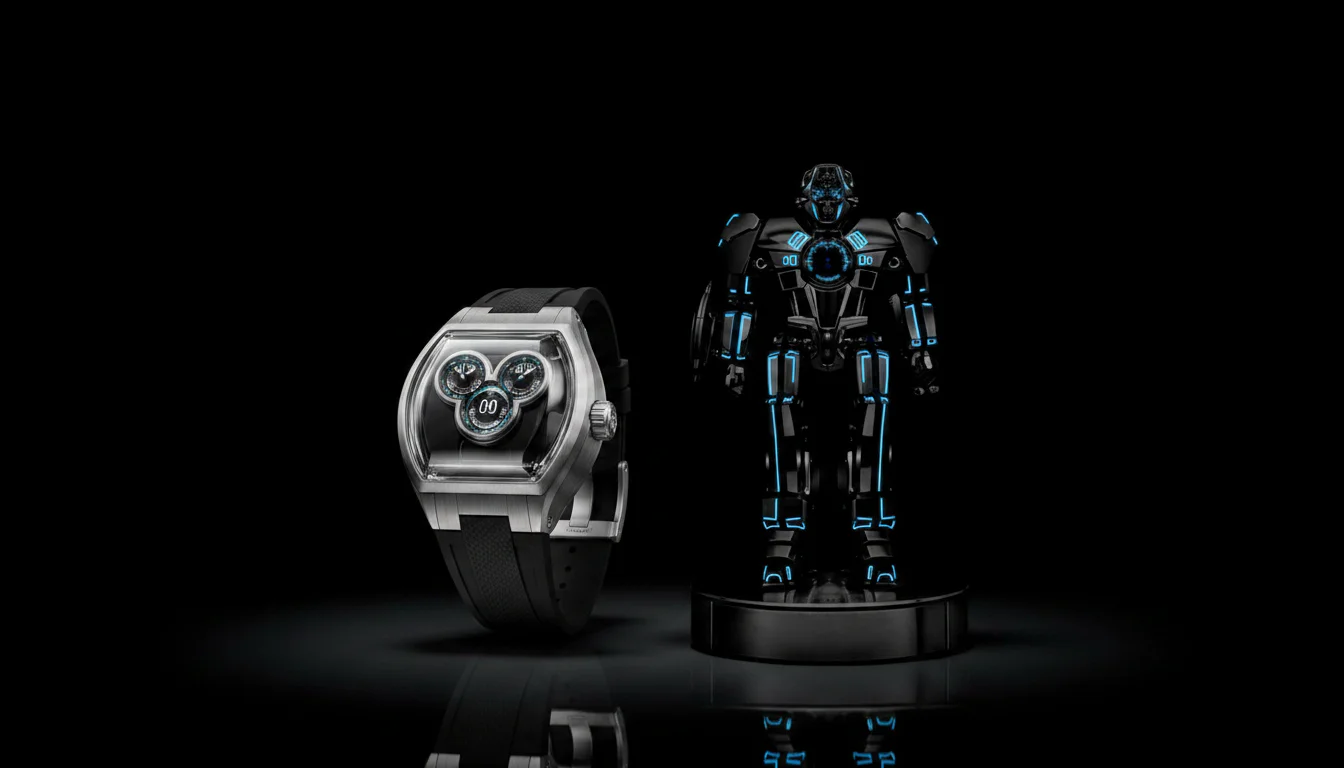 Presenting the watch and the robot together is closer to how MB&F intends the piece to be experienced than photographing the watch alone.
FAQ
What is the MB&F HM12 "The Guardian"?
The HM12 "The Guardian" is MB&F's tenth Horological Machine, a titanium wristwatch with a jumping-hour and trailing-minutes dial styled as a face, a flying tourbillon, and a companion mechanical robot figure built by L'Épée 1839. It costs CHF 280,000 plus VAT and is limited to 36 pieces.
How much does the MB&F HM12 cost?
CHF 280,000 plus VAT for the watch and its robot companion together, across three limited colorways (blue, green, and purple), each capped at 12 pieces.
What movement does the HM12 use?
An in-house automatic caliber with 646 components and 86 jewels, running at 28,800 vibrations per hour with an 84-hour power reserve and a double-sided micro-rotor shaped like MB&F's battle-axe motif.
Who worked on the HM12 besides MB&F?
Independent watchmaker Kari Voutilainen's team handled the guilloché finishing, and L'Épée 1839 built the 755-component mechanical robot companion. Founders Maximilian Büsser and Maximilian Maertens led the four-year development.
How does the HM12 compare to the HM11 Architect?
The HM11 Architect, released in 2023, retailed around $230,000 in titanium. The HM12 Guardian costs more at CHF 280,000, a gap that reflects the added robot companion and the scale of the face-shield mechanism, not just a materials change.
Related Reading
- MB&F Legacy Machine Sequential EVO: The Brand's First-Ever Chronograph, Explained
- F.P. Journe: The Connoisseur's Independent, and Why Collectors Keep Chasing It
- H. Moser & Cie: The Rebel Independent That Made Minimalism a Statement
- Twenty-Five Years of the Ulysse Nardin Freak: No Crown, No Hands, and the Silicon That Changed Everything