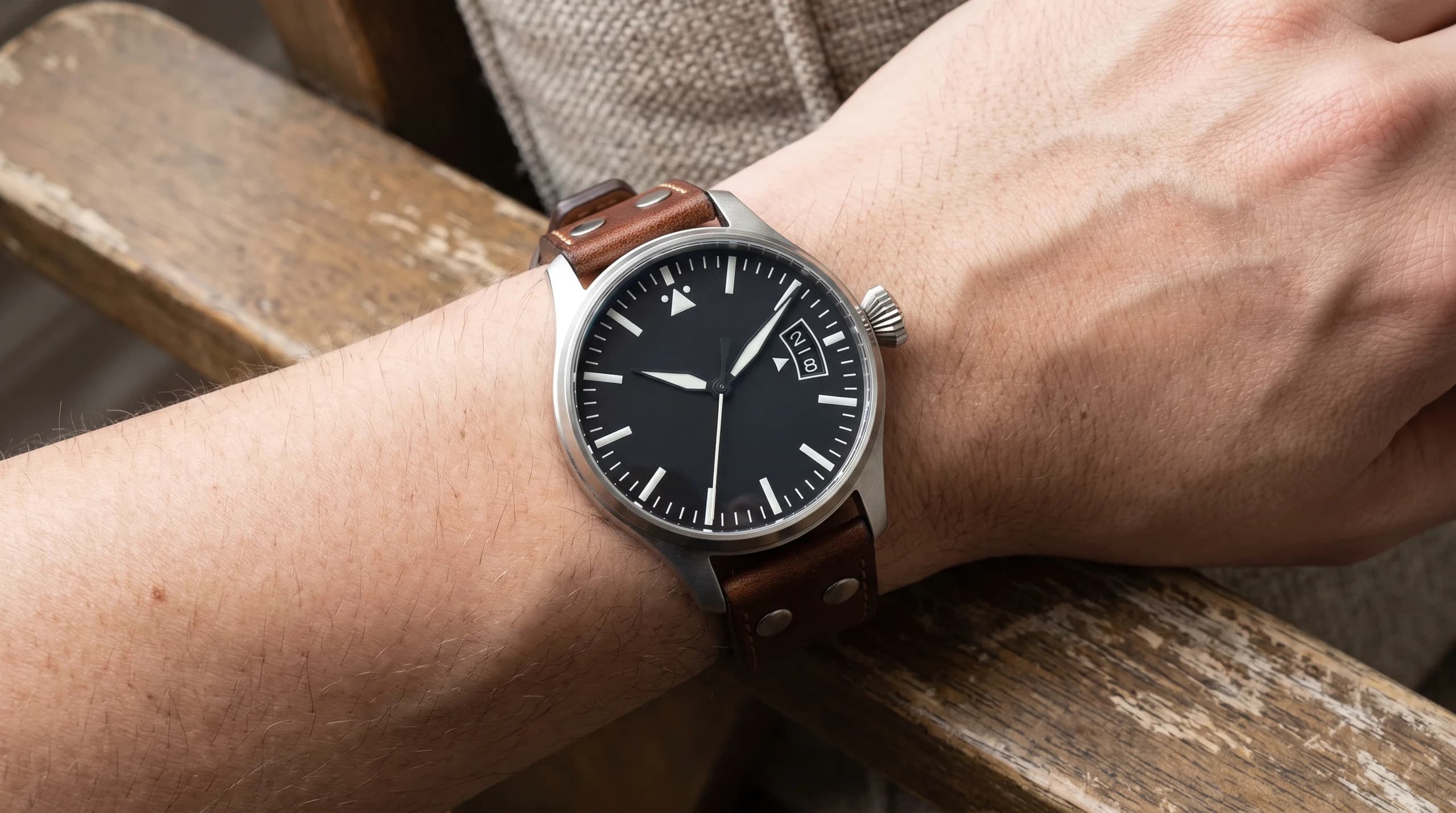
The Short Answer
A big date, also called an outsize date, shows the date in two large adjacent numerals instead of one small window. Getting there took watchmakers longer than a single wide window would suggest, because two separate discs, one for tens and one for ones, have to stay perfectly level and advance together at midnight without one lagging behind the other.
The IWC Big Pilot's Watch is one of the clearest modern examples, using a wide rectangular window at 12 o'clock to show both digits at a readable size on an otherwise simple pilot's dial.
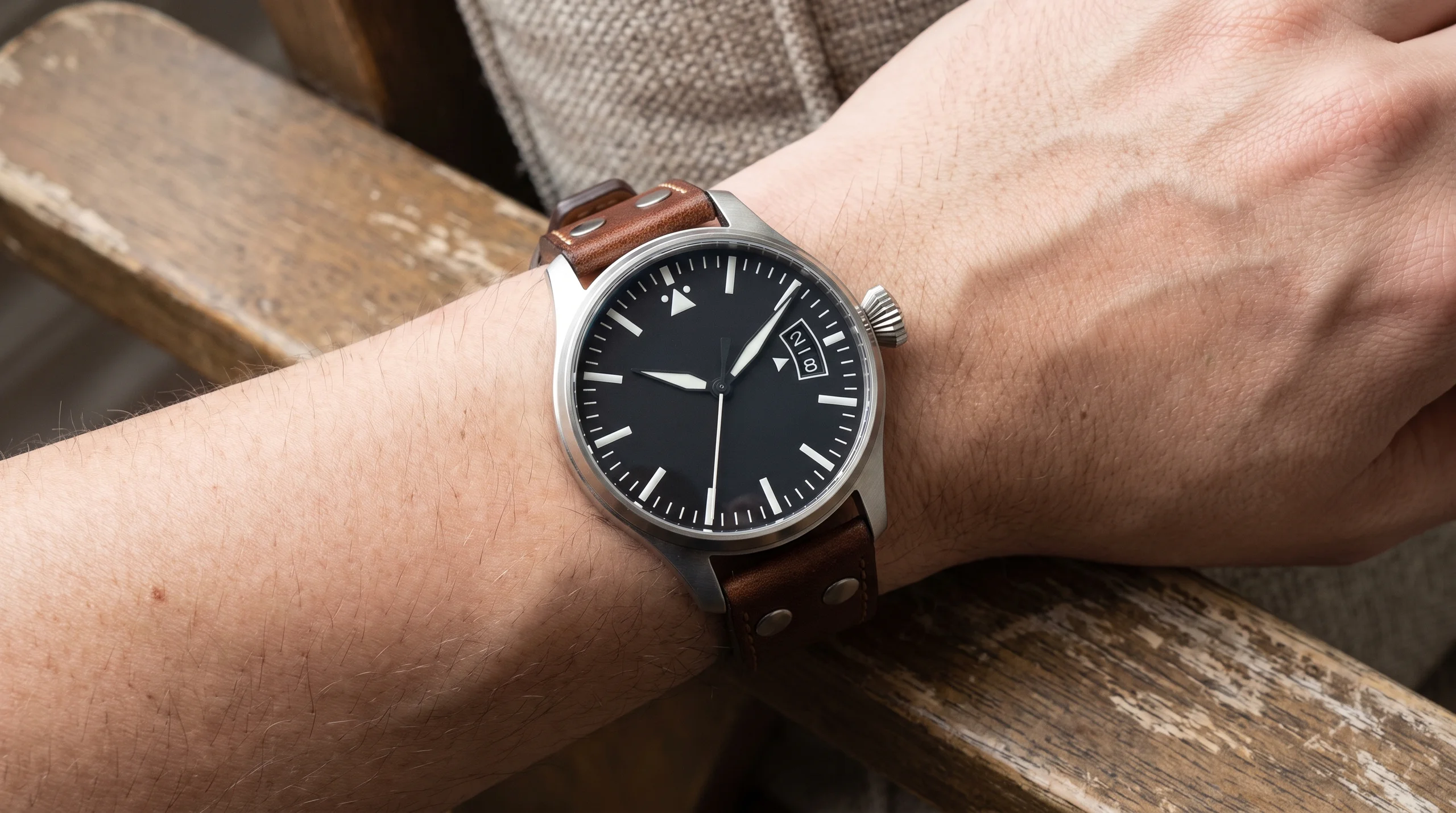 A big date window at 12 o'clock, sized to be legible from across a room rather than only up close.
The watch photos in this article were generated with AI image tools, conditioned on real reference photography of large pilot's watches so the case and dial proportions are accurate.
Why a Single Date Window Was Never Going to Be Big
A standard date window is small because it only ever needs to show one digit at a time comfortably, sitting on a single rotating disc printed with all 31 numbers around its edge.
Rather than build an oversized single disc, watchmakers split the display into two independent discs: one for the tens digit (blank, 1, 2, or 3) and one for the ones digit (0 through 9), each sized normally and mounted at slightly different depths so they sit side by side without touching.
Rolex Tried First, and Differently
Rolex's 1945 Datejust is generally credited as the watch that popularized a date window at all, though its original single disc kept every number small and cramped against its neighbors, a genuine readability compromise compared to later big date solutions.
How the Two-Disc Mechanism Actually Works
The tens disc and ones disc sit on separate axes, each driven by its own set of gears connected to the movement's date-change mechanism, and both are timed to jump forward together at midnight.
 Two adjacent discs, each carrying its own set of digits, sit at slightly different heights behind the aperture.
The tricky part is the tens disc. It only needs to change on 10 of the month's roughly 30 days (moving from blank to 1, from 1 to 2, from 2 to 3, and back to blank), but it has to do so in perfect sync with the ones disc rolling from 9 back to 0, or the display briefly shows a wrong or crooked pair of numbers.
A. Lange & Söhne's Grossdatum
A. Lange & Söhne is widely credited with the modern two-window big date presentation, introducing it on the original Lange 1 in 1994 and carrying the same Grossdatum architecture across nearly every major collection since.
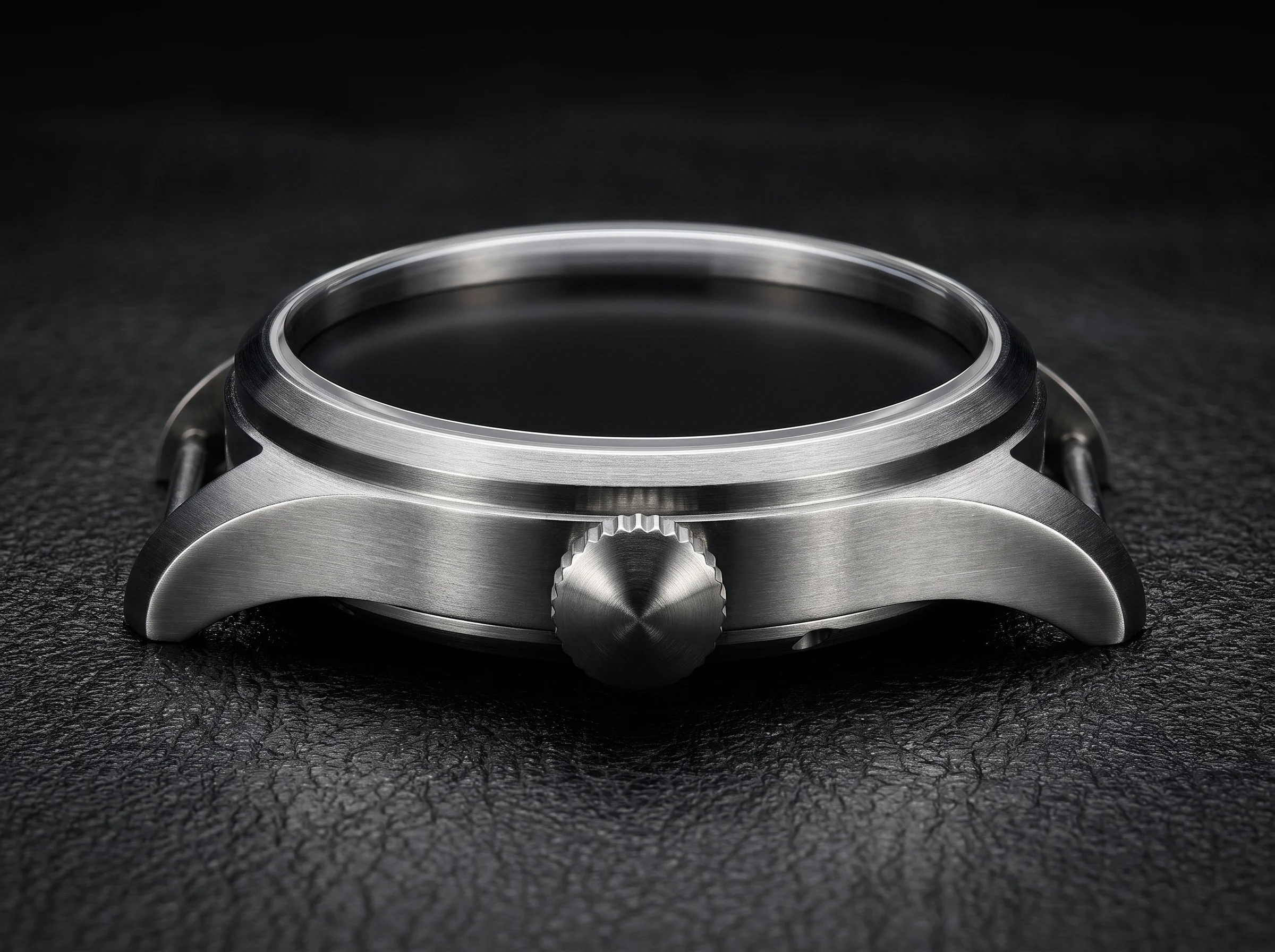 Big date mechanisms generally need more case depth than a standard date window, since two discs stack more components under the dial.
Girard-Perregaux takes a different approach on its Vintage 1945 line, using a transparent disc layered over an opaque one so both digits appear to float at the same visual depth despite sitting on separate mechanical planes.
Why the Discs Have to Sit at Different Depths
If both discs sat at exactly the same height, their edges would physically collide as they rotate independently past each other. Offsetting one disc slightly behind the other solves the clearance problem, at the cost of a small, usually unnoticeable difference in how flush each digit sits against the dial.
The Trade-Offs Big Date Buyers Should Know
A big date mechanism adds real complexity: more gears, more discs, and more parts that must be precisely synchronized, all of which raises both the manufacturing cost and the service cost compared to a standard single-disc date.
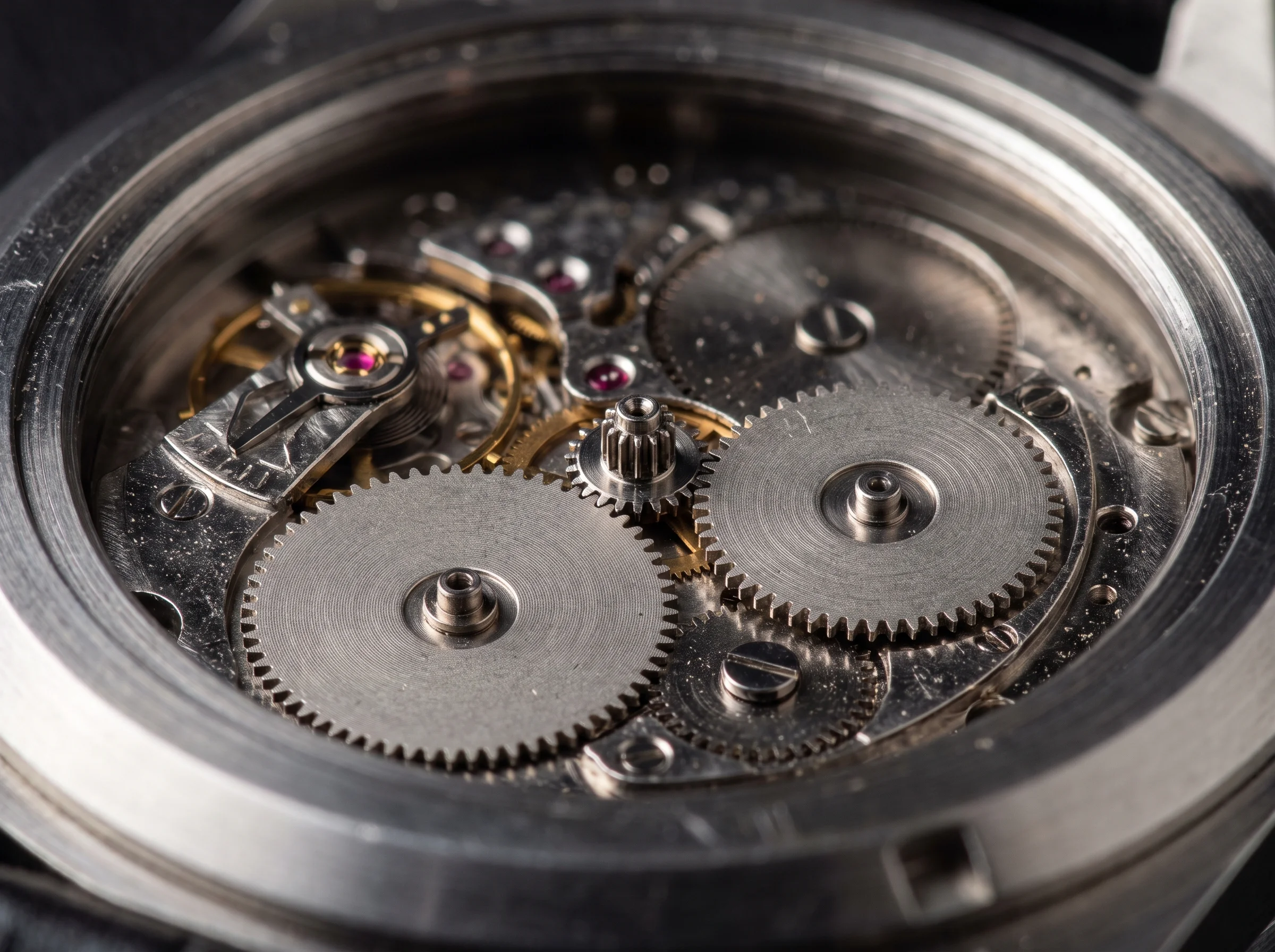 A big date's tens and ones discs each need their own drive train, roughly doubling the date mechanism's part count.
What to Check When Buying a Big Date Watch Pre-Owned
Ask specifically whether the discs advance cleanly and simultaneously at midnight rather than lagging by a few minutes or showing a crooked gap between the two numerals, since a disc that has fallen slightly out of alignment is one of the more common service issues on this complication.
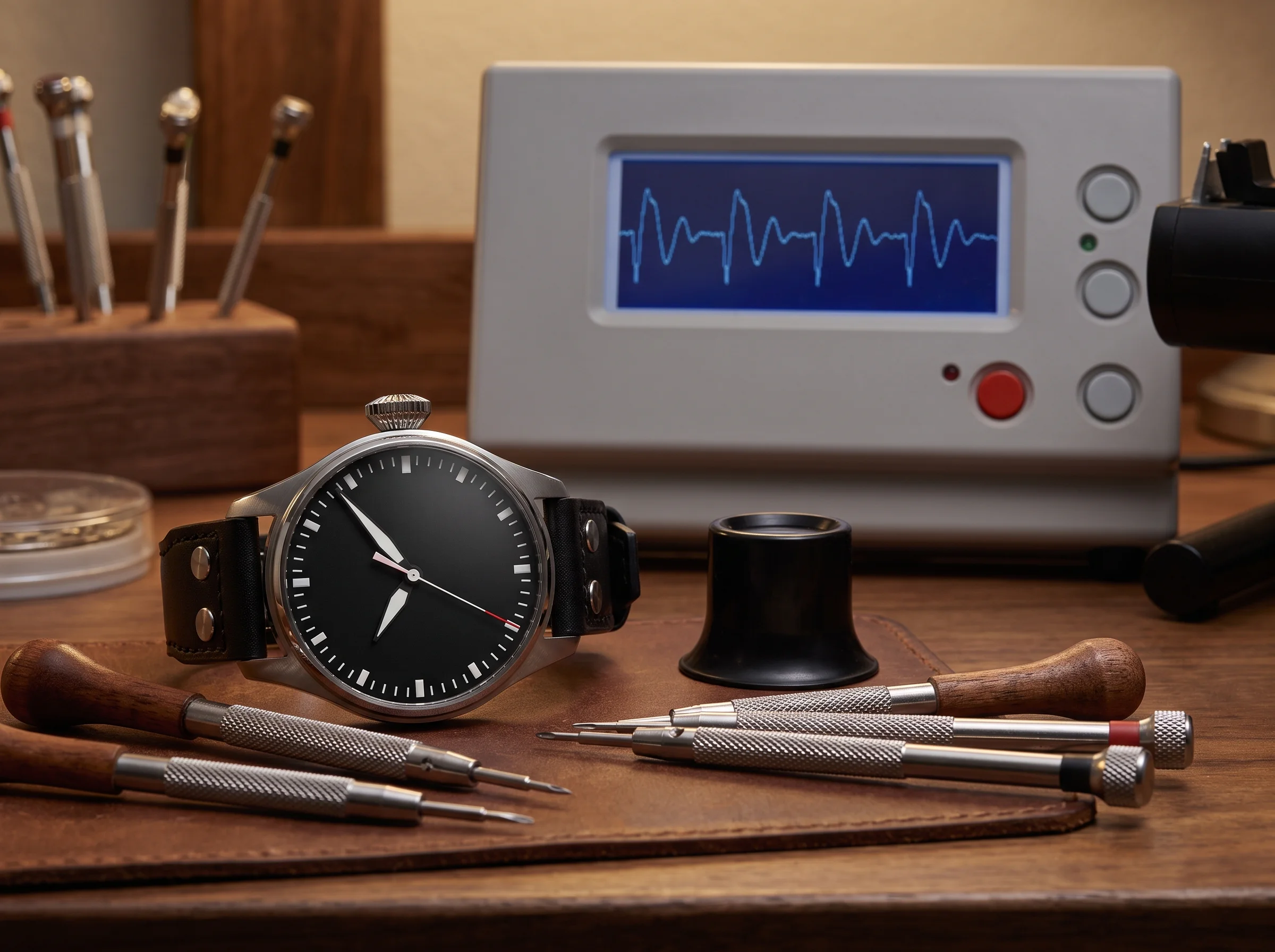 A timing machine check confirms overall rate, but a big date's disc alignment has to be verified visually at midnight or by manually advancing the date.
The Honest Trade-Off
A big date is objectively more expensive to build and to service than a standard date window, and the added components mean more that can eventually need adjustment. What it buys is genuine legibility. Two large, evenly weighted digits read at a glance in a way a single cramped disc simply cannot, which is exactly why Lange, IWC, and Girard-Perregaux all consider the added mechanical cost worth it.
FAQ
What is a big date complication?
A big date, or outsize date, displays the date in two large adjacent numerals instead of one small window, using two separate discs, one for the tens digit and one for the ones digit, rather than a single disc printed with all 31 numbers.
Why does a big date need two discs instead of one?
A single disc large enough to show two-digit numbers legibly would need to be more than twice the size of a standard date disc, which does not fit inside a normal watch case. Splitting the display into two normally sized discs solves the space problem.
Which watch popularized the modern big date?
A. Lange & Söhne is widely credited with the modern two-window big date, called the Grossdatum, introduced on the original Lange 1 in 1994 and used across nearly every major Lange collection since.
What can go wrong with a big date mechanism over time?
The two discs can fall slightly out of sync, causing the date to advance unevenly at midnight or display a crooked gap between the tens and ones digits. This is one of the more common service issues specific to this complication.
Is a big date more expensive to service than a standard date?
Generally, yes. The added discs and drive gears mean more components that must stay precisely synchronized, which typically raises both manufacturing and service costs compared to a single-disc date window.
Related Reading
- Instantaneous vs. Creeping Date Change: Why Some Watches Snap and Others Crawl
- Quickset Date Explained: What It Is and How to Use It Safely
- What Is an Annual Calendar? The Complication Between Simple Date and Perpetual, Explained
- Pre-Owned IWC Pilot's Watches: A Working Dealer's Buying Guide for the Mark XVIII, Top Gun, and Big Pilot