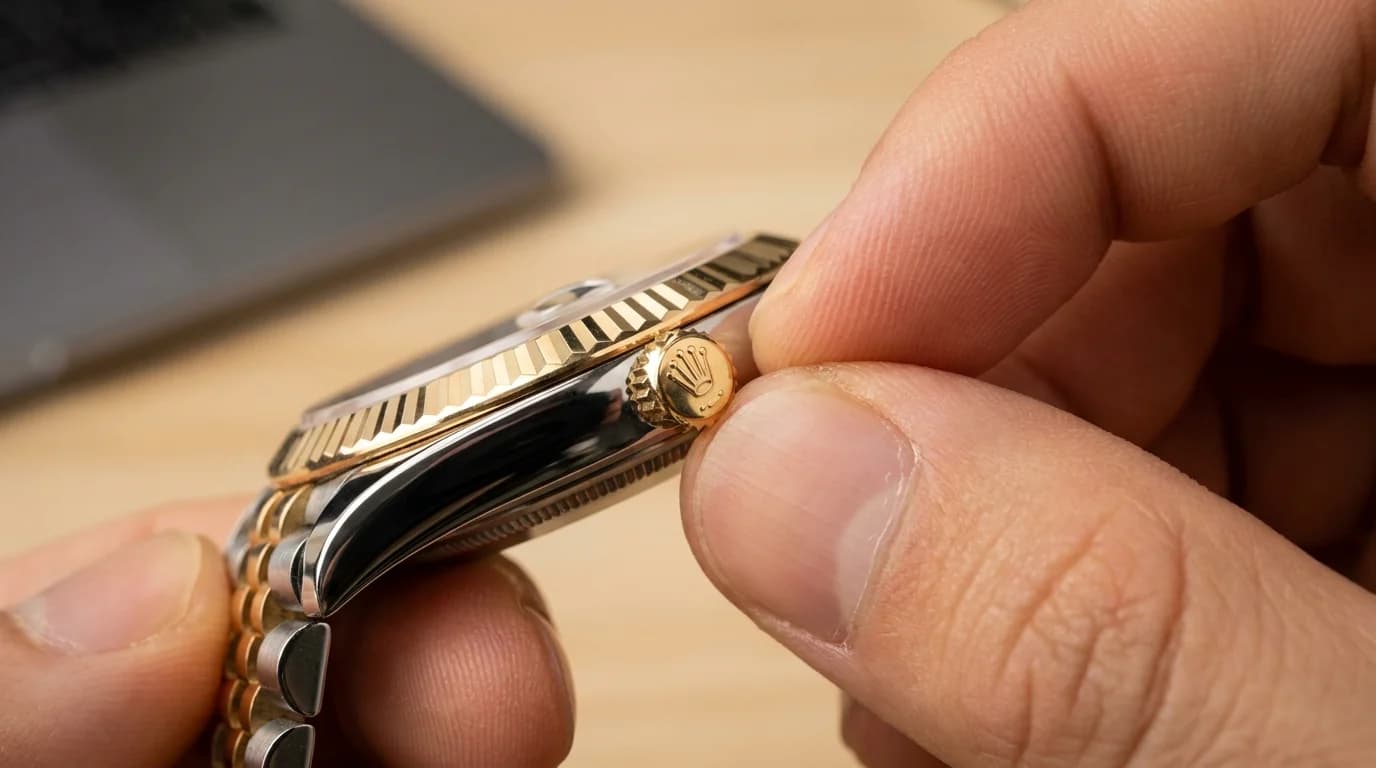
Every so often a customer brings in a watch with a date that will not stay put, or worse, a date wheel that jumps two days at once. Nine times out of ten the cause is the same: someone set the quickset date at 11pm without knowing why that matters. It is one of the most useful features on a modern watch and one of the easiest to misuse.
This post includes AI-assisted images built from real reference photos of the actual watches and mechanisms discussed. All technical details are researched and verified against manufacturer and trade sources, not invented.
The short answer: Quickset date is a crown position that lets you change the date independently of the time, without cycling the hands through 24 hours. Pull the crown to the middle position (usually the first click on a screw-down crown) and turn it to advance the date directly. The one rule that matters: never use it between roughly 9pm and 4am, because that is when the internal date-change gear is already engaged for the automatic midnight date jump, and forcing the quickset mechanism at the same time can damage that gear.
What Quickset Date Actually Does
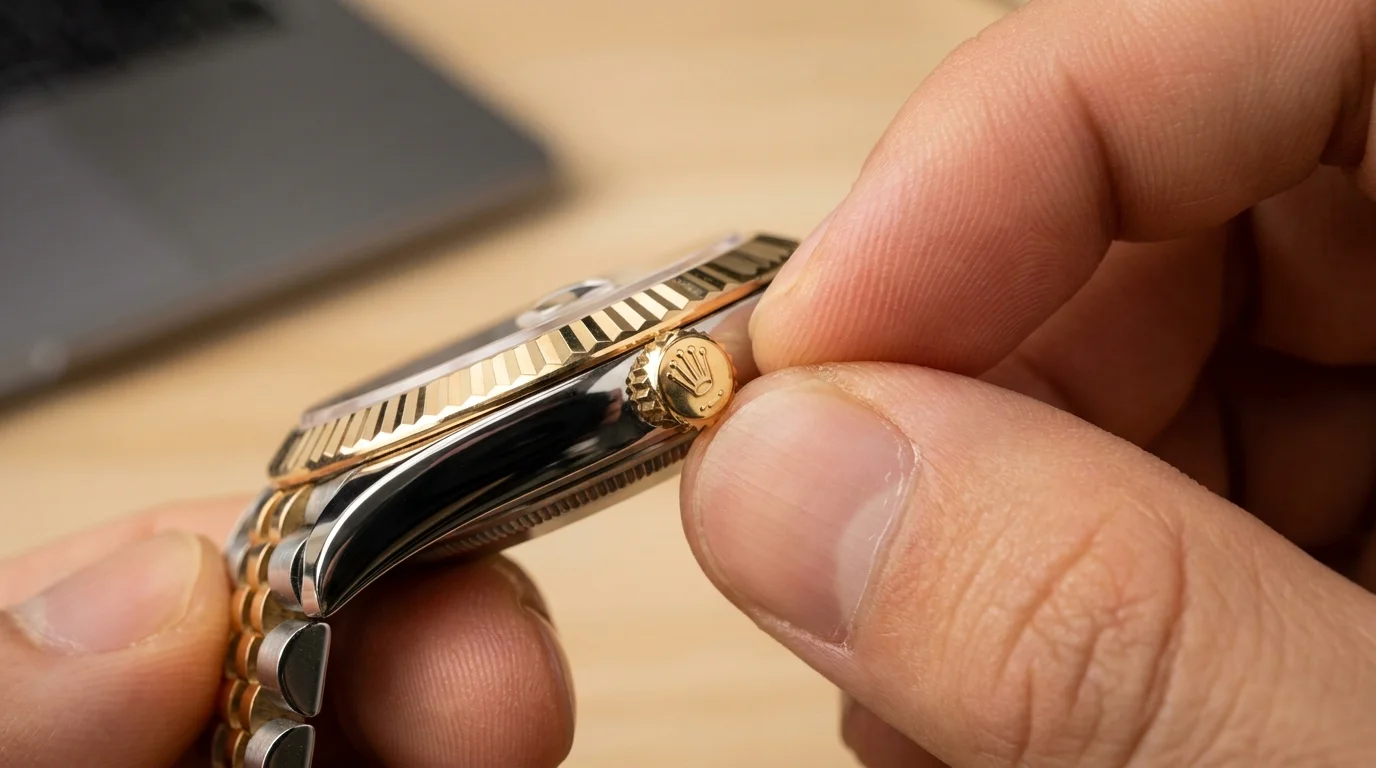 Pulling the crown to the quickset position. On most modern watches this is the first stop, not the fully extended time-setting position.
Before quickset existed, changing the date meant running the hands forward a full 24 hours for every day you needed to advance. Set your watch down for a long weekend and you came back to a three-day chore. Rolex introduced Quickset in 1977 on the Day-Date reference 18038 (caliber 3055) and the Datejust reference 16014 (caliber 3035), letting the wearer pull the crown to an intermediate position and turn it to jump the date forward one day at a time, completely independent of the time-setting function. In 1988 Rolex extended the idea with Double Quickset on the Day-Date reference 18238, allowing the day and date to be set independently of each other as well as the time. Most major brands now build some version of quickset into their date-equipped calibers, though the exact crown position and feel vary by manufacturer.
How The Mechanism Works
A date-only watch typically has three crown positions: fully in (winding), first click out (quickset date), and fully out (time setting, which stops the seconds hand on most calibers). Pulling to that first click disengages the date wheel from the normal hour-driven advance and connects it instead to a separate gear train that only the crown drives. Turn the crown and you rotate the date disc directly, jumping straight to the day you want. Release the crown and screw it back down (on a screw-down crown) or push it in, and the watch resumes normal timekeeping with the date now driven by the hour wheel as usual.
The One Rule: Avoid The Danger Zone
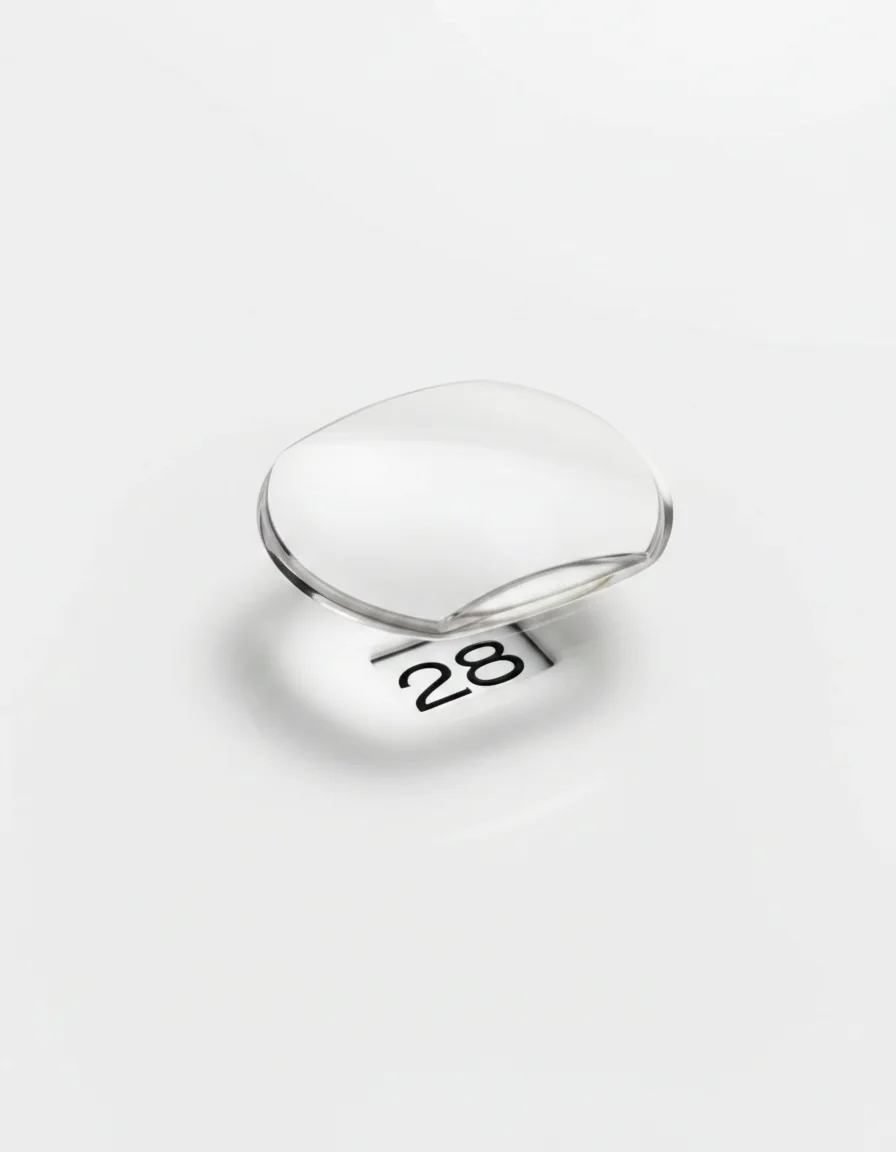 The date window and cyclops lens. Innocent looking, but the gear behind it is doing real work every night around midnight.
Between roughly 9pm and 4am, the movement's own date-change mechanism is mid-cycle, either winding up to trigger the midnight date jump or actively in the process of advancing the disc. If you pull the crown and force a quickset change during that window, you can push the manual gear against the automatic gear while both are partially engaged. The usual result is a bent or chipped tooth on the date-change gear, which shows up later as a date that jumps unevenly, changes at the wrong time of day, or refuses to advance at all.
The safe method: set the time to somewhere around 6am or 7am first, well clear of the danger window, make your date changes with the quickset function, then set the time forward to its correct position. If you only need to nudge the date and you are unsure what time your watch is actually reading internally, it costs nothing to set the time forward to daytime hours before touching the date.
Which Watches Have Quickset (and Which Don't)
Almost every date-equipped watch made from the late 1970s onward has some form of quickset, though vintage pieces predating that era generally do not. A pre-1977 Datejust, for example, has to have its date advanced the slow way, by running the hands around the dial repeatedly. This is one of the practical reasons vintage date watches without quickset trade at a slight convenience discount relative to later references with the same specs otherwise, and it is worth checking before you buy a pre-owned piece if daily wearability matters to you.
| Watch Type | Quickset Behavior |
|---|---|
| Modern Rolex Datejust, Submariner Date, GMT-Master II | Standard quickset date, single crown click |
| Modern Rolex Day-Date (1988+) | Double Quickset: day and date set independently |
| Pre-1977 Rolex date models | No quickset, date advanced only by cycling hands |
| Most modern Omega, Tudor, Breitling date calibers | Quickset date standard, position varies by model |
| Many vintage non-Rolex date watches (pre-1980s) | Often no quickset, confirm before buying if daily use matters |
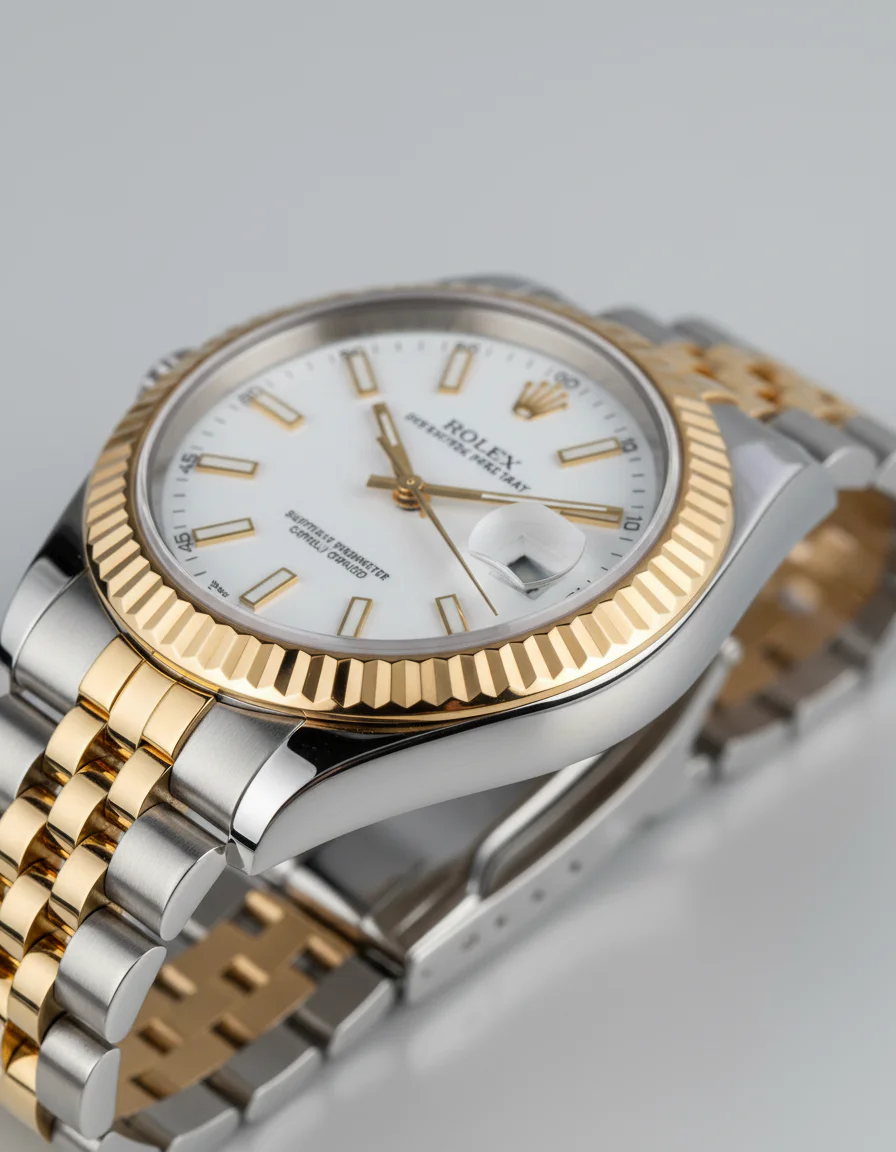 A modern two tone Datejust. Every reference like this one has had quickset since the feature debuted in 1977.
A Simple Habit That Prevents The Whole Problem
 Setting the date during the day, well clear of the overnight danger zone, is the entire fix.
The easiest way to avoid the danger zone entirely is to only ever adjust your date during daylight hours. If your watch has stopped and you genuinely do not know what time it last displayed, glance at the date window first: if it looks like it might be mid-change (a blurry or half-advanced number), give the movement a minute before touching the crown, or set the time forward to midday before you do anything else. It takes five extra seconds and it is the difference between a quick date fix and a trip to the watchmaker.
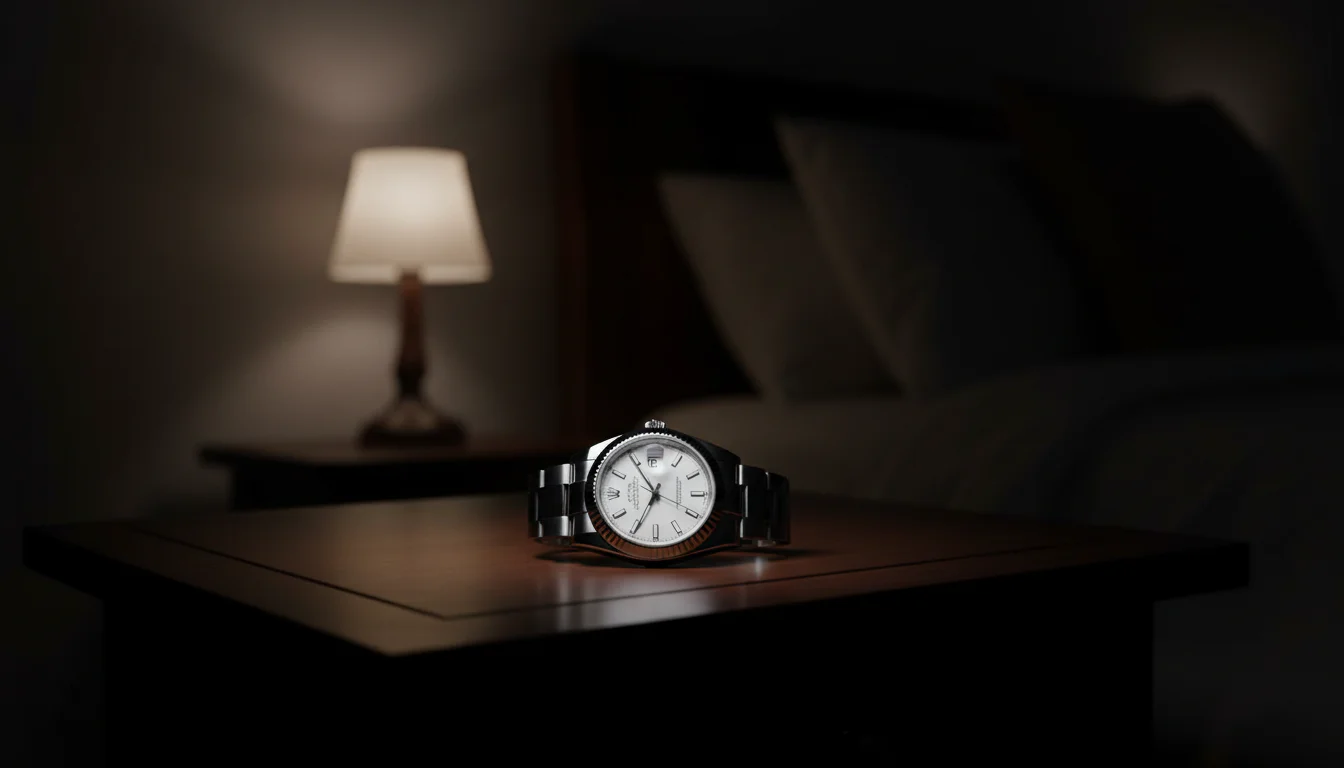 The most common time people reach for the crown without thinking about it: last thing at night, right in the danger window.
FAQ
What is quickset date on a watch?
Quickset date is a crown position, usually the first click out on a screw-down crown, that lets you advance the date directly without moving the time-setting hands, avoiding the older method of cycling through a full 24-hour rotation for every day you need to change.
What time should I avoid using the quickset date function?
Avoid setting the date between roughly 9pm and 4am. During that window the movement's own date-change gear is engaged or about to engage for the automatic midnight jump, and forcing the quickset mechanism at the same time can damage the gear.
Can quickset date damage my watch?
Yes, if used during the overnight danger window. The most common damage is a bent or chipped tooth on the date-change gear, which can cause the date to jump unevenly or stop advancing correctly.
Do all Rolex watches have quickset date?
No. Rolex introduced quickset in 1977 on the Day-Date reference 18038 and Datejust reference 16014. Pre-1977 Rolex date watches do not have it and must be set the slow way, by cycling the hands through 24 hours per day.
How do I safely change the date if I am not sure what time my watch is showing?
Set the time forward to a safe daytime hour, such as 6am or 7am, before making any quickset date adjustments. This guarantees you are outside the overnight danger window regardless of what the watch was previously showing.