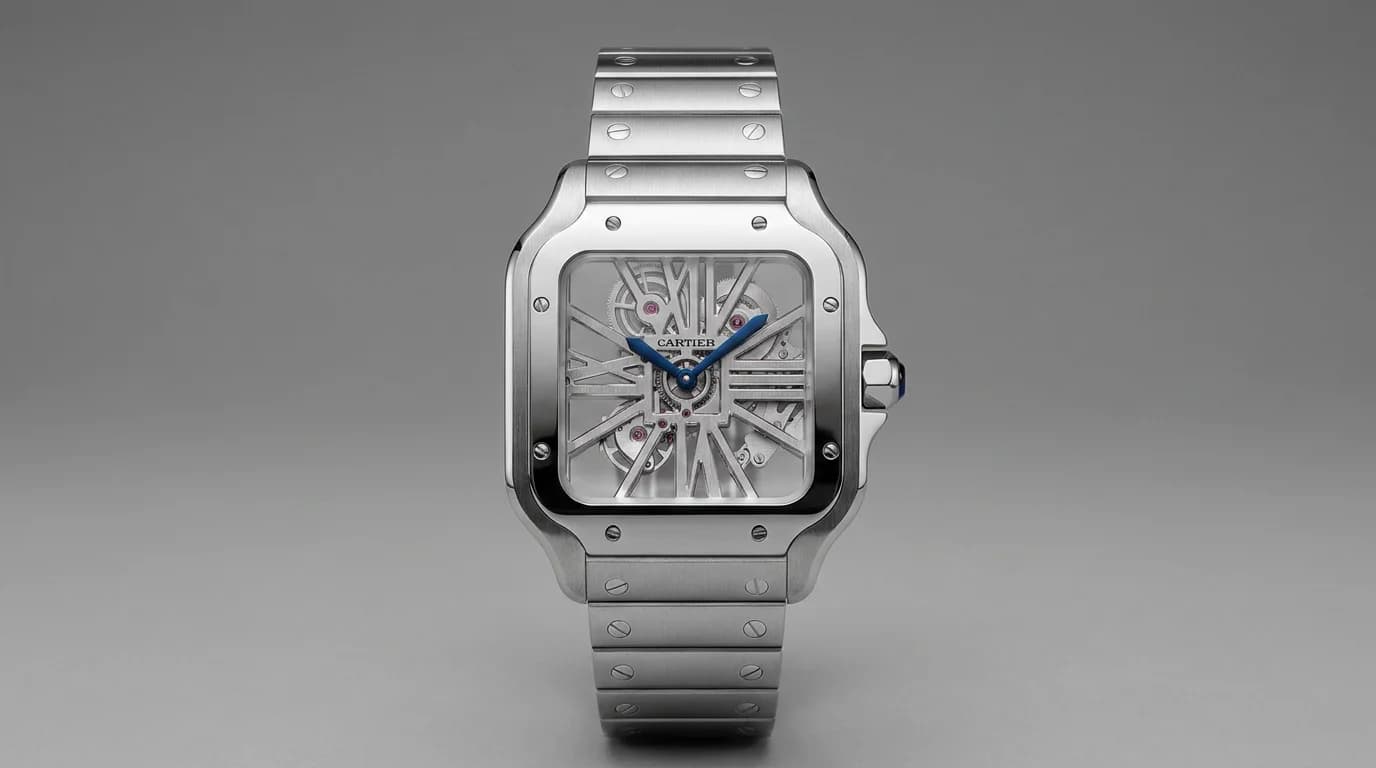
A skeleton watch removes everything a movement does not strictly need. What is left is the mechanism itself, on full display, doing the job a dial normally hides. It is one of the oldest tricks in watchmaking, and also one of the hardest to execute well.
AI disclosure: images in this post are AI-generated renderings conditioned on real reference photography of the actual watches discussed. They are illustrative, not photographs of specific inventory.
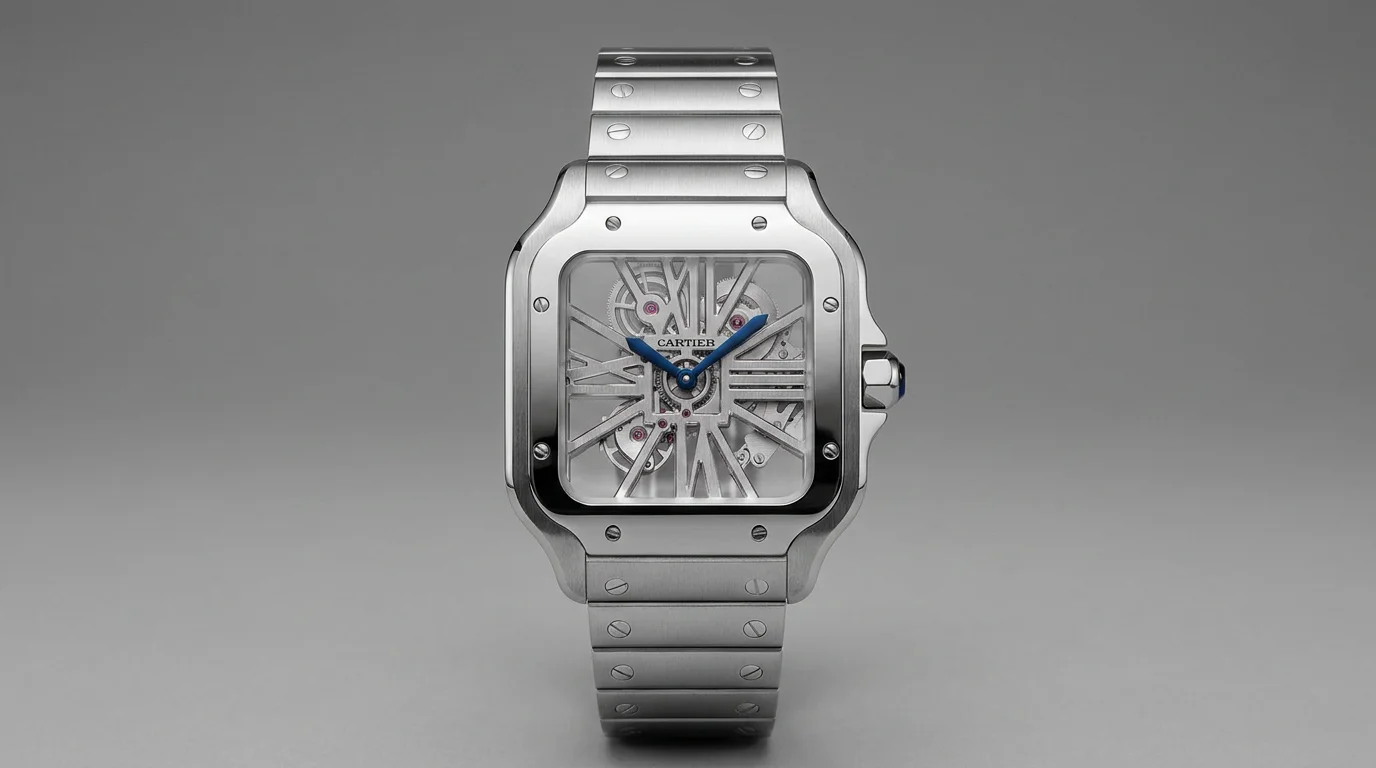 On the Cartier Santos Skeleton, the Roman numeral bridges are not decoration on top of the movement. They are the movement.
The short answer
A skeleton watch, or an openworked watch, has a movement that has been cut away, or built from the start, so the gears, bridges, and escapement are visible instead of hidden under a solid dial. The technique dates to 18th-century Geneva, where watchmakers first hollowed out pocket watch movements to show off their work. Modern skeleton watches use two methods to get there: cutting away material from a standard movement (traditional skeletonization) or engineering a movement from scratch to be open (modern openworking). Both take significantly more hand-finishing than a closed movement, which is the main reason skeleton watches cost more than their solid-dial siblings.
How skeletonization actually works
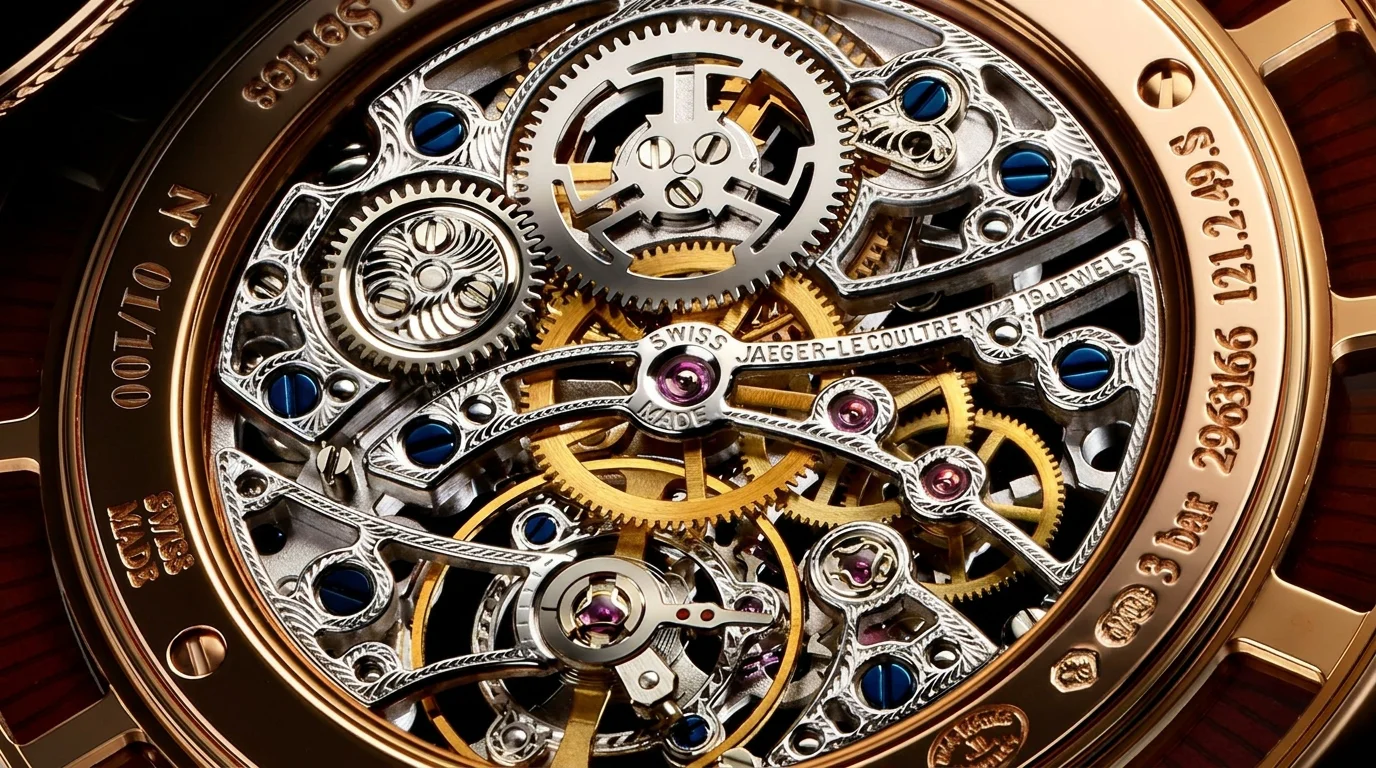 Every visible edge on a skeletonized bridge has to be polished and beveled by hand, since there is no dial left to hide an unfinished surface.
Traditional skeletonization: cutting away
The classic method starts with a normal, solid movement and removes material from the bridges and main plate wherever the metal is not load-bearing. A watchmaker maps out which sections can be cut without weakening the structure, then hand-saws, files, and finishes each remaining edge.
This is where skeleton watches earn their price. Every cut surface needs the same level of polish as a visible bridge on a closed movement, and there are now far more visible surfaces to finish. A closed movement can hide a rough edge. A skeletonized one cannot hide anything.
Modern openworking: designed open from the start
Some contemporary watchmakers skip the cutting step entirely and design a movement's bridges and plates to be open by architecture, not by subtraction. The Audemars Piguet Royal Oak Openworked family works this way: the bridges are shaped from the outset to expose the gear train rather than carved out of a solid design after the fact.
 The Royal Oak Openworked is engineered open rather than cut open, which lets the bridges take dramatic, sculptural shapes traditional skeletonization cannot achieve.
This distinction matters for how a skeleton watch looks. Cut skeletonization tends to preserve the original movement's layout, so the visible architecture still reads as recognizably mechanical and orderly. Designed-open movements can be far more sculptural and abstract, since the engineer was never constrained by an existing solid design.
EDM and laser cutting: how modern brands do it fast
Hand-sawing a skeleton movement is slow and expensive, so most production skeleton watches today use electrical discharge machining (EDM), a process that uses electrical sparks to erode metal with extreme precision, or laser cutting for the coarser initial material removal. The hand-finishing step, the polishing, beveling, and chamfering of every visible edge, still has to happen afterward. EDM speeds up the cutting. It does not replace the hand work.
The honest trade-off: a fully hand-sawn and hand-finished skeleton movement from an independent watchmaker will cost dramatically more than an EDM-assisted skeleton movement from a larger manufacture, even when both look similarly open on the wrist. The difference is in how much of the cutting was done by a machine versus a person.
Does skeletonizing a movement weaken it?
Yes, to a degree, and good watchmakers design around that trade-off rather than ignore it. Removing material from a bridge reduces its rigidity, which can allow more flex and vibration under shock. Reputable skeleton watches account for this with careful engineering: reinforced pivot points, strategic material retention exactly where load concentrates, and testing before the design goes into production.
A watch with fussy, over-thin skeletonized bridges is a red flag, not a feature. If a skeleton watch you are considering pre-owned has visible bridge distortion or an inconsistent gear mesh, have a watchmaker inspect it before buying.
 Skeletonized bridges are inspected under a loupe at multiple stages, since a hairline crack or an uneven cut is far more visible on an open movement than a closed one.
How a skeleton watch wears
 On the wrist, an openworked dial catches light differently through the day as the angle changes against the exposed gear train underneath.
An openworked dial behaves differently on the wrist than a closed one. Light passes through the cut sections rather than reflecting off a flat surface, so the dial's appearance shifts with the angle of the wrist and the light source. Legibility takes a real hit compared to a solid dial with applied markers, which is a trade-off buyers should try in person before committing.
Notable skeleton watches worth knowing
- Cartier Santos Skeleton: the Roman numerals themselves form the bridges of the movement, a design that dates back to Cartier's earliest skeleton pieces and remains one of the cleanest ways to combine dial and mechanism into one object.
- Audemars Piguet Royal Oak Openworked: designed open rather than cut open, with the octagonal bezel and integrated bracelet giving the movement a sporty, architectural frame.
- Jaeger-LeCoultre Master Ultra-Thin Squelette: pairs skeletonization with extreme thinness, a genuinely difficult combination since thin bridges are harder to skeletonize without sacrificing rigidity.
- Patek Philippe Reference 899: Patek's approach to a fully openworked, hand-engraved skeleton movement, built to the brand's usual finishing standard.
- De Bethune DB28: an independent take that treats the openworked movement as sculpture as much as mechanism, typical of the smaller independent houses pushing skeletonization furthest.
For how the chronograph complication specifically gets skeletonized and switched, our column wheel vs cam-lever explainer covers the mechanism most often shown off on an open dial. And for another complication that lives or dies by hand-finishing quality, see our tourbillon explainer.
Buying a skeleton watch pre-owned: what to check
A skeleton watch hides nothing, which is actually an advantage for a careful buyer. Check for:
- Even, consistent bevel finishing on every visible bridge edge. Inconsistent polish quality is the clearest sign of a lower-tier skeleton execution.
- No visible gaps or play between the bridges and the case, which can indicate the skeletonization compromised structural rigidity.
- Service history, since skeleton movements sometimes require specialized parts or watchmaker familiarity that a generalist repair shop may not have.
- Dust and moisture exposure, since an open case-back and heavily cut bridges expose more of the movement's surface to the environment over time.
FAQ
What is a skeleton watch?
A skeleton watch is a watch whose movement has been cut away or designed to expose its internal gears, bridges, and escapement, instead of hiding them under a solid dial and closed case-back.
Is a skeleton watch the same as an openworked watch?
The terms are largely interchangeable today, though "skeletonized" traditionally refers to cutting material away from an existing solid movement, while "openworked" more often describes a movement engineered to be open from the start.
Are skeleton watches weaker than solid-dial watches?
Removing material does reduce rigidity somewhat, which is why well-engineered skeleton watches reinforce load-bearing points and test extensively before production. Poorly executed skeleton watches can show real durability issues.
Why are skeleton watches expensive?
Every visible cut surface on a skeleton movement needs the same hand-polishing and beveling that only a few surfaces need on a closed movement. That dramatically increases finishing time, which is the primary driver of the price premium.
What is the oldest style of skeleton watch?
Skeletonization traces back to 18th-century Geneva, where watchmakers began hollowing out pocket watch movements to display their handwork, well before the wristwatch existed.
Browse authenticated pre-owned skeleton and openworked watches at 5dwatches.com.