The WatchPro June 2026 issue covers a story that matters more than most watch news: Chrono24 and Bezel are not building marketplaces anymore. They are building trust infrastructure — and that shift changes how buyers should navigate the secondary market in 2026.
The distinction sounds subtle. It is not.
A marketplace connects buyers and sellers and charges a fee. Trust infrastructure goes further: it owns authentication, controls the transaction flow, and makes the platform itself the guarantor rather than the individual seller. Bezel's co-founders put it plainly in their WatchPro interview: buyers on their platform do not know who the seller is. They trust the Bezel process.
That is a fundamentally different model from browsing Chrono24 listings where seller reputation varies and buyer protection depends on platform escrow rather than end-to-end ownership of the transaction.
Images in this post are AI-generated for editorial illustration. AI-generated editorial images for concept purposes only.
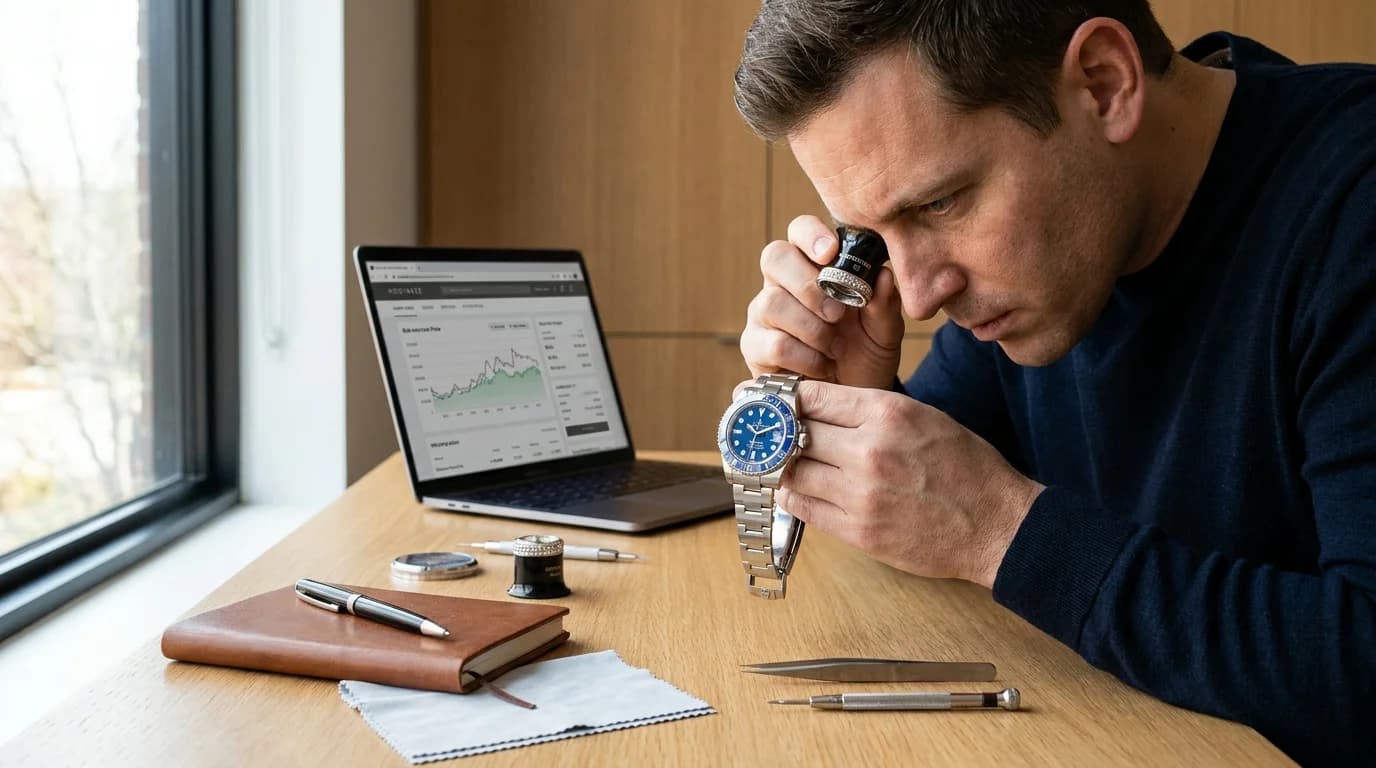
 Authentication at the point of inspection. The 2026 secondary market is increasingly organized around trust infrastructure rather than listing volume. AI-generated editorial image.
What Chrono24 and Bezel Are Actually Building
Chrono24's new CEO José Gaztelu, appointed in 2026, has been clear about his strategic focus: trust and community over pure listing volume. The platform lists over 600,000 watches from more than 3,000 dealers globally, handles around nine million unique monthly visitors, and has been adding infrastructure — the Chrono24 Certified authentication program, brand storefronts for independent watchmakers, and an expanding US presence under new leadership hired from the sneaker resale world (Flight Club). The sneaker parallel is deliberate: both markets are built on community trust and authentication at scale.
Bezel takes a different approach to the same problem. Founded in 2021, Bezel blends Silicon Valley product thinking with deep horological expertise, aiming to build trust in a historically fragmented space. The platform authenticates everything in-house — there is no third party involved — and owns the entire transaction flow. The data advantage this creates is significant: transaction platforms see actual buying behaviour, not just public listings. A watch listed publicly at $10,000 may actually sell privately for $8,700 after negotiations. Bezel sees those transaction numbers — and with auctions, can also analyse demand depth, where a watch may only have one winning bidder but 42 bidders clustered just above $9,000.
That is a different quality of market intelligence than public listing scraping.
 End-to-end authentication in-house — the model both Bezel and Chrono24 Certified are building toward. AI-generated editorial image.
What This Means for Buyers in 2026
The shift toward trust infrastructure has a concrete implication: the secondary watch market is becoming more efficient, and more efficient markets have thinner opportunities for deal-finding.
When price data is based on scraped listings with negotiation discounts invisible, buyers who know the real transaction prices have an edge. As platforms aggregate actual transaction data — not advertised prices — that edge erodes. WatchPro's June issue captures this inflection point: both Chrono24 and Bezel describe AI as an accelerant for price discovery and authentication, not just a tool for marketing.
For a buyer in 2026, the practical read breaks down into three tiers:
Certified platform inventory — Chrono24 Certified and Bezel's in-house process reduce the risk of buying a frankenwatch or outright counterfeit. The tradeoff is premium pricing. For a first-time buyer or anyone uncomfortable with hands-on authentication, the premium is worth it.
Grey-market listings — Chrono24's uncertified listings, Watchexchange, WUS, and equivalent forums still surface deals that do not appear in certified channels, because sellers there are not paying platform fees. The inspection and authentication burden shifts back to the buyer, but the pricing opportunity is real.
Private dealer relationships — For significant purchases above $15,000, a trusted dealer who stands behind the watch still offers something platforms cannot: accountability and relationship continuity. If something is wrong after the transaction, a dealer who values the long-term relationship has skin in the game in a way a platform listing does not.
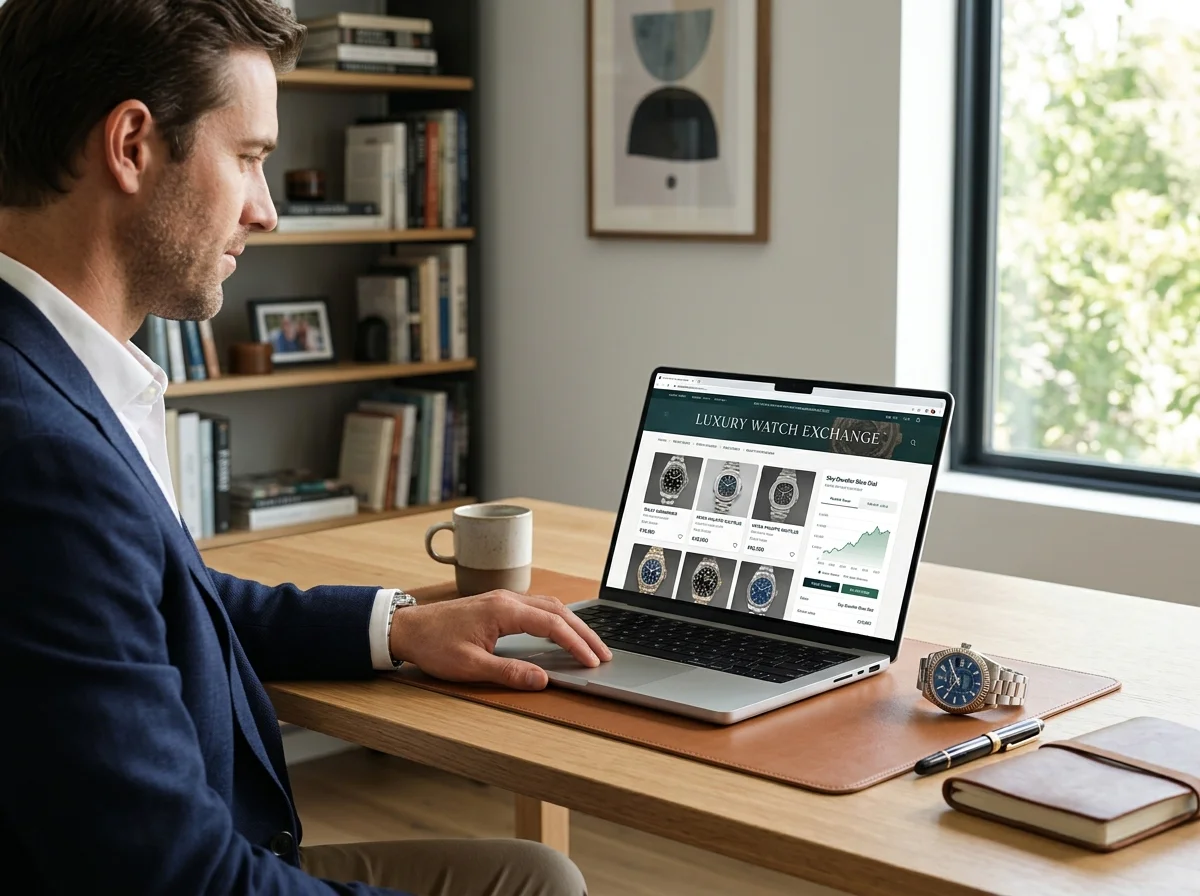 The 2026 buyer journey starts with platform price data, then moves to deal identification across channels. AI-generated editorial image.
The AI Authentication Question
AI-driven authentication tools are entering the market. WatchCert launched in late 2025 with an app-based 100-point inspection report powered by a model trained on 50,000+ official watch documents. Chrono24's Gaztelu has noted that platforms with strong reputations — Chrono24 has a Trustpilot rating around 4.8 — benefit as AI models increasingly influence discovery, because trust signals become part of how AI evaluates and surfaces sources.
For buyers, the near-term implication is simpler: AI authentication tools are useful as a first-pass screen, not a replacement for human inspection of condition details. A model can confirm that a Submariner's dial matches the correct reference. It cannot reliably assess bracelet stretch, crystal condition, or case polishing history.
The pre-owned Rolex authentication guide covers what to check before any significant purchase, regardless of which platform you are buying through.
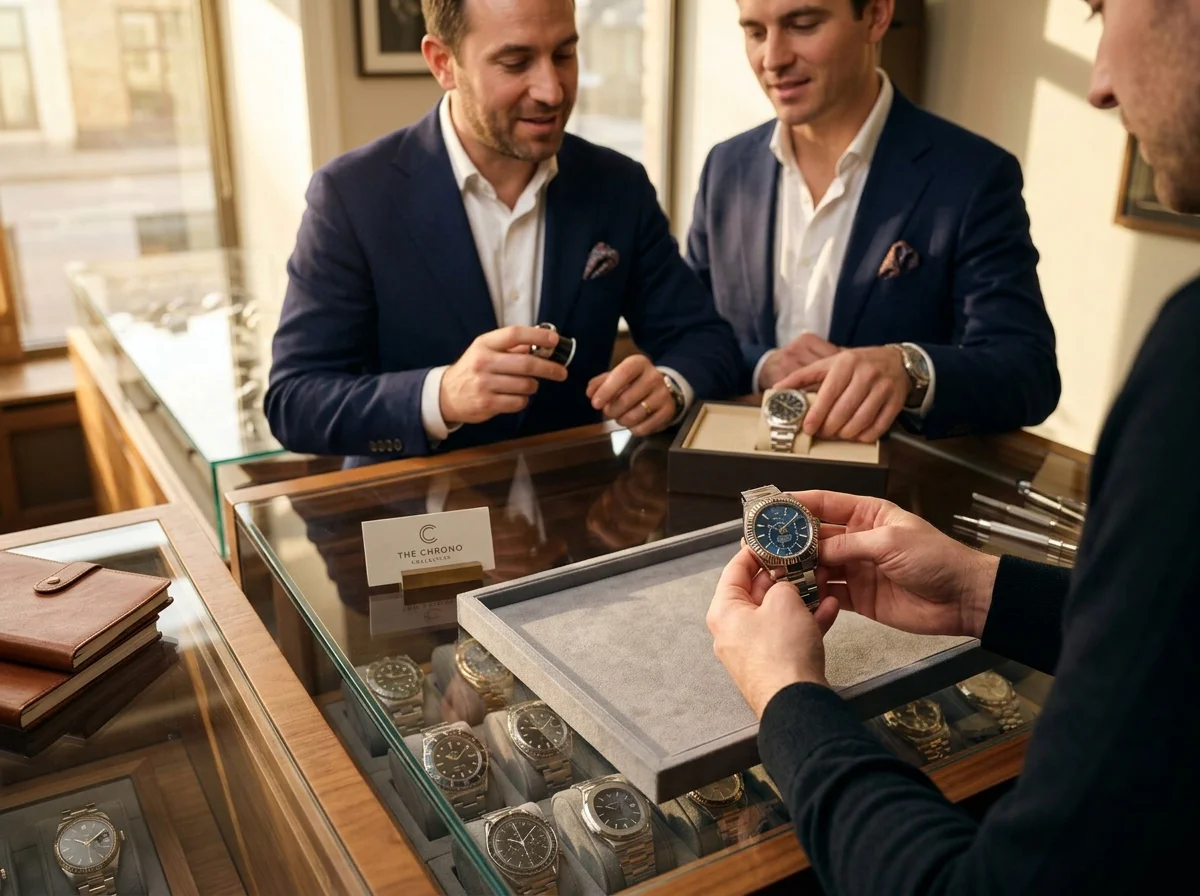 The dealer relationship matters where platform listings cannot replace hands-on inspection. AI-generated editorial image.
The Working Dealer's Take
The WatchPro June story confirms a pattern visible from the selling side: buyers are getting more sophisticated, faster. Questions about authentication documentation, platform provenance, and transaction history are now standard in conversations that would have started with price two years ago.
That is a healthy development. An efficient, transparent secondary market is better for buyers and honest dealers alike. The winners in this environment are buyers who understand the channel hierarchy — certified platform at a premium, grey-market at a discount but with inspection burden, and private transactions for the most sophisticated — and can act quickly on correctly-priced inventory.
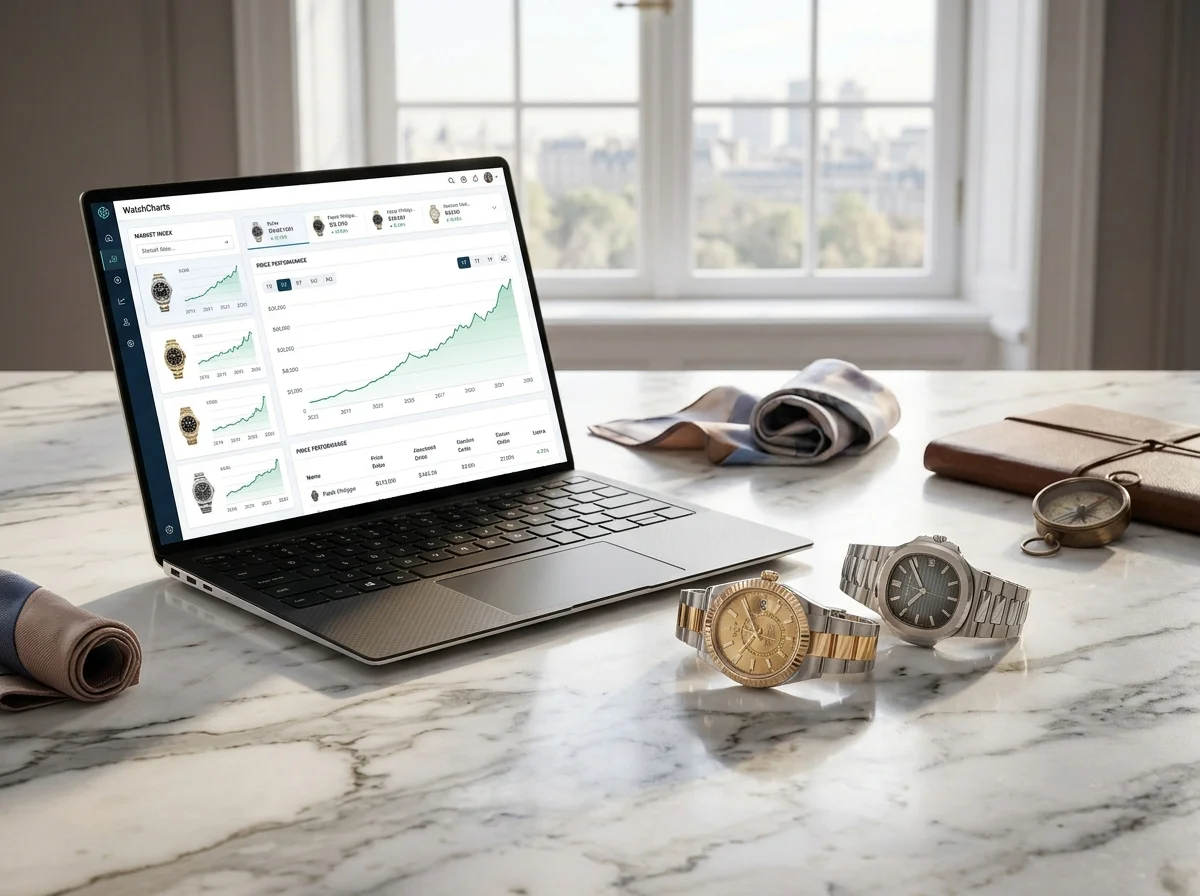 Market data is more accessible than ever in 2026. The edge now is knowing how to act on it. AI-generated editorial image.
Browse verified pre-owned inventory at 5dwatches.com/shop.