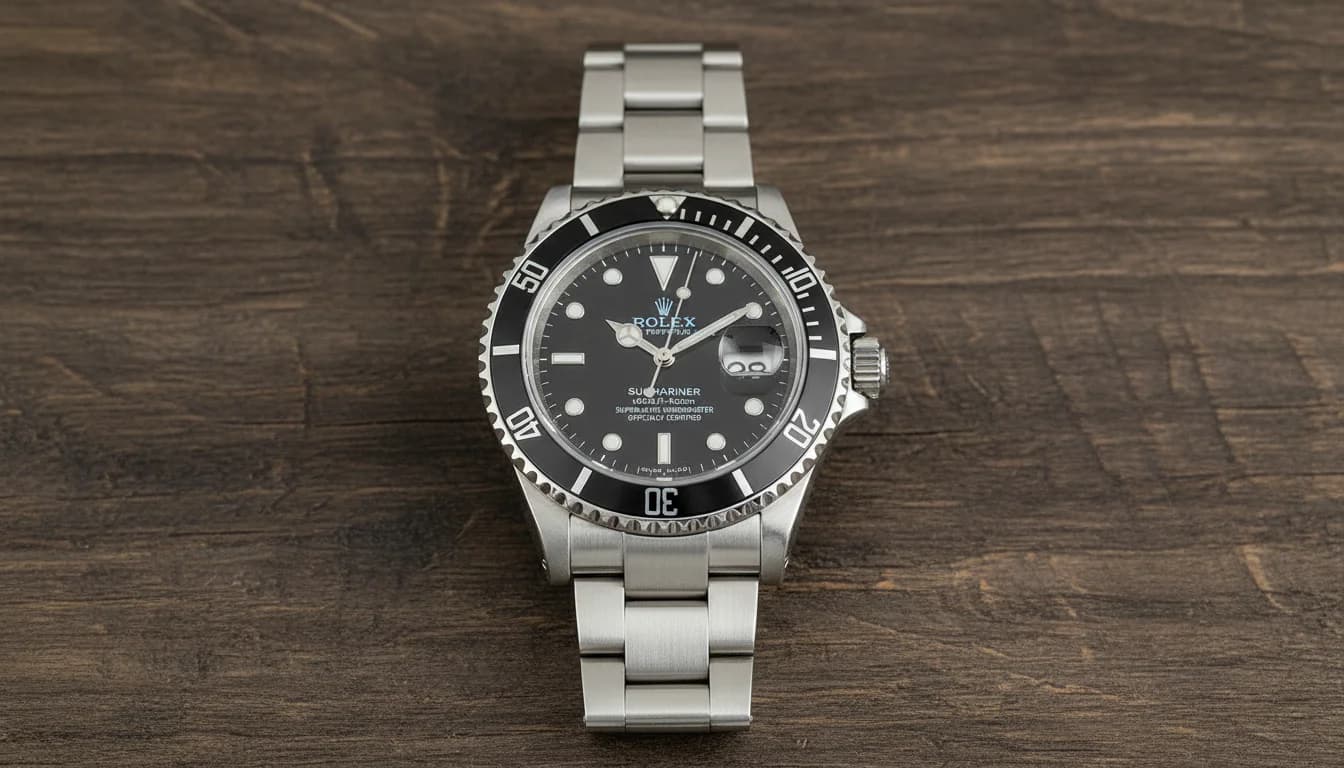
The Short Answer
A watch serial number identifies one specific case or movement, and where a brand puts it, and how it changed over time, is one of the most useful things a buyer can learn before shopping pre-owned. Rolex engraved serials between the lugs until the mid-2000s, moved to the inner rehaut under the crystal, then quietly stopped issuing sequential, publicly datable numbers around 2010. Omega stamps its serial on the movement itself, sometimes also on the case, in a numbering system that is not strictly sequential at all.
None of this alone proves a watch is genuine. A serial number is one data point among several, useful for dating a watch and cross-checking its story, not a standalone authentication tool.
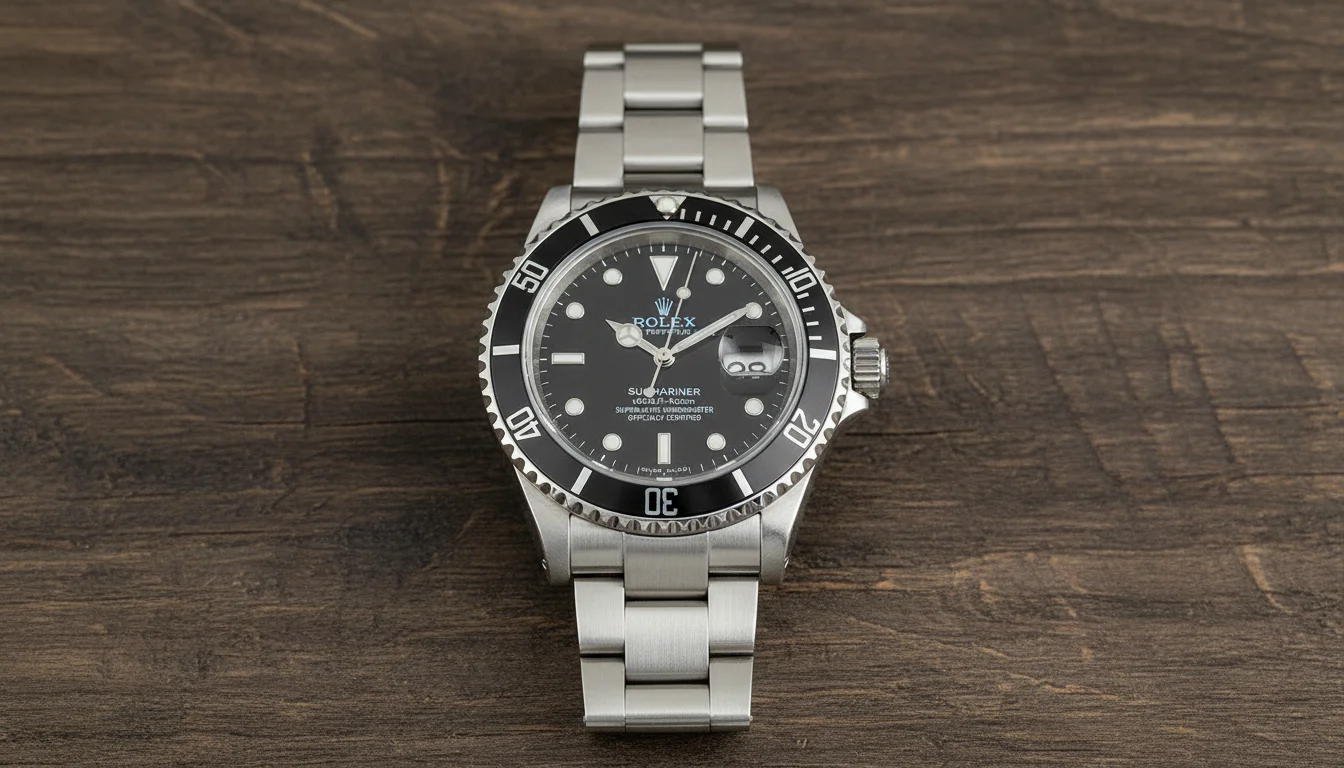 Where a serial number sits, and whether it is even visible without opening the case, has changed multiple times across a watch as familiar as the Submariner.
The watch photos in this article were generated with AI image tools, conditioned on real reference photography so the case shapes and construction details are accurate to the real watches.
What a Serial Number Actually Identifies
A watch can carry more than one serial. The case has its own number, and the movement inside often carries a separate one. On most modern watches those two numbers are matched at the factory and should correspond to each other, which is itself something a dealer checks.
Manufacturers use serials internally for production tracking, warranty records, and increasingly for anti-counterfeiting. The public-facing use, dating a watch to a rough production year, is really a side effect of that internal tracking, not the reason it exists.
Case Serial vs Movement Serial
The case serial is usually what people mean when they say "the serial number." The movement serial lives on the caliber itself, visible only with the case back off or through an exhibition window, and on some brands it is the movement number, not the case number, that manufacturer records actually track.
Where to Find One: It Keeps Moving
Serial location is not fixed even within one brand's history, and Rolex is the clearest example of that drift.
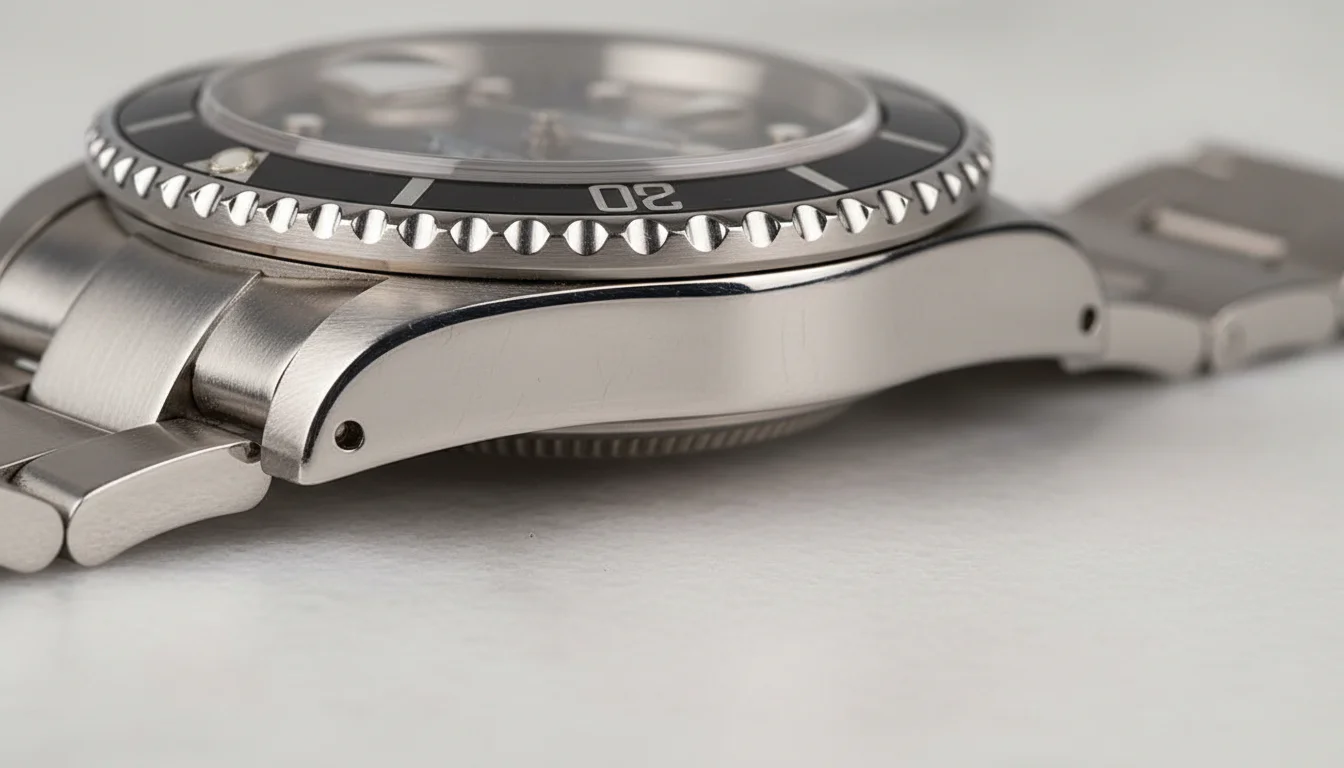 Older Rolex references carried their serial engraved into the case at the 6 o'clock lug, a location that required removing the bracelet to actually read it.
Rolex: Between the Lugs, Then the Rehaut, Then Gone
Rolex originally engraved the serial between the lugs at 6 o'clock, visible only with the bracelet off. Starting in 2005, the brand began duplicating that engraving on the rehaut, the inner flange under the crystal, and by 2008 the rehaut engraving had fully replaced the lug location. Around 2010, Rolex moved to a random alphanumeric serial system that is no longer printed anywhere visible on the outside of the case at all, which is exactly why older public serial-to-year lookup charts stop being reliable for newer watches.
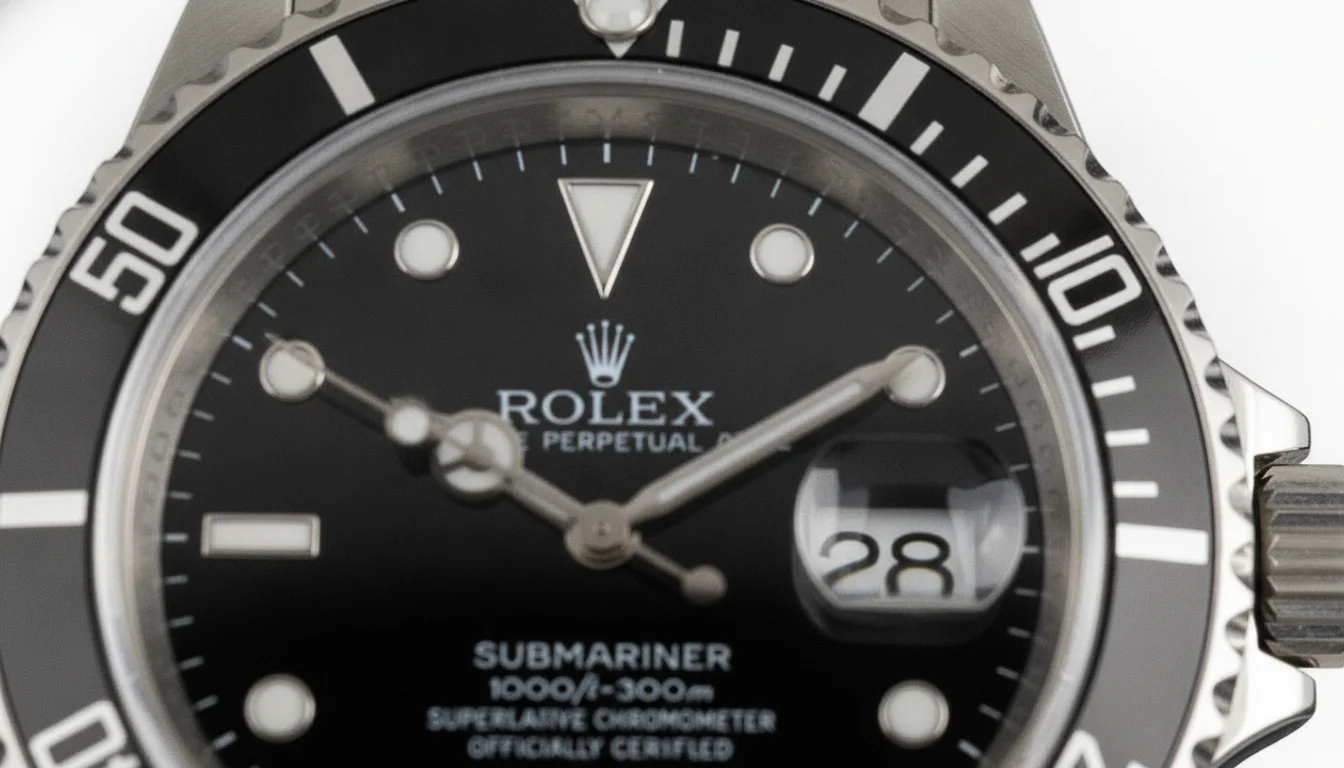 The rehaut, the inner flange visible just under the crystal, became the standard serial location for a few years before Rolex moved away from a publicly readable number entirely.
Omega: On the Movement, Not Always the Case
Omega's serial is fundamentally a movement serial, etched on a bridge inside the caliber. Starting in the early 1990s, Omega began duplicating that number on the exterior, either the case back or the underside of a lug, but not consistently across every model. The numbering is also not strictly sequential: because movement parts can be assembled well ahead of a finished watch, a later-produced watch can carry a lower serial than an earlier one.
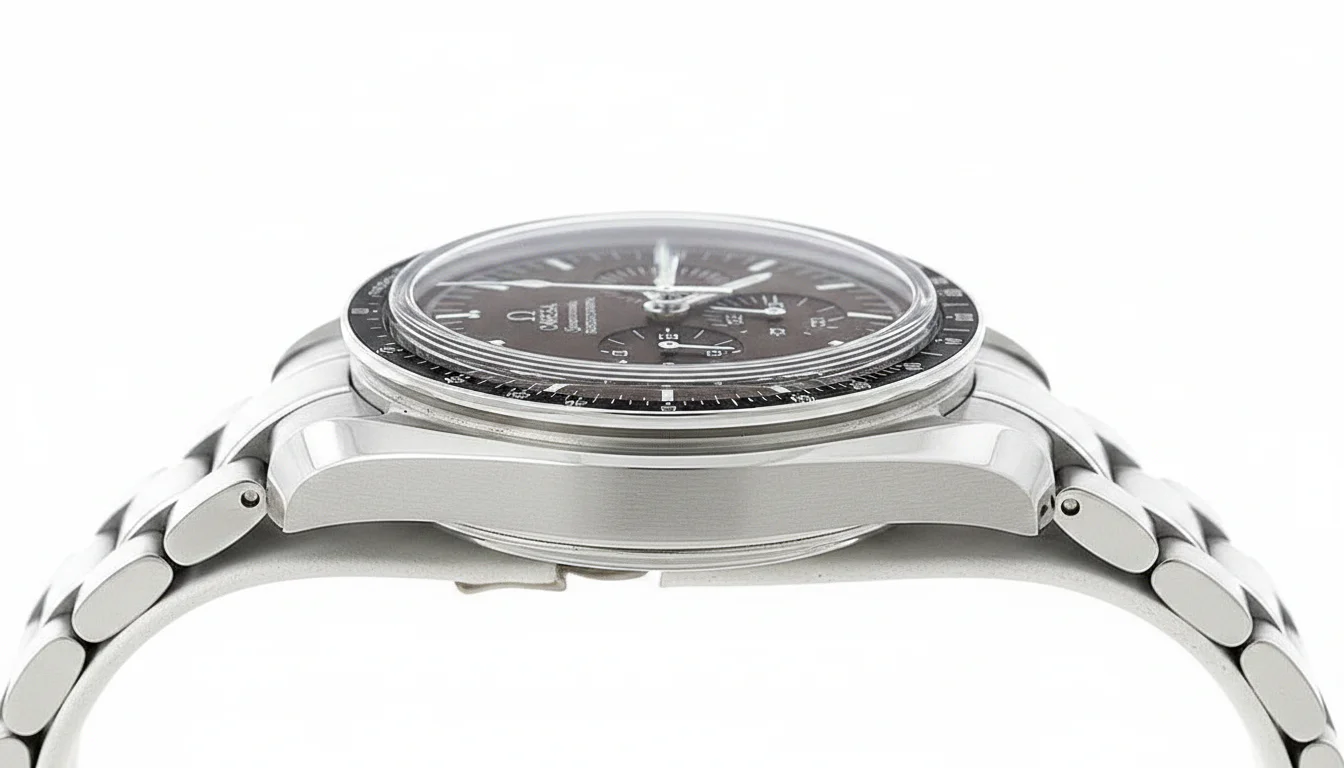 Omega's Speedmaster runs its own separate serial-number dating chart, distinct from the rest of the catalog, one more reason a general rule of thumb does not travel well across models.
Why the Move Away From Visible Serials Happened
Rolex has never published an official explanation, but the practical effect is clear: a random, non-sequential serial is far less useful to a counterfeiter trying to fake a plausible production date, and far less useful to the public trying to date a watch from the outside without documentation. The trade-off is that legitimate buyers lose an easy self-check tool along with it.
The Honest Trade-Off
A serial number by itself proves very little. It has to line up with the reference number, the movement generation, the dial printing style, and the case finishing details that were actually correct for that production window. A correct-looking serial engraved on a fake case is trivial for a convincing counterfeit to fake; a genuinely mismatched serial on a real case is far harder to fake convincingly and is exactly the kind of detail dealers cross-check.
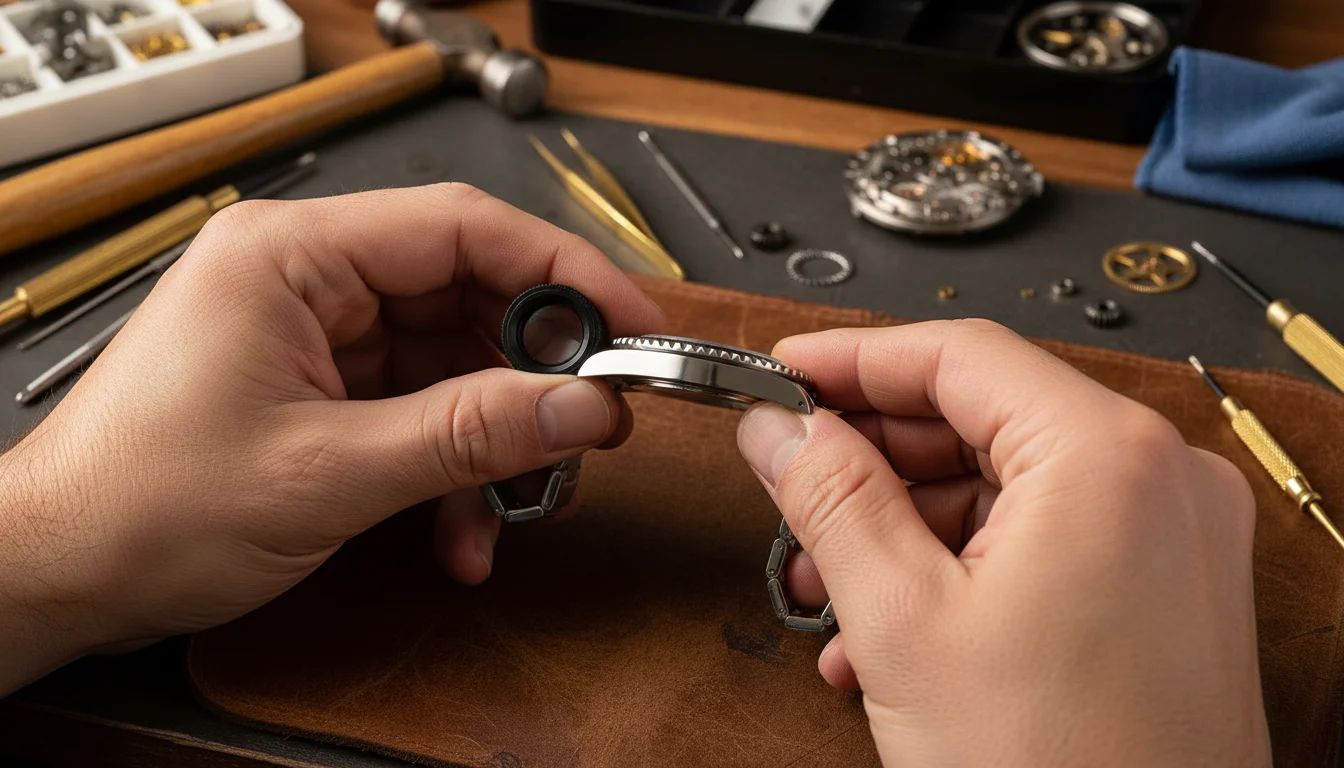 Cross-checking a serial against the reference number, movement generation, and case finishing is standard practice before any pre-owned watch changes hands.
What This Means When Buying Pre-Owned
Treat a serial number as one input, not a verdict. A watch with full original documentation removes most of the guesswork. A watch without paperwork can still often be dated reasonably well from its serial, reference number, and construction details together, which is exactly the kind of cross-check a working dealer runs before authenticating anything.
FAQ
Where is the serial number on a Rolex?
It depends on the year. Rolex engraved serials between the lugs until roughly 2008, then moved exclusively to the rehaut under the crystal. Since around 2010, newer Rolex watches use a random serial system with no number visible on the outside of the case at all.
Where is the serial number on an Omega?
Omega's primary serial is etched on the movement itself, visible with the case back removed. Since the early 1990s, many models also duplicate that number on the case back or under a lug, though placement is not fully consistent across the catalog.
Can a serial number alone prove a watch is authentic?
No. A serial number is one data point that has to be cross-checked against the reference number, movement generation, and case and dial details that were correct for that production window. Relying on the serial alone is not a reliable authentication method.
Why did Rolex stop making serial numbers easy to find?
Rolex has not given an official reason, but moving to a random, non-sequential system around 2010 made the numbers far less useful for both counterfeiters trying to fake a plausible date and the public trying to self-date a watch without documentation.
Does a mismatched case and movement serial mean a watch is fake?
Not automatically. Movements are sometimes swapped during a service using a genuine replacement part, which can create a mismatch on an otherwise authentic watch. It is a detail worth asking about, not an automatic red flag.