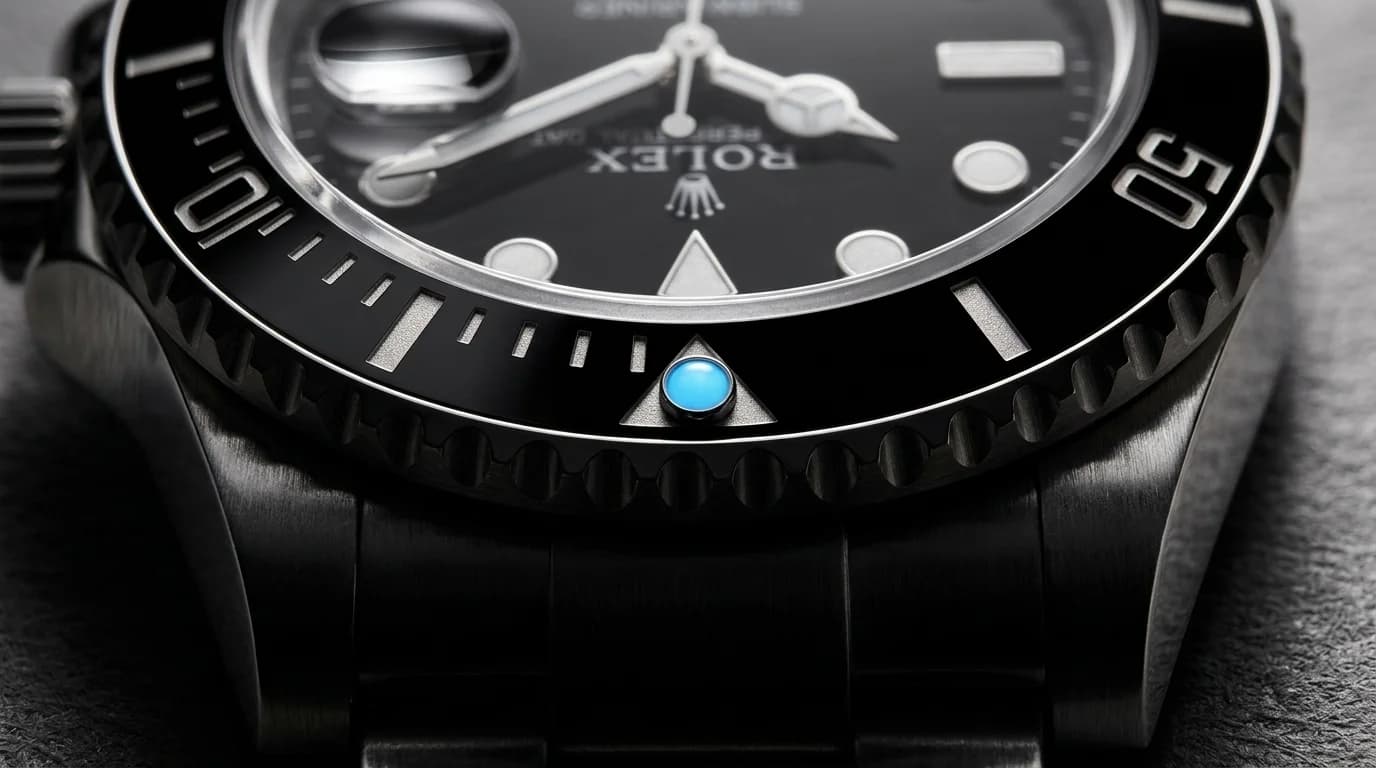
A bezel looks like decoration until you actually need it. Then it is either a timer, a calculator, a second time zone, or nothing functional at all, and knowing which one you are looking at changes how you use the watch.
The Short Answer
A watch bezel is the ring surrounding the crystal, and its type determines what it actually does. A unidirectional bezel times elapsed minutes for diving. A tachymeter bezel calculates speed. A GMT bezel tracks a second time zone. Plenty of bezels, like a Datejust's fluted ring, do nothing functional at all and exist purely for looks.
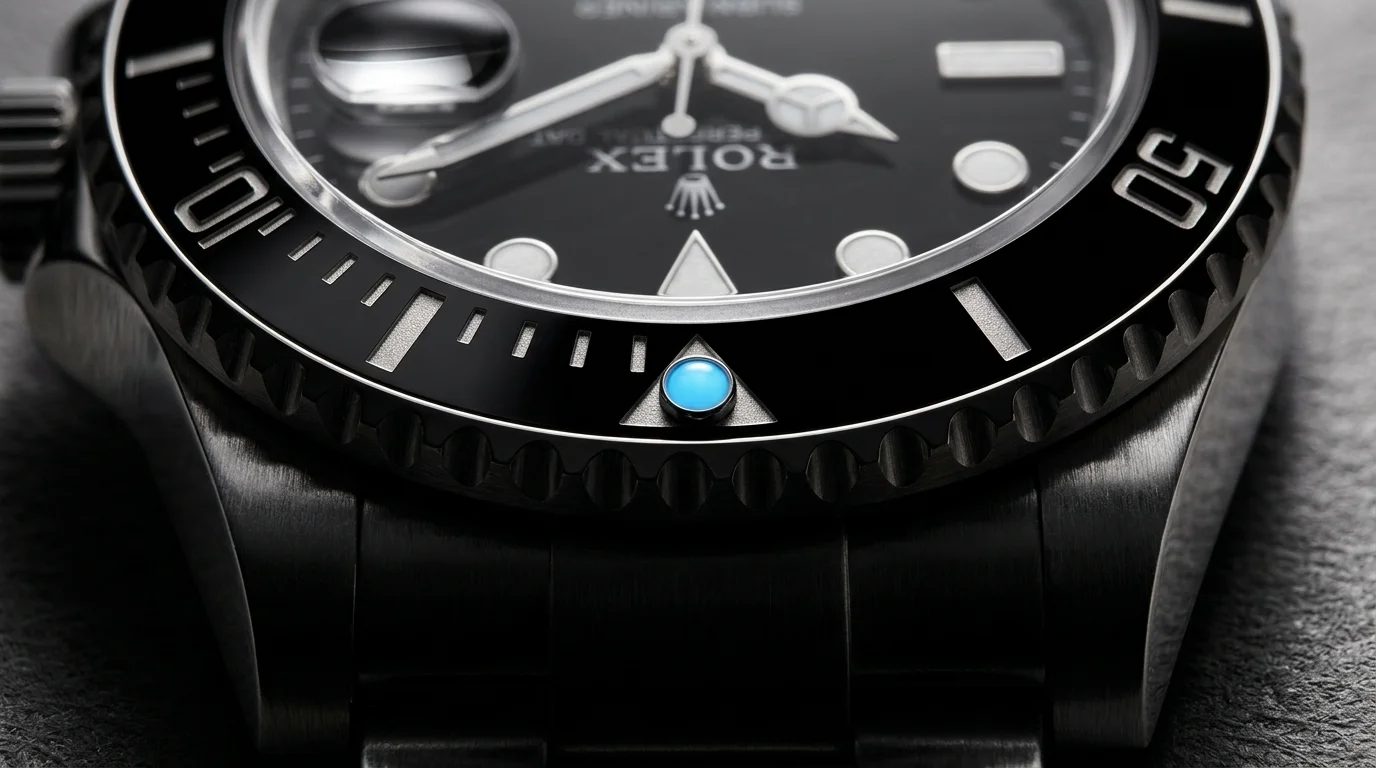 A unidirectional dive bezel. The one-way ratchet is a safety feature, not a design choice.
The Unidirectional Dive Bezel
This is the bezel most people picture first, the one on a Submariner or any real dive watch. It rotates counter-clockwise only, and that one-way restriction is not a design accident.
Why It Only Turns One Direction
Under the ISO 6425 dive watch standard, the bezel must be mechanically blocked from turning clockwise. If a diver accidentally bumps it underwater, the bezel can only make elapsed dive time look longer, never shorter, which pushes a diver to surface earlier rather than risk running out of air on a miscalculated timer.
The standard also requires a minimum of 60 graduations, with the first 15 minutes marked more prominently, and every critical mark legible at 25cm in total darkness for at least 60 minutes after light exposure. This is a genuine dive tool, built to a real safety standard, source: ISO 6425 dive watch bezel requirements.
The Tachymeter Bezel
A tachymeter bezel looks similar to a rotating dive bezel but does something completely different: it calculates speed based on how long it takes to travel a fixed distance, typically one mile or one kilometer.
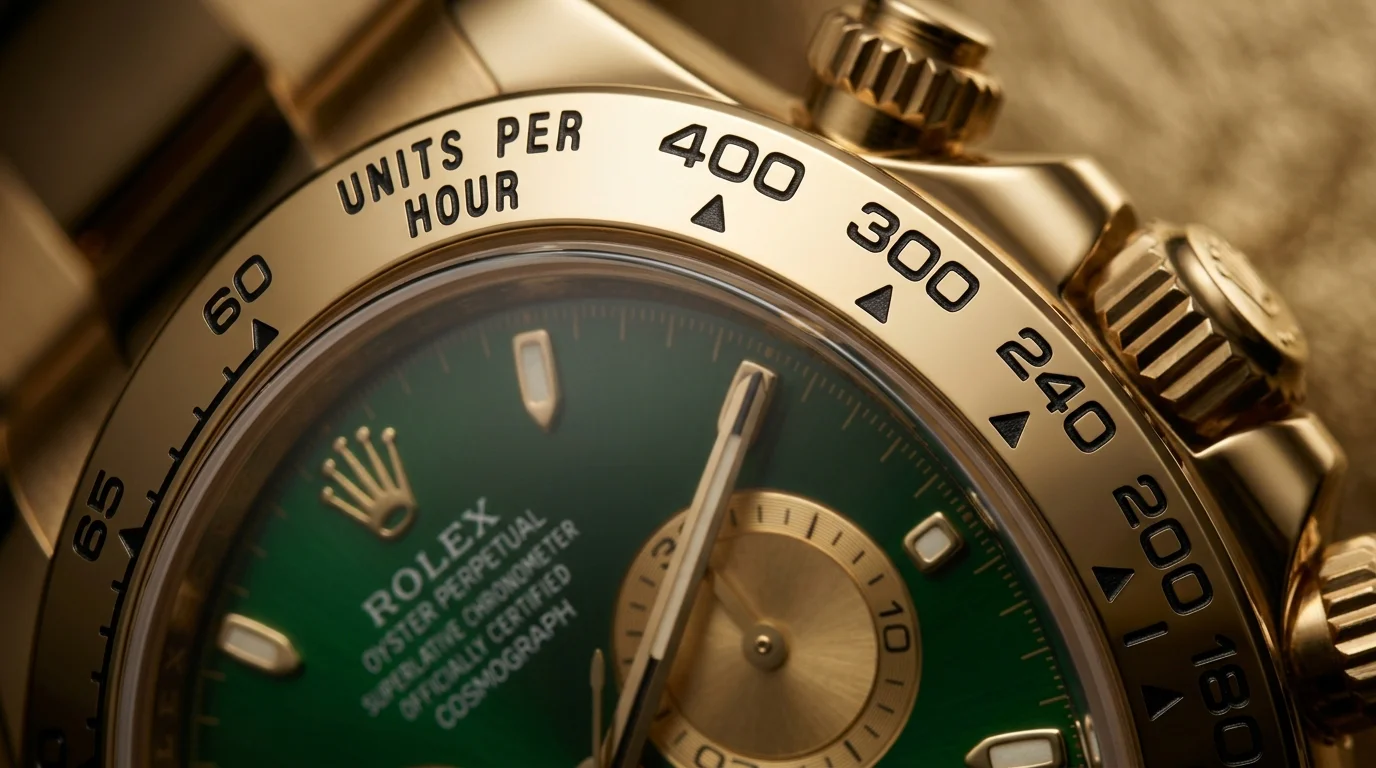 A tachymeter bezel is a fixed lookup scale, not a rotating timer. It reads speed off wherever the chronograph hand lands.
How You Actually Use It
Start the chronograph when you begin covering the measured distance, stop it when you finish, and read the speed off the bezel where the chronograph seconds hand lands. The Rolex Daytona is the reference example, and its tachymeter bezel is fixed in place rather than rotating, since it is a lookup scale rather than a countdown tool.
The GMT Bezel
A GMT bezel tracks a second time zone using a 24-hour scale and a fourth hand that makes one full rotation per day instead of two.
The Rolex GMT-Master II 126710, in either the Pepsi (red and blue) or Batman (black and blue) colorway, is the most recognized modern example. The bezel rotates in either direction on most GMT watches, letting the wearer dial in whichever second time zone matters that trip.
GMT Bezel Versus Dive Bezel, at a Glance
| Unidirectional Dive Bezel | GMT Bezel | |
|---|---|---|
| Rotation | One direction only | Either direction |
| Function | Times elapsed minutes | Tracks second time zone |
| Scale | 60-minute graduations | 24-hour scale |
| Governed by | ISO 6425 | No formal ISO standard |
The Decorative, Non-Functional Bezel
Not every bezel does anything. The fluted bezel on a Rolex Datejust is a coin-edge pattern that adds visual texture and, historically, made the bezel easier to grip when the watch was still hand-wound. On the modern Datejust it is a design signature, not a tool.
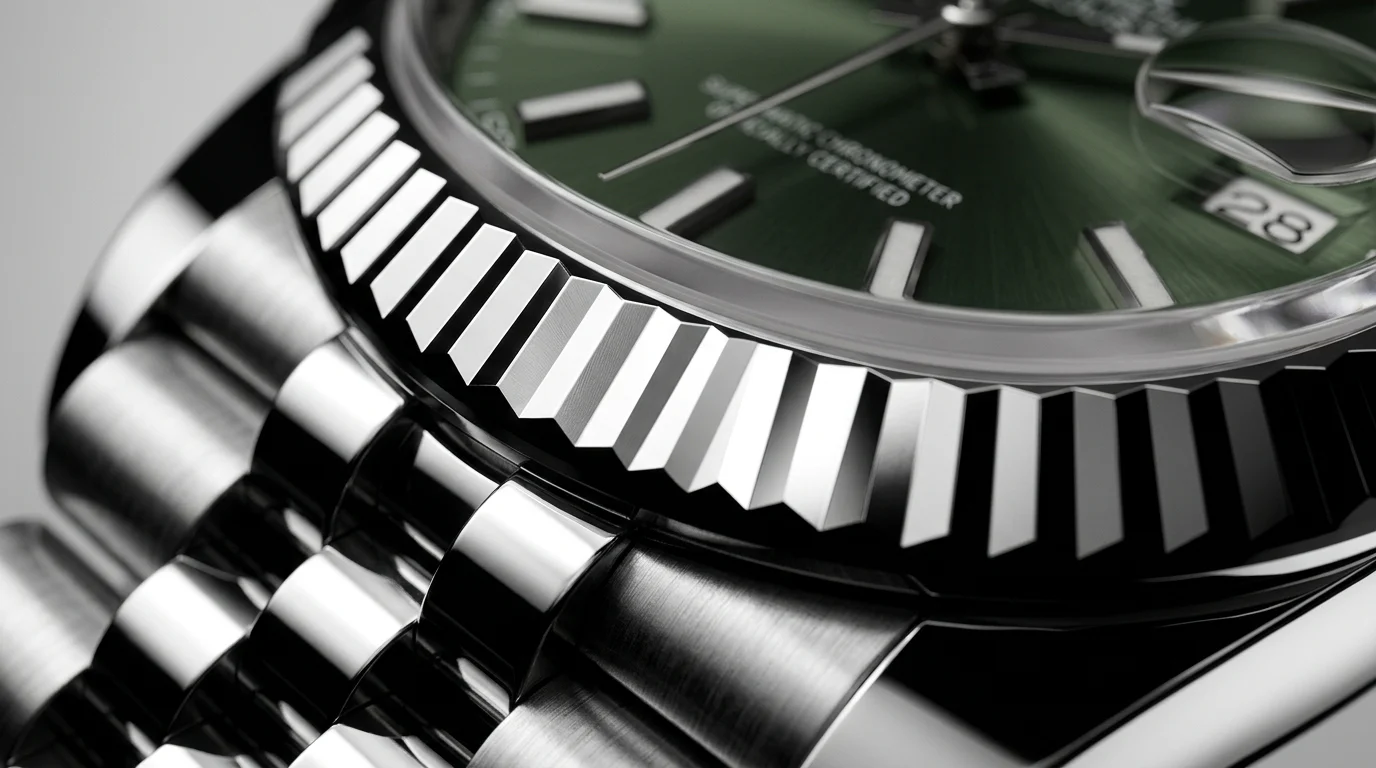 The fluted bezel does not time, calculate, or track anything. It is pure design signature, and that is the point.
Why This Distinction Matters When Buying
If you are shopping pre-owned and a listing calls out a bezel type, know whether that bezel is functional before you pay a premium for it. A smooth or fluted bezel on a dress watch is not doing math or timing anything, and that is fine. It is just not the same category of feature as a tachymeter or GMT scale.
The Rare One: The Slide Rule Bezel
Less common but worth knowing, a slide rule bezel carries a full circular logarithmic scale used for aviation calculations like fuel consumption and unit conversions. The Breitling Navitimer is the watch most associated with this bezel type, and it is functionally closer to a calculator strapped to your wrist than a timer.
Related Reading
Our column wheel versus cam-lever guide covers what powers the chronograph function that a tachymeter bezel actually reads from. If a GMT bezel caught your interest, our world time complication guide covers the multi-time-zone complication that takes the concept even further, and our monopusher chronograph guide covers a different single-control mechanism worth knowing.
FAQ
What is a unidirectional bezel and why does it only turn one way?
A unidirectional bezel is a dive watch bezel that rotates counter-clockwise only, so an accidental bump underwater can only make elapsed time appear longer, never shorter, prompting an earlier and safer surfacing.
What is a tachymeter bezel used for?
A tachymeter bezel calculates speed based on the time it takes to travel a fixed distance, read off the bezel scale using a running chronograph. It is common on watches like the Rolex Daytona.
What is the difference between a GMT bezel and a dive bezel?
A GMT bezel uses a 24-hour scale and rotates in either direction to track a second time zone, while a dive bezel uses 60-minute graduations and rotates in one direction only to time elapsed minutes underwater.
Why is the Rolex Datejust fluted bezel not functional?
The Datejust's fluted bezel is a coin-edge design detail with historical roots in improving grip, but on the modern watch it serves no timing or calculation function and exists purely as a design signature.
What is a slide rule bezel?
A slide rule bezel carries a circular logarithmic scale used for aviation math like fuel consumption and unit conversion, most associated with the Breitling Navitimer.
Browse authenticated pre-owned dive and GMT watches at 5dwatches.com.