The Short Answer
A vertical clutch chronograph engages its stopwatch function through a spinning cone and flywheel stacked on top of each other, while a horizontal clutch does the same job by sliding one gear sideways into mesh with another. Vertical clutches run smoother, wear less, and let you leave the chronograph running indefinitely without hurting accuracy. Horizontal clutches are the older, simpler design, and a few brands still choose one on purpose.
Most new chronograph calibers built today use a vertical clutch. The mechanism is not new. Its modern form dates to Seiko's 1969 caliber 6139, though the basic idea shows up in some 19th century pocket watches.
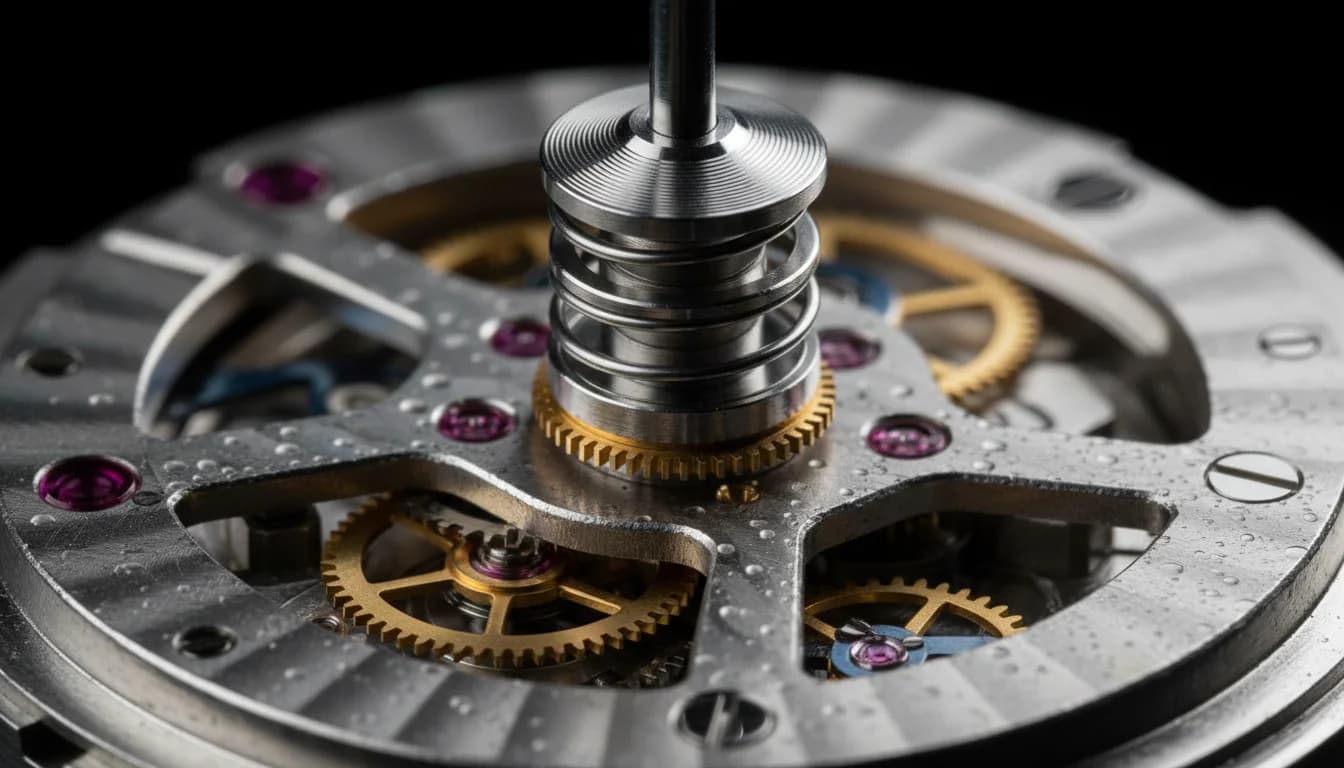
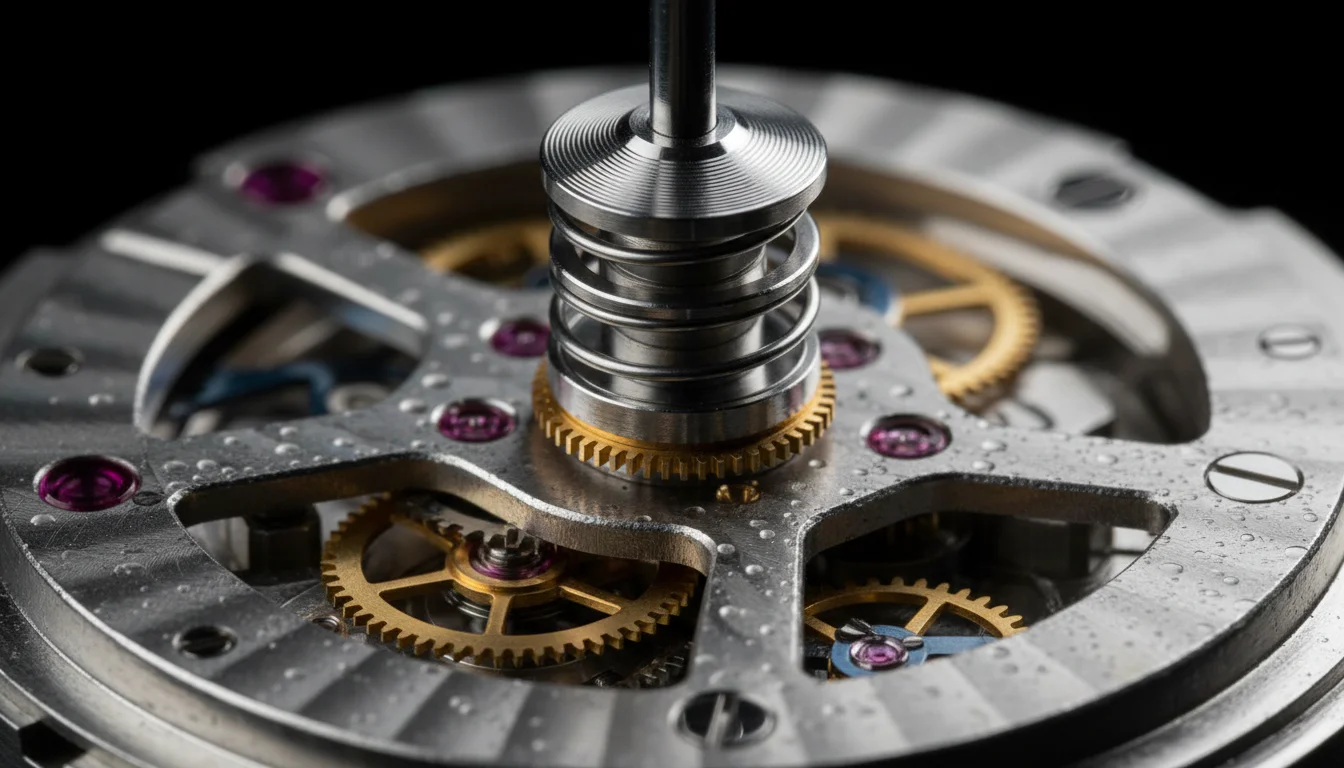 The vertical clutch sits as a stacked cone and flywheel rather than a set of side-by-side gears, the detail that gives the mechanism its name.
The watch photos in this article were generated with AI image tools, conditioned on real reference photography of chronograph movements and watchmaking tools so the mechanical layout is accurate to the real thing.
Why a Chronograph Needs a Clutch At All
A chronograph has two separate gear trains running side by side: the one that keeps ordinary time, and the one that only turns while the stopwatch function is active. Something has to connect and disconnect those two trains every time you start and stop the chronograph, and that connector is the clutch.
Get the clutch engagement wrong and the chronograph seconds hand either stutters when it starts, drifts when it runs, or drags down the accuracy of the base movement underneath it.
Horizontal Clutch: The Original Design
A horizontal, or lateral, clutch connects the two gear trains by sliding one wheel sideways until its teeth mesh with a second wheel's teeth. It is mechanically simple and has powered chronographs for over a century.
How the Vertical Clutch Actually Works
A vertical clutch replaces sideways gear meshing with a cone, linked to the chronograph seconds hand, held under spring tension against a constantly spinning flywheel. Pincers raise or lower that cone to engage or disengage it from the flywheel below.
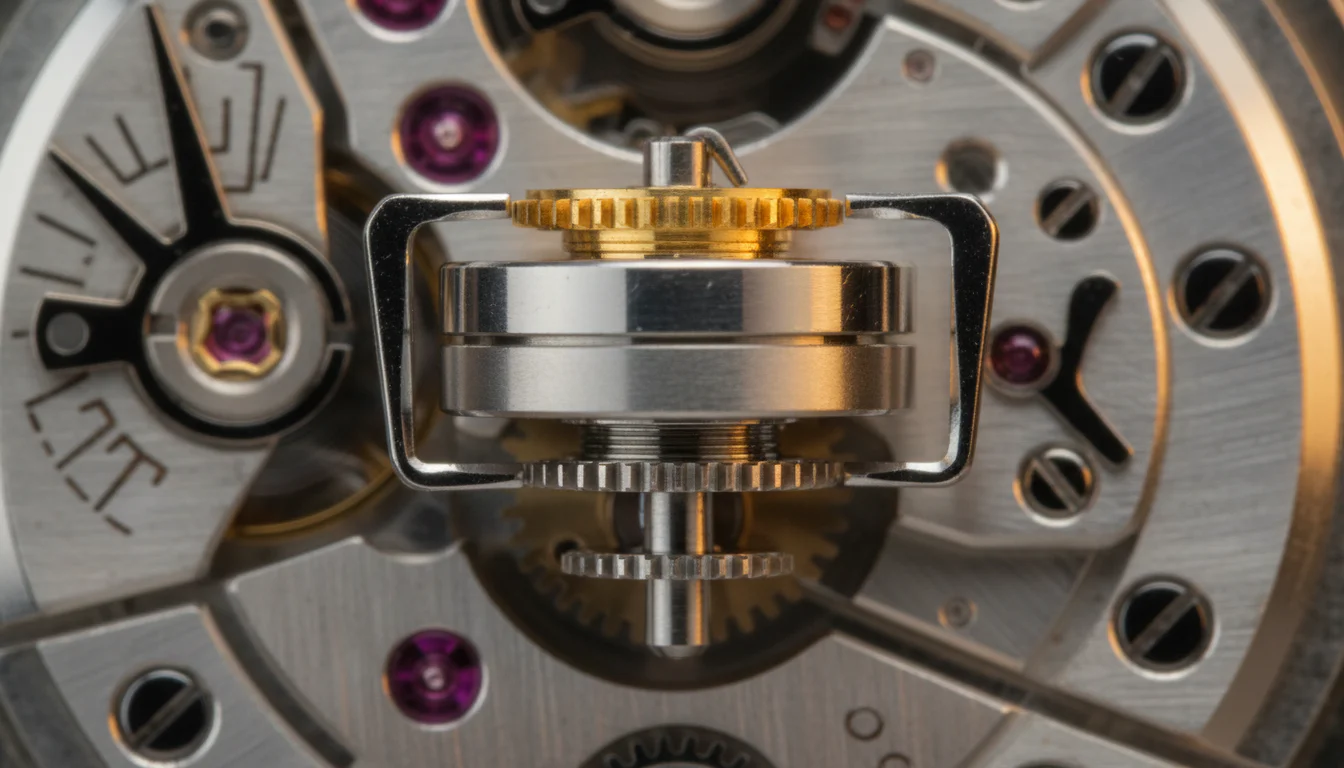 This is the part that does the work: the stacked cone sits above the flywheel on a shared axis, and pincers lower it into friction contact instead of sliding a gear sideways the way a horizontal clutch would.
Why the Vertical Design Runs Smoother
When two gear teeth mesh sideways in a horizontal clutch, there is a real chance they do not line up perfectly the instant you press start, causing the chronograph seconds hand to visibly jump or stutter before settling into its running position. A vertical clutch's cone-and-flywheel engagement has no teeth to misalign, so the seconds hand starts cleanly with no jump.
Why Wear Matters Here
A horizontal clutch's meshed gears grind against each other the entire time the chronograph runs, and that friction both wastes energy and wears the gear teeth over years of use. A vertical clutch's cone engagement runs with very little friction and, according to watchmakers who service both designs, can be left running indefinitely without meaningfully accelerating wear.
Which Watches Use Which
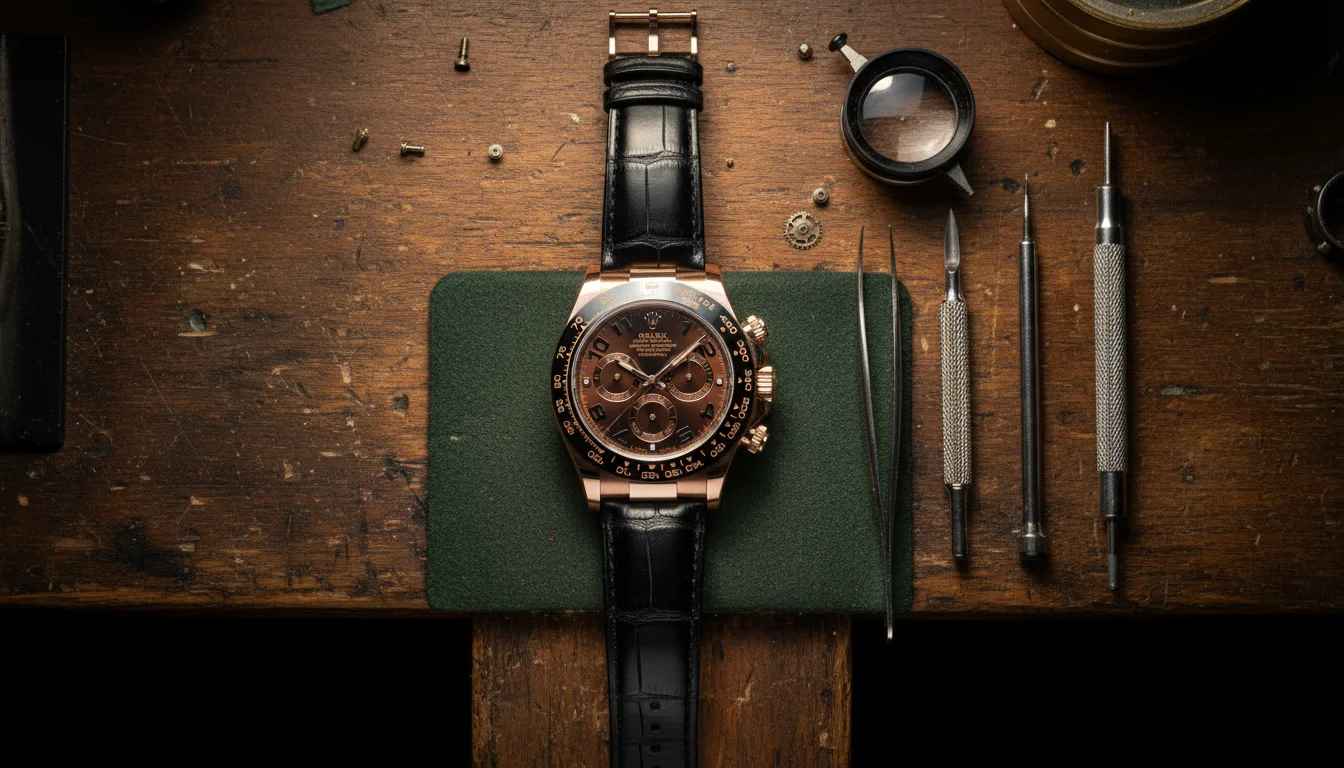 The Daytona's caliber 4131 is one of the most common vertical clutch calibers in daily circulation, a design choice most Daytona owners never think about but benefit from every time they use the pushers.
Why Omega Still Builds a Horizontal Clutch on Purpose
Omega's caliber 3861 in the current Speedmaster Professional deliberately keeps a horizontal clutch and a cam-actuated switching mechanism, the same basic architecture as the Moonwatch's original 1960s calibers. That is not a technical limitation. It is Omega preserving the mechanical character, hand feel, and visible construction that made the original Moonwatch what it is, even though a vertical clutch would technically outperform it on smoothness and wear.
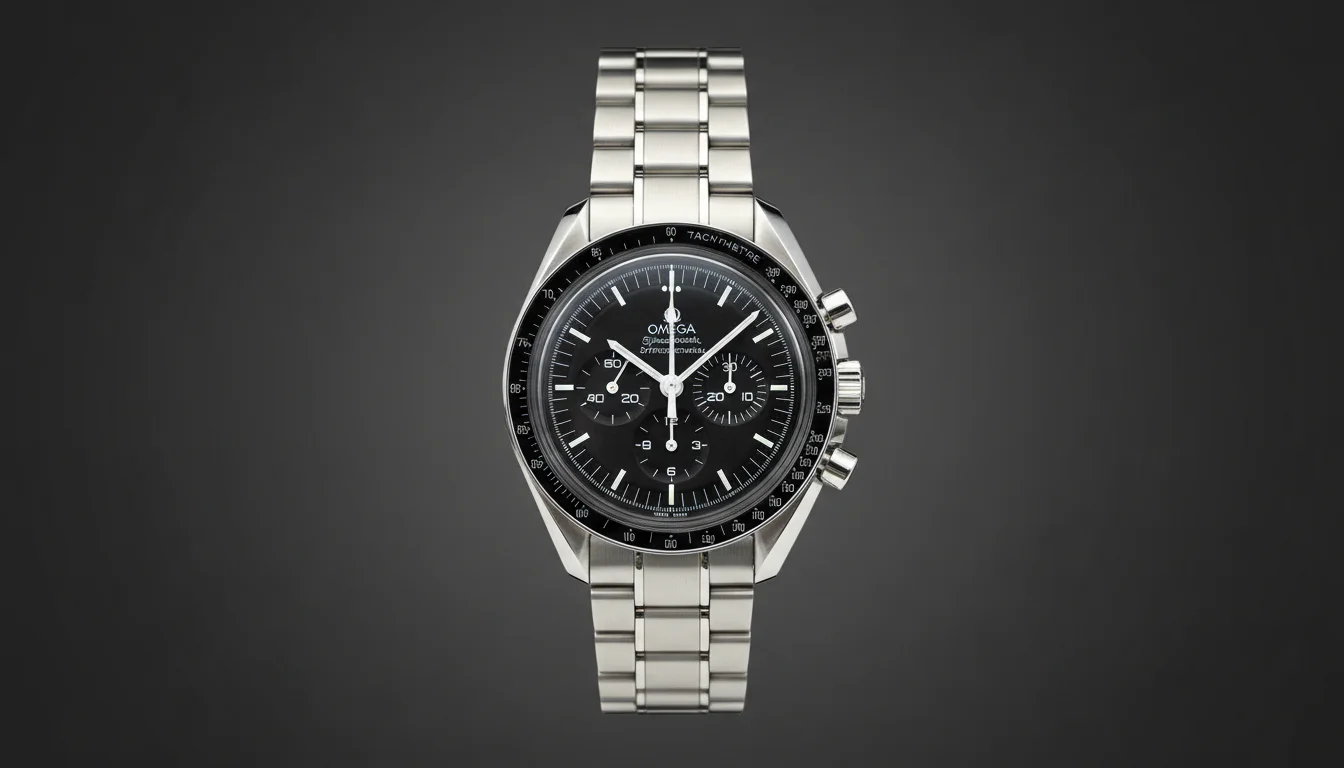 The Speedmaster Professional is the clearest mainstream example of a brand choosing a horizontal clutch on purpose, for continuity with the original 1960s caliber rather than for any performance advantage.
The Honest Trade-Off
A vertical clutch is close to a strict upgrade in mechanical terms: less wear, no hand jump, and no accuracy penalty from leaving the chronograph running. The trade-off is not performance. It is character and cost. Vertical clutch modules typically add height to a movement, and a small number of collectors specifically want the older horizontal architecture in a vintage-reissue caliber, the same reason some buyers prefer a cam-lever switching mechanism over a column wheel despite the column wheel's smoother feel.
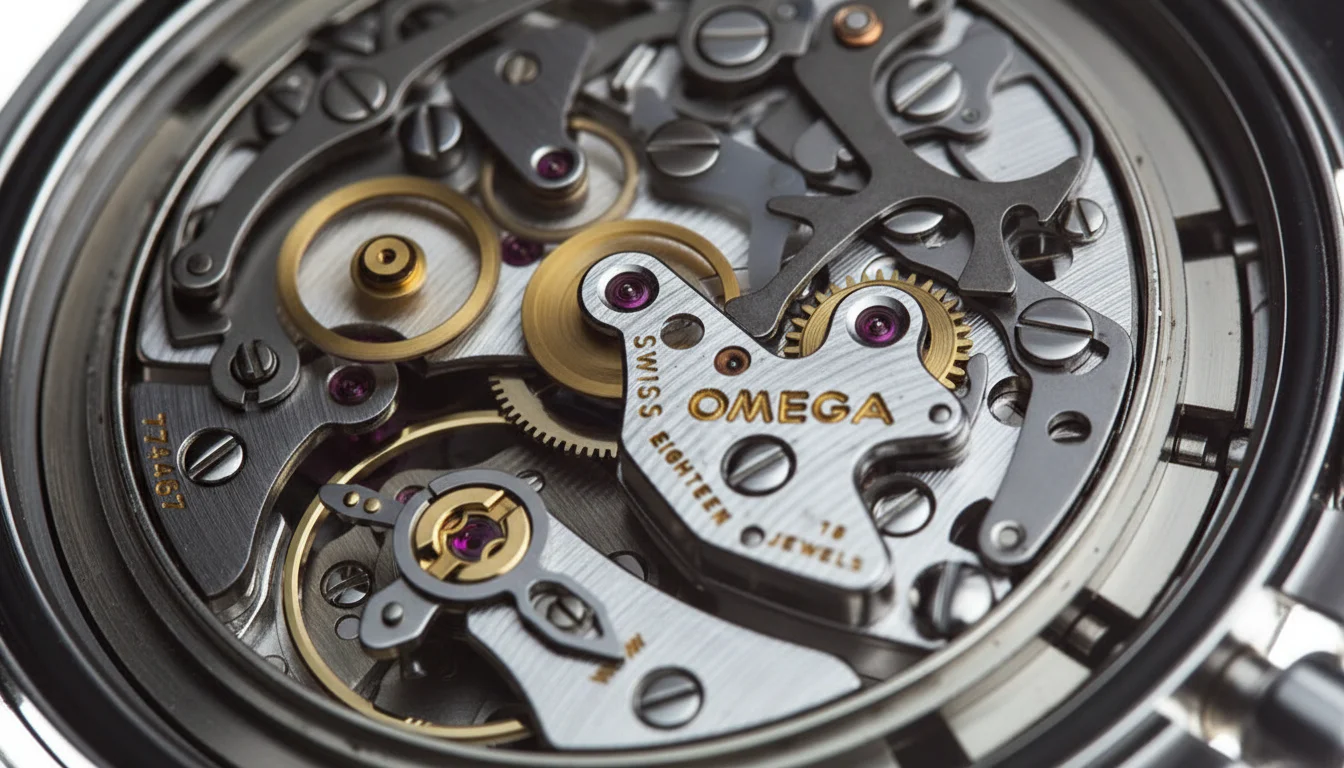 A vertical clutch assembly sits stacked through the movement's depth rather than spread across its width, one reason the mechanism adds height rather than diameter to a caliber.
What This Means When Buying Pre-Owned
If a pre-owned chronograph's seconds hand jumps noticeably when you press start, that alone is not a defect. It may simply be a horizontal clutch design behaving exactly as intended, particularly on a Speedmaster or another vintage-architecture caliber. A vertical clutch chronograph should start with no visible jump at all, and if one does jump, that is worth having checked by a watchmaker.
FAQ
What is a vertical clutch chronograph?
A vertical clutch chronograph engages its stopwatch function through a spring-loaded cone that presses against a spinning flywheel along a shared axis, rather than sliding two gears sideways into mesh like an older horizontal clutch design.
Which is better, vertical or horizontal clutch?
Vertical clutches generally perform better: less wear over time, no seconds hand jump at start, and no accuracy penalty from running the chronograph continuously. Horizontal clutches persist mainly for historical accuracy in vintage-reissue calibers, such as Omega's Speedmaster Professional.
Why does my chronograph's seconds hand jump when I press start?
That jump is typical of a horizontal clutch chronograph, caused by the two gears not perfectly aligning the instant they mesh. It is normal behavior for that design, not necessarily a defect.
Does the Rolex Daytona use a vertical or horizontal clutch?
The Rolex Daytona's caliber 4131 uses a vertical clutch, along with other modern column-wheel chronographs like the Patek Philippe Nautilus Chronograph and Audemars Piguet Royal Oak Chronograph.
Why does Omega still use a horizontal clutch in the Speedmaster?
Omega's caliber 3861 deliberately keeps the horizontal clutch and cam-actuated switching architecture of the original 1960s Speedmaster calibers, prioritizing mechanical character and historical continuity over the smoother performance a vertical clutch would offer.