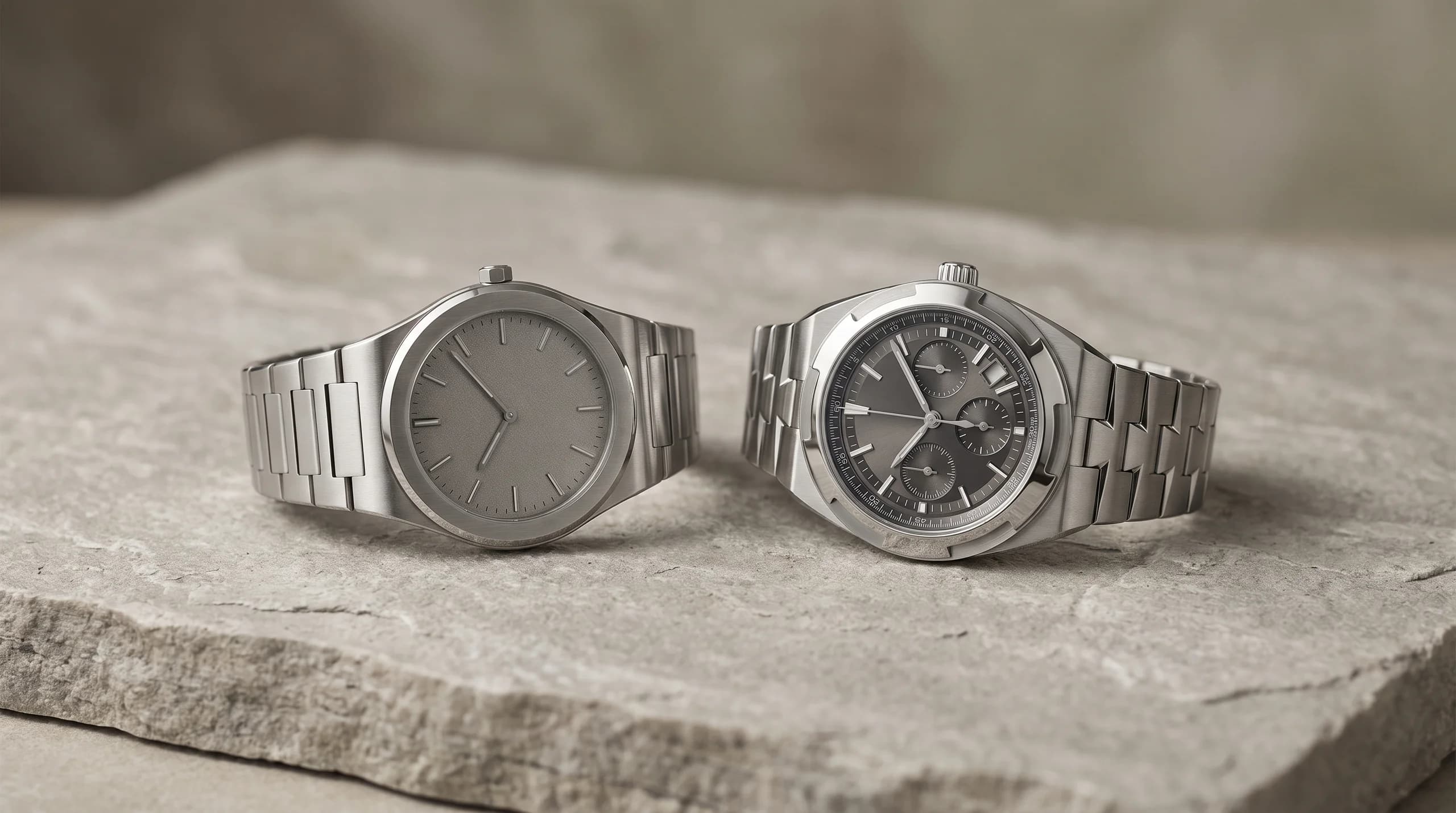
Every few weeks, someone asks which they should buy: the Tissot PRX or the Christopher Ward Twelve. It is the defining budget question in the integrated-bracelet sports watch world, the corner of the market that gives you the Gerald Genta look without a Royal Oak price. The honest answer is that these two watches are not really fighting for the same buyer. One is the better-made watch; the other is the better deal, and the better place to start.
Which of those matters more is the whole decision. So rather than crown a winner, here is what your money actually buys on each, and who each one is for.
The images in this article are AI-generated illustrations created for editorial purposes. They are not photographs of a specific watch offered for sale.
The short answer: the Tissot PRX is the cheapest credible Swiss automatic in this style, at roughly $700 (less in quartz), with an 80-hour power reserve and the ability to walk into a boutique, negotiate, and wear it home. The Christopher Ward Twelve is the better-finished watch, with a sharper case, a more detailed dial, a smoother 4Hz movement without plastic parts, and a slimmer profile, for roughly double the money and online-only. Buy the PRX if it is your first automatic or your budget is tight. Buy the Twelve if you care about finishing and can spend around $1,400.
The same idea, two budgets
Genta's steel Royal Oak and Nautilus created the integrated-bracelet sports watch, and the genre has spent fifty years trickling down to prices normal people can pay. At the top, the Patek, AP, and Vacheron holy trinity still runs well into five figures, and even a value-focused pick like the Girard-Perregaux Laureato starts in the low twenties. The PRX and the Twelve deliver the same visual language, angular case flowing straight into a bracelet, for under a thousand and just over it. That is the appeal, and it is a real one.
What the money buys on the PRX
Tissot has made watches since 1853, and the PRX is the company doing what it does best: a lot of watch for very little money. In Powermatic 80 form it is a steel automatic at around $700, and the quartz version costs meaningfully less. The headline is the movement. The Powermatic 80 carries an 80-hour power reserve, so you can take it off Friday night and it is still running Monday morning.
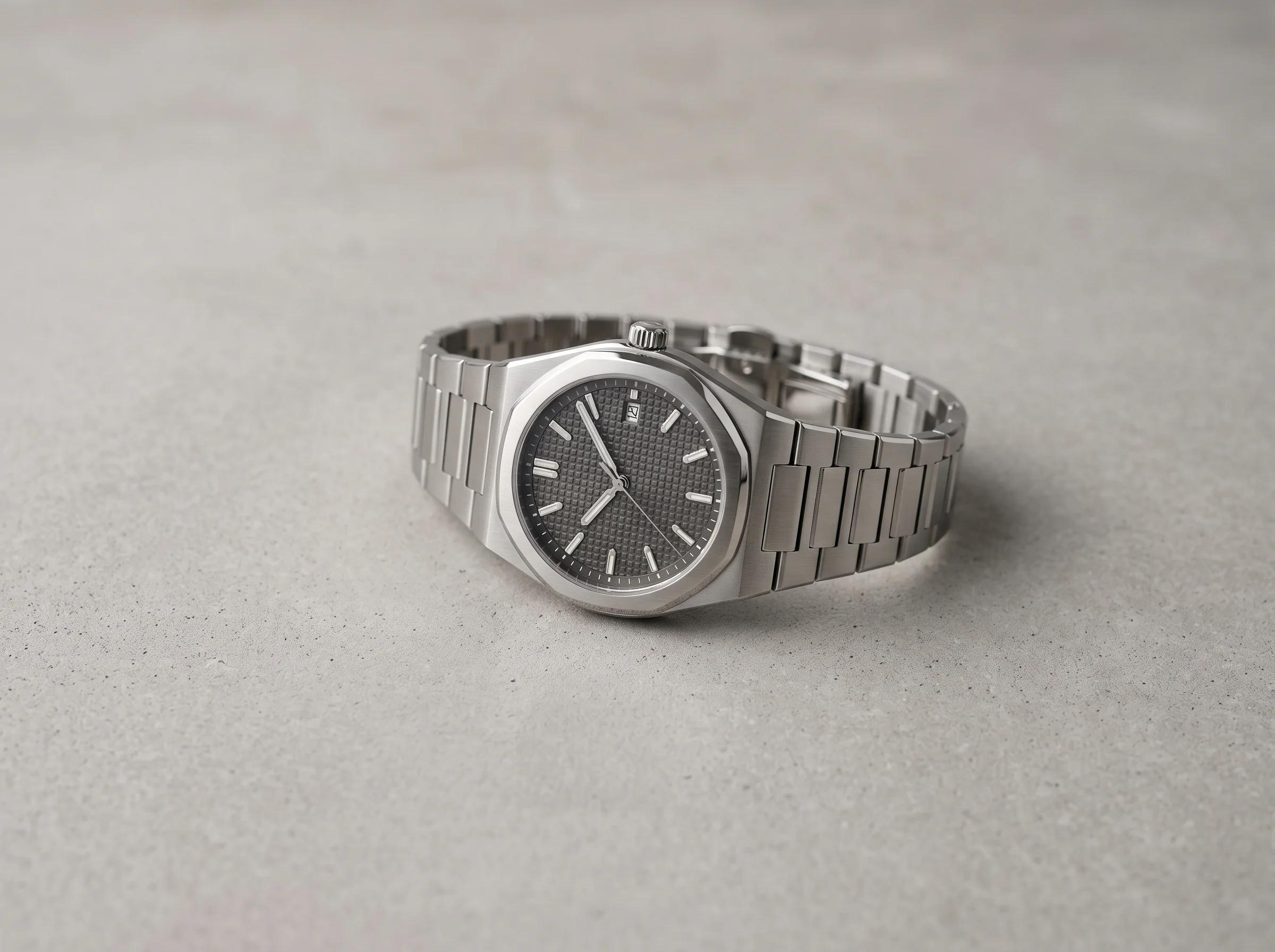 The PRX's appeal is a clean 70s silhouette and a lot of Swiss watch for the money, with finishing kept simple to hit the price.
There are trade-offs, and they are honest ones. The Powermatic 80 runs at 3Hz and uses some plastic escapement components. In practice that has proven accurate and reliable, and it is worth remembering that even the Omega Moonwatch uses a plastic brake, so a plastic part is not the death sentence forums make it out to be. The dial is a clean waffle texture, the case and bracelet are simple in their finishing, and the watch can wear a touch thick on smaller wrists.
What you get in return is availability. Tissot is everywhere, boutiques, dealers, department stores, even airports, which means you can try one on, often negotiate 20 to 30 percent off, and walk out the same day. It also carries a two-year warranty backed by a service network on every continent.
What the money buys on the Twelve
Christopher Ward is a British brand founded in 2005 that sells direct to consumer, online only, and the Twelve is where the extra money goes straight into the metal. For the full picture of how the brand builds its range beyond this one model, our complete Christopher Ward brand and model guide covers the C60 Trident, C63 Sealander, and the in-house Bel Canto chiming watch.
Start with the case. Its twelve-sided bezel steps through a brushed circle, a mirror-polished facet that reviewers have likened to integrated watches several times its price, bead-blasted flanks, and back to a circle. The dial is a catalogue of detail next to the PRX, with raised pyramid textures and crisp, multi-layered markers.
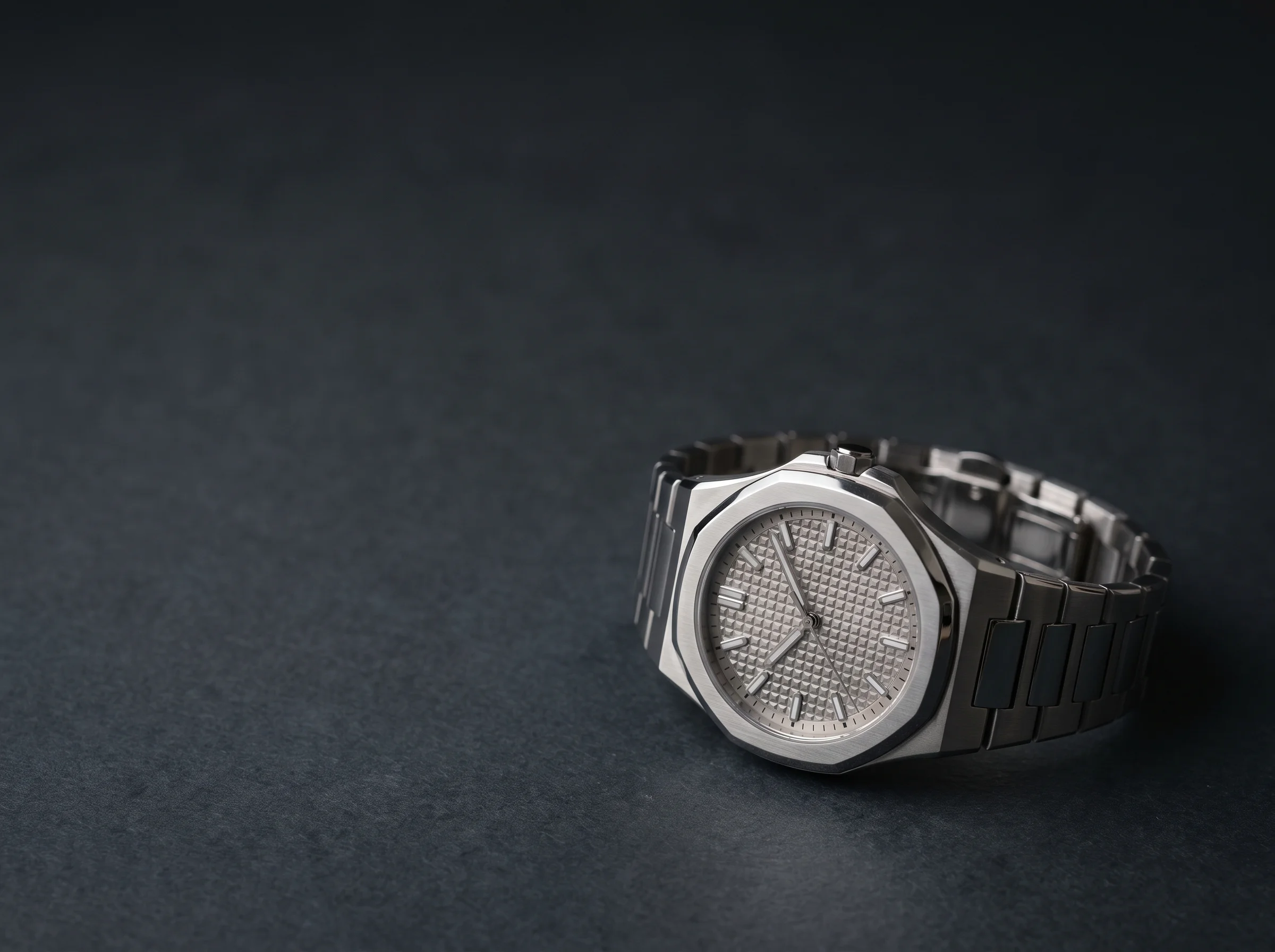 The Twelve puts its budget into finishing: a triple-textured twelve-sided bezel and a layered dial that reward a close look.
Inside is a Sellita SW200, which beats faster at 4Hz for a smoother seconds sweep and uses no plastic parts, though it gives up more than half the PRX's reserve at around 38 hours. On the wrist the Twelve is the more comfortable watch, slimmer at roughly 8.95mm against the PRX's 10.9mm and better balanced. The catches are real too: the crown guards and busy dial divide opinion, and the lugless case limits you to Christopher Ward's own bracelet and straps. Backing it is a genuinely strong ownership package, a 60-day return window and a five-year movement guarantee, and the Twelve comes in both steel and titanium.
The head-to-head
| Tissot PRX Powermatic 80 | Christopher Ward The Twelve | |
|---|---|---|
| Price (steel, bracelet) | ~$700 | ~$1,400 |
| Movement | Powermatic 80, 3Hz | Sellita SW200, 4Hz |
| Power reserve | 80 hours | ~38 hours |
| Plastic escapement parts | Yes | No |
| Thickness | ~10.9mm | ~8.95mm |
| Warranty | 2 years | 5 years |
| How to buy | Boutiques and dealers | Online only, 60-day returns |
The honest gap
Set them side by side and the Twelve is the better watch. The case finishing, the dial detail, the movement, and the wrist feel all favor it, and the gap is arguably wider than the price difference suggests. If you have owned a few watches and learned to see finishing, you will notice every one of those upgrades.
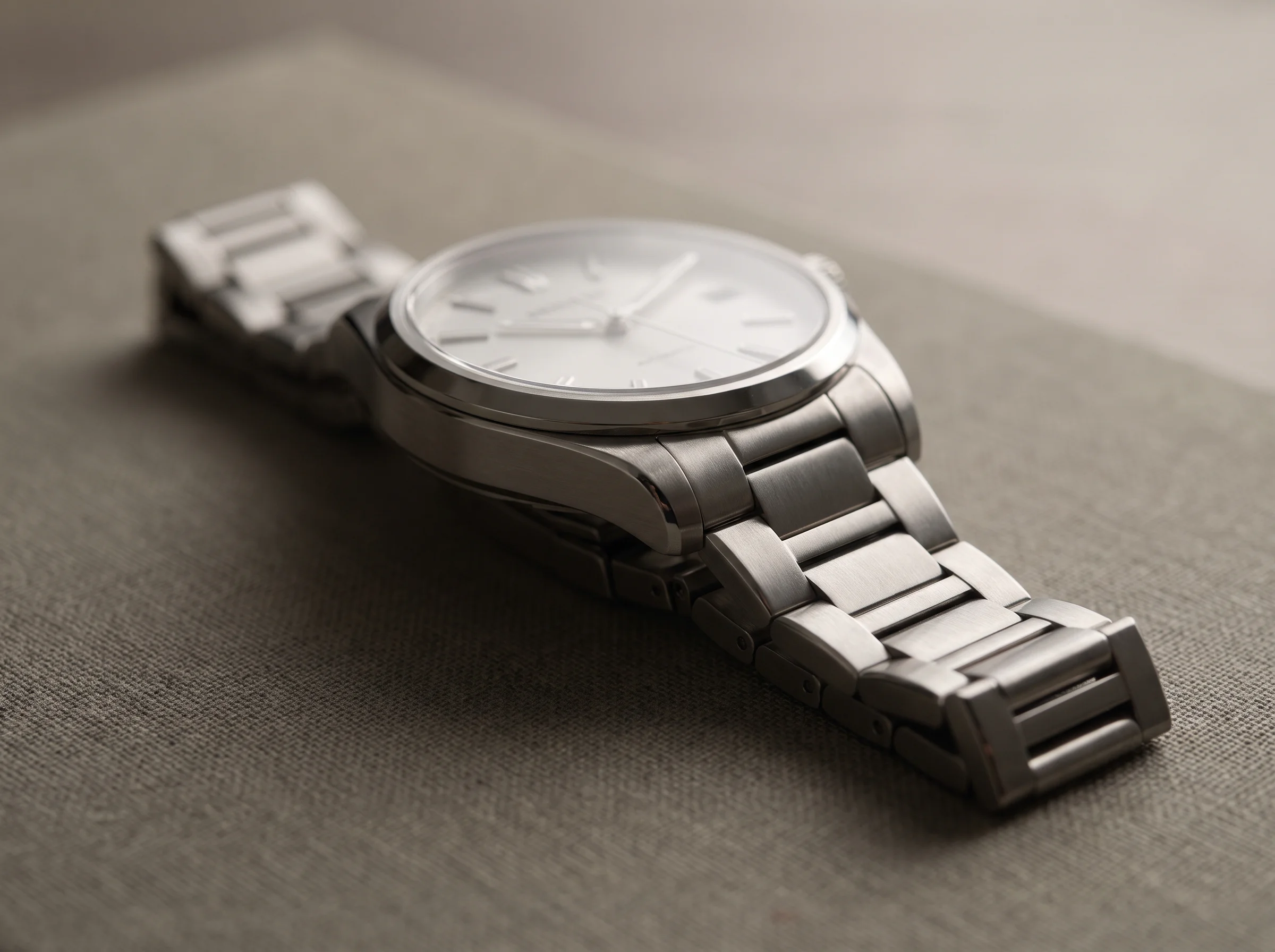 Where the bracelet meets the case is where finishing budgets show. It is also where the two watches most visibly part ways.
But better is not the same as right. The PRX's value is not a consolation prize, it is the entire point of the watch, and the difference between a 3Hz and a 4Hz movement or a plastic and a metal escapement matters far less in daily wear than it does on a spec sheet. If the movement question interests you, our guide to how the four movement types actually differ is a good next read, and if you are weighing the Twelve's titanium option, titanium versus steel covers the trade-offs.
Which one is for you
Buy the PRX if it is your first mechanical watch, if your budget is genuinely tight, if you want to try before you buy and negotiate a discount, or if you simply love the clean look and the convenience of an 80-hour reserve and a brand you can service anywhere. It is one of the best value propositions in all of watchmaking.
 Both wear like everyday watches. The Twelve is the more comfortable of the two, and the one that rewards a more experienced eye.
Buy the Twelve if you have owned a few pieces and care about how a watch is finished, if you want the better movement and the more comfortable wear, if the extra few hundred dollars is spendable, and if you are comfortable buying online with a 60-day safety net. It is the more watch, and for the right buyer it is worth every pound of the difference.
When you outgrow the entry point
The real lesson of both watches is that you do not need a grey-market Royal Oak to wear the integrated-sports look well. Start here, and start smart. But this genre has a way of pulling you in, and when it does, the next rung is genuine luxury: the accessible integrated pieces from a maker like Tudor, and eventually the trinity itself. That is the ladder these two watches put you on the bottom of.
When you are ready to step up from the entry point, browse authenticated pre-owned Tudor at 5dwatches.com.