The Short Answer
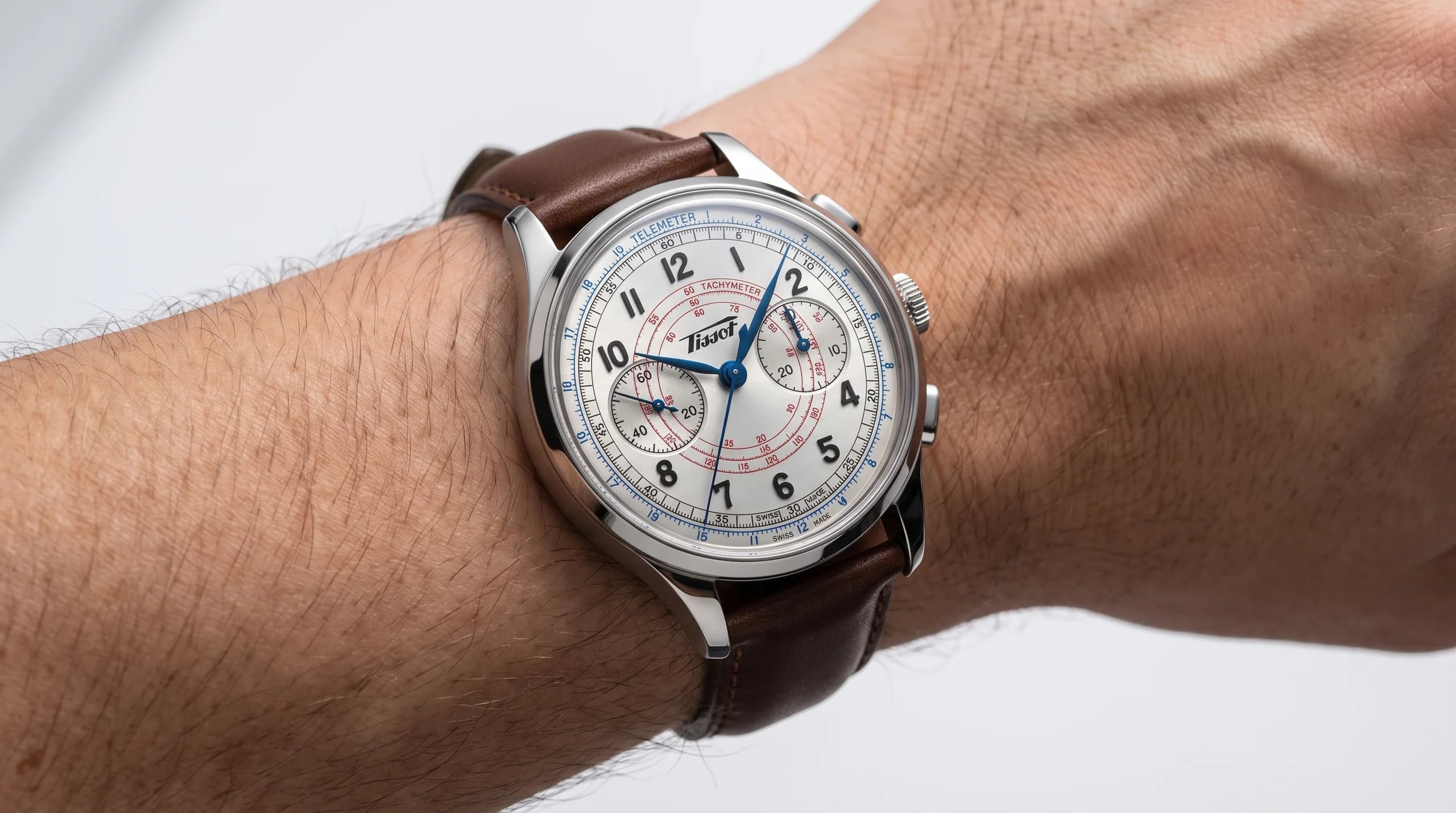
A telemeter scale lets you measure your distance from an event you can both see and hear, most classically a lightning strike, by timing the gap between the flash and the thunder. Start the chronograph on the flash, stop it on the sound, and the chronograph hand points to your distance on the scale. It works because sound travels through air at a known, roughly constant speed of about 343 meters per second, while light arrives close enough to instantly for the delay to be ignored.
The Tissot Telemeter 1938 Chronograph is one of the few modern watches still printing this scale, a nod to a complication most brands quietly dropped decades ago.
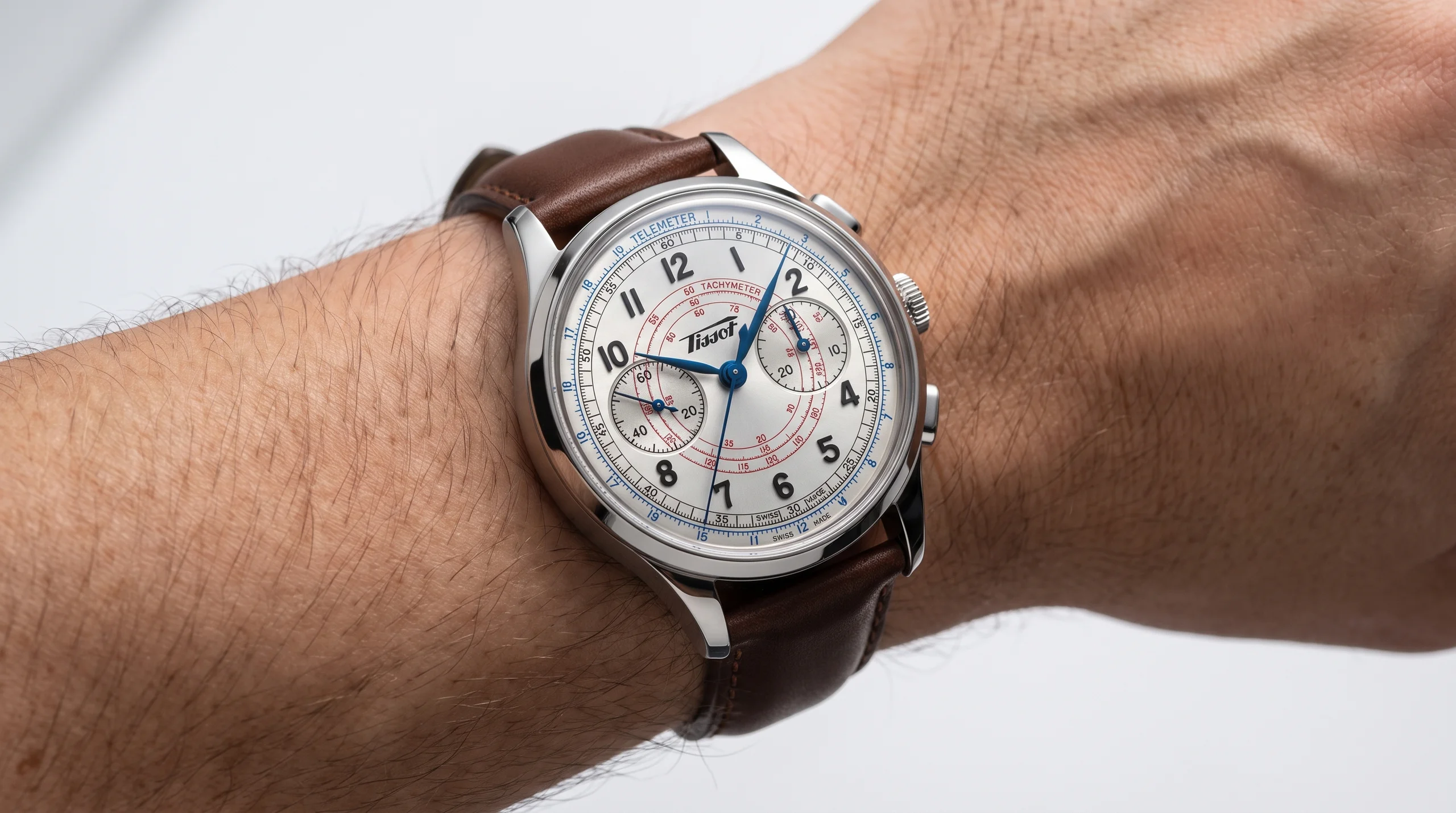 The blue telemeter scale runs around the outer edge of the dial, separate from the red tachymeter scale closer to the center.
The watch and dial photos in this article were generated with AI image tools, conditioned on real reference photography of the Tissot Telemeter 1938 Chronograph so the scale layout and typography are accurate to the real watch.
Where the Telemeter Scale Came From
Telemeter scales predate the wristwatch chronograph by decades, originating in military and civil engineering instruments used to estimate distance to artillery fire or storm activity long before pocket chronographs adopted the same math. Watchmakers printed the scale onto chronograph dials starting in the early 20th century, and it became a standard fixture on pilot's and military-adjacent chronographs through the interwar and WWII years, when estimating the distance to incoming artillery fire had obvious practical value.
By the postwar decades, most chronograph buyers had no practical need to range artillery or lightning, and manufacturers largely replaced the telemeter with the more broadly useful tachymeter scale. Tissot's Telemeter 1938 is a deliberate revival of the older approach, styled after the brand's own chronographs from that decade.
Telemeter vs. Tachymeter vs. Pulsometer
All three are chronograph dial scales solving different problems. The tachymeter calculates speed over a known, fixed distance, commonly one mile or one kilometer. The telemeter calculates distance from a known, fixed speed, the speed of sound. The pulsometer is the simplest of the three, counting a set number of heartbeats or breaths to estimate a patient's pulse rate rather than measuring distance or speed at all.
How to Actually Use a Telemeter Scale
Start the chronograph the instant you see the event, a lightning flash or the muzzle flash of gunfire in the scale's original military use.
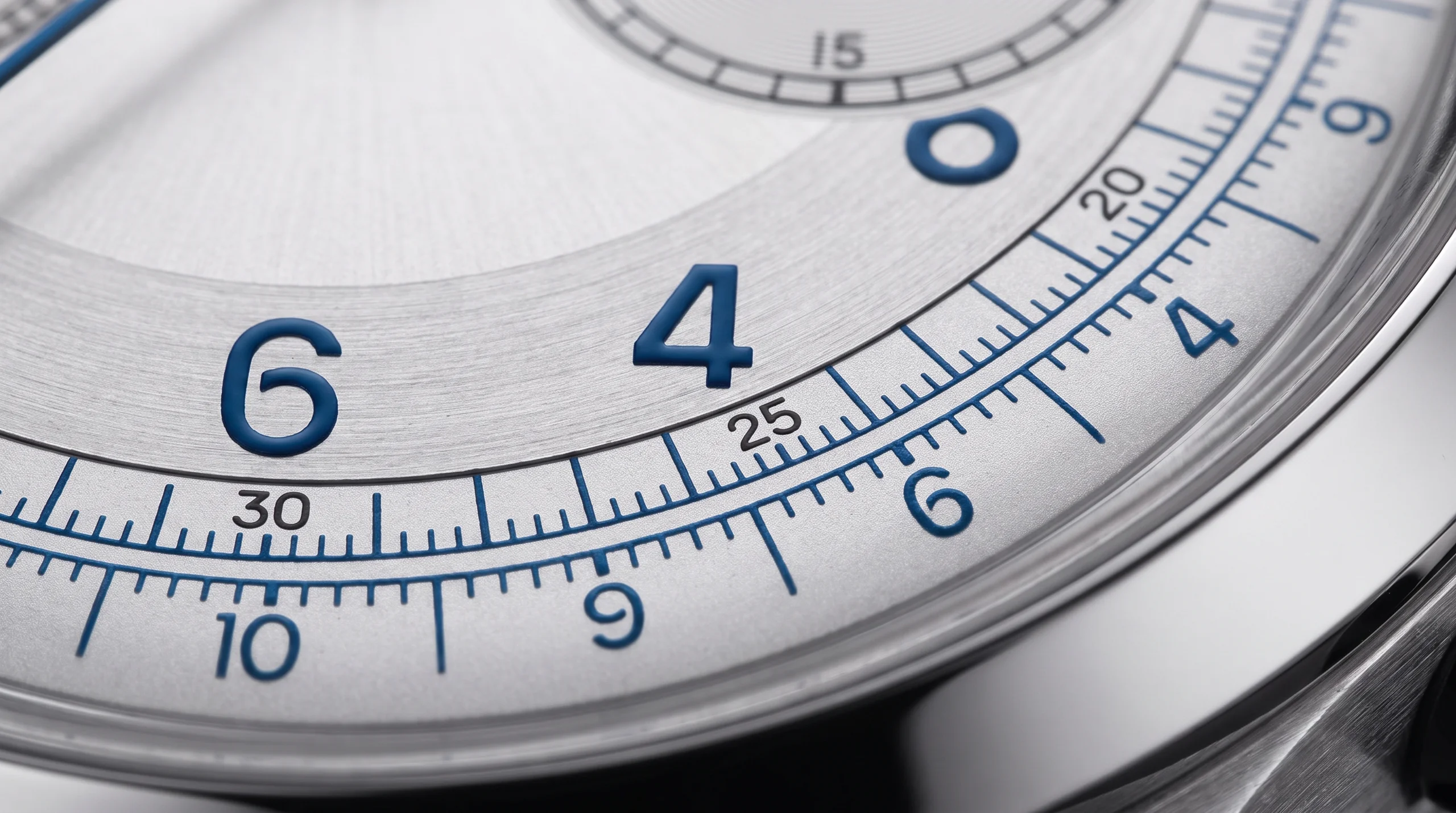 The Tissot Telemeter 1938 uses distinctive flat-top 4s and open-ended 6s and 9s on its scale, styled after the brand's original 1930s chronographs.
Stop the chronograph the instant you hear the corresponding sound, the thunderclap or the report of the gunshot. The chronograph seconds hand will have swept around to a number on the telemeter scale, and that number is your distance from the event, in kilometers or miles depending on how the specific watch's scale is calibrated.
The Physics Behind the Scale
Sound travels through air at roughly 343 meters per second at sea level and room temperature, meaning it takes about 2.9 seconds to travel one kilometer, or about 4.8 seconds to travel one mile. A telemeter scale is simply a chronograph seconds track relabeled using that constant, so a 2.9-second reading lands on the "1" kilometer mark instead of the "20.7" mark a standard tachymeter would show for the same elapsed time.
The Tissot Telemeter 1938, as a Modern Example
Tissot's Telemeter 1938 Chronograph runs a 42mm stainless steel case at 13.9mm thick, powered by the Valjoux-based A05.231 movement, with a silver or black dial carrying both the blue telemeter scale on the outer track and a red Base 1000 tachymeter scale closer to the dial center.
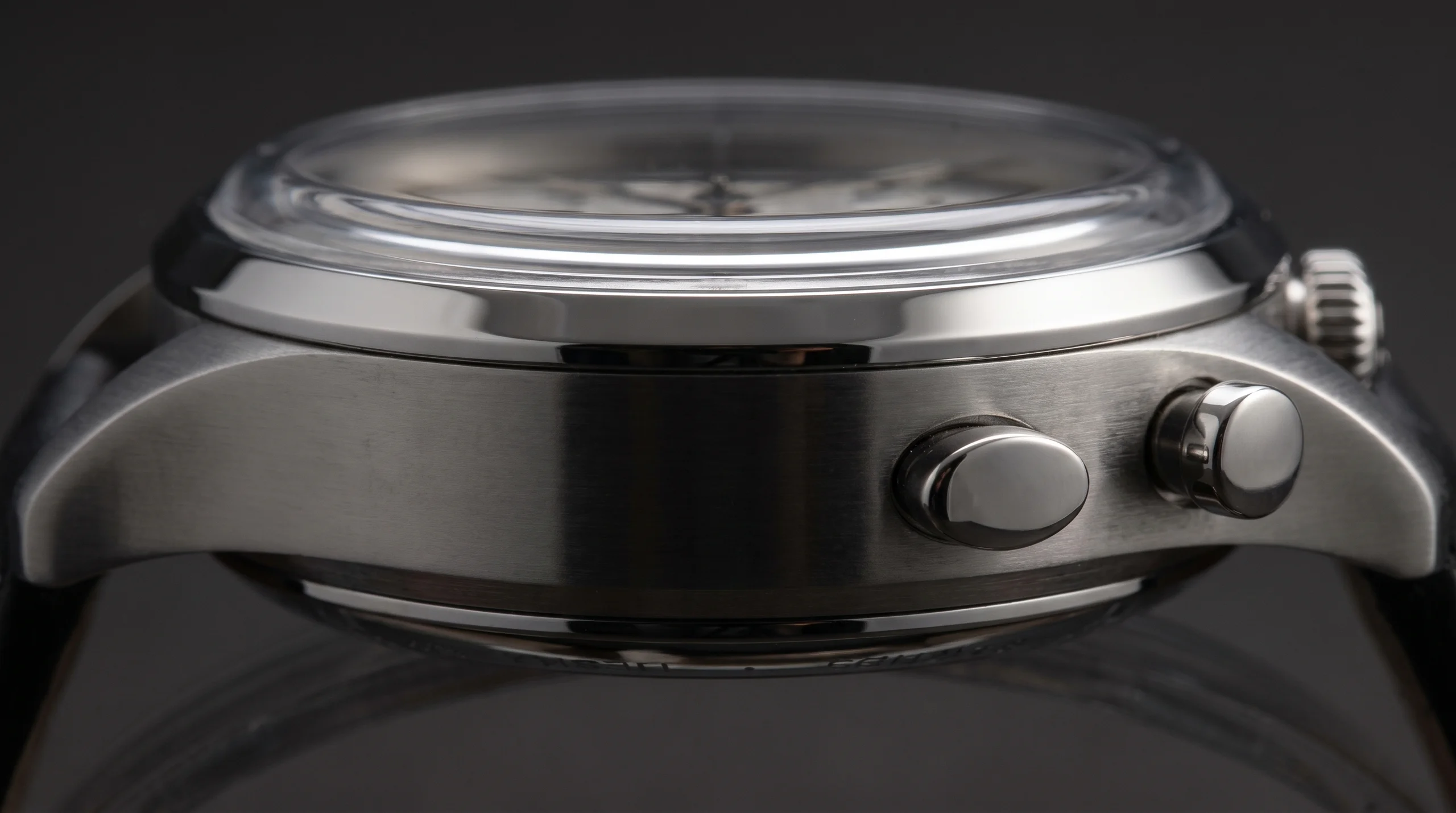 The almond-shaped pushers are a deliberate period detail, matching the vintage chronographs the design is drawn from.
Running both scales on one dial without crowding it is a genuine layout challenge, solved here by keeping the telemeter track thin and pushed to the very edge of the dial, with the tachymeter kept smaller and closer to center where it does most of its practical work.
Why the Typography Looks Unusual
The Telemeter 1938's numerals use flat-top 4s and open-ended 6s and 9s, a period-correct typographic choice pulled directly from Tissot's own 1930s chronographs rather than a modern font. It is a small detail, but one that separates a genuine vintage-inspired reissue from a watch that merely borrows an old name.
The Honest Trade-Off
A telemeter scale has almost no practical use for the overwhelming majority of owners today, and a smartphone app will range a thunderstorm faster and more accurately than any mechanical watch ever could. What the scale buys a collector is a specific, historically grounded complication that most brands no longer bother printing, on a dial layout genuinely harder to execute cleanly than a single-scale chronograph.
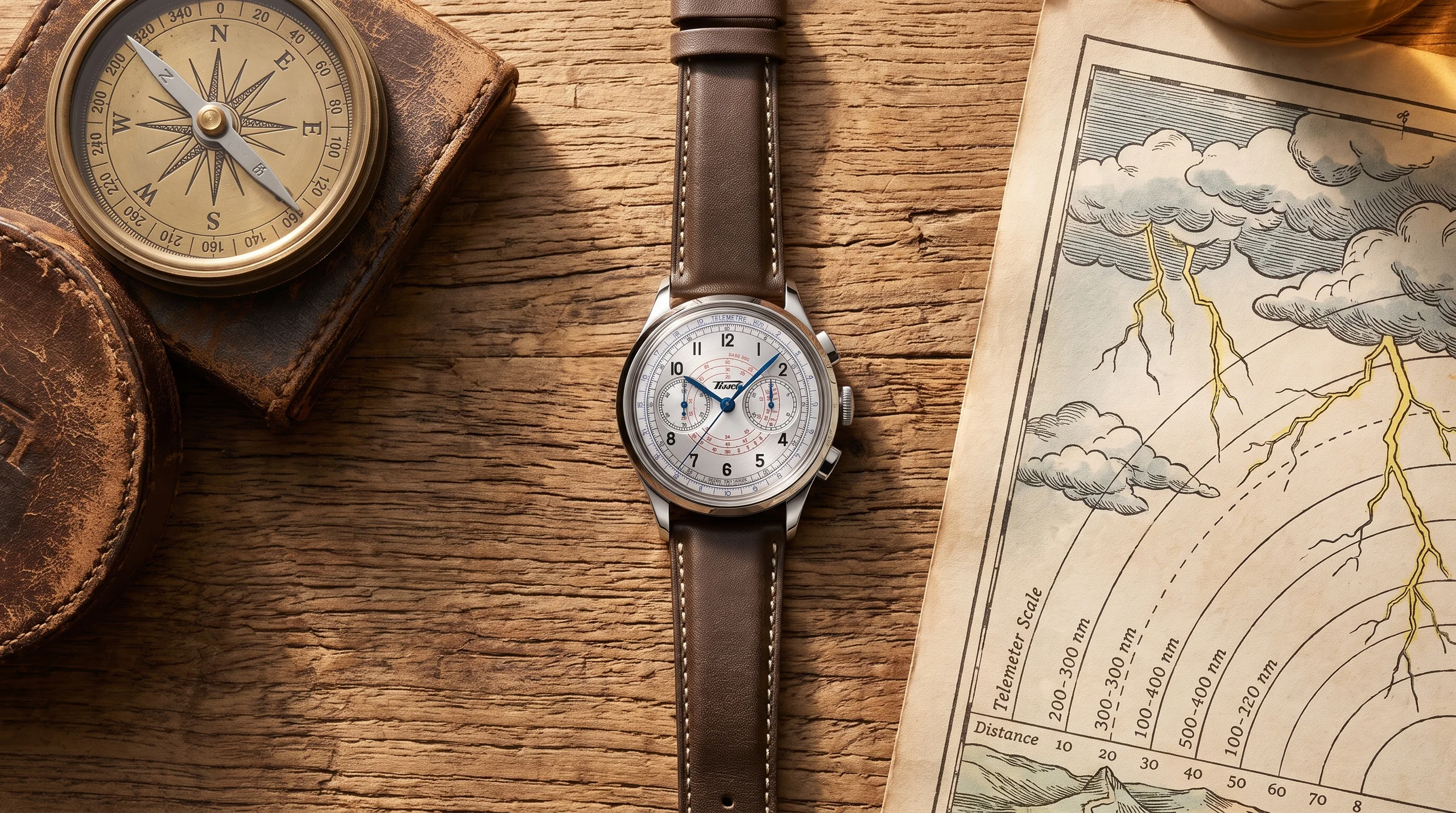 Ranging a storm was the telemeter scale's original civilian use, alongside its military role estimating distance to artillery fire.
FAQ
What is a telemeter scale on a watch?
A telemeter scale lets you calculate your distance from an event that is both visible and audible, most commonly a lightning strike, by timing the delay between seeing it and hearing it with a chronograph.
How do you use a telemeter scale?
Start the chronograph when you see the event (a lightning flash), stop it when you hear the corresponding sound (the thunder), and read your distance from the chronograph hand's position on the telemeter scale.
What is the difference between a telemeter and a tachymeter?
A tachymeter calculates speed over a known, fixed distance. A telemeter calculates distance using a known, fixed speed, the speed of sound through air, roughly 343 meters per second.
Why don't more modern watches have a telemeter scale?
Most owners today have no practical need to range lightning strikes or artillery fire, the scale's original civilian and military uses, so manufacturers largely replaced it with the more broadly useful tachymeter scale by the mid-20th century.
Does the telemeter scale show kilometers or miles?
It depends on the individual watch. Some telemeter scales are calibrated in kilometers and others in miles, so it is worth checking a specific reference's dial or documentation before relying on the reading.