The Short Answer
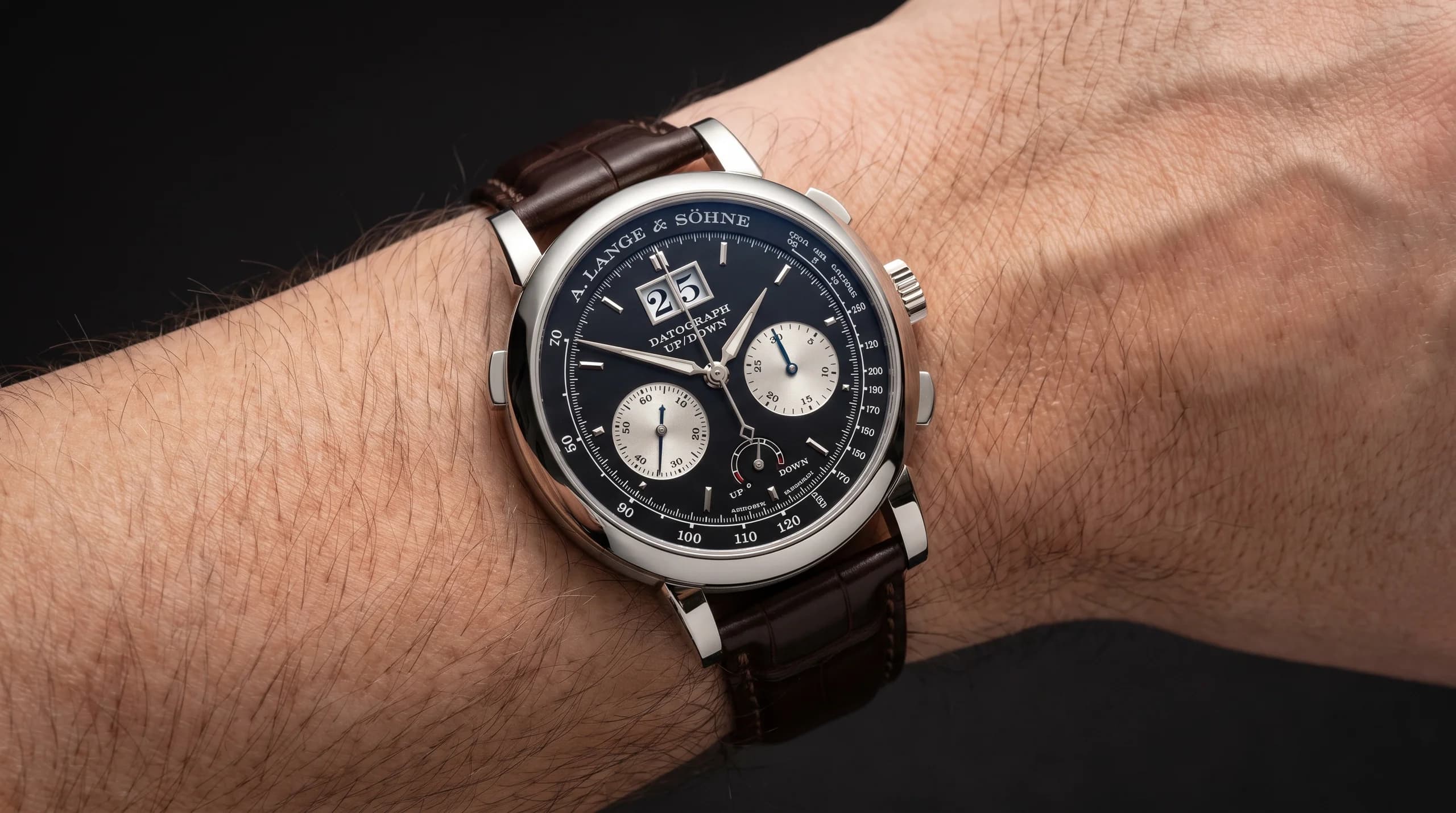
The A. Lange & Söhne Datograph is a 41mm flyback chronograph built around the in-house caliber L951.6, best known in its Up/Down configuration with an outsize date and a 60-hour power reserve indicator. Trackers place current retail for the Up/Down around EUR 54,000, with the earlier standard Datograph (no power reserve display) trading pre-owned from roughly EUR 33,000 in platinum to EUR 37,000 in pink gold. Later Up/Down platinum examples generally command more, often EUR 70,000 to 90,000-plus pre-owned depending on dial and condition.
This guide covers what the Datograph actually is mechanically, how the Up/Down differs from the original 1999 model, and what a buyer should expect to pay across the range.
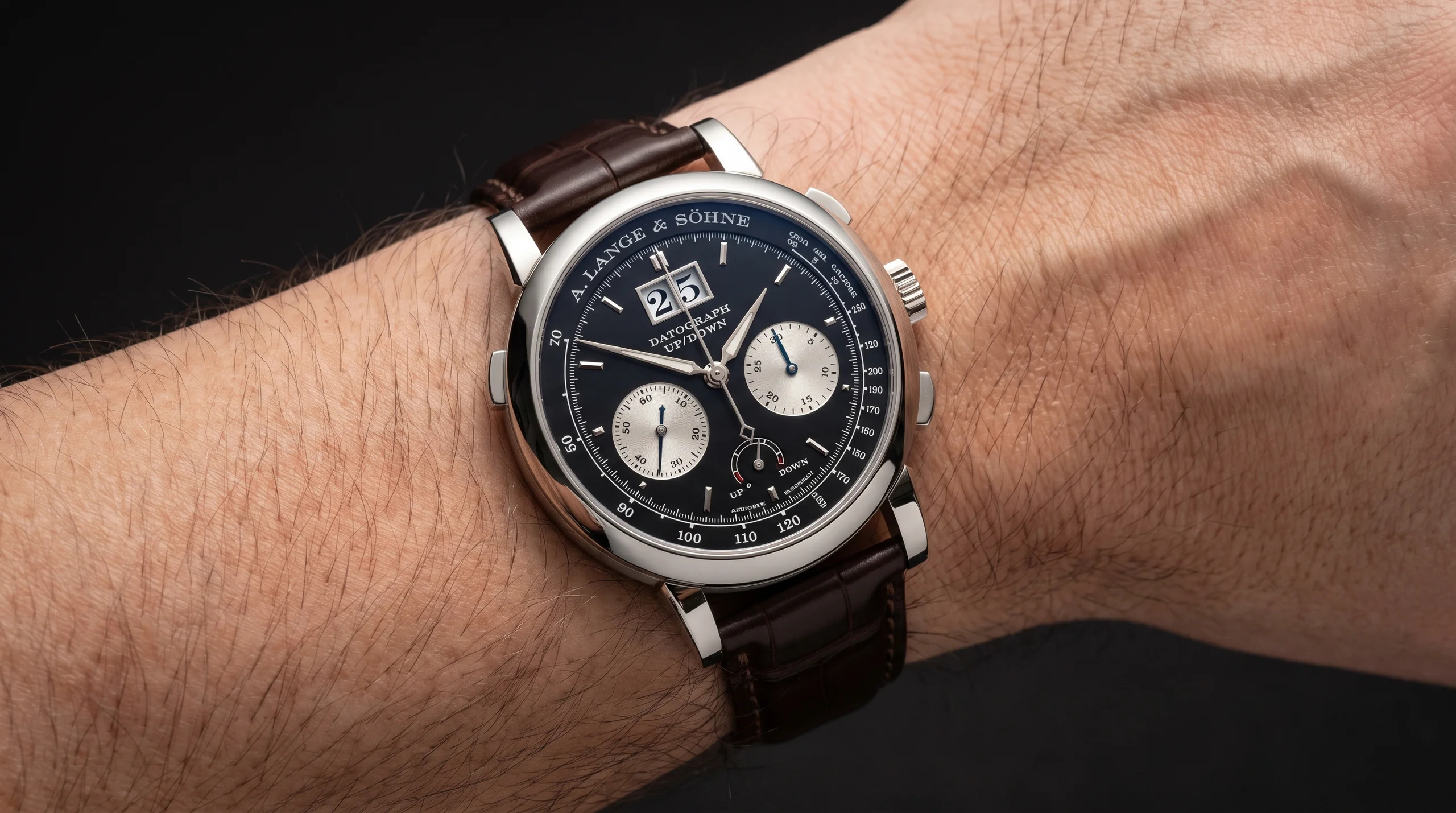 The Datograph's outsize date sits directly above the running seconds hand, a layout Lange has used across its collection since 1994.
The watch photos in this article were generated with AI image tools, conditioned on real reference photography of the A. Lange & Söhne Datograph so the case shape and dial layout are accurate to the real watch.
Why the Datograph Matters to Lange's Story
A. Lange & Söhne relaunched in 1994, four years after German reunification made it possible to revive the Glashütte watchmaking name at all. The original Datograph arrived in 1999, and it mattered immediately: independent reviewers at the time called it one of the finest wristwatch chronographs ever built, a serious claim for a five-year-old manufacture competing against houses with a century of chronograph experience.
The name itself is a contraction of "Datum" (German for date) and "Chronograph," a nod to the watch's defining feature: a chronograph and an outsize date sharing the same dial without crowding each other.
The Original Datograph vs. the Up/Down
The first Datograph, reference 403.032 and its siblings, ran a 39mm case with no power reserve indicator. Lange widened the case to 41mm and added the Up/Down naming and power reserve display starting with reference 405.031 in 2012, a change collectors generally consider a meaningful upgrade rather than just a cosmetic refresh.
How the Chronograph Actually Works
The Datograph's caliber L951.6 uses a column-wheel chronograph mechanism with a lateral clutch driven by an oscillating pinion, a more traditional and more difficult-to-finish approach than the cam-operated, vertical-clutch systems common in mass-produced chronographs.
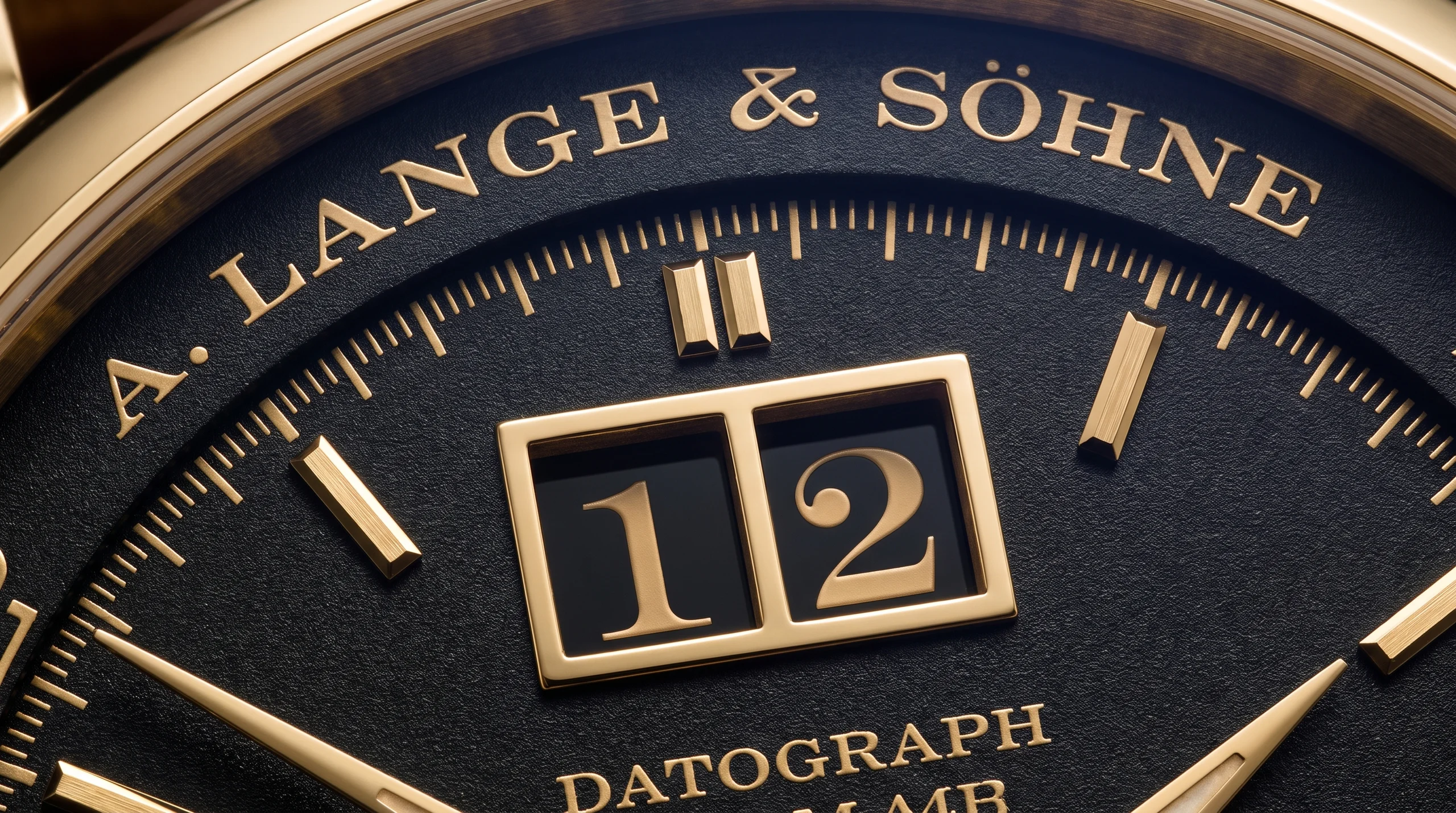 The two-window Grossdatum display was Lange's own invention, first introduced on the original Lange 1 in 1994 and carried into every major Lange collection since.
Pressing the flyback pusher resets and restarts the chronograph in a single motion, useful for anyone timing a sequence of intervals back to back. The 30-minute counter jumps instantaneously to the next number rather than creeping forward, a small detail that took Lange's engineers real effort to achieve cleanly.
The Outsize Date, Explained
Lange's Grossdatum display uses two separate discs, rather than one wide disc, to keep both digits large and evenly sized. It debuted on the Lange 1 in 1994 and has become one of the brand's most recognizable signatures, appearing on nearly every major Lange collection including the Datograph.
The Movement Underneath
Caliber L951.6 runs 451 parts and 46 jewels, four of them set in screwed gold chatons, at a traditional 18,000 vibrations per hour (2.5Hz), slower than the 4Hz standard on most modern chronographs.
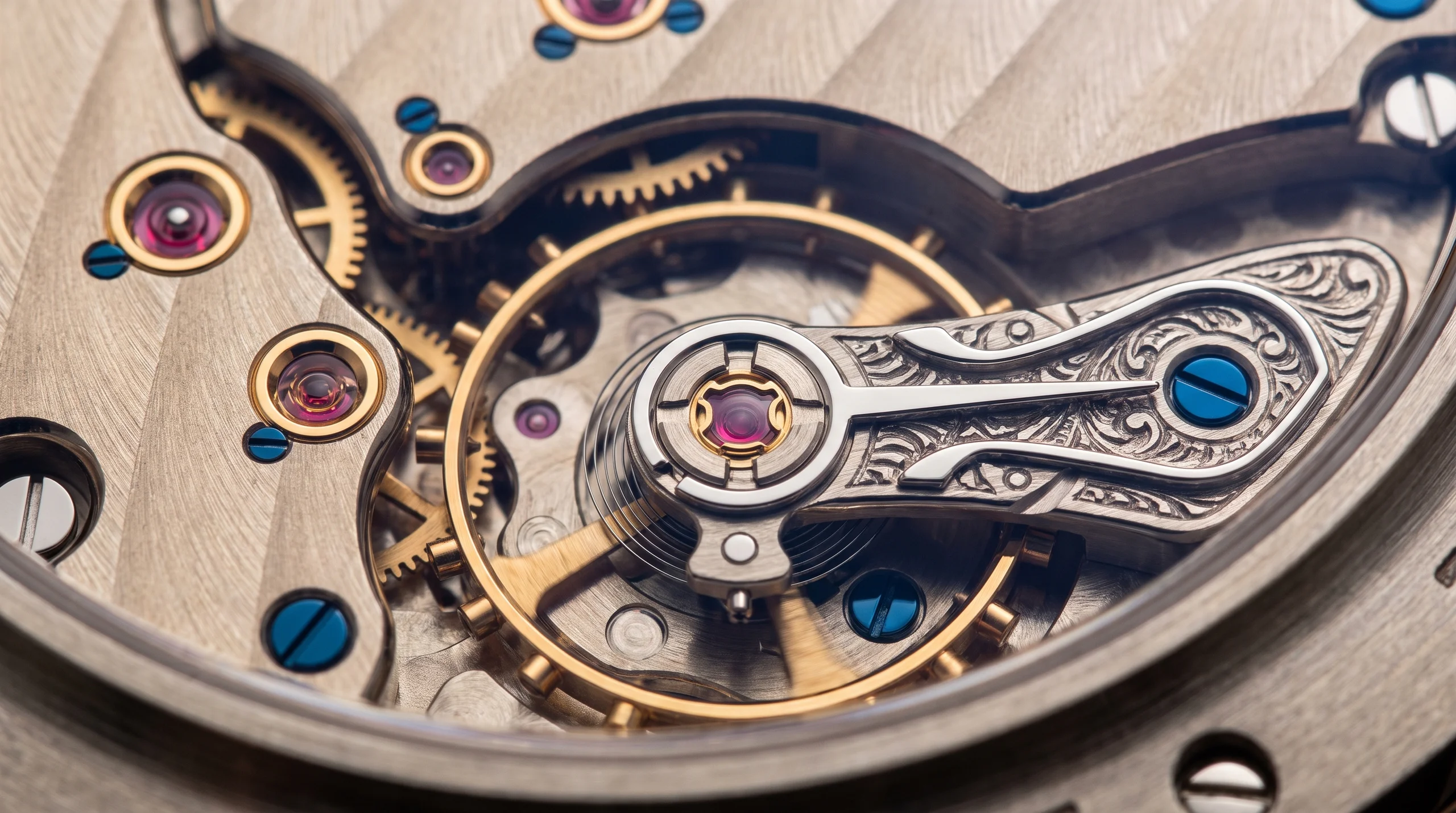 The hand-engraved balance cock is unique to every individual movement. No two are cut in exactly the same pattern.
Twin barrels arranged in series extend the power reserve to 60 hours despite the slower beat rate, and every visible surface, including the untreated German silver three-quarter plate, is finished and beveled by hand rather than by machine.
Why the Movement Is Slower on Purpose
A slower beat rate is generally associated with older, less sophisticated movements, but Lange kept 18,000 vph deliberately here, prioritizing the traditional column-wheel chronograph's mechanical character and finishing possibilities over the marginal timekeeping benefit of a faster balance.
What a Datograph Actually Costs
Lange does not discount, and demand for the Datograph consistently outpaces the brand's limited annual production. Because of that, well-kept Up/Down examples in platinum regularly change hands well above the Up/Down's own retail figure, often in the EUR 70,000 to 90,000 range depending on dial condition, box and papers, and which authorized dealer originally sold the piece.
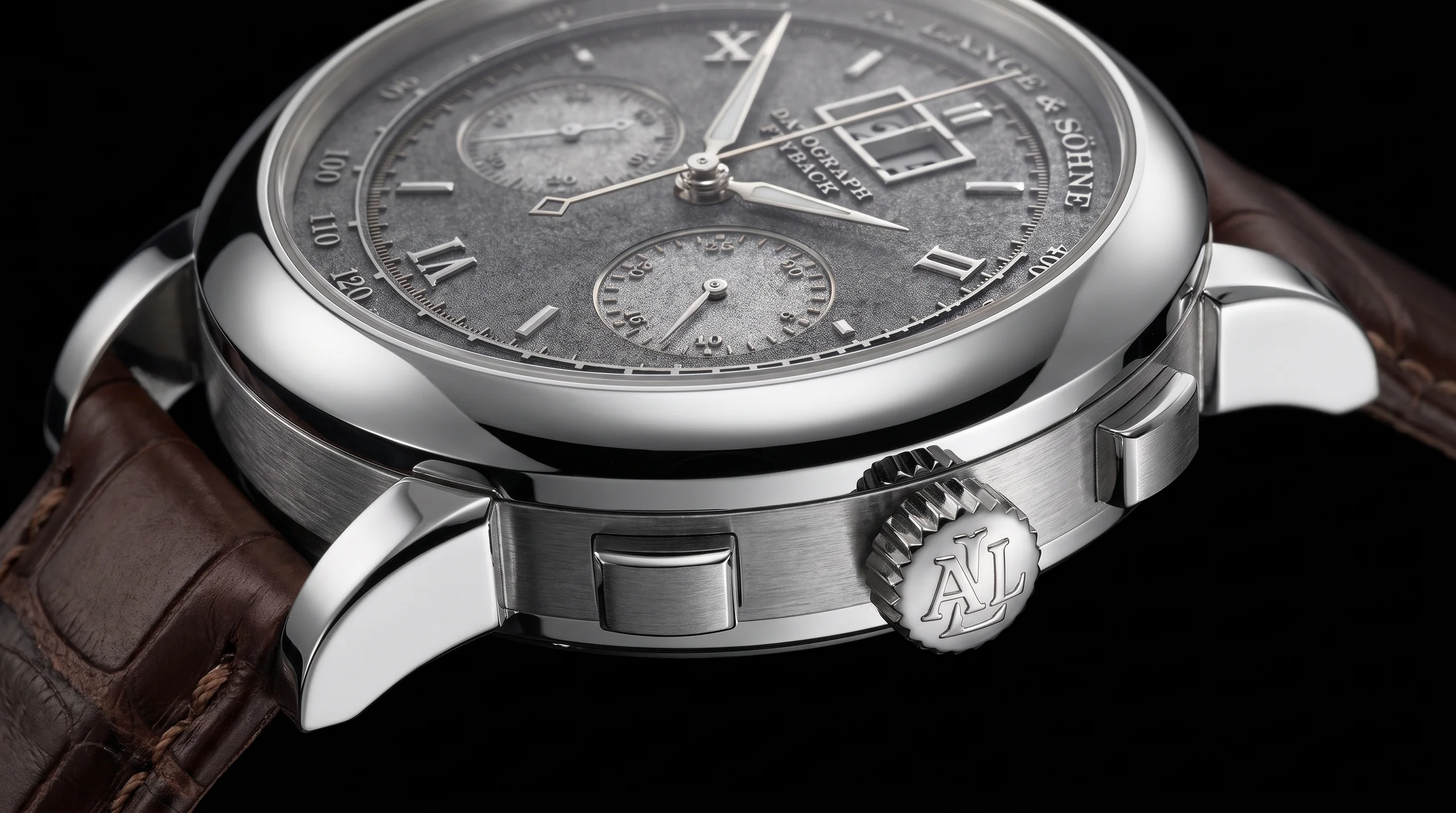 The crown carries Lange's interlocking A and L monogram, a small detail worth checking when authenticating a pre-owned piece.
What to Check Before Buying Pre-Owned
A Datograph's flyback pushers see more use than a typical chronograph's, since the whole point of the flyback function is quick, repeated resets. Ask for service history specifically covering the chronograph mechanism, not just a general movement service, and confirm the outsize date discs advance cleanly at midnight rather than lagging or sticking.
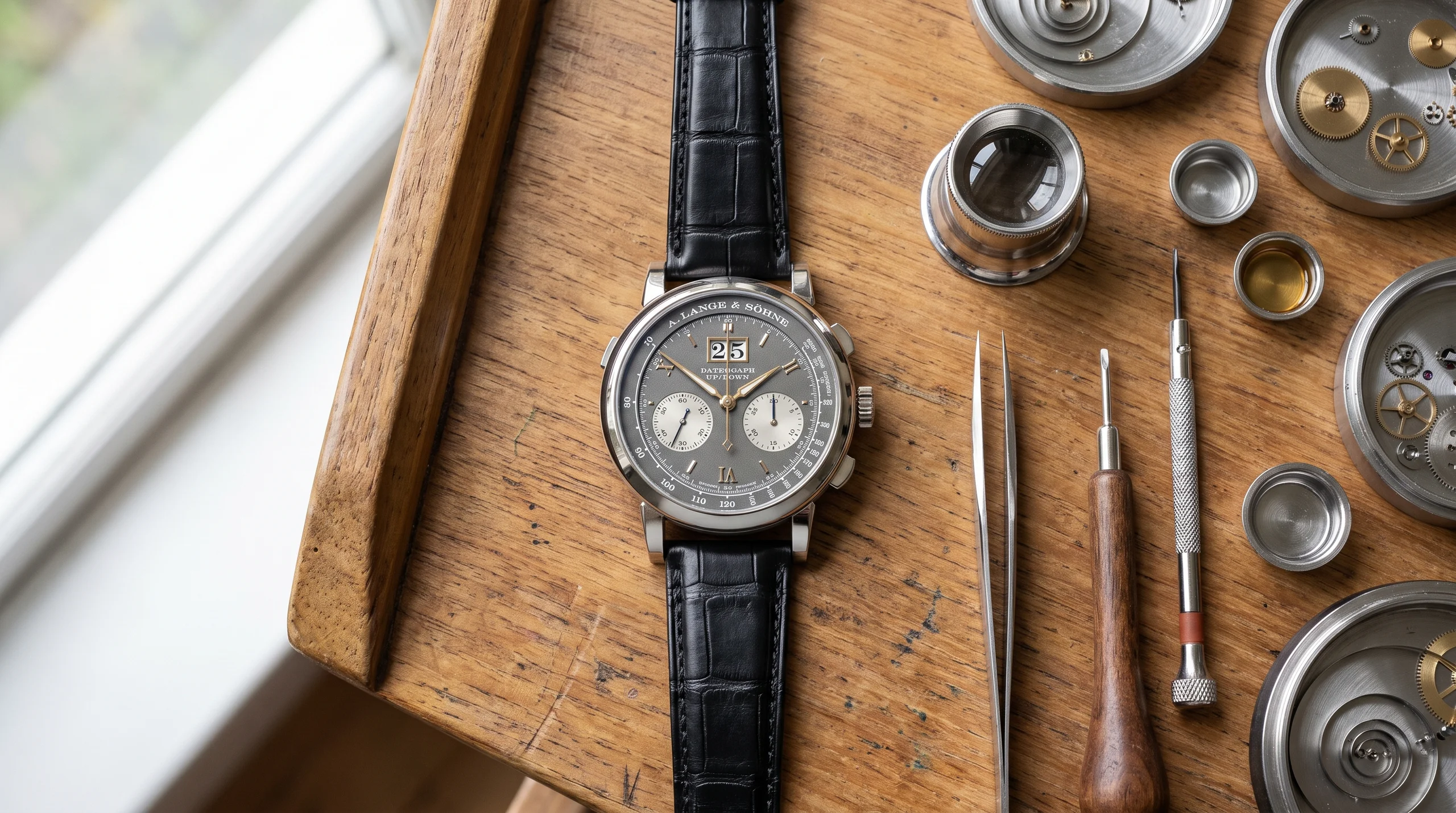 A properly serviced Datograph should reset the chronograph to zero instantly and advance the date discs cleanly at midnight, with no lag or hesitation.
The Honest Trade-Off
An 18,000 vph column-wheel chronograph is objectively harder to service and slightly less precise on paper than a modern 4Hz vertical-clutch alternative. What it buys is a mechanism built the way high chronographs were built a century ago, finished entirely by hand, in a case size that has aged better than most chronographs from the same era. Buyers chasing outright technical modernity will find it elsewhere for less money. Buyers chasing Lange's specific approach to the problem will not find a substitute.
FAQ
What is the A. Lange & Söhne Datograph?
It is Lange's flagship flyback chronograph, first released in 1999 and currently produced as the Datograph Up/Down, a 41mm platinum or gold watch built around the in-house caliber L951.6 with an outsize date and power reserve indicator.
How much does an A. Lange & Söhne Datograph cost?
The original Datograph (no power reserve display) trades pre-owned from roughly EUR 33,000 in platinum to EUR 37,000 in pink gold. The current Datograph Up/Down retails around EUR 54,000, with well-kept platinum examples often reselling higher, commonly EUR 70,000 to 90,000 depending on condition.
What is the difference between the Datograph and the Datograph Up/Down?
The original Datograph had no power reserve display and used a 39mm case. The Up/Down, introduced in 2012, added a power reserve indicator at 6 o'clock and widened the case to 41mm.
Why does the Datograph run at 18,000 vibrations per hour instead of the modern 28,800?
Lange chose the slower, traditional beat rate to suit the column-wheel chronograph's mechanical design and finishing, prioritizing the movement's classical character over the marginal accuracy gain of a faster balance.
Is the A. Lange & Söhne Datograph a good investment?
Watches are not a reliable substitute for diversified financial investments, and no future price can be guaranteed. What can be said with confidence is that Lange's limited annual production and sustained demand have historically kept Datograph resale values close to or above retail.
Related Reading
- The A. Lange & Söhne Lange 1 Buying Guide: The Independent Benchmark, Read by a Dealer
- A. Lange & Söhne Triple Split Platinum: Ref. 424.025F, Price, and What Changed
- Column Wheel vs Cam-Lever: How Chronograph Movements Actually Differ
- Flyback Chronograph Explained: Stop, Reset, and Restart in a Single Press