The Short Answer
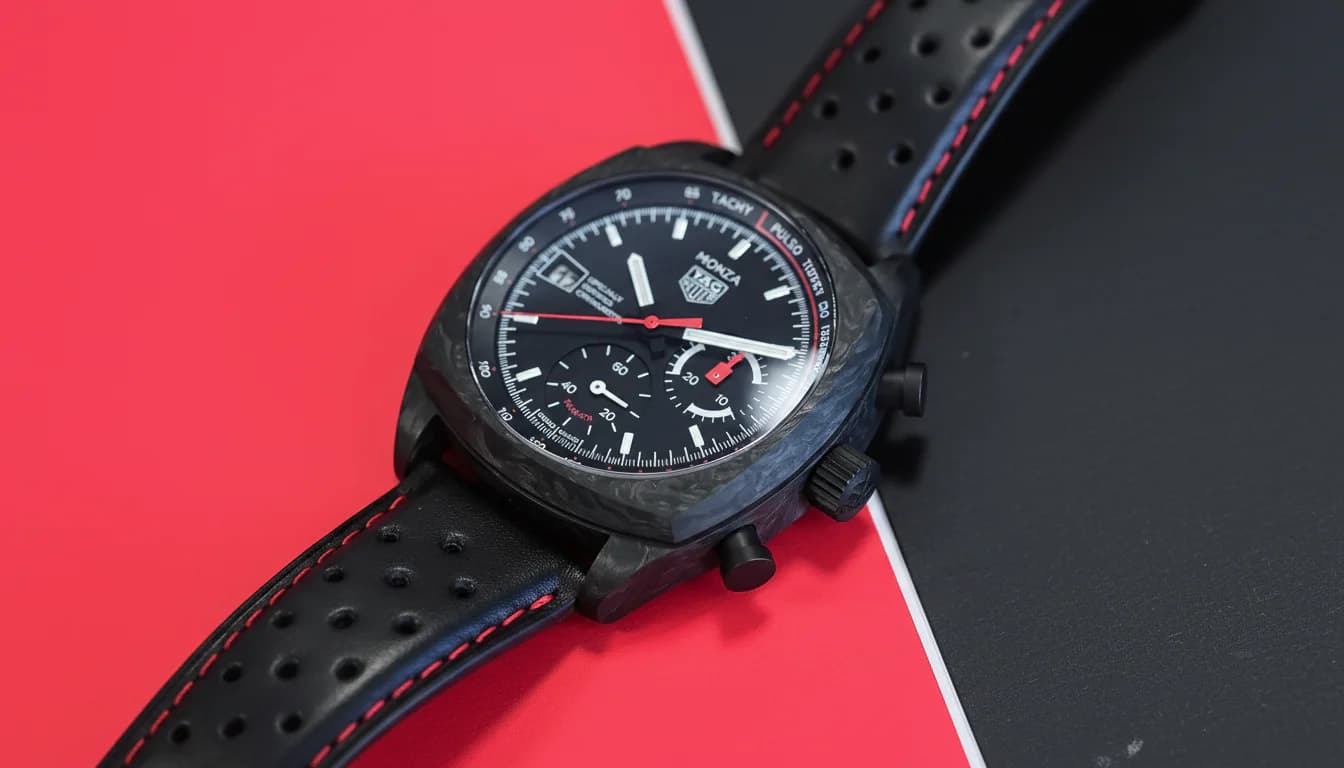
TAG Heuer just built its most technical Monza in decades. The Monza Flyback Chronograph Carbon pairs a 42mm forged carbon cushion case with the in-house caliber TH20-12, a flyback chronograph movement running an 80-hour power reserve and carrying COSC chronometer certification. TAG Heuer caps the run at 500 pieces, priced at EUR 13,350 (roughly CHF 12,600 to 13,350, about $13,400).
The name is not marketing filler. The original 1976 Heuer Monza commemorated Niki Lauda clinching Ferrari's 1975 Formula 1 World Championship at the Monza circuit, the team's first title in over a decade. This new carbon version keeps that link intact while updating almost everything else about the watch.
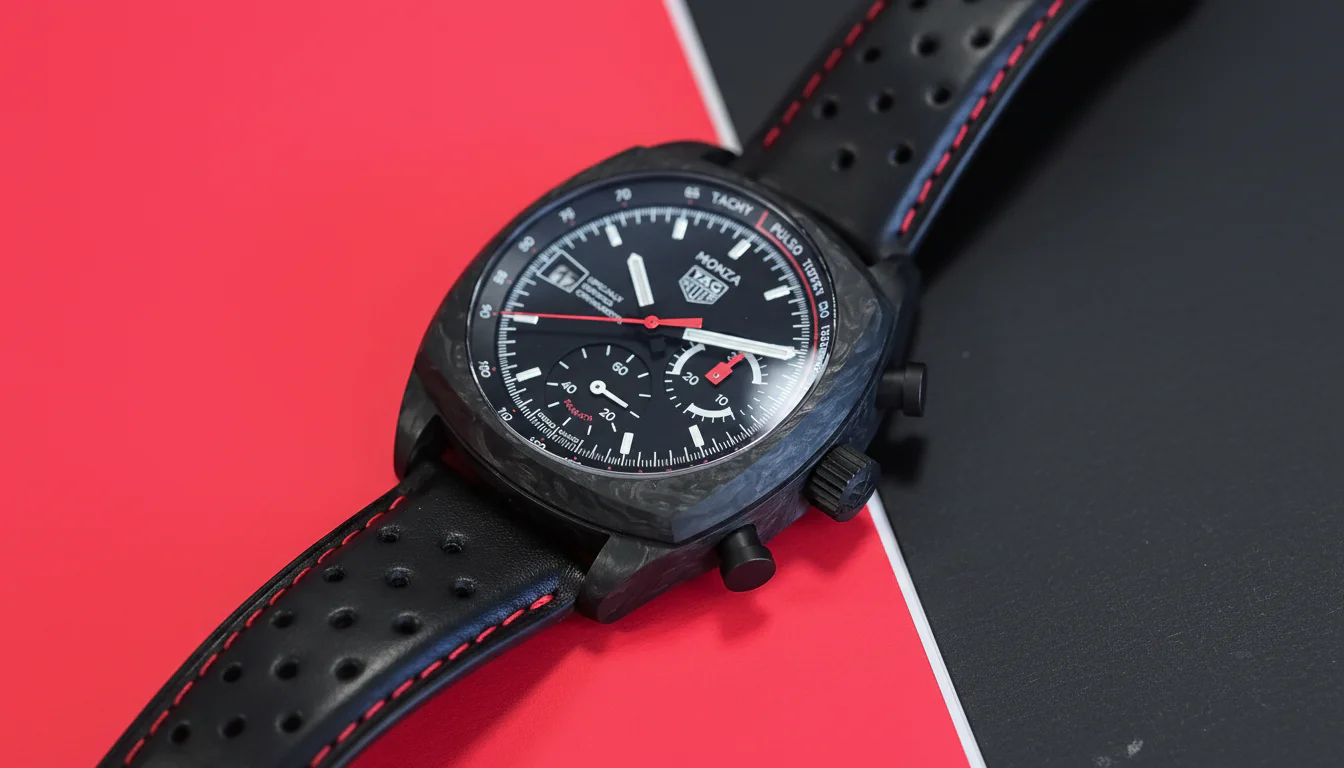 The cushion case shape has defined the Monza since 1976, even as the materials and movement inside have changed completely.
The watch photos in this article were generated with AI image tools, conditioned on real reference photography of the TAG Heuer Monza Flyback Chronograph Carbon so the case shape, dial layout, and construction details are accurate to the real watch.
Where the Monza Name Actually Comes From
Heuer released the original Monza in 1976, and the name was a direct tribute to a specific race result, not the circuit in general. Niki Lauda won the 1975 F1 Drivers' Championship for Ferrari, clinched at Monza on September 7, 1975, ending an 11-year title drought for the team since John Surtees in 1964.
Jack Heuer, then running the family company, had close ties to Ferrari through his sponsorship of the team. Naming a new chronograph after the circuit where Ferrari ended its drought was a natural move for a brand already deeply embedded in motorsport timing.
A Cushion Case Built for the 1970s
The original Monza broke from Heuer's round Carrera and Monaco cases with a cushion shape and a matte black finish, an aesthetic that fit the era's taste for tool-like, unpolished sports watches. That silhouette has carried through every Monza revival since, including this carbon version.
The Case: 42mm Forged Carbon
TAG Heuer builds the new Monza's case from forged carbon, a composite made from chopped carbon fiber and resin compressed under heat, rather than the traditional woven carbon sheets used elsewhere in the industry. The result is a case with a marbled, non-repeating texture where no two watches look quite identical.
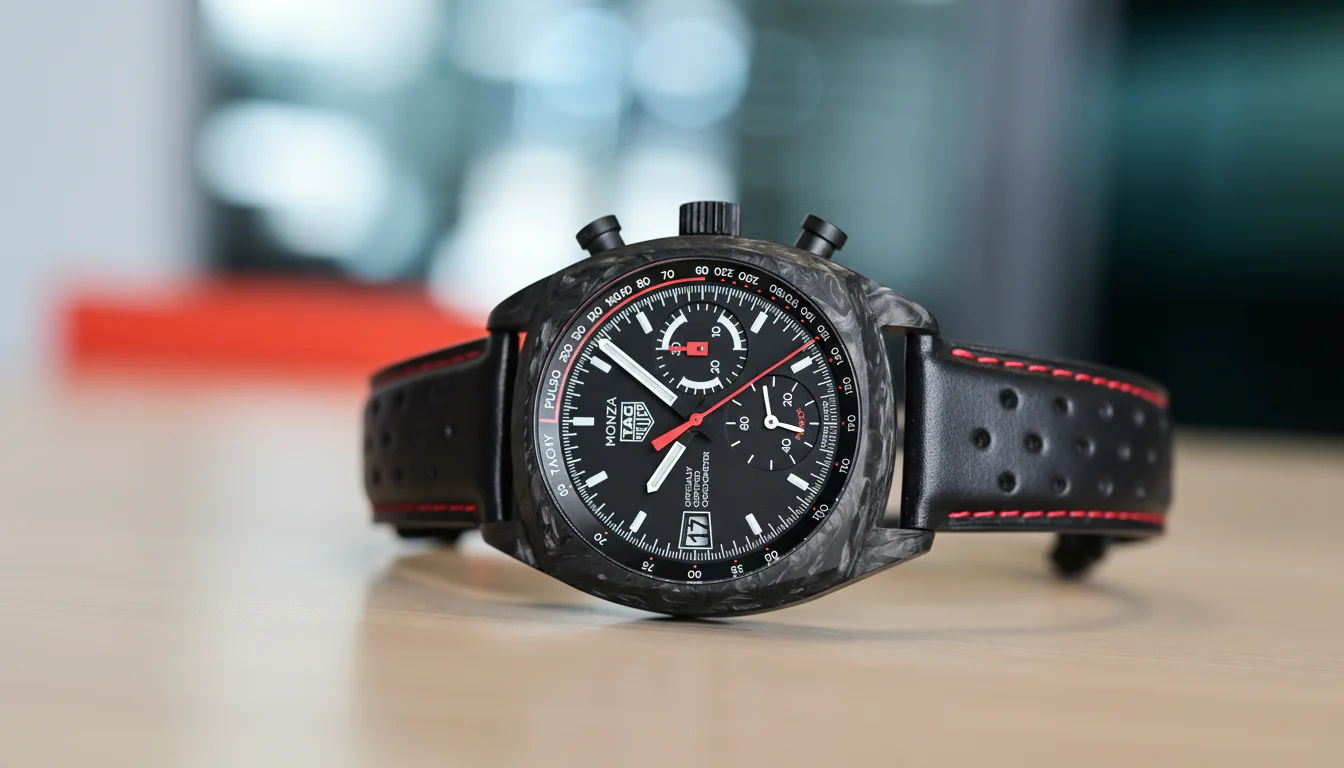 Forged carbon's marbled pattern is a byproduct of the manufacturing process, not a printed effect, so the grain varies piece to piece.
At 42mm, the case sits in a genuinely wearable middle ground, large enough to carry the chronograph's subdials clearly but not oversized the way some modern carbon sports chronographs have drifted. Forged carbon also runs noticeably lighter than steel, which matters on a case this size.
Why Forged Carbon Over Steel or Titanium
A chronograph case has to house pushers, a crown, and the sealing components a flyback mechanism needs, all without cracking under repeated pusher use. Forged carbon holds up to that stress while keeping weight down, which is part of why TAG Heuer has leaned on the material across several Carrera and Monaco references in recent years.
The Movement: Caliber TH20-12
Caliber TH20-12 is TAG Heuer's in-house automatic flyback chronograph movement, built on the TH20 architecture the brand has used across its higher-end Carrera and Monaco chronographs. A flyback function lets the wearer stop, reset, and restart the chronograph in a single pusher press, without needing to stop it first the way a standard chronograph requires.
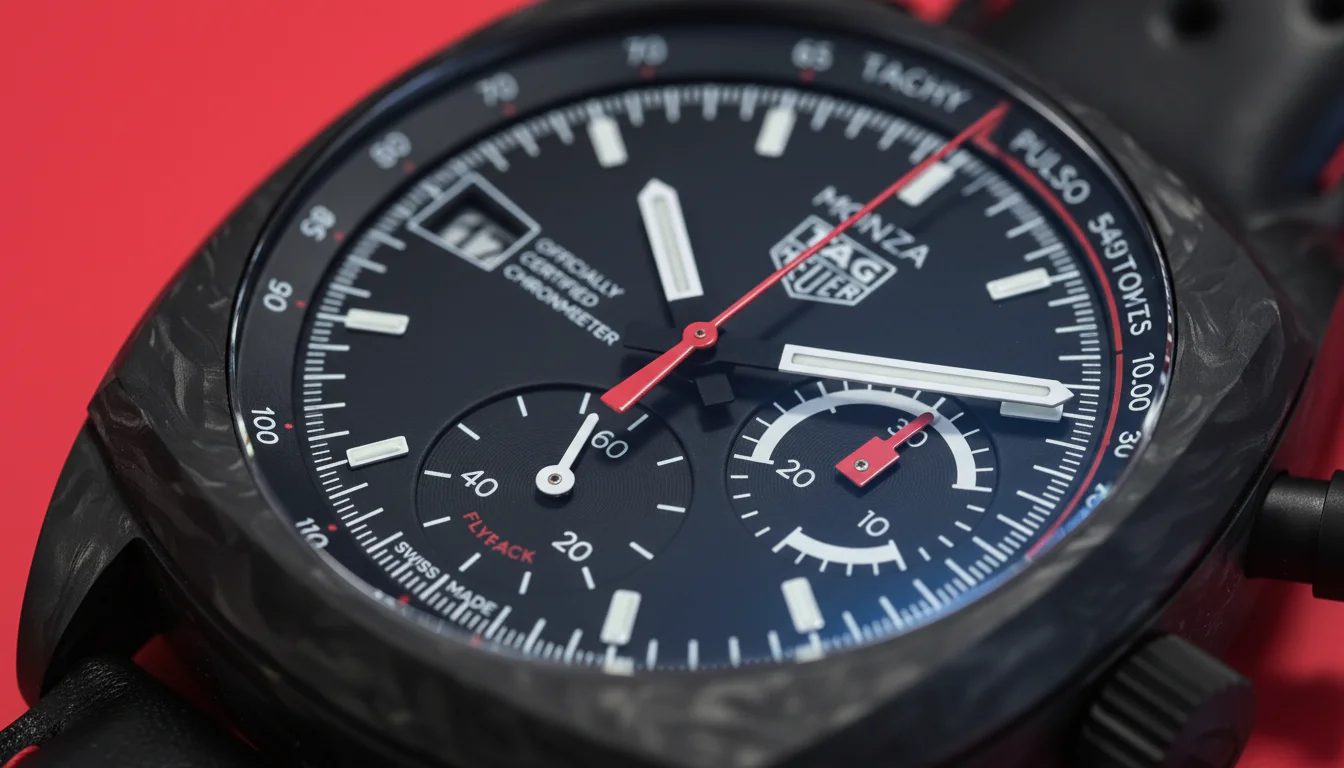 The dial spells out both the flyback function and COSC chronometer certification, two claims that actually matter on the specification sheet.
The movement delivers an 80-hour power reserve, well above the 40 to 48 hours common on most column-wheel chronographs, and carries COSC chronometer certification, meaning an independent Swiss body tested the movement's timekeeping accuracy before TAG Heuer cased it.
What a Flyback Actually Buys You
A standard chronograph needs three separate presses to stop, reset, and restart: one to stop the timing, one to zero the hands, one to start again. A flyback collapses all three into a single press, a function that traces back to pilots and rally timekeepers who needed to restart a timed sequence instantly without fumbling for a second pusher.
On the Wrist
The cushion case wears close to the wrist, and forged carbon's lighter weight keeps the 42mm diameter from feeling top-heavy the way a steel case this size sometimes does. Red accents on the hands and subdial rings echo the racing heritage without turning the dial busy.
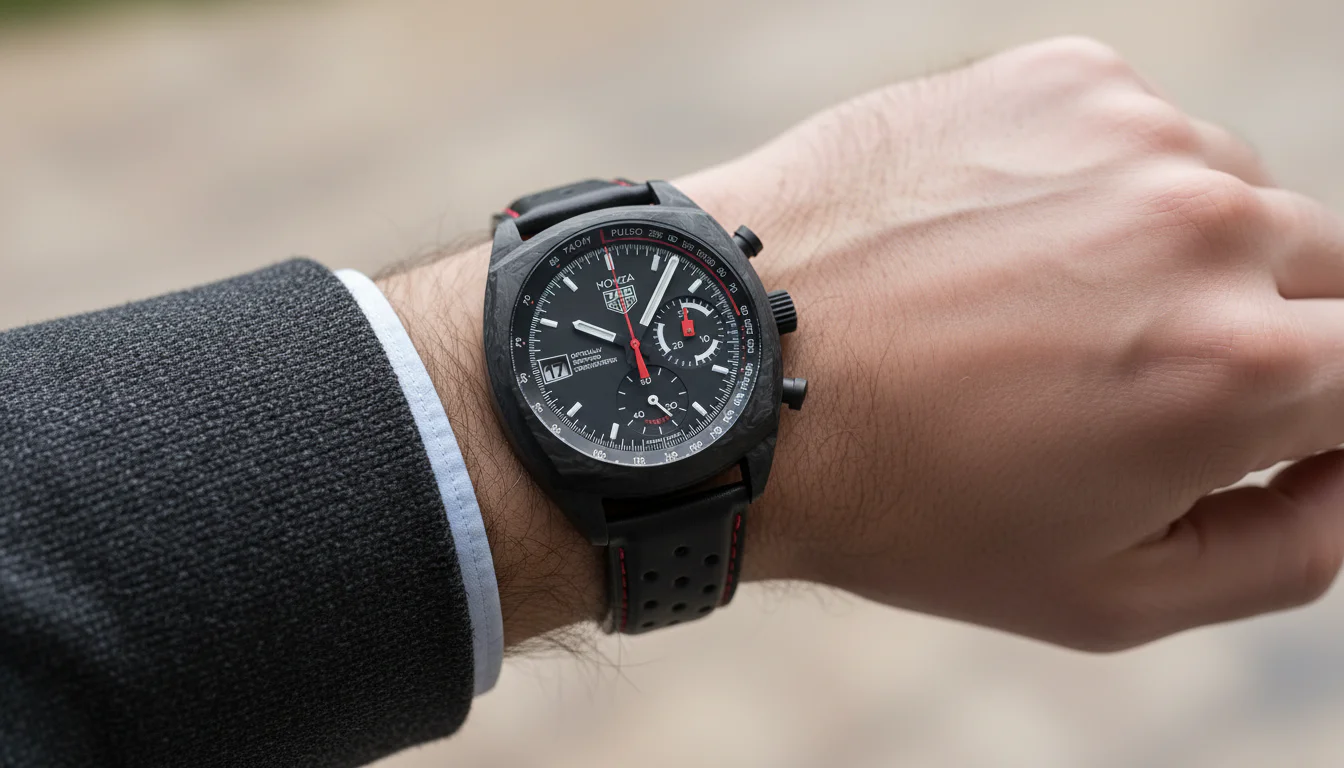 Forged carbon's reduced weight is noticeable next to a steel chronograph of the same diameter.
The pusher action on flyback movements tends to run slightly stiffer than a standard chronograph pusher, since the mechanism has to reset and restart the gear train in one motion. That is normal for the mechanism, not a flaw specific to this reference.
The Case Side Profile
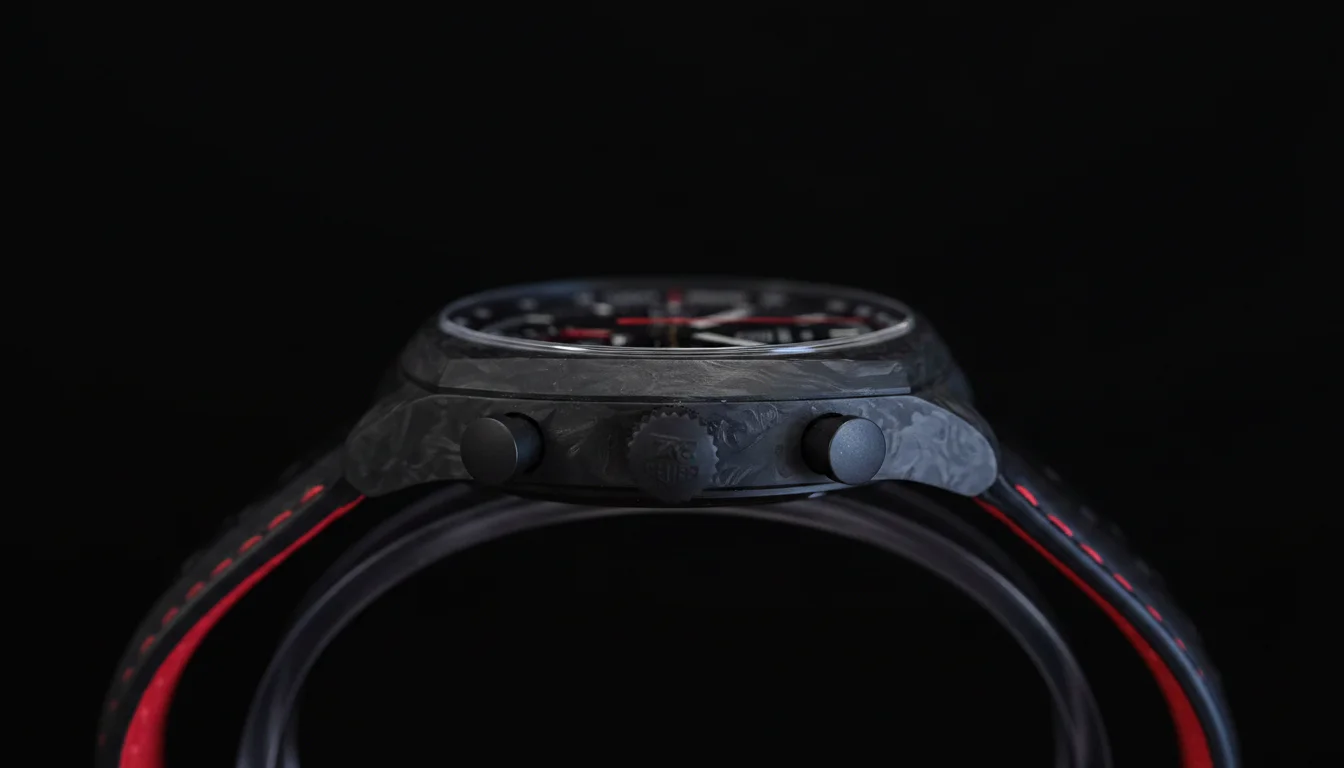 The forged carbon texture reads differently at every angle, one of the material's more interesting quirks compared to a flat-polished steel case.
The crown and pushers sit on the right side of the case, finished in a matte black to match the case rather than a contrasting polished metal, keeping the whole silhouette tonal.
Price and Availability
| Spec | Detail |
|---|---|
| Case | 42mm forged carbon, cushion shape |
| Movement | Caliber TH20-12, automatic flyback chronograph |
| Power reserve | 80 hours |
| Certification | COSC chronometer |
| Production | Limited to 500 pieces |
| Price | EUR 13,350 / CHF 12,600 to 13,350 / approximately $13,400 |
At 500 pieces worldwide, this Monza sits in a tighter allocation than TAG Heuer's standard Carrera and Monaco production runs, though it is not as scarce as the brand's single-digit haute horlogerie pieces like the Monaco Speed 12.
Where It Sits Against the Rest of the Lineup
Compared to the steel Monaco Evergraph at roughly $25,000, this Monza costs meaningfully less while running a more conventional flyback chronograph rather than the Evergraph's experimental bistable mechanism. It is a more traditional watchmaking proposition at a lower price point, aimed at buyers who want the material story and the motorsport history without the Evergraph's mechanical novelty.
FAQ
What is the TAG Heuer Monza Flyback Chronograph Carbon?
A 42mm forged carbon chronograph running the in-house caliber TH20-12, an automatic flyback movement with an 80-hour power reserve and COSC chronometer certification, limited to 500 pieces.
Why is it called the Monza?
The name commemorates Niki Lauda clinching Ferrari's 1975 Formula 1 World Championship at the Monza circuit on September 7, 1975. Heuer released the original Monza the following year specifically to mark that win.
What does the flyback function do?
It lets the wearer stop, reset, and restart the chronograph in a single pusher press, instead of the three separate presses a standard chronograph requires.
How much does the TAG Heuer Monza Flyback Chronograph Carbon cost?
TAG Heuer prices it at EUR 13,350, roughly CHF 12,600 to 13,350, or approximately $13,400.
How many pieces is TAG Heuer making?
The run is limited to 500 pieces worldwide.
Related Reading
- The TAG Heuer Monaco Buying Guide: History, References, and What It Costs
- TAG Heuer Carrera Buying Guide: Every Modern Reference and What It Actually Costs
- Flyback Chronograph Explained: Stop, Reset, and Restart in a Single Press
- TAG Heuer Just Reinvented the Chronograph Mechanism. The Monaco Evergraph Is Worth $25,000.