
Walk through enough watch listings and you will hit it constantly. Where the price should be, three words sit instead: price on request. It shows up on dealer sites, auction previews, and boutique displays for the most expensive watches in the room. Most buyers read it as proof the watch is too rare to put a number on. That is almost never what it means.
The images in this post are AI-generated illustrations for editorial purposes and may not exactly represent any specific watch or product.
The short version
Price on request, often shortened to POR or written as P.O.A. for price on application, almost never means the price is unknowable. It means the seller has a reason to make you ask for it. Sometimes that reason is legitimate, like a genuinely bespoke piece or an ultra-high complication priced to order. More often it is a sales tactic: control the conversation, capture your contact details, and keep the number off the public record where it can be compared. Knowing which one you are looking at changes how you should respond.
Where you actually see it
POR shows up in two very different settings, and they do not mean the same thing.
The first is the genuine top of the market. At the level of a unique commission, a one-off high complication, or a brand that prices by allocation rather than a public list, there may be no catalog number to quote. A made-to-order grande complication is priced when it is specified, not before.
The second, and far more common, is the ordinary secondary market. Here POR is a choice, not a necessity. The watch has a knowable market value. The seller has simply decided not to print it, and that decision is doing work.
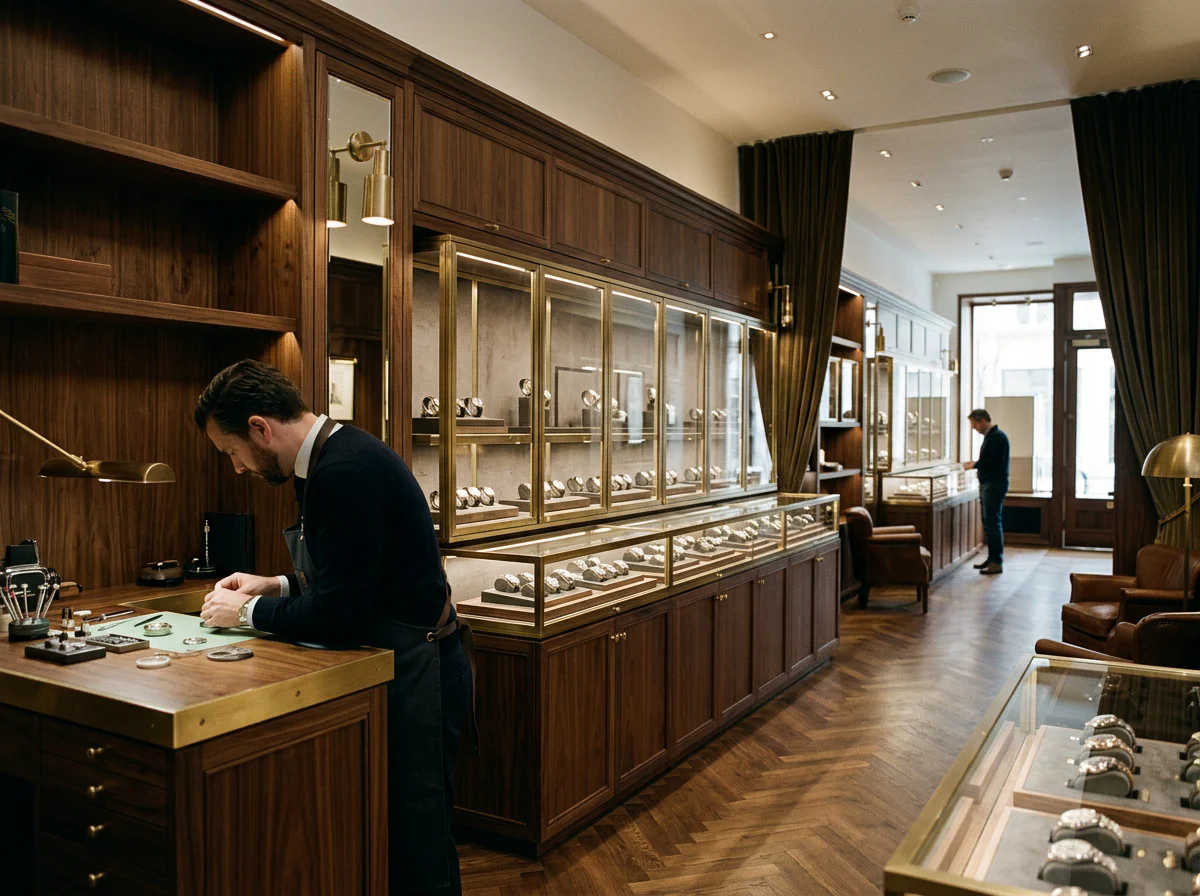 POR is most at home in rooms built to make you ask. (AI-generated illustration.)
Why a seller hides a knowable number
When the value is easy to look up and the seller still withholds it, the reason is usually one of these:
- Lead capture. "Request" forces you to make contact, which hands over your email or phone number and opens a sales conversation.
- Price anchoring. A number on a public page can be screenshotted and compared. A quiet price lets the seller adjust per buyer and quote you on the day.
- Data obfuscation. Listings without prices are hard for aggregators to track, which keeps a model's real trading range fuzzy.
- Qualifying the buyer. On the most expensive pieces, the seller wants to know you are serious before naming a figure.
None of those are about the price being a mystery. They are about who controls the information, and when.
 Presenting the watch, and quietly not presenting the number. (AI-generated illustration.)
The Richard Mille example
No brand illustrates this better than Richard Mille.
RM sells fewer than 6,000 watches a year and runs an allocation model closer to Hermes or Ferrari than a normal watch brand, where purchase history and a boutique relationship decide who is allowed to buy. Entry pieces start around $120,000, and the average secondary-market RM trades near $252,000 on WatchCharts data.
Here is the tell. Secondary listings for Richard Mille are so routinely marked price on request that, as WatchCharts has pointed out, it is genuinely hard to assemble clean pricing data on the brand at all. The opacity is not a side effect. For a brand built on exclusivity, a public price list would undercut the entire pitch.
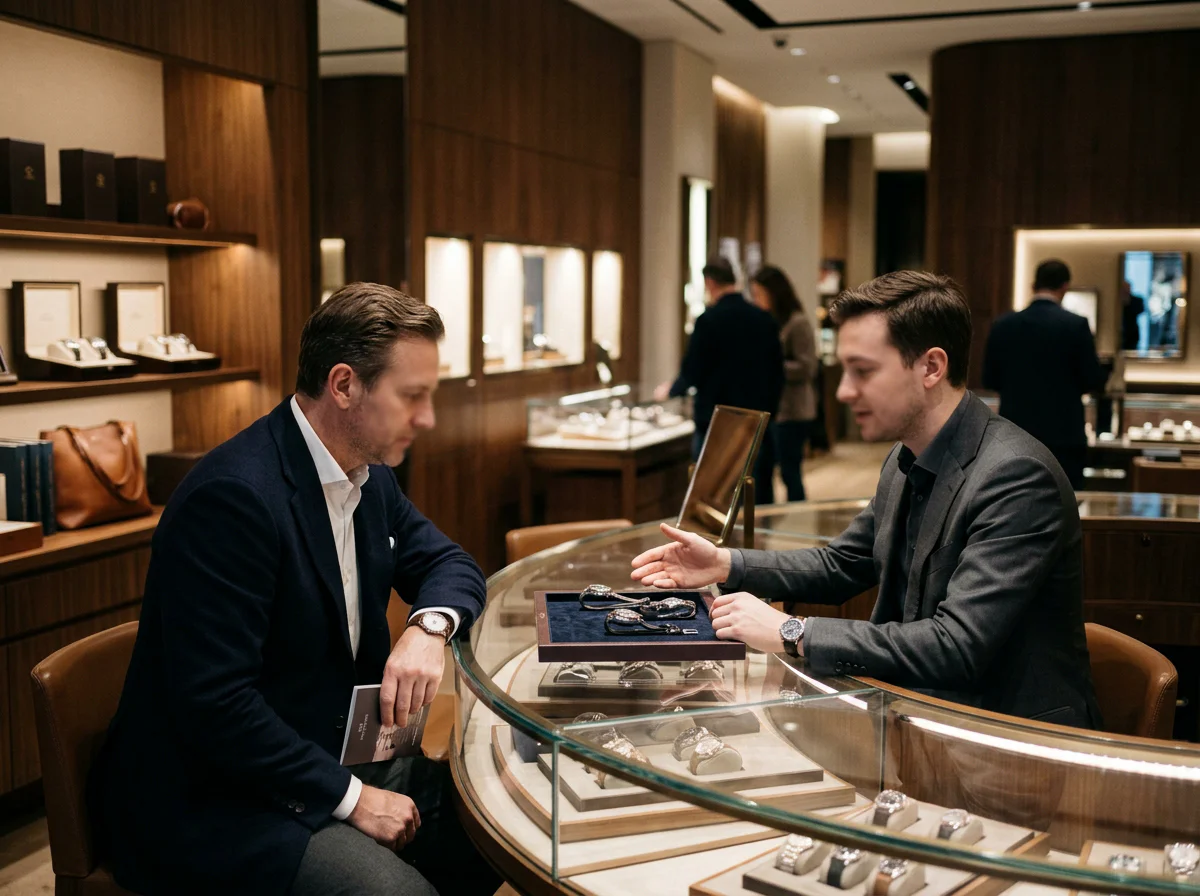 At the very top, the relationship comes before the number. (AI-generated illustration.)
Legitimate, or a yellow flag
The same three words can be either, so read the context.
It leans legitimate when the piece is genuinely bespoke, a unique commission, or a brand that has never published list prices. In those cases there may truly be no standard number to give.
It leans yellow flag when the watch is a known, catalogued reference with an established market value and the seller still will not print it. A steel sports watch with a public trading range does not need to be price on request. When a seller hides a figure that everyone can look up, the real question is what else they would rather you not compare.
 A catalogued watch with a public market value does not need a hidden price. (AI-generated illustration.)
A working dealer's read
We list our prices in the open, so this is an easy one to be blunt about.
If you see price on request on a watch you actually want, do three things. Ask for the number directly and in writing, because a seller who will not put a figure in a message is telling you something. Check the model's real range yourself on WatchCharts or Chrono24 before any call, so you walk in with your own anchor instead of taking theirs. And treat reluctance as information: at the genuine top of the market a quiet price is normal, but on a catalogued reference, a seller who keeps dodging the number is usually managing you, not protecting the watch.
The cleanest version of this is a seller who simply tells you the price. If you would rather skip the dance entirely, our listings show the number right on the page. And for where real value actually sits in today's market, the June 2026 market update breaks down which references earn their premium and which do not.