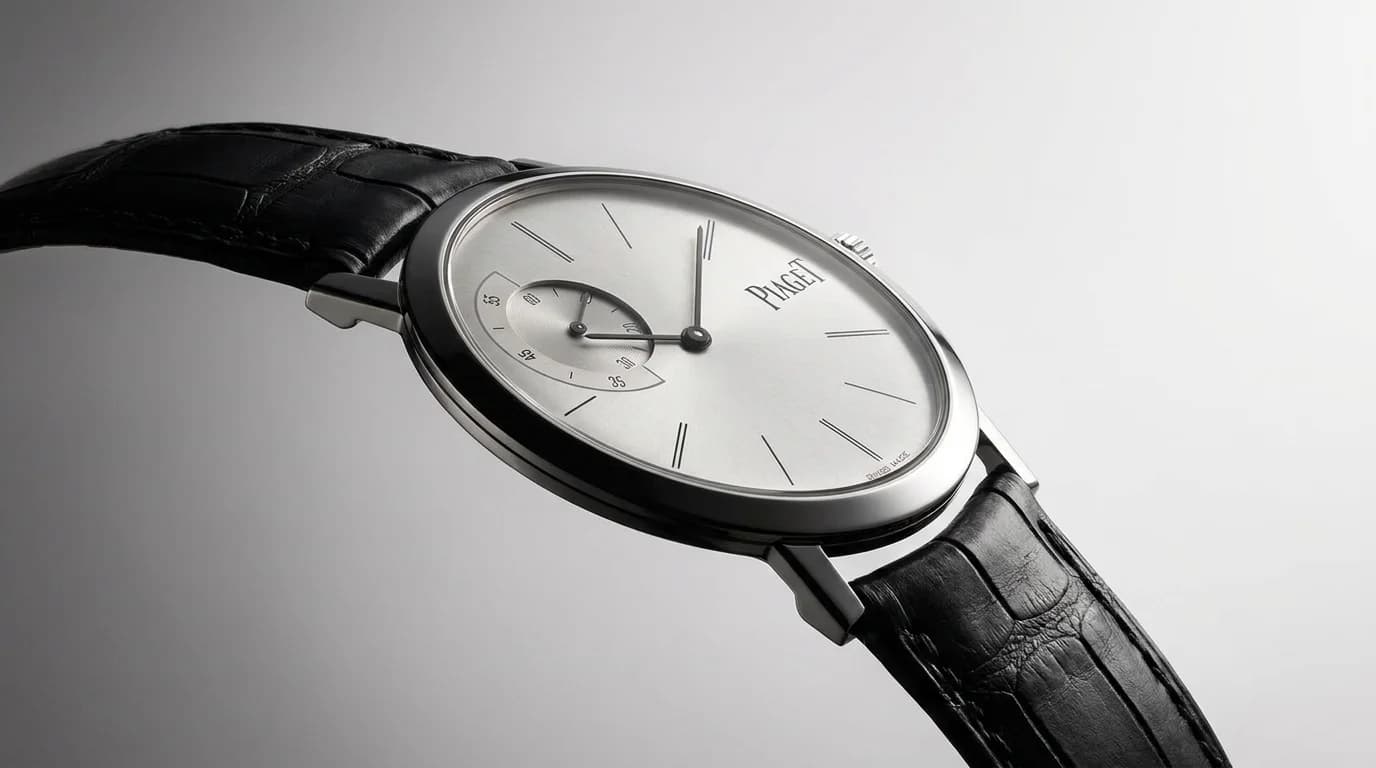
Piaget makes two kinds of watch, and they barely look related. One is the thinnest serious dress watch you can buy. The other is a gold-plated status symbol built for a wrist that already owns three other watches. Here is what actually separates the Altiplano from the Polo, and what each one costs.
The images in this article were generated with AI for illustration. They show recognizable Piaget models based on real reference photography, but are not photographs of a specific watch for sale.
The Short Answer
- Piaget's two core collections solve different problems: the Altiplano is built around record-thin movements for a dress watch that disappears under a cuff, while the Polo is a gold or steel sports watch built to be seen.
- The Altiplano Ultra-Thin in 18K gold runs $43,900 to $44,500 new, built on caliber 910P, a 4.3mm automatic.
- The Polo 79, Piaget's 2022 revival of the 1979 original, starts around 38mm on caliber 1200P1 and runs into six figures in gold.
- The Polo Date is the accessible entry point at $14,000 new in steel, with pre-owned examples trading closer to $11,000.
- Piaget invented the automatic ultra-thin movement in 1960 with caliber 12P, a claim almost nobody outside the brand can make.
Why Piaget Doesn't Get Talked About Enough
Ask a newcomer to name a luxury watch brand and you get Rolex, then maybe Omega. Piaget rarely comes up, and that is strange, because Piaget did something in 1957 that most brands still can't touch: it built a hand-wound movement, caliber 9P, thin enough to disappear inside a case most brands would call impossibly slim.
Three years later Piaget went further. Caliber 12P, launched in 1960, was the world's first ultra-thin automatic movement. No other manufacture had one. That single achievement still defines the Altiplano collection today, over sixty years later.
Two collections, two audiences
The Altiplano is for the collector who wants engineering nobody can see. The Polo is for the guy at the yacht club who wants everybody to see it immediately. Neither is wrong. They're just different jobs.
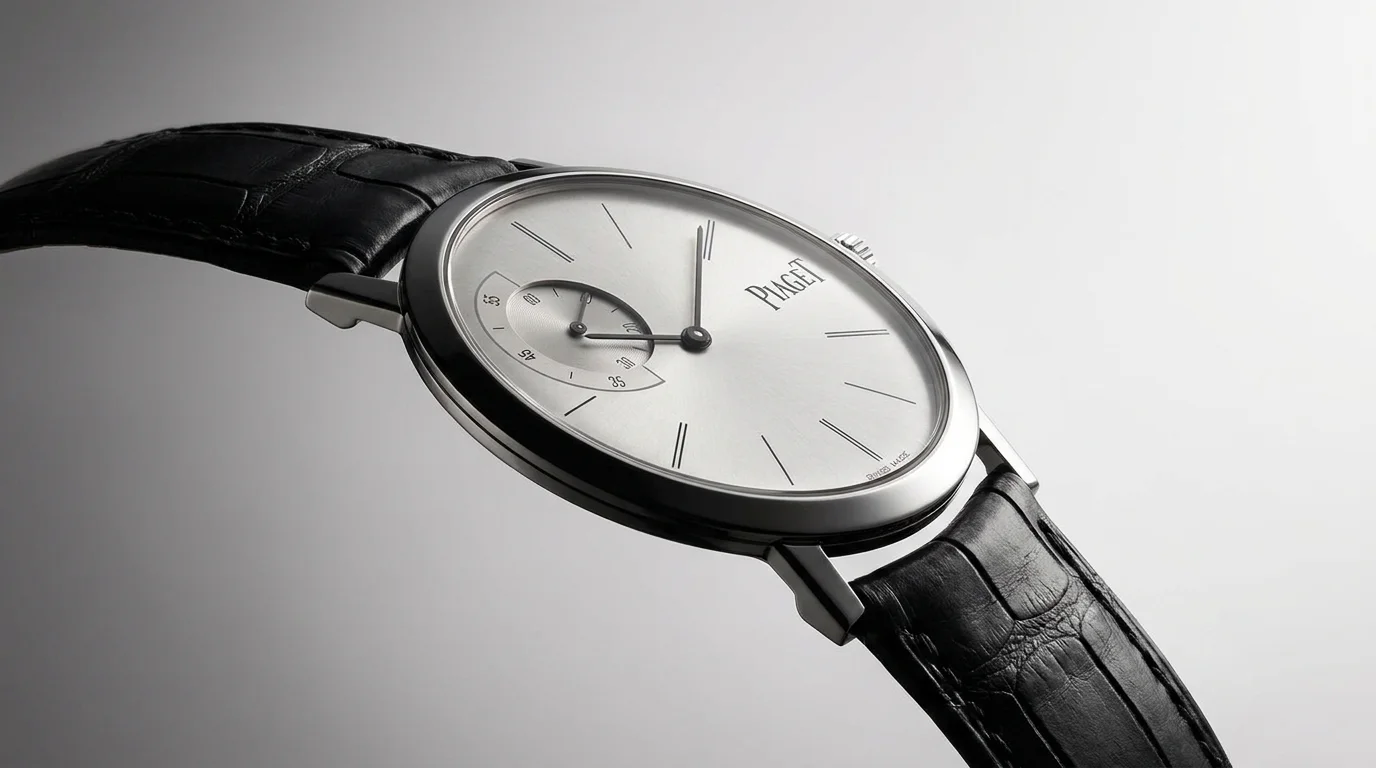 The Altiplano Ultra-Thin measures just 4.3mm thick on the wrist, one of the slimmest automatic watches sold today.
The Altiplano: Piaget's Case for Ultra-Thin
Every current Altiplano Ultra-Thin shares the same formula: a 41mm round case in precious metal, an off-centered dial with hours and minutes pushed to 10 o'clock, and caliber 910P doing the actual work underneath.
Reference G0A45123, white gold
Rhodium-finished 18K white gold, blue alligator strap, $43,900. Same 4.3mm case, same 910P movement, same 238-component build with 30 jewels.
Reference G0A50126, yellow gold
Yellow gold case, green alligator strap, $44,500. The pricing gap between metals here is small, which tells you the labor is the expensive part, not the raw gold.
Reference G0A43120, rose gold
Rose gold on black alligator. Piaget lists this one as price on request rather than a published figure, which is common for lower-volume gold references.
A watch this thin has almost no margin for error in assembly. Every part has to be finished by hand because a machine can't correct for a movement measured in tenths of a millimeter.
The trade-off nobody mentions upfront
A 4.3mm automatic movement means a smaller mainspring barrel and a shorter power reserve, about 48 hours here. It also means the caseback and dial plate have almost no structural depth to hide in, so any finishing flaw shows immediately under a loupe. This is the honest cost of thinness, not a flaw so much as physics.
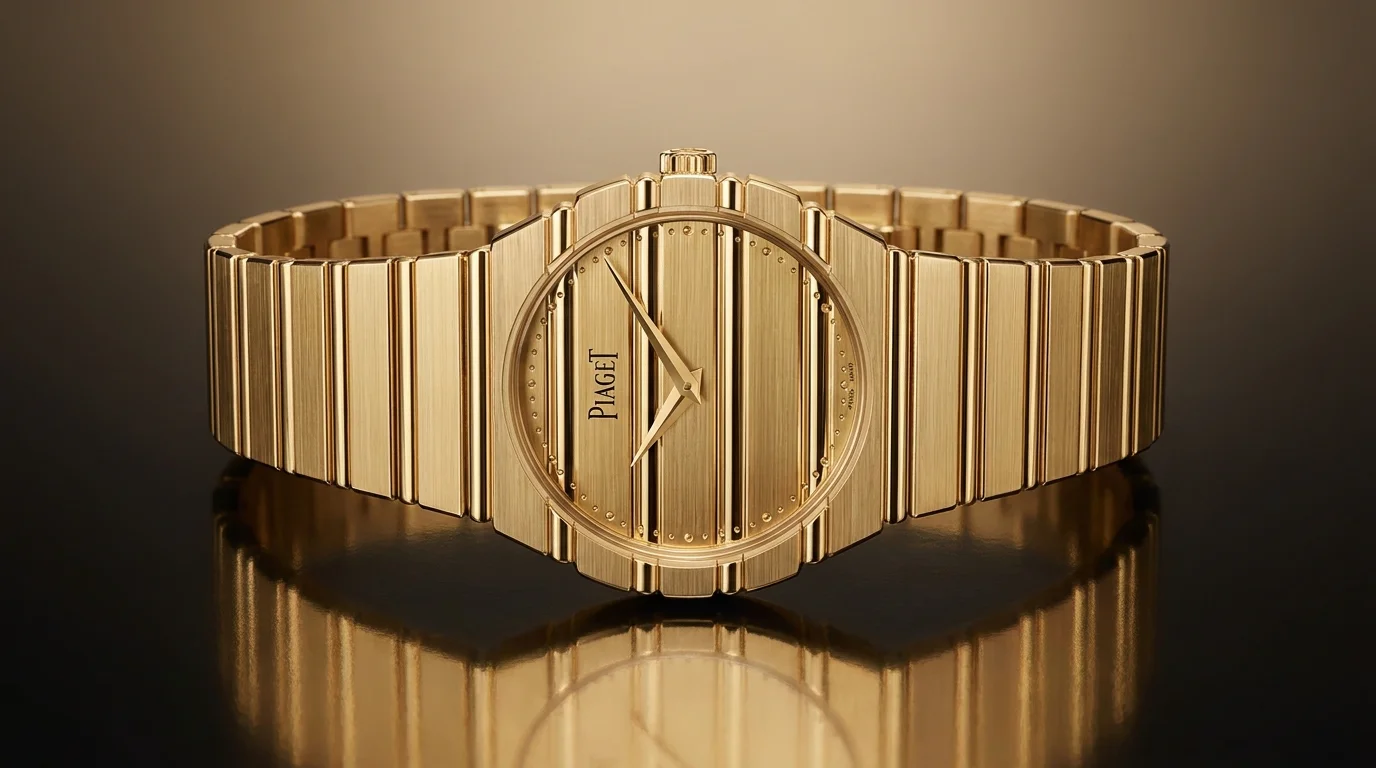 The Polo 79 revival brings back the original 1979 gadroon case and fully integrated bracelet, here in solid yellow gold.
The Polo: Piaget's Case for Being Seen
The original Polo launched in 1979 at the request of Piaget's New York distributor, who wanted something sportier than the brand's dress watches for a jet-set clientele entering the disco era. It sold well through the early 1980s in solid gold, then quietly disappeared by the decade's end.
Polo 79, the 2022 to 2026 revival
Piaget brought the original design back nearly unchanged: 38mm diameter, 7.45mm thick, horizontal gadroon fluting running across both case and dial, powered by caliber 1200P1, an in-house automatic with a micro-rotor and roughly 44 hours of power reserve. The newest two-tone reference, G0A51150 in white and yellow gold, lists at €96,000.
At the very top of the Polo case family sits the Polo Minute Repeater, a 48mm white gold reference built around caliber 1290P, the thinnest self-winding minute repeater movement Piaget makes. Only five numbered pieces leave the manufacture each year, at EUR 330,000.
Polo Date, the accessible entry point
This is the steel Polo most buyers actually encounter. Reference G0A47014 runs 42mm, powered by caliber 1110P with a 50-hour reserve, priced at $14,000 new. Pre-owned examples with box and papers have traded closer to $11,000, a meaningful discount for a watch still under warranty.
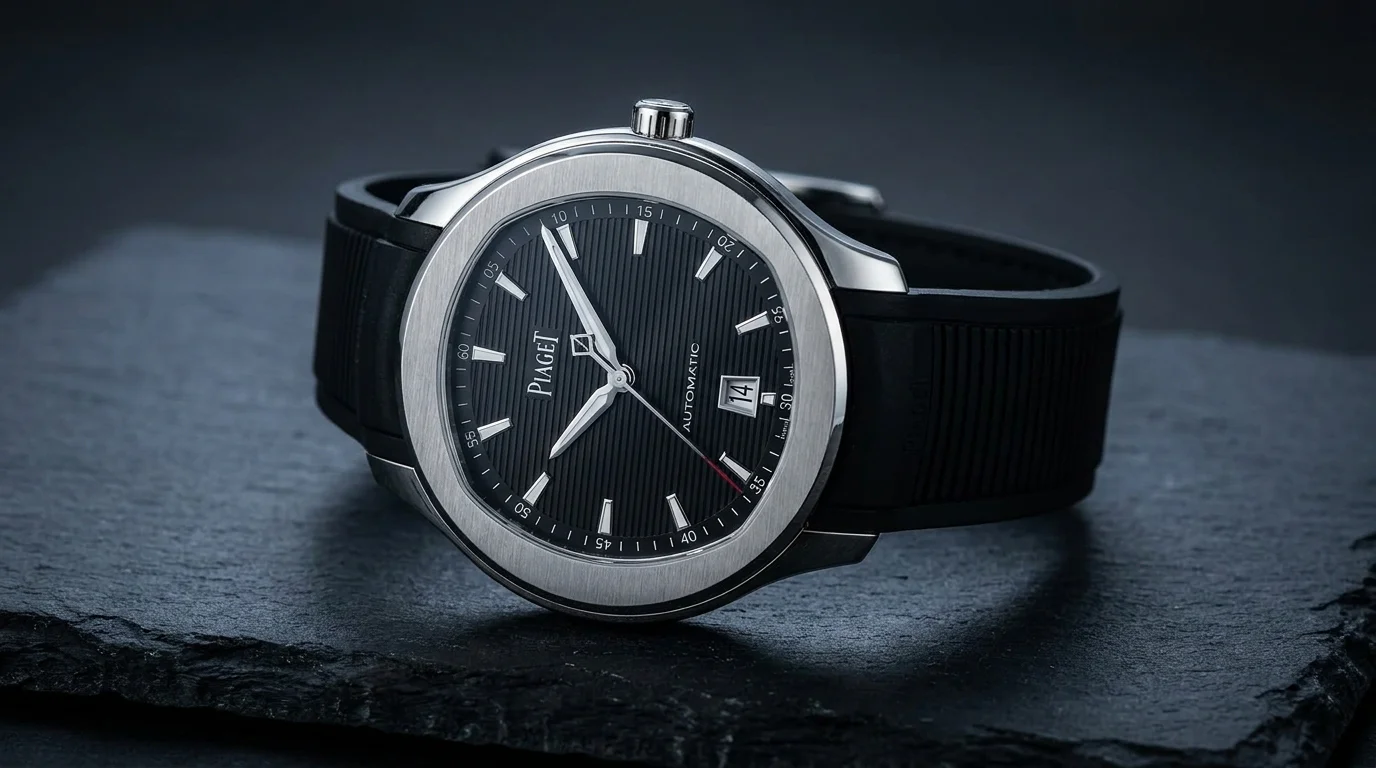 The Polo Date's black dial uses a fine guilloche pattern, a detail our Guilloche Explained piece covers in more depth.
What the Polo Date actually looks like up close
The dial finishing on the Polo Date is genuinely good for the price tier. It uses a fine vertical guilloche pattern under the applied indices, which catches light differently depending on the angle instead of sitting flat like a stamped dial. That's a detail worth checking in person before you buy, since photos flatten it.
Inside the Movement
Piaget's ultra-thin claim isn't marketing. It's backed by an internal manufacture that still builds these calibers in-house, hand-finishes every bridge, and stamps a movement number specific to that watch.
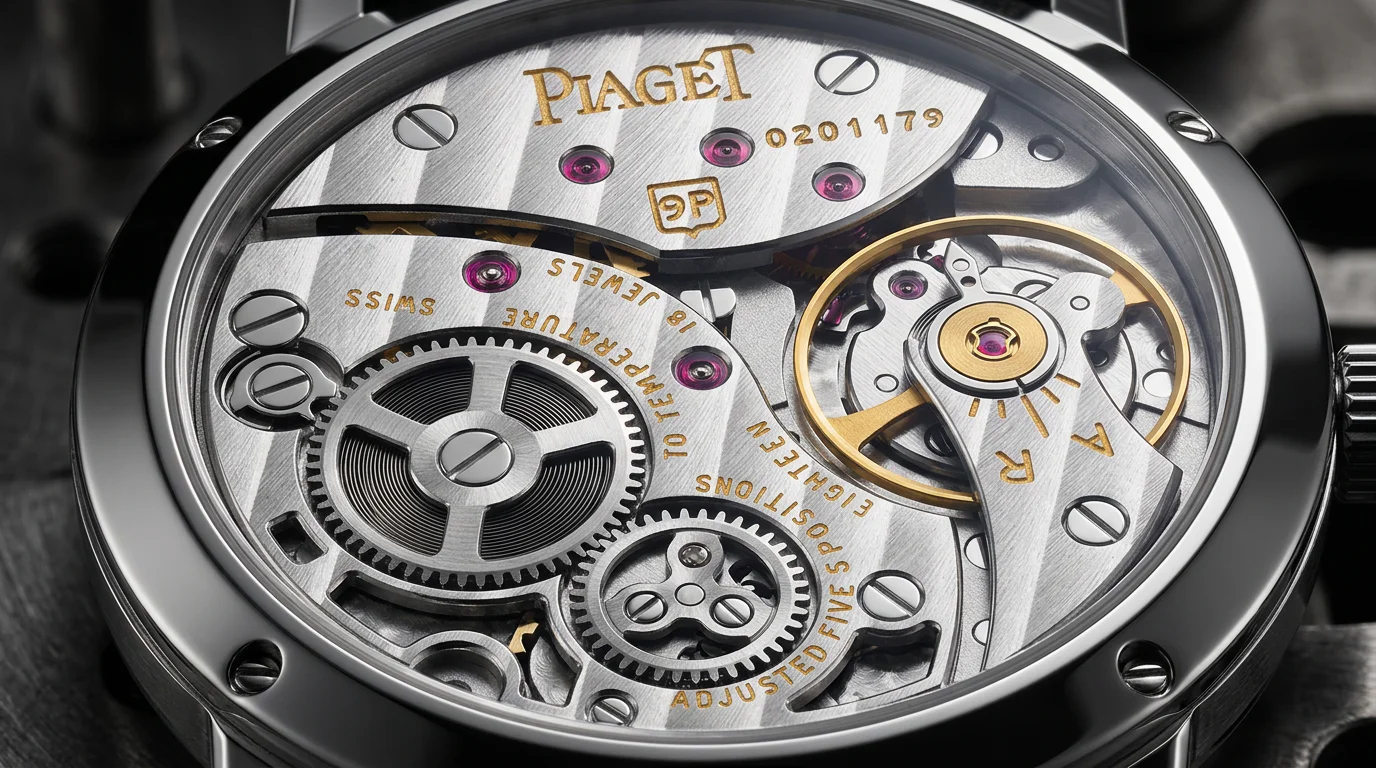 An ultra-thin Piaget movement seen through the exhibition caseback. Cotes de Geneve striping and beveled bridges are standard even at the entry tier.
Why thin movements cost more to build
Every part in a 4.3mm movement is smaller, thinner, and harder to machine without warping than the equivalent part in a standard 7 to 9mm automatic. Assembly happens almost entirely by hand, under magnification, because tolerances this tight don't survive careless handling.
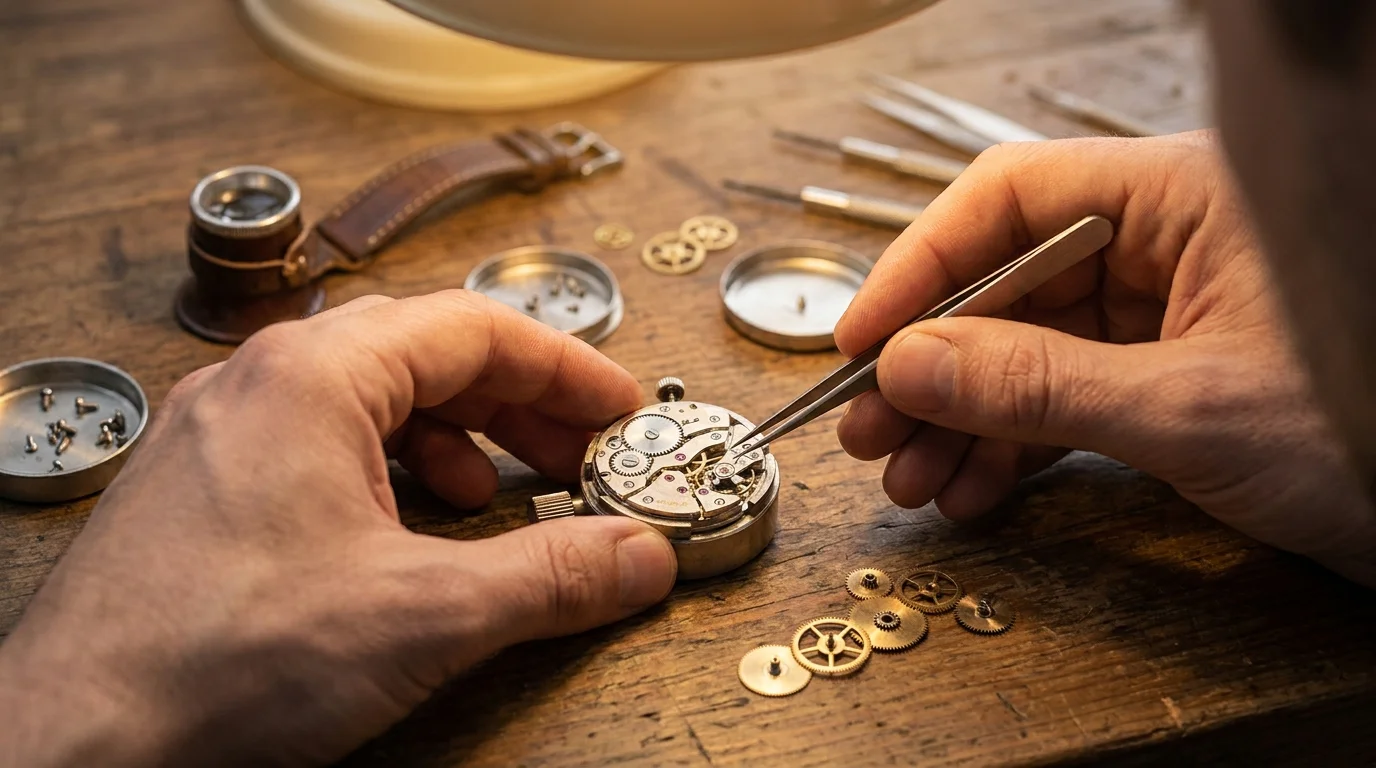 Ultra-thin assembly work happens almost entirely by hand. A single misaligned pivot can throw off the entire stack.
Servicing an ultra-thin Piaget
Not every independent watchmaker will take on a 4.3mm movement. Fewer moving parts help, but the tolerances are unforgiving, and a shop without Piaget-specific experience can do more harm than good. Ask before you send one in. If you're weighing where to source your next watch at all, our grey market vs authorized dealer vs CPO breakdown covers how that decision affects warranty and service access.
Altiplano vs Polo: Which One Fits You
| Altiplano Ultra-Thin | Polo Date | Polo 79 | |
|---|---|---|---|
| Case size | 41mm | 42mm | 38mm |
| Thickness | 4.3mm | 9.4mm | 7.45mm |
| Movement | Caliber 910P | Caliber 1110P | Caliber 1200P1 |
| Material | 18K gold | Steel | 18K gold |
| Price new | $43,900 to $44,500 | $14,000 | ~$103,000 |
| Best for | Formal wear, thin cuffs | First Piaget, daily wear | Gold sports watch collectors |
Buy the Altiplano if you already own a sports watch and want a dress piece with real engineering behind it. Buy the Polo Date if you want a Piaget you can wear every day without worrying about it. Buy the Polo 79 if the goal is a gold integrated-bracelet watch that isn't a Nautilus or a Royal Oak, and you don't mind paying a premium for that distinction.
For a different take on a slim, formal case shape, our Jaeger-LeCoultre Reverso buying guide covers the other classic dress watch collectors cross-shop against the Altiplano. For an integrated-bracelet sports watch at a lower price point, see our Chopard Alpine Eagle buying guide.
Related Reading
- Piaget Polo Minute Repeater: The Brand's Thinnest Chiming Complication Gets a Sportier Case
- Jaeger-LeCoultre Reverso Buying Guide: Every Current Model, Compared
- The Chopard Alpine Eagle Buying Guide: Every Size, Material, and Price
- Guilloche Explained: The Hand-Cut Pattern Behind the Best Dials in Watchmaking
- Grey Market vs Authorized Dealer vs CPO: Where Should You Actually Buy?
Frequently Asked Questions
What is Piaget best known for?
Piaget is best known for ultra-thin watchmaking. The brand built caliber 9P in 1957, a record-thin hand-wound movement, then followed it in 1960 with caliber 12P, the world's first ultra-thin automatic movement. That heritage still defines the Altiplano collection today.
Is Piaget a good first luxury watch?
The Polo Date is a reasonable first Piaget at $14,000 new, and pre-owned examples trade closer to $11,000. The Altiplano Ultra-Thin is a better fit for a second or third watch, since its formal proportions and gold-only pricing make it less of an everyday piece.
How thick is the Piaget Altiplano Ultra-Thin?
The current Altiplano Ultra-Thin references measure 4.3mm thick, built on the automatic caliber 910P. That makes it one of the thinnest automatic watches sold today, though Piaget's own Altiplano Ultimate Concept has pushed even thinner in limited runs.
What's the difference between the Polo 79 and the Polo Date?
The Polo 79 is a faithful revival of the original 1979 design in solid gold, 38mm, with horizontal gadroon fluting across the case and dial. The Polo Date is a modern steel sports watch at 42mm with a guilloche dial, priced far below the Polo 79 and intended for daily wear.
Does Piaget hold its value pre-owned?
Piaget pre-owned pricing tends to sit well below MSRP compared to Rolex or Patek Philippe, since demand is thinner and the brand carries less speculative interest. That works in a buyer's favor: a Polo Date at roughly $11,000 pre-owned against a $14,000 MSRP is a real discount on a watch still largely under warranty.
Browse authenticated pre-owned Piaget at 5dwatches.com.