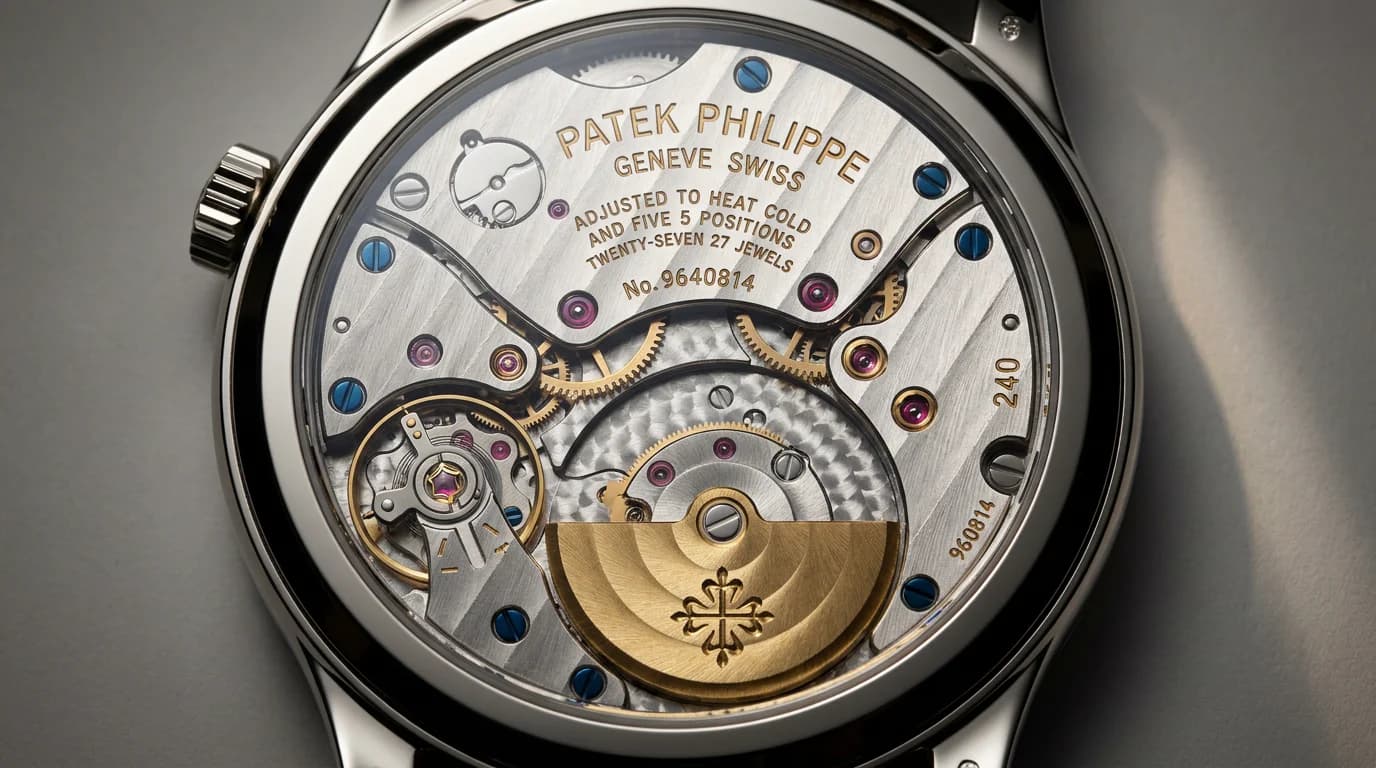
A micro-rotor is a small, thick weight built into the automatic winding system of a watch, sitting inside the movement's plane instead of stacked on top of it. It does the same job as a standard rotor: swinging with wrist motion to wind the mainspring. It just does that job in a fraction of the vertical space.
That space savings is the entire point, and it is why some of the thinnest automatic watches in the world still wind themselves.
The images in this article were generated with AI for illustration. They show recognizable movements and watches based on real reference photography, but are not photographs of a specific watch for sale.
The Short Answer
- A micro-rotor is a small oscillating weight recessed into the movement plate, not stacked above it like a standard rotor.
- Buren Watch Company and Universal Geneve jointly introduced the technology on February 18, 1958, with patents filed by Hans Kocher (Buren) in 1954 and Jean-Michel Froidevaux and Fred Bandi (Universal) in 1955.
- The main benefit is thickness. Patek Philippe's caliber 240 measures just 2.53mm thick thanks to its micro-rotor design.
- The main tradeoff is winding efficiency. A micro-rotor's smaller mass generates less inertia than a full-size rotor, so it winds the mainspring more slowly.
- Modern brands using micro-rotors include Patek Philippe, Piaget, Chopard, Vacheron Constantin, Bulgari, and Panerai.
How It Actually Works
A standard automatic movement stacks its rotor on top of the entire mechanism, like a half-moon disc spinning above the gears and bridges. That adds height to the case.
A micro-rotor sits inside the same plane as the rest of the movement, tucked into a recessed pocket cut into the plate. Because it does not need to clear anything stacked beneath it, the whole assembly can be built thinner.
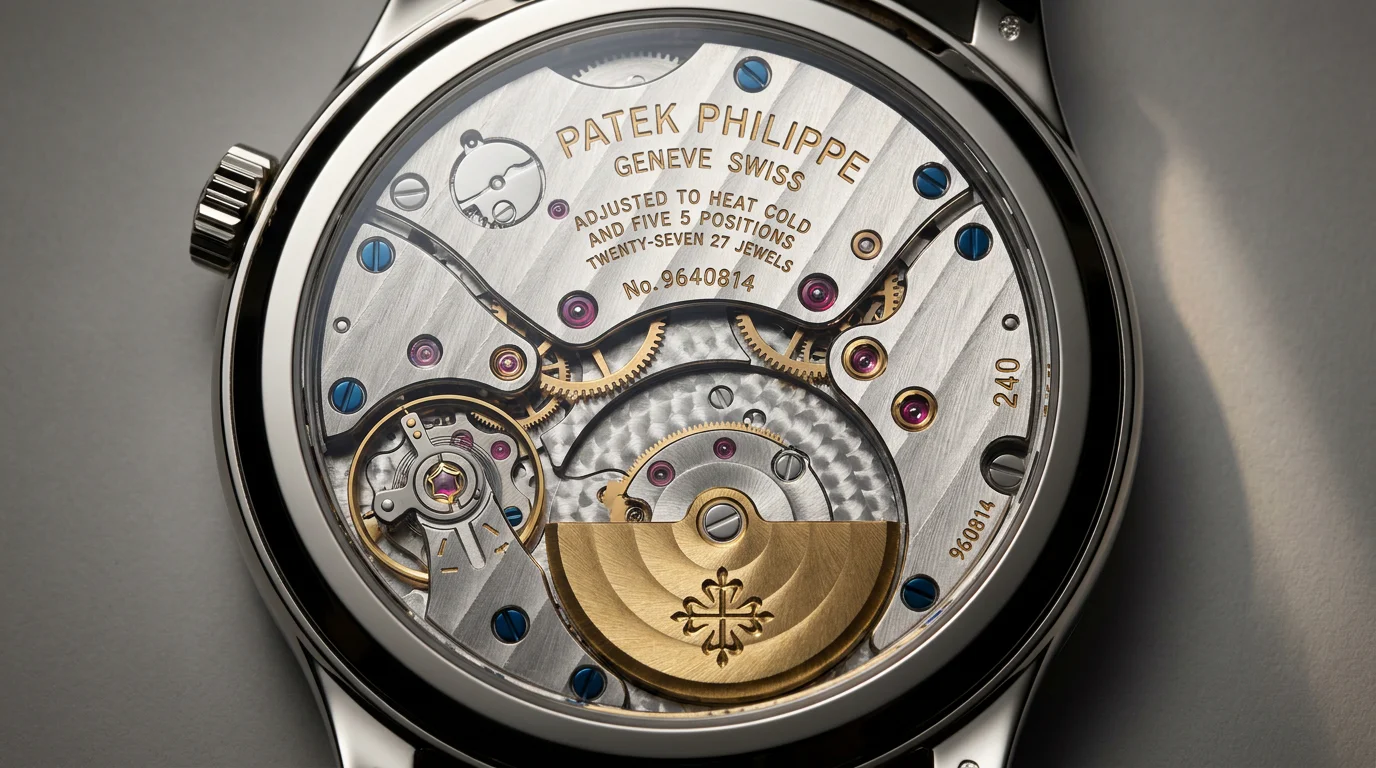 Patek Philippe's caliber 240: a 22-carat gold micro-rotor recessed into the movement plate, part of why the caliber measures just 2.53mm thick.
Why the Rotor Has to Get Heavier
A full-size rotor generates winding power partly through sheer mass and a long swing radius. Shrink the rotor and you shrink both.
To compensate, micro-rotors are almost always made from dense materials like 22-carat gold, platinum, or tungsten rather than the steel used in a standard rotor. Denser metal in a smaller package recovers some of the lost winding torque, though rarely all of it.
Who Actually Invented It
The credit gets split, and for good reason. Two Swiss manufacturers filed independent patents within a year of each other and then launched competing products at the same trade show.
Two Companies, Two Patents, One Announcement
Hans Kocher of Buren Watch Company filed the first micro-rotor patent on June 21, 1954. Jean-Michel Froidevaux and Fred Bandi of Universal Geneve filed their own, independently developed version eleven months later, on May 27, 1955.
Rather than fight over it, the two companies jointly announced the technology on February 18, 1958, and both launched products at the Basel Fair that April. Buren's version powered its Super Slender line. Universal's version, called the Microtor, powered the now-famous Polerouter.
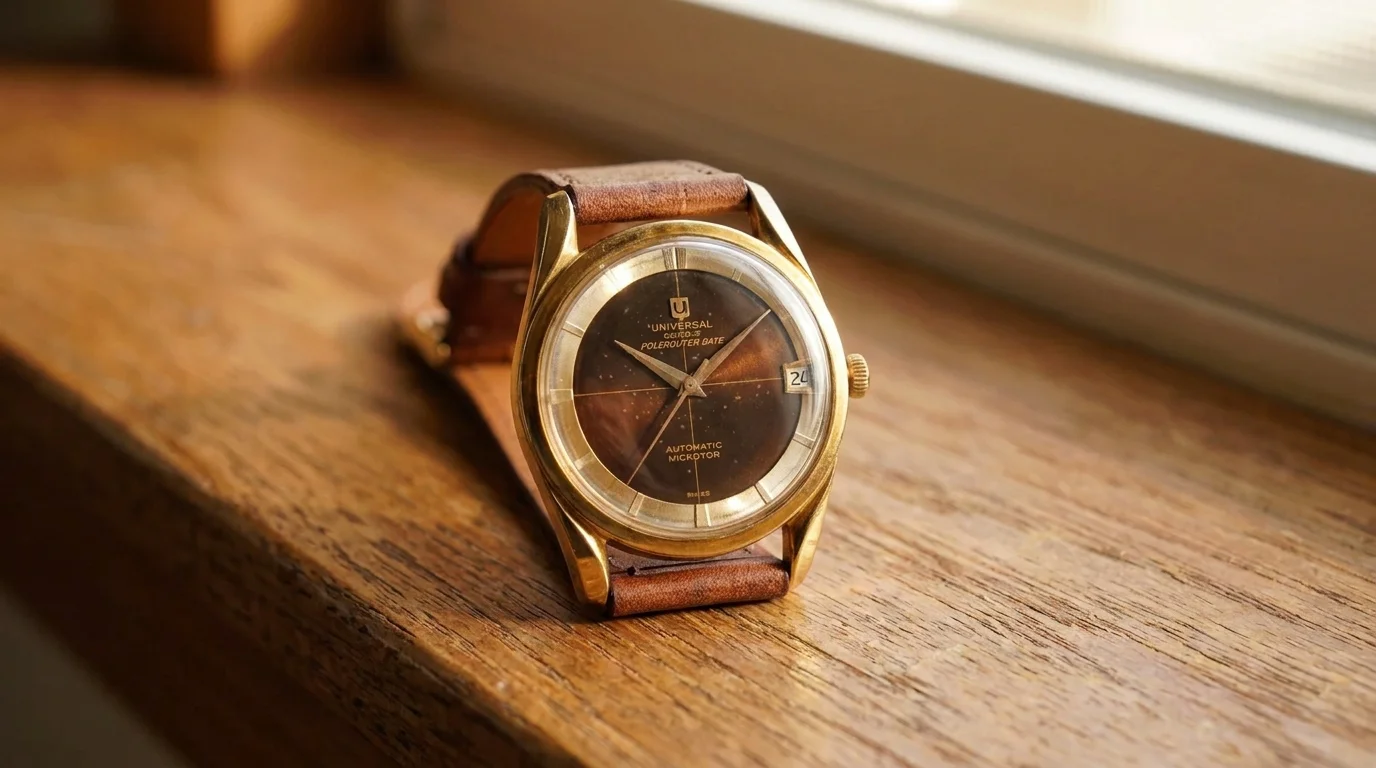 The Universal Geneve Polerouter Date, one of the original 1958 launch watches for the micro-rotor, marketed under Universal's own "Microtor" name.
Kocher and Bandi later co-authored an article on the technology together. This was a rare case of parallel invention followed by genuine collaboration, not a patent fight.
The Modern Standard-Bearer: Patek Philippe Caliber 240
Patek Philippe adopted the micro-rotor for its caliber 240 in 1977, and the movement family is still in production today, nearly five decades later.
| Spec | Detail |
|---|---|
| Diameter | 27.5mm |
| Thickness | 2.53mm |
| Power reserve | Minimum 48 hours |
| Jewels | 27 |
| Rotor material | 22-carat gold |
| Components | 152 |
The caliber 240's thinness is exactly why Patek uses it as the base movement for some of its slimmest perpetual calendars, including references in the Nautilus and Calatrava families. There is no room in a 2.53mm-thick movement for a rotor stacked on top.
The Honest Tradeoff Nobody Skips Around
A micro-rotor watch will generally wind less efficiently than an equivalent full-rotor automatic. That is not a design flaw, it is physics.
How Much Slower, Really
Montblanc has published a direct comparison for one of its own calibers: a micro-rotor version needs roughly 11 hours of wrist motion for a full wind, against about 8 hours for the equivalent full-rotor version. That gap is representative of what most micro-rotor movements face.
For a watch that gets worn daily, this rarely matters in practice. For a watch that sits in a drawer between wears, it means reaching for a watch winder sooner than you would with a conventional automatic.
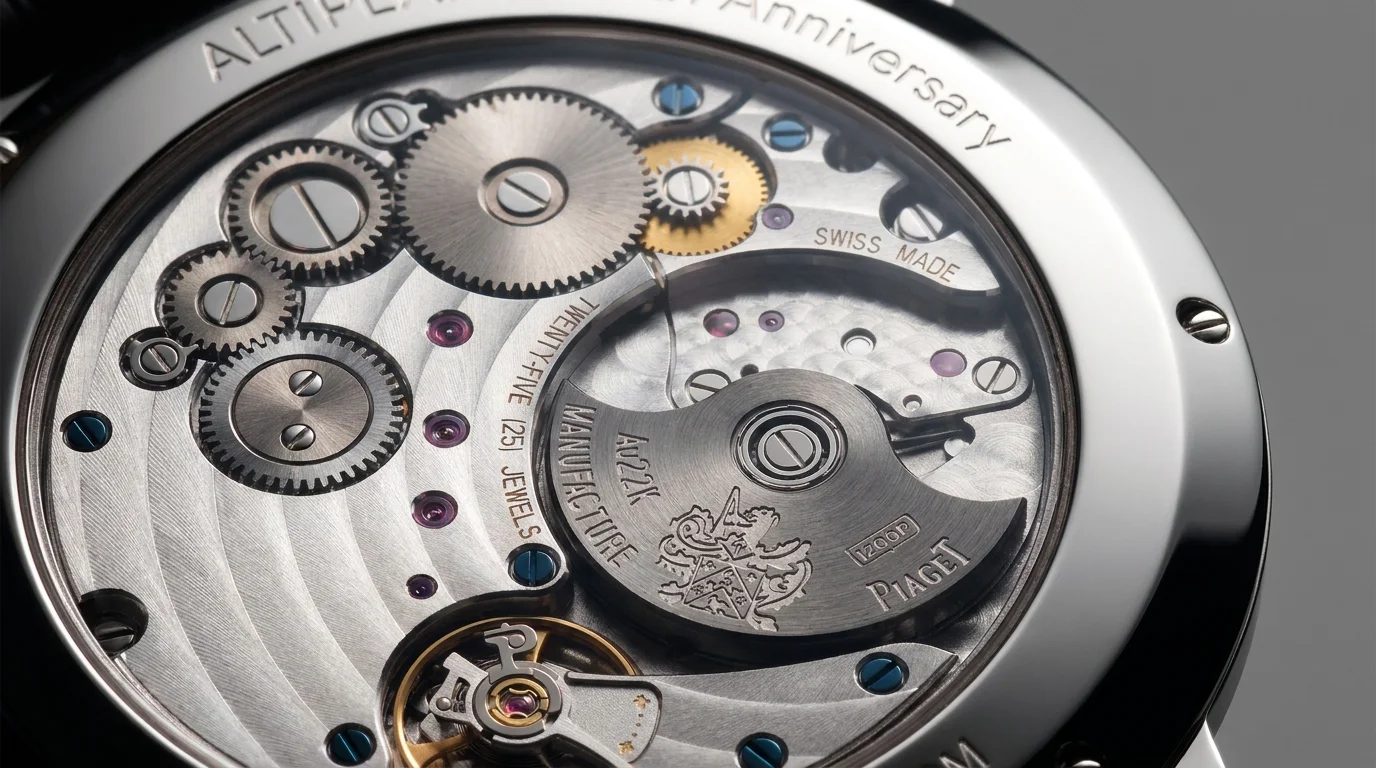 Piaget's caliber 1200P carries its own ultra-thin micro-rotor design, part of the brand's long-running push to build the world's thinnest automatic movements.
Why Micro-Rotor Watches Cost More
Micro-rotor construction is expensive to produce well. The recessed pocket for the rotor has to be precisely machined into the plate, the dense rotor material itself costs more than steel, and the smaller parts require more delicate hand-finishing to avoid rattling or friction.
Very few brands offer a micro-rotor watch under 10,000 Swiss francs. This is a genuine engineering cost, not a marketing markup dressed up as one.
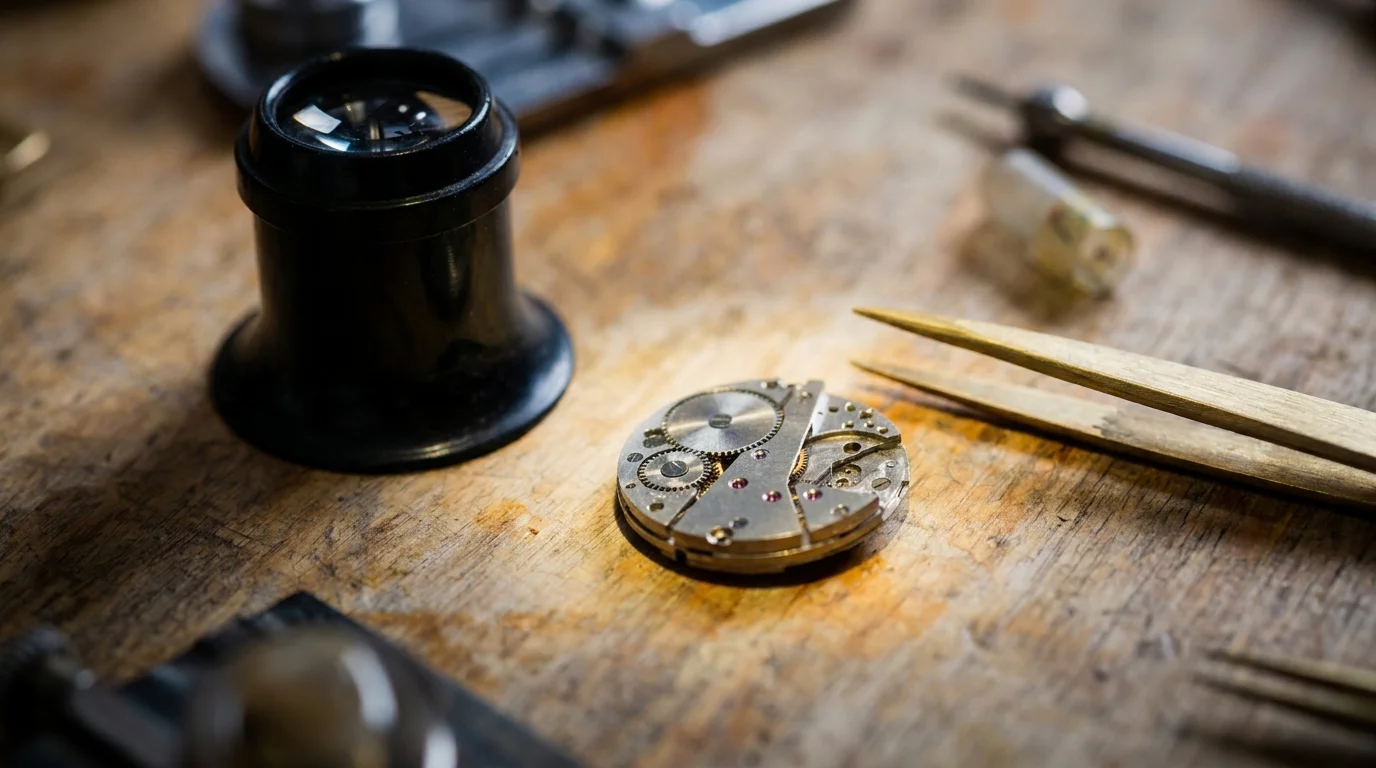 Servicing a micro-rotor movement takes the same patience as building one. The recessed rotor pocket leaves less room to work around.
Which Brands Build Them Today
- Patek Philippe: caliber 240 family, still the reference point for the category
- Piaget: caliber 1200P and related ultra-thin calibers
- Chopard: L.U.C 96.01-L and related in-house calibers
- Vacheron Constantin: several in-house micro-rotor calibers across thinner collections
- Bulgari: used in the record-setting Octo Finissimo lineup
- Panerai: micro-rotor versions of select in-house calibers
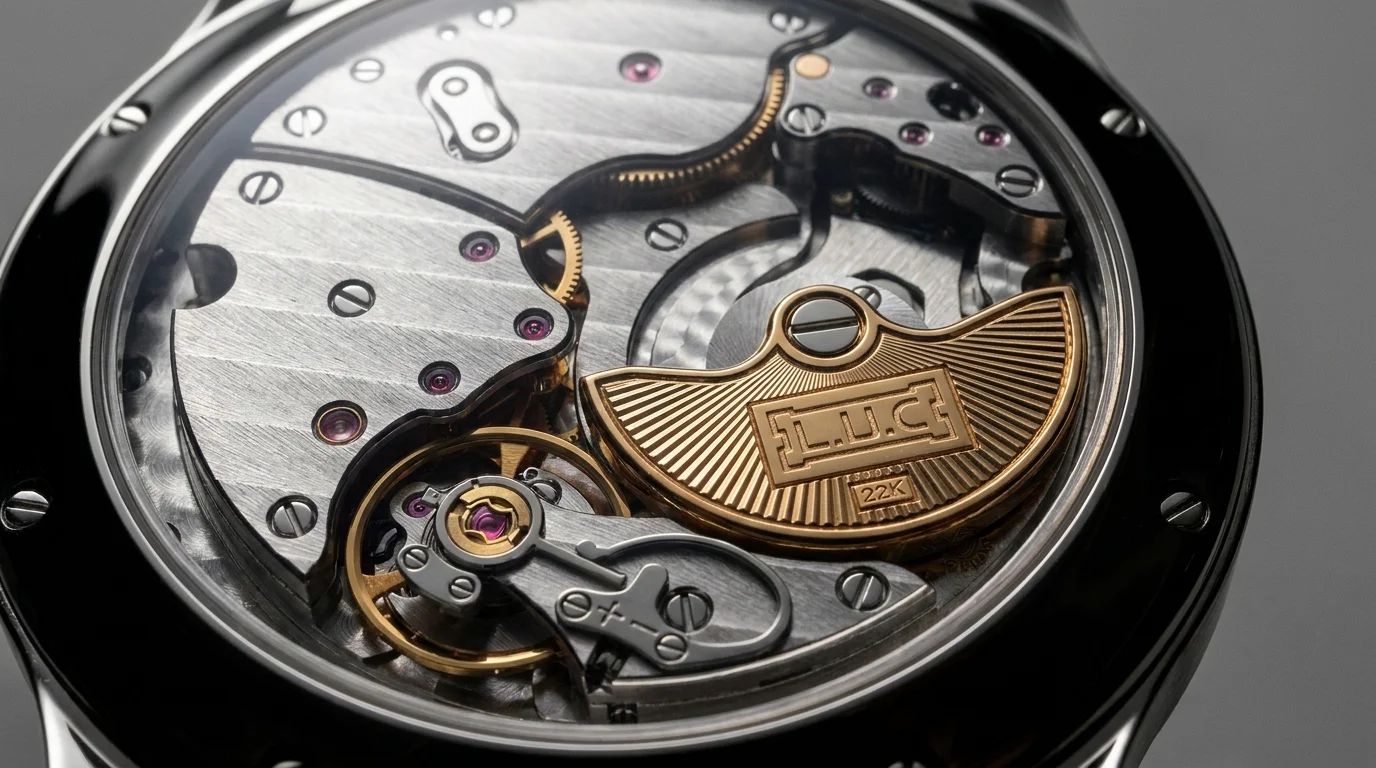 Chopard's L.U.C caliber carries a 22-carat gold micro-rotor finished with the same Geneva stripes and perlage as the rest of the movement.
Is a Micro-Rotor Watch Worth Buying
Buy one if thinness matters to you more than winding convenience, or if you wear the watch daily and the winding gap never becomes an issue. A slim dress watch or an open-worked movement genuinely benefits from the design in a way a diver never will.
Skip it if you rotate through several watches and need each one to stay wound with minimal wrist time. A full-rotor automatic will simply keep better time on the shelf.
Related Reading
- What Is a Chronometer? COSC Certification and the New 2026 Standard, Explained
- Perpetual, Annual, or Triple Calendar: Which Complication Is Actually Worth Your Money
- The Patek Philippe Calatrava Buying Guide: Every Modern Reference
- Jumping Hour Watches Explained: The Complication With No Hour Hand
Frequently Asked Questions
What is a micro-rotor in a watch?
A micro-rotor is a small, dense oscillating weight recessed into the movement plate rather than stacked on top of it, allowing the automatic winding mechanism to sit in a much thinner case.
Who invented the micro-rotor?
Buren Watch Company and Universal Geneve independently developed and jointly announced the micro-rotor in 1958. Hans Kocher filed Buren's patent in 1954, and Jean-Michel Froidevaux and Fred Bandi filed Universal's separate patent in 1955.
Do micro-rotor watches wind less efficiently?
Yes. A micro-rotor's smaller mass and shorter swing radius generate less winding torque than a full-size rotor, which is why brands like Montblanc report needing about 11 hours of wear for a full wind versus roughly 8 hours on an equivalent full-rotor caliber.
Why are micro-rotor watches more expensive?
The recessed rotor pocket requires precise machining, the rotor itself is usually made from costly dense metal like gold or platinum, and the smaller components demand more careful hand-finishing, all of which raise production cost.
Which modern watches use a micro-rotor movement?
Patek Philippe's caliber 240 family, Piaget's caliber 1200P, Chopard's L.U.C calibers, Vacheron Constantin's thinner in-house movements, Bulgari's Octo Finissimo, and select Panerai calibers all use micro-rotor construction today.