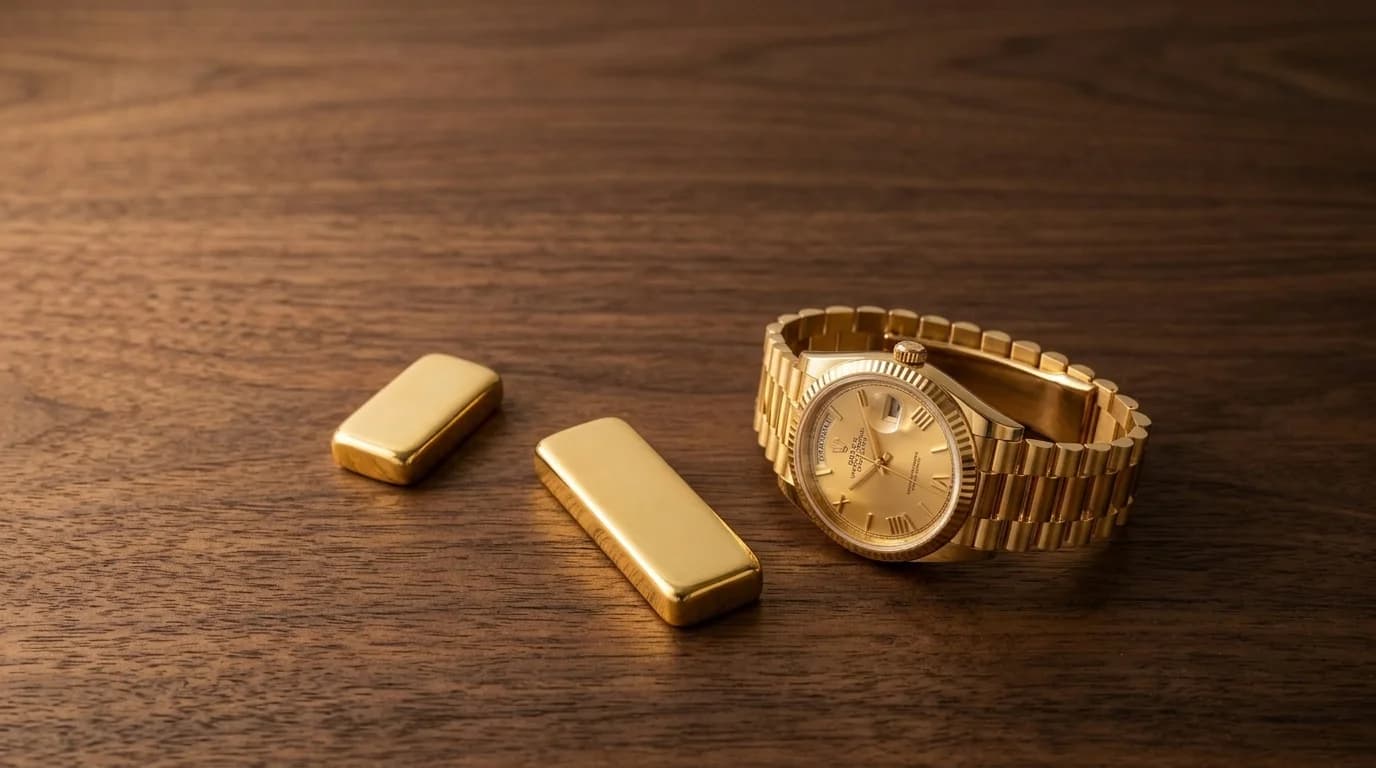
For most of the last century, platinum was the expensive one. A watch in platinum cost more than the same watch in gold, because the raw metal did. That order has flipped, and hard. Gold has gone on one of the great runs in its history while platinum, the metal that used to sit above it, now trades at a steep discount. For anyone buying a precious-metal watch in 2026, that gap is worth understanding before you sign.
The images in this post are AI-generated illustrations for editorial purposes and may not exactly represent any specific watch or product.
The short version
As of late June 2026, gold trades around $4,130 an ounce and platinum around $1,700. That puts gold at roughly 2.4 times the price of platinum. For most of modern history the relationship ran the other way, with platinum commanding a premium over gold. The practical takeaway for watch buyers: the metal inside a gold watch is now worth more than the metal inside a comparable, and heavier, platinum one, which quietly reframes where the value sits.
How the metals got here
The whole precious-metals complex went vertical over the past 18 months. Gold set an all-time record near $5,600 in late January 2026 before pulling back as the Federal Reserve turned hawkish and the dollar firmed. Even after that retreat, it sits near $4,130, still roughly $750 above where it was a year ago.
Platinum had its own historic run. It broke its long-standing 2008 record to print an all-time high around $2,730 in January 2026, driven by a structural supply deficit out of South Africa and Russia. It has since slipped back toward $1,700 on the same stronger-dollar pressure that cooled gold. Both metals are off their peaks. The gap between them is the story.
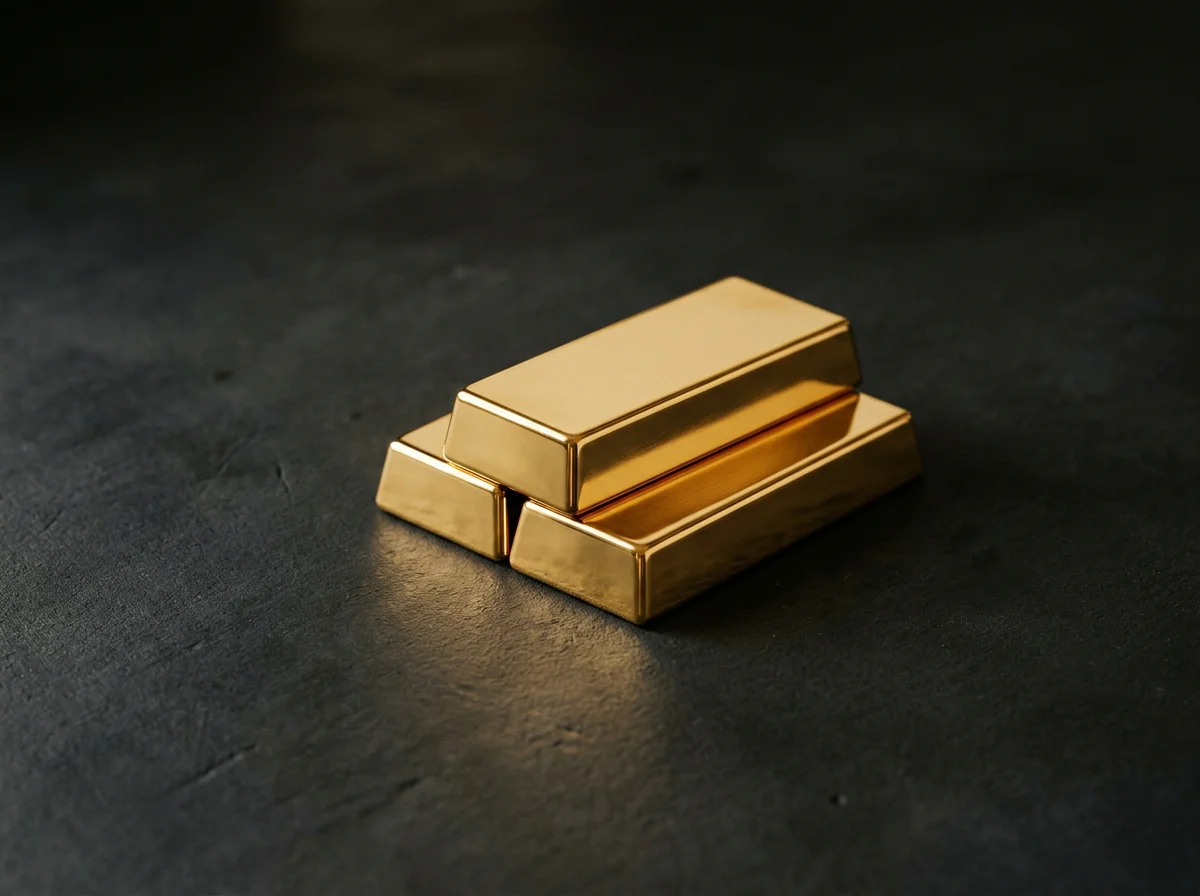 Gold's multi-year run took it to a January record before a pullback. (AI-generated illustration.)
The ratio flip
Here is the part that matters. Back in 2007, when platinum last set records, it was worth nearly two and a half times as much as gold. As the team at CME Group laid out in its precious-metals outlook, that relationship has completely inverted, with gold now worth roughly twice platinum or more. Decades of weak diesel and catalytic-converter demand held platinum down while gold rode wave after wave of safe-haven buying.
| Metal | Record high (Jan 2026) | Late June 2026 | Historical role |
|---|---|---|---|
| Gold | ~$5,600/oz | ~$4,130/oz | The financial safe haven |
| Platinum | ~$2,730/oz | ~$1,700/oz | Once the premium metal, now well below gold |
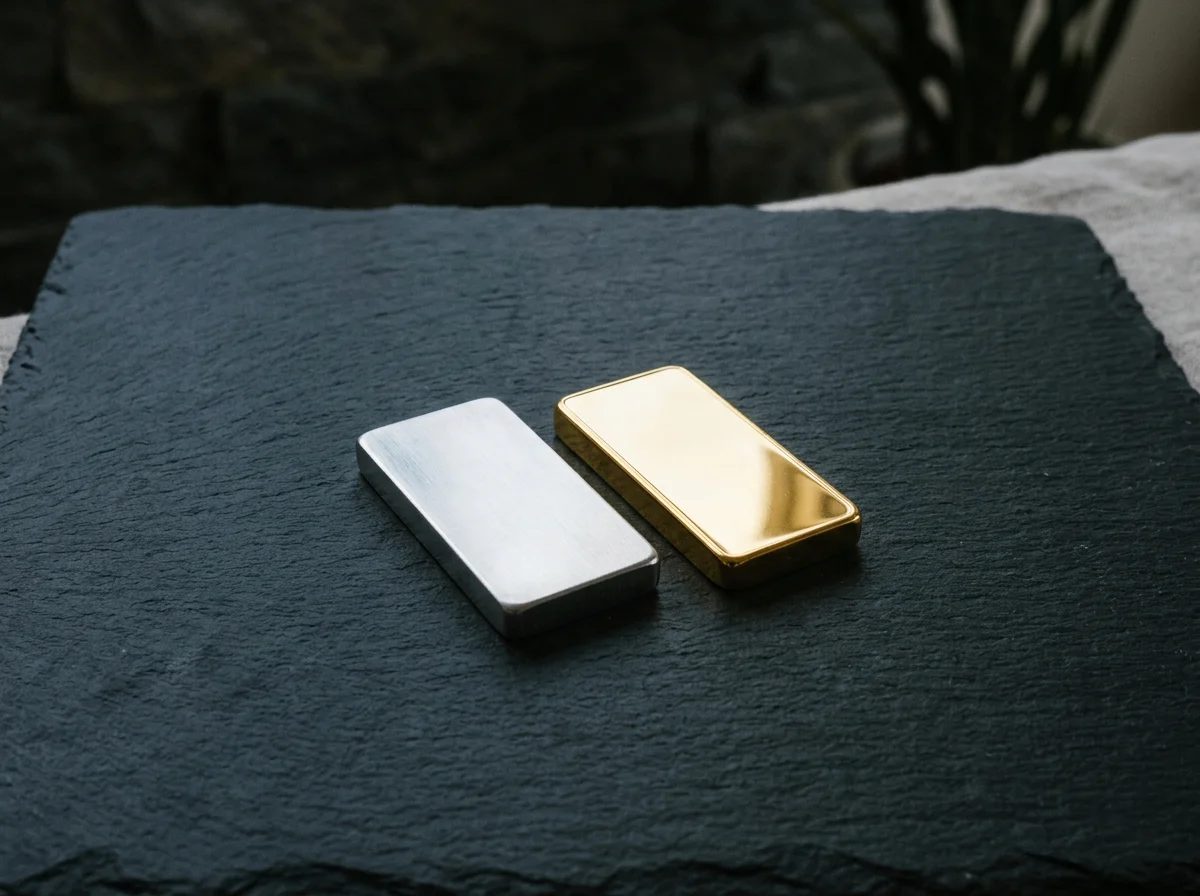 For most of modern history, the white metal cost more than the yellow one. Not now. (AI-generated illustration.)
What this means inside a watch
A precious-metal watch is mostly metal cost plus craft, and the metal half just moved a lot. Watch cases in gold are typically 18-carat alloy, while platinum cases are usually 950 platinum, denser and noticeably heavier on the wrist. Platinum is also harder to machine and finish, chewing through tooling and adding labor, which is the traditional reason a platinum watch was priced above its gold twin.
The twist in 2026 is that despite using more metal mass, a platinum watch can now carry less raw-metal value than a gold one, because gold per gram is worth nearly double platinum per gram. Brands price precious-metal models with large margins, so retail does not track spot day to day, but the direction is real: gold model prices have drifted steadily upward as the metal climbed, while platinum has quietly become the cheaper raw input for the heavier, rarer-feeling watch.
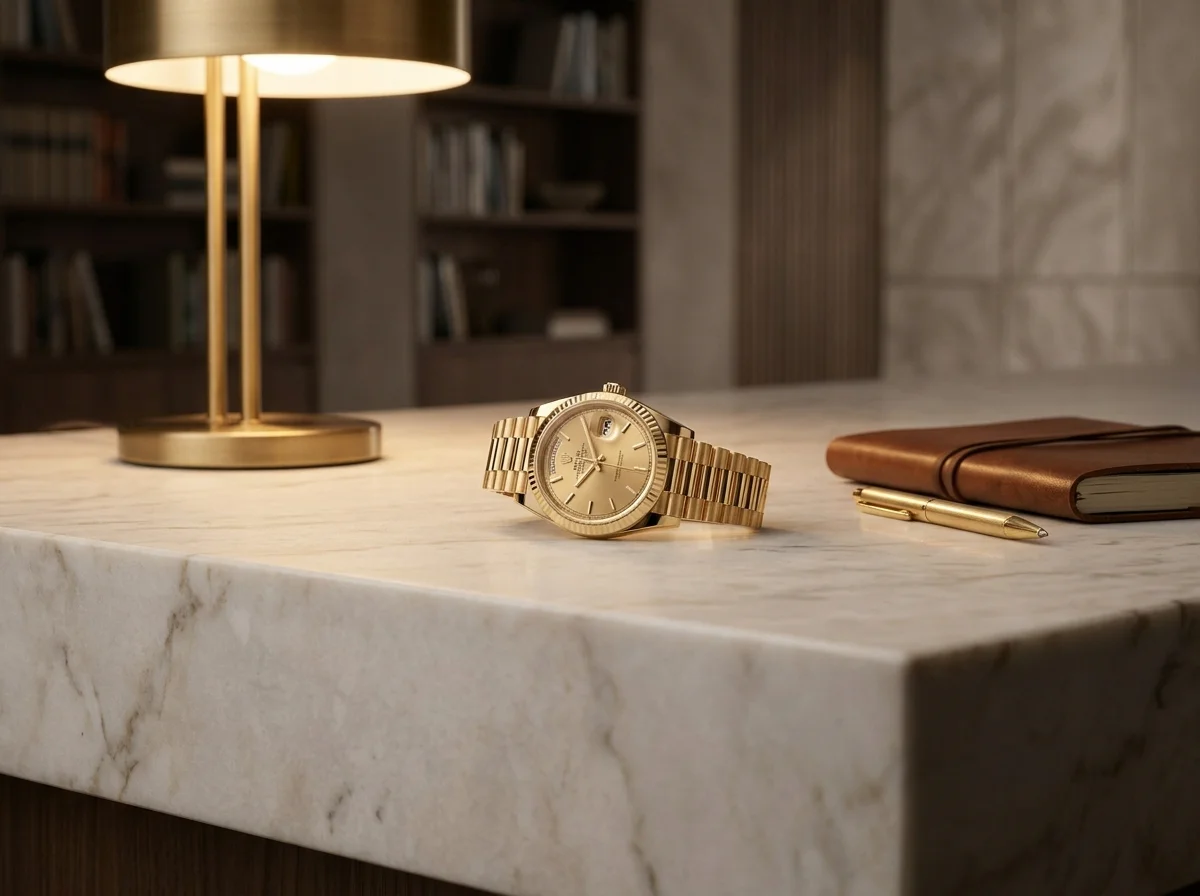 The gold in a gold watch is now worth more than the platinum in a heavier platinum one. (AI-generated illustration.)
A working dealer's read
None of this is a reason to buy a watch as a metals trade. You buy a watch to wear it, and spot prices move every day. But the gap does change the value math on the showroom floor.
Gold watches are getting more expensive to produce and to replace, and that pressure shows up in retail and, eventually, pre-owned. Platinum watches, meanwhile, tend to be undervalued on the secondary market for a different reason: the buying public chases steel sport models and flashy gold, so the heavy, discreet platinum dress watch often trades closer to its merits than its materials. A platinum piece gives you the densest, most labor-intensive metal in watchmaking, frequently for less of a premium than it used to command. For the collector who actually likes platinum's understated weight, that is the quiet opportunity in this market.
If you want the wider read on where prices are sitting right now, our June 2026 watch market update covers the index in detail. And for a concrete look at how gold and platinum play out across one model line, the Patek Philippe Calatrava guide runs from gold references to the platinum 6196P.