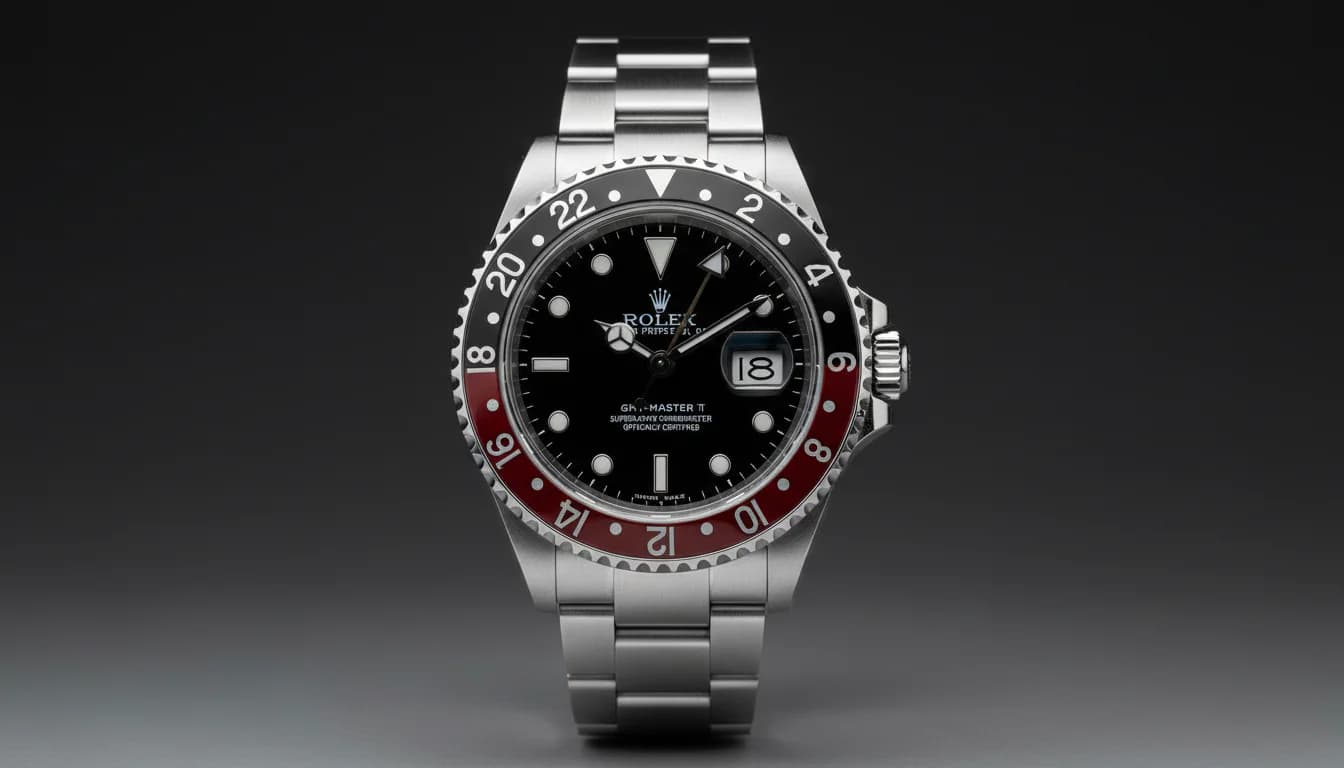
The GMT complication looks simple from across the room: a fourth hand sweeping around a 24-hour scale. What that scale looks like varies a lot. A rotating two-tone bezel is the most famous version, thanks to Rolex, but plenty of real GMT watches use a single-color bezel, a fixed engraved ring, or no bezel at all. What actually determines whether the watch tracks a real second time zone is the movement underneath, and most GMT watches on the market today handle that in one of two very different ways.
This post includes AI-generated images built from real reference photography of the watch discussed, verified by our team for accuracy before publishing.
The short answer
A GMT watch is, at its core, any watch that adds a 24-hour indication to track a second time zone alongside local time. That scale can appear on a two-tone bezel, a single-color bezel, a fixed ring, or a printed dial track. What splits GMT watches into two functional camps is the movement. On a flyer, or "true," GMT, you set the local hour hand independently, jumping it in one-hour clicks while the GMT hand and your reference time zone stay put. On a caller, or "office," GMT, the GMT hand jumps independently instead, and the local hour and minute hands move together. Both are legitimate GMT watches. Only the flyer/true version lets you reset local time at a layover without touching your reference zone.
How the fourth hand actually works
A GMT watch adds a fourth hand that makes one full rotation every 24 hours instead of 12, geared to point at a 24-hour scale. That scale most often sits on a rotating bezel. It can also live on a fixed ring around the dial, as on IWC's Pilot's Watch UTC and Grand Seiko's GMT references (the SBGM series, for one). Read against a stationary 24-hour reference, whether that's a bezel or a fixed ring, the hand shows a second time zone. On the models that do have a rotating bezel, turning it to a third zone's offset lets the same hand show a third time reference at a glance.
Why 24 hours and not 12
A 12-hour hand cannot distinguish AM from PM on its own. Gearing the GMT hand to a 24-hour rotation removes that ambiguity entirely, which is the actual reason the complication exists rather than just adding a second 12-hour dial.
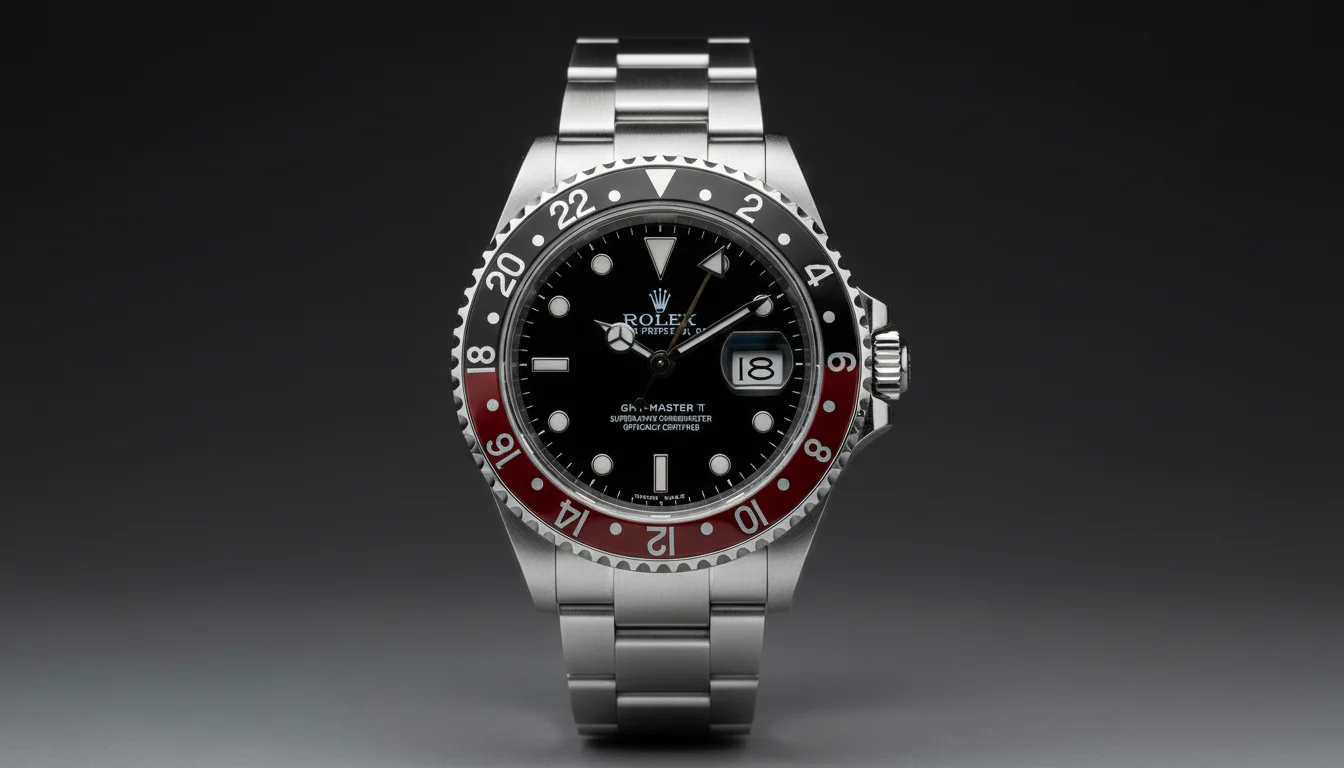 The GMT-Master II pairs a 24-hour orange hand with a bicolor bezel, letting you read a second time zone at a glance without doing any math.
True GMT vs office GMT: the difference that actually matters
"True GMT" (also called flyer or traveler GMT) and "office GMT" (also called caller GMT) describe the two common movement types. The difference comes down to which hand jumps independently when you set the watch.
True GMT
On a true GMT movement, the local hour hand can be independently advanced or set backward in one-hour jumps using the crown, without stopping the seconds hand and without moving the minute hand, GMT hand, or date. Land in a new time zone, jump the hour hand to local time, and your reference time zone keeps running on the GMT hand exactly where you left it.
Office GMT
An office GMT drives the GMT hand directly off the same gear train as the local hour hand, so the two are always locked at a fixed offset. To read a second time zone, you rotate the external bezel (or reference a fixed scale, on models without one) to the correct offset instead of independently setting the hour hand. This is simpler and cheaper to manufacture, and it works fine if you rarely cross time zones. It does not work the way a frequent traveler actually wants a GMT to work.
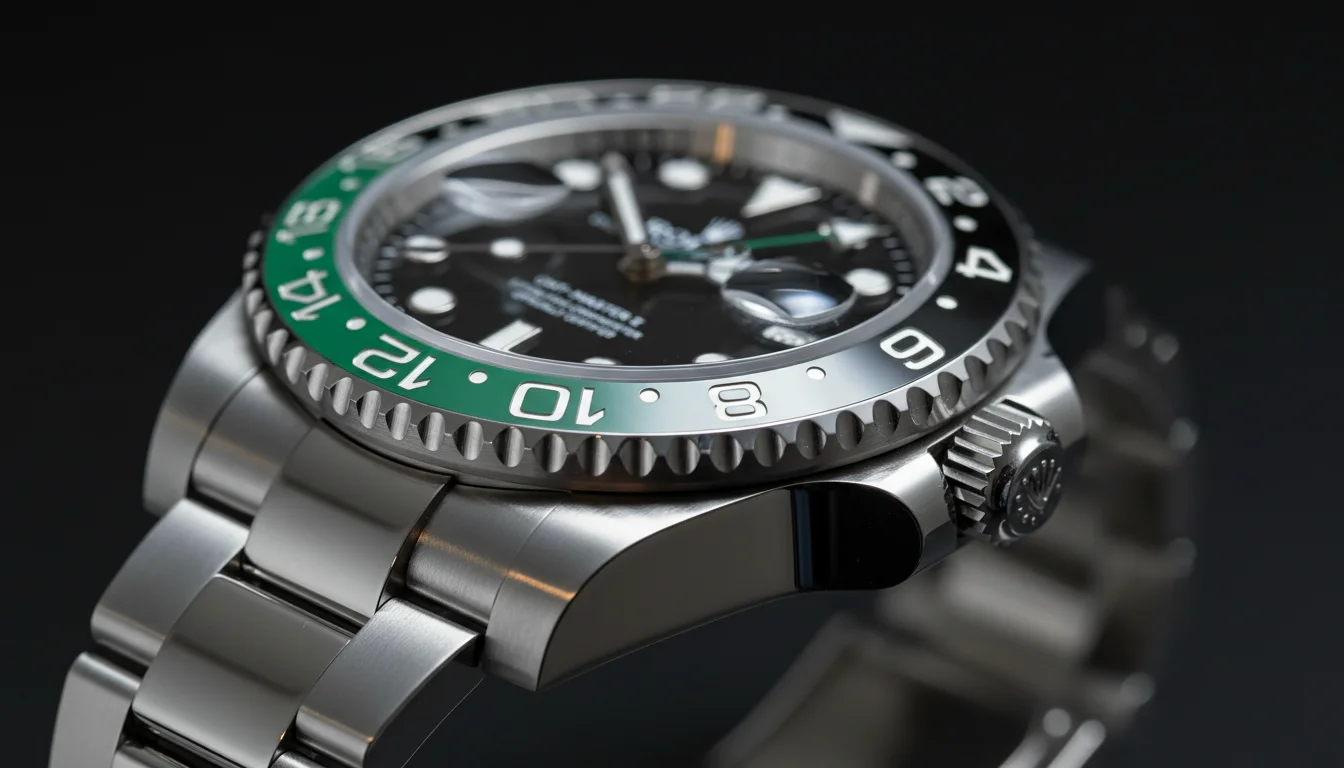 A rotating 24-hour bezel scale is what turns a fourth hand into a readable second time zone on watches built this way, one implementation among several.
How to tell which one you have
Set the watch to the correct time, then try advancing only the hour hand using the crown's intermediate position (usually the first click out). If the hour hand jumps forward in one-hour increments while the GMT hand and minute hand stay put, it is a true GMT. If the hour hand will not move independently of the GMT hand, it is an office GMT.
Reading a third time zone off the bezel
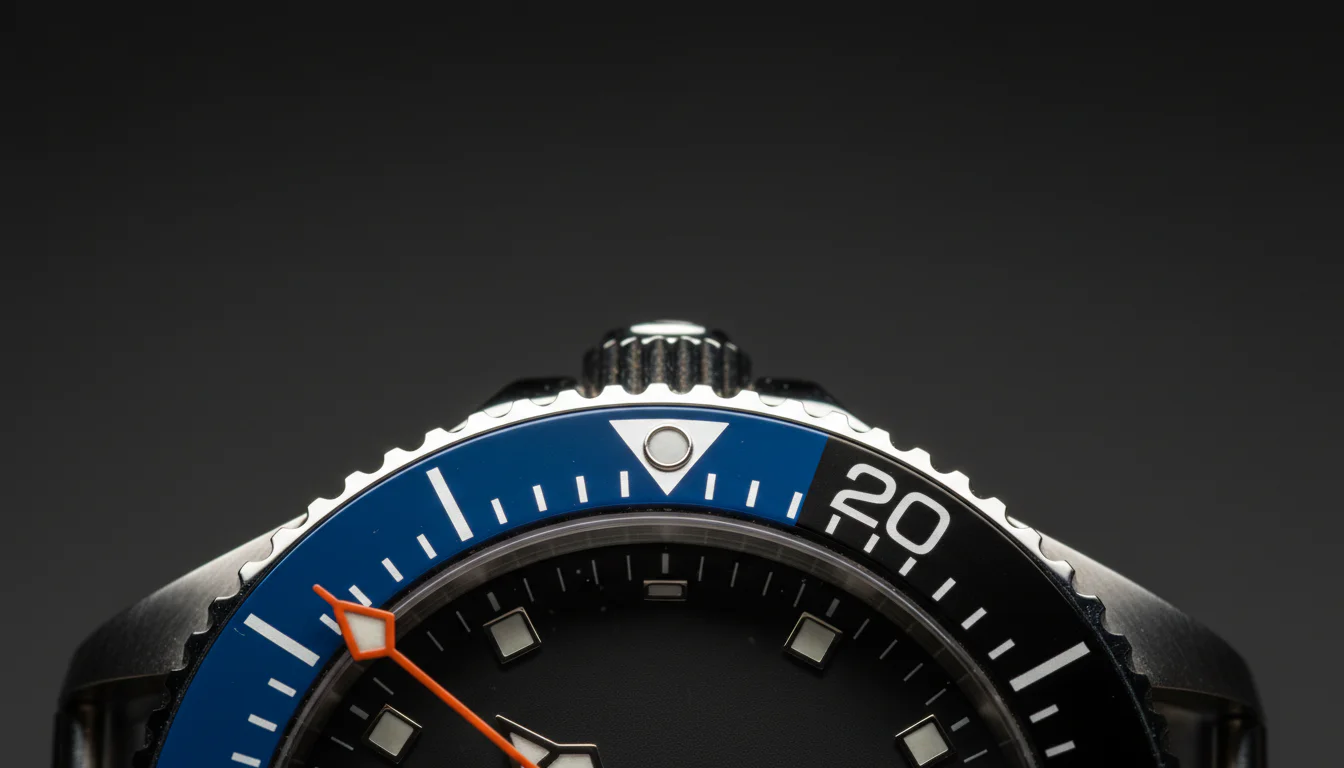 Rotating the bidirectional bezel lets a true GMT track a third time zone off the same fourth hand, no extra complication required.
On references with a bidirectional 24-hour bezel, rotating the bezel itself to a third offset gives you a third time zone read directly off the same GMT hand, no additional complication needed. This is the actual reason road warriors reach for a GMT over a simple two-time-zone watch: one hand, one bezel, three usable time references.
Bezel styles vary by brand and reference
The bicolor bezel schemes (Pepsi, Batman, Root Beer, Sprite) that collectors chase are Rolex GMT-Master design language. Other brands run a single-color 24-hour bezel, which reads exactly the same information. Where a two-tone bezel is present, the color split marks day hours against night hours at a glance, a nice touch, though a single-color bezel or a fixed ring does the same underlying job.
On the wrist and in transit
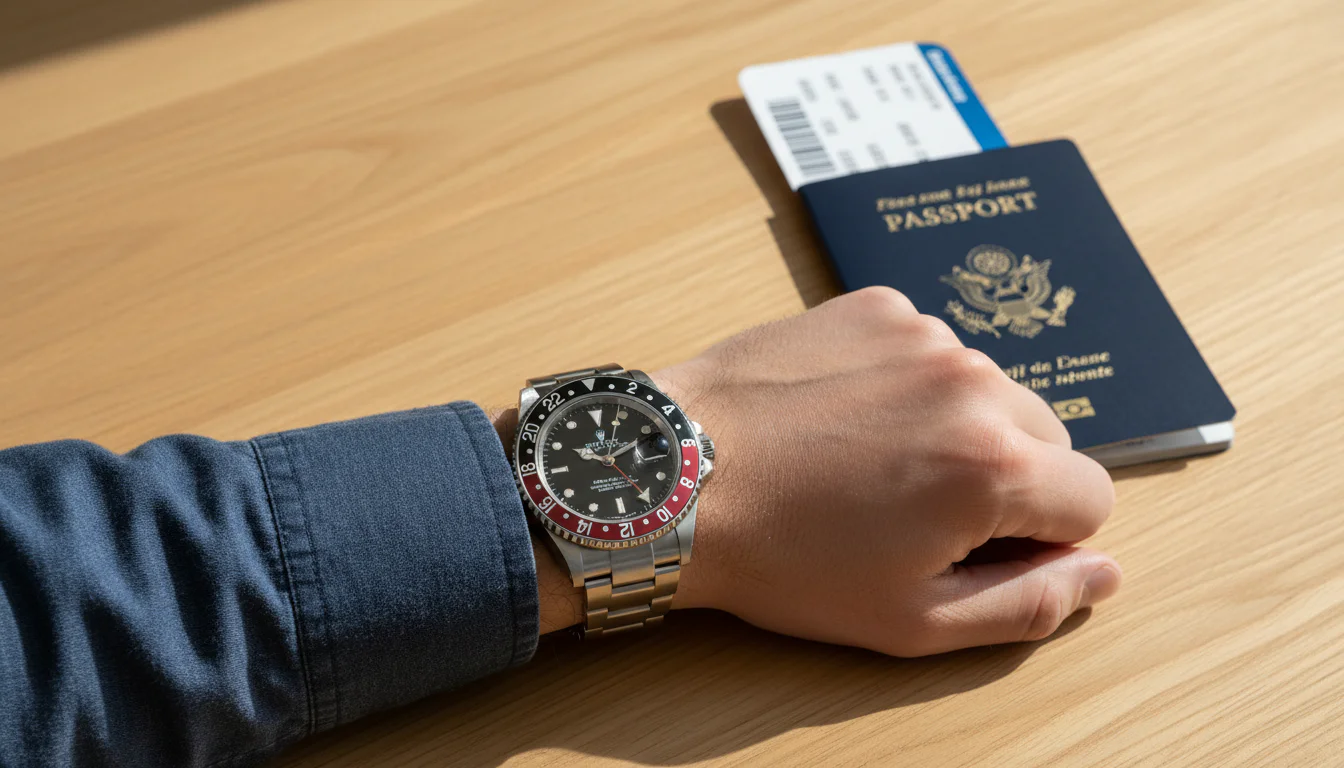 A true GMT earns its keep specifically at the moment you land: jump the local hour hand, leave everything else alone.
This complication earns its keep at one specific moment: touching down after a long flight. On a true GMT, that is a single crown adjustment. On an office GMT or a plain two-hand watch, it means resetting the entire time display and either losing track of home time or doing mental math for the rest of the trip.
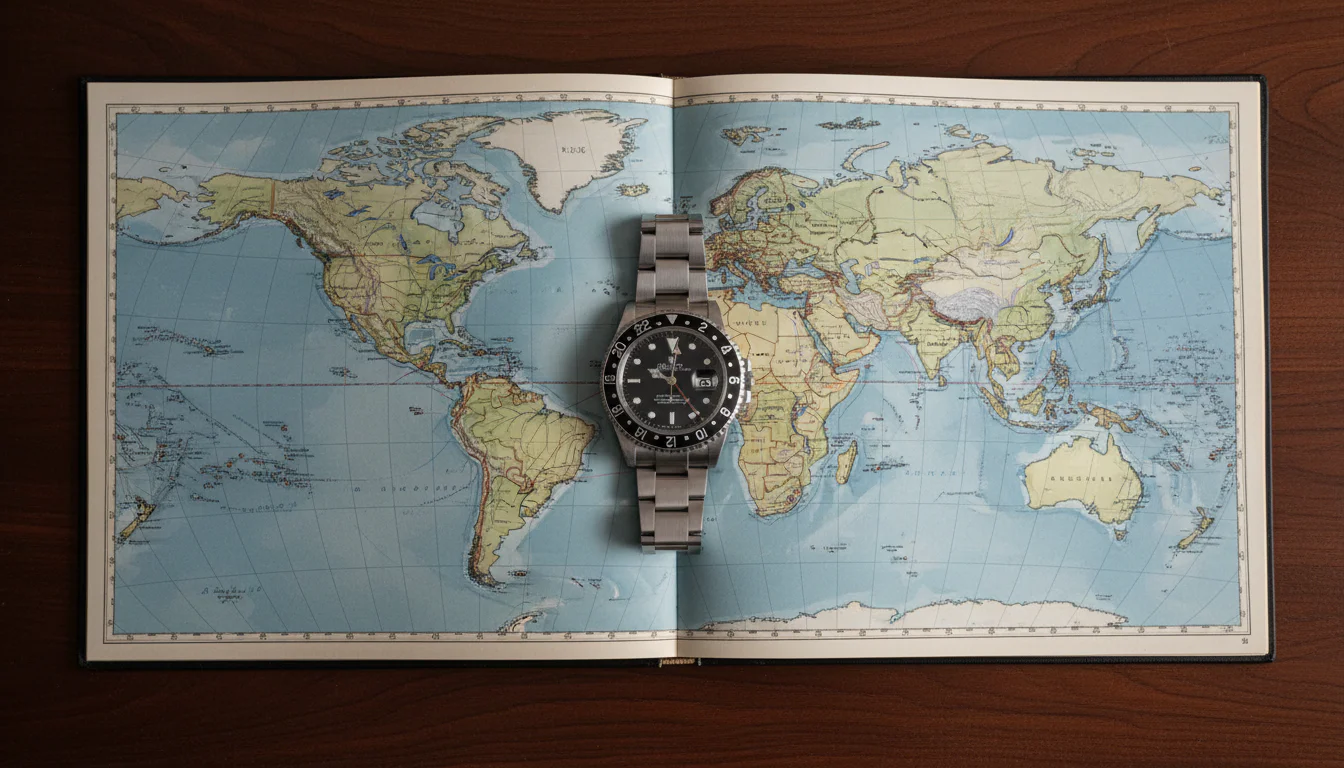 Three time zones, one hand, zero math: the actual value proposition of a true GMT movement.
FAQ
What does GMT mean on a watch?
GMT stands for Greenwich Mean Time, historically the reference time zone. On a watch, "GMT function" refers to a fourth hand that reads against a 24-hour scale, letting you track a second time zone alongside local time. That scale can appear on a rotating bezel, a fixed ring, or a printed dial track, depending on the reference.
What is the difference between a true GMT and an office GMT?
A true GMT lets you independently set the local hour hand without disturbing the GMT hand or minute hand. An office GMT locks the GMT hand to the local hour hand at a fixed offset, so you read a second time zone by rotating the bezel, or checking a fixed scale, instead.
Do I need a true GMT if I do not travel much?
No. An office GMT is a perfectly legitimate, usually less expensive way to get the same 24-hour readability. The independent hour-hand jump only matters if you actually cross time zones often enough to reset local time regularly.
Can a GMT watch show three time zones at once?
Yes, on models with a rotating 24-hour bezel. Set the bezel to a third zone's offset and the same GMT hand reads that third zone directly, in addition to local time on the main hands and the reference zone the bezel was originally set to.
Does the bezel color affect how the GMT function works?
No. Two-tone bezels like Pepsi or Batman mark day versus night hours at a glance, a Rolex GMT-Master signature. A single-color bezel or a fixed 24-hour ring reads the same underlying second time zone.
Related reading
For how the GMT-Master II's specific references and pricing break down, see Submariner vs GMT-Master II: Choosing Your First Rolex Sports Watch. For the broader case for adding a travel watch to a small collection, read Building a Five-Watch Collection in 2026: A Working Dealer's Blueprint. And for how Rolex's own accuracy certification applies to GMT calibers, see What Is a Chronometer? COSC Certification and the New 2026 Standard, Explained.