Five watches is the number where a collection stops being a pile of purchases and starts being an actual system. Fewer than that and you are usually still figuring out what you like. More than that and duplicates start creeping in, two watches quietly doing the same job. Five, built right, covers every real situation a watch needs to handle.
This post includes AI-generated images built from real reference photography of the watches discussed, verified by our team for accuracy before publishing.
The short answer
A well-built five-watch collection covers five distinct jobs: a dive or tool watch for anything active, a dress watch for formal wear, a GMT or pilot watch for travel and daily versatility, a chronograph for the mechanical showpiece, and an accessible everyday watch you do not think twice about wearing. Build in that order, prioritizing function over brand name, and the collection will actually get worn instead of sitting in a box.
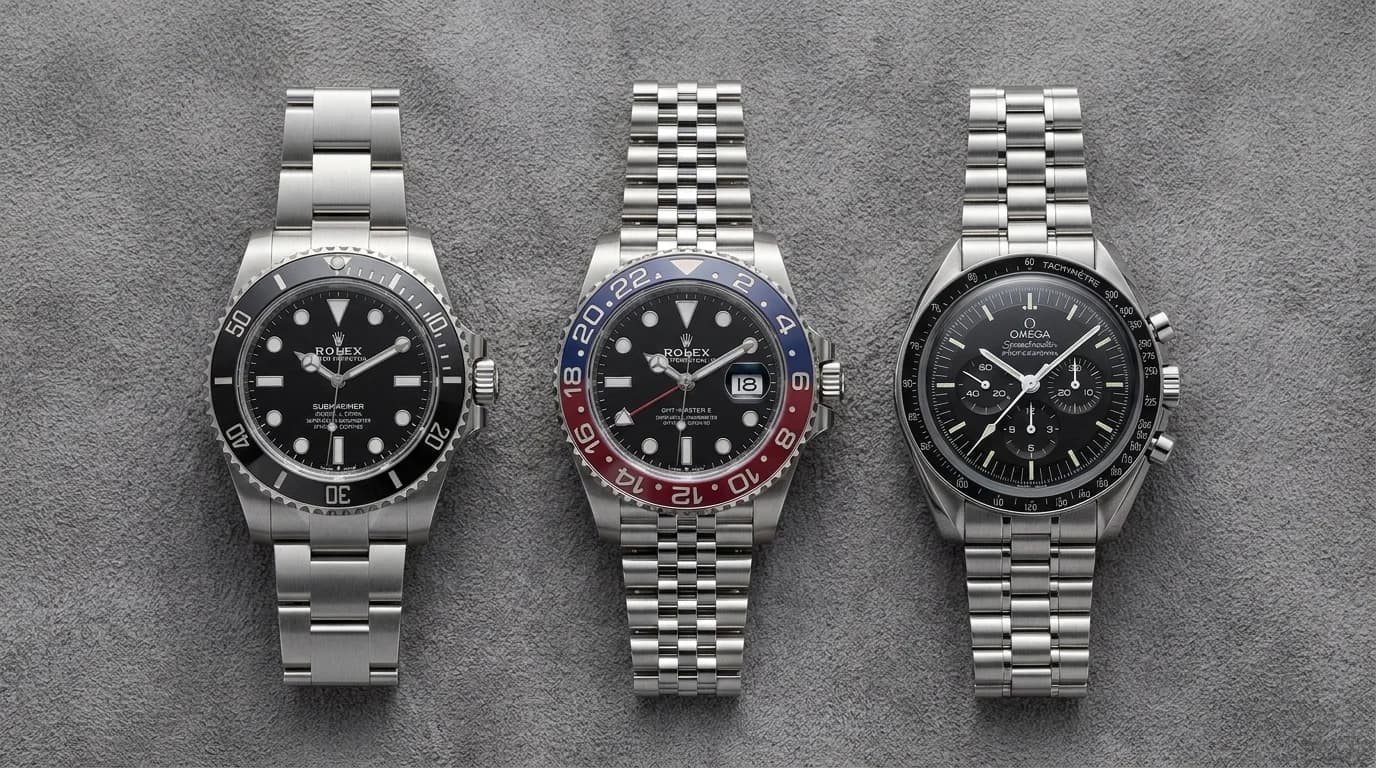
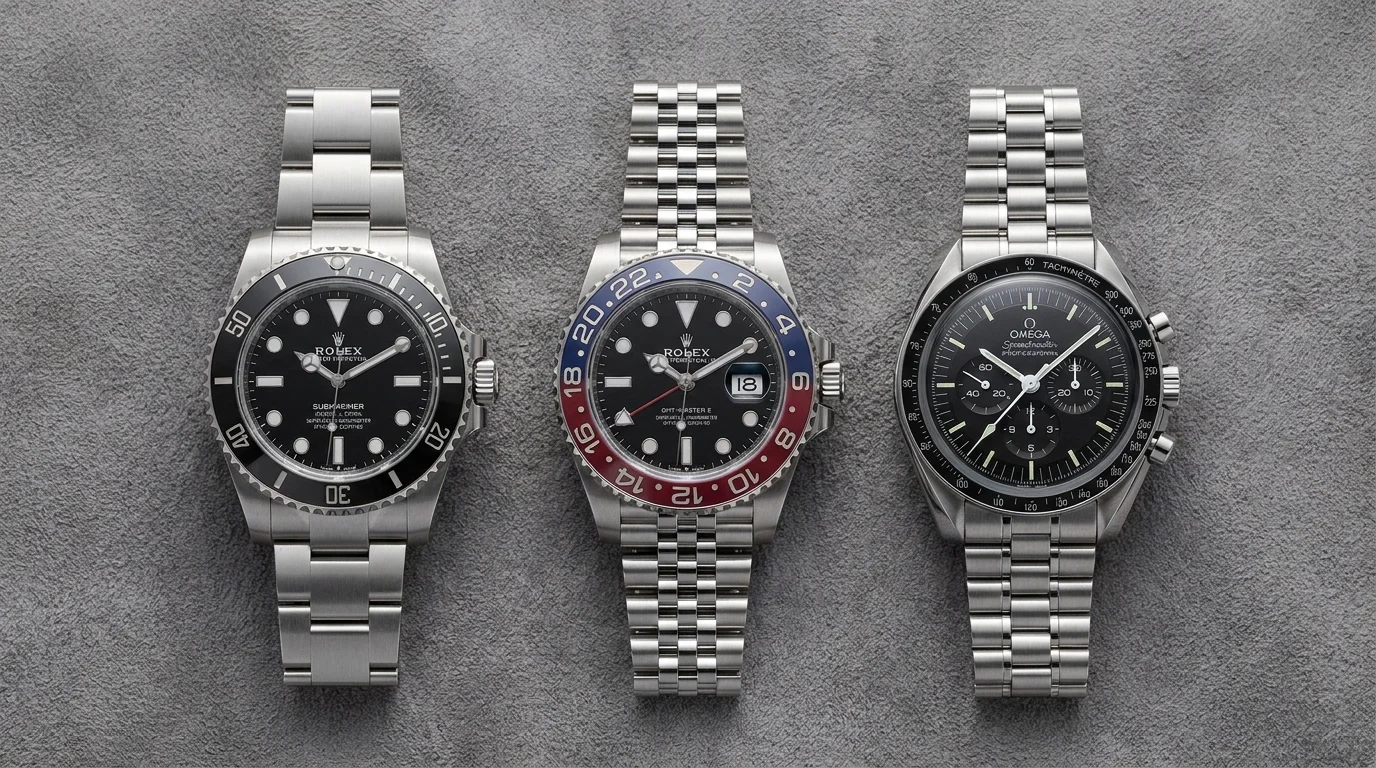 Three of the five jobs pictured together: dive, GMT, and chronograph. Dress and everyday round out the blueprint below.
Watch one: the dive watch
The dive watch is the collection's workhorse. It survives water, knocks, and the gym, which means it is the watch you reach for by default and the one that teaches you to stop babying a mechanical watch.
Rolex Submariner 124060: The benchmark. 41mm, Caliber 3235, 300m water resistance, and a reference that holds value better than almost anything else in the category. Pre-owned prices run $10,000 to $13,000 depending on condition.
Tudor Pelagos 39: A titanium alternative from Rolex's sister brand at a fraction of the cost. 39mm, in-house Caliber MT5400, 200m water resistance, and roughly $3,800 to $4,200 pre-owned.
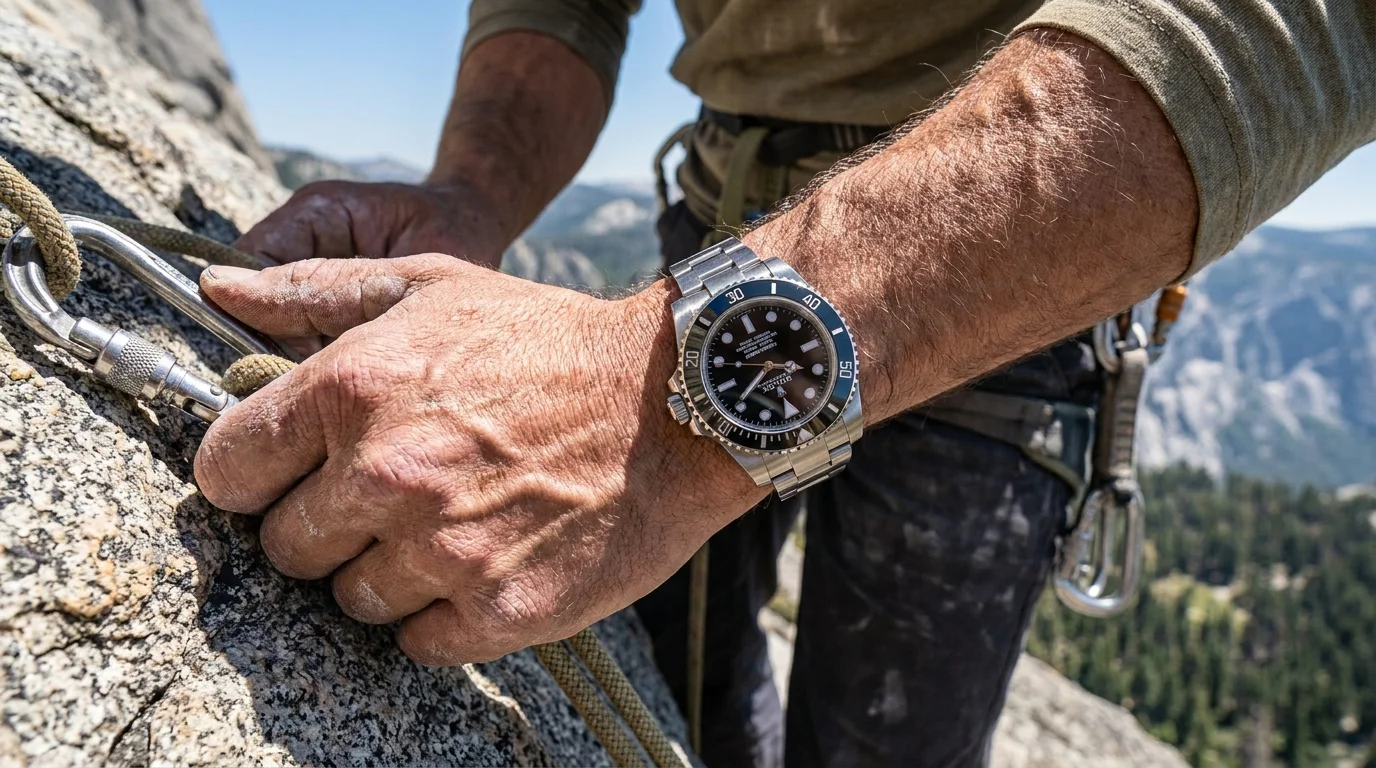 A dive watch is meant to take a hit. That durability is exactly what makes it the watch you actually wear the most.
Watch two: the dress watch
The dress watch is the opposite job: it disappears under a cuff instead of standing out on a wrist. Thin, quiet, and correct for anything formal.
Jaeger-LeCoultre Master Ultra Thin: 39mm, Caliber 899, a clean three-hand dial with no distractions. Pre-owned runs $6,000 to $8,000.
Cartier Tank: The other obvious answer, and arguably the more recognizable silhouette of the two. A rectangular case that has barely changed since 1917, which is exactly the point.
Either reference does the same job: formal wear where a chunky sports watch would look out of place.
Watch three: the GMT or pilot watch
This is the daily-driver slot, built to handle a second time zone and enough wrist presence to wear with anything from a suit to a t-shirt.
Rolex GMT-Master II 126710BLRO: 40mm, Caliber 3285, an independently adjustable local hour hand that makes it a genuine travel tool, not just a two-tone bezel for looks. Pre-owned runs $16,000 to $20,000 depending on the "Pepsi" bezel demand cycle.
IWC Big Pilot: For buyers who want the tool-watch look without the GMT function, the Big Pilot's 46mm case and oversized crown read unmistakably as an instrument, not jewelry.
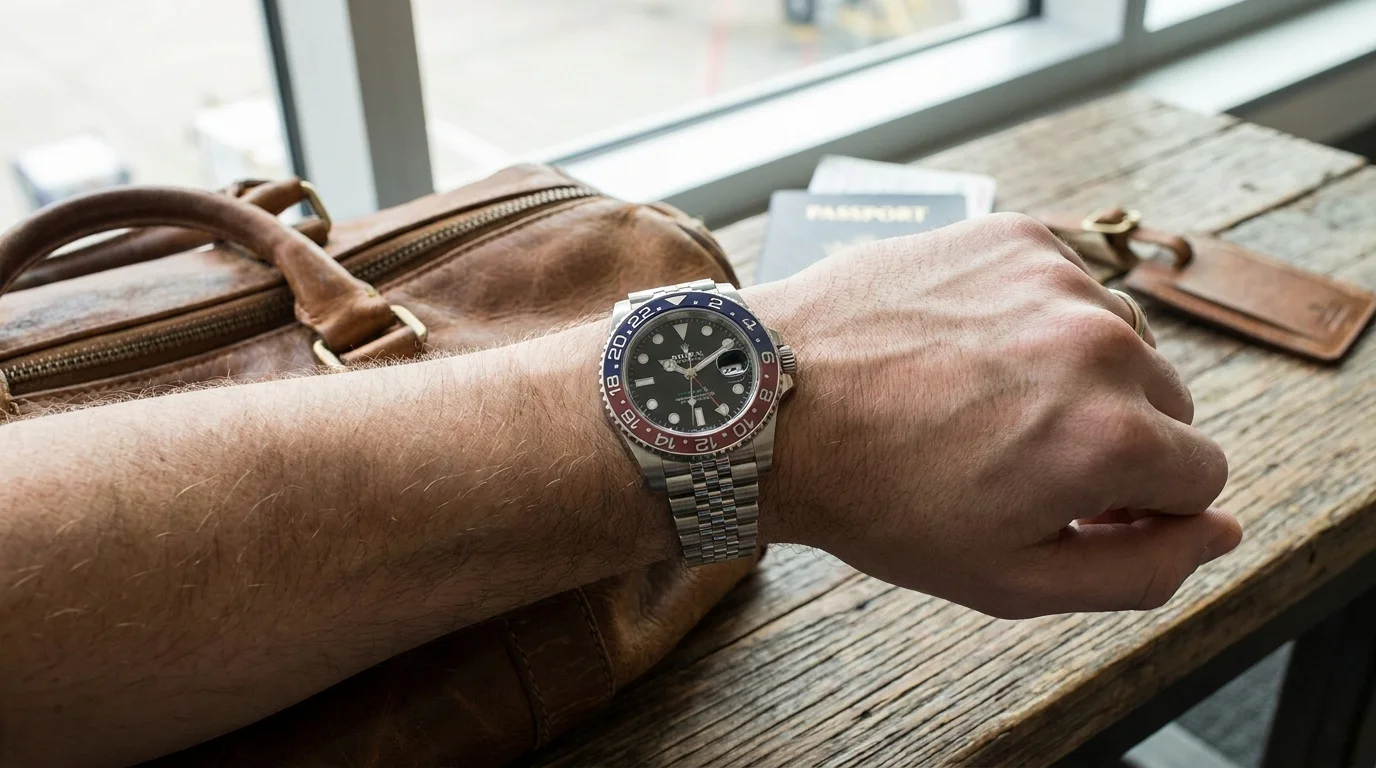 The GMT earns its slot through function, not looks. A second time zone hand you can actually set independently changes how you use the watch.
Watch four: the chronograph
The chronograph is the collection's mechanical showpiece, the watch you put on when you want to talk about what is happening under the dial.
Omega Speedmaster Professional: The manual-wind Moonwatch, Caliber 3861, largely unchanged in spirit since it went to the moon in 1969. Pre-owned runs $5,500 to $7,000.
Zenith Chronomaster Sport: For buyers who want an automatic chronograph with genuine horological pedigree, the El Primero 3600 times to a tenth of a second, a specification the Speedmaster cannot match.
Both are legitimate answers depending on whether manual-wind heritage or automatic high-frequency engineering matters more to you.
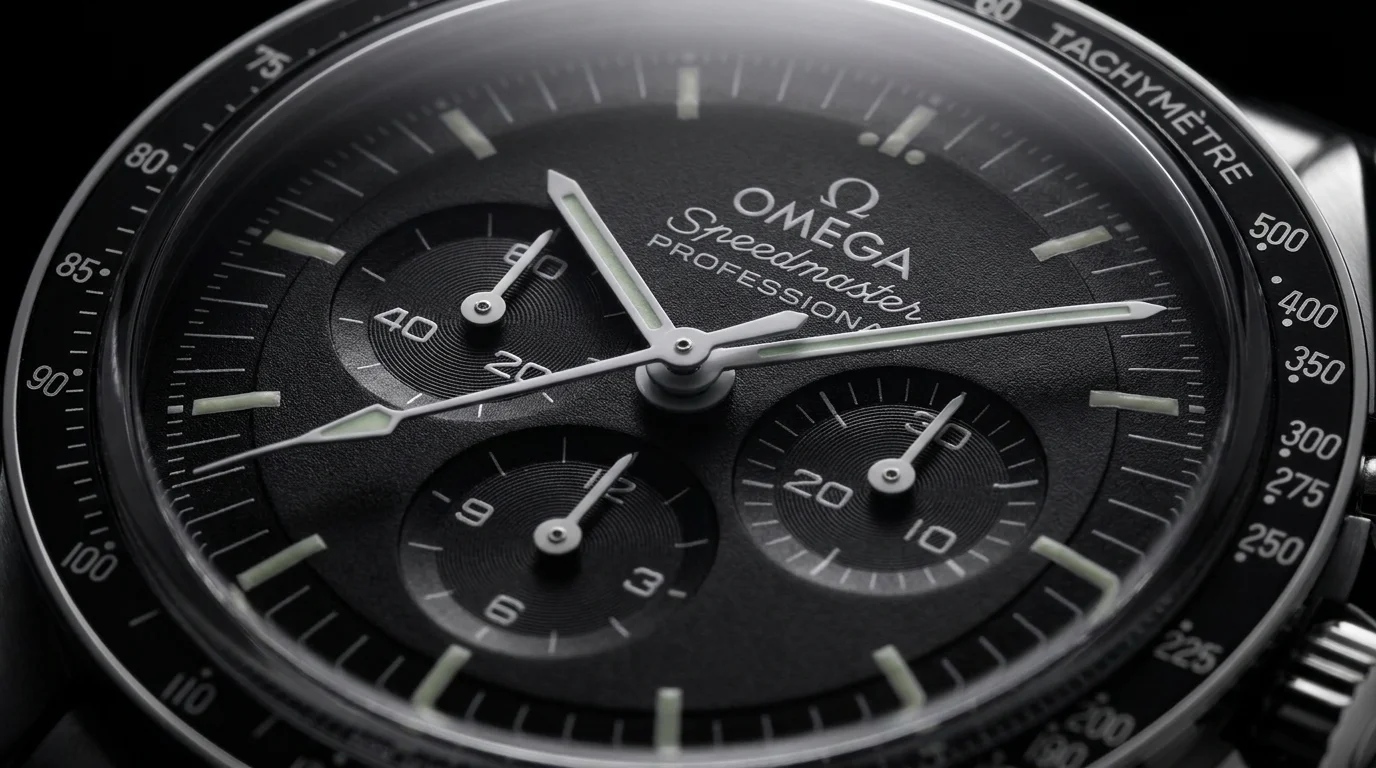 Sub-dials, a tachymeter bezel, and a story. The chronograph is the watch that gets asked about at dinner.
Watch five: the everyday watch
The fifth slot is the most personal, and the easiest to get wrong. This is not the flashiest watch in the collection. It is the one with the lowest barrier to putting on, meaning it gets worn the most days of any watch you own.
Rolex Datejust 36: The original GADA (go anywhere, do anything) watch. 36mm is small enough to disappear under a cuff and versatile enough for a boardroom or a weekend. Pre-owned runs $7,000 to $9,000.
Tudor Black Bay 58: A more casual, more affordable answer to the same brief, at 39mm with genuine dive-watch DNA but a proportions-first design that wears smaller than the spec sheet suggests.
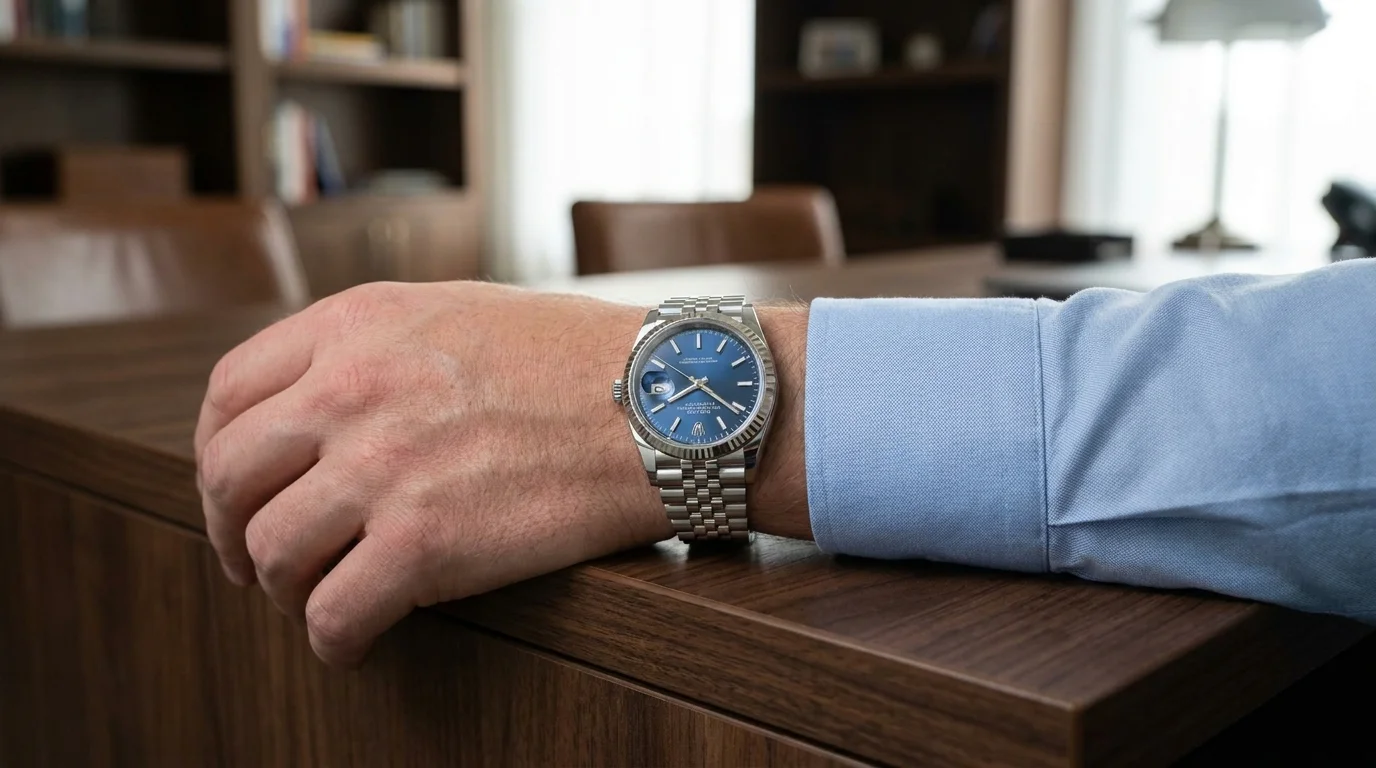 The everyday watch is the one you stop noticing you are wearing, which is exactly the point of the fifth slot.
The five-watch blueprint at a glance
| Slot | Job | Reference example | Pre-owned range |
|---|---|---|---|
| 1. Dive | Durability, daily wear | Rolex Submariner 124060 | $10,000-$13,000 |
| 2. Dress | Formal occasions | JLC Master Ultra Thin | $6,000-$8,000 |
| 3. GMT | Travel, versatility | Rolex GMT-Master II 126710BLRO | $16,000-$20,000 |
| 4. Chronograph | Mechanical showpiece | Omega Speedmaster Professional | $5,500-$7,000 |
| 5. Everyday | Lowest-friction daily wear | Rolex Datejust 36 | $7,000-$9,000 |
Why this order matters
Build the dive watch first, not last. It is the most versatile single watch you can own and will absorb the bulk of your wear while you figure out what the rest of the collection actually needs. Save the dress watch and GMT for once you understand your own habits, since those are the two slots most collectors get wrong on a first guess.
Resist buying two watches for the same job early on. A second chronograph before you own a dress watch is a common, expensive mistake that a five-slot framework is built to prevent.
FAQ
What five watches should a collection include?
A dive watch, a dress watch, a GMT or pilot watch, a chronograph, and an accessible everyday watch. Each covers a distinct real-world job, which is what keeps the collection from developing overlap.
What order should I buy a five-watch collection in?
Start with the dive watch, since it is the most versatile and durable single watch you can own. Follow with the everyday watch, then the GMT, chronograph, and dress watch as your habits become clearer.
How much does a five-watch collection cost?
A five-watch collection built around the references in this guide runs roughly $45,000 to $57,000 total pre-owned, though every slot has less expensive alternatives, like a Tudor Pelagos instead of a Submariner, that can cut that total significantly.
Do I need five different brands for a five-watch collection?
No. Function matters more than brand diversity. Several of the references above come from the same manufacturer group, and that is fine as long as each watch does a genuinely different job.
Is five watches too many or too few to collect?
Five is a practical sweet spot for most collectors: enough to cover every real occasion without redundant watches doing the same job. Some collectors stop there permanently and never feel under-equipped.
Related reading
For a deeper look at the everyday slot specifically, see The Best Everyday Watches to Buy in 2026: A Working Dealer's GADA Picks. For the dive watch slot, read The Best Dive Watches to Buy in 2026. And for the chronograph slot, see The Best Chronograph Watches to Buy in 2026.