The Short Answer
F.P. Journe builds fewer than 1,000 watches a year and does not publish an official price list, so quoted figures vary by boutique and by year. The Chronometre Bleu in tantalum retails near $38,000 and has traded on the secondary market between $190,000 and $210,000. The Chronometre a Resonance, the brand's dual-balance-wheel signature piece, retails near $101,400 in rose gold, with pre-owned asking prices commonly running from $150,000 to $300,000 depending on metal and condition. The Astronomic Souveraine grand complication is priced on request, and launched at CHF 885,000 before tax.
This guide walks through five current models with real reference points: what each one actually does mechanically, what it costs, and where it sits relative to the others.
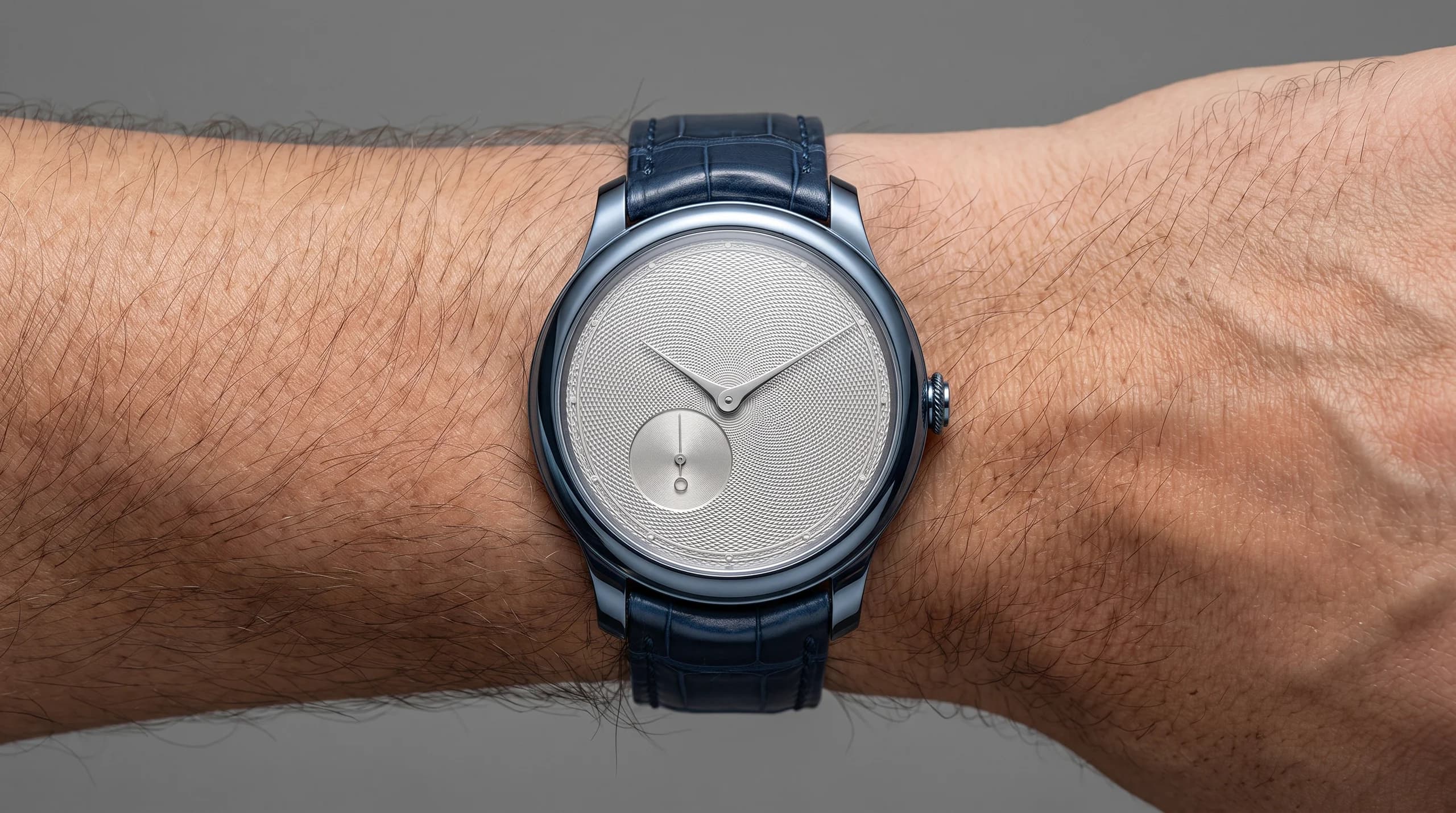
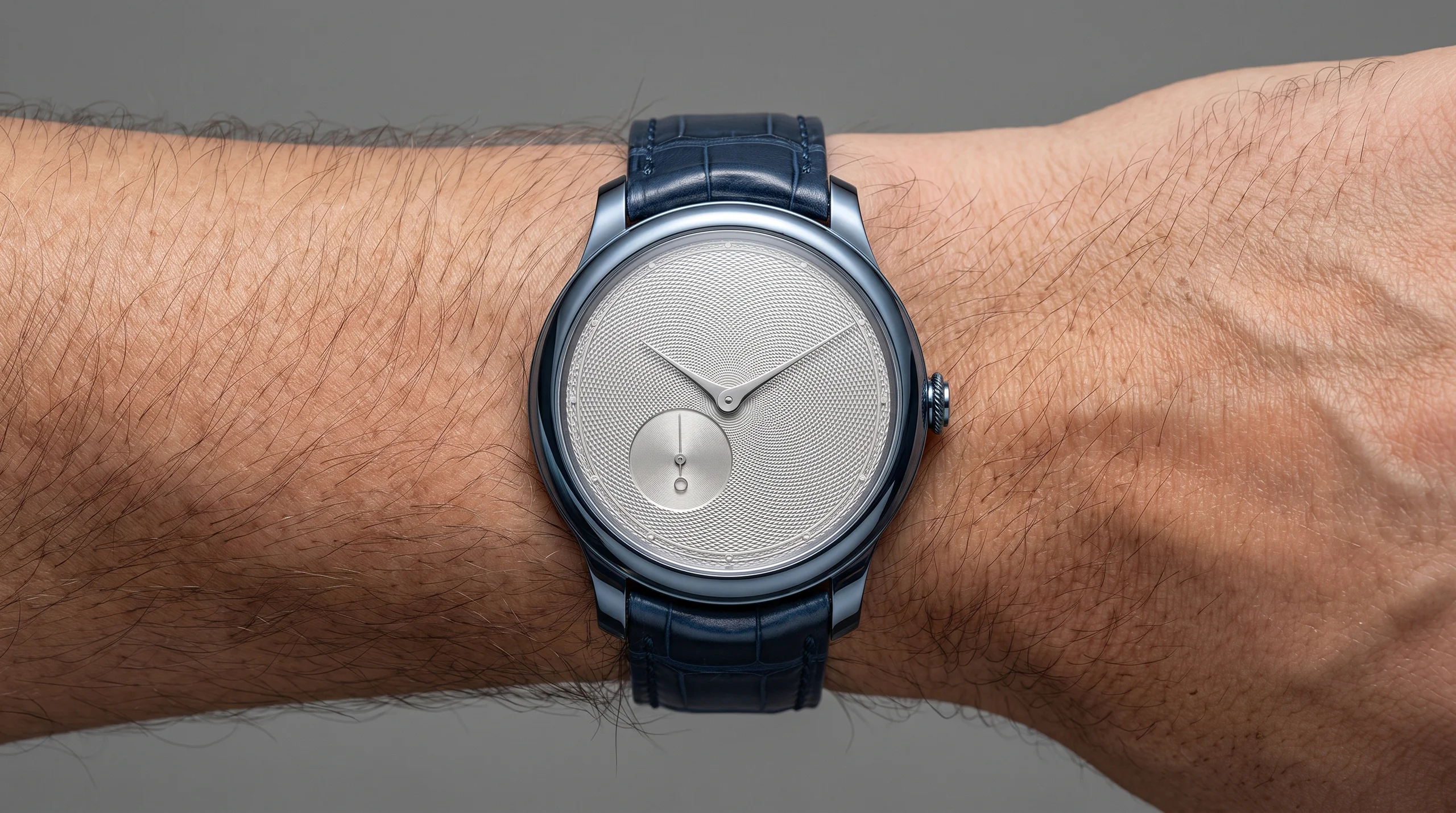 The Chronometre Bleu's tantalum case develops its blue-grey color naturally, not through plating or coating.
The watch photos in this article were generated with AI image tools, conditioned on real reference photography of F.P. Journe's current collection so the case shapes and dial layouts are accurate to the real watches.
Why F.P. Journe Trades Differently Than Almost Any Other Brand
Francois-Paul Journe founded his eponymous brand in 1999 after two decades building complicated movements for other watchmakers and restoring antique clocks. Every Journe movement uses solid 18k gold for the mainplate and bridges instead of brass, a material choice almost no other manufacturer bothers with because gold is harder to finish and far more expensive to waste.
Because Journe does not publish list prices the way a public company like Richemont does for its brands, every dollar figure below should be read as a range drawn from secondary-market trackers and dealer listings, not an official price. Boutique allocation and currency also move the number by market.
Journe's Own Motto
Every Journe dial carries the phrase "Invenit et Fecit," Latin for "invented and made it." It is not marketing filler. Journe designs and builds his own escapements and complications rather than licensing or adapting existing ones, which is unusual even among independent watchmakers.
Chronometre Bleu: The Entry Point
The Chronometre Bleu is a 39mm time-only watch in tantalum, a dense blue-grey metal that Journe was among the first watchmakers to case a watch in. The caliber 1304 inside is hand-wound with a roughly 40-hour reserve.
Chronometre Bleu Pricing
Retail runs near $38,000, one of the more accessible entry points into the brand on paper. Tiny production against heavy demand has pushed the secondary market to roughly $190,000 to $210,000, one of the widest retail-to-resale gaps of any watch covered on this site.
Chronometre a Resonance: The Signature Complication
The Chronometre a Resonance is the model most serious collectors point to when they explain why Journe matters. It runs two completely independent movements side by side inside one case, each with its own balance wheel, mainspring, and escapement, tuned close enough in frequency that they synchronize with each other through resonance, a physical effect Journe borrowed from 18th-century clockmaking and adapted for the wrist.
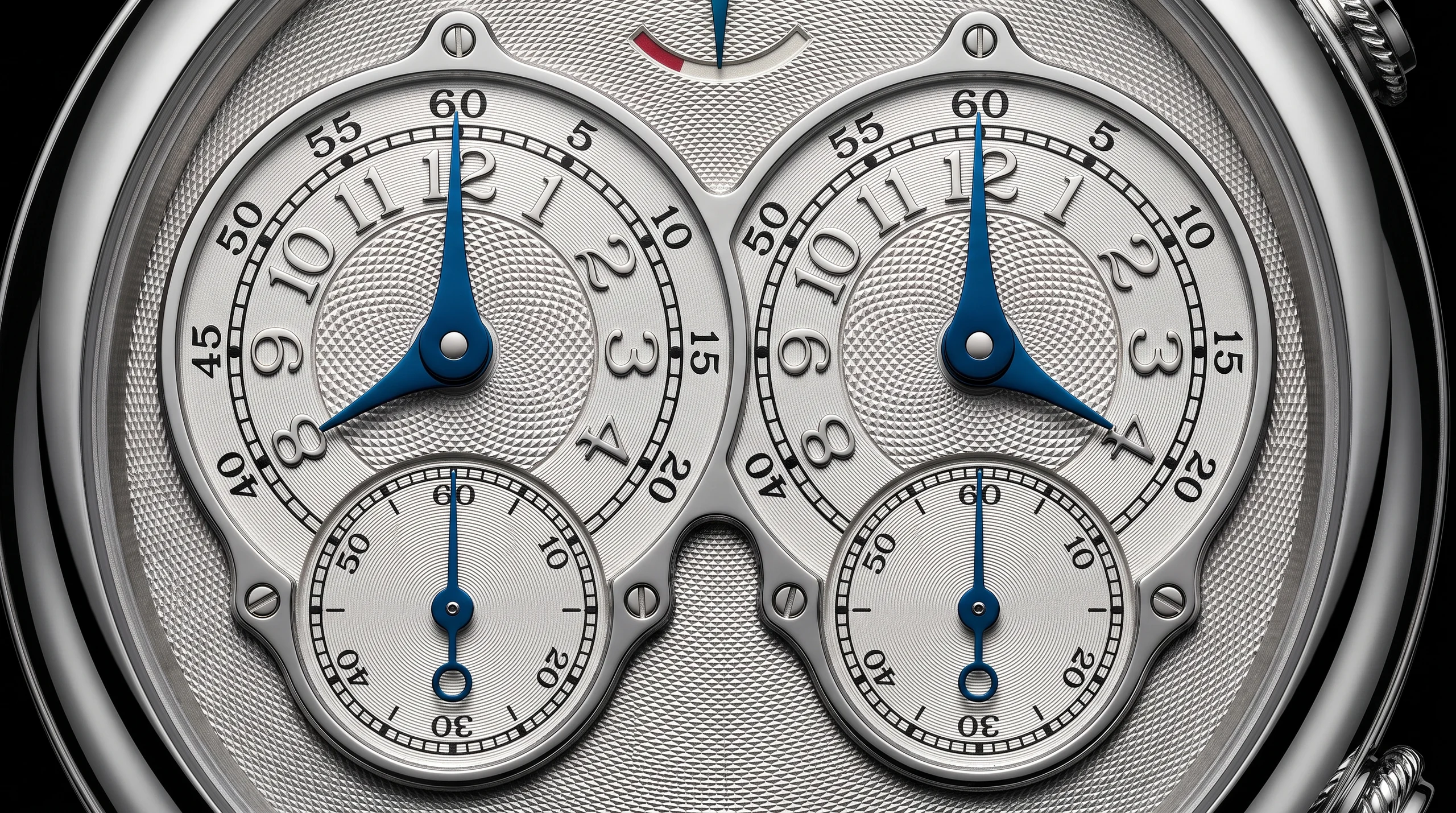 The two subdials are not decorative twins. Each one is driven by its own separate balance wheel and escapement inside the same case.
How the Caliber 1520 Actually Synchronizes
Two mechanical oscillators placed close together and tuned to nearly the same rate will gradually pull each other into sync, the same physical principle behind two pendulum clocks on a shared wall eventually ticking together. Journe's caliber 1520 puts two balance wheels close enough, on a shared platform, for that resonance effect to measurably improve the timekeeping of both.
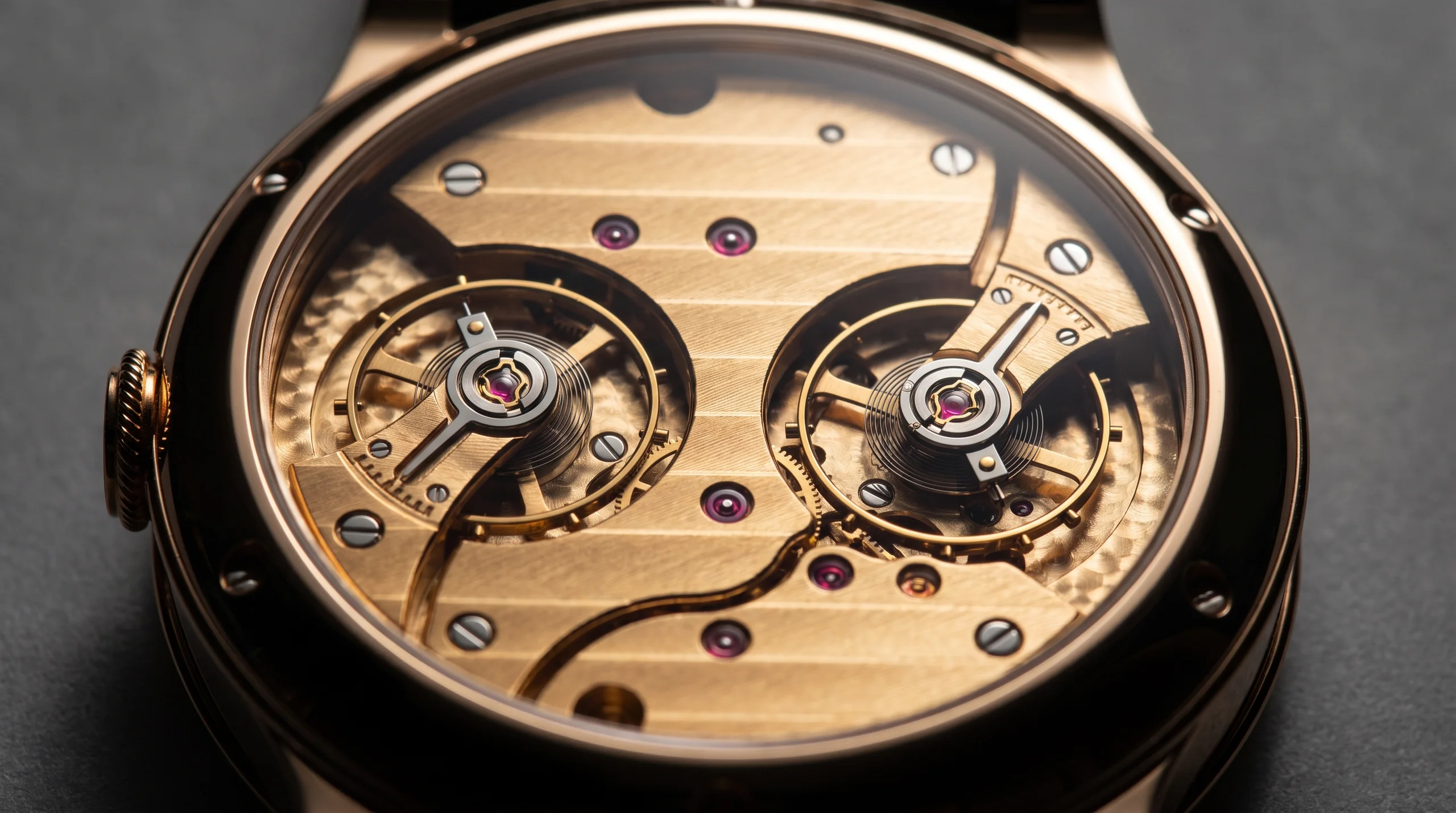 Building two full, independent movements into one case, rather than one movement driving two displays, is what makes the Resonance genuinely difficult to produce and copy.
Chronometre a Resonance Pricing
Current retail runs near $101,400 in rose gold, with pre-owned asking prices commonly running from $150,000 to $300,000 depending on case metal and condition. At the extreme end, an early souscription-series Resonance, numbered 007, sold for $13,922,000 at Phillips in New York in June 2026, the highest price ever paid for a watch by any independent watchmaker. That result reflects a specific historic piece, not what a current-production Resonance trades for, but it shows how far collector demand for the model can stretch.
Astronomic Souveraine: The Grand Complication
The Astronomic Souveraine is Journe's most complicated watch: a 44mm stainless steel case housing caliber 1619, a hand-wound movement built from 758 parts running 18 separate functions. Dual time zones, sidereal time, moonphase, day and night indication, sunrise and sunset times, an annual calendar with zodiac indication, and an equation of time display all live on one dial.
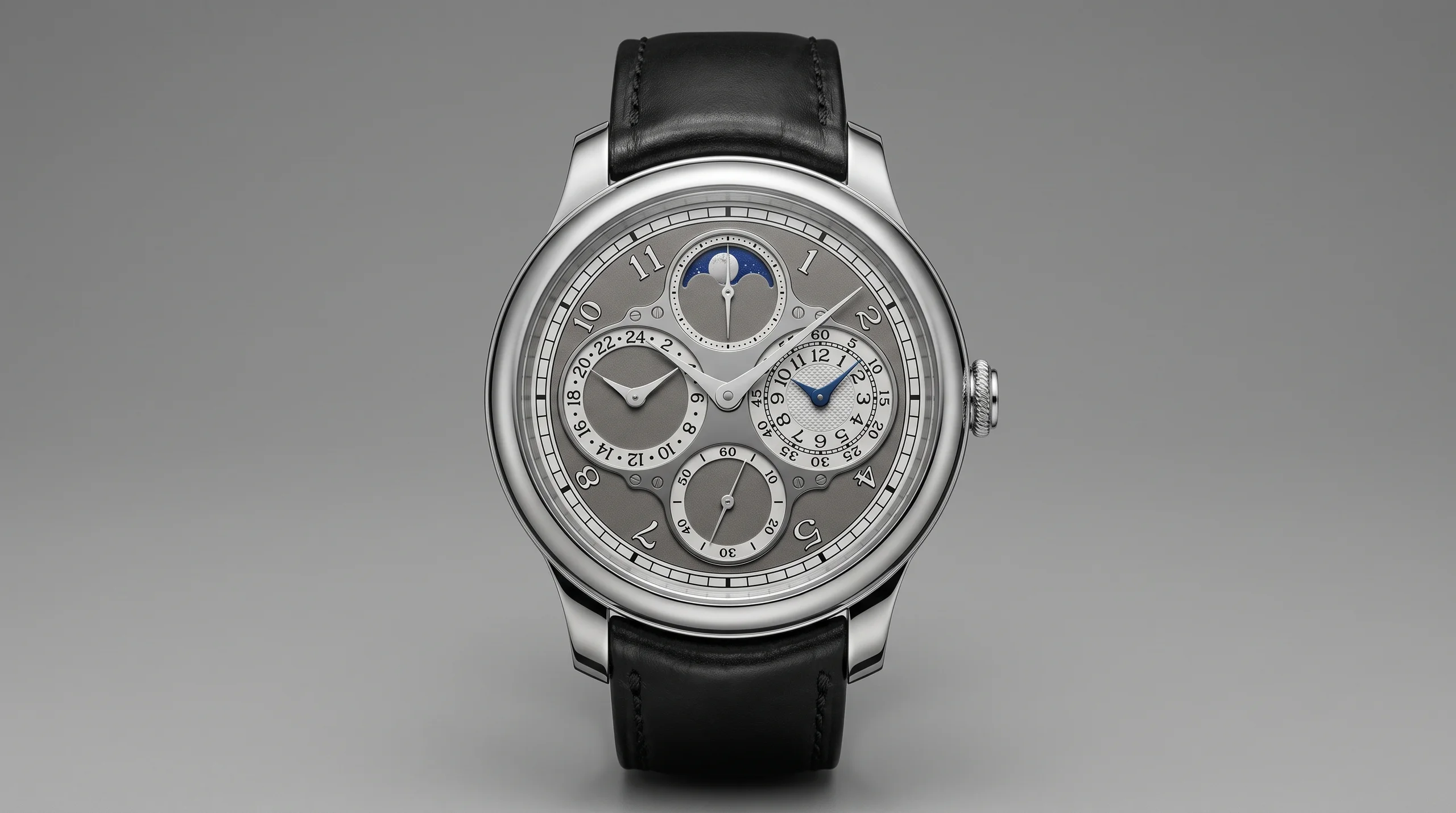 Eighteen functions on one dial is a genuinely difficult layout problem, solved here by giving each function its own clearly separated register rather than crowding a single busy face.
Astronomic Souveraine Pricing
Journe launched this watch at CHF 885,000 before tax in 2019, and it is generally quoted price on request today rather than off a public list. Treat any specific current number with caution unless it comes directly from a boutique or a dated dealer listing.
Centigraphe Sport: The Titanium Chronograph
The Centigraphe Sport brings Journe's 1/100th-of-a-second chronograph technology into a 42mm titanium case with rubber inserts, a sportier and more wearable execution than the brand's dressier Centigraphe Souverain. Caliber 1506 measures elapsed time down to a hundredth of a second across three subdials using a mechanical rocker-arm system rather than a simple stopped seconds hand.
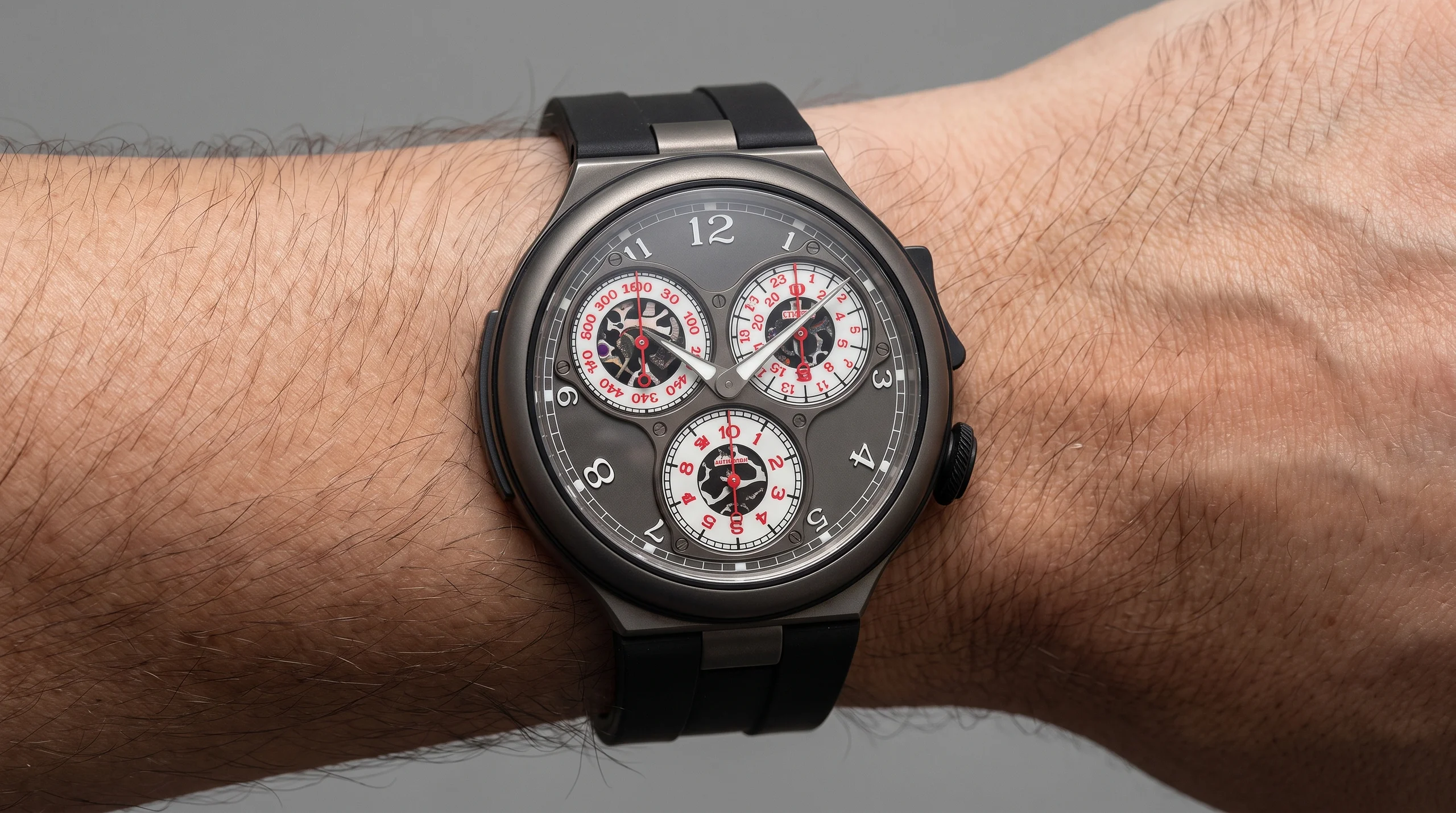 A hundredth-of-a-second reading on a mechanical chronograph is a genuinely hard problem. Most mechanical chronographs measure to the nearest fifth or eighth of a second at best.
Centigraphe Pricing
Broader Centigraphe Souverain-family tracking places retail loosely around $70,000, with wide variation by case metal, and secondary asking prices commonly landing between $55,000 and $120,000.
Elegante: The Everyday Journe
The Elegante is Journe's one true departure from traditional mechanics: a 40mm by 35mm titanium or Titalyt case running caliber 1210, a battery-powered movement with a motion sensor built in. After roughly 35 minutes without wrist motion, the watch stops its hands and drops into a standby mode, extending battery life to as long as 18 years on standby versus 8 to 10 years of daily wear.
Why the Elegante Divides Collectors
A battery-powered Journe is a genuinely controversial idea to some collectors who buy the brand specifically for hand-finished mechanical movements. Journe's own answer is that the Elegante's electromechanical design, with its own dedicated processor and two-rotor motor, is still an original invention built in-house, not an outsourced quartz module, and it opens the brand to buyers who want the design language without the winding routine.
The Honest Trade-Off Across the Catalog
Every model here costs meaningfully more pre-owned than its original retail price, which is unusual in a market where most luxury watches lose value the moment they leave the boutique. That premium exists because Journe caps production well below demand on purpose. The trade-off for a buyer is that finding a specific reference in a specific metal, especially the Resonance or the Astronomic Souveraine, can take years of waiting on a boutique list or paying the secondary-market premium to skip the line.
FAQ
How much does an F.P. Journe watch cost?
Prices range from roughly $18,000 for an entry Elegante to price-on-request territory above $800,000 for the Astronomic Souveraine grand complication. Most core models retail between $38,000 and $150,000, with secondary-market prices typically running well above that.
What is the F.P. Journe Chronometre a Resonance?
It is Journe's signature complication: two entirely separate movements, each with its own balance wheel and escapement, built into one case and tuned to synchronize with each other through mechanical resonance.
Why are F.P. Journe watches worth more pre-owned than retail?
Journe produces fewer than 1,000 watches a year, and demand has outpaced that number for years. Boutiques allocate pieces slowly, so many buyers pay a secondary-market premium rather than wait.
Is the F.P. Journe Elegante a real mechanical watch?
No, not in the traditional sense. The Elegante runs caliber 1210, a battery-powered electromechanical movement with a motion sensor, built in-house by Journe rather than sourced as an outside quartz module.
What does "Invenit et Fecit" mean on a Journe dial?
It is Latin for "invented and made it," Journe's stated commitment to designing and building his own movements and complications rather than licensing or adapting designs from elsewhere.