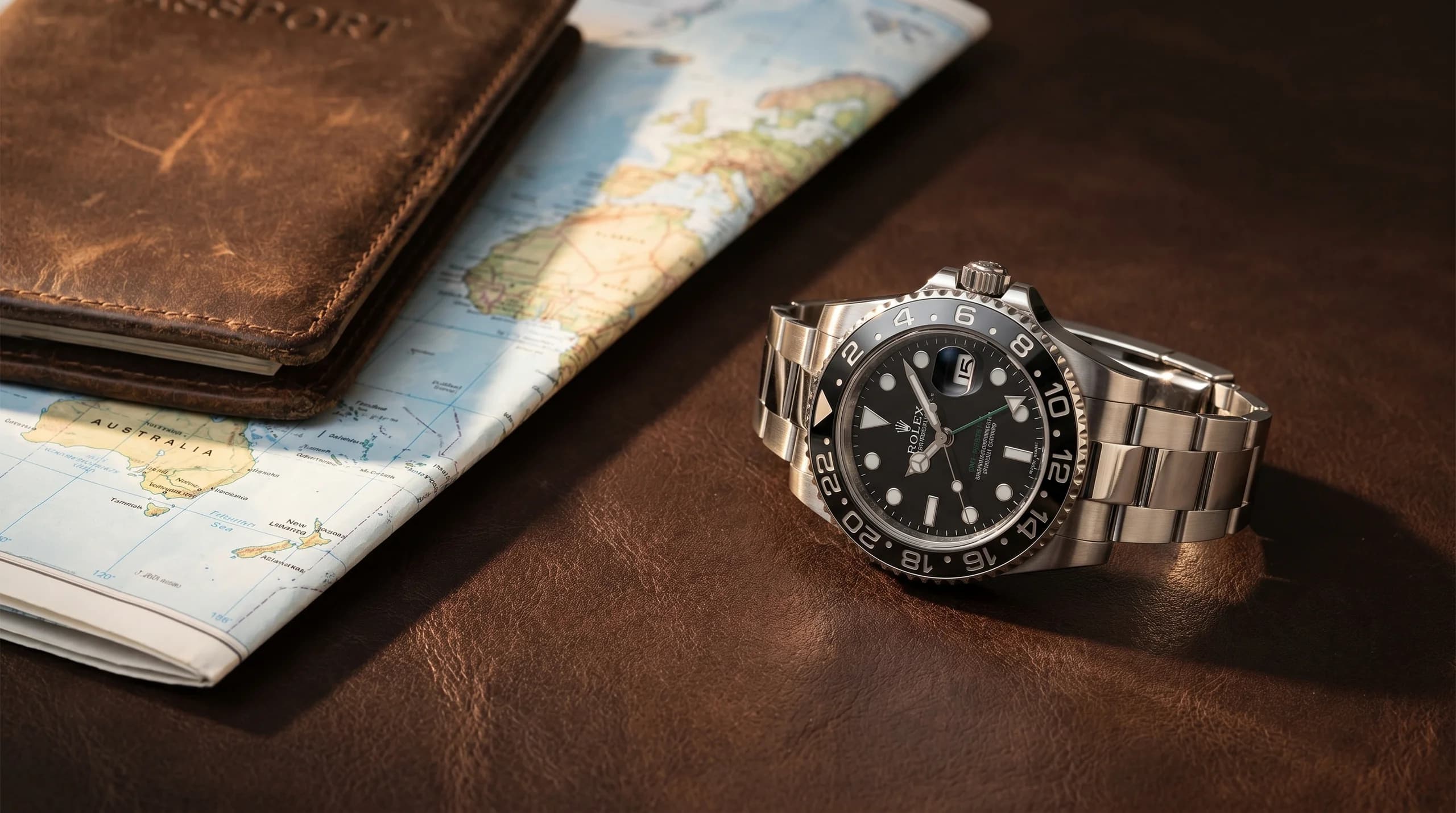
Two watches can both say GMT on the dial and work in completely opposite ways. One is built for the person stepping off a plane. The other is built for the person who never leaves their desk. The spec sheet rarely spells out which you are buying, and getting it wrong means quietly fighting your watch every time you want to read a second time zone.
The images in this post are AI-generated illustrations for editorial purposes and may not exactly represent the actual watch, its dial, or its finishing.
The short answer
A GMT watch adds a fourth hand that points to a 24-hour scale, letting you read a second time zone. The split is in which hand you can move on its own. A flyer (or traveler) GMT lets you jump the local hour hand in one-hour steps, so you reset to a new time zone in seconds while home time keeps ticking. A caller (or office) GMT keeps the main hands fixed and lets you set the 24-hour hand instead, so you track one distant zone from where you sit. Flyer if you actually travel, caller if you mostly track. And the "true GMT" label collectors throw around is a misnomer, which we will get to.
What the GMT hand actually does
Every GMT watch starts from the same idea. On top of the normal hour and minute hands reading local time, there is an extra hand, often arrow-tipped and brightly colored, that circles the dial once every 24 hours instead of every 12. Point it at a 24-hour scale, on the dial or the bezel, and it shows you a second time zone with no morning-or-night guesswork.
The difference between the two GMT types comes down to one question: which hand moves independently when you pull the crown. That single design choice decides who the watch is really for.
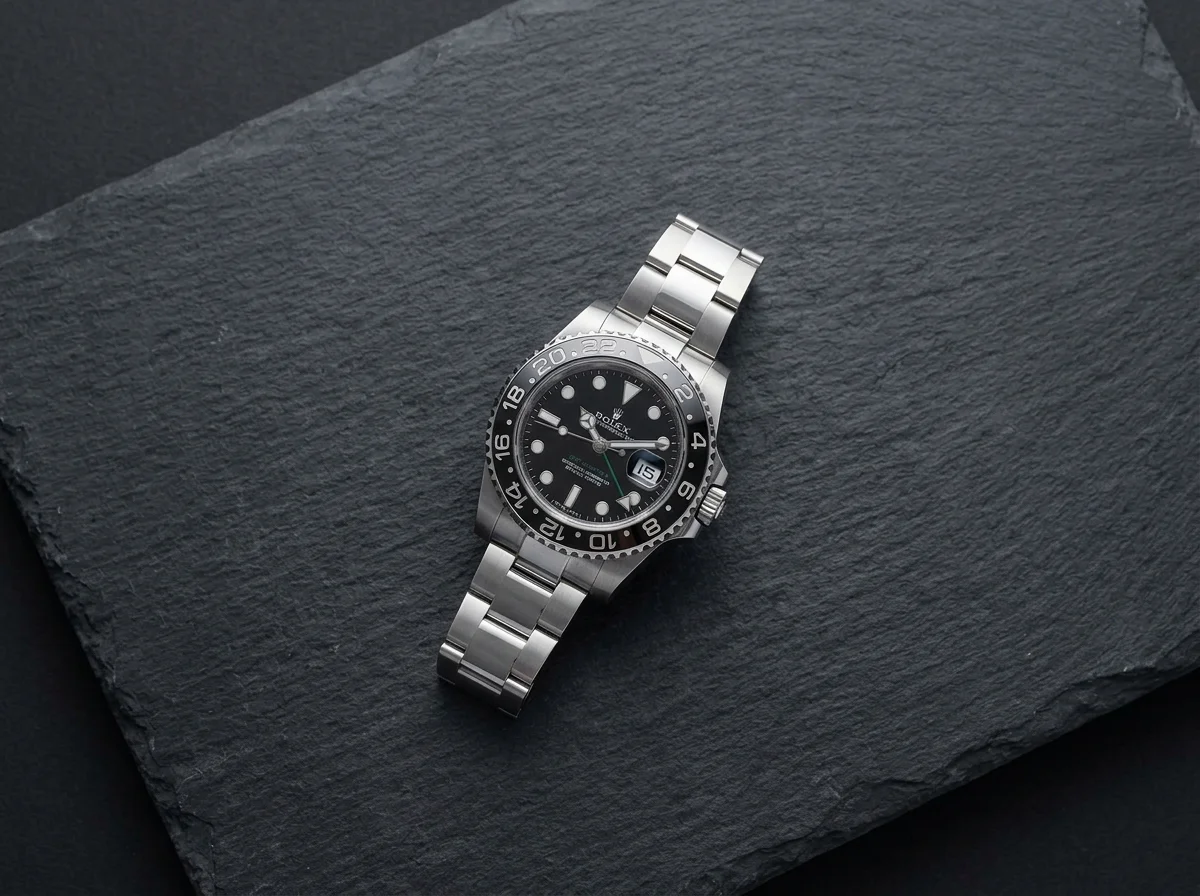 Every GMT adds a 24-hour hand. How you set it is the whole story. (AI-generated illustration.)
Flyer GMT: built for the runway
On a flyer GMT, the independently adjustable hand is the local hour hand. You set home time once on the 24-hour hand, and from then on the hour hand jumps forward or back in clean one-hour steps without stopping the seconds. Land in a new city, pull the crown, click the hour hand to local time, and you are done in seconds. The date even rolls over with it, since crossing zones can change the day.
This is the setup for people who move. Fratello, in its GMT explainer, traces it to the Rolex caliber that first gave the GMT-Master II an independent hour hand, and it is the layout you will find in Rolex, Tudor, Omega, and Grand Seiko travel watches. The mechanical complexity is higher, which is historically why flyer GMTs cost more.
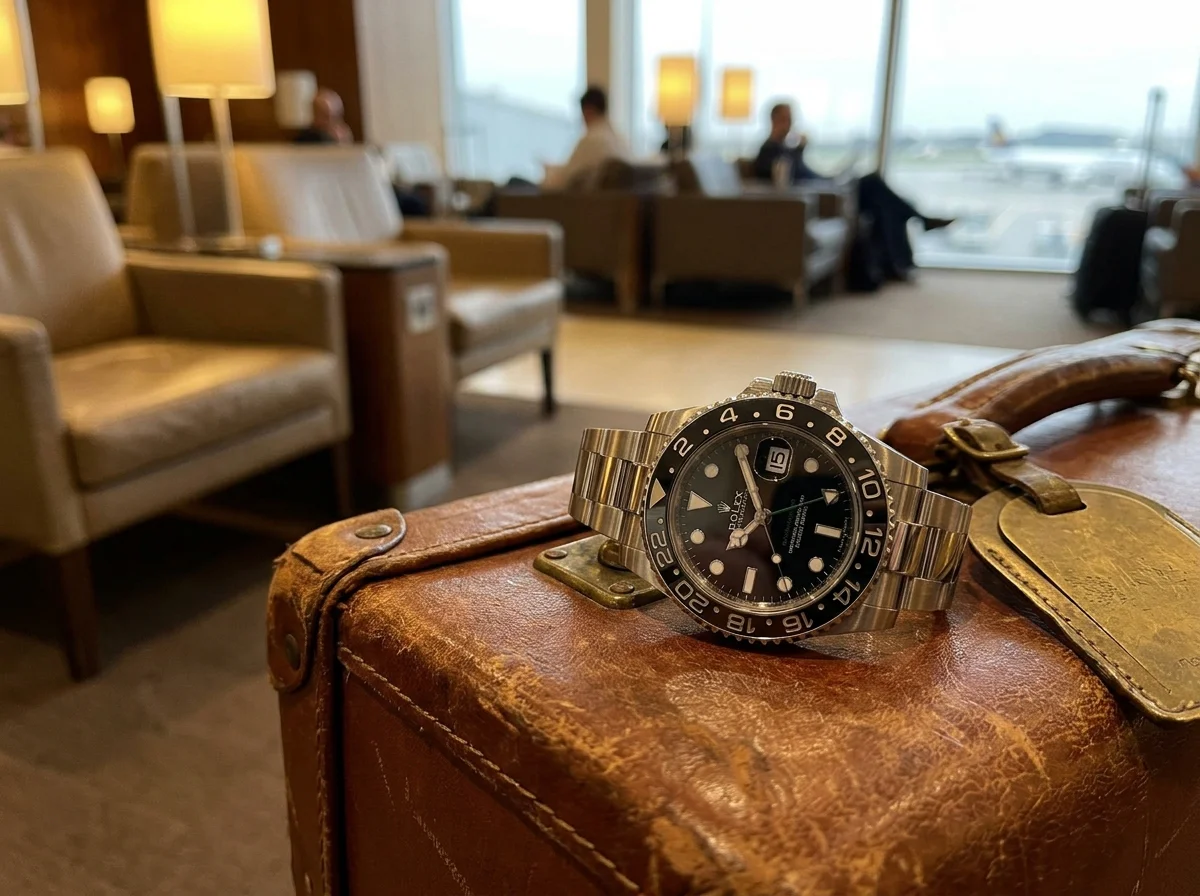 Flyer GMT: jump the local hour hand on landing, leave home time untouched. (AI-generated illustration.)
Caller GMT: built for the desk
A caller GMT flips the logic. The main hands stay locked together as a normal watch, and the hand you set independently is the 24-hour GMT hand. You set your own local time the usual way, then point the GMT hand at whatever far-off zone you need to watch. Time and Tide frames the ideal owner perfectly: someone who stays put but has colleagues or family on the other side of the world.
The trade-off is the mirror image of the flyer. Tracking that one distant zone is effortless, but if you yourself fly somewhere new, you have to reset the entire watch rather than nudge a single hand. For a desk-bound life, that almost never matters, which is why caller movements power most affordable GMTs from Seiko and the microbrand world.
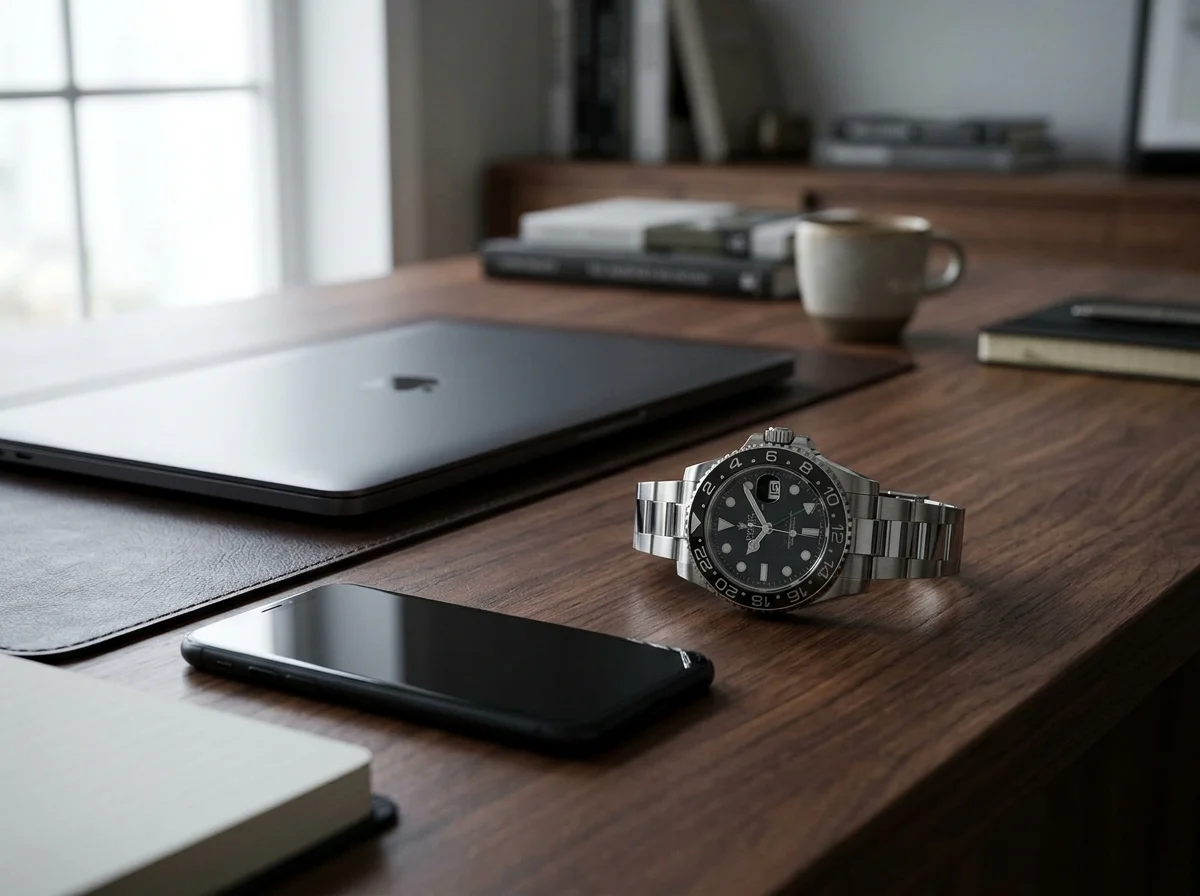 Caller GMT: set the 24-hour hand to a colleague's time zone and leave it. (AI-generated illustration.)
Here is the split in one view:
| Flyer / traveler GMT | Caller / office GMT | |
|---|---|---|
| Hand you set alone | Local hour hand jumps | 24-hour GMT hand |
| Arriving somewhere new | Click the hour hand, seconds keep running | Reset the whole watch |
| Best for | People who actually fly | Tracking one zone from home |
| Date | Flips with the hour jump | Set on its own |
| Common in | Rolex, Tudor, Omega, Grand Seiko | Seiko and many microbrands |
| Cost | Historically higher | More accessible |
The "true GMT" myth
You will hear the flyer called the "true" GMT, with the implication that callers are imposters. The history does not support it. The original Rolex GMT-Master, the ref. 6542 built for Pan Am pilots in the mid-1950s, did not have an independent hour hand at all. Its 24-hour hand was locked to the main movement, and you tracked the second zone purely by rotating the bezel.
The independently jumping hour hand did not arrive until the GMT-Master II of the early 1980s, decades later. So if "true" is meant to signal the original approach, the label is simply wrong, which is why Fratello avoids the term entirely. A caller GMT is every bit as real a GMT. It is just tuned for a different life.
 A caller is not a lesser GMT. It is a different tool for a different routine. (AI-generated illustration.)
A working dealer's read
Buy the mechanism that matches how you live, not the one a forum told you is real. If you genuinely cross time zones, the flyer earns its premium every trip, and the Rolex GMT-Master II is the benchmark. The discontinued black-bezel 116710LN is the value way into it, trading around $11,000 to $14,000 pre-owned, and Tudor delivers the same flyer mechanism for far less in the Black Bay 58 GMT, often $3,500 to $4,000. For the full reference-by-reference picture, our GMT-Master II buying guide lays out every modern and vintage option.
If you mostly sit in one city and keep tabs on one other zone, do not overpay for a flyer you will use like a caller. A good caller GMT does that job beautifully for a fraction of the money. And if travel is your reason to buy, see the GMT-Master II references in stock and start with the benchmark.