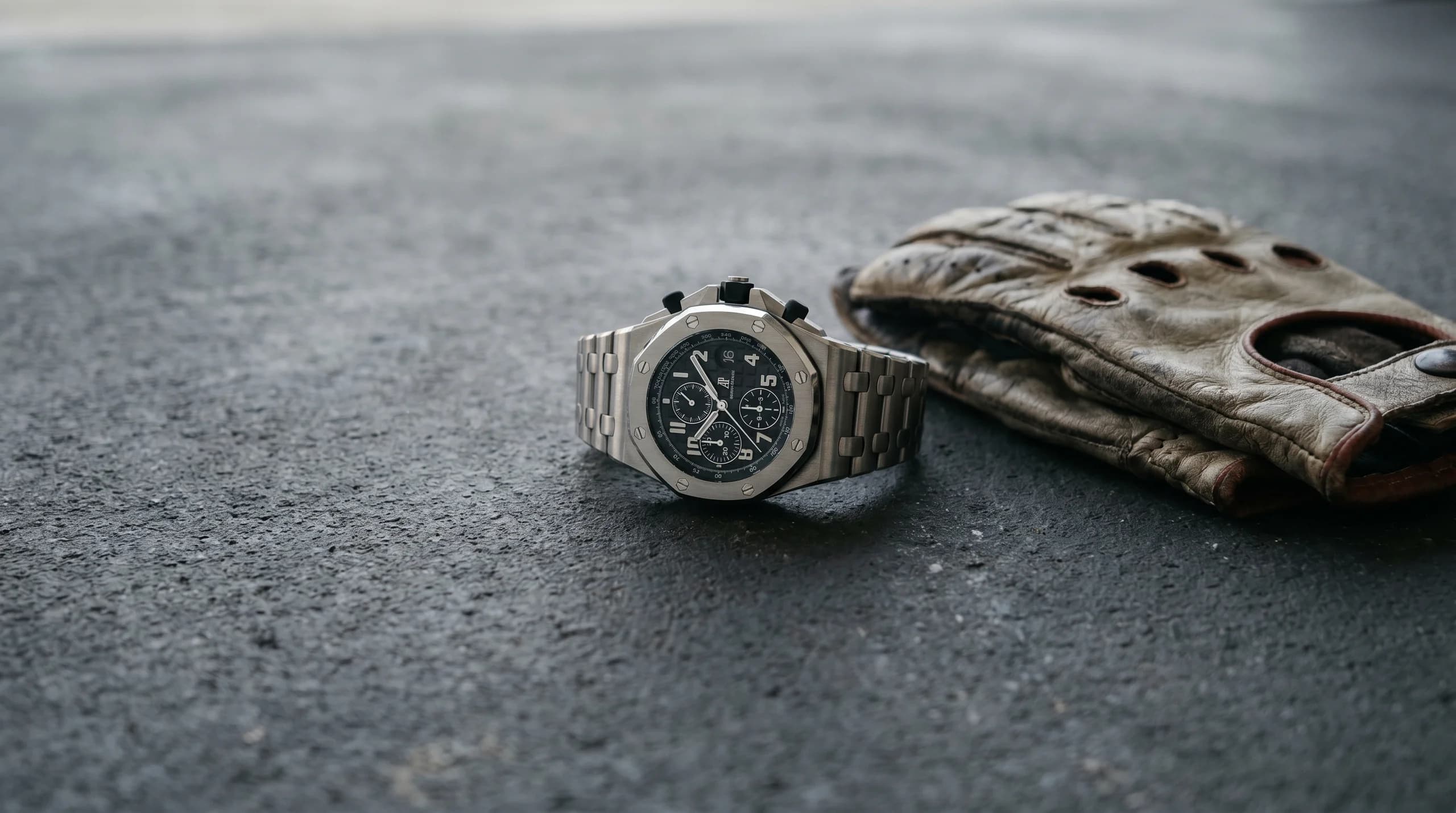
The short answer: Everyone wants the steel Audemars Piguet Royal Oak, and that demand is exactly the problem. In-production steel Royal Oaks trade 30 to 50% over retail with waitlists to match. The Royal Oak Offshore, the bigger and louder sibling once dismissed as a caricature, trades far closer to retail. It is the same brand, the same hand-finishing, and the same octagonal Genta-derived design, for a fraction of the premium. For a lot of buyers, the Offshore is the only version of this watch that actually makes financial sense.
The Royal Oak is the watch that made steel cost more than gold. It is also the watch you cannot buy at retail, cannot easily buy at all, and will pay a heavy premium to own on the secondary market.
The Offshore solves most of that. It just asks you to wear a bigger, bolder watch to get there.
The images below are AI-generated illustrations created for this article and do not represent specific watches offered for sale.
The premium problem with the standard Royal Oak
The numbers tell the story. The steel Selfwinding 15510ST carries a market value around $46,500, the Jumbo Extra-Thin 16202ST trades at $70,000 to $85,000, and the steel Chronograph 26240ST sits at $45,000 to $58,000. Royal Oak even rose 2.7% in Q1 2026, with nearly every in-production reference trading above retail.
Retail, in other words, is theoretical. We laid out why the Royal Oak is the line that holds while the rest of the catalog struggles in our look at why the Royal Oak holds and the Code 11.59 bleeds.
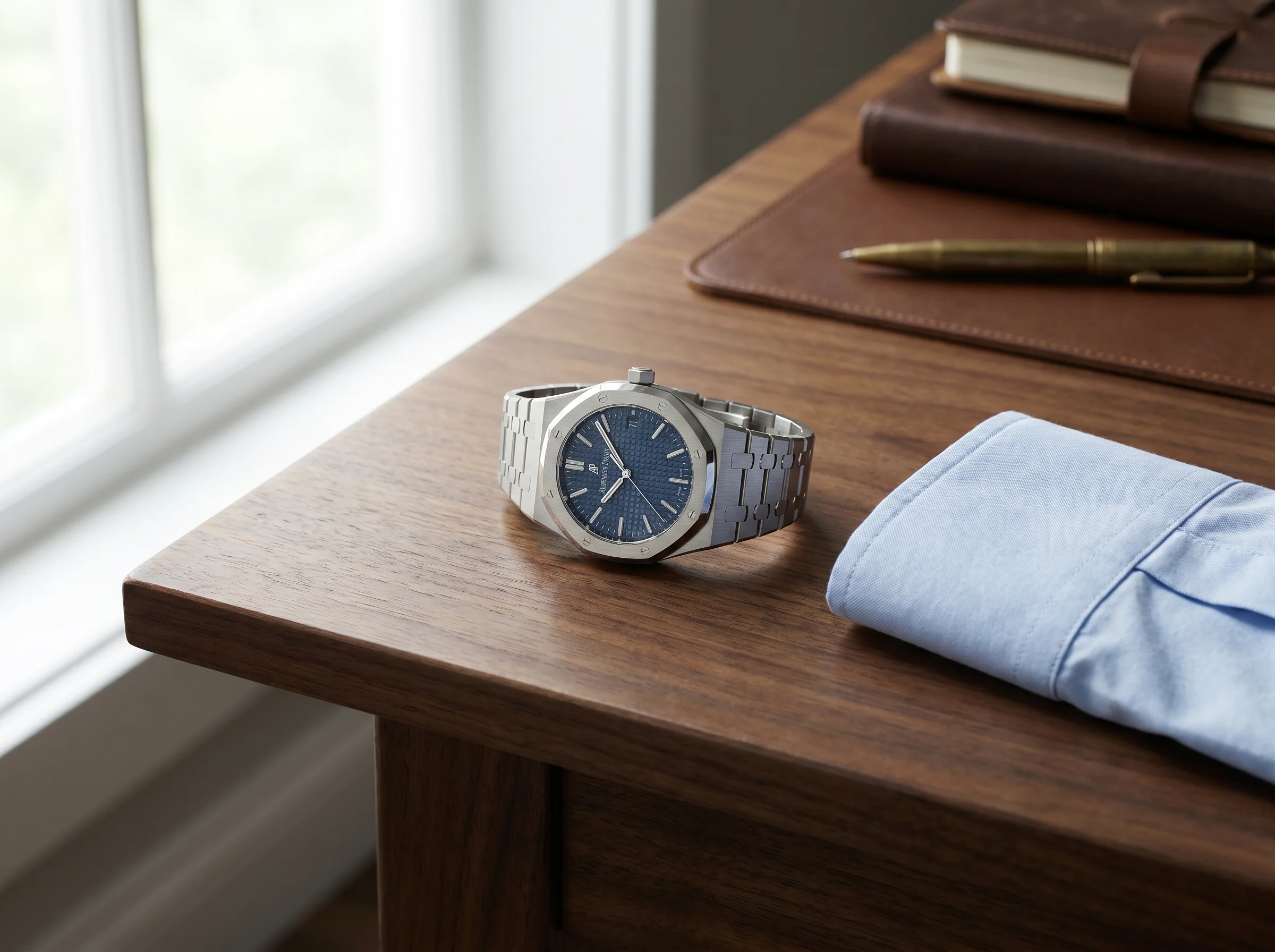 The standard steel Royal Oak is the icon, and it trades 30 to 50% over a retail price almost nobody actually pays.
The Offshore is the same AP for a lower premium
Here is the part most buyers overlook. The Offshore trades much closer to retail in steel. The collection averages around $28,000, the most popular 15710ST Diver carries a market value near $18,000, and steel chronographs land in the low-to-mid $20,000s.
That buys genuine Audemars Piguet: the same octagonal bezel with eight hexagonal screws, the same obsessive case finishing, the same brand on the dial. You are not buying a lesser watch. You are buying the version the market does not fight over.
| Standard Royal Oak | Royal Oak Offshore | |
|---|---|---|
| Launched | 1972 (Genta) | 1993 (Gueit) |
| Case size | 39-41mm | 42-44mm |
| Wears | Under a cuff, dressy | Bold, statement |
| Steel vs retail | 30-50% over | Closer to retail |
| Steel entry | ~$46,500 (15510ST) | ~$18,000-$28,000 |
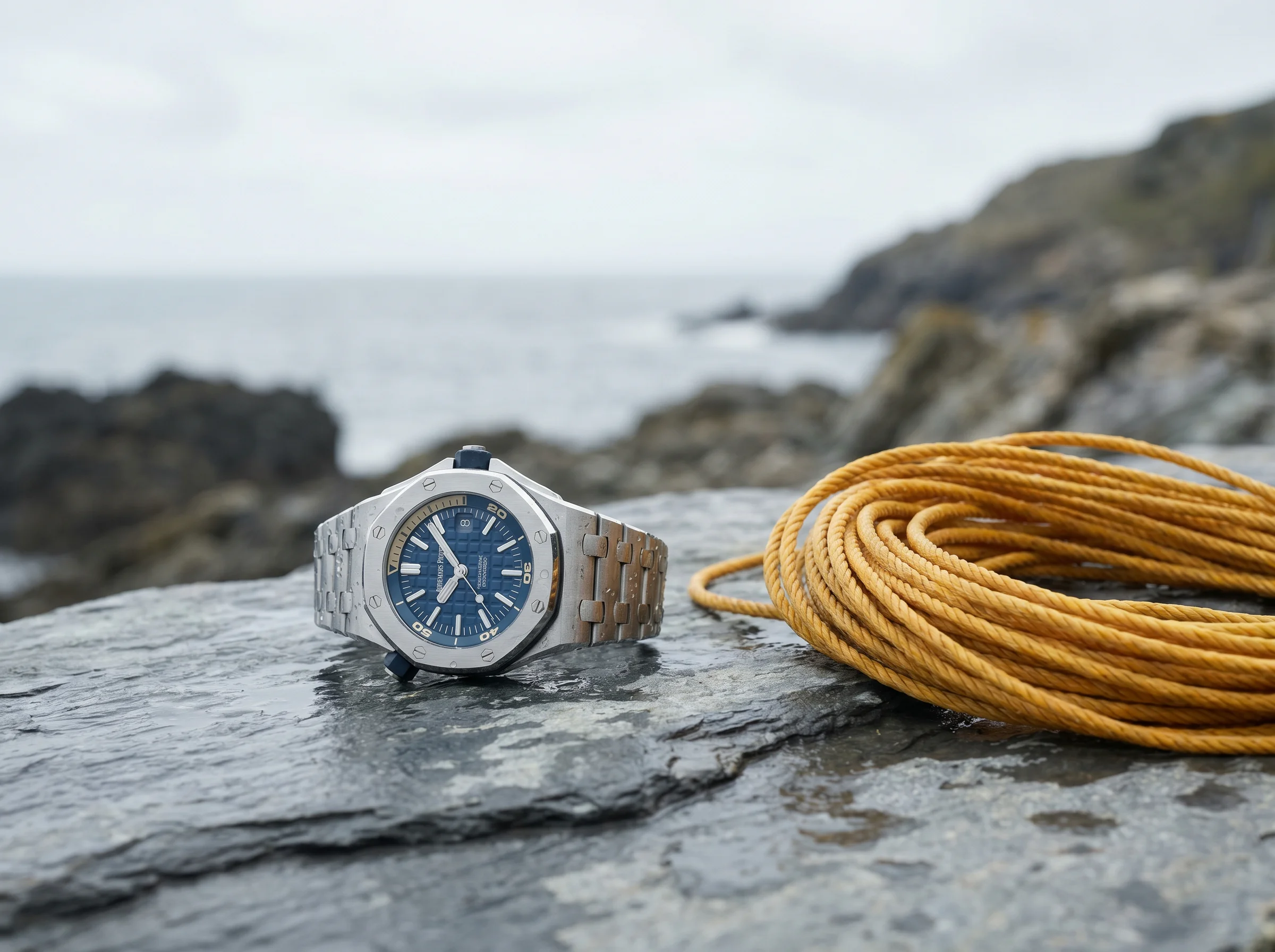 The Offshore Diver delivers full AP finishing and presence at a price the standard Royal Oak cannot touch.
What you give up, and what you gain
The Offshore earned its "Beast" nickname honestly. Emmanuel Gueit designed it in 1993 at 42mm, enormous for its day, with a thicker case, rubber-clad crown and pushers, and the amplified Mega Tapisserie dial. It does not hide under a cuff, and it was never meant to.
That is the whole trade. If you want the refined, dress-friendly icon, the standard Royal Oak is the watch, and you will pay for it. If you want bold AP presence that you can actually acquire near retail, the Offshore is the answer.
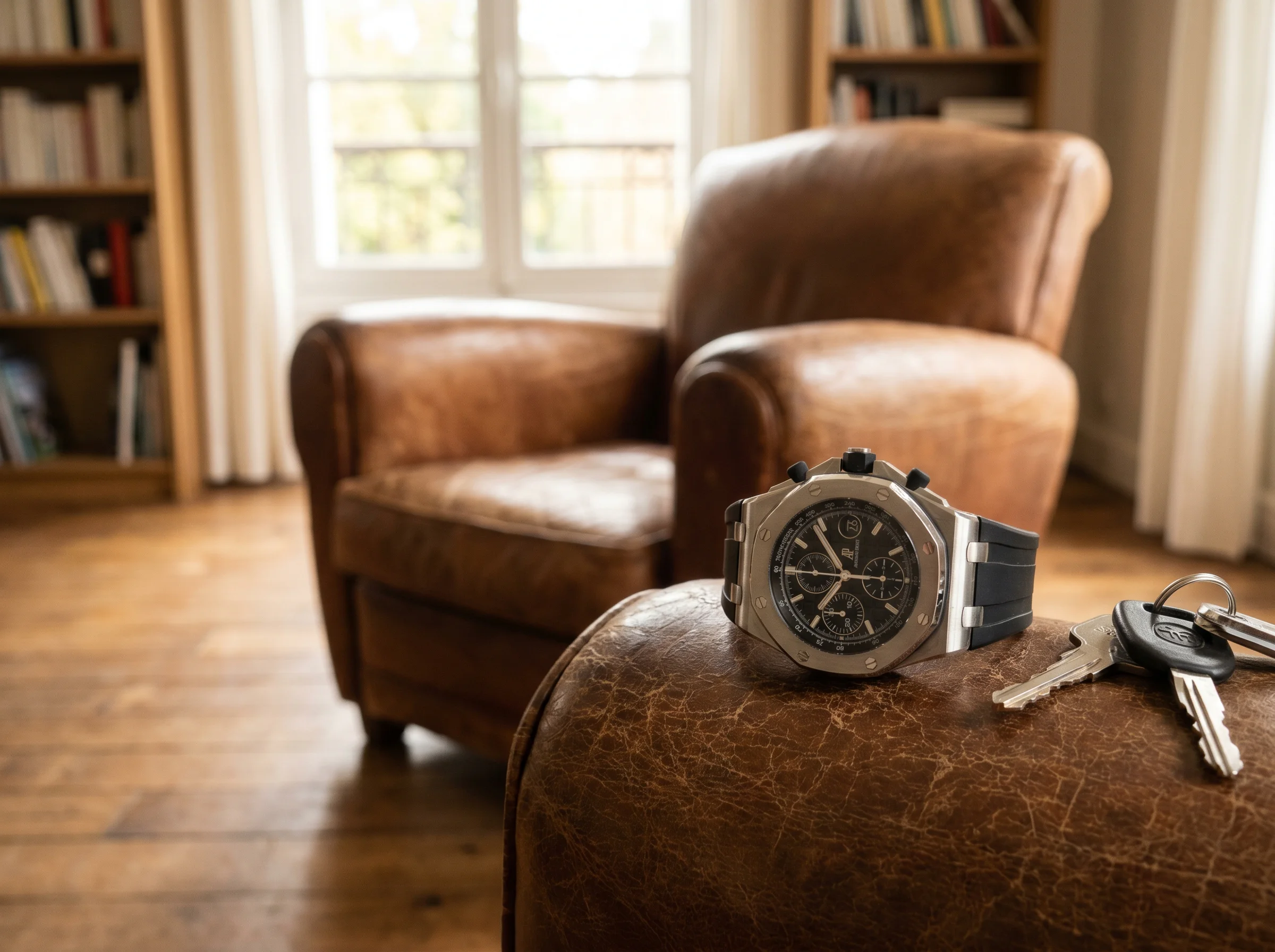 On a rubber strap, the Offshore leans fully into its sport-watch identity. This is not a watch that disappears.
The honest caveats
The value case has limits, and they matter. It applies to steel, non-limited Offshores. Ceramic models and limited editions, the Schwarzenegger pieces and the like, carry real premiums and are not where the deals live.
The Offshore's value retention is also softer than the standard Royal Oak's, which is a genuine cost to the owner even as it is the opening for the buyer. And the size is divisive. At 42 to 44mm and notably thick, the Offshore overwhelms smaller wrists, so this is a watch to try on before buying, never to buy on a screen.
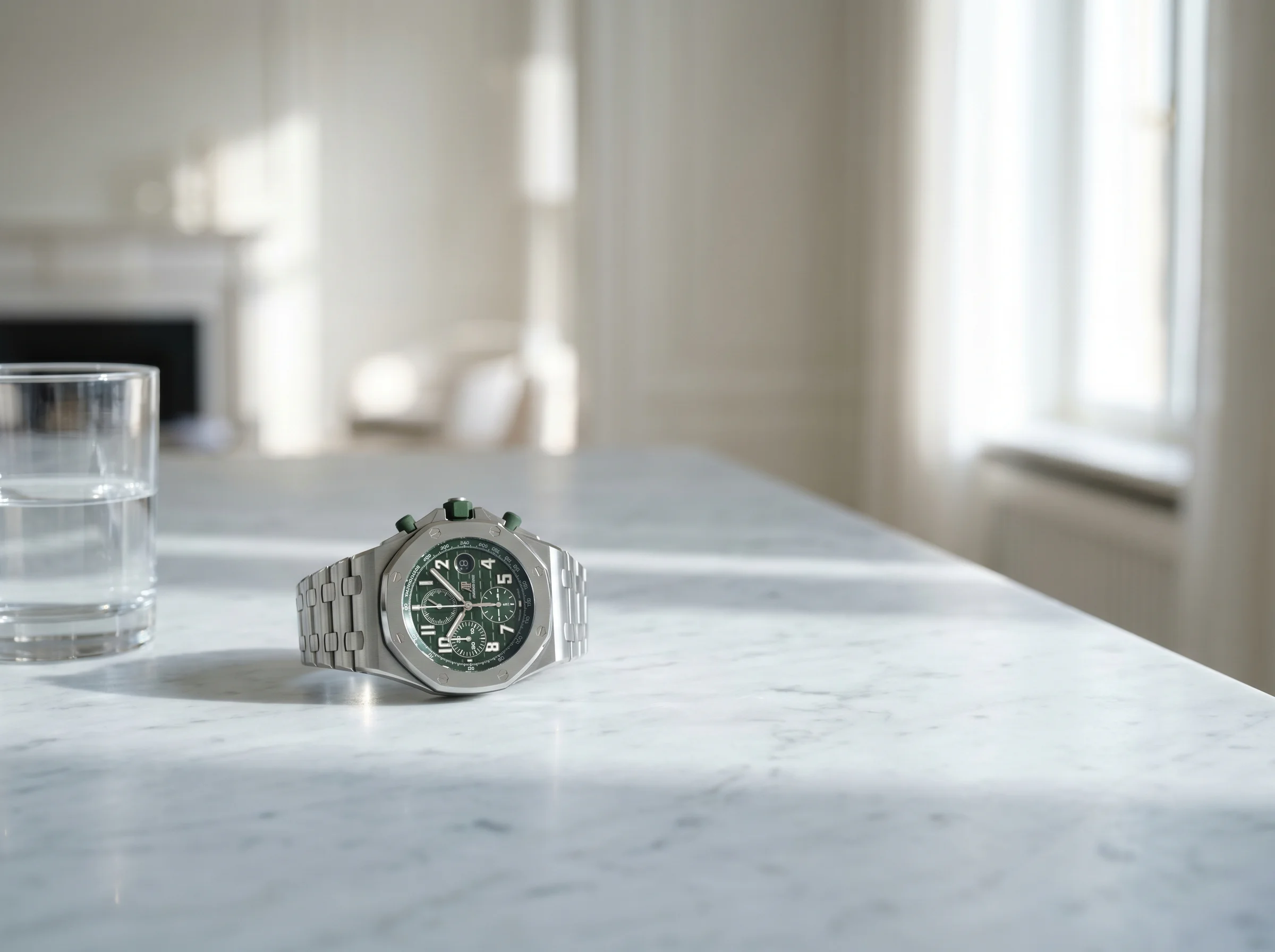 Bold dial colors suit the Offshore in a way they never would the dressier Royal Oak.
The dealer's read
If you must have the steel Royal Oak, accept that you are paying 30 to 50% over a retail you will never see, and that it remains the reference that holds best. There is nothing wrong with paying for the icon.
But if your real goal is to own an Audemars Piguet, to get the finishing and the design and the name without the premium, the Offshore is the smarter money. Buy steel, time-only or chronograph, and skip the hyped ceramic and limited editions unless you specifically want them. It is the same logic that runs through the whole resilient top of the market we mapped at 5dwatches.com/blog/swiss-watch-market-barbell-split-2026, and the same Genta-rooted design we compared against Patek in Nautilus versus Royal Oak. For the full reference-by-reference picture, our Royal Oak buying guide covers the rest.
Browse our authenticated pre-owned Audemars Piguet at 5D Watches.