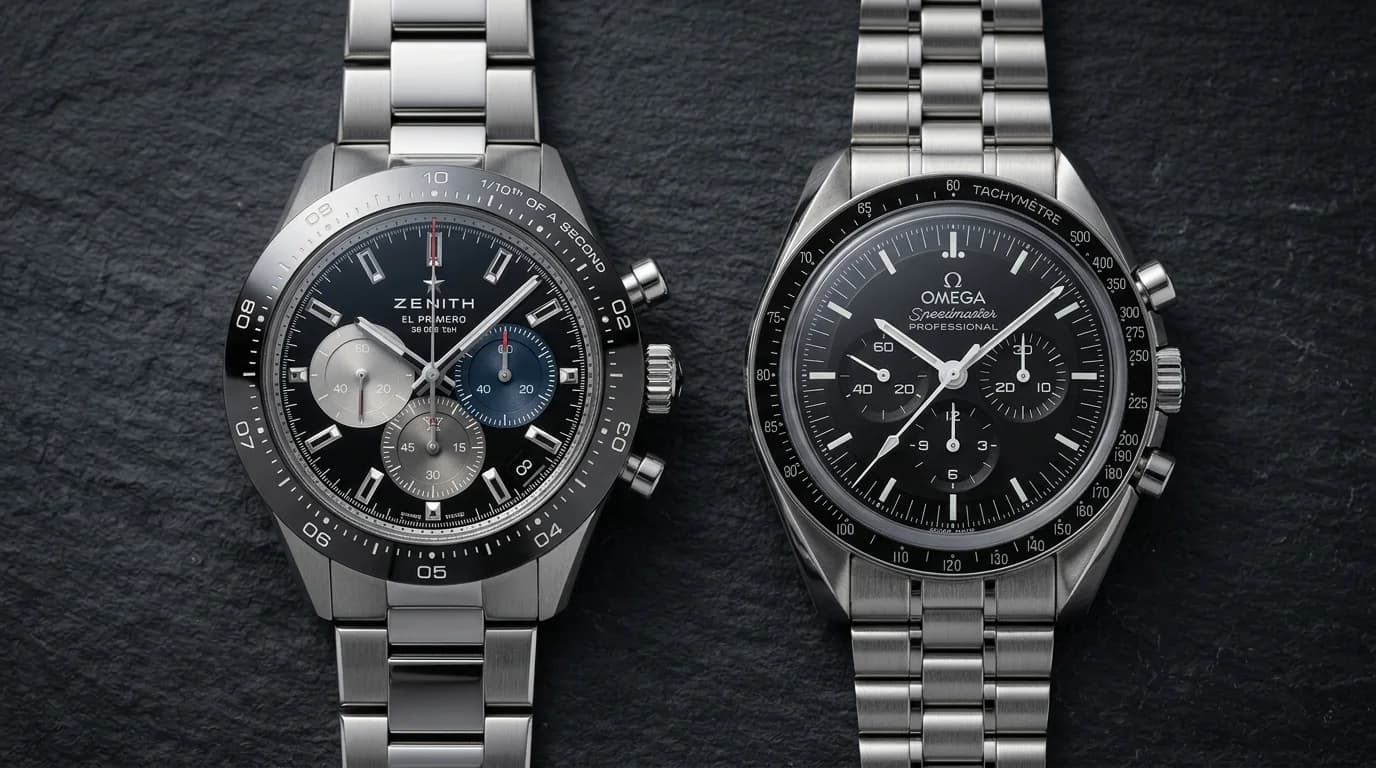
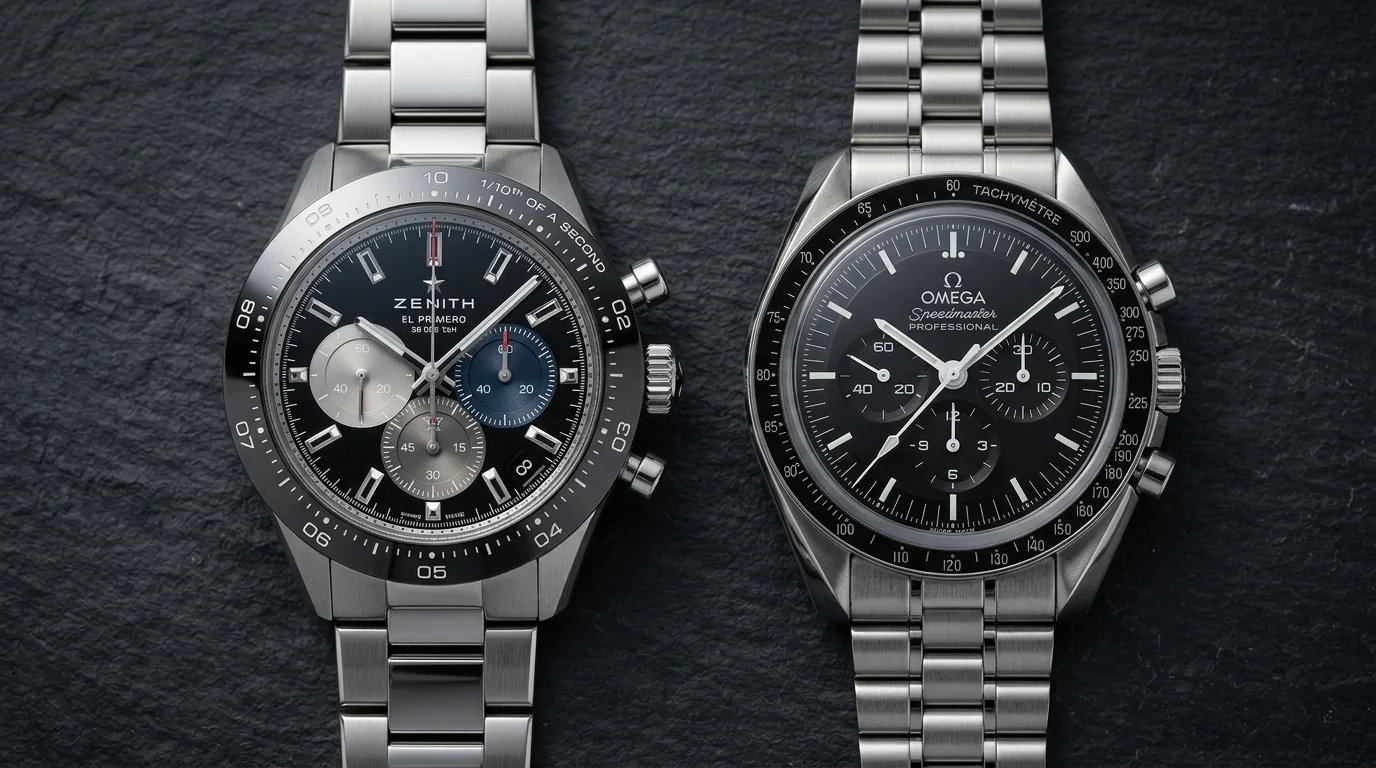
 The Zenith Chronomaster Sport and Omega Speedmaster Professional, two column-wheel chronographs that both earned the Daytona alternative label the hard way.
The Short Answer
The Zenith Chronomaster Sport and the Omega Speedmaster Professional Moonwatch solve the same problem in opposite ways. The Zenith is automatic, runs at a screaming 5 Hz for true 1/10th-second timing, and wears like a modern sports watch at 41mm in ceramic-bezel steel. The Omega is manual wind, ties itself to the moon landings, and still ships on Hesalite acrylic if you want the "as worn on the moon" experience.
If you want a Daytona alternative that reads as a serious independent chronograph, buy the Zenith. If you want the watch with the deepest story in horology and do not mind winding it by hand, buy the Speedmaster. Both are excellent. Neither is the wrong answer.
Two Different Roads to the Same Reputation
Both of these watches get called "Daytona alternatives," and both earned that label honestly rather than by marketing. The Speedmaster got there first, decades before the Daytona had a following, by going to the moon on Buzz Aldrin's wrist in 1969 and never leaving NASA's flight-qualified equipment list since.
The Chronomaster Sport got there more recently, on the back of the El Primero, the world's first automatic chronograph movement, first shown in January 1969, months ahead of both of its rivals in that three-way race to build it. Zenith's version of the Daytona alternative argument leans entirely on movement pedigree and price. It costs a third of a steel Daytona and still runs an in-house column-wheel chronograph built to a standard most collectors rate above Rolex's own caliber 4131.
The Zenith Chronomaster Sport
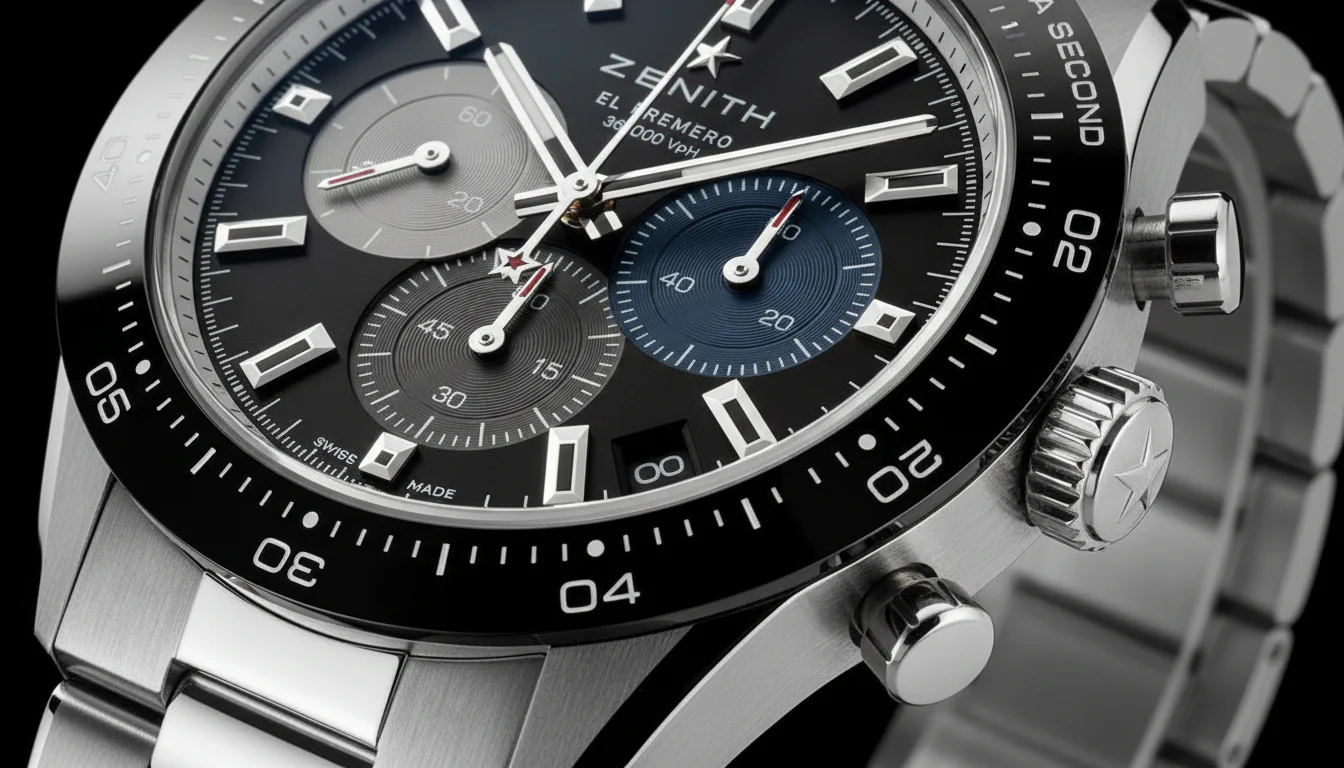 The El Primero 3600's tri-register dial reads a genuine 1/10th of a second, no quartz assist required.
Reference 03.3100.3600/21.M3100 runs $10,900 to $12,300 at retail depending on the dealer, in a 41mm steel case with a black ceramic bezel and painted tachymeter scale.
The El Primero 3600 inside is automatic, beats at 36,000 vibrations per hour (5 Hz), and reads a genuine 1/10th of a second on the sub-dial without any quartz assistance. Power reserve runs about 60 hours. Water resistance sits at 100 meters, and the case back is a sapphire display window over the finished movement.
The Omega Speedmaster Professional Moonwatch
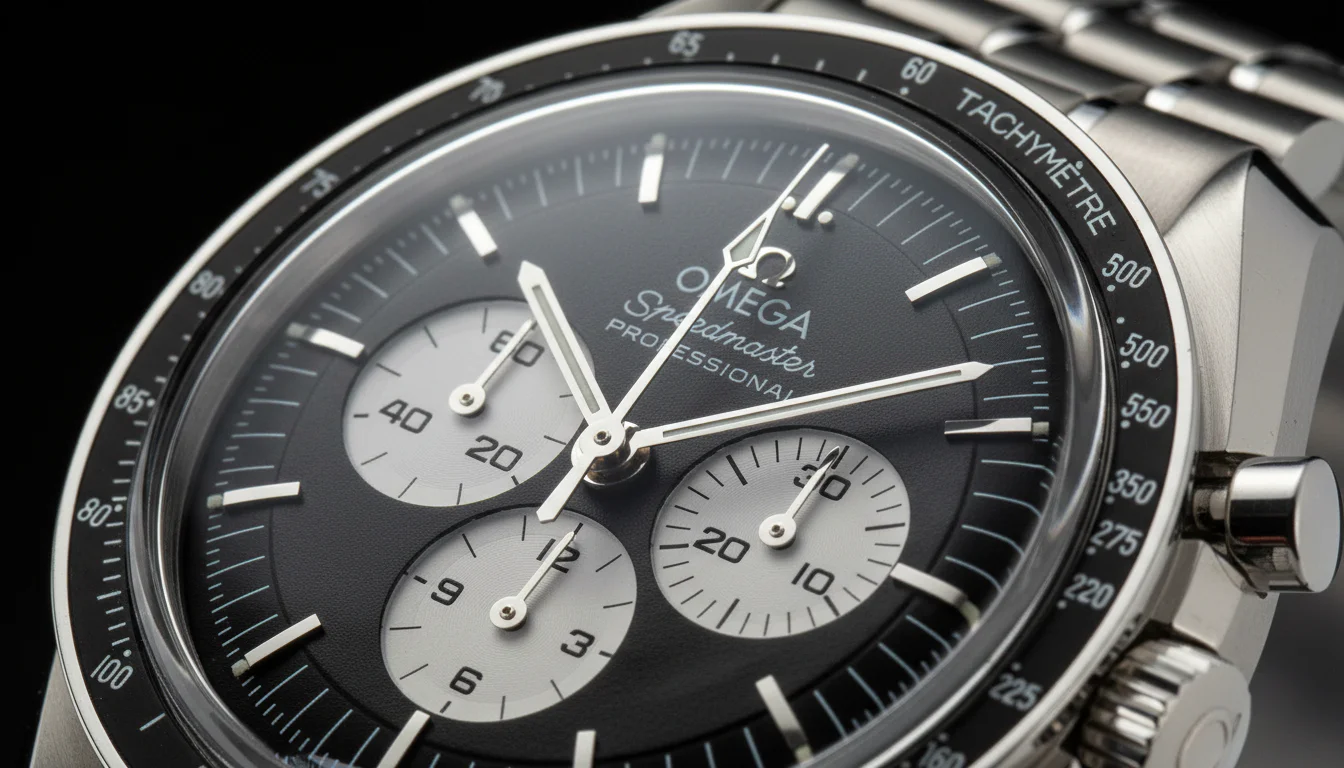 The Speedmaster's dial has barely changed since it flew to the moon in 1969.
The current Calibre 3861 Hesalite reference, 310.30.42.50.01.001, trades from roughly $5,200 to $6,850 pre-owned depending on condition and set completeness.
It is manual wind, which is the point for purists: the moon-landing Speedmasters were manual, and Omega has never made the Professional automatic in order to preserve that link. The Calibre 3861 is Co-Axial and METAS Master Chronometer certified, a real upgrade in accuracy and anti-magnetism over the older 1861 it replaced, though the movement architecture and hand-wind feel are unchanged. The Hesalite crystal is acrylic, not sapphire, and that is deliberate too. It scratches easier and polishes out with toothpaste, exactly like the crystal Armstrong and Aldrin wore.
Head to Head
| Zenith Chronomaster Sport | Omega Speedmaster Pro Moonwatch | |
|---|---|---|
| Reference | 03.3100.3600/21.M3100 | 310.30.42.50.01.001 |
| Case size | 41mm | 42mm |
| Movement | El Primero 3600, automatic | Calibre 3861, manual wind |
| Beat rate | 36,000 vph | 21,600 vph |
| Chronograph precision | 1/10th second | 1/5th second |
| Certification | None stated | METAS Master Chronometer |
| Water resistance | 100m | 50m |
| Crystal | Sapphire | Hesalite (sapphire on other refs) |
| Retail | $10,900 to $12,300 | $6,400 to $6,900 |
| Pre-owned | $8,500 to $10,500 typical | $5,200 to $6,850 typical |
Where Each One Actually Wins
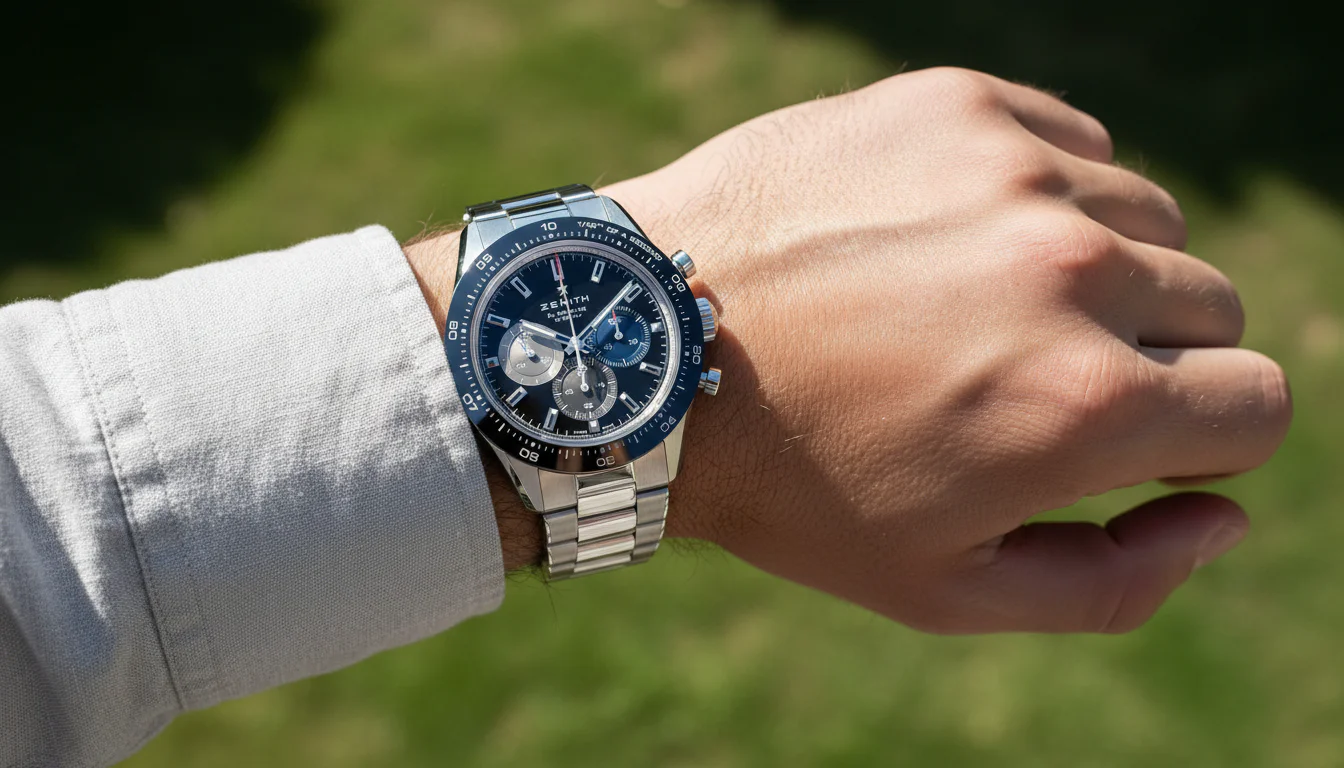 The Chronomaster Sport's ceramic bezel wears larger on the wrist than its 41mm diameter suggests.
The Zenith wins on movement engineering, full stop. A 5 Hz automatic column-wheel chronograph with a genuine tenth-of-a-second reading is a harder watch to build than a 3 Hz manual one, and the finishing on the El Primero through that display back backs it up.
The Omega wins on everything else that is not on a spec sheet. Story, resale liquidity, and the fact that literally every watch person on earth recognizes it on sight. That recognition is worth real money at resale. Pre-owned Speedmasters move fast because buyers do not need it explained to them.
Sizing splits buyers too. The Zenith's 41mm ceramic bezel wears more like a modern sports watch. The Speedmaster's 42mm asymmetrical case and lyre lugs wear smaller than the number suggests, closer to a 39 or 40mm watch on the wrist, and that vintage-proportioned case is part of why people who dislike modern chronographs still wear one daily.
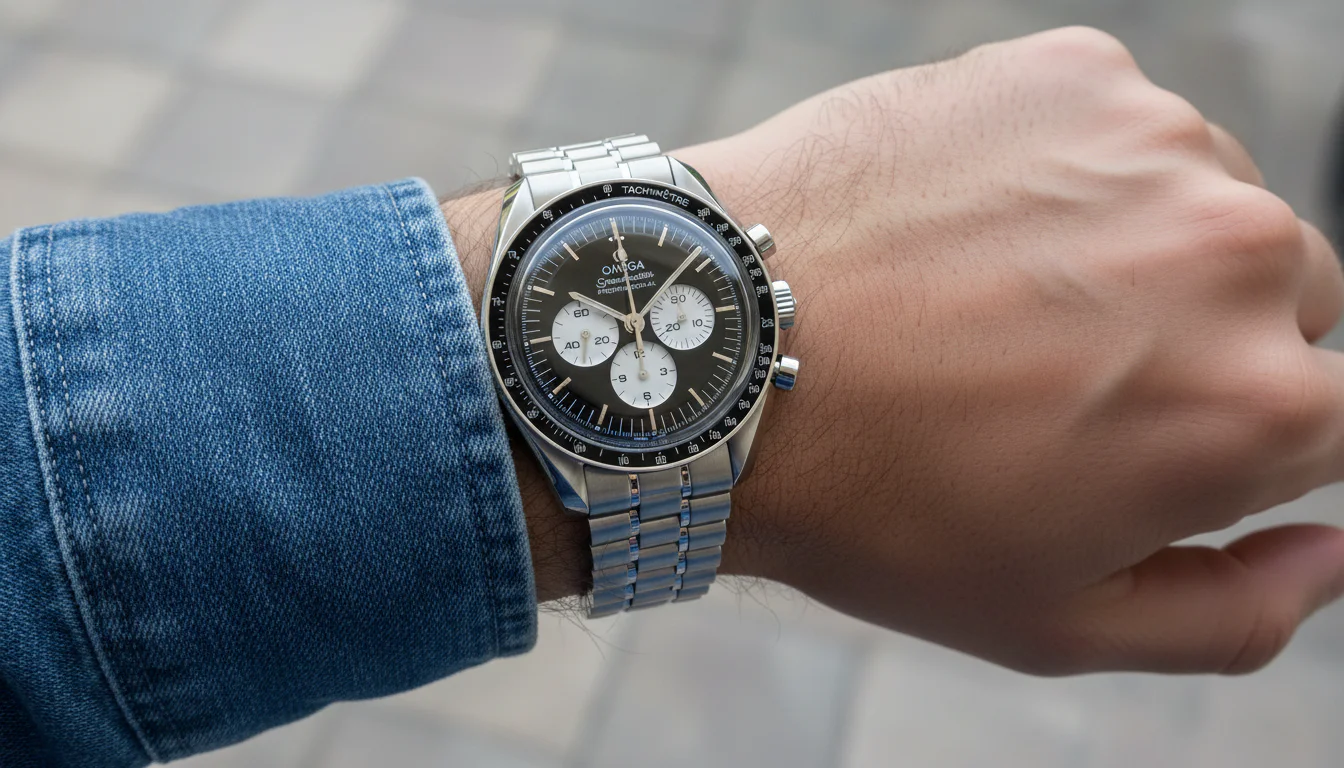 The Speedmaster's lyre lugs pull its 42mm case in tighter on the wrist than the raw number suggests.
The Honest Caveat on Both
Neither of these is a Rolex-level flip. The Zenith holds value reasonably but does not have the depth of secondary market the Speedmaster does. The Speedmaster holds because there are more of them changing hands, not because Omega restricts supply the way Rolex does.
If you are buying to wear rather than to trade, that distinction barely matters. If you are buying with resale in mind, the Speedmaster's liquidity is the safer bet even though the Zenith is arguably the better engineered watch.
FAQ
Is the Zenith Chronomaster Sport a real Daytona alternative?
Yes, more literally than the Speedmaster is. The El Primero 3600 is automatic like the Daytona's caliber 4131, has a comparable column-wheel architecture, and costs roughly a third of a steel Daytona's retail price.
Why is the Omega Speedmaster still manual wind in 2026?
Omega keeps the Professional manual on purpose. It is the direct descendant of the exact configuration NASA qualified for spaceflight in 1965, and changing that would break the watch's entire reason for existing.
Which one holds its value better pre-owned?
The Speedmaster, mainly because of higher trading volume and universal recognition. The Zenith holds reasonably but trades in a thinner, more collector-driven market.
Can I get either of these with a sapphire crystal?
The Zenith Chronomaster Sport ships with sapphire standard. The Speedmaster only gets sapphire on the 310.30.42.50.01.002 reference and above. The base Hesalite reference keeps the acrylic crystal on purpose.
Is 41mm or 42mm the bigger wrist presence?
The Zenith's 41mm ceramic-bezel steel case actually reads larger on the wrist than the Speedmaster's 42mm, because the Omega's lyre lugs and asymmetrical pusher guard pull the case in tighter than the raw diameter suggests.