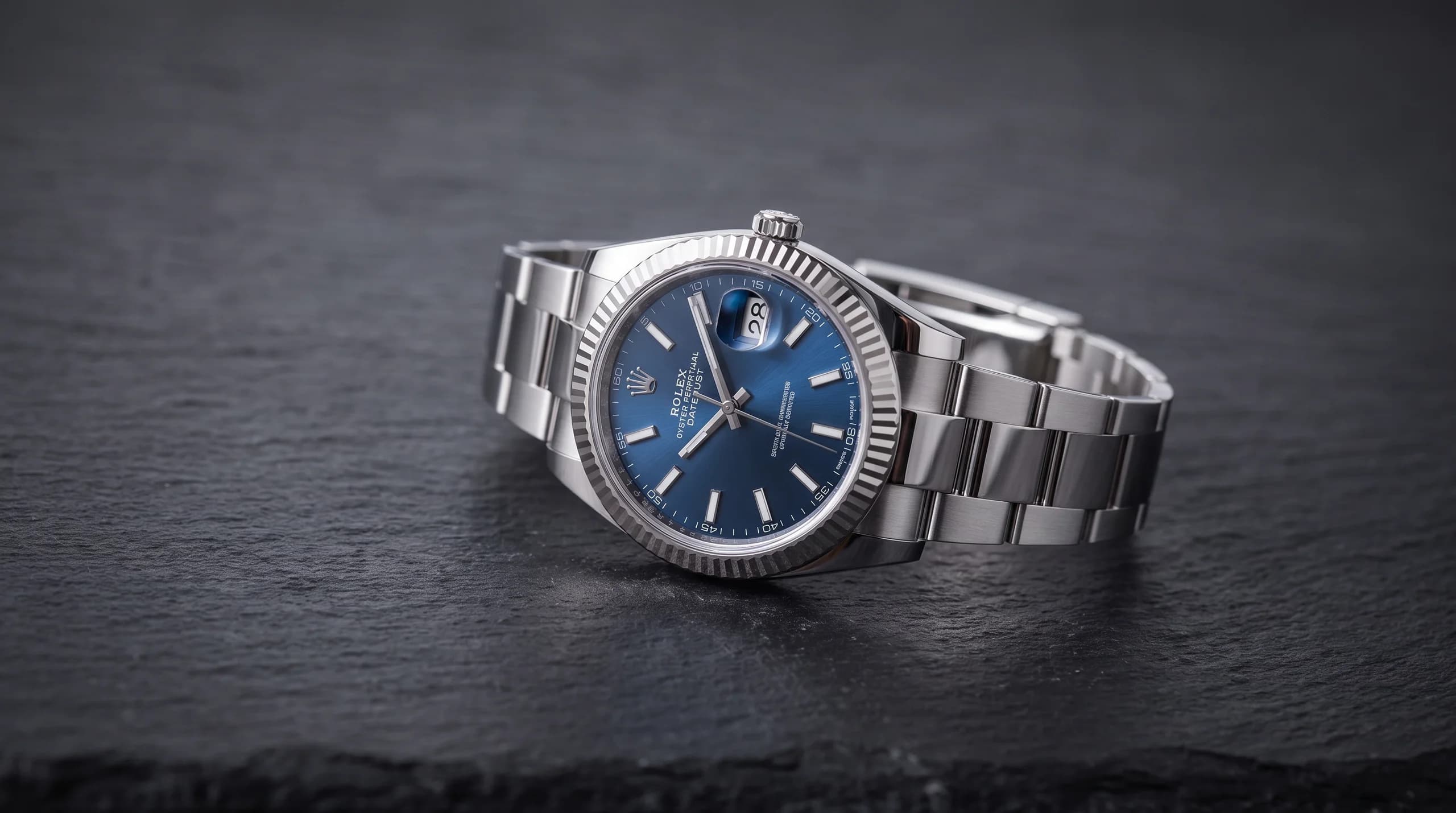
"What size watch should I wear?" is the most common question a first-time buyer asks, and most of the advice out there answers the wrong part of it. The number everyone quotes, the case diameter, is the least reliable guide to how a watch actually fits.
This is a working dealer's fit guide. We will cover the three measurements that decide fit, how to measure your own wrist, a simple size chart, and the one dimension that matters more than diameter. Get these right and the watch sits like it was made for you.
The short answer: Three numbers decide fit: case diameter, lug-to-lug, and thickness. For a typical 7-inch wrist, a 38 to 42mm case works, with the lug-to-lug staying under about 50mm so it does not overhang your wrist. Lug-to-lug matters more than diameter, thickness decides comfort, and none of it is about gender. When in doubt, try it on.
The images in this article were generated with AI for illustration, conditioned on real reference photography of the watches shown. They depict recognizable models but are not photographs of specific watches for sale.
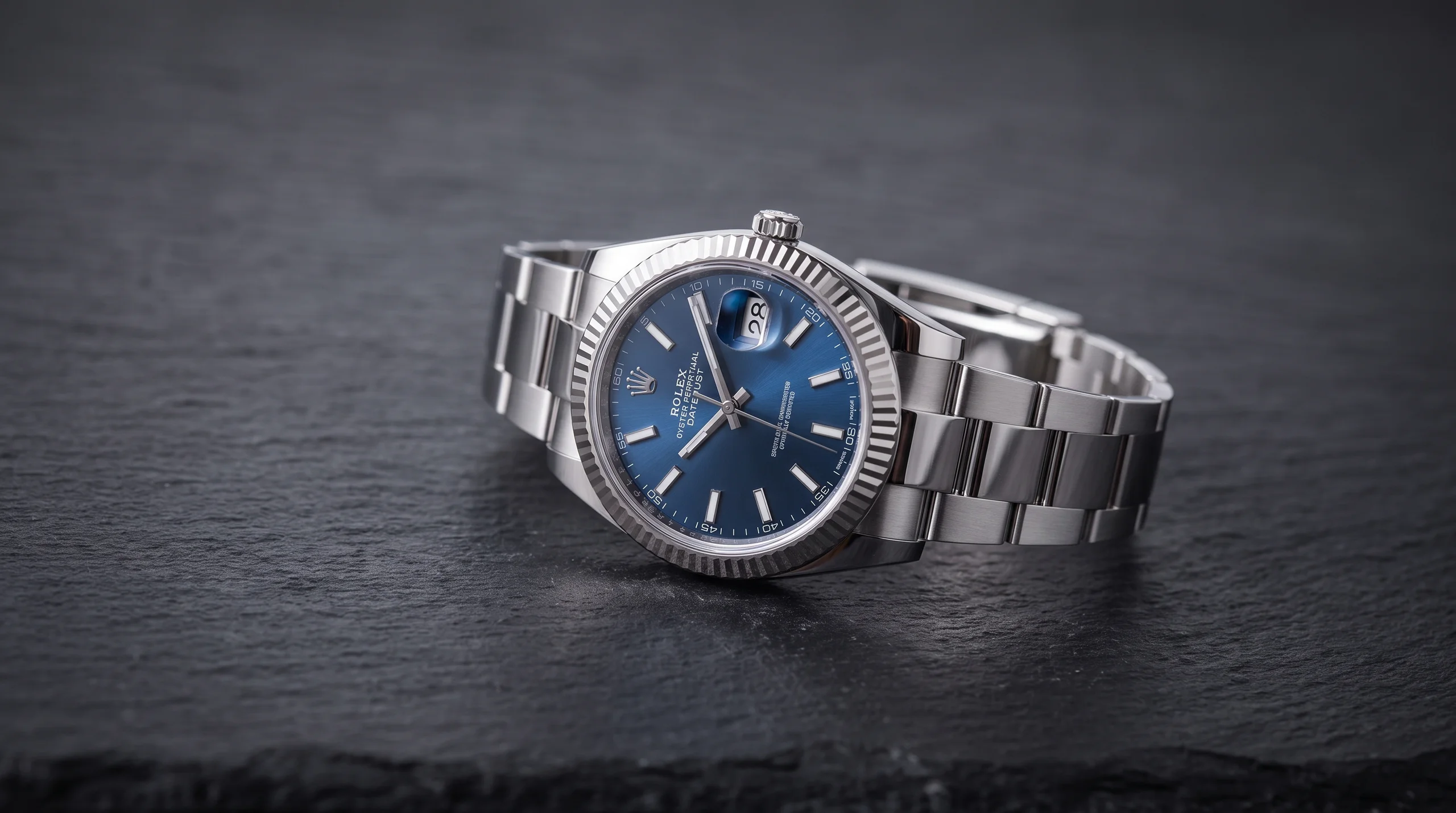 A well-proportioned mid-size watch. The right size is the one that sits flat and looks balanced on your wrist.
The Three Measurements That Actually Matter
Forget the idea that a watch has one size. It has three, and all three decide the fit.
Case diameter is the width of the case, not counting the crown. It is the number brands advertise and the one buyers fixate on, but on its own it tells you surprisingly little.
Lug-to-lug is the length from the tip of the top lugs to the tip of the bottom lugs. It decides whether the watch sits flat or hangs over the edges of your wrist, which is what actually looks wrong when a watch is too big.
Thickness is how tall the watch stands off your wrist. It decides comfort, whether the watch slides under a cuff, and how top-heavy it feels.
How to Measure Your Wrist
You cannot choose a size without knowing your wrist, and it takes ten seconds.
Wrap a flexible tape measure, or a strip of paper you then measure, around your wrist just above the wrist bone, where a watch sits. Pull it snug but not tight, and record the number to the nearest quarter inch or 5mm. Most adult men land between 7.0 and 7.5 inches, though plenty fall on either side, and that is the number every recommendation below is built on.
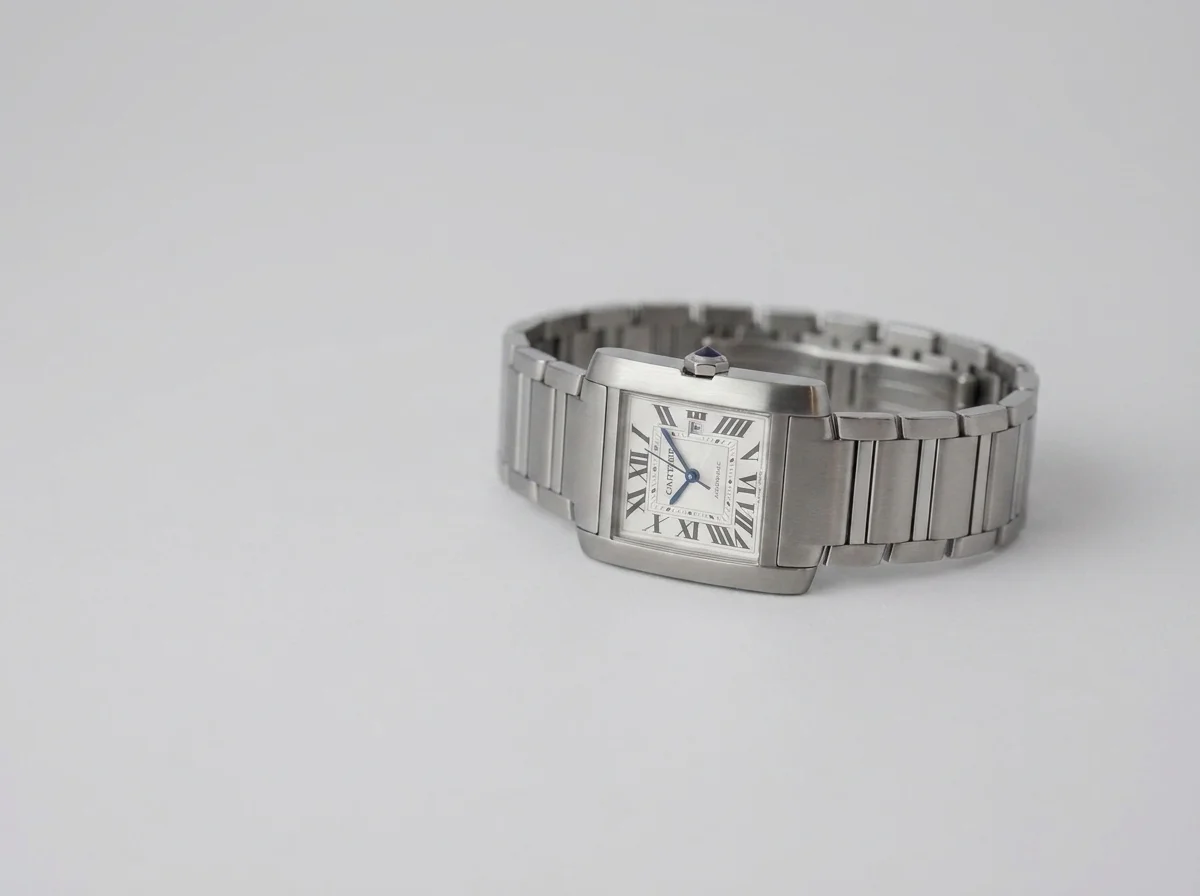 A smaller case reads dressier and more classic. On the right wrist it is elegant, not undersized.
The Size Chart
Here is a simple starting point, matching wrist circumference to a sensible case diameter and a maximum lug-to-lug so the watch does not overhang.
| Wrist circumference | Case diameter | Max lug-to-lug |
|---|---|---|
| Under 6.5 in (16.5 cm) | 34 to 38mm | ~46mm |
| 6.5 to 7.0 in | 36 to 40mm | ~48mm |
| 7.0 to 7.5 in | 38 to 42mm | ~50mm |
| Over 7.5 in | 40 to 44mm | ~52mm+ |
Treat these as a center of gravity, not a rule. A rule of thumb watchmakers use is that a case looks right at roughly 60 to 75 percent of your flat wrist width, with the lug-to-lug landing between 75 and 95 percent.
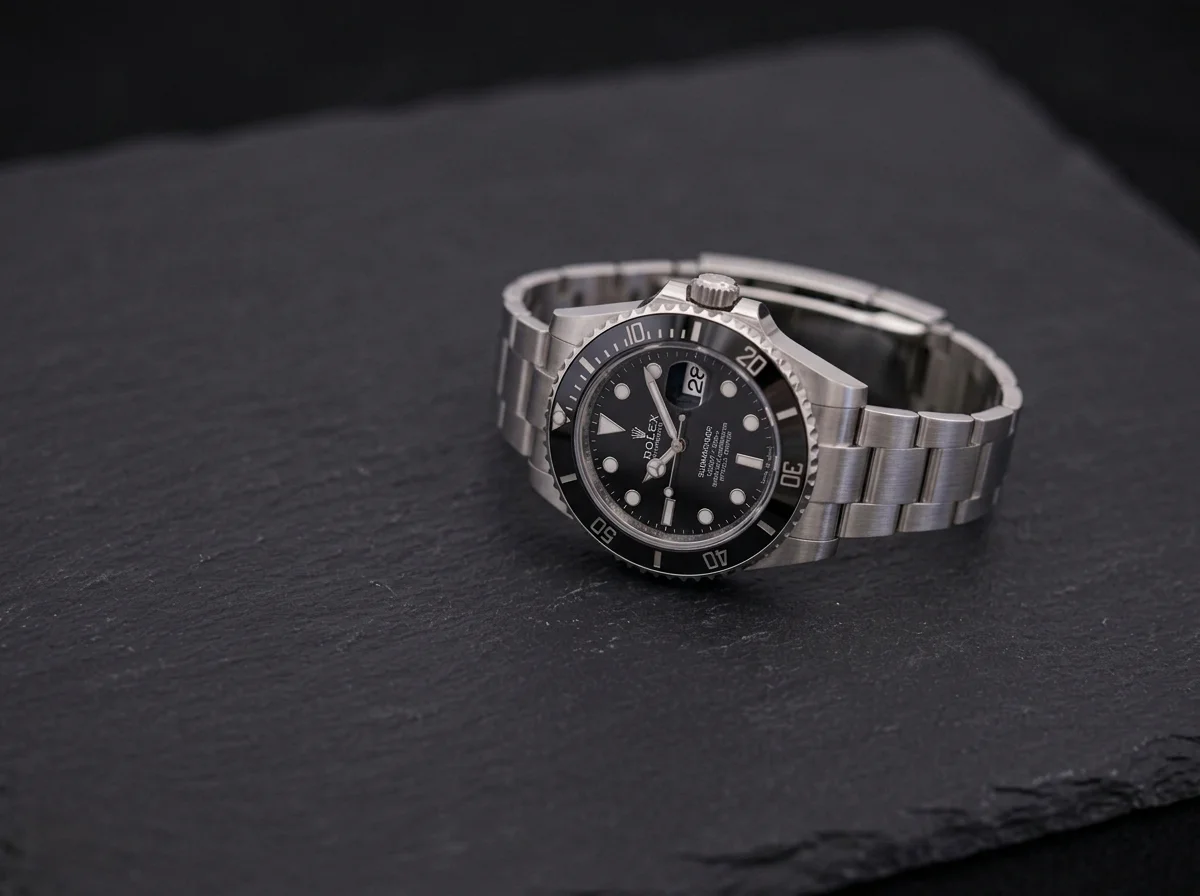 A larger sports case reads bold and modern. The limit is not the diameter, it is whether the lugs overhang.
Why Lug-to-Lug Beats Diameter
If you remember one thing, remember this: lug-to-lug tells you more about fit than diameter does.
Two watches with the same 40mm diameter can wear completely differently if one has short, curved lugs and the other has long, straight ones. A 40mm watch with a 52mm lug-to-lug will overhang a 6.5-inch wrist, while a 42mm watch with a 47mm lug-to-lug and curved lugs will sit perfectly. This is why a Rolex often wears smaller than its number, and why some 38mm watches wear large.
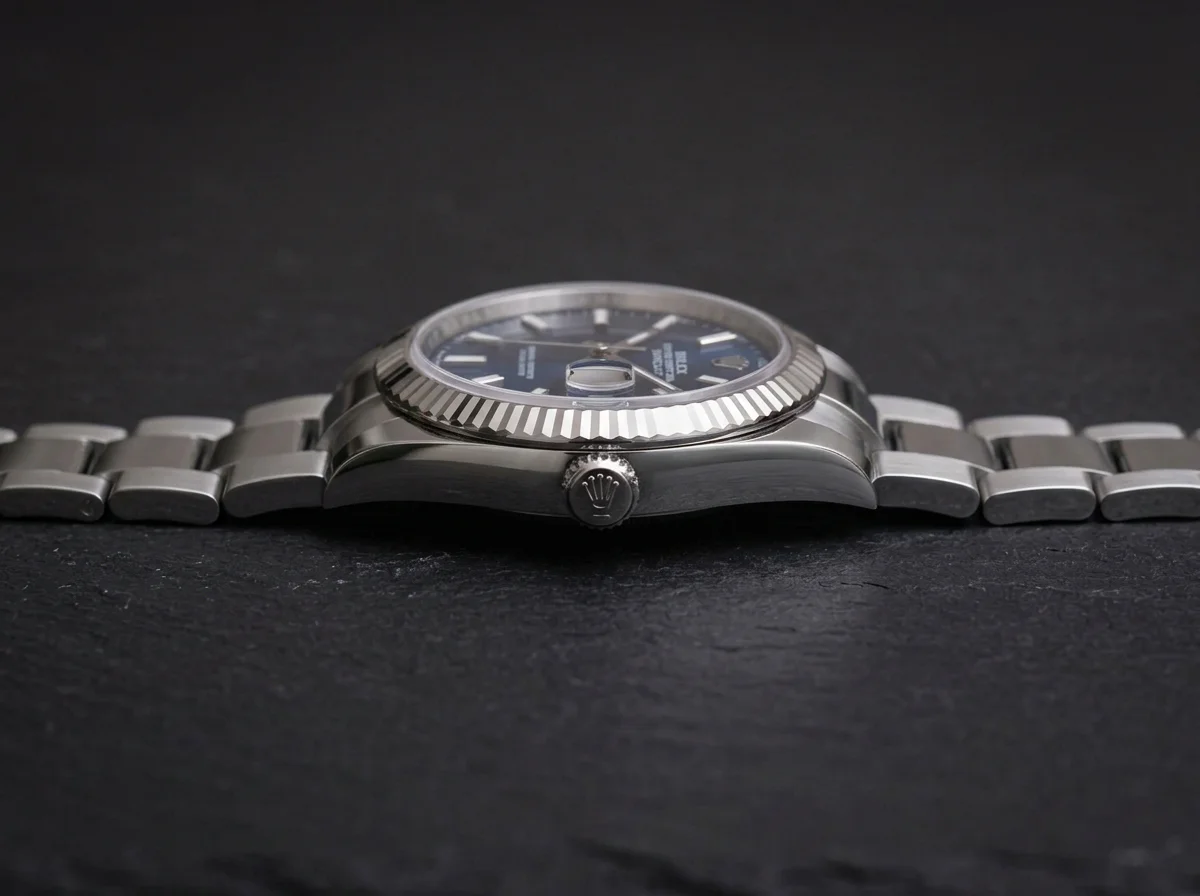 Lug-to-lug is the span from lug tip to lug tip. Keep it inside your wrist width and the watch sits flat.
Thickness is the tiebreaker. Under about 13mm stays comfortable and slips under a cuff for a dress or daily watch, while dive and sports watches run thicker and that is expected. Wrist shape matters too: flatter wrists carry larger cases and longer lugs easily, rounder wrists reward more compact watches.
Size Is Personal, Not Gendered
The old rules about men's and women's sizes are gone, and good riddance.
Plenty of women wear 40mm sports watches and plenty of men wear 36mm dress watches, and both look excellent because they fit. The market has also shifted back toward smaller cases in recent years, which we covered in our read on the sub-39mm size shift. Buy the size that suits your wrist and your taste, and ignore which counter it was sold from.
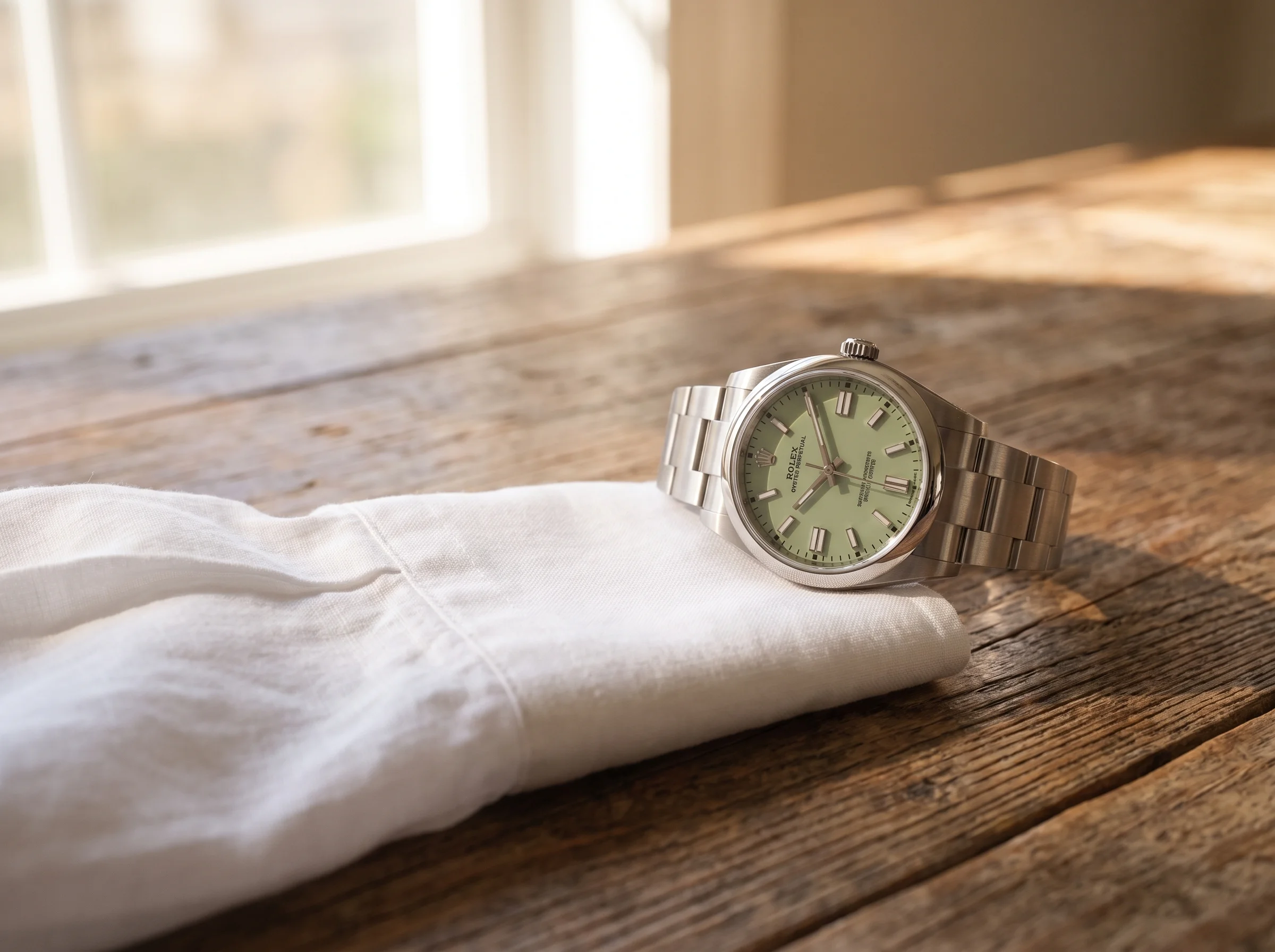 The real test is on the wrist, under a cuff. Numbers get you close; trying it on gets you right.
The Bottom Line
The best watch size is not a number you read, it is a fit you feel. Measure your wrist, aim for a case and lug-to-lug that sit inside its width, keep an eye on thickness, and then trust your eye over the spec sheet. A watch that fits looks intentional at any diameter, and a watch that overhangs looks wrong no matter how fashionable the size.
Measure your wrist, check the lug-to-lug, and forget what the box says a watch is supposed to be. Still stuck between two sizes? Send us your wrist measurement and we will point you to the ones that actually fit, and our Datejust buying guide walks through the 36mm versus 41mm call if that is the one you are weighing.
Frequently Asked Questions
What size watch should I wear for my wrist?
For a typical 7.0 to 7.5 inch wrist, a 38 to 42mm case works well. Smaller wrists under 6.5 inches suit 34 to 38mm, and larger wrists over 7.5 inches carry 40 to 44mm comfortably. Just as important, keep the lug-to-lug under your wrist width so the watch does not overhang, and try it on before you commit.
What is lug-to-lug and why does it matter?
Lug-to-lug is the length from the tip of the top lugs to the tip of the bottom lugs. It decides whether a watch sits flat or hangs over the edge of your wrist, which is what actually looks wrong when a watch is too big. Because lug shape varies, lug-to-lug is a better guide to fit than case diameter.
Is a 40mm watch too big or too small?
A 40mm case suits most wrists in the 7-inch range, which is why it is such a common size. Whether it works for you depends more on the lug-to-lug and lug shape than the diameter, since a 40mm watch with long straight lugs can overhang a smaller wrist while one with short curved lugs sits perfectly.
Does watch size depend on gender?
No. Size is about your wrist and your taste, not gender. Many women wear 40mm sports watches and many men wear 36mm dress watches, and both look right because they fit. Ignore which department a watch was sold from and choose the size that suits your wrist.
How do I measure my wrist for a watch?
Wrap a flexible tape measure, or a strip of paper you then measure against a ruler, around your wrist just above the wrist bone where a watch sits. Pull it snug but not tight, and record the number to the nearest quarter inch or 5mm. That single measurement is the basis for every size recommendation.