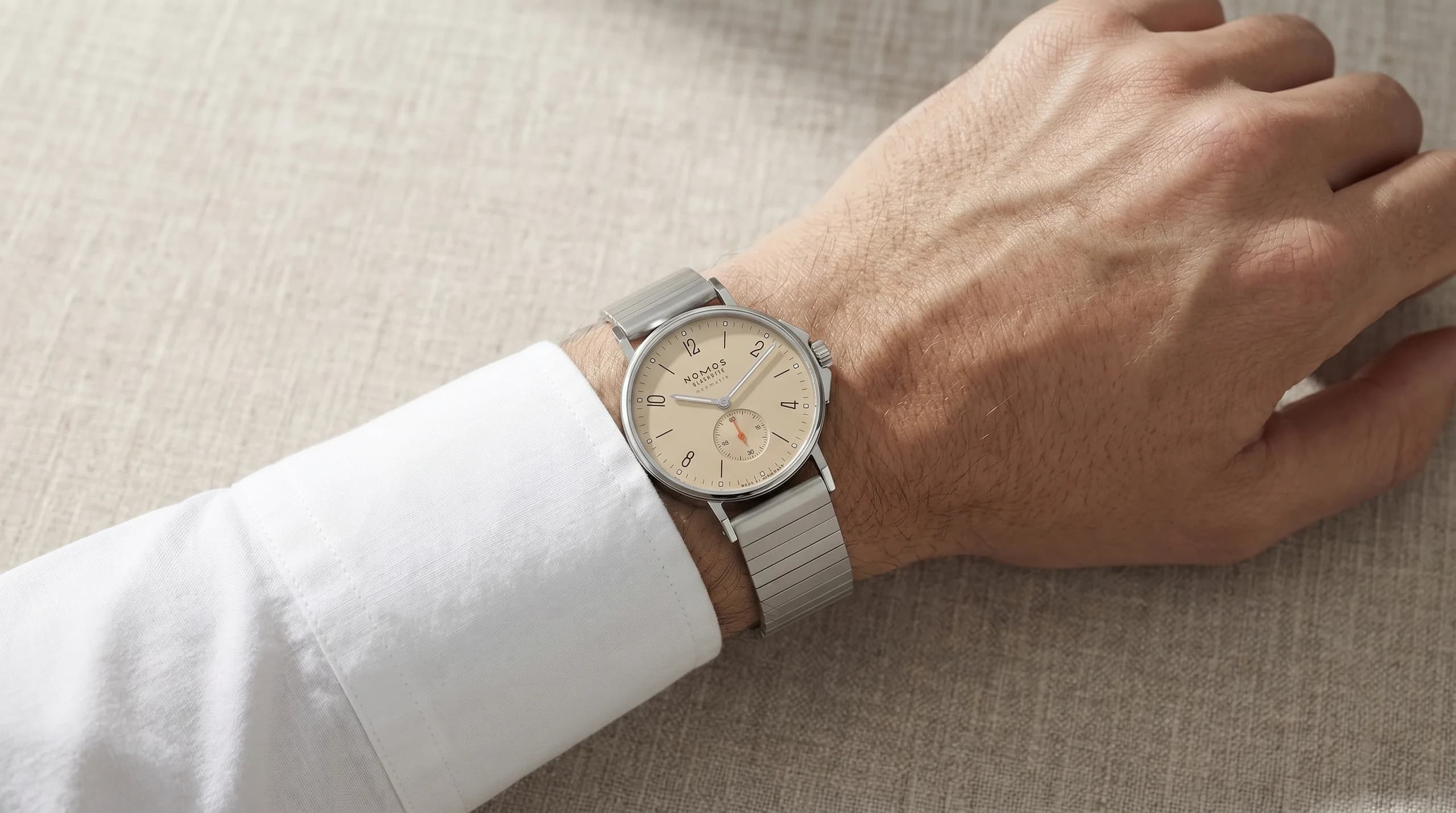
For ten years the watch world only moved one direction: bigger. That run is over. In 2026 the most telling sign is not a trend piece like this one. It is that brands spent Watches and Wonders shrinking their own watches.
The images in this post are AI-generated illustrations for editorial purposes and may not represent specific watches or their exact proportions.
The short version
The center of gravity for watch sizing has moved back to roughly 36mm to 39mm, and it is mainstream now rather than niche. The clearest proof came at Watches and Wonders 2026, where several brands released smaller versions of watches they already sold. For buyers, this is not just aesthetics. It changes which watches stay easy to sell and which ones quietly become the discount bin.
The proof: brands shrank their own watches
Trend articles have called smaller sizes "back" for a few years now. What makes 2026 different is that the manufacturers agreed, in metal.
At Watches and Wonders, as WatchTime catalogued, A. Lange and Söhne took the Saxonia Annual Calendar from 38.5mm down to 36mm. Grand Seiko brought its Spring Drive U.F.A. diver from 43.8mm to 40.8mm, its smallest diver yet. Raymond Weil split the difference on its Millesime Chronograph at 37mm, and Bulgari trimmed three millimeters off the Octo Finissimo so it finally wears like its actual diameter.
When a brand re-tools a movement and a case to make an existing watch smaller, that is not a magazine guess about taste. That is a company spending real money because it reads the same demand we do at the counter.
Why the wrist got smaller
A few forces pushed at once, and none of them are fads.
Comfort is the obvious one. A 38mm watch under 11mm thick slides under a cuff and stays put through a long day, which a slab-sided 44mm diver never did. Vintage collecting did the rest: as buyers fell for mid-century Datejusts and Seamasters that lived in the 34mm to 38mm band, modern taste recalibrated around those proportions. Add a broad move toward gender-neutral sizing and a quieter, less shouty aesthetic, and the 36 to 39mm range stopped being a compromise.
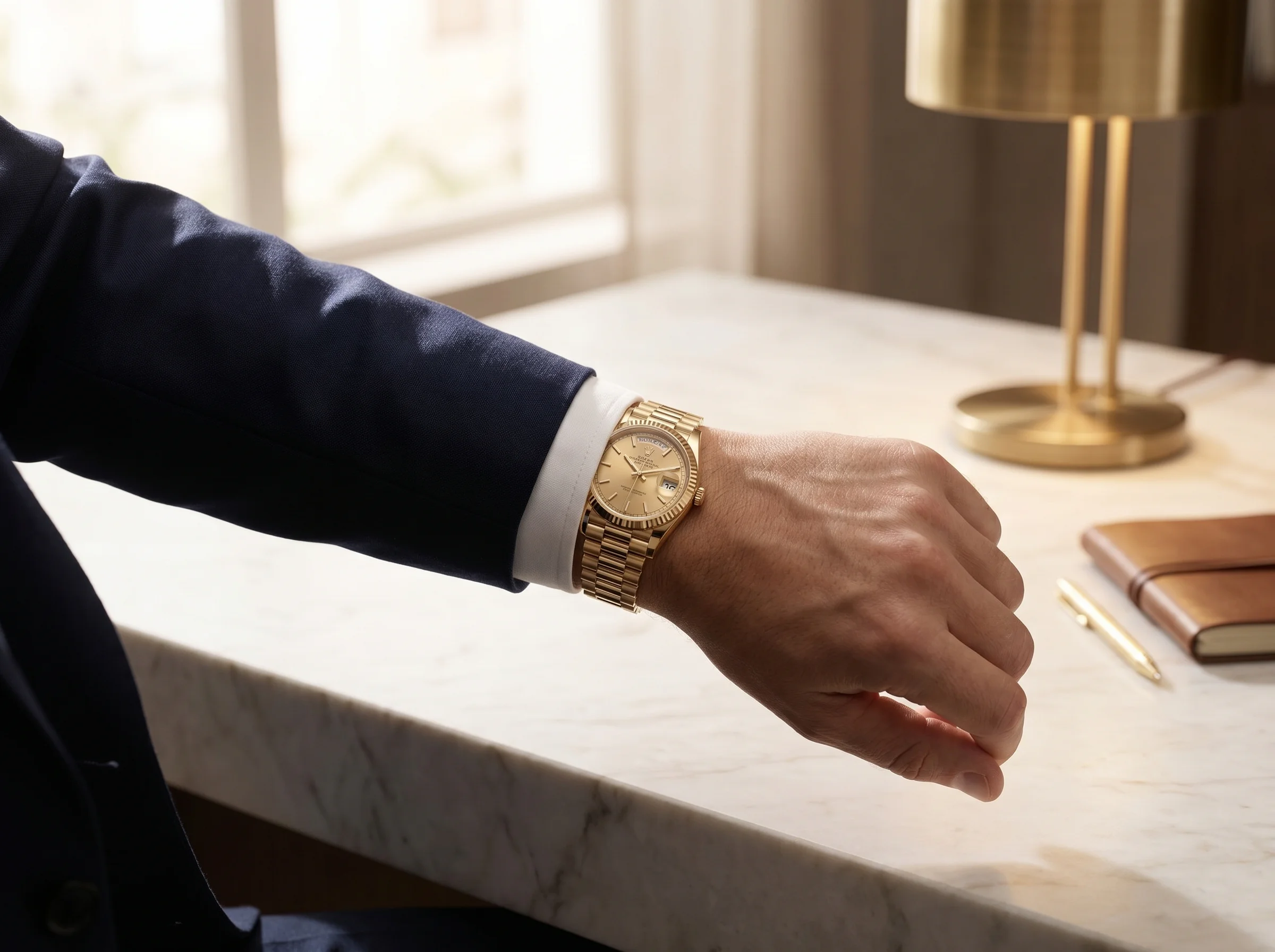 A small watch disappears under a cuff. That used to be a knock. Now it is the selling point. (AI-generated illustration.)
What it actually means for value
Here is where it matters for anyone buying or selling.
Demand and liquidity now favor the middle. A clean 36mm to 39mm Rolex, Tudor, or Omega in honest condition moves quickly, because it fits the most wrists and the current mood. The watches getting harder to shift are the oversized statement pieces of the 2010s, the 44mm and 45mm cases that defined that decade and now feel dated to a lot of buyers. That softening is not universal, since big tool divers and bold chronographs still have a crowd, but the easy resale premium that size alone used to carry is gone.
If you are buying to keep, none of this should worry you. If you are buying with one eye on resale, a well-sized modern classic is the safer bet than another oversized trend piece.
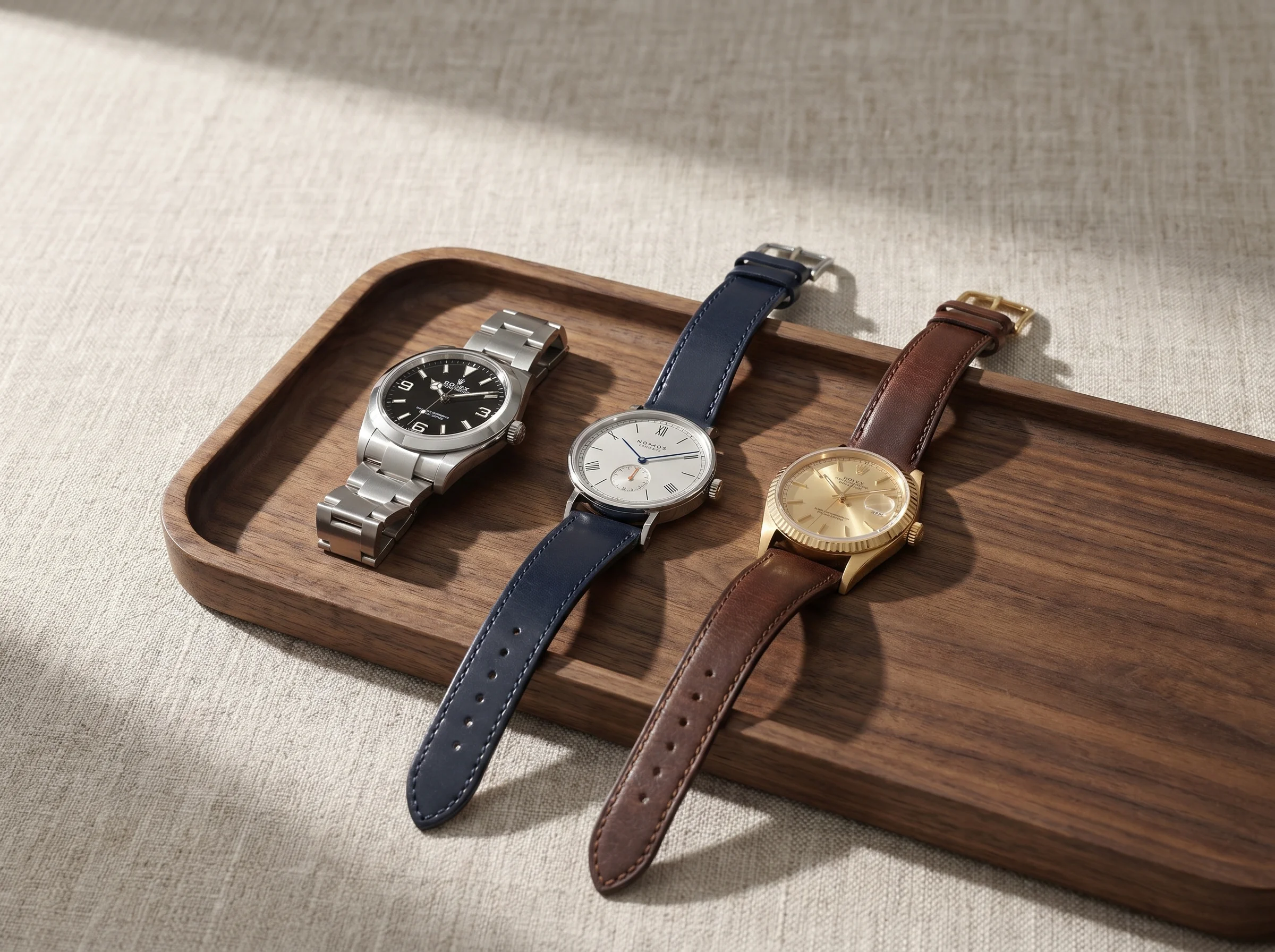 Liquidity has moved to the middle: clean 36 to 39mm pieces move fastest. (AI-generated illustration.)
The number that matters more than diameter
One caution before you chase a small number on a spec sheet. Diameter is only half the story.
Lug-to-lug, the distance from top lug tip to bottom lug tip, is what decides whether a watch overhangs your wrist. A 38mm watch with long lugs can wear larger than a 40mm with short, curved ones, which is exactly the trap with some otherwise lovely slim watches, including the Nomos Ahoi we covered this week. Before you buy any watch, smaller ones included, look up the lug-to-lug and measure your own wrist. The question stopped being how big and became how well it fits.
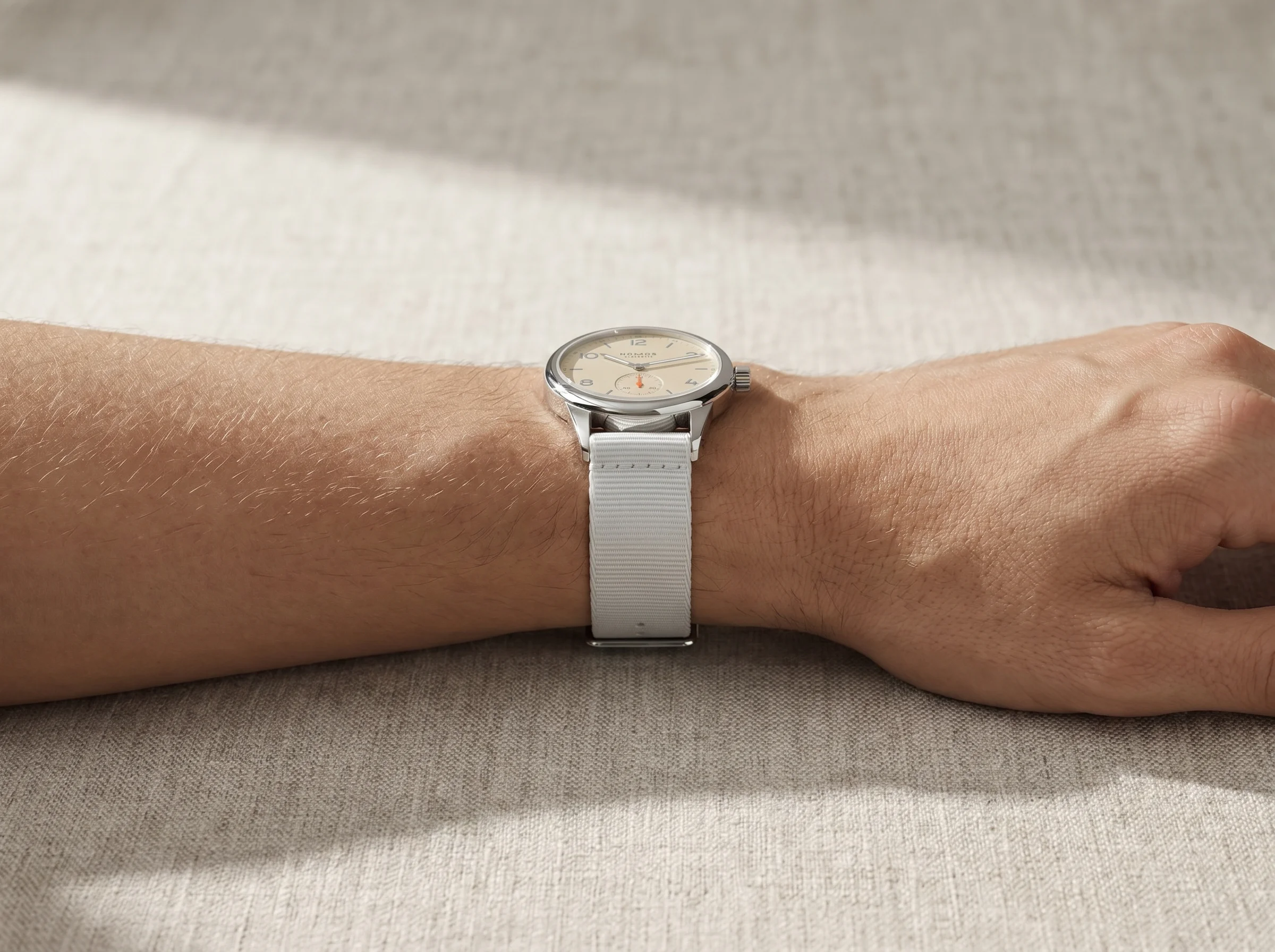 Diameter sells the watch. Lug-to-lug decides whether it actually fits. (AI-generated illustration.)
A working dealer's read
We have watched this shift arrive at the counter, and the advice is simple.
Buy the watch that fits your wrist and your life, not the one that wins a staring contest across the room. In 2026 that usually lands somewhere in the 36 to 39mm range, and the happy accident is that the same watch is also the easier one to sell later. If you want a compact classic with real liquidity behind it, the Tudor Black Bay 58 at 39mm is the gateway most buyers should start with, and our pre-owned Rolex selection is full of 36mm Datejusts and Oyster Perpetuals that have quietly been the right answer all along.
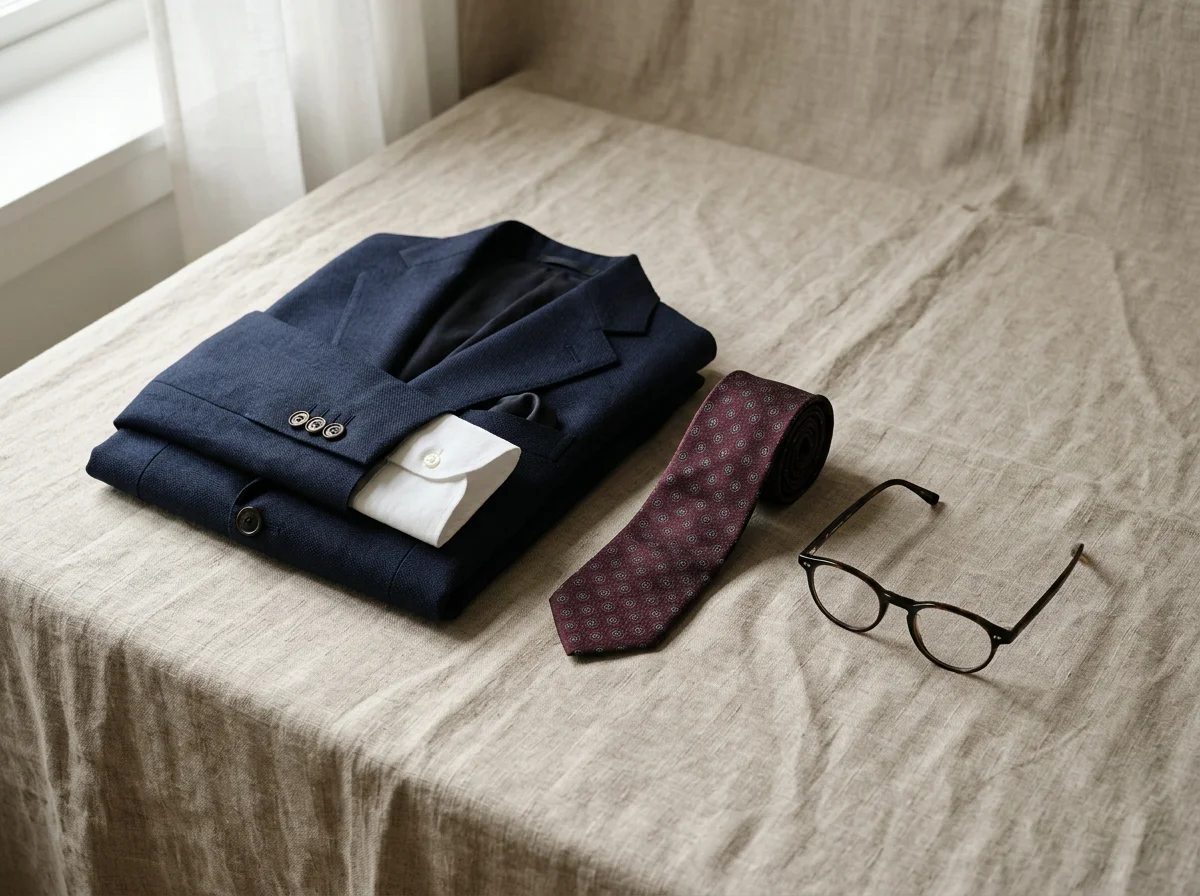 Restraint is the look now, and the wrist followed. (AI-generated illustration.)