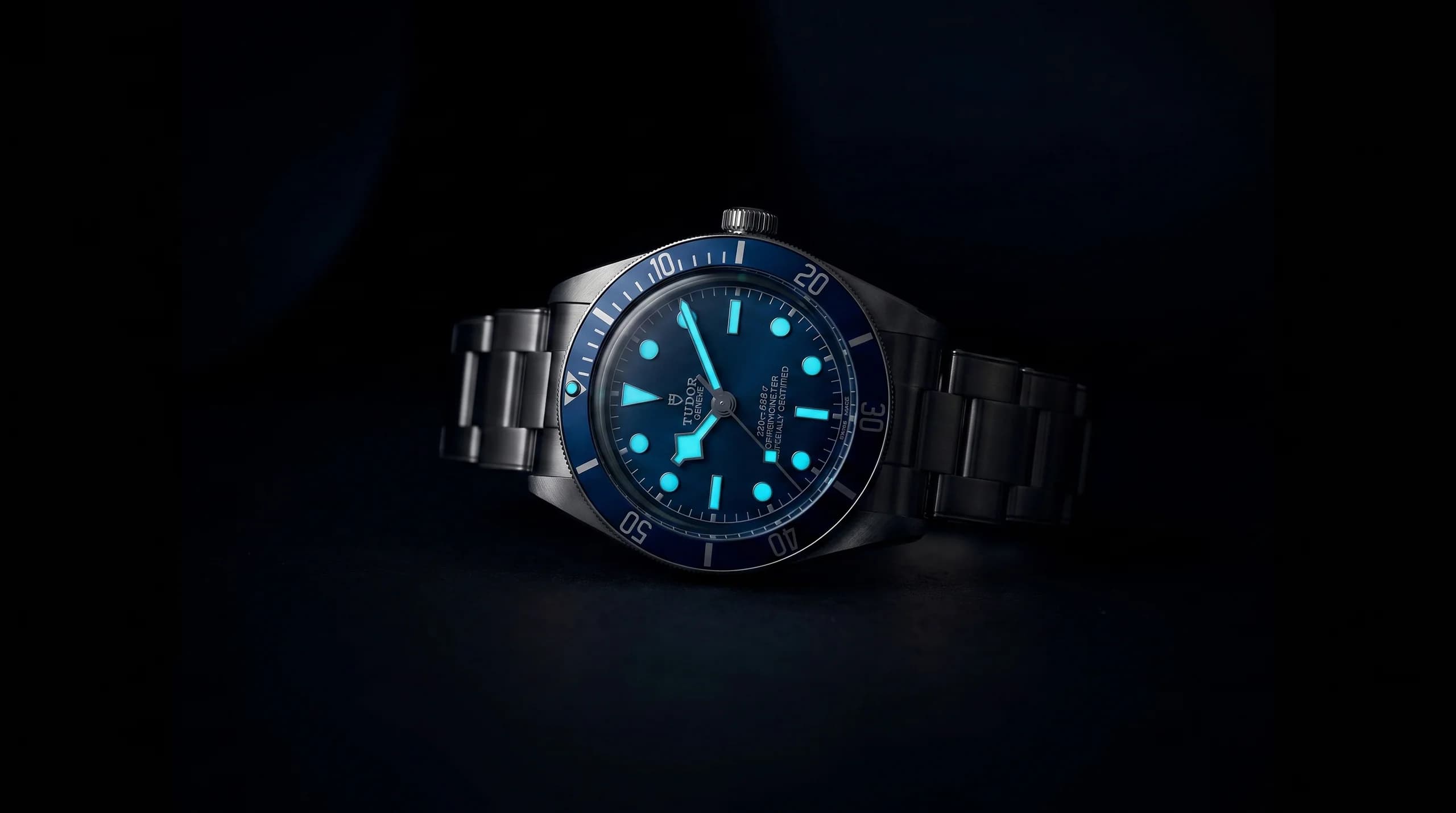
Lume is the glowing material on a watch's hands and markers that lets you read the time in the dark. There are two systems in use today. Super-LumiNova is a paint that you charge with light and that fades over the night. Tritium gas tubes glow on their own for years without any light at all. Super-LumiNova vs tritium is the choice behind almost every glowing watch, and here is how they actually differ.
The images in this article are AI-generated for illustration. They are built from real reference photos of the actual watches discussed and are not photographs of specific inventory.
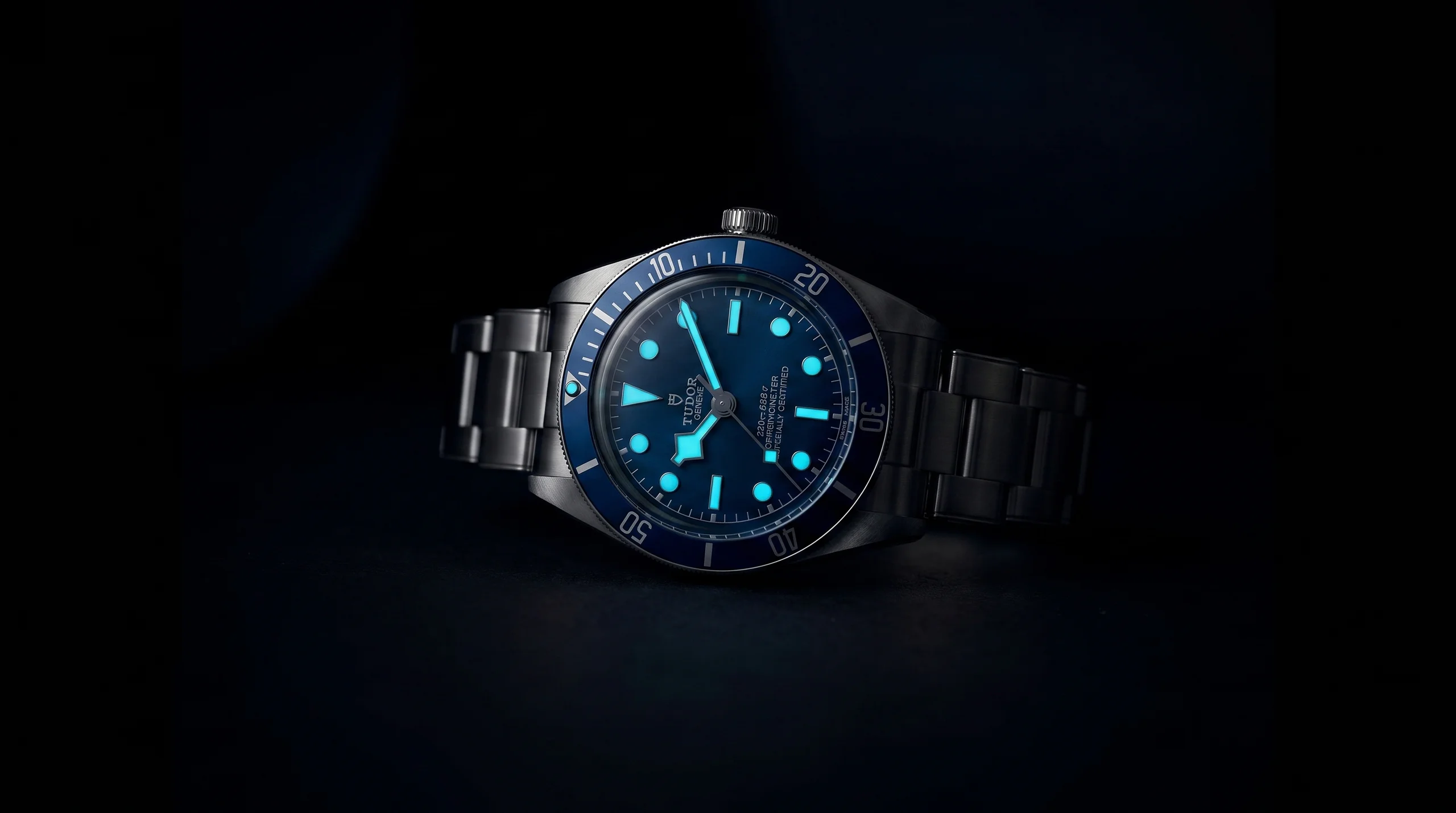 A dive watch lit up with Super-LumiNova. Charge it with light, and it glows brightly for hours.
The short answer
Super-LumiNova is the common one. It is a non-radioactive pigment that soaks up light and glows brightly for a few hours before fading, so it needs a top-up from the sun or a lamp. Tritium gas tubes are the other option: sealed vials that glow continuously for 10 to 25 years with no charging, but dimmer and always the same brightness. Most watches use Super-LumiNova. Tool and military watches often use tritium tubes.
What watch lume actually is
Lume is short for luminous material. It is applied to the hands, hour markers, and often the bezel pip so the watch stays legible in the dark. How it produces light is the whole story, because the two modern systems work in completely different ways.
One is photoluminescent: it absorbs light energy and releases it slowly as a glow. The other is self-powered: it produces light continuously from a sealed radioactive gas. Neither is better in the abstract, they suit different jobs.
Super-LumiNova and Lumibrite: the charge-and-fade type
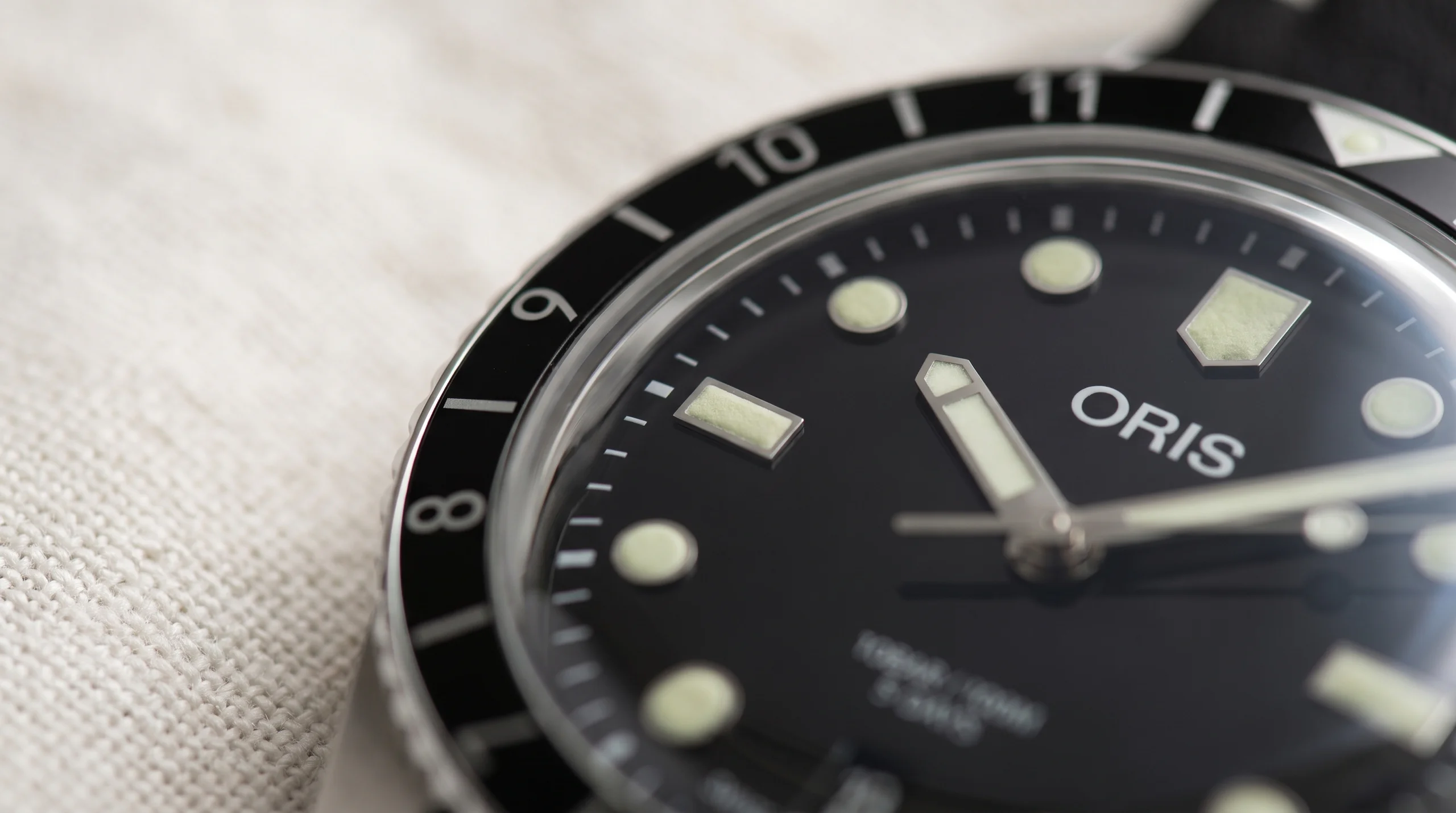 In daylight, Super-LumiNova is just a pale pigment packed into the hands and markers. Light is what wakes it up.
Super-LumiNova is a photoluminescent pigment based on strontium aluminate, made by the Swiss firm RC Tritec. Seiko's in-house equivalent is called Lumibrite. It charges when exposed to light, glows most intensely right after, then fades over several hours. It is completely non-radioactive and safe.
It comes in grades and colors. The familiar green is often the C3 pigment, while the blue-glowing BGW9 is popular on modern dive watches. Brighter grades and thicker application give a stronger, longer glow, which is why a serious diver lights up far better than a dress watch with a thin coat.
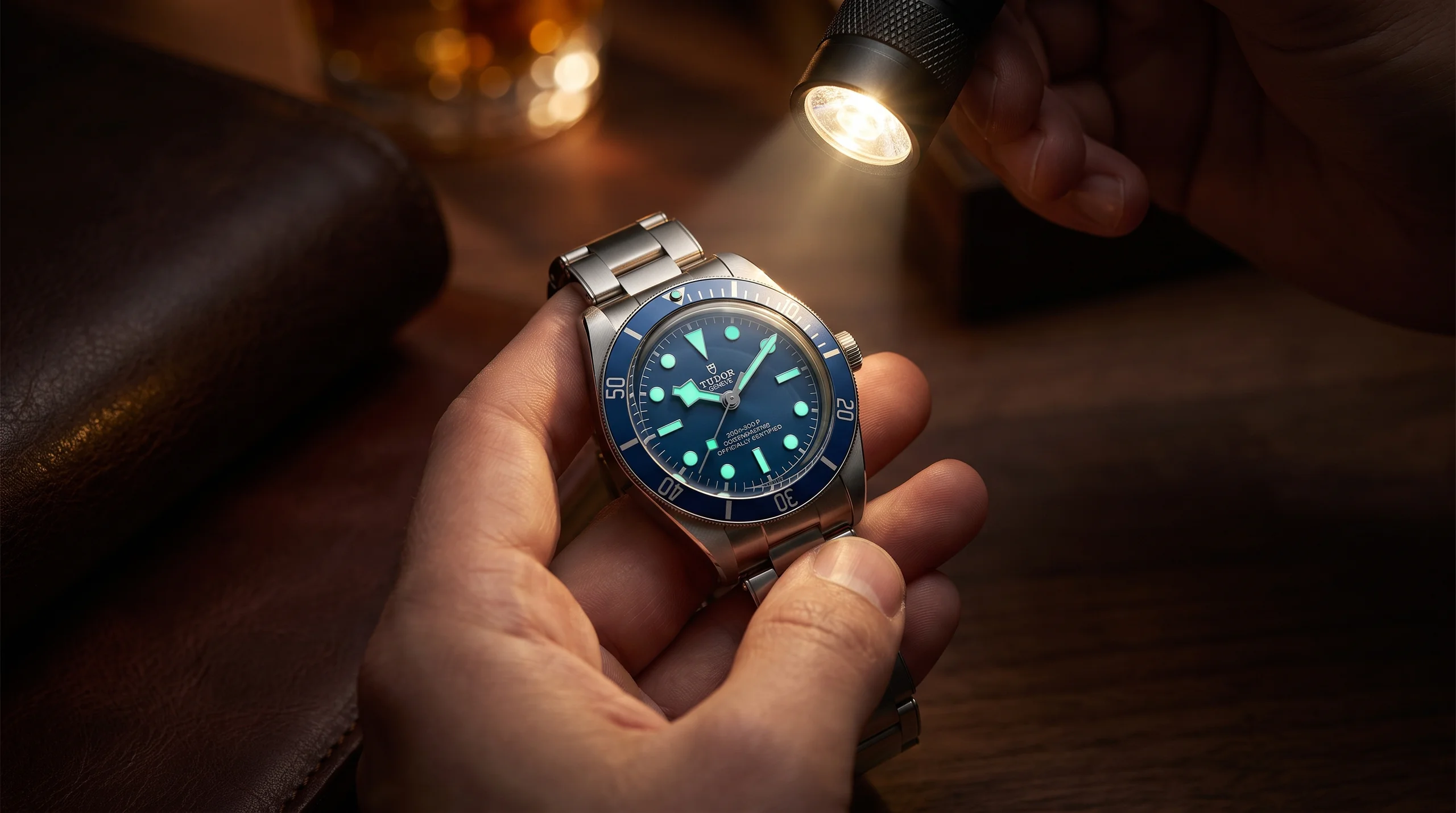 To get the brightest glow, charge it under strong light. Sunlight and UV work fastest.
Tritium tubes: the always-on type
Tritium gas tubes, sometimes labeled GTLS for gaseous tritium light source, are tiny sealed glass vials coated on the inside with a phosphor and filled with tritium gas. The gas continuously excites the phosphor, so the tube glows on its own with no charging, day or night, for around 10 to 25 years as the tritium slowly decays.
The trade-off is brightness and cost. Tritium tubes are dimmer than a freshly charged Super-LumiNova dial, but they never need a light source and never fade during the night. Brands like Ball, Luminox, and traser build around them, and they are a favorite for military and tool watches where always-on legibility matters.
A quick word on radium and safety
Early luminous watches, from roughly the 1910s to the 1950s, used radium paint, which is intensely radioactive and caused real harm to the workers who applied it. The industry moved to tritium paint mid-century, which is far safer, and then to today's non-radioactive Super-LumiNova.
For a buyer, the practical points are simple. Super-LumiNova is not radioactive at all. Tritium tubes contain a small amount of radioactive gas but are sealed and safe to wear. Only genuinely vintage radium dials warrant caution, and they should not be opened or handled carelessly.
Vintage patina and modern imitations
Old tritium and radium lume ages. Over decades it can turn from white to a warm cream or pumpkin tone, and collectors prize that patina on vintage watches, sometimes paying more for an evenly aged dial. Modern watches often imitate the look with cream-colored "faux-patina" Super-LumiNova from the factory. It is purely cosmetic, and whether you love it or not is down to taste. If you own a real vintage piece, our guide on whether to polish a vintage watch applies to the dial too: originality usually wins.
Which lume is best for you
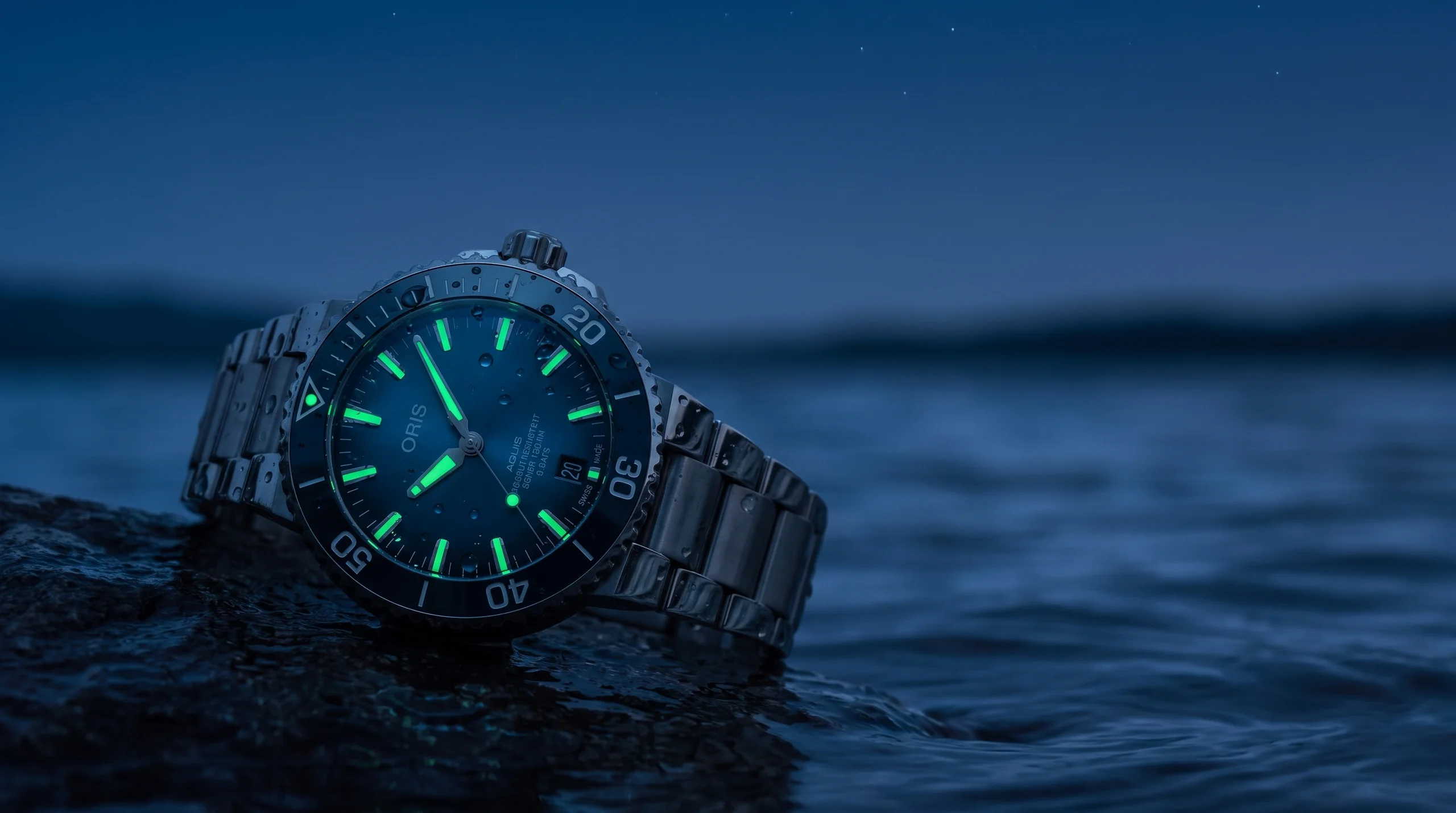 For most people, a well-lumed Super-LumiNova diver is all the glow you need.
For most buyers, a dive watch with a thick, high-grade Super-LumiNova application is the best of both worlds: very bright when charged, and safe. If you need a watch that is legible at a glance in the dark at any hour without ever seeing light, a tritium-tube watch is the tool for the job.
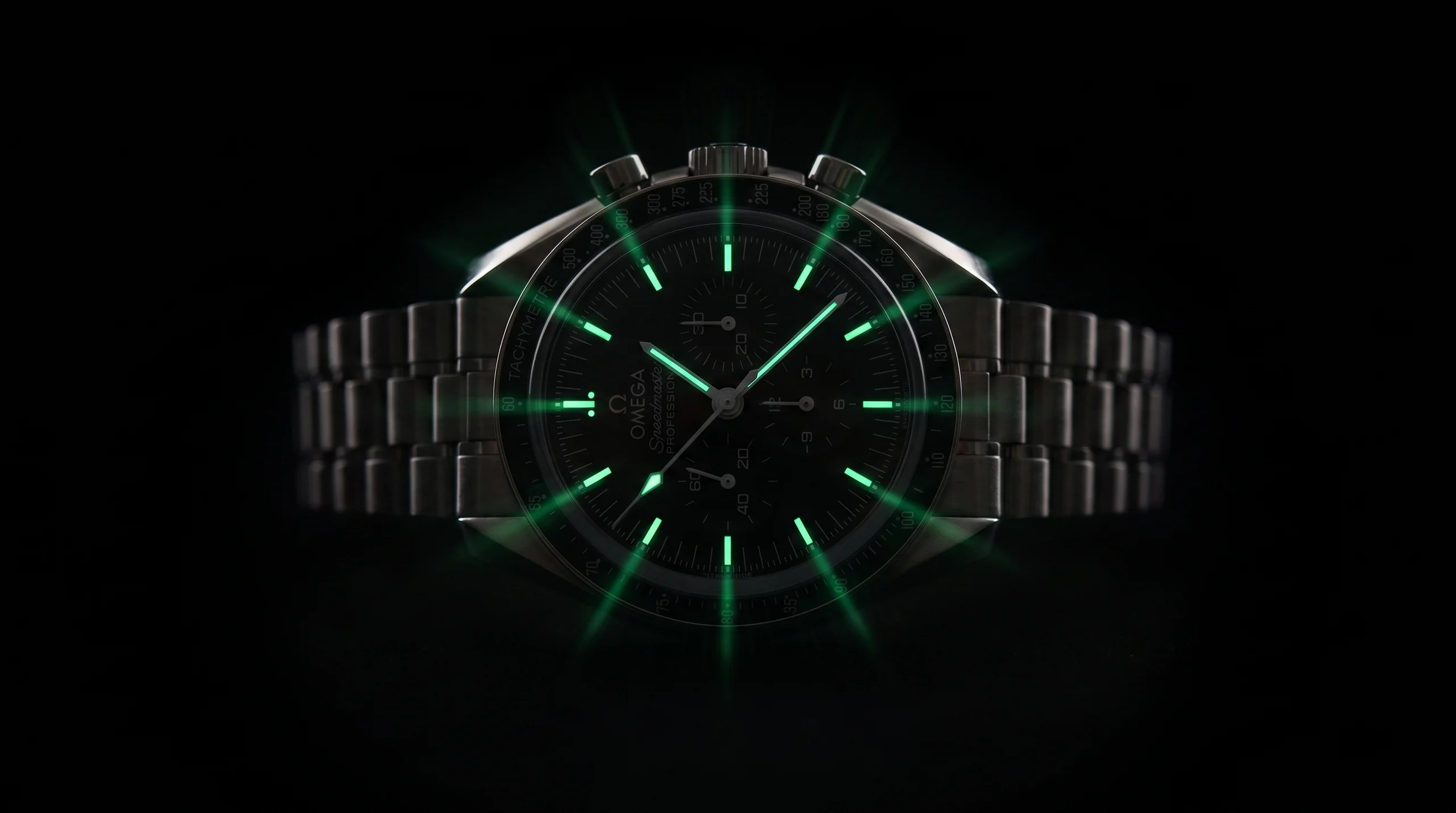 The Speedmaster and most luxury watches use Super-LumiNova. Give it light and it delivers.
Lume is one more spec to match to how you use the watch, alongside the crystal and the water resistance rating. A desk-diver rarely needs tritium tubes. A watch you actually rely on in the dark might.
FAQ
What is watch lume?
Watch lume is the luminous material applied to a watch's hands, hour markers, and bezel so it can be read in the dark. Today it is either a photoluminescent paint like Super-LumiNova that charges with light, or sealed tritium gas tubes that glow on their own.
What is Super-LumiNova?
Super-LumiNova is a non-radioactive photoluminescent pigment made by the Swiss firm RC Tritec. It absorbs light and then releases it as a glow that is brightest right after charging and fades over several hours. Seiko's in-house equivalent is called Lumibrite.
What is the difference between Super-LumiNova and tritium tubes?
Super-LumiNova must be charged by light and fades over the night, but it glows very brightly when fresh and is non-radioactive. Tritium gas tubes glow continuously for 10 to 25 years with no charging, but are dimmer and contain a small amount of sealed radioactive gas.
Is watch lume radioactive?
Super-LumiNova and Lumibrite are not radioactive. Tritium gas tubes contain a small amount of radioactive tritium but are sealed and safe to wear. Vintage radium dials from before the 1960s are genuinely radioactive and should be handled with care and never opened.
How do you charge watch lume, and why won't mine glow?
Photoluminescent lume like Super-LumiNova charges by exposure to light, and sunlight or a UV light charges it fastest and brightest. If your lume will not glow, it either has not been charged, the application is thin or low grade, or older lume has degraded. Only tritium-tube watches glow without any charging.
Browse authenticated pre-owned dive and tool watches with strong lume at 5dwatches.com, where every piece is inspected and authenticated before it ships.