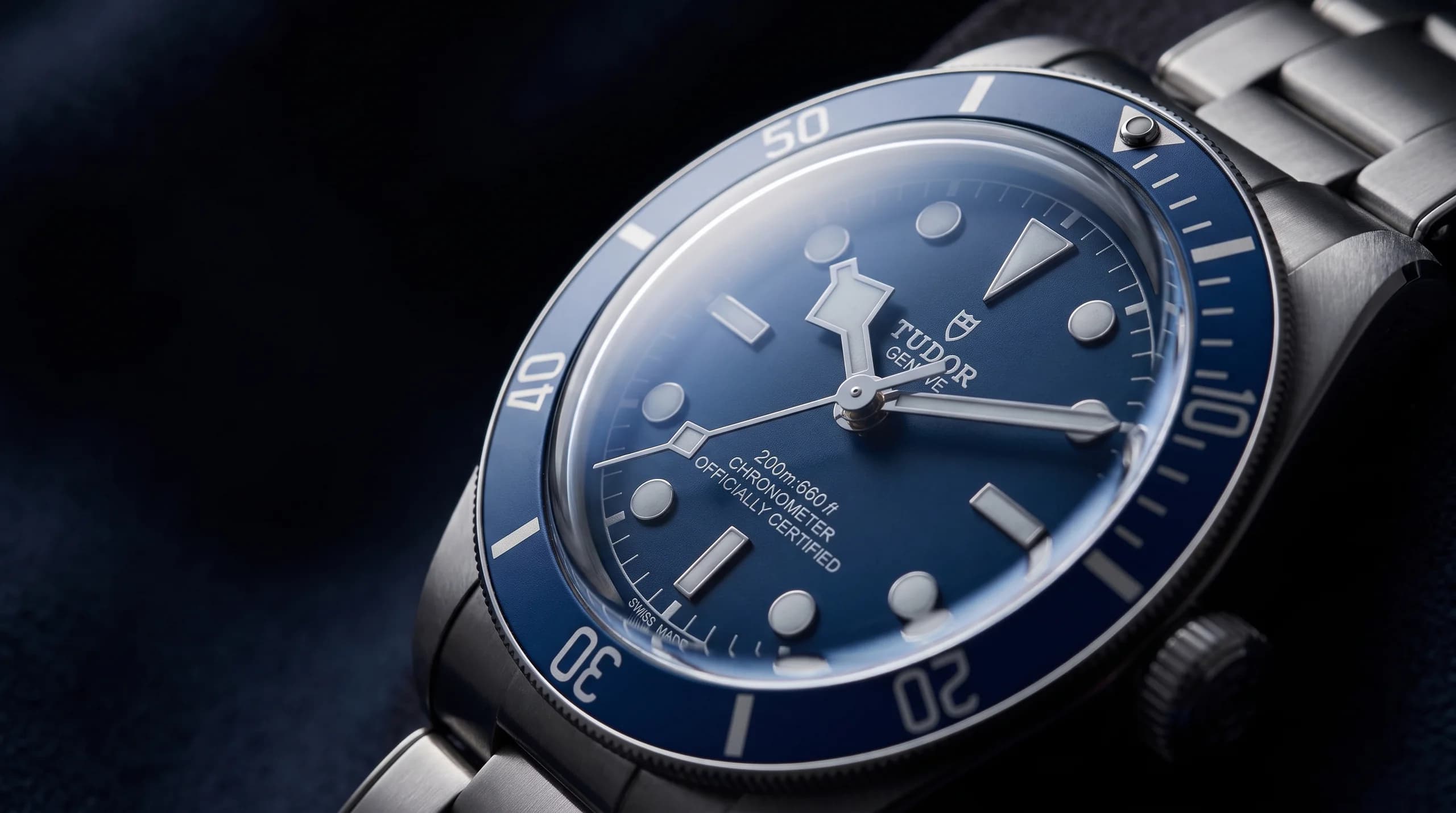
The crystal is the clear cover over the dial, and it is the part of a watch you look through every time you check the time. There are three common types: sapphire, acrylic, and mineral. Sapphire vs acrylic crystal is the debate most buyers care about, but mineral sits in between and matters too. Here is what actually separates them, and which one is right for you.
The images in this article are AI-generated for illustration. They are built from real reference photos of the actual watches discussed and are not photographs of specific inventory.
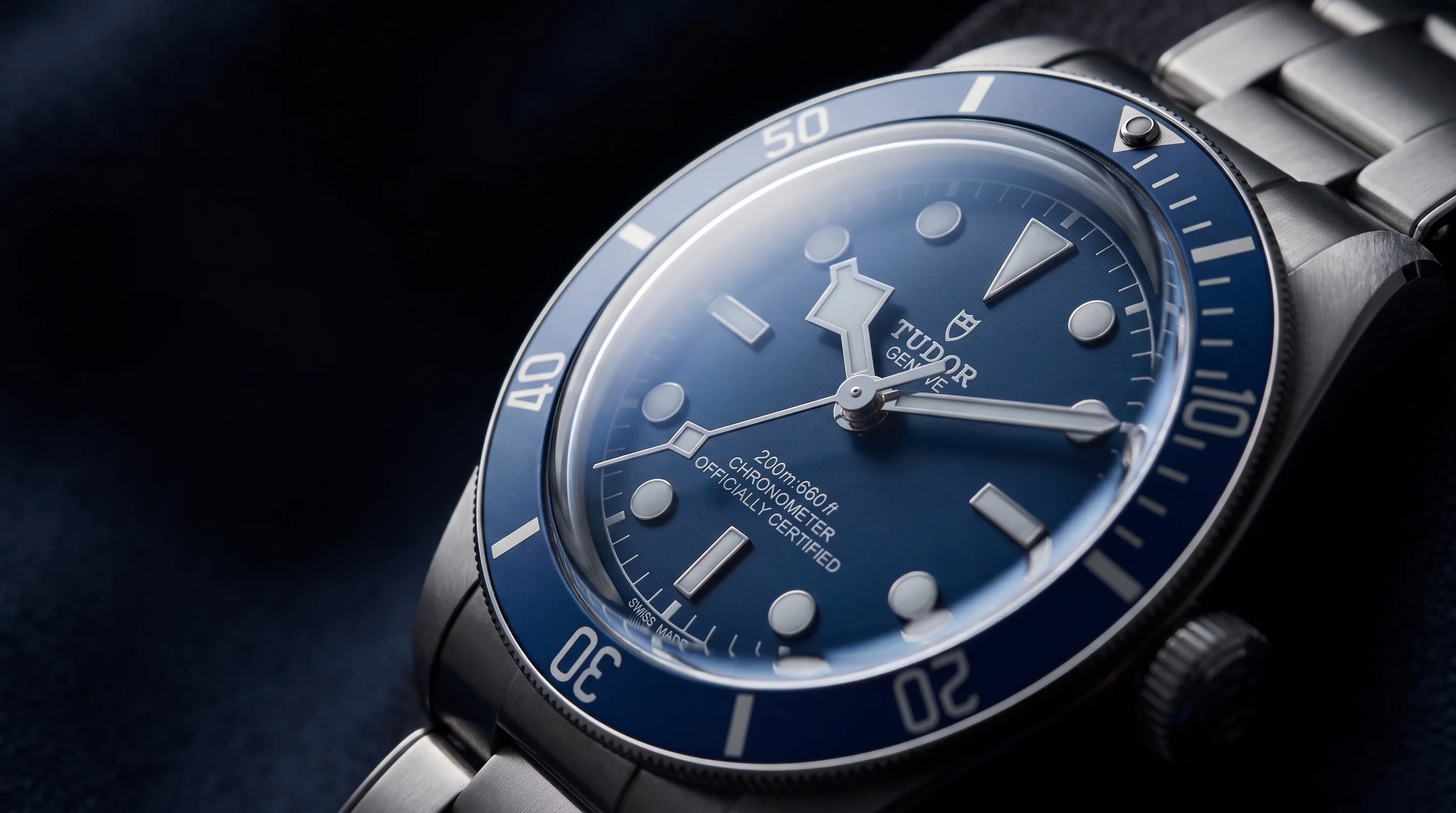 A sapphire crystal with anti-reflective coating. The hardest of the three, and the standard on most watches over a few hundred dollars.
The short answer
Sapphire is the hardest and most scratch-resistant, and it is what you want on a daily watch. Acrylic is soft plastic that scratches easily but shrugs off impacts and polishes out at home, which is why vintage watches and the Speedmaster Professional still use it. Mineral glass sits in the middle: harder than acrylic, cheaper than sapphire, common on affordable watches. If you are choosing today, sapphire is the default, and acrylic is a deliberate style choice.
What a watch crystal is
The crystal is the transparent disc that protects the dial and hands. It is not actually crystal in the geological sense, the name is a holdover. What matters is the material, because that decides how the watch survives daily life: whether it scratches, whether it cracks, and how it handles glare.
Two properties define each type. Hardness is how well it resists scratches, measured on the Mohs scale. Toughness is how well it resists shattering on impact. No crystal is best at both, which is the whole trade-off.
Sapphire: the hard one
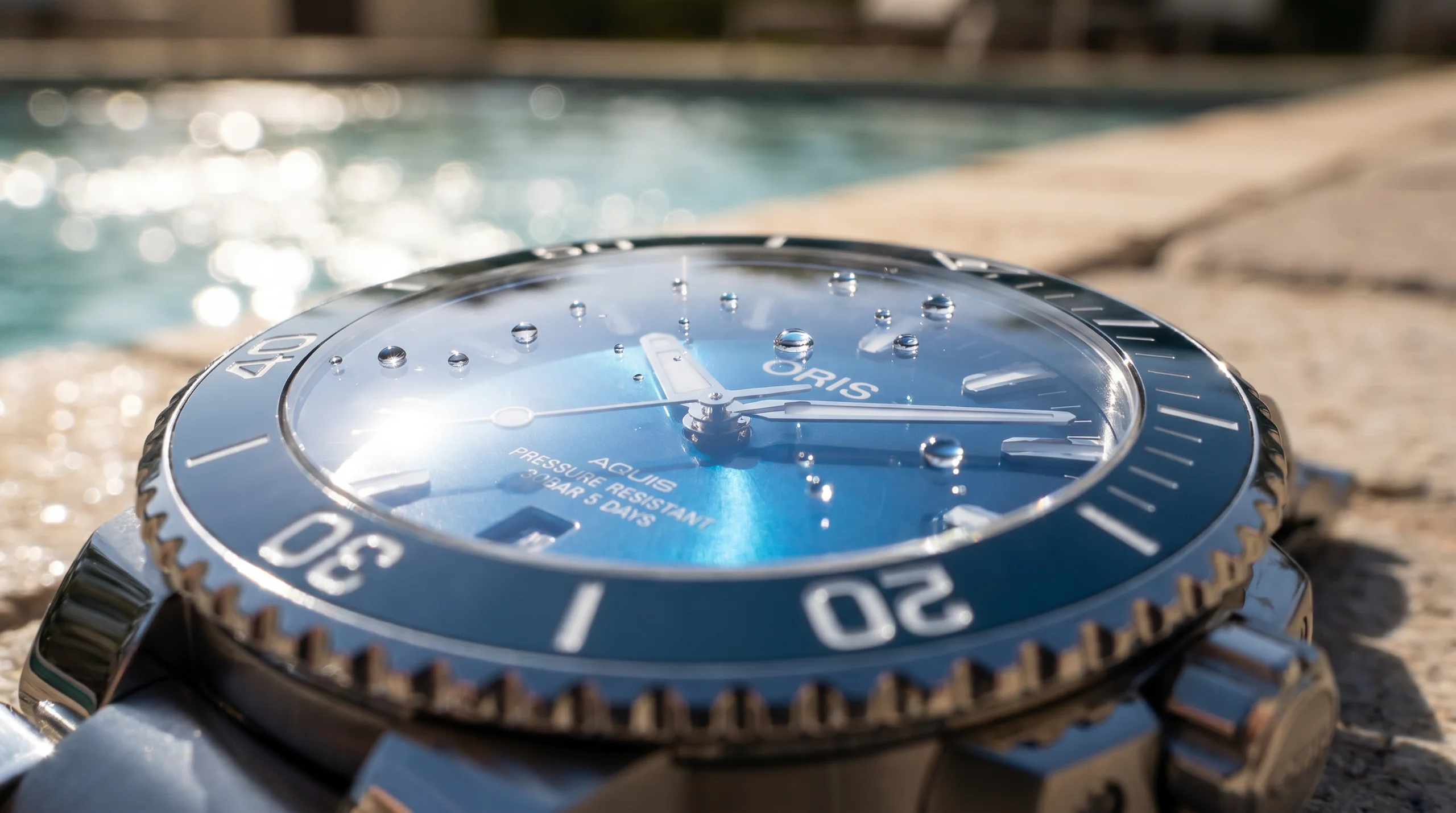 Sapphire with a blue anti-reflective coating. The coating kills glare so you see the dial, not your own reflection.
Sapphire crystal is synthetic sapphire, the same material as the gemstone, grown in a lab. It rates 9 on the Mohs scale, just below diamond, which means almost nothing you encounter day to day will scratch it. Keys, coins, desk edges, they all bounce off.
The trade-off is toughness. Sapphire is hard but brittle, so a sharp knock on a tile floor or a door frame can chip or shatter it where a softer crystal would survive. It is also the most expensive to make and replace. Most watches above a few hundred dollars use sapphire, usually with an anti-reflective coating to cut glare.
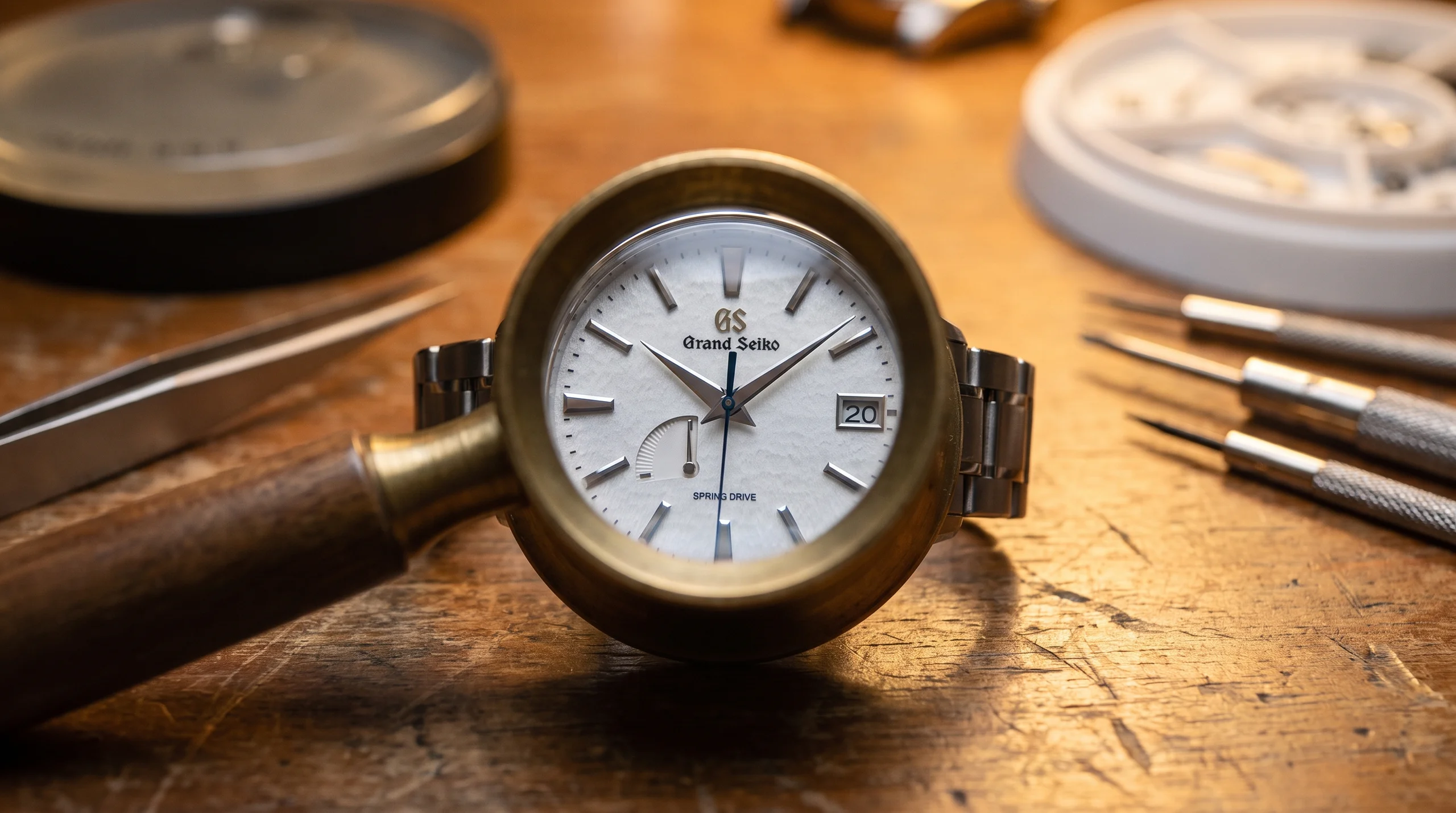 Under a loupe, a clean sapphire crystal reads as flawless. It is the reason a luxury dial looks so crisp years into ownership.
Acrylic: the soft, tough one
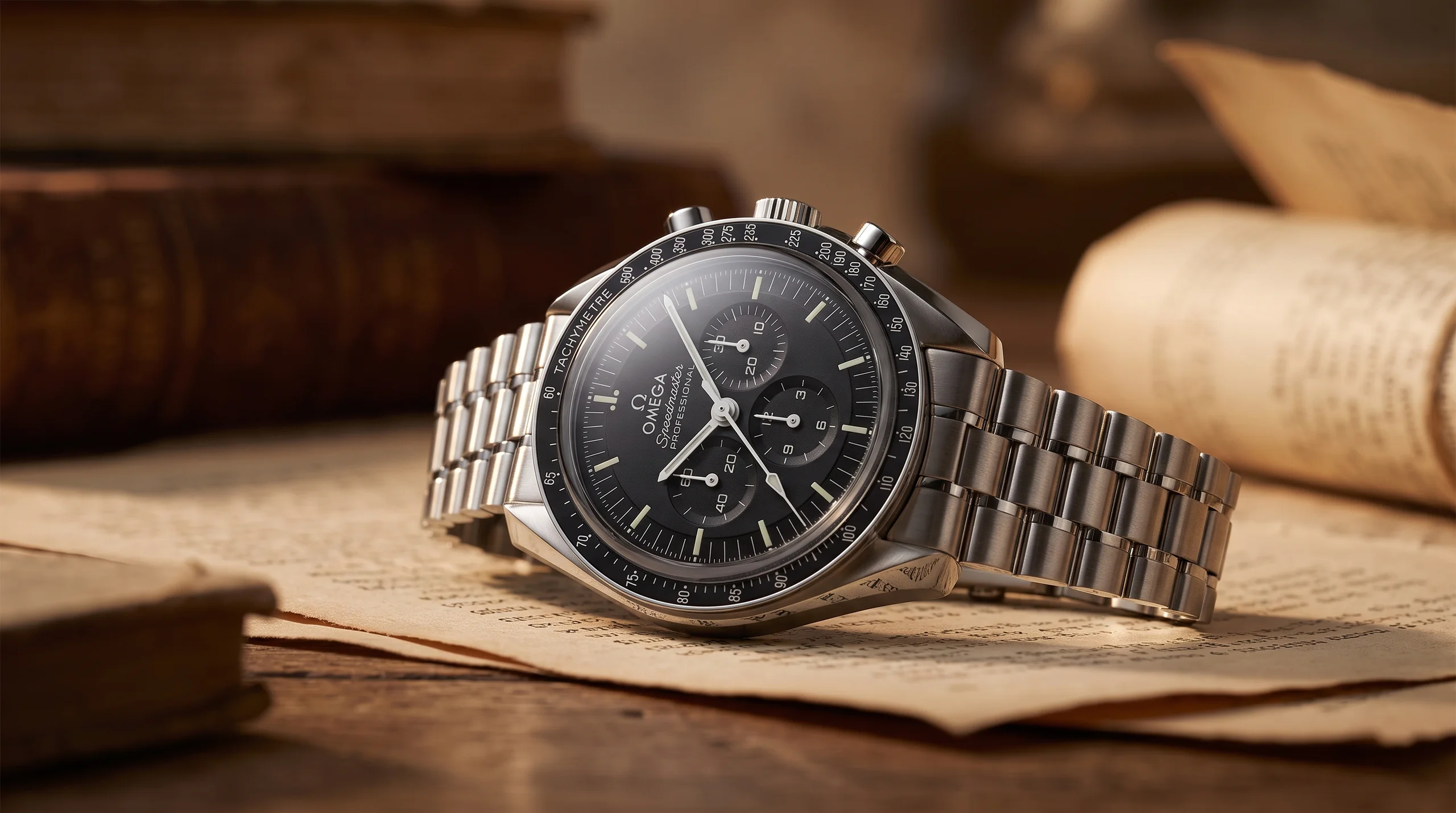 The Omega Speedmaster still uses an acrylic Hesalite crystal, the same material NASA approved because it will not shatter in a cockpit.
Acrylic, also called Hesalite or plexiglass, is clear plastic. It is the softest crystal and scratches from almost anything, which sounds like a fatal flaw until you learn the upside: those scratches polish out at home in minutes with a mild abrasive like Polywatch. A sapphire scratch, rare as it is, means a full replacement.
Acrylic is also nearly shatterproof. It flexes and deforms rather than cracking, which is why NASA chose it for the Speedmaster and why nearly every vintage watch wears it. It gives a warm, slightly distorted look at the edges that many collectors love. It is the cheapest crystal, and on the right watch it is a feature, not a compromise. If you buy vintage, expect acrylic, and read our take on whether to polish an old watch before you touch anything else.
Mineral: the middle ground
Mineral glass is hardened or tempered glass, the same broad family as a drinking glass but treated for durability. It rates around 5 to 6 on the Mohs scale, harder than acrylic but well short of sapphire. Seiko's proprietary Hardlex is the best-known example.
Mineral is the budget middle. It resists scratches better than acrylic and costs far less than sapphire, but it can both scratch and shatter, and unlike acrylic its scratches do not buff out. You find it on affordable watches and some tool watches where a shatter-resistant glass is preferred. Some brands use a "sapphire-coated" mineral crystal, which adds a thin hard layer that wears off over time.
Domed or flat, and the coating question
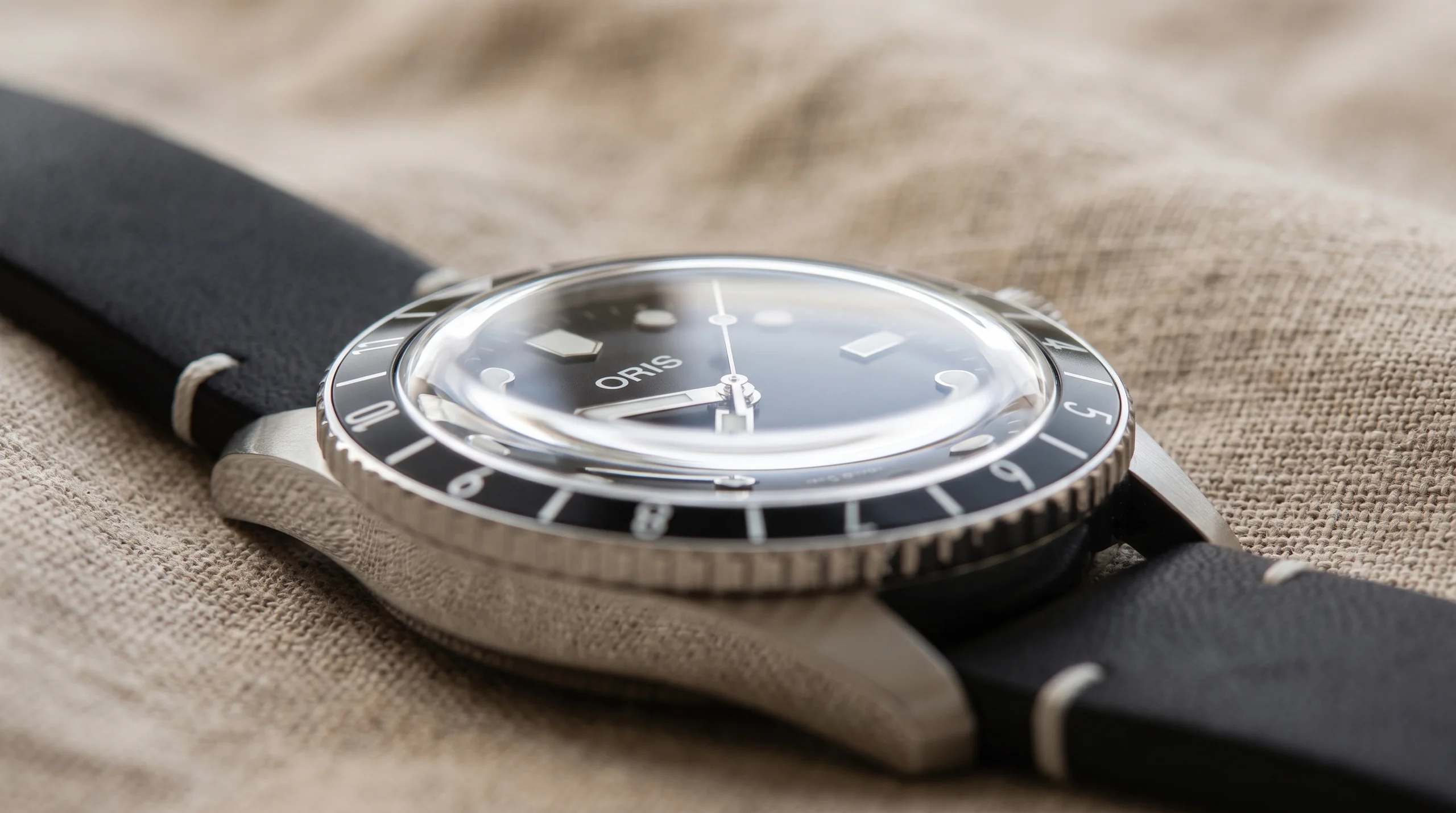 A high domed crystal bends the dial at its edge. It is a vintage look now offered in both acrylic and sapphire.
Shape is separate from material. A flat crystal is modern and reflection-free from most angles. A domed or "box" crystal rises above the bezel and warps the dial at the edges for a vintage feel, and you can get that dome in acrylic or sapphire today.
Anti-reflective coating is the other variable. It is a microscopically thin layer that cuts glare so you see the dial instead of your reflection. It can sit on the inside of the crystal, the outside, or both. Inside coatings last, while outside coatings look cleaner but wear over the years. On a sapphire diver, that blue sheen you see is the coating doing its job.
Which crystal should you choose
For a daily watch you want to look perfect for years, choose sapphire. For a vintage piece, or a tool watch you would rather not shatter, acrylic is the honest choice and the cheapest to maintain. Mineral is fine on a budget watch but is the one to avoid paying up for.
The crystal should match how you wear the watch, the same way the bracelet or strap and the water resistance rating should. Buy the crystal that fits your life, not the spec sheet.
FAQ
What is the best watch crystal?
For everyday durability and clarity, sapphire is the best watch crystal because it is the most scratch-resistant. Acrylic is the best choice for vintage watches and shatter resistance, and it is the cheapest to repair. Mineral glass is a budget middle ground. The right answer depends on how you wear the watch.
Is sapphire crystal scratch-proof?
Sapphire is scratch-resistant, not scratch-proof. It rates 9 on the Mohs hardness scale, so normal daily contact will not mark it, but it can be scratched by materials as hard as diamond, and it can chip or shatter on a hard impact because it is brittle.
What is a Hesalite or acrylic crystal?
Hesalite is Omega's name for an acrylic (plastic) crystal. Acrylic scratches easily but the scratches polish out at home with a mild abrasive, and it is nearly shatterproof because it flexes rather than cracks. It is used on vintage watches and the Speedmaster Professional Moonwatch.
How do sapphire, mineral, and acrylic compare in hardness?
On the Mohs scale, sapphire rates about 9, mineral glass rates about 5 to 6, and acrylic rates about 3. Higher is more scratch-resistant, so sapphire resists scratches best and acrylic least. Toughness runs the other way, with acrylic the least likely to shatter.
Can you fix a scratched watch crystal?
An acrylic crystal can usually be polished at home with a product like Polywatch to remove light scratches. Mineral and sapphire scratches do not buff out and generally require replacing the crystal, which a watchmaker can do. Sapphire replacement is the most expensive of the three.
Browse authenticated pre-owned watches with sapphire and acrylic crystals at 5dwatches.com, where every piece is inspected and authenticated before it ships.