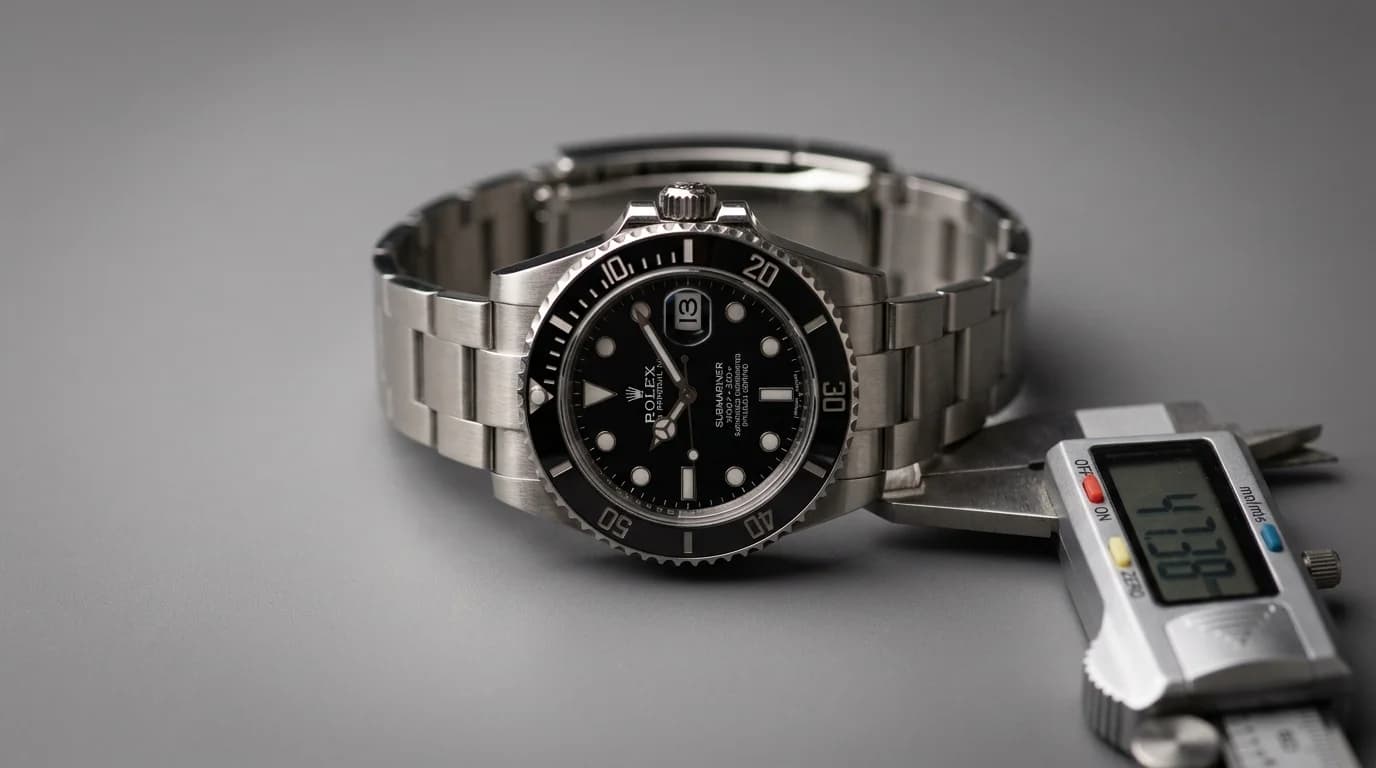
A watch can look perfectly sized on a spec sheet and still hang off your wrist like it belongs to someone else. Case diameter is not the reason. Lug-to-lug almost always is.
The Short Answer
Lug-to-lug is the vertical distance from the tip of the top lug to the tip of the bottom lug, measured across the case from 12 to 6. It determines how far a watch actually stretches across your wrist, and it can vary wildly between two watches with the same case diameter. A 40mm watch with long, flat lugs can wear larger than a 41.5mm watch with short, curved ones.
Why Diameter Alone Is Misleading
Case diameter measures the widest point of the case, edge to edge, ignoring the lugs entirely. Two watches with identical diameters can wear completely differently depending on how far their lugs extend beyond that circle.
The Classic Example
The Orient Mako II runs 41.5mm in diameter with a 46.6mm lug-to-lug. The Zodiac Super Sea Wolf runs a smaller 40mm diameter but a longer 48.9mm lug-to-lug. On paper the Zodiac looks smaller. On the wrist, the Orient actually sits more compactly because its lugs are shorter.
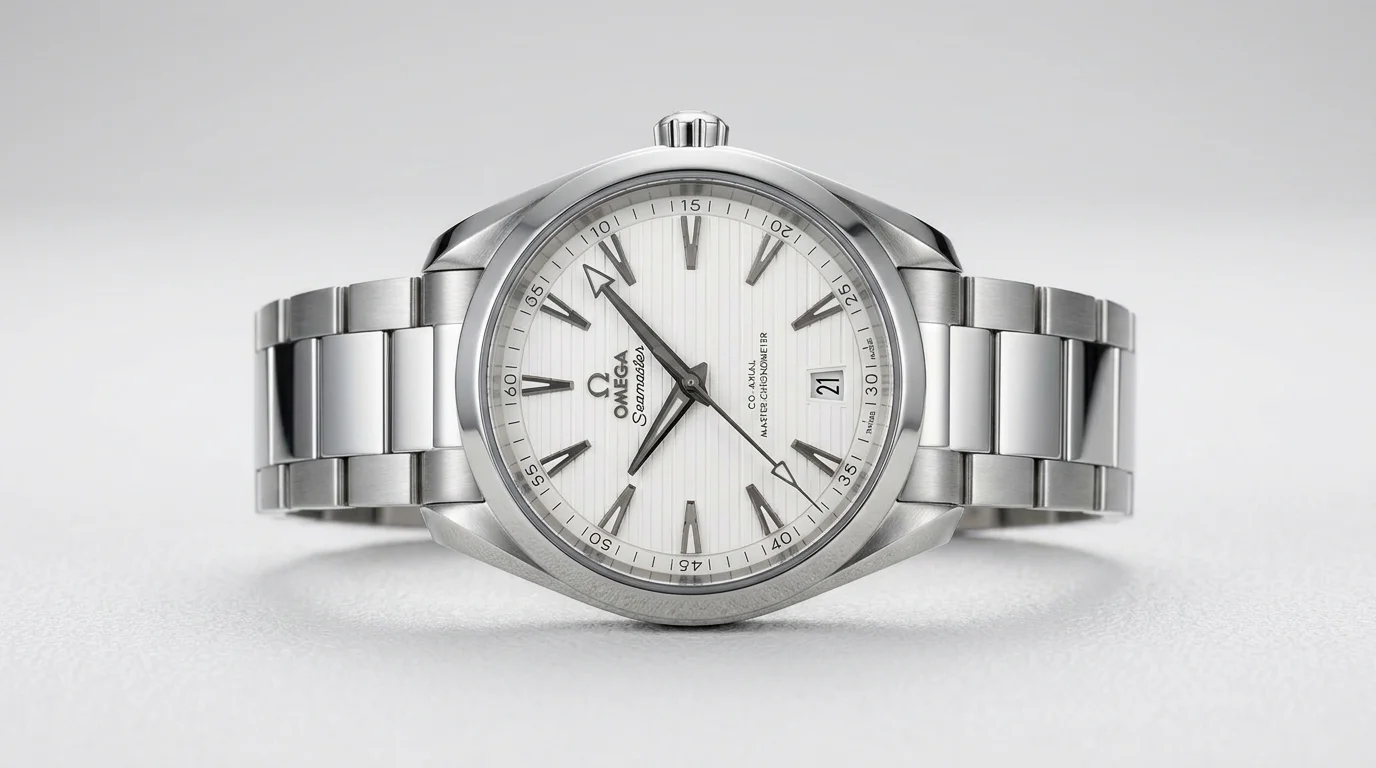 The Omega Aqua Terra at 38mm runs a compact 44.2mm lug-to-lug, which is a big part of why it wears smaller than its diameter alone would suggest.
How to Measure It Yourself
Lug-to-lug is measured with digital calipers, from the outermost tip of the top lug straight down to the outermost tip of the bottom lug.
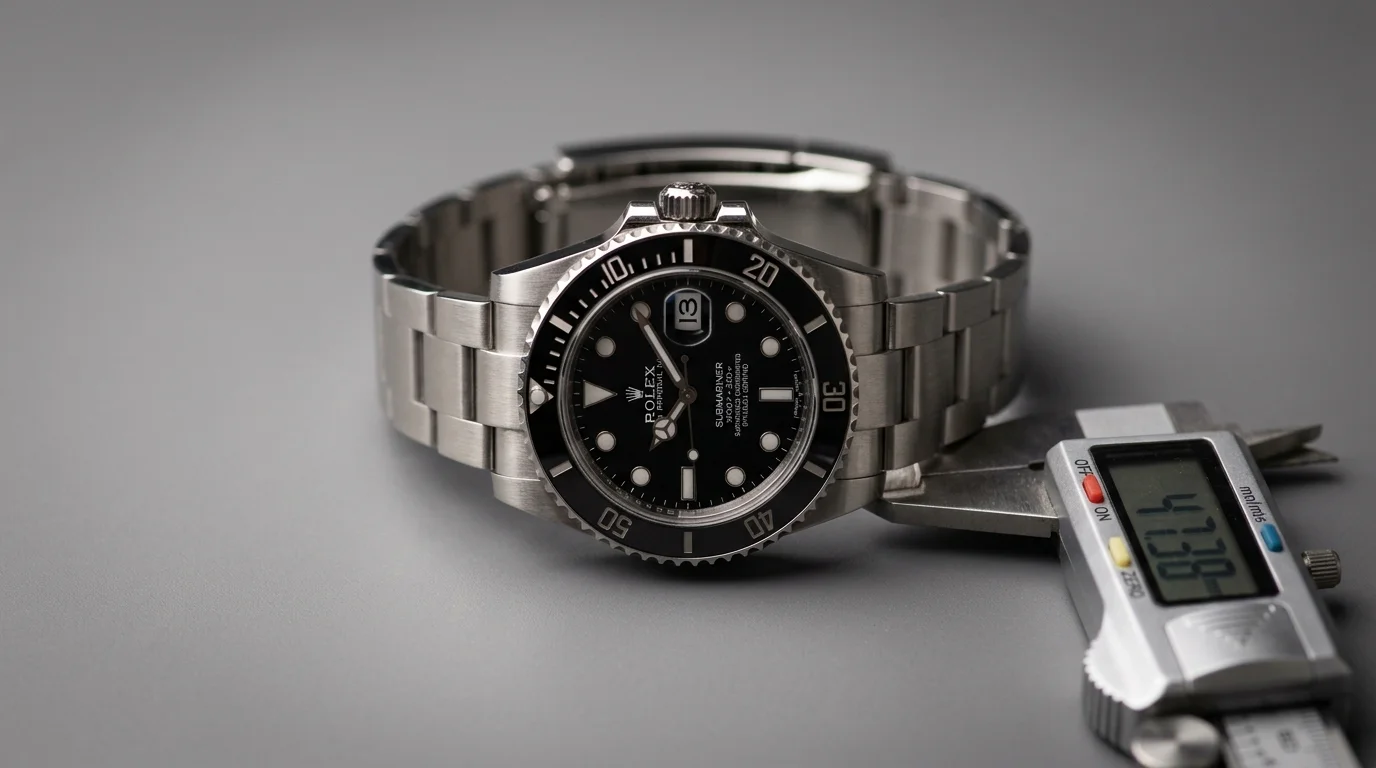 A set of digital calipers, available cheaply online, is the standard tool for checking a watch's true lug-to-lug against a listed spec.
Why You Might Need to Measure It Yourself
Brands do not always list lug-to-lug on the spec sheet the way they list diameter, water resistance, and movement caliber. If a listing skips it, measuring a watch in person (or asking a dealer to) is the only reliable way to know before you buy.
Lug-to-Lug by Wrist Size
Wrist circumference gives you a rough ceiling for how long a lug-to-lug measurement you should be shopping for.
| Wrist Circumference | Comfortable Lug-to-Lug Range |
|---|---|
| Under 6.5 inches | Below 47mm |
| 6.5 to 7 inches | 46mm to 50mm |
| 7 inches and up | 50mm and beyond |
What Happens Past Your Range
Go beyond your comfortable range and you get lug overhang, where the case edges visibly extend past your wrist. Most watch people agree that once you can see the lugs hanging off the sides, the watch does not fit, regardless of what the diameter says.
Lug Shape Changes Everything
Lug-to-lug is not just about length. The shape and angle of the lugs change how that same measurement actually wears.
- Straight or tapered lugs: sit flatter, tend to read larger on the wrist for a given length
- Contoured or downturned lugs: curve toward the wrist and hug closer, wearing shorter than the raw number suggests
- Wire lugs: thin soldered loops, seen on watches like the Panerai Radiomir, that sit close and read smaller than their measurement implies
- Integrated lugs: blend directly into the bracelet, common on sports watches, but limit strap swapping
- Hooded lugs: partially hidden beneath the case edge for a cleaner profile
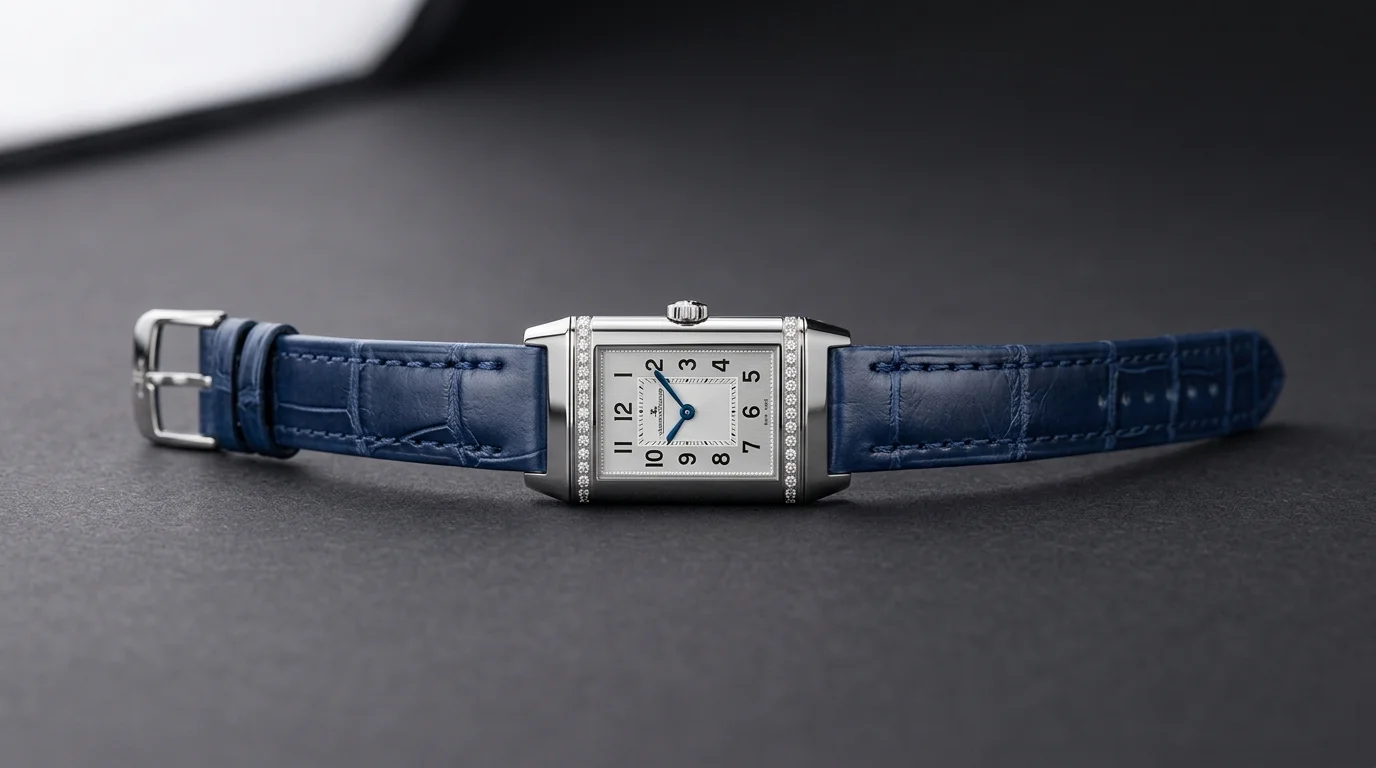 The Reverso's wire lugs are a good example of how lug construction, not just the raw millimeter number, changes how a case actually wears.
Downturned Lugs Are the Small-Wrist Buyer's Friend
If you have a smaller wrist and keep gravitating toward watches that read as "too big" on paper, look specifically for downturned or contoured lugs. They physically curve the case ends closer to your wrist, which can make a 49mm lug-to-lug wear closer to a 46mm one.
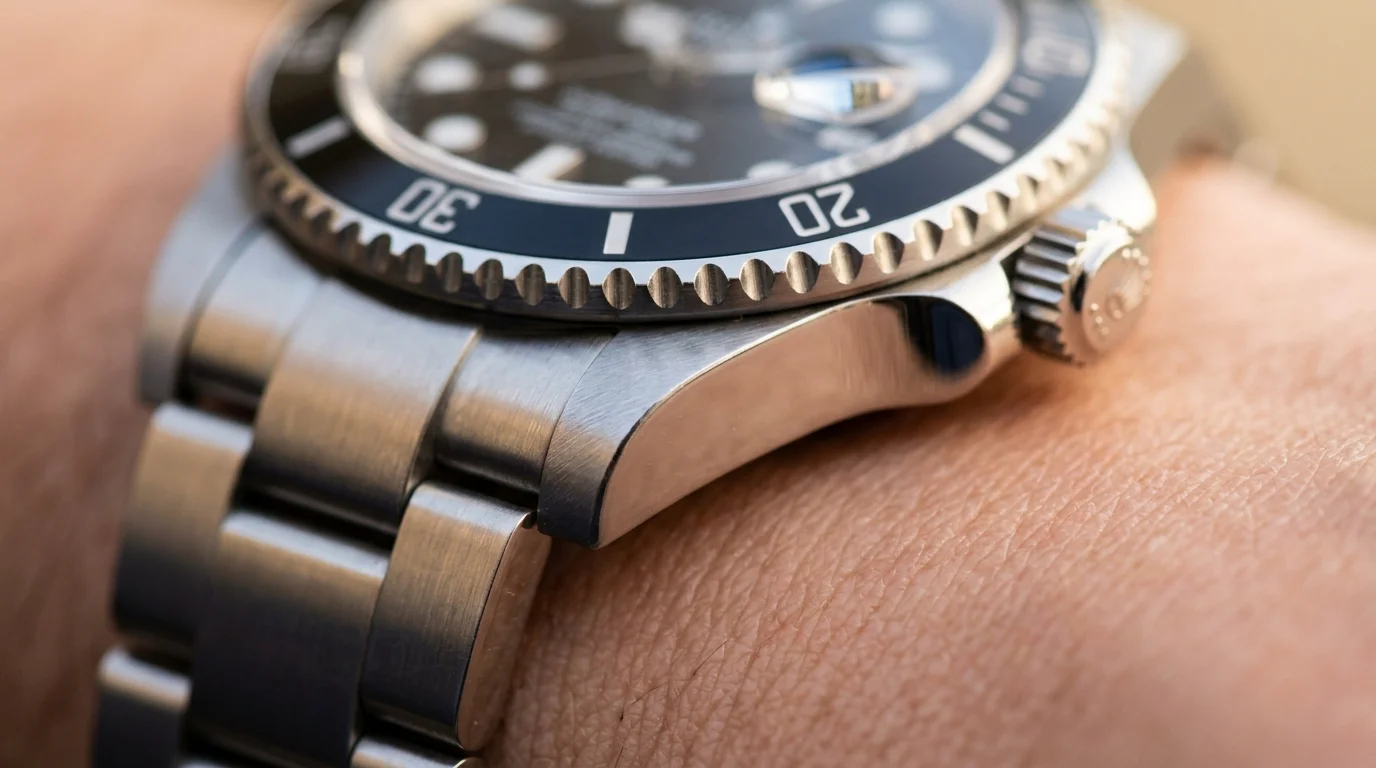 Downturned lugs curve toward the wrist rather than sitting flat, closing the gap between the case edge and your skin.
Real Reference Examples
Here is how lug-to-lug plays out across a handful of well-known references.
| Reference | Case Diameter | Lug-to-Lug |
|---|---|---|
| Omega Aqua Terra 38mm | 38mm | 44.2mm |
| Orient Mako II | 41.5mm | 46.6mm |
| Zodiac Super Sea Wolf | 40mm | 48.9mm |
| Oris Big Crown ProPilot | 41mm | 49mm |
| Rolex Submariner 126610LN | 41mm | ~48mm |
| Longines HydroConquest | 43mm | 53.5mm |
The Takeaway From This Table
Notice that diameter and lug-to-lug do not move together in any predictable way. The Submariner and the Oris are both roughly 41mm, but their lug-to-lug numbers land close together while the HydroConquest, at just two millimeters wider, adds nearly five millimeters more length. Diameter alone would never have told you that.
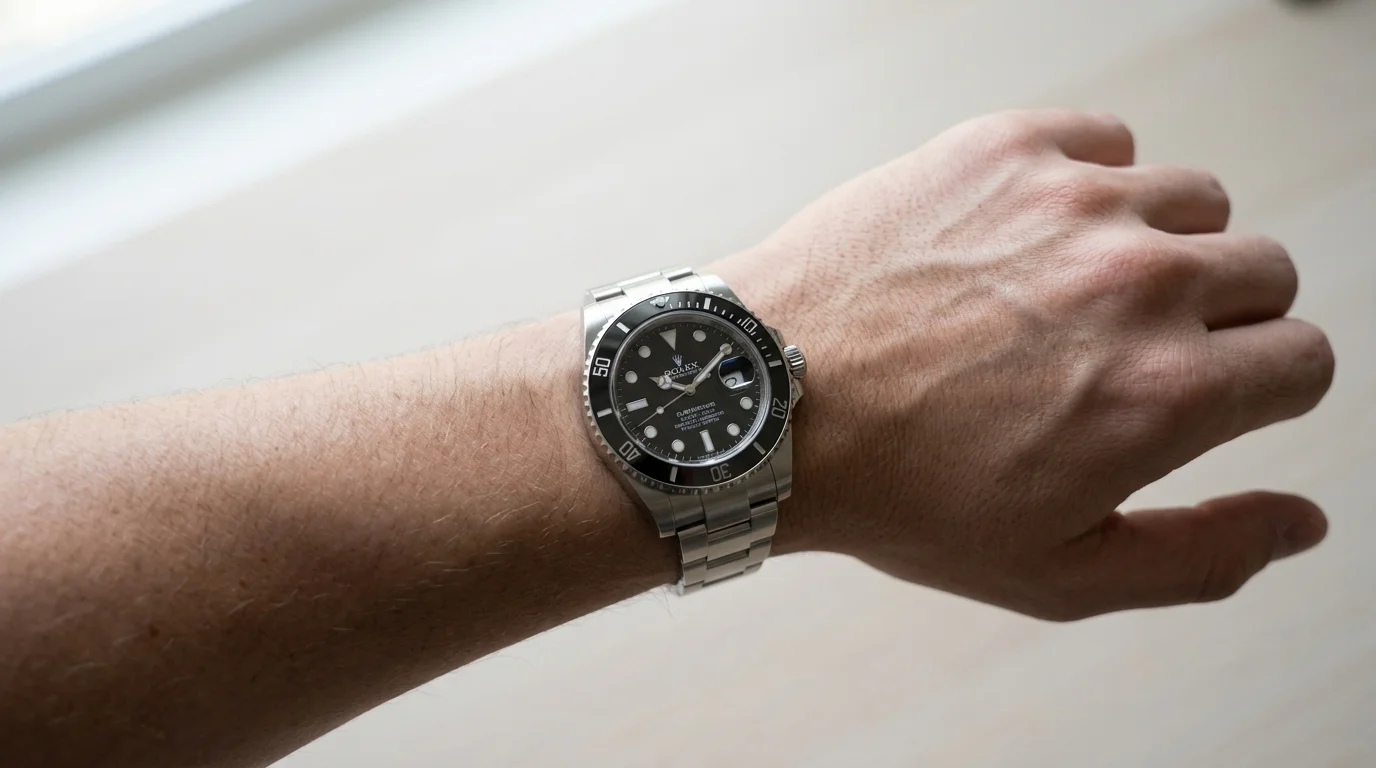 Viewed from above, it is easy to see exactly where the lug tips sit relative to the wrist edges, which is the real test of fit.
What to Do With This Before You Buy
Treat lug-to-lug as a hard constraint, not a nice-to-know. Measure your wrist width across the flat top, compare it against the table above, and use that as your actual shopping filter instead of diameter alone.
Ask Before You Buy Pre-Owned
If a pre-owned listing gives diameter but not lug-to-lug, ask for it directly. A reputable dealer should be able to hand you that number without hesitation, since it takes thirty seconds with a caliper to check. Once fit is settled, the other overlooked line item is ongoing cost. Our watch servicing costs by brand guide covers real Rolex and Omega service pricing so the total cost of ownership does not catch you off guard either.
FAQ
What does lug-to-lug mean on a watch?
Lug-to-lug is the vertical distance from the tip of the top lug to the tip of the bottom lug, measuring how far the case actually stretches across your wrist from 12 to 6.
Is lug-to-lug more important than case diameter?
For fit, generally yes. Two watches with the same diameter can wear very differently depending on their lug-to-lug measurement and lug shape, and lug overhang past your wrist edge is more noticeable than a slightly larger diameter.
What is a good lug-to-lug for a small wrist?
For a wrist under 6.5 inches, staying below roughly 47mm lug-to-lug is a safe range, with contoured or downturned lugs helping an otherwise longer case wear closer to your wrist.
How do you measure a watch's lug-to-lug?
Lug-to-lug is measured with digital calipers, placed at the outermost tip of the top lug and extended straight down to the outermost tip of the bottom lug.
Why do some watches with the same diameter wear differently?
Lug-to-lug length and lug shape both vary independently of diameter. A watch with short, downturned lugs can wear noticeably smaller than one with the same diameter but long, flat lugs.