The perpetual calendar is one of watchmaking's great party tricks, and also one of its most frustrating ownership experiences. It tracks the date, day, month, and leap year correctly all the way to 2100, with no adjustment needed. The catch is simple: it only does that while it keeps running. Set one aside for a few weeks and the mainspring runs flat, leaving you to reset a tangle of indications by hand, often with a dedicated tool and a careful eye on the danger hours around midnight.
Vacheron Constantin spent years chasing a real fix for that. The 2026 Traditionnelle Twin Beat Perpetual Calendar (ref. 3200T/000P-H167) is the closest the brand has come to solving it in a watch you can actually order.
The images in this post are AI-generated illustrations for editorial purposes and may not exactly represent the actual watch, its dial, or its finishing.
The short answer
The Twin Beat carries two separate balances running at two speeds. On the wrist it ticks at a fast, accurate 5 Hz. Left in a drawer, a press of the pusher drops it to a slow 1.2 Hz that sips energy and keeps the calendar alive for up to 70 days. The 2026 version adds five days over the 2019 original and, more to the point, moves a concept piece toward something close to real production. It is platinum, roughly £286,000, and you will probably never see one in the wild. It still matters.
What Vacheron actually announced
Vacheron brought back a 2019 concept as a refined, catalog watch.
The original Twin Beat arrived in 2019 in tiny numbers and read more like a technical statement than a product. The 2026 release keeps the same core architecture and rebuilds the details around it. Monochrome's coverage frames the update as a sign the brand has pushed the movement closer to series production, which is the real story here.
The headline figures:
| Spec | Detail |
|---|---|
| Reference | 3200T/000P-H167 |
| Movement | Manual-wind Calibre 3610 QP |
| Active mode | 5 Hz (36,000 vph), 4-day reserve |
| Standby mode | 1.2 Hz (8,640 vph), 70-day reserve |
| Case | 42mm platinum, 12.3mm thick |
| Components / jewels | 480 / 64 |
| Certification | Hallmark of Geneva |
| Price | ~£286,000 (availability extremely limited) |
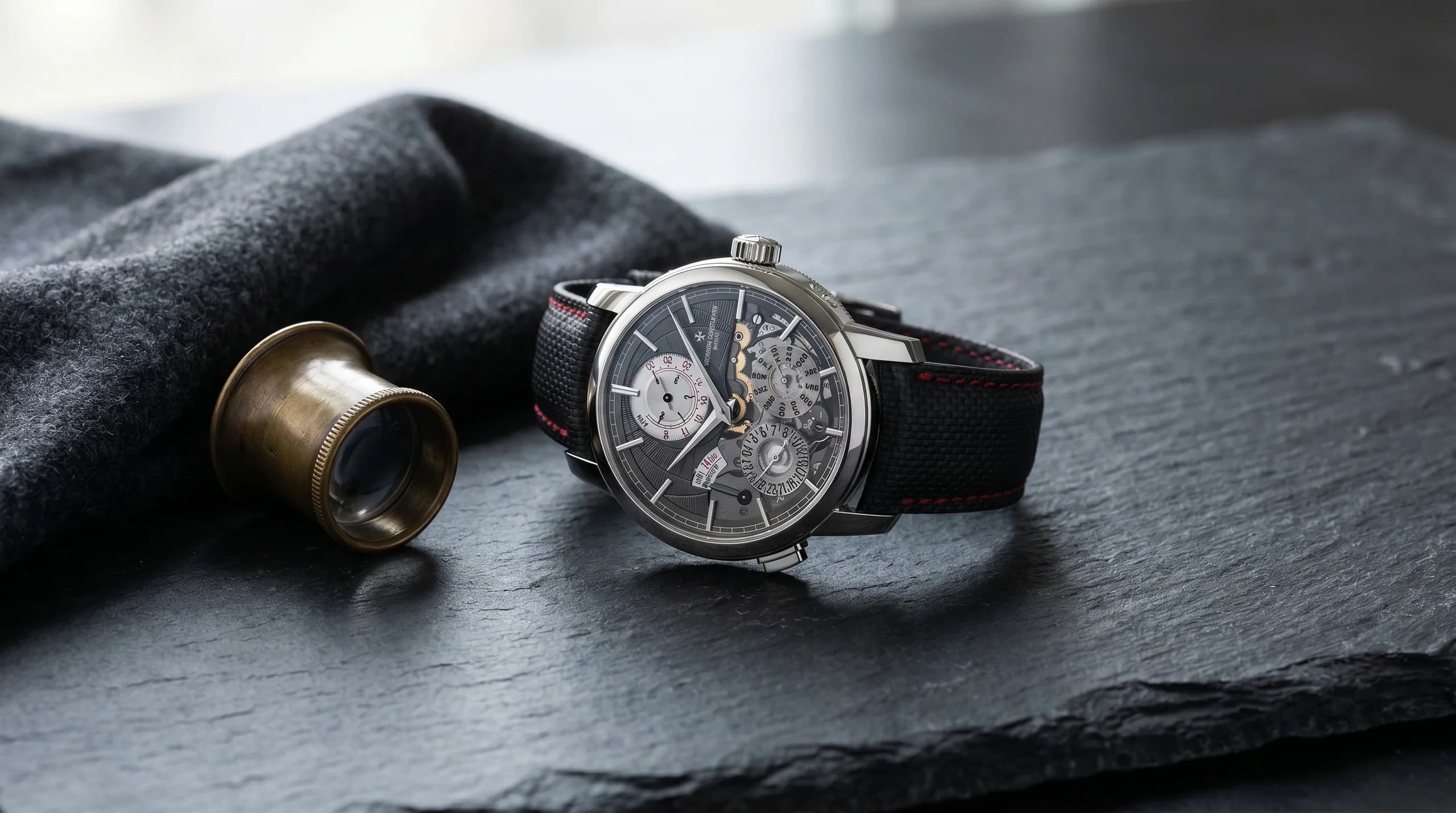
 A two-part sapphire dial leaves much of the movement on display. (AI-generated illustration.)
How the Twin Beat solves the calendar's oldest problem
The clever part is not the power reserve number. It is how Vacheron gets there.
Most long-reserve watches simply store more energy, with bigger barrels or longer mainsprings. That adds bulk and tends to cost balance power. Vacheron took the opposite approach: instead of feeding the movement more energy, it lets the movement need less. A pusher at 8 o'clock switches between two independent regulating organs sharing one going train, and only one balance runs at a time.
In Active mode, the 5 Hz balance keeps the watch accurate for daily wear. Flip to Standby and the 1.2 Hz balance takes over, slowing the whole system so the calendar can coast for over two months. WatchTime notes the switch happens without stopping the display, so the time and the calendar never freeze mid-change.
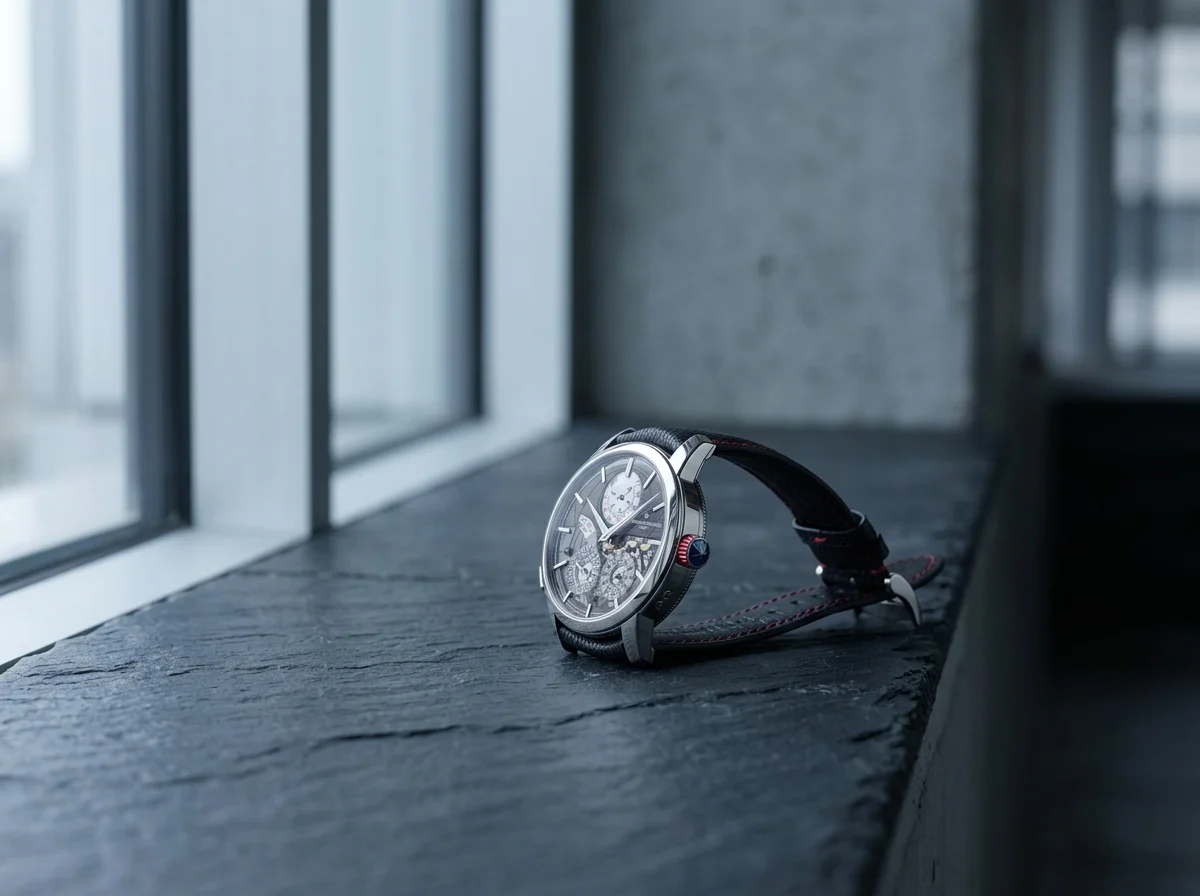 At 12.3mm, the case stays slim for a watch carrying two gear trains. (AI-generated illustration.)
What changed since 2019
The jump from 65 to 70 days sounds small. The engineering behind it is not.
Less energy, not more
Vacheron reworked the calibre's three differentials and built a new double-gear spring-winding system for the instantaneous calendar jump. That midnight jump is usually an energy hog, since the movement has to store force and release it all at once. The redesign cuts the torque needed for the jump to roughly a quarter of a conventional system, and those savings are where the extra five days come from.
A cleaner face
The 2026 dial is a two-part sapphire construction. The upper section is 18k gold finished in slate grey with a hand-guilloche radiating pattern, while the lower half stays transparent to show the NAC-treated mainplate beneath. Faceted white gold Dauphine hands handle the time, and the sub-counters were reworked with frosted, laser-etched glass for better legibility against the busy backdrop.
The honest caveats
This is a halo piece, and it behaves like one.
Three things are worth saying plainly. First, the price: Vacheron declined to publish an official figure, but aBlogtoWatch reported it at roughly £286,000, and supply will be limited by the sheer complexity of building it. Second, it is hand-wound, which suits a watch designed around energy management but means no rotor doing the work for you. Third, at 42mm in solid platinum, this wears as a serious, heavy presence rather than a featherweight dress watch.
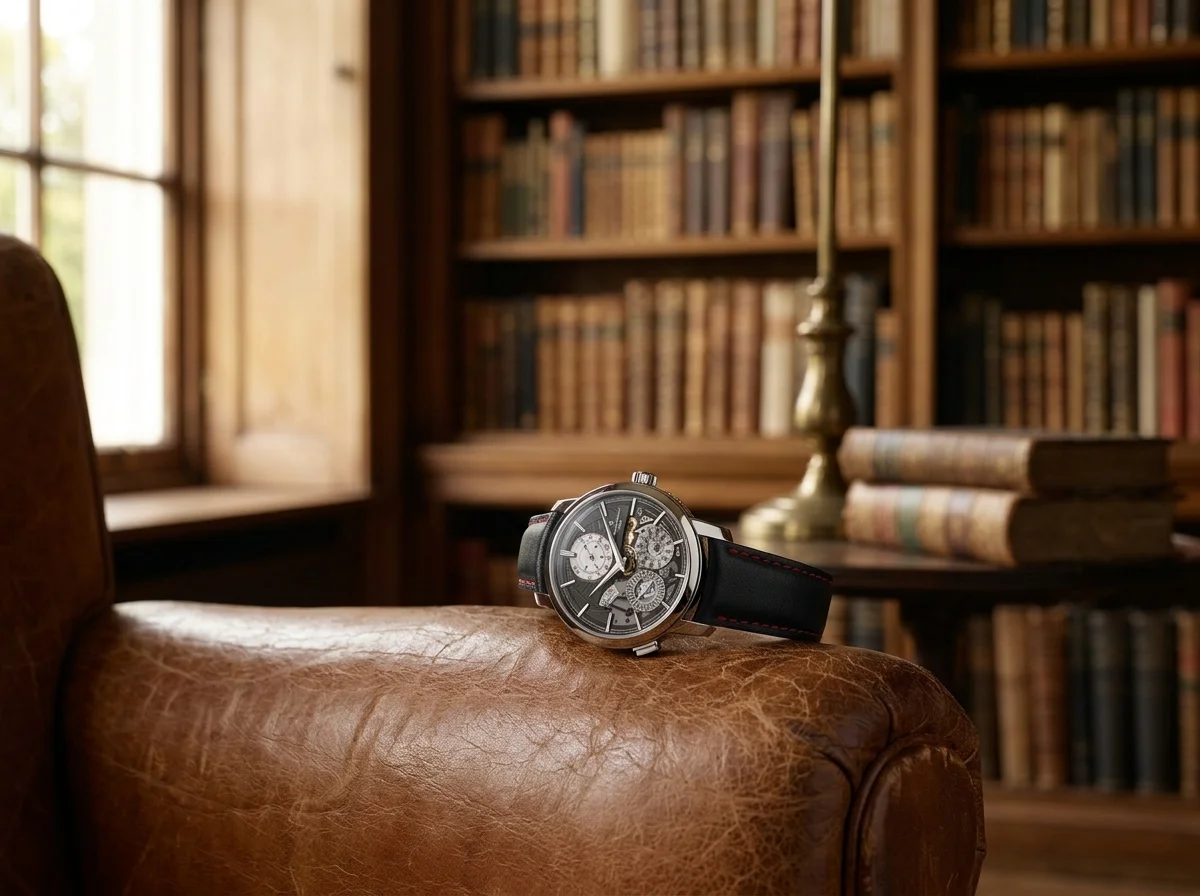 Solid platinum at 42mm carries real weight on the wrist. (AI-generated illustration.)
A working dealer's read
Here is why a watch almost nobody will own still belongs on your radar.
The Twin Beat is the kind of release that tells you what a manufacture actually values. Vacheron did not chase a bigger number with a bigger barrel. It solved a genuine ownership problem with a genuinely new mechanism, then spent seven more years refining it. That is the signal worth tracking, because it should shape how you weigh the rest of the brand's catalog.
For most buyers, the takeaway is not the £286,000 flagship. It is that the same house builds the Overseas, a steel sports watch with a Geneva Seal movement that trades for a fraction of its trinity rivals and gets quietly overlooked. If the Twin Beat is the brand flexing, the Overseas is the brand you can actually buy. I made the full case for the quiet third of the holy trinity in a separate read.
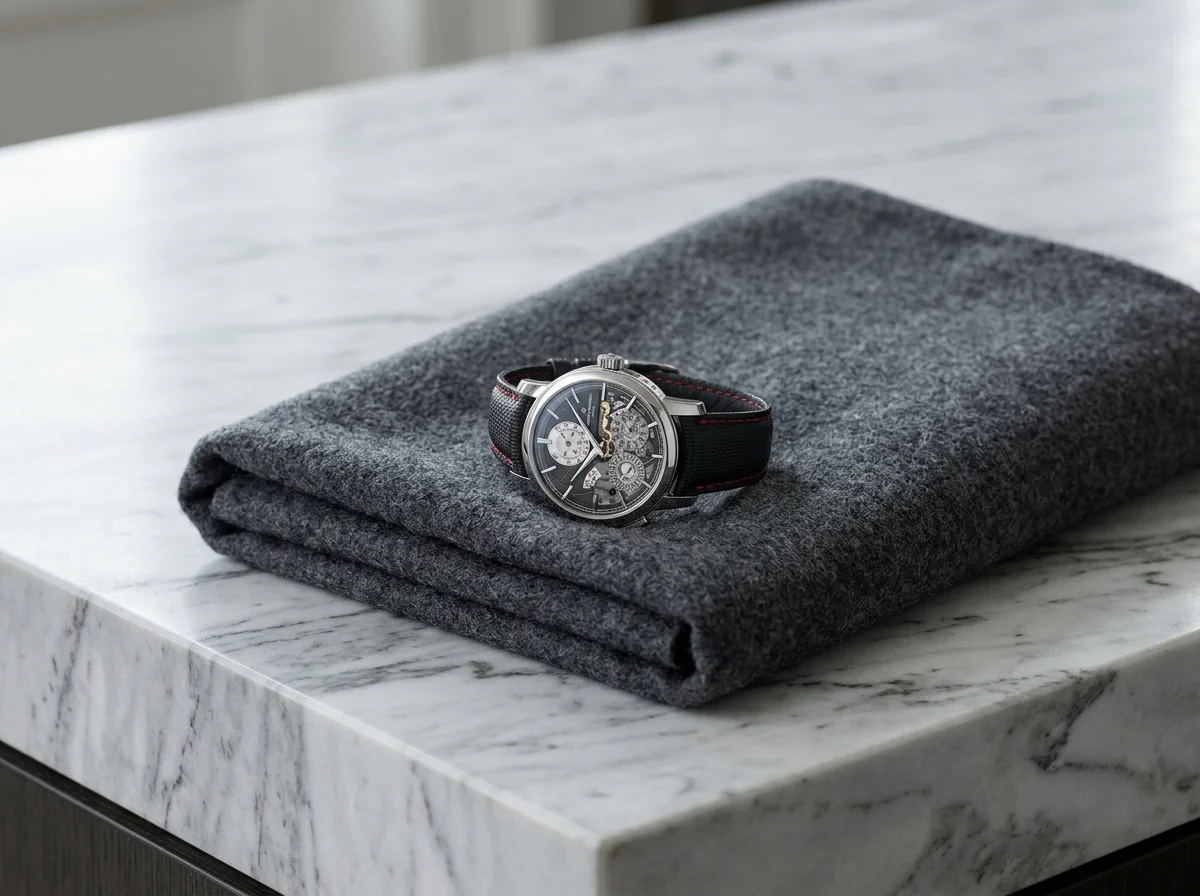 The Twin Beat is the statement. The attainable Vacheron is the Overseas. (AI-generated illustration.)