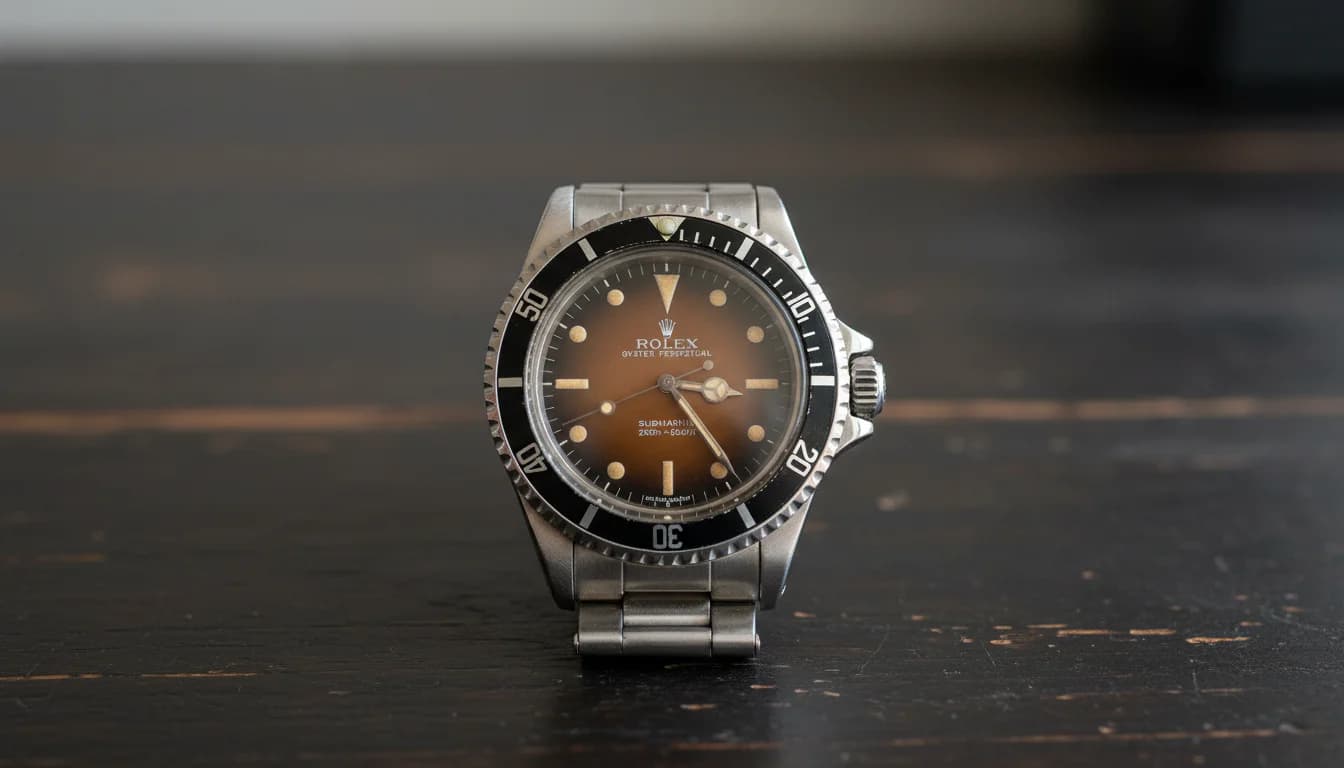
The Short Answer
A tropical dial is a black watch dial that has faded to brown or chocolate over decades of sun exposure, caused by an unstable paint pigment used by a small number of dial makers between roughly the 1950s and 1970s. It is not intentional aging and it is not damage. It is a genuine chemical accident, and on the right reference it can multiply a watch's value by three to four times over an identical black-dial example.
The catch: real tropical fading cannot be faked convincingly, so the premium exists precisely because it is so hard to fake well.
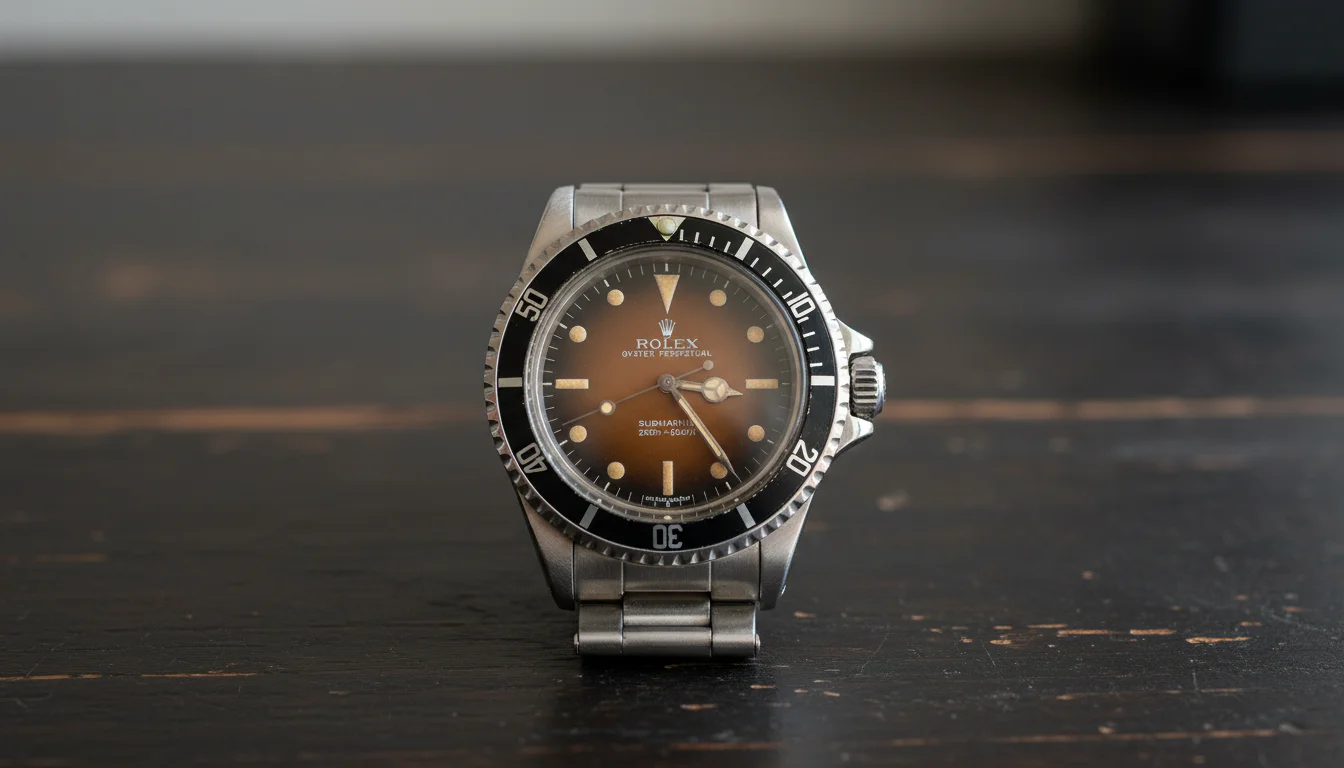 A genuine tropical dial fades unevenly, with warmer chocolate tones pooling near the edges while the center often stays slightly darker.
The watch photos in this article were generated with AI image tools, conditioned on real reference photography of each watch mentioned so the case shapes and dial layouts are accurate to the real references.
What Actually Causes a Tropical Dial
Rolex, Omega, and a handful of other brands sourced dials from third-party suppliers who used a black lacquer paint that was supposed to be UV-resistant. On a small percentage of dials, that paint had a manufacturing flaw.
Sunlight, heat, and humidity reacted with the flawed pigment over years of wear, not days. The black slowly shifted toward brown, and in the most dramatic cases toward a deep chocolate or even a warm khaki tone.
Why It Took Decades to Notice
Nobody set out to make a tropical dial. The defect only showed up after enough real-world sun exposure, which is why the phenomenon is almost entirely confined to watches from the 1950s through the 1970s. Modern dial coatings do not do this.
Vintage watch restoration experts estimate that only three to four out of every 100 vintage watches from this era show genuine tropical characteristics, and only about one in 1,000 reaches the deep, even chocolate coloring collectors chase hardest.
Which Watches Show Real Tropical Dials
Rolex sport models are the most famous carriers of the tropical dial, largely because collectors have spent decades documenting and pricing them. But the defect was not exclusive to Rolex.
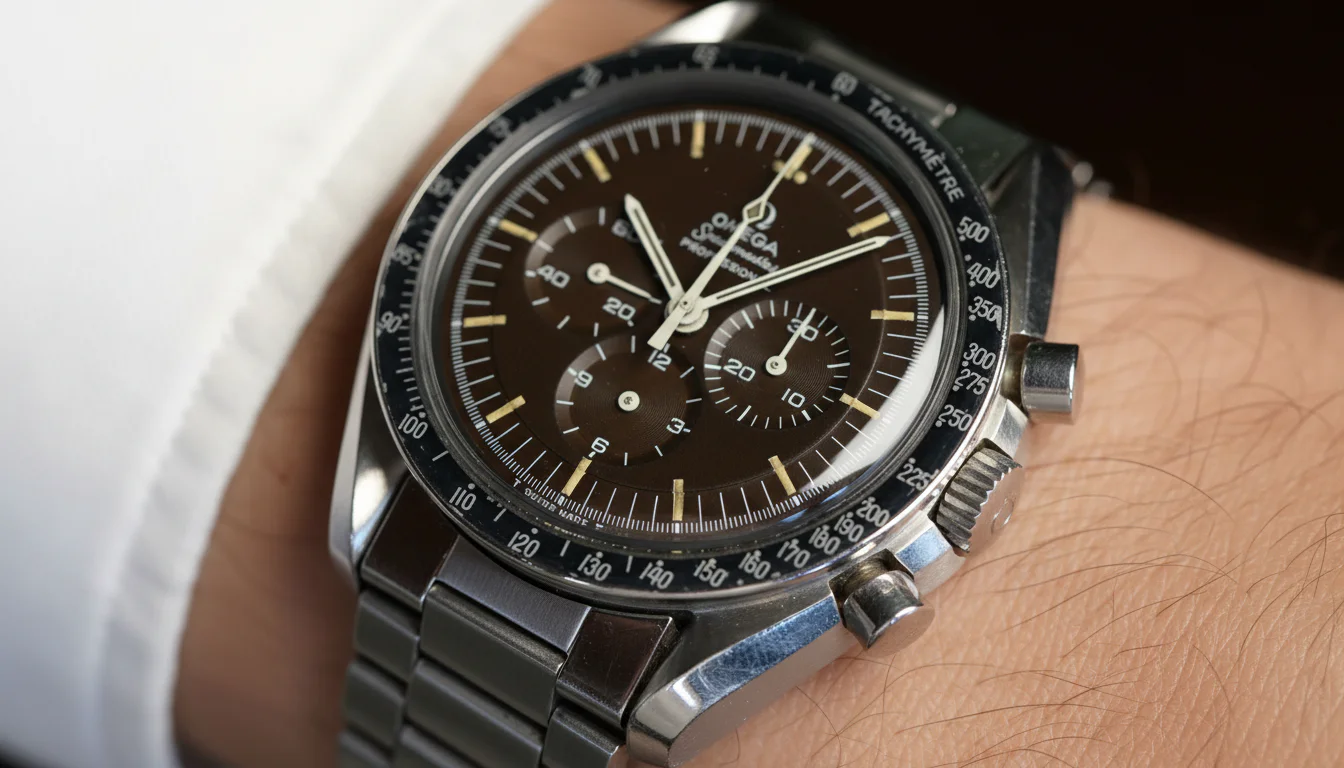 Omega's early Speedmaster Professional, reference 145.022, is one of the best-known non-Rolex tropical dial carriers.
The Reference List Worth Knowing
| Brand | References Known for Tropical Dials | Era |
|---|---|---|
| Rolex Submariner | 5508, 5510, 5512, 5513, 1680 | 1950s to 1970s |
| Rolex GMT-Master | 6542, 1675, 16750 | 1950s to 1980s |
| Rolex Daytona | 6239 to 6265 (including Paul Newman dials) | 1960s to 1970s |
| Rolex Datejust | 1600 to 1603, 16000 to 16014 | 1960s to 1980s |
| Omega Speedmaster | 145.022 | Late 1960s |
| Longines and Bulova | Various dive and field watch references | 1960s |
Where the Budget Tier Lives
Not every tropical dial costs a fortune. A tropical Rolex Submariner is a five-figure conversation, but a tropical Longines or Bulova from the same era can still be found for a couple thousand dollars or less.
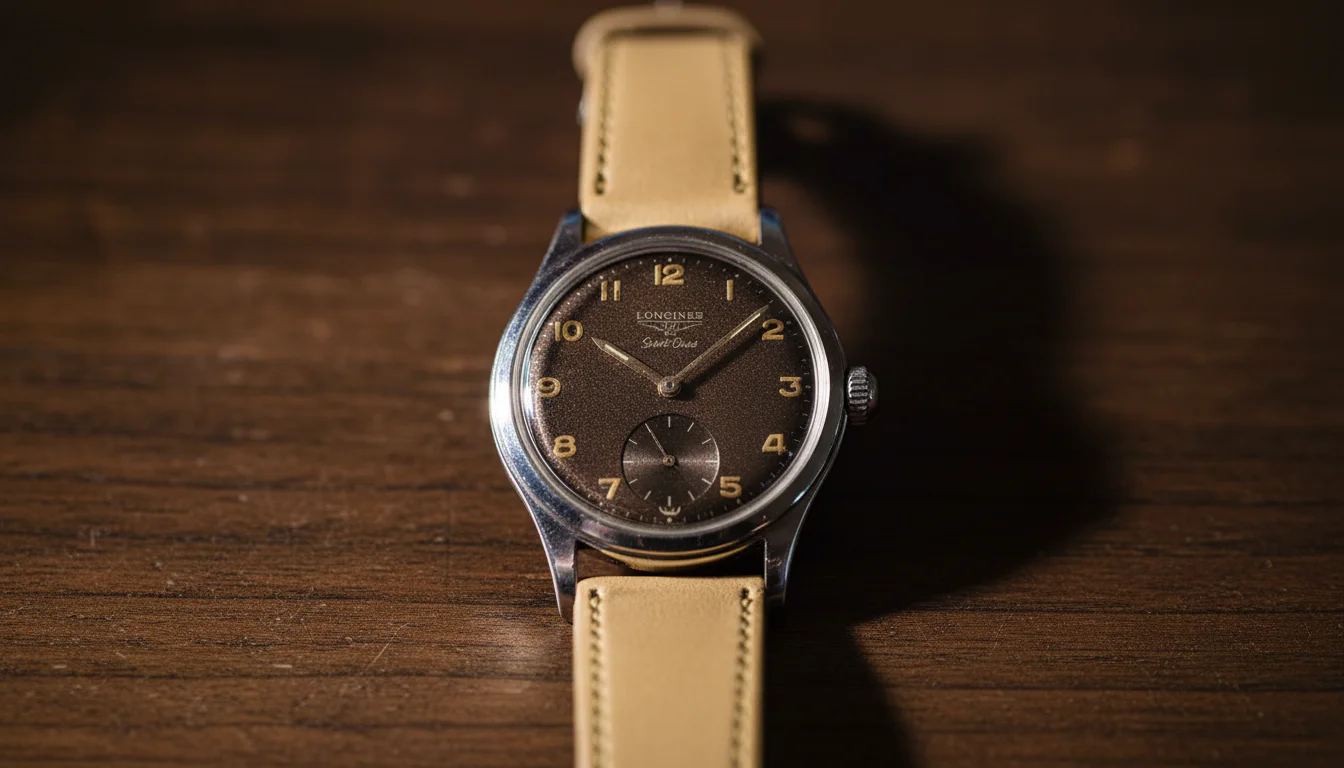 A Longines from the same era can show the same genuine fading as a Rolex, at a fraction of the price, because the collector premium tracks the brand, not just the chemistry.
That gap makes vintage Longines and Bulova pieces a realistic entry point for a collector who wants to own a real tropical dial without the Rolex-sized budget.
How to Tell a Real Tropical Dial From a Fake
This is where a lot of buyers get burned. Because tropical dials carry such a large premium, some sellers try to artificially discolor a plain black dial and pass it off as tropical.
What a Genuine Fade Looks Like
A real tropical dial fades unevenly rather than in one flat, uniform tone. Expect the coloring to be warmer near the printed text and the edges of the dial, with subtle variation rather than a single flat brown wash across the entire surface.
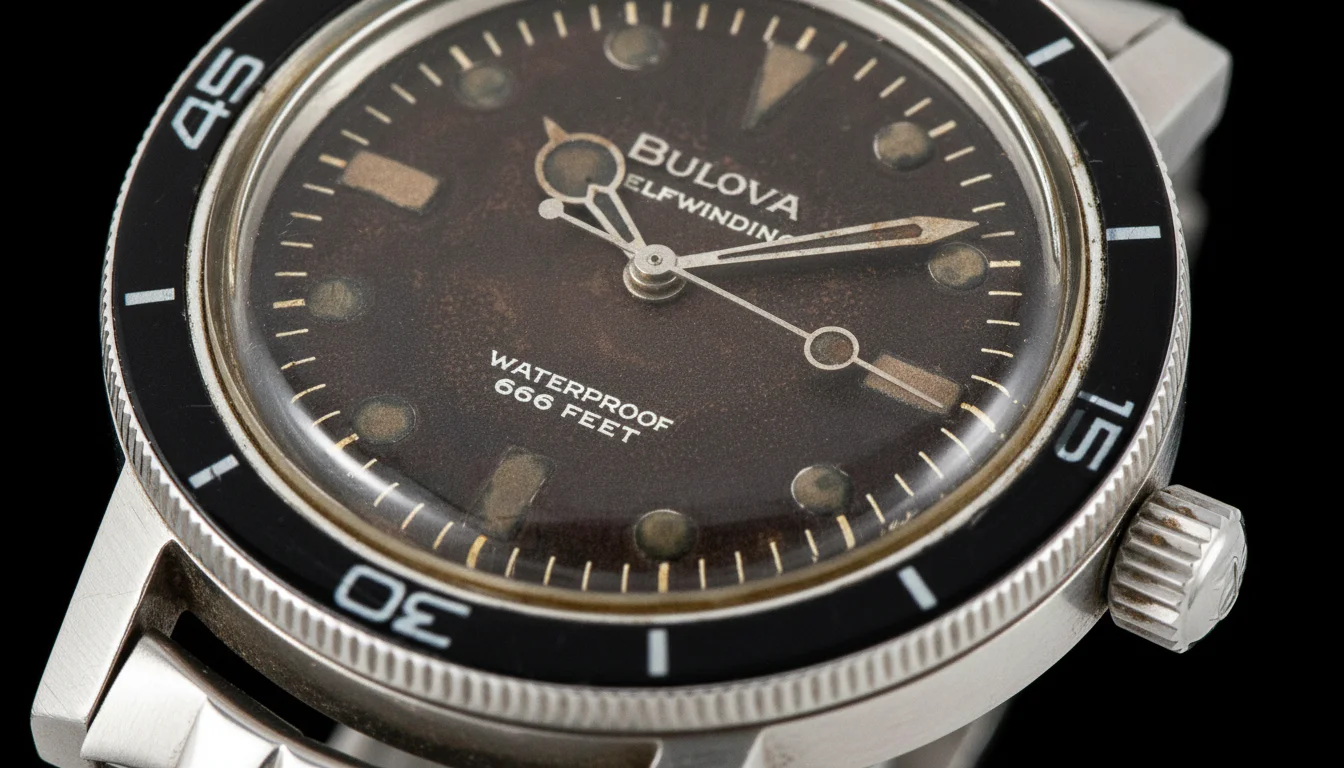 The Bulova Snorkel's brown fade shows the same uneven, organic variation as the Rolex and Omega examples above, since the underlying paint chemistry does not care which name is printed on the dial.
The Provenance Check
Because faking a tropical dial convincingly is difficult, provenance matters more here than on almost any other vintage watch feature. A tropical dial with service records, a known ownership history, or a paper trail through a reputable dealer is worth substantially more confidence than one with none of that.
Bring in a Specialist
If you are considering a five-figure tropical Rolex, get it in front of someone who has handled dozens of real examples before you commit. The premium at stake is large enough that a second opinion from a specialist is cheap insurance by comparison.
Why Collectors Pay So Much More for Tropical
Rarity explains part of the premium, but it is not the whole story. A tropical dial also makes an otherwise mass-produced vintage reference genuinely one of a kind, since no two fade the same way.
On the most desirable Rolex sport references, that combination of rarity and individuality can push a tropical example to three or four times the price of an identical black-dial watch in similar condition.
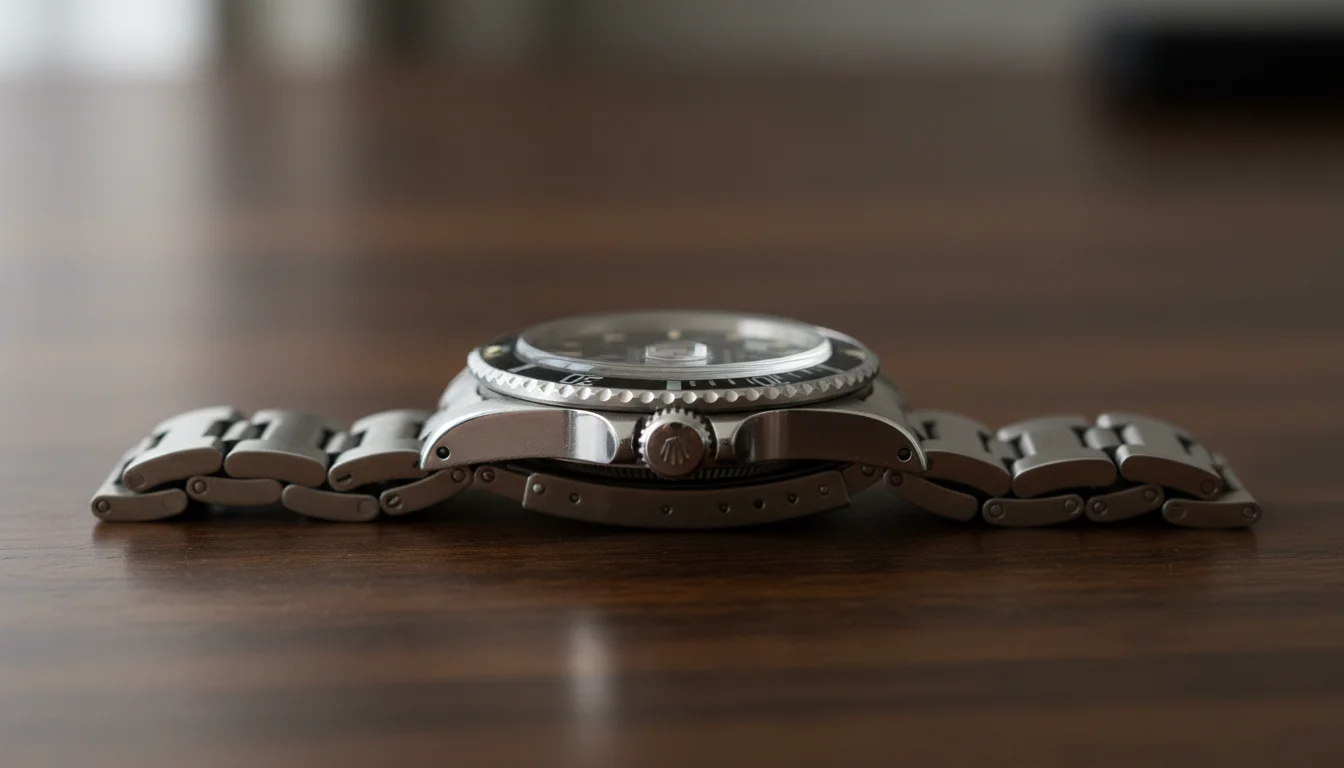 The case and bracelet on a tropical Submariner usually show honest vintage wear too. A dial this desirable rarely survives on a watch that has been aggressively polished or over-restored.
FAQ
What is a tropical dial on a watch?
A tropical dial is a vintage watch dial that has faded from black to brown or chocolate due to a manufacturing flaw in the paint pigment, triggered by decades of sun and heat exposure.
Which watches are known for tropical dials?
Vintage Rolex Submariner, GMT-Master, Daytona, and Datejust references are the most documented, along with the Omega Speedmaster 145.022 and various vintage Longines and Bulova pieces.
How much more is a tropical dial worth?
On desirable Rolex sport references, a genuine tropical dial can sell for three to four times the price of an equivalent black-dial example in similar condition.
Can a tropical dial be faked?
People try, but genuine fading is uneven in ways that are difficult to reproduce artificially. Provenance and expert inspection matter more on a tropical dial than on almost any other vintage feature.
Is a tropical dial the same as patina?
Tropical dial is one specific type of patina caused by paint fading from black to brown. Other forms of patina include lume aging, case wear, and bezel fading, which are different processes with different causes.
Related Reading
- Should You Polish a Vintage Watch? The Honest Answer Is Almost Always No.
- How to Authenticate a Pre-Owned Rolex: A Dealer's Checklist
- The Rolex Submariner Buying Guide: Every Modern Reference From 116610 to 126610LV
- The Omega Speedmaster Moonwatch Buying Guide: Every Reference, the Calibre 3861, and What Pre-Owned Actually Costs