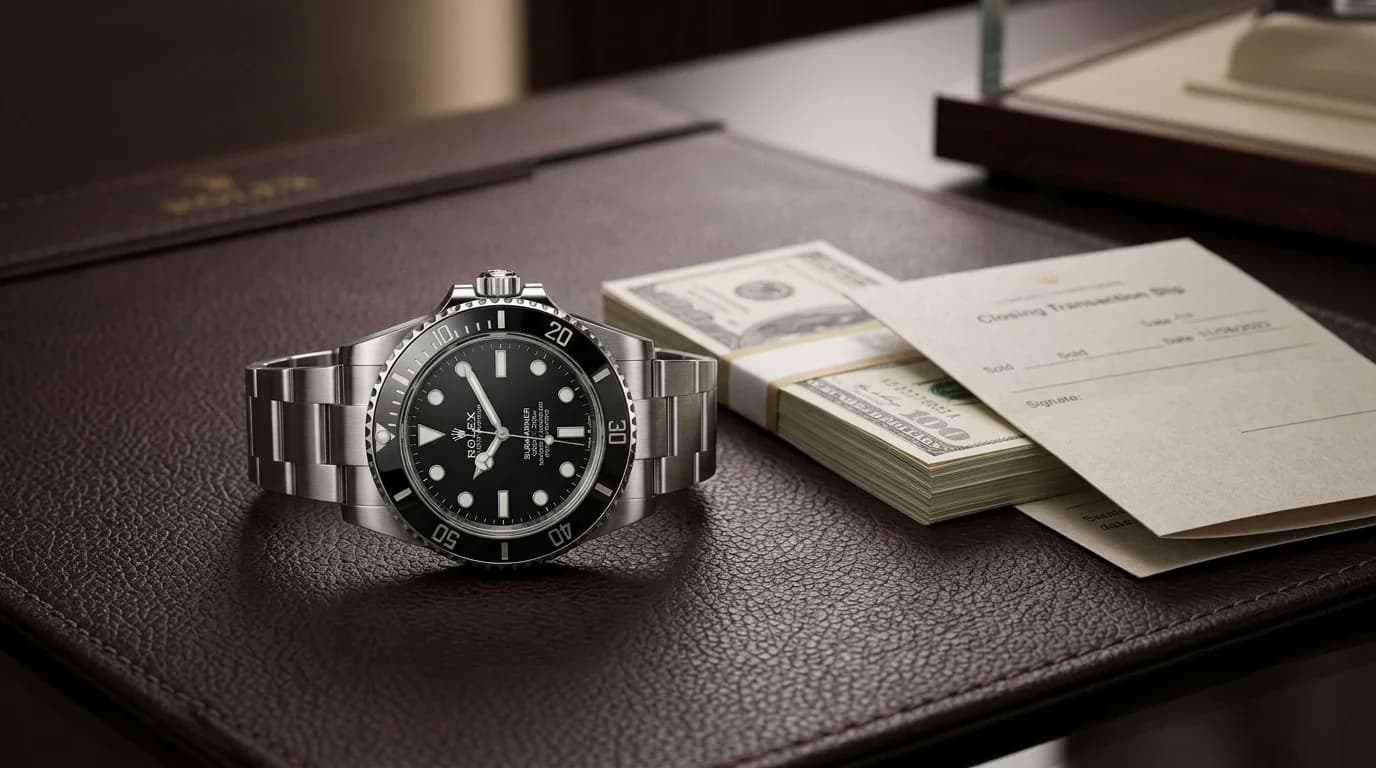
Most people treat "selling a watch" as a single decision. It is not. Trade-in, consignment, and an outright sale are three different transactions with three different payouts, three different timelines, and three different amounts of risk sitting on your side of the table versus the dealer's.
This post includes AI-generated images built from real reference photography of the watches discussed, verified by our team for accuracy before publishing.
The short answer
An outright sale pays the least but pays fastest, usually same-day, because the dealer is buying at wholesale and taking on all the resale risk. A trade-in nets out against your next purchase, and the math often works in your favor since you avoid two separate transaction costs. Consignment pays the most, because the watch sells at retail rather than wholesale, but you do not get paid until it actually sells, and there is no guaranteed timeline. Which one is right depends on whether you need cash now, are upgrading to a specific next watch, or can afford to wait for the best possible number.
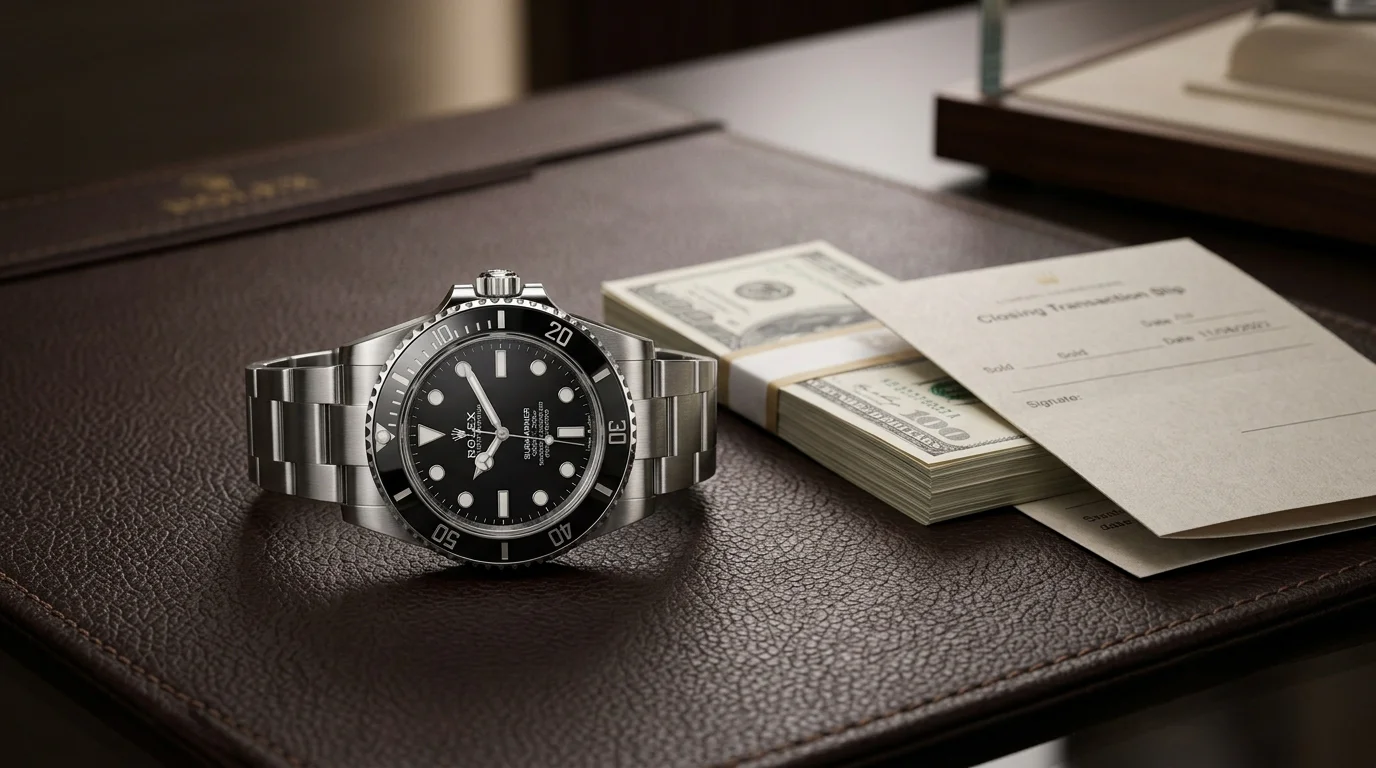 An outright sale, closed in one sitting. Fastest cash, lowest number, and the risk moves entirely to the dealer.
Outright sale: fastest cash, lowest number
An outright sale means a dealer buys the watch from you directly, on the spot, for cash or an immediate transfer.
What you get: A wholesale offer. The dealer is pricing in reconditioning costs, photography, listing time, and the risk that the market moves against them before it sells.
How fast: Same day, often within the hour once the watch is authenticated and inspected.
Who takes the risk: The dealer. Once you hand over the watch, its resale outcome is entirely their problem.
This is the right call when you need cash quickly, want zero involvement in the process after the transaction, or are selling a watch you no longer want to think about at all.
Trade-in: the math that works in your favor
A trade-in applies the value of your current watch directly against the purchase price of a new one, in the same transaction.
Why it beats selling and buying separately: You avoid paying twice. Sell outright and buy elsewhere, and you eat the spread on both sides. Trade in, and the dealer only needs to make sense of the math once.
What you get: Typically a stronger net number than an outright sale, because the dealer can afford to be more generous when the watch converts straight into a sale on their end rather than sitting in inventory.
Best for: Collectors who already know what they want next. If you are trading a Submariner toward a GMT-Master II, the trade-in path is almost always cleaner than selling one and separately buying the other.
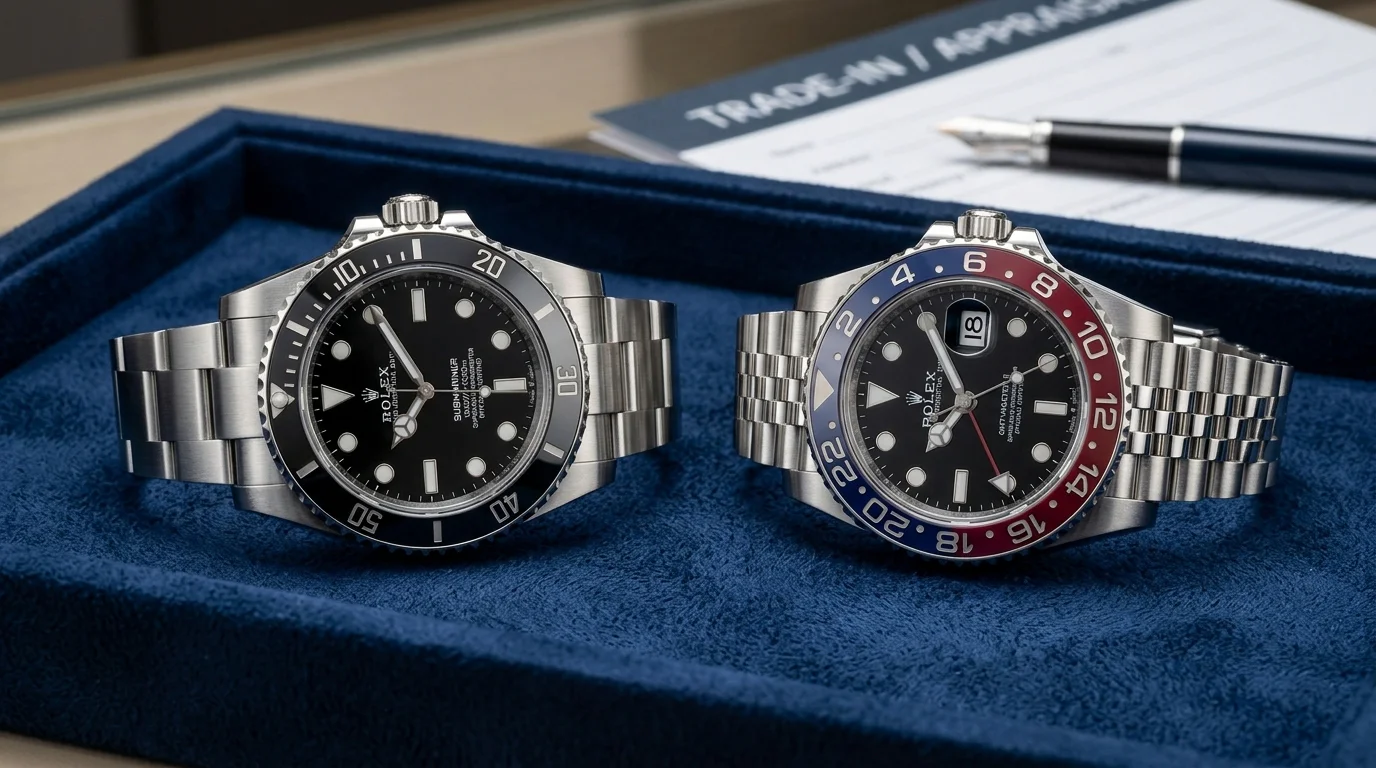 Trade-in math runs on both watches at once: what yours is worth against what you are moving toward.
Consignment: the highest payout, if you can wait
Consignment means the dealer lists and sells the watch on your behalf, at retail, and pays you once it sells, minus a commission.
Why it pays more: The watch is priced to sell at retail instead of wholesale. That gap, often the difference between what a dealer would pay you outright and what a buyer will actually pay for the watch, is the entire reason consignment exists.
The tradeoff: Time. There is no guaranteed sale date. A reference in high demand might sell in a week. A less liquid piece could sit for months.
Who takes the risk: You. Until the watch sells, you have neither the watch nor the cash, and if the market softens while it is listed, that risk is yours to absorb.
Best for: Collectors who are not in a hurry and want to maximize what a specific watch brings, especially rarer or high-demand references where the retail-to-wholesale gap is widest.
 Consignment means the watch sits on display at retail pricing until the right buyer finds it, not until you need the cash.
Trade-in vs consignment vs outright sale at a glance
| Outright sale | Trade-in | Consignment | |
|---|---|---|---|
| Payout | Lowest (wholesale) | Mid to high (net against purchase) | Highest (retail minus commission) |
| Speed | Same day | Same day | Weeks to months, no guarantee |
| Who bears the risk | Dealer | Shared | You |
| Best for | Fast cash, no next purchase planned | Upgrading to a specific next watch | Maximizing value, can wait |
How to actually decide
Run through these three questions before picking a path.
Do you need the cash now? If yes, outright sale. Nothing else pays same-day without conditions attached.
Do you already know what you want next? If yes, trade-in almost always beats selling and buying as two separate transactions, since you are not paying the spread twice.
Can you afford for the watch to not be cash for a while? If yes and the reference is in real demand, consignment gets you the closest number to what a private buyer would actually pay.
There is a fourth factor worth naming honestly: how liquid the reference actually is. A steel sport Rolex in demand can consign quickly. A less sought-after reference from a slower-moving brand might sit long enough that the trade-in or outright path ends up being the more realistic choice regardless of preference.
 Whichever path you choose, the transaction ends the same way: the watch changes hands and the paperwork closes it out.
What speeds up any of the three paths
Regardless of which route you pick, the same preparation work makes the number better and the process faster.
- Box and papers: Typically add 10 to 25% to a watch's value and matter even more on consignment, where a private buyer is paying closer to retail and expects full documentation.
- Service history: Recent authorized service records support both condition and authenticity claims.
- Condition honesty: A dealer's appraisal will catch a soft polish or a swapped bezel anyway. Disclosing it upfront speeds up every path.
- Original box and warranty card: Even a basic card with the reference number and date helps establish provenance quickly.
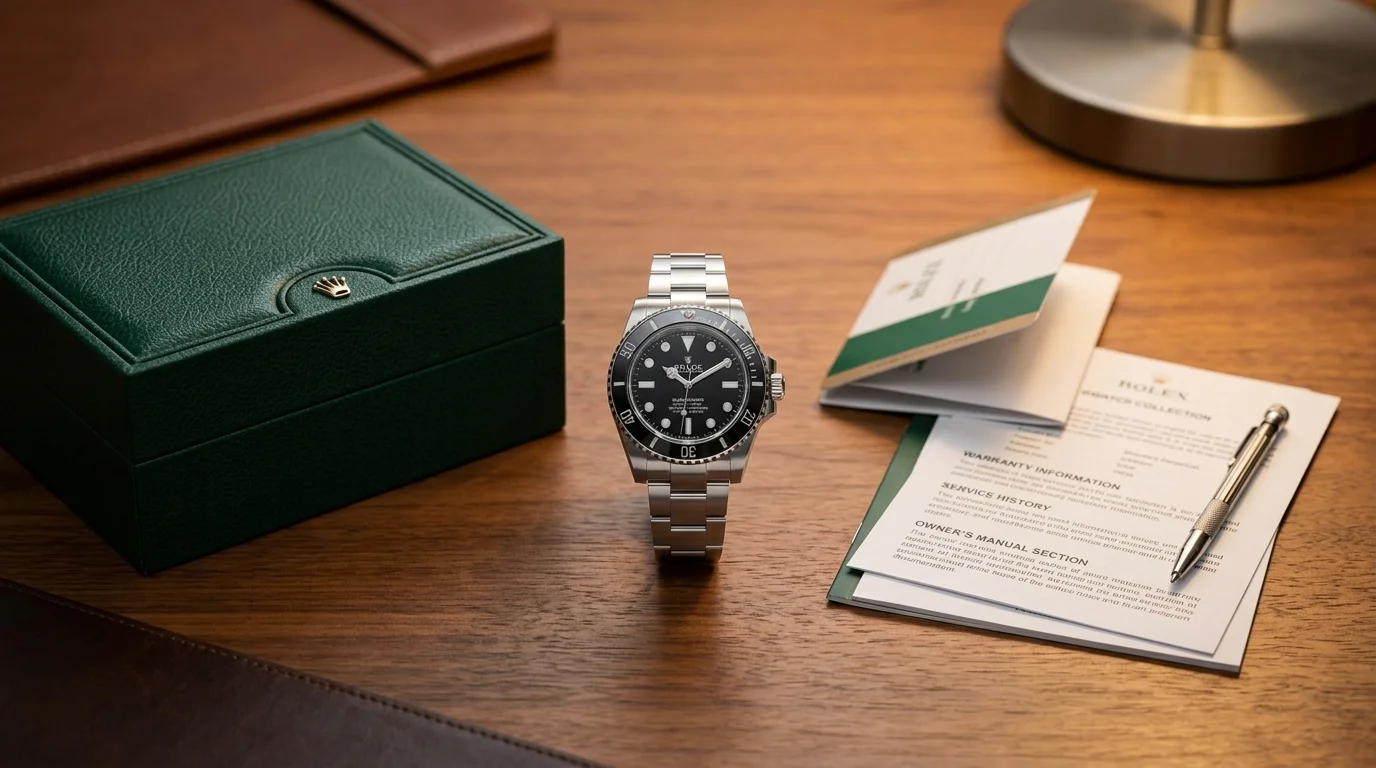 A complete file, box, card, and service papers, speeds up every one of the three paths and improves the number on all of them.
FAQ
What is the difference between trade-in and consignment?
A trade-in applies your watch's value directly against a new purchase in one transaction. Consignment means a dealer sells your watch on your behalf at retail and pays you once it sells, minus a commission.
Which pays more, selling outright or consigning?
Consignment typically pays more because the watch sells at retail rather than wholesale. The tradeoff is time: you do not get paid until the sale actually happens.
How fast can I sell a watch outright?
Often same-day, once the watch is authenticated and inspected. This is the fastest of the three paths, though it also pays the least.
Does a trade-in get me a better deal than selling and buying separately?
Usually yes. A trade-in nets the transaction into one step, so you are not paying the spread on a sale and a separate purchase. Dealers can often offer better trade-in terms than an outright buy price for the same reason.
Do box and papers matter more for one selling path than another?
They matter for all three, but most for consignment, since a private buyer paying closer to retail expects full documentation. Missing papers narrow your buyer pool and slow the sale.
Related reading
For what documentation actually does to your number regardless of which path you choose, see Box & Papers: What They Actually Add to a Watch's Value. For a brand-by-brand look at which references hold value best going into a sale, read The One to Buy and the One to Avoid, by Brand: a 2026 Value Map. And for how condition affects what any of these three paths will pay, see Should You Polish a Vintage Watch? The Honest Answer Is Almost Always No.