Two chronographs sit at the top of almost every wish list: the Omega Speedmaster Professional and the Rolex Cosmograph Daytona. On paper they look like rivals, both steel, both around 40mm, both three-register racing chronographs with decades of history. At the retail counter they even look close in price.
Then you try to actually buy one, and the whole comparison falls apart. This is a working dealer's read on how these two icons really differ, and which one belongs on your wrist.
The short answer: The Speedmaster and Daytona look like peers until you reach the buying market, where they split violently. The Speedmaster is a genuine moon-landing icon you can buy today, often below retail. The Daytona is nearly impossible to get at an authorized dealer and trades at roughly double retail. Buy the Speedmaster to wear a legend; chase the Daytona only if the premium and the hunt are worth it to you.
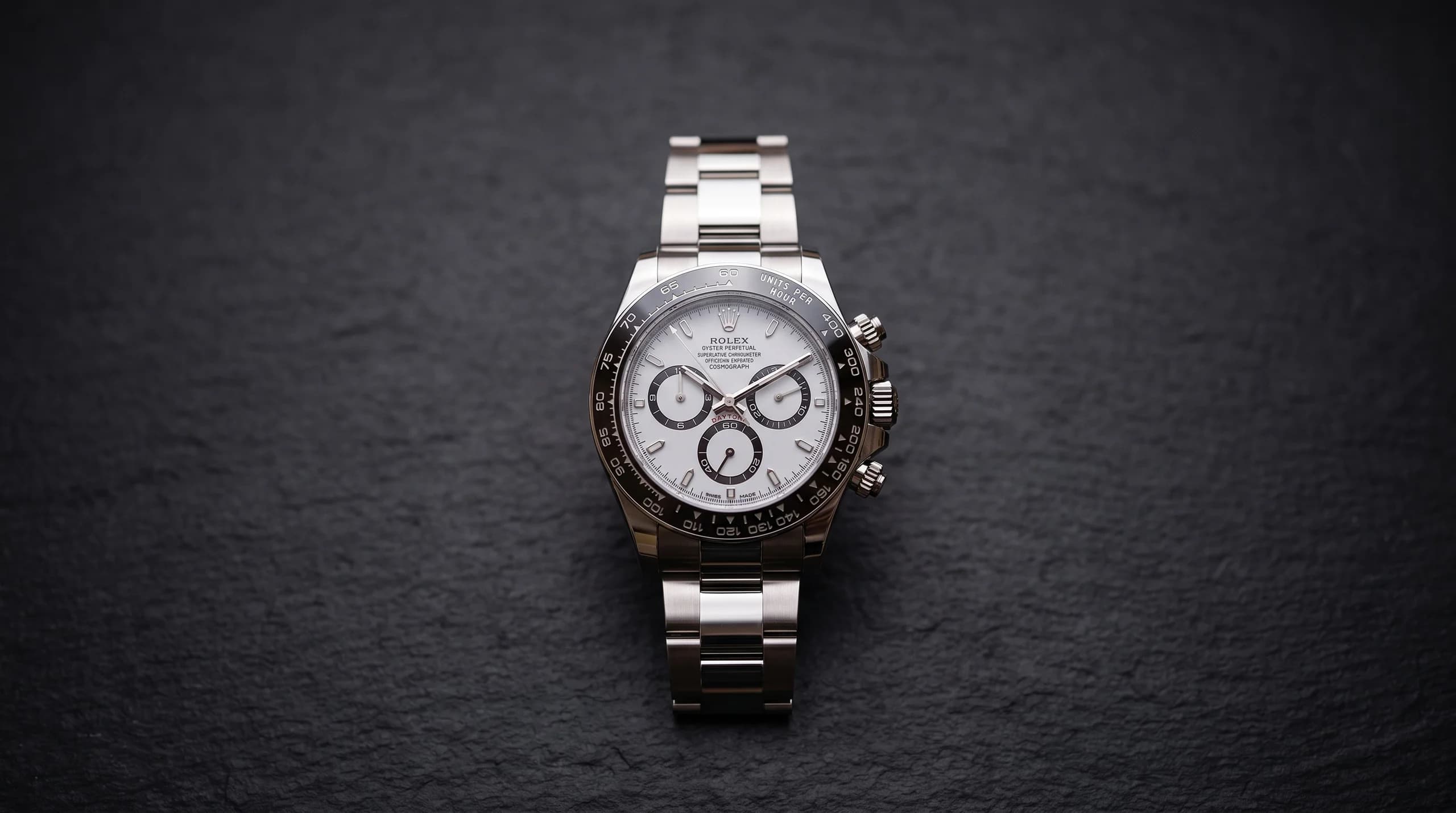
The images in this article were generated by AI using real reference photography of the Omega Speedmaster and Rolex Daytona to keep the case and dial detailing accurate. They are illustrations, not photographs of specific inventory.
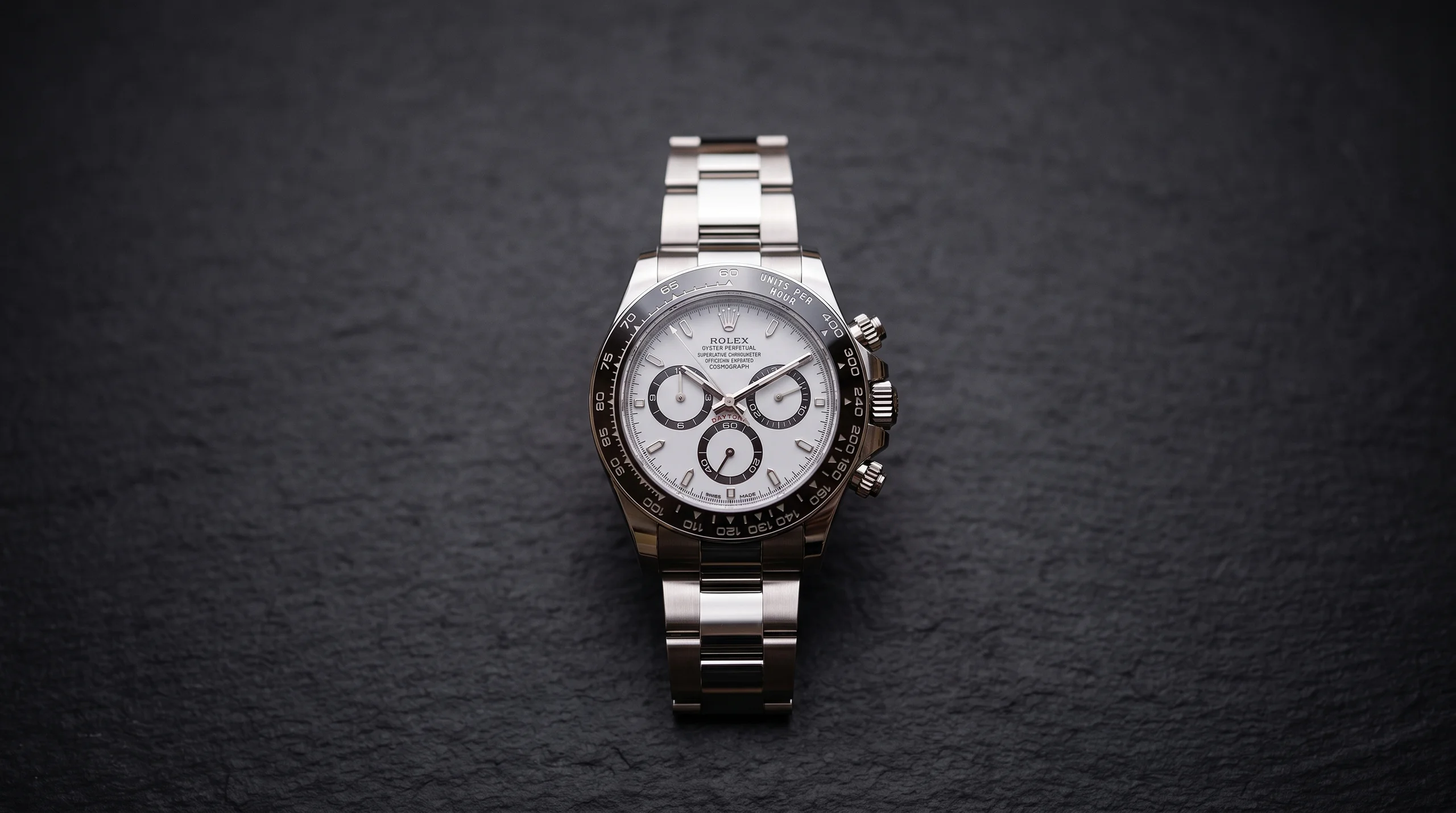 The Rolex Daytona 126500LN. The most allocation-constrained steel Rolex, and the reason this comparison is not really about specs.
The Two Legends, Briefly
Both watches earned their status honestly, and their histories point in different directions.
The Speedmaster is the Moonwatch. It went to the lunar surface on Apollo 11 and rode every crewed NASA moon mission, and the current Professional preserves that look and its hand-wound feel. The Daytona was born in 1963, named for the Florida racing circuit, and after a slow start became the most coveted Rolex sports watch on earth, helped along by Paul Newman's own example selling for $17.8 million in 2017.
Same Category, Opposite Personalities
One watch celebrates the tool, the other celebrates the trophy. The Speedmaster wears its utilitarian, instrument-like character openly. The Daytona has become a luxury object first and a chronograph second. Neither approach is wrong, but they attract different buyers.
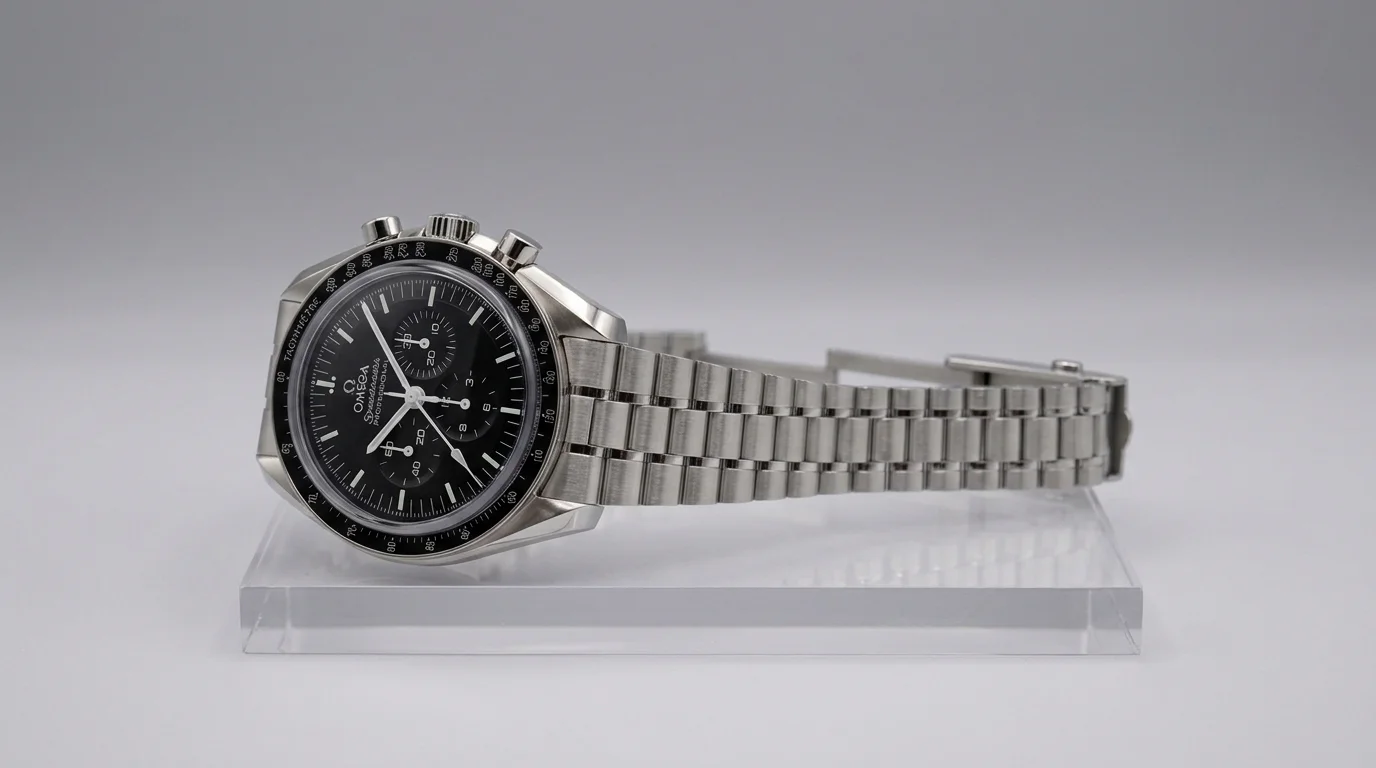 The Omega Speedmaster Professional Moonwatch keeps its tool-watch honesty: aluminium bezel, hand-wound movement, printed dial.
The Movements: Manual Soul vs Automatic Convenience
This is the clearest mechanical split between them, and it comes down to how you like to live with a watch.
The Speedmaster's Hand-Wound Calibre 3861
The Speedmaster runs the manually wound calibre 3861, a modernized descendant of the movement architecture Omega used in 1969. It is now a Master Chronometer, with a co-axial escapement, a silicon hairspring, and resistance to magnetic fields up to 15,000 gauss, accurate to 0 to +5 seconds per day. It holds a 50-hour power reserve and you wind it by hand, which purists consider part of the charm.
The Daytona's Automatic Calibre 4131
The Daytona uses the in-house automatic calibre 4131, widely regarded as one of the best chronograph movements ever made. It pairs a column wheel with a vertical clutch, carries Rolex's Superlative Chronometer rating of -2/+2 seconds per day, and delivers a longer 72-hour reserve. A rotor winds it as you move, so it is the more convenient daily companion. Notably, the same movement family once ran a Zenith El Primero base, the value chronograph the market keeps overlooking.
Neither is "better" in a vacuum. If you want mechanical romance and history, the manual Speedmaster delivers. If you want set-and-forget convenience and top-tier accuracy, the Daytona wins. On the broader question of how much accuracy actually matters day to day, we dug into the watch accuracy race here.
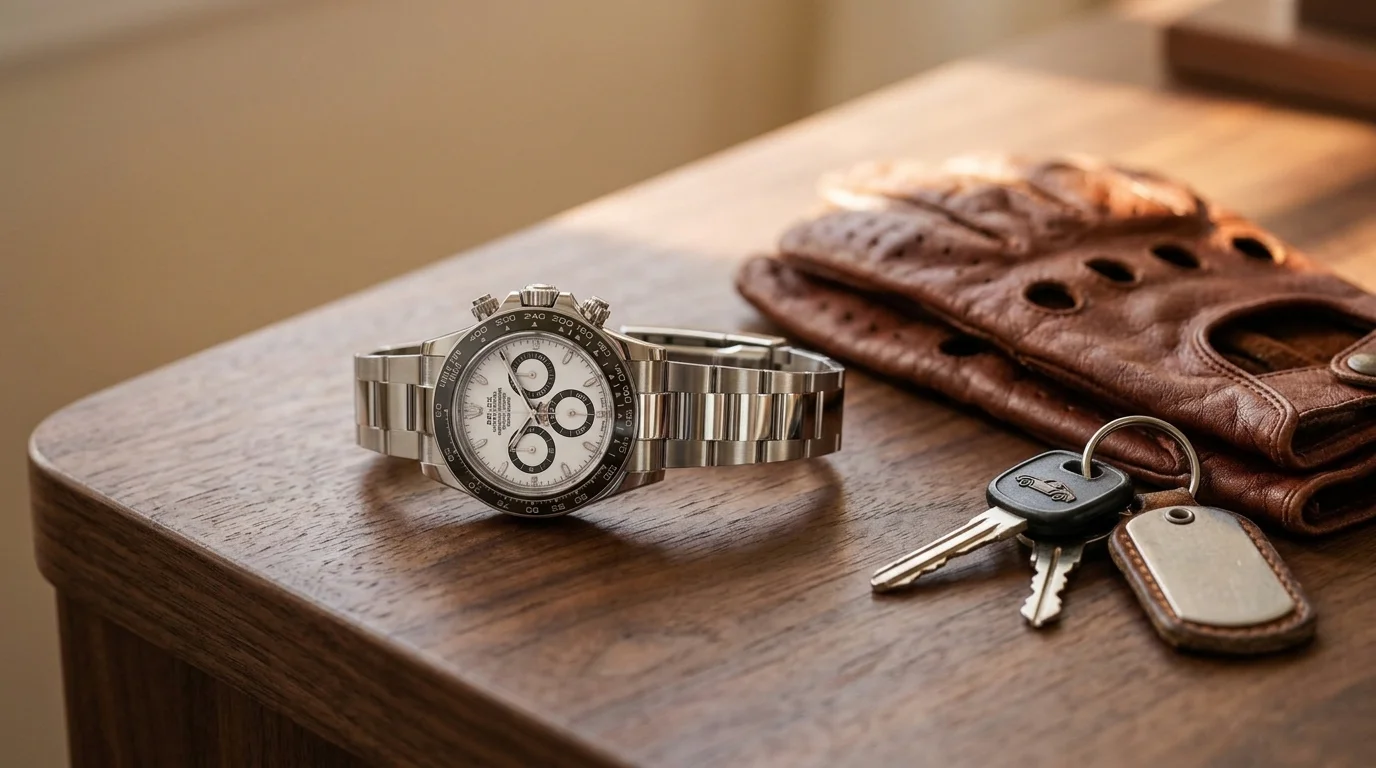 The Daytona's automatic 4131 makes it the easier daily wear. Its bigger obstacle is getting one at all.
The Spec Sheet, Head to Head
For the buyers who like it laid out plainly, here is how the two compare.
| Feature | Speedmaster Professional | Rolex Daytona 126500LN |
|---|---|---|
| Movement | Manual, cal. 3861 | Automatic, cal. 4131 |
| Power reserve | 50 hours | 72 hours |
| Accuracy | Master Chronometer, 0/+5 | Superlative, -2/+2 |
| Case size | 42mm | 40mm |
| Water resistance | 50m | 100m |
| Bezel | Aluminium tachymeter | Cerachrom ceramic |
| Crystal | Hesalite or sapphire | Sapphire |
The Daytona edges the spec sheet on water resistance, bezel material, and reserve. The Speedmaster answers with a genuine NASA pedigree and the choice of a period-correct Hesalite crystal. Close, on paper.
Where The Comparison Actually Breaks: Price And Availability
Everything above is a reasonable debate between two great watches. This next part is where they stop being comparable at all.
The Speedmaster: A Buyable Icon
The Speedmaster Professional retails around $7,300 for the Hesalite version and about $9,000 for the sapphire model. More importantly, you can walk into a boutique and buy one. On the secondary market it actually trades below retail, with the Hesalite around $5,200 and the sapphire near $6,400, roughly 28 to 29 percent under sticker.
That is remarkable. It means one of the most historically significant watches ever made is available, right now, at a discount to retail.
The Daytona: A Multi-Year Hunt
The steel Daytona 126500LN retails around $15,500. But authorized-dealer availability is close to nonexistent, with waitlists running years and many lists effectively closed to new buyers. On the secondary market it trades around $28,000 to $35,000, a 75 to 125 percent premium over retail, with the white panda dial commanding the most.
So the real-world buying gap is enormous. The Daytona is a five-to-six-times-more-expensive watch than the Speedmaster once you account for what people actually pay. That premium is a supply story more than a quality one, the same dynamic driving record Rolex secondary listings. And if you are tempted by a grey-market Daytona to skip the wait, understand exactly what you give up buying outside the authorized network first.
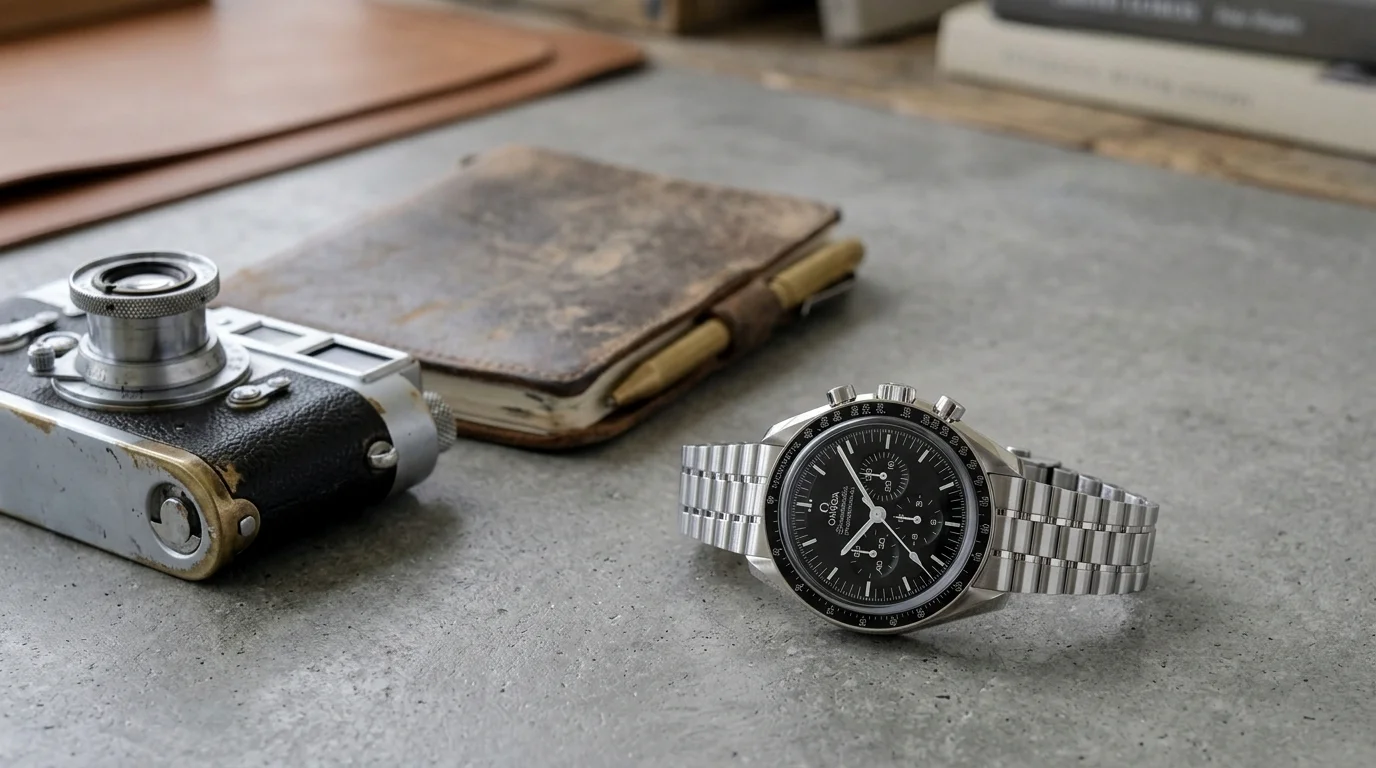 One of these you can own this week for well under retail. That fact reshapes the entire comparison.
Which One Should You Actually Buy?
Strip away the hype and the answer depends on what you want from the watch.
Buy the Speedmaster if you value history, mechanical engagement, and honest value. It is the smarter purchase for almost everyone: a bona fide icon, available now, at or below retail, that you will never feel silly wearing. The manual wind is a feature, not a chore, once you settle into it.
Chase the Daytona if you specifically want it and understand the cost. It is a superb automatic chronograph with the strongest resale floor in watches, but you will pay roughly double retail and likely wait or hunt to get one. If an authorized dealer offers you an allocation at retail, that is a genuinely good deal and worth taking.
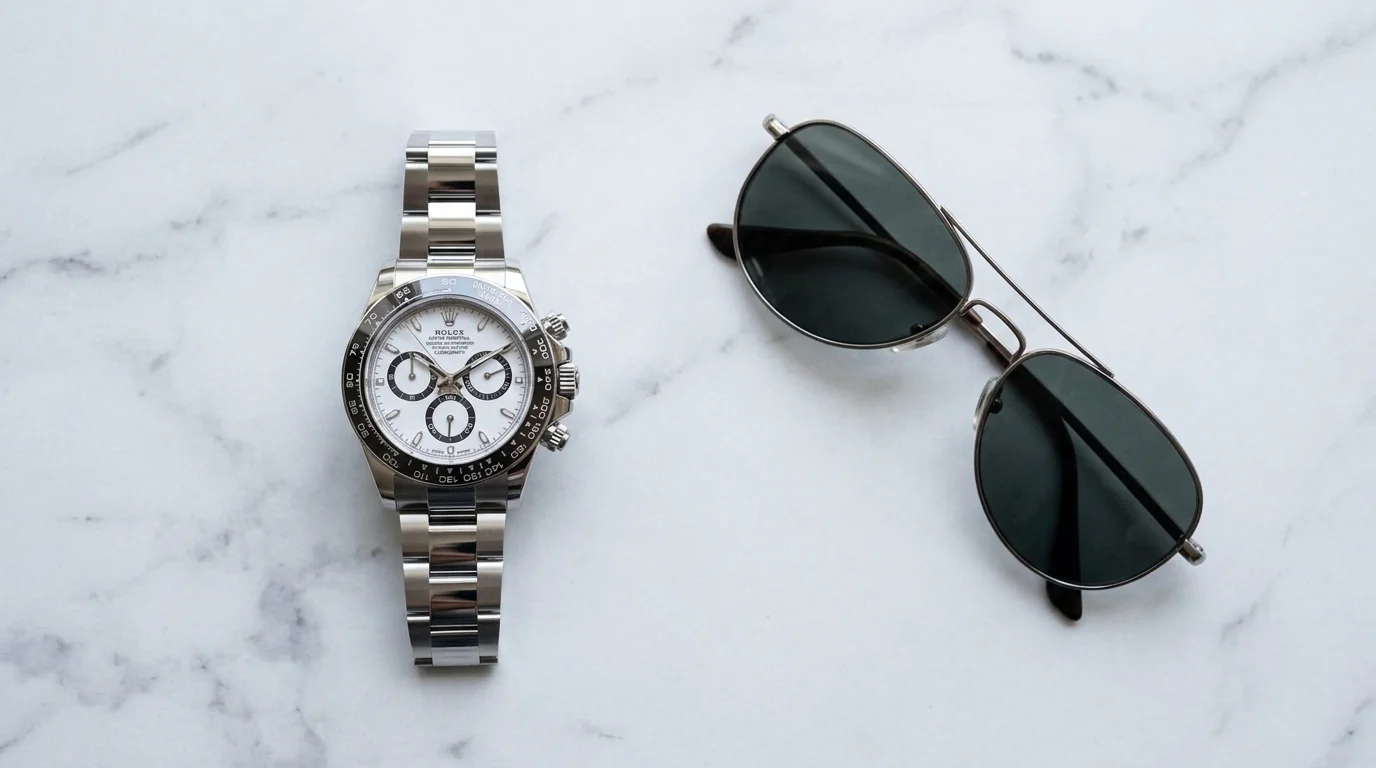 The Daytona holds value better than almost anything. You just pay for that certainty up front.
The Bottom Line
The Speedmaster and Daytona are both worthy of the icon label, but they answer different questions. The Daytona is the trophy: harder to get, more expensive, and a rock-solid store of value. The Speedmaster is the legend you can actually live with: available, affordable, and dripping with history.
For most buyers, the Speedmaster is simply the smarter watch to own right now. Browse authenticated pre-owned Omega chronographs at 5dwatches.com and put a genuine moonwatch on your wrist without the wait.
Frequently Asked Questions
Is the Omega Speedmaster or the Rolex Daytona a better buy in 2026?
For most buyers the Speedmaster is the smarter buy. It is a genuine moon-landing icon that sells at or below its roughly $7,300 retail, while the steel Daytona 126500LN trades around $28,000 to $35,000 on the secondary market against a $15,500 retail. You get an authentic icon now with the Speedmaster, where the Daytona demands a large premium and a long wait.
Why is the Rolex Daytona so hard to buy?
Demand vastly outstrips Rolex's steel-sport supply, so authorized-dealer waitlists run years and many are effectively closed to new buyers. Most people end up on the secondary market, where the Daytona 126500LN commands a 75 to 125 percent premium over retail. If an authorized dealer offers you one at retail, that is a genuinely good deal.
Is the Speedmaster's manual-wind movement a drawback?
It depends on how you wear a watch. The hand-wound calibre 3861 needs winding roughly every day or two, which purists consider part of the charm, while the Daytona's automatic calibre 4131 winds itself and holds a longer 72-hour reserve. For a daily watch the Daytona is more convenient; for mechanical engagement and history the Speedmaster wins.
Does the Omega Speedmaster or Rolex Daytona hold value better?
The Daytona has one of the strongest resale floors of any steel sports watch, trading well above retail, so it "holds value" better on paper. But you pay that certainty up front through the secondary-market premium. The Speedmaster depreciates slightly below retail, which makes it the better value to buy and wear rather than to flip.
Should I buy a grey-market Daytona to skip the waitlist?
You can, but understand the tradeoffs first. A grey-market Daytona is a genuine new watch sold outside Rolex's authorized network, usually without the same warranty handling and at that steep secondary premium. Weigh what you give up on paperwork and peace of mind before paying double retail to avoid the wait.