Rolex and Omega is the comparison every new luxury watch buyer ends up running. Both Swiss. Both 150+ years old. Both make professional dive watches, chronographs, and dress watches. Both produce roughly a million watches per year between them. Both anchor the entire mid-tier luxury watch category.
The two brands sit at the same retail tier on the surface. A Rolex Submariner 124060 retails at $9,200. An Omega Seamaster Diver 300M retails at $5,800. A Rolex Daytona 126500LN retails at $15,500. An Omega Speedmaster Professional Moonwatch retails at $7,300. Comparable functionality, similar production quality, parallel design heritage going back to the 1950s.
The story collapses the moment you look at the secondary market. The Submariner trades 50 to 75 percent above retail. The Seamaster Diver 300M trades 25 to 35 percent below retail. Rolex carries an allocation premium; Omega does not. The two brands are not the same product in 2026, even if they look comparable in the showcase.
This is the head-to-head most buyers actually run. Where the two brands genuinely compete, where they diverge, and the honest dealer read on which to choose for 2026 purchasing decisions.
All images in this post are AI-generated and may not perfectly represent the actual watch references discussed. They are intended for illustration only.
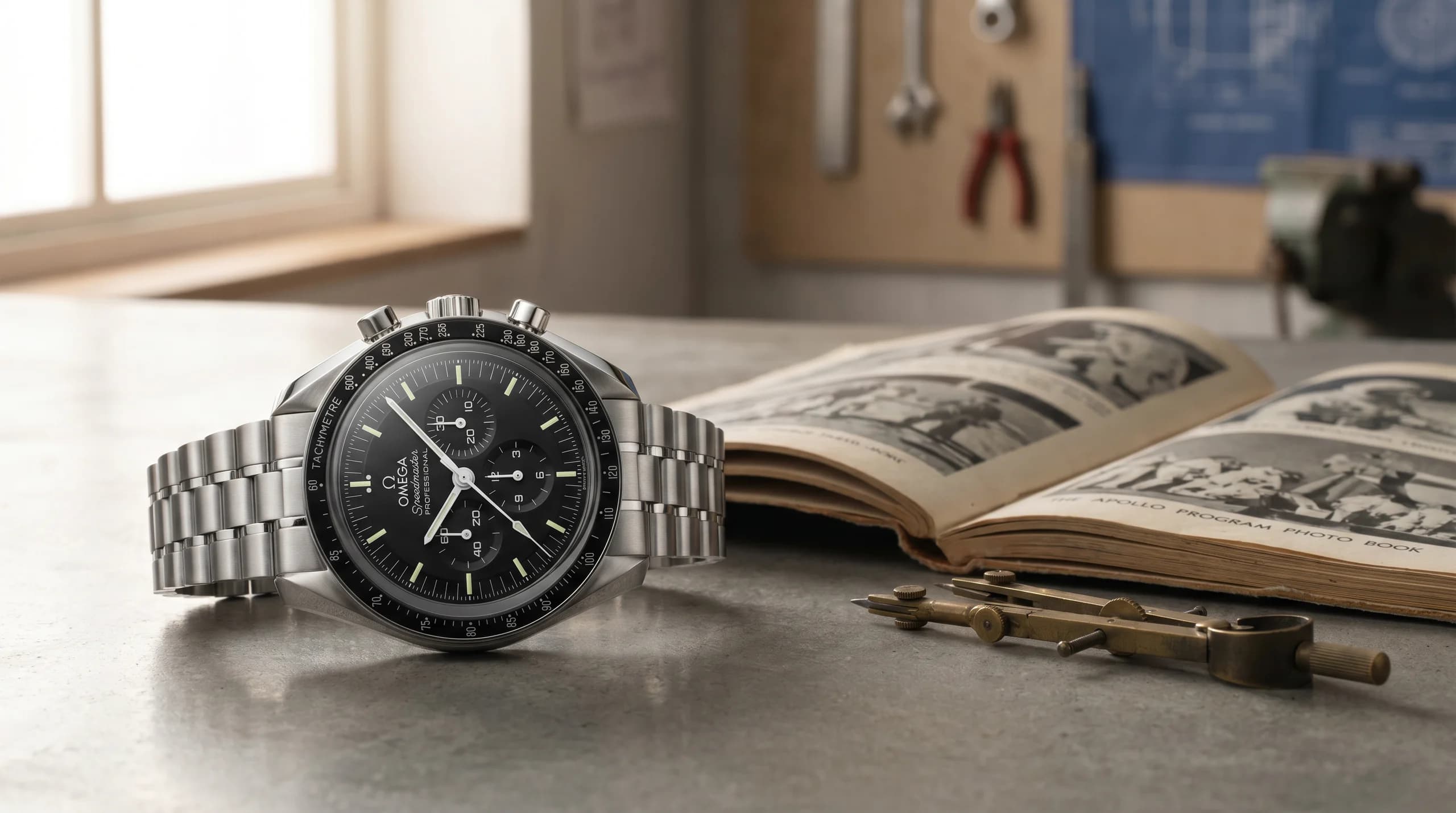
The Omega Speedmaster Professional Moonwatch reference 310.30.42.50.01.001, the most recognizable Omega ever produced and the only watch worn on the moon. Retail $7,300, secondary $5,238 on WatchCharts as of May 2026.
The Short Answer
If you are scanning, the comparison compresses to four big decisions.
- For best value at retail (when you can get it): Omega. Every current Omega reference trades below retail on the secondary market, meaning you save 20 to 30 percent buying pre-owned. The Speedmaster Pro Moonwatch retails at $7,300 and trades at $5,238 secondary.
- For best secondary market performance: Rolex. The Submariner 124060 trades 50 to 75 percent above retail. The Daytona 126500LN trades 70 to 100 percent above retail. Sub-$20,000 Rolex secondary pricing has appreciated steadily through 2024 to 2026.
- For investment-grade holding: Rolex, with limits. Daytona, GMT-Master II, and Submariner are the strongest performers. Discontinued references (Hulk 116610LV, Pepsi 126710BLRO) continue to outperform brand average.
- For everyday wear with minimal worry: Omega. The brand's pre-owned values are stable but not appreciating significantly, which means daily wear damage costs you proportionally less than equivalent damage on an appreciating Rolex.
The pricing differential is the entire story. Rolex secondary market premium runs 30 to 100 percent above retail depending on reference. Omega secondary market discount runs 15 to 35 percent below retail for current production. The two brands are operating in fundamentally different markets in 2026, despite the comparable showroom pricing.
The Direct Reference Comparison
Both brands cover the same five core categories. The direct competitive pairings have been consistent for over six decades.
Dive Watch: Submariner vs Seamaster Diver 300M
The Rolex Submariner is the canonical professional dive watch. The current reference 124060 (no-date) at $9,200 retail and the 126610LN (date) at $10,250 retail both run the in-house caliber 3230/3235 with the 70-hour power reserve, Cerachrom ceramic bezel with platinum-coated minute markers, and the Oyster bracelet with Glidelock adjustment.
The Omega Seamaster Diver 300M reference 210.30.42.20.03.001 at $5,800 retail runs the in-house caliber 8800 with 55-hour reserve, ceramic bezel with laser-engraved scale, and the famous wave-pattern dial (laser-engraved into the dial surface). The Master Chronometer certification covers magnetic resistance to 15,000 gauss, exceeding the Rolex specification at less than two-thirds the retail price.
The functional comparison is essentially even. Both deliver 300m depth rating, both run chronometer-certified in-house movements with comparable accuracy, both carry strong brand heritage in professional diving (the Submariner was issued to commercial divers; the Seamaster carried Bond franchise associations from 1995 onward).
The buying decision splits cleanly. The Submariner trades $11,000 to $14,500 on the pre-owned market, a premium over retail driven by AD allocation constraints. The Seamaster Diver 300M trades $4,000 to $4,800 on the pre-owned market, a 20 to 30 percent discount below retail. For buyers prioritizing dollar value, the Seamaster is the meaningfully better play. For buyers prioritizing long-term value retention, the Submariner is the demonstrably stronger performer.
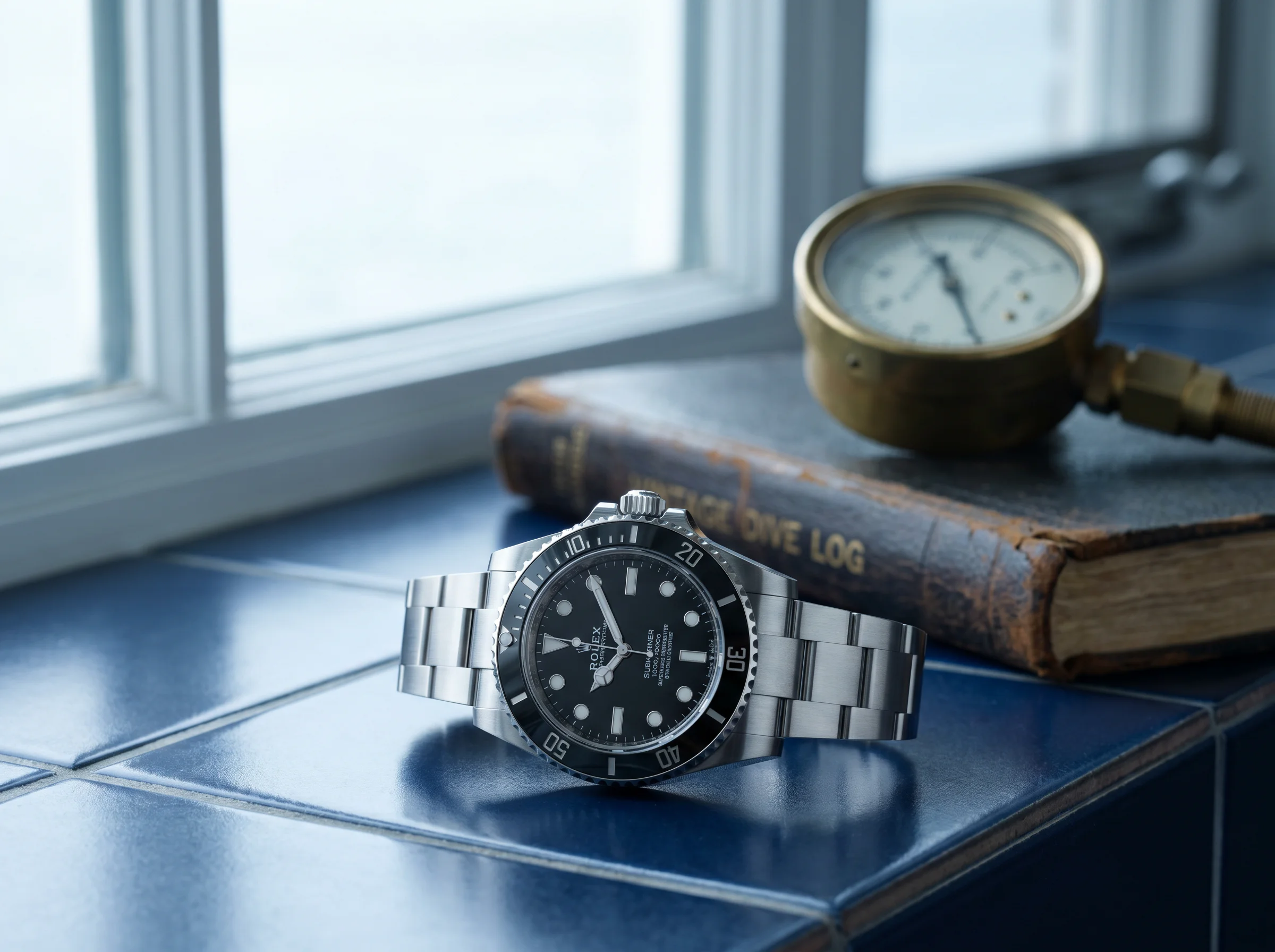 The current Rolex Submariner no-date reference 124060 in Oystersteel. Retail $9,200, secondary $11,000 to $14,500. The canonical professional dive watch and the most consistently appreciating sub-$15,000 Rolex sports reference.
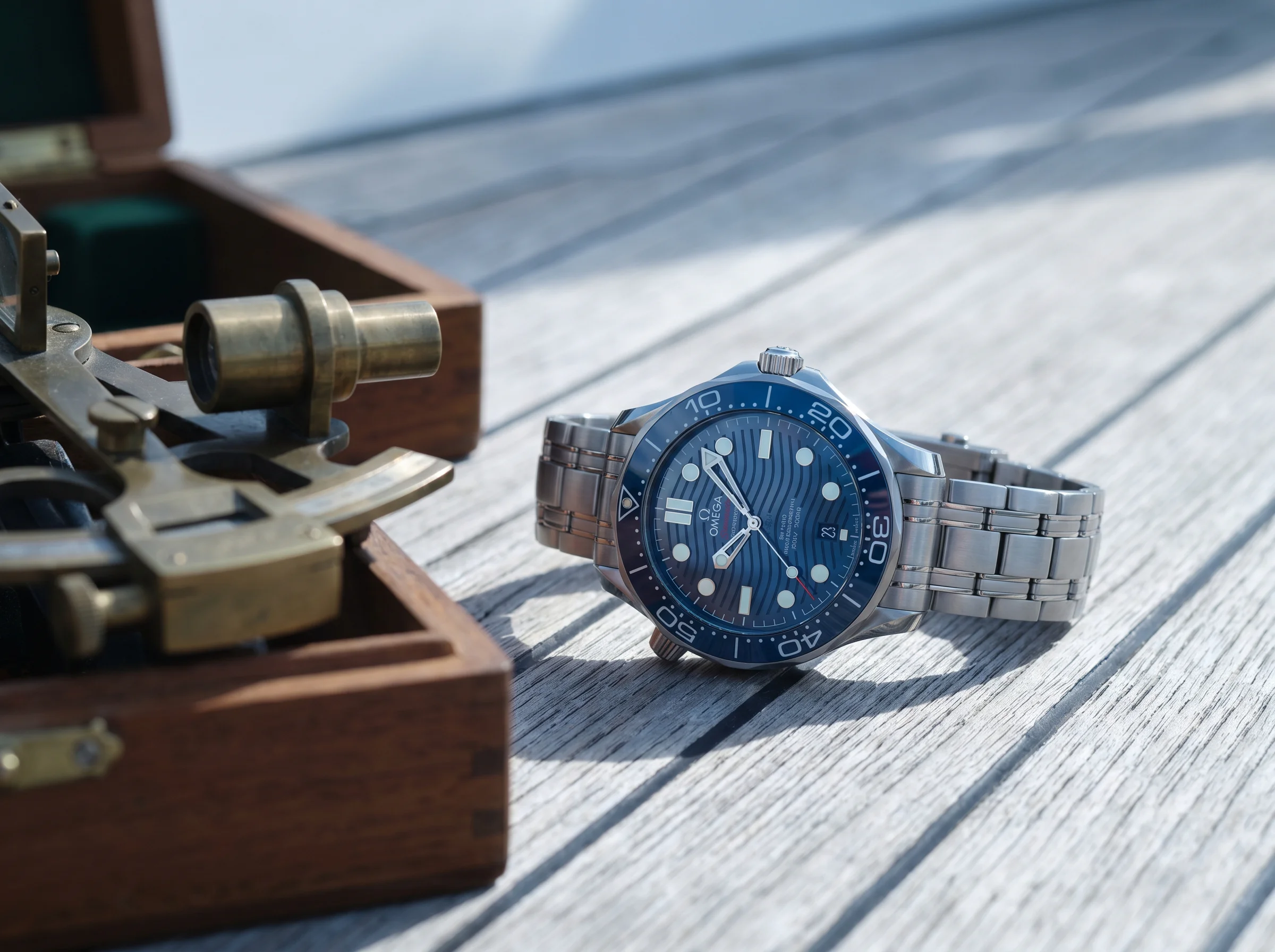 The Omega Seamaster Diver 300M reference 210.30.42.20.03.001 with the iconic blue laser-engraved wave dial. Retail $5,800, secondary $4,000 to $4,800. The direct Submariner competitor at meaningfully lower pricing.
Chronograph: Daytona vs Speedmaster Professional
The Rolex Cosmograph Daytona reference 126500LN at $15,500 retail runs the in-house caliber 4131 chronograph with 72-hour reserve, Cerachrom ceramic tachymeter bezel, and the famous panda or reverse-panda subdial configuration. The Daytona is the most allocation-constrained Rolex sport model in 2026, with AD waits running multiple years.
The Omega Speedmaster Professional Moonwatch reference 310.30.42.50.01.001 (hesalite) at $7,300 retail or the 310.30.42.50.01.002 (sapphire) at $9,000 retail runs the manually wound caliber 3861 with the famous "first watch worn on the moon" provenance. Every Apollo lunar landing carried Speedmaster references, with the 105.012 and 145.012 vintage references serving as the actual flight-qualified pieces.
The functional comparison favors the Speedmaster on heritage and the Daytona on movement. The Speedmaster's manual-wind caliber 3861 is a refined version of the same lever-escapement architecture Omega used in 1969 for Apollo 11. The Daytona's automatic caliber 4131 is a fundamentally modern movement with newer technology, higher accuracy specifications, and 72-hour reserve against the Speedmaster's 50.
The buying decision splits on a meaningfully wider gap than the dive watch comparison. The Daytona 126500LN trades $28,000 to $35,000 on the pre-owned market, a 75 to 125 percent premium over retail. The Speedmaster Pro hesalite trades $5,238 secondary (28 percent below retail), and the sapphire variant trades $6,383 secondary (29 percent below retail). The Daytona is a five-to-six-times-more-expensive watch on the actual buying market.
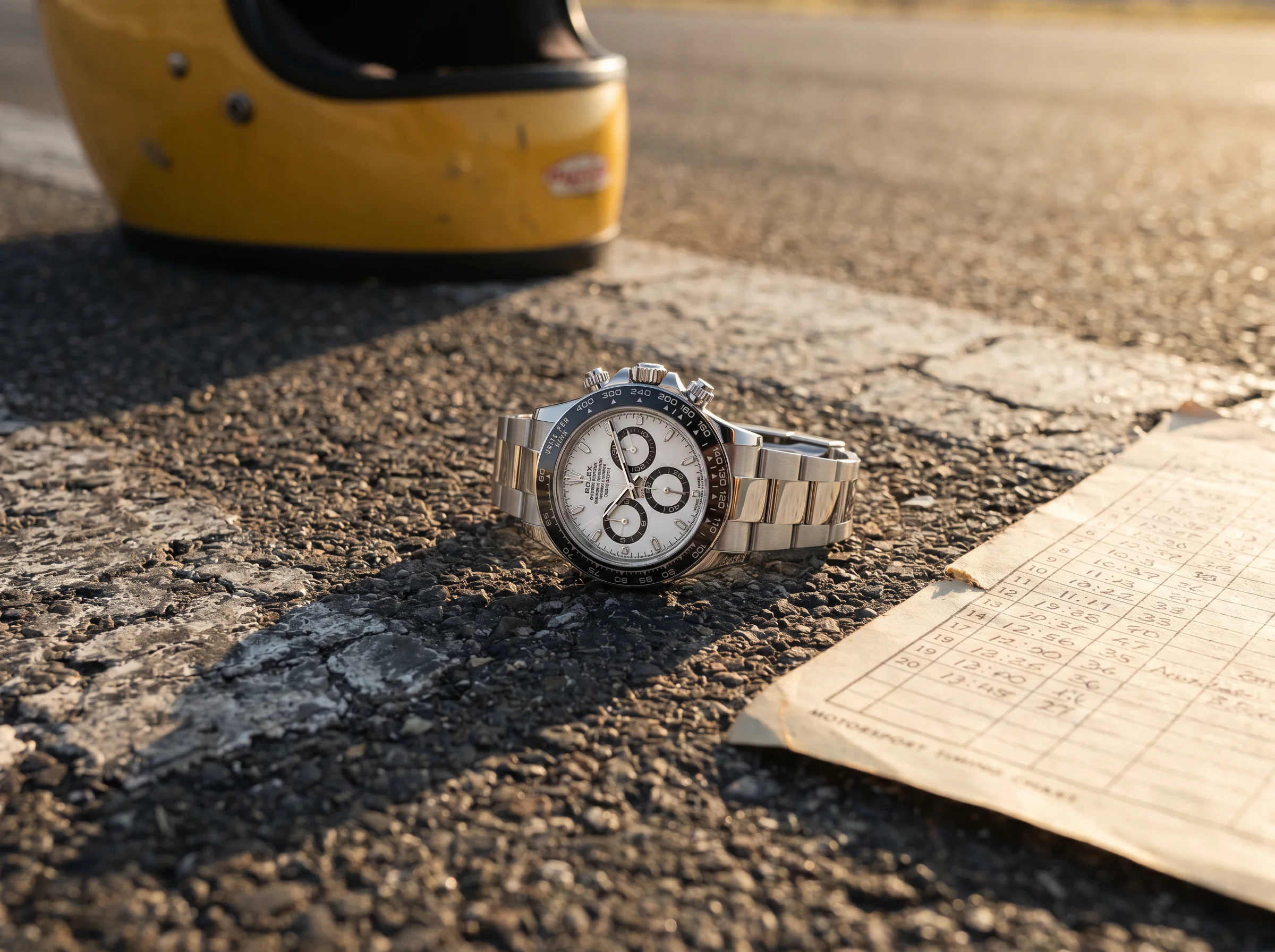 The current Rolex Cosmograph Daytona reference 126500LN in steel with black Cerachrom bezel and panda dial. Retail $15,500, secondary $28,000 to $35,000. The most allocation-constrained Rolex sport model in 2026.
Everyday Sports: Datejust vs Aqua Terra
The Rolex Datejust 41 reference 126334 at $9,200 retail and the 126200 (smooth bezel) at $7,500 retail represent the canonical luxury everyday sports watch. The Datejust has been in continuous production since 1945, with the modern lineup covering 36mm, 41mm, and ladies-size 31mm and 28mm references.
The Omega Seamaster Aqua Terra 150M reference 220.10.41.21.03.004 at $6,400 retail represents Omega's direct everyday luxury competitor. The teak-pattern dial (vertical ridges referencing yacht deck planking), the 41mm case, and the caliber 8900 Master Chronometer movement deliver the same fundamental functionality as the Datejust at meaningfully lower pricing.
Both watches anchor their respective brands' broader catalogs. The Datejust trades $8,000 to $11,000 secondary for the 41mm references depending on dial color and bezel. The Aqua Terra trades $4,200 to $5,200 secondary, a 20 to 30 percent discount below retail.
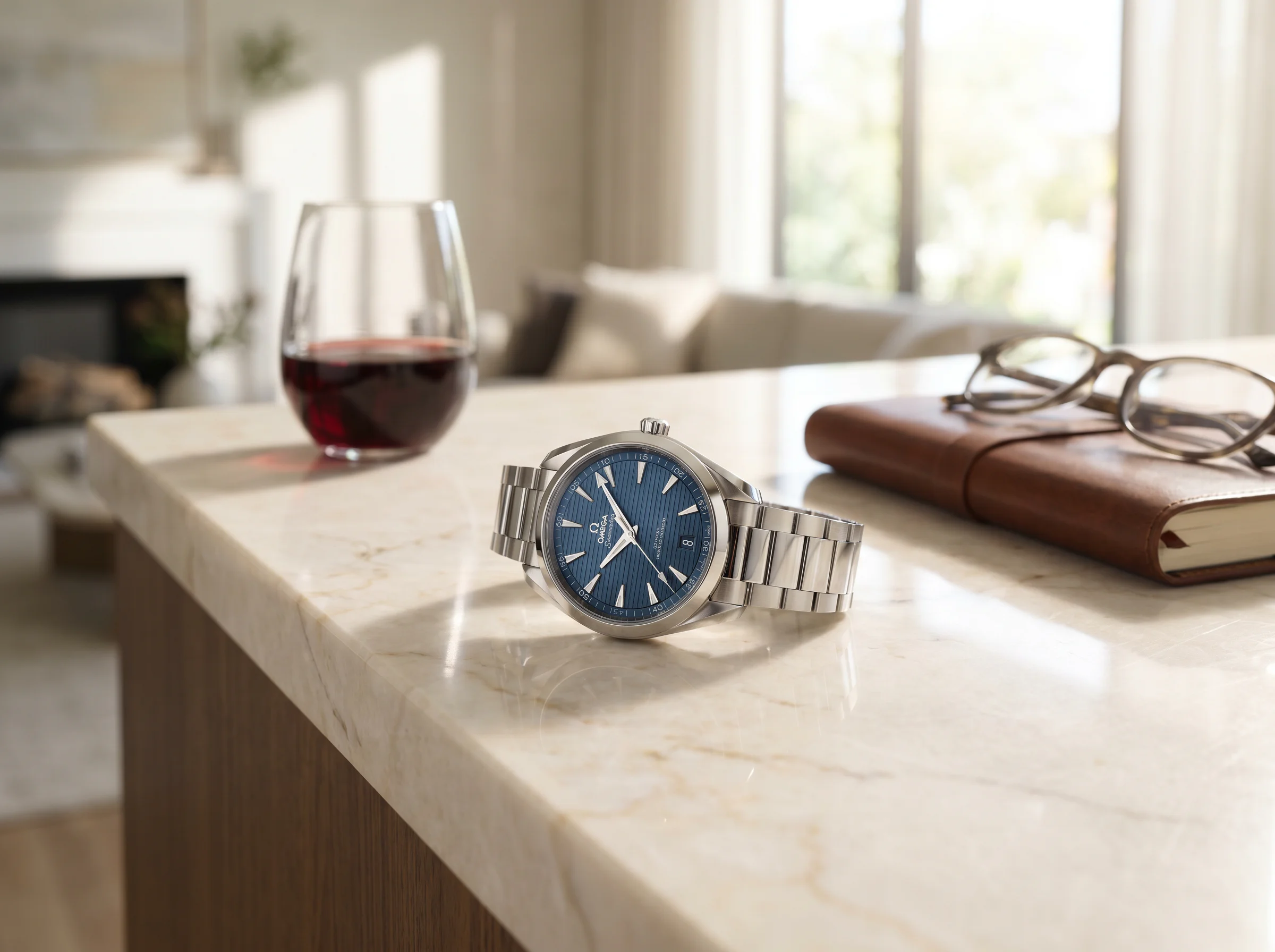 The Omega Seamaster Aqua Terra 150M reference 220.10.41.21.03.004 with the iconic vertical teak pattern dial in summer blue. Retail $6,400, secondary $4,200 to $5,200. The direct Datejust competitor at meaningfully lower pricing.
Adventure / Travel: GMT-Master II vs Aqua Terra Worldtimer
The Rolex GMT-Master II reference 126710BLNR ("Batman") at $11,050 retail and the discontinued 126710BLRO ("Pepsi") references define the modern travel watch category. Both run the caliber 3285 with 70-hour reserve and independently set local-hour-hand jumping mechanism.
The Omega Aqua Terra Worldtimer reference 220.10.43.22.03.001 at $9,400 retail offers a comparable functional concept with a different aesthetic interpretation. The watch displays 24 city names and local time across the dial, with the caliber 8938 Master Chronometer movement powering the worldtimer complication.
Pricing diverges sharply. The GMT-Master II Batman trades $15,500 to $18,000 secondary. The Aqua Terra Worldtimer trades $7,500 to $8,500 secondary, again at the 15 to 20 percent retail discount that defines Omega secondary positioning.
The Rolex Pepsi GMT 126710BLRO discontinuation at Watches & Wonders 2026 (covered in our W&W 2026 discontinuation recap) added scarcity premium to the reference, with secondary pricing now trending toward $20,000 plus.
The 2026 Pricing Matrix
| Reference | Brand | Retail (2026) | Secondary | Spread |
|---|---|---|---|---|
| Submariner 124060 | Rolex | $9,200 | $11,000-$14,500 | +20% to +58% |
| Seamaster Diver 300M | Omega | $5,800 | $4,000-$4,800 | -17% to -31% |
| Daytona 126500LN | Rolex | $15,500 | $28,000-$35,000 | +81% to +126% |
| Speedmaster Pro hesalite | Omega | $7,300 | $5,238 | -28% |
| Speedmaster Pro sapphire | Omega | $9,000 | $6,383 | -29% |
| Datejust 41 126334 | Rolex | $9,200 | $8,000-$11,000 | -13% to +20% |
| Aqua Terra 150M | Omega | $6,400 | $4,200-$5,200 | -19% to -34% |
| GMT-Master II 126710BLNR Batman | Rolex | $11,050 | $15,500-$18,000 | +40% to +63% |
| Aqua Terra Worldtimer | Omega | $9,400 | $7,500-$8,500 | -10% to -20% |
The pattern is consistent across every category. Rolex carries an allocation premium that places secondary market pricing meaningfully above retail. Omega carries no such premium, with current production references trading at consistent 15 to 35 percent discounts to retail.
The Brand Strategy Difference
The pricing differential reflects deeply different brand strategies at the corporate level.
Rolex: Constrained Supply, Allocation Power
Rolex operates as an independent foundation (the Hans Wilsdorf Foundation) and produces roughly 1 million watches per year. The brand controls retail allocation through a tightly managed network of authorized dealers, with allocation going almost exclusively to established clients with multi-year purchase history. The supply constraint is deliberate and structural.
The result is the allocation premium. Buyers who cannot wait years for an AD allocation pay 50 to 100 percent premiums on the pre-owned market for the most-requested references (Daytona, GMT-Master II, Submariner Date). The premium has been consistent across the past five years, briefly compressing in 2023 to 2024 before re-expanding through 2025 to 2026.
Omega: Volume Production, Retail Availability
Omega is part of the Swatch Group and produces approximately 700,000 to 800,000 watches per year. The brand operates without the same allocation constraints, with most current production references available at authorized dealers in current inventory. The Speedmaster Professional, Seamaster Diver 300M, and Aqua Terra references can all be purchased at retail without waiting lists in 2026.
The result is the structural secondary market discount. New owners can sell pre-owned Omegas, but they are competing against retail availability at meaningfully higher pricing through authorized dealers. The discount creates substantial value for pre-owned buyers but creates downside for anyone holding the watches as investment.
How to Choose: Buyer Profile Matrix
First Luxury Watch (Realistic Budget)
The honest recommendation is the Omega Speedmaster Professional Moonwatch hesalite at $5,238 secondary or the Seamaster Diver 300M at $4,000 to $4,800 secondary. Both deliver canonical Swiss luxury watchmaking, strong brand heritage, in-house chronometer movements, and the kind of versatile design language that wears well across decades.
The Rolex equivalent (Submariner 124060 at $11,000 to $14,500 or Datejust 41 at $8,000 to $11,000) costs roughly 2 to 3 times the Omega for comparable functionality. The pricing differential reflects allocation premium rather than meaningful product superiority. For first luxury watch buyers operating on realistic budgets, Omega delivers more watch per dollar.
First Luxury Watch (Status / Recognition Priority)
Rolex Submariner 124060 or Datejust 41. The Rolex crown carries broader cultural recognition than the Omega seahorse, particularly in business and professional settings where watches function as visible status markers. The Submariner's silhouette is the most recognized luxury watch design template in the world. For buyers prioritizing recognition over dollar value, the Submariner premium is the cost of admission.
Long-Term Investment / Appreciation
Rolex. The brand's structural allocation premium, sustained over multiple decades, has driven consistent secondary market appreciation across the major sport references. The Daytona 126500LN, GMT-Master II 126710BLNR, and discontinued references (Hulk 116610LV, Pepsi 126710BLRO) all deliver appreciation patterns Omega cannot match.
The Speedmaster vintage market (5-digit references from the 1960s and 1970s) is a meaningful exception. Vintage Speedmaster pricing has appreciated steadily, with strong condition examples of the 145.012 (Apollo 11 reference), 145.022 (Mark II), and CK 2998 trading at sustained premiums. Modern Speedmaster references do not deliver comparable appreciation.
Daily Wear / Minimal Worry
Omega. The brand's lower retail pricing and stable but unappreciating secondary market means daily wear damage costs proportionally less than equivalent damage on an appreciating Rolex. The Speedmaster Pro hesalite at $5,238 secondary is a meaningfully different financial proposition for daily wear than a Submariner at $14,500 secondary.
Collector / Connoisseur
Both, in tandem. Most serious collectors eventually own representative pieces from both brands, typically starting with a Submariner or Speedmaster as a first luxury watch and building outward. The two brands are complementary rather than competitive at the collector tier, with Rolex anchoring the sport watch tier and Omega delivering the heritage chronograph and dive watch references that Rolex cannot match (the Speedmaster Pro lunar provenance, the vintage Seamaster racing references, the Constellation chronometer history).
The Vintage Question
The vintage market reverses much of the modern brand positioning. Vintage Rolex (1960s to early 1980s Submariners, Daytonas, GMT-Masters) carries the strongest collector premium in the entire luxury watch market, with seven-figure results common for the rarest references. The Patek Philippe 2523 at $10.2M at Phillips Geneva XXIII in May 2026 sat alongside multiple vintage Rolex Daytonas at $5M plus.
Vintage Omega operates at a meaningfully lower tier in the auction market. The Speedmaster Apollo 11 references (145.012 and 105.012 from 1969) trade in the $50,000 to $250,000 range depending on condition and provenance. The 1957 trilogy references (Speedmaster CK 2915, Seamaster 300 CK 2913, Railmaster CK 2914) trade in the $80,000 to $400,000 range for collector-grade examples.
The differential reflects two factors. First, Rolex vintage scarcity is more pronounced than Omega vintage scarcity, with surviving examples of the most-collected references running into the low triple digits worldwide. Second, vintage Rolex has been the consistent benchmark for vintage watch market value for over four decades, with the secondary market infrastructure (auction houses, dealer networks, authentication standards) calibrated around Rolex as the default reference brand.
For collectors building vintage exposure, Rolex remains the dominant brand at every tier. Omega delivers strong specific opportunities (Apollo heritage Speedmasters, 1957 trilogy references, vintage Constellation chronometers) but does not match Rolex's depth or auction market presence.
A Working Dealer's Read
The Rolex versus Omega comparison is not symmetric. The two brands deliver different products despite the surface similarity. Rolex sells allocation; Omega sells watches. The structural premium attached to Rolex secondary pricing is the cost of admission to a deliberately constrained supply system, not the price of meaningfully better watchmaking.
For most buyers, the practical decision compresses to budget and time horizon. Buyers with sub-$10,000 budgets and no commitment to long-term hold strategy are better served by Omega's current production lineup. The Speedmaster Pro hesalite at $5,238, the Seamaster Diver 300M at $4,400 secondary, and the Aqua Terra at $4,800 secondary all deliver canonical luxury Swiss watchmaking at meaningfully lower entry costs than the Rolex equivalents.
Buyers with budgets above $15,000 who can accept the allocation premium structure or are willing to buy pre-owned at premium pricing find Rolex's value retention more compelling. The Submariner 124060 at $14,500 secondary will likely trade $16,000 to $18,000 in five years. The Speedmaster Pro hesalite at $5,238 secondary will likely trade $4,800 to $5,400 in five years, holding stable but not appreciating.
For collectors operating at the auction tier ($50,000 plus per piece), vintage Rolex remains the dominant brand for both appreciation and liquidity. Vintage Omega delivers strong specific opportunities but does not match Rolex's market depth.
Browse authenticated pre-owned Rolex at 5dwatches.com and Omega. Both lineups span the modern production references and the discontinued generations that often deliver the strongest value across both brands.
Frequently Asked Questions
Is Rolex better than Omega?
Neither brand is objectively better. The two operate in fundamentally different market positions. Rolex carries an allocation premium that places secondary market pricing 30 to 100 percent above retail. Omega carries no allocation premium, with current production references trading 15 to 35 percent below retail. The product quality is comparable; the pricing dynamics are not.
Why does Rolex hold value better than Omega?
The value differential is driven by allocation constraint rather than product superiority. Rolex deliberately limits supply through the AD network, creating multi-year waiting lists for most sport references. The waiting list creates pre-owned demand that drives secondary market premiums. Omega does not operate with comparable supply constraints, so secondary market pricing tracks below retail rather than above.
What is the Omega equivalent of the Rolex Submariner?
The Omega Seamaster Diver 300M reference 210.30.42.20.03.001 at $5,800 retail. The watch delivers comparable 300m depth rating, ceramic bezel, in-house chronometer movement (caliber 8800), and bracelet construction at meaningfully lower pricing than the Submariner 124060 at $9,200 retail.
What is the Omega equivalent of the Rolex Daytona?
The Omega Speedmaster Professional Moonwatch references 310.30.42.50.01.001 (hesalite) at $7,300 retail or 310.30.42.50.01.002 (sapphire) at $9,000 retail. The Speedmaster delivers comparable chronograph functionality at half the Daytona's retail price, with the additional heritage of being the only watch flight-qualified by NASA for lunar missions.
Should I buy a Rolex or Omega for daily wear?
Omega, for most buyers. The brand's stable but unappreciating secondary market means daily wear damage costs proportionally less than equivalent damage on an appreciating Rolex. A Speedmaster Pro at $5,238 secondary is a meaningfully different financial proposition for daily wear than a Submariner at $14,500 secondary, even though both watches will survive equivalent treatment without functional impact.
Where should I buy a pre-owned Rolex or Omega?
Buy authenticated pre-owned from a dealer with verifiable authentication standards. Browse authenticated pre-owned Rolex at 5dwatches.com and Omega. Avoid private sales without box and papers, verify serial number ranges and movement details before committing, and prioritize dealers with established reputations and inspection guarantees over price-driven listings without provenance documentation.