Every new customer eventually asks some version of the same question. Usually it comes out after their second or third purchase: "How many is too many?" There is no clean answer, but there is a useful framework, and it has almost nothing to do with the number itself.
This post includes AI-assisted images built from real reference photos of actual watches. All perspectives and figures cited are drawn from published collector commentary, not invented.
The short answer: There is no universally correct collection size. Some experienced collectors argue for a tight 5 to 7 pieces, actively curated through periodic selling. Others argue against any predetermined cap at all, pointing out that most long-time collectors naturally settle somewhere around 15 to 30 watches without ever trying to hit that number. The right size for you depends on your budget, how often you actually rotate what you wear, and how much friction you are willing to tolerate from storage, insurance, and maintenance.
The Case For a Small, Curated Collection
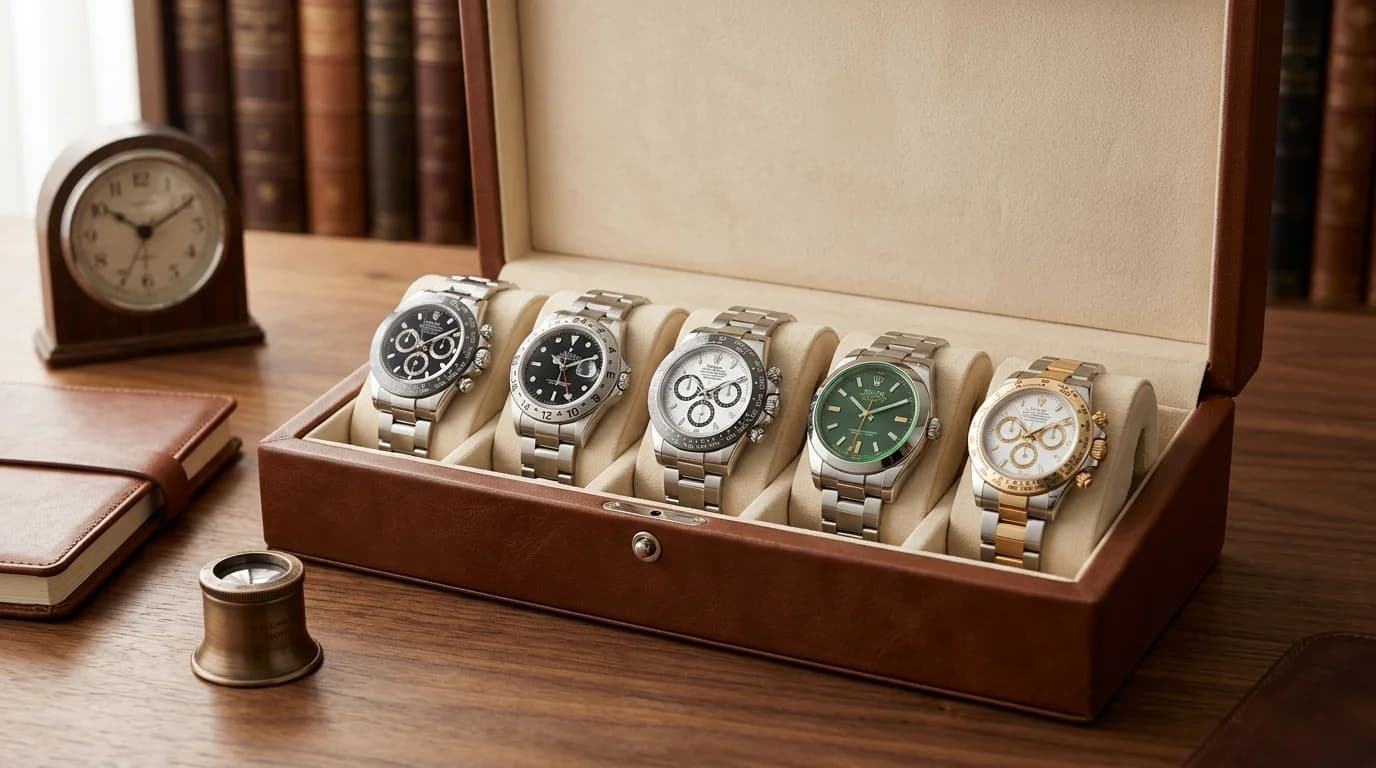
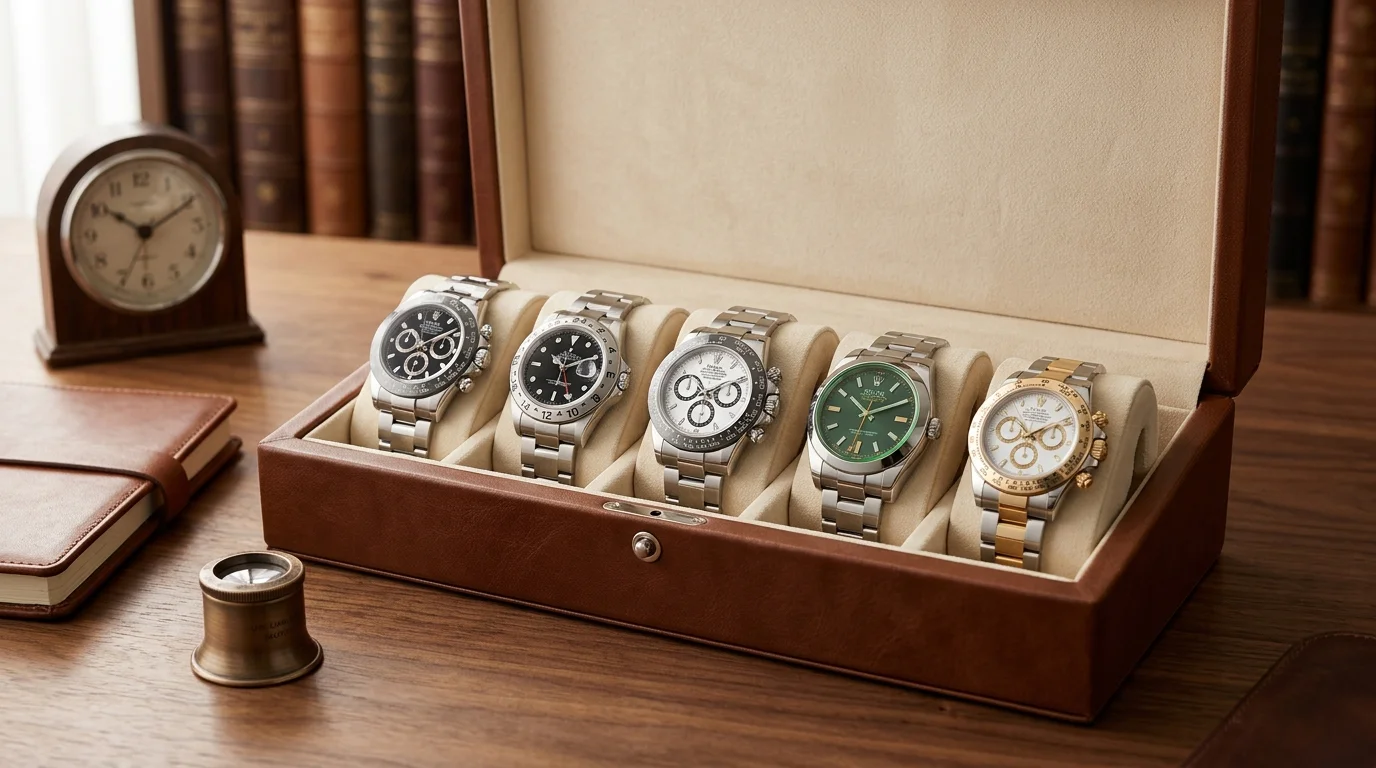 Five pieces, each earning its spot. This is the "binge and purge" model in practice.
One well known argument for a small collection lands on a specific range: 5 to 7 carefully selected watches. The logic is straightforward. Beyond that number, most people stop wearing every piece regularly, and a watch box full of watches you rarely touch is not really a collection, it is storage. The strategy that pairs with this philosophy is active curation: sell the piece you have grown out of to fund the next one you actually want, rather than just adding indefinitely.
The practical benefit: it forces real decision-making about what you value in a watch, rather than accumulating pieces because they were available or discounted. It also keeps total capital tied up in watches lower and more liquid.
What Small-Collection Curation Actually Looks Like
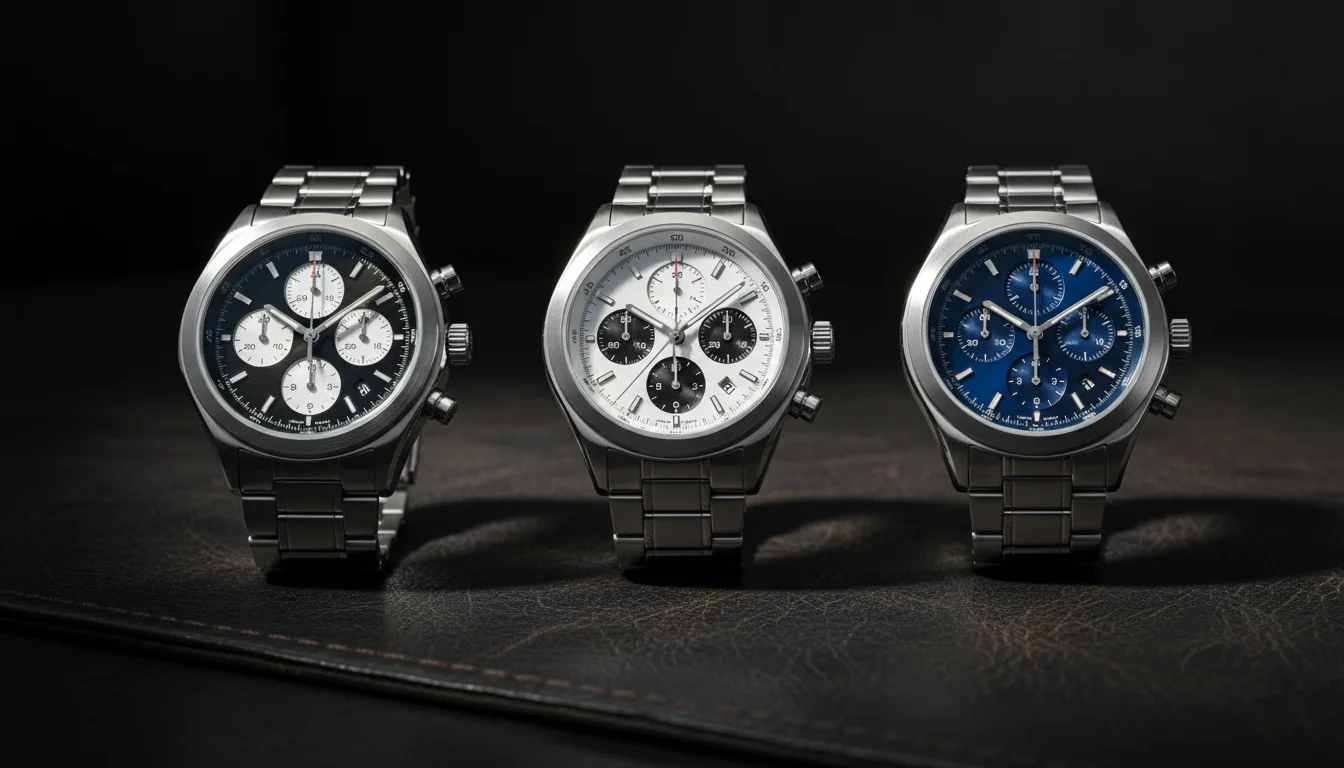 Even within a tight collection, variation matters: different dial colors, different use cases, no true duplicates.
A well curated small collection typically covers distinct roles rather than distinct brands: one daily steel sports watch, one dressier piece for formal occasions, and one that is purely emotional, bought because you love it rather than because it fills a gap. When a new watch enters the rotation and genuinely outclasses an existing piece at the same role, that older piece gets sold. The collection stays the same size but the quality bar keeps rising.
The Case Against a Cap
Other experienced collectors push back hard against any predetermined limit. The argument here is that watch collecting rewards accumulation the way few other hobbies do: a watch bought purely for its design or its story still has value sitting in a drawer, unlike, say, a car you never drive. Survey data referenced by collectors in this camp suggests most long-time collectors land naturally somewhere around 15 to 30 pieces, not because they targeted that number but because that is roughly where genuine interest plateaus without artificial constraint.
The practical tradeoff: selling a watch you later regret costs real money and, more than that, costs you the piece itself. Buyers in this camp would rather hold a watch they rarely wear than sell it and watch the market or their own taste swing back toward it a year later.
Storage Stops Being Optional Past a Certain Point
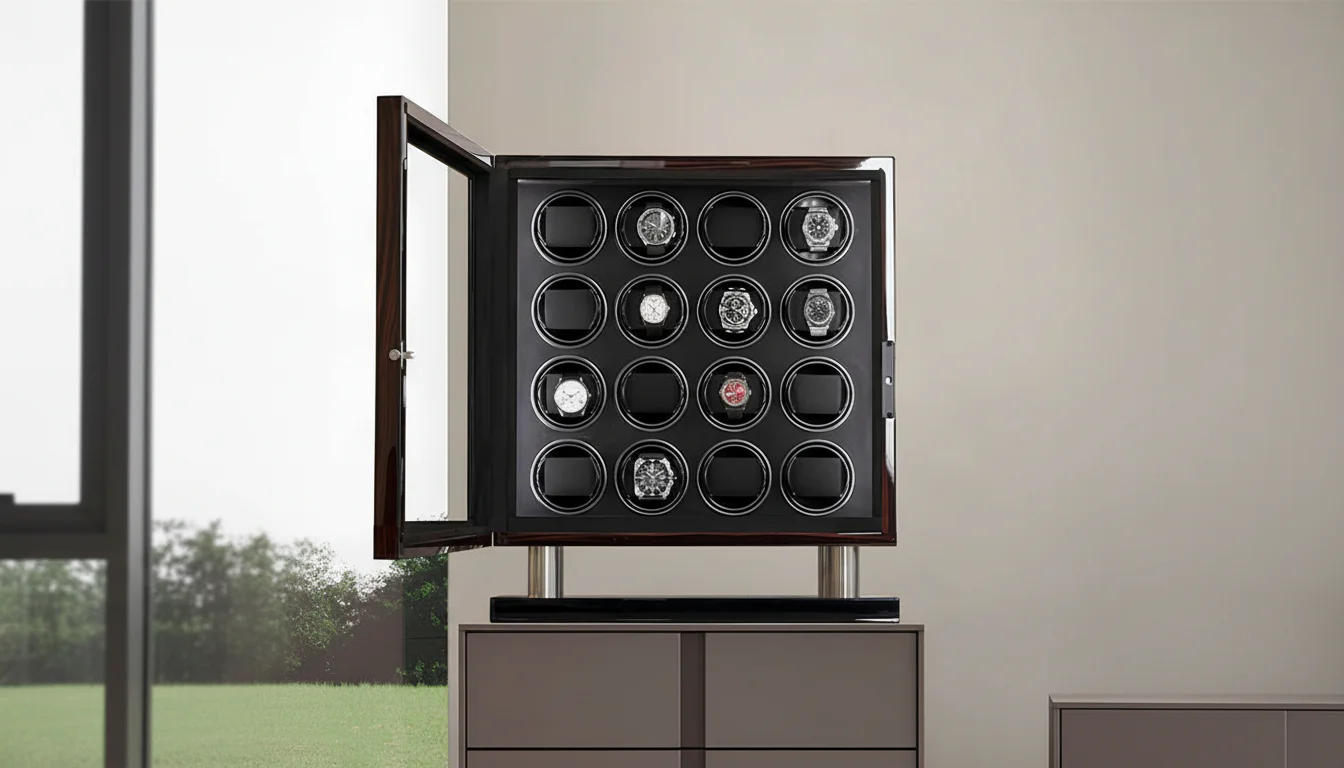 Once you are past a handful of automatics, a winder or safe becomes a real line item, not an accessory.
Anyone genuinely holding 15 or more mechanical watches runs into a practical wall that the "no cap" philosophy tends to skip over: automatic movements need to run to stay lubricated properly, and hand-winding a large rotation daily is not realistic. That means a real watch winder, likely a safe, and often a homeowner's insurance rider once total value clears a certain threshold. None of that is a reason to stop collecting. It is a reason to budget for the infrastructure honestly instead of pretending it does not exist.
The Question That Actually Matters More Than The Number
 The most honest test of a collection: how much of it do you actually reach for?
Forget the target number for a second and ask a more useful question: what percentage of your current collection did you wear in the last three months? If the answer is close to 100 percent, you probably have room to grow, whether that is your third watch or your twentieth. If it is closer to 20 percent, you already have your answer, and it has nothing to do with buying less. It means selling the pieces that lost the argument for your wrist.
One honest metric worth tracking: cost per wear. A $15,000 watch worn twice a month for five years costs roughly $125 per wear. A $5,000 watch that sat in a drawer after the first month cost you the full $5,000 for one outing. The sticker price tells you almost nothing about whether a watch was a good addition to your rotation.
One Watch, Two Watches, Twenty Watches: Pick Your Role First
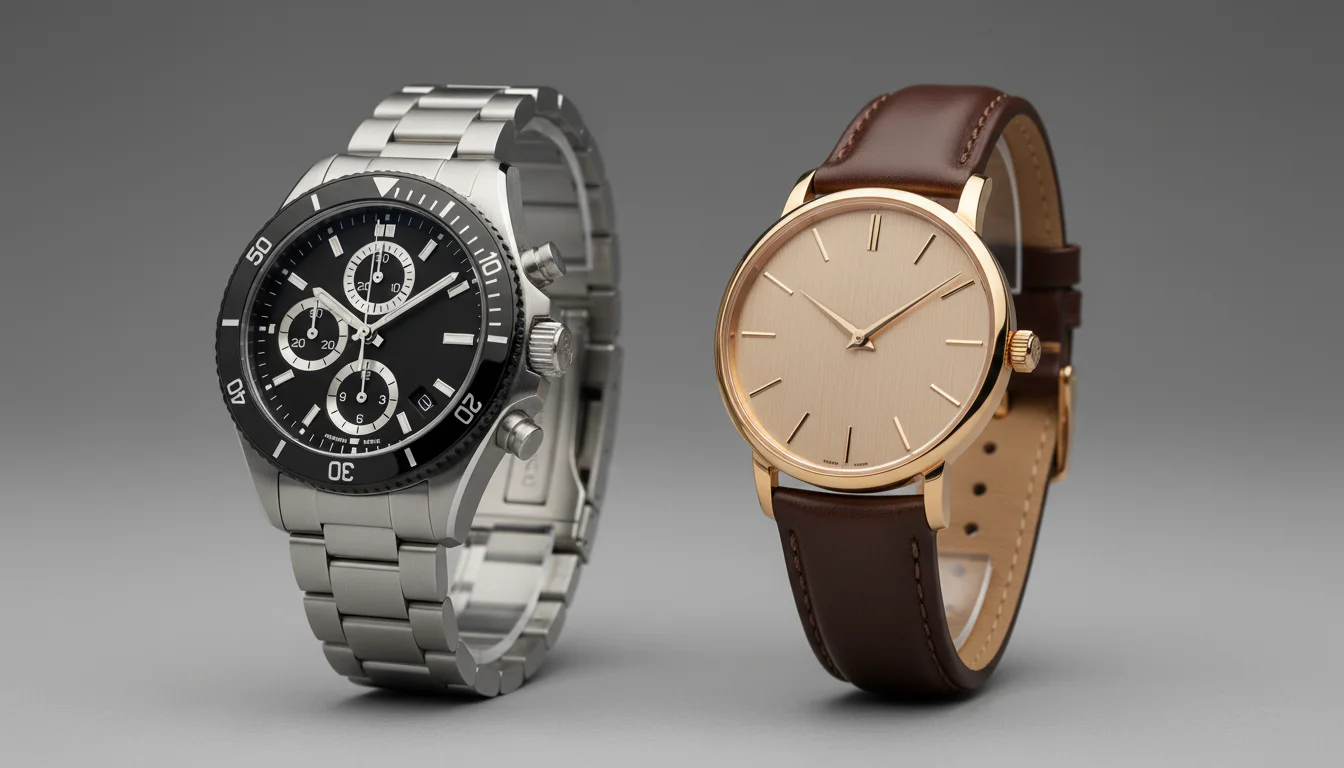 Two watches covering two genuinely different roles beats five watches that all do the same job.
Before chasing a number, decide what roles you actually need covered: a daily beater that can take a scratch without ruining your day, something dressier for the occasions a sports watch looks wrong, and, if your budget allows, one piece that exists purely because you love it and does not need to justify itself against a spreadsheet. Once those roles are filled, the question of adding a fourth, fifth, or twentieth watch becomes a question about whether it earns a genuinely new role, not whether you can afford it.
FAQ
How many watches does the average serious collector own?
There is no official average, but collector commentary and forum surveys consistently point to a range around 15 to 30 pieces for people who have been collecting for several years without deliberately capping their collection.
Is a one-watch collection considered "real" collecting?
Yes. Many serious enthusiasts intentionally keep a single exceptional watch rather than a larger rotation, prioritizing quality and daily wear over quantity.
What is the "5 to 7 watch" collecting philosophy?
It is an active curation approach where a collector keeps a tight, deliberately limited number of watches, selling pieces that no longer earn their spot to fund new acquisitions rather than accumulating indefinitely.
At what point do I need a watch winder or safe?
Once you are regularly holding more than a handful of automatic watches, a winder becomes practical rather than optional, since hand-winding a large rotation daily is not realistic. A dedicated safe and an insurance rider typically become worth considering once total collection value clears a meaningful threshold for your policy.
How do I decide whether to sell a watch in my collection?
Track how often you actually wear each piece over a few months. A watch that consistently sits unworn while others get regular rotation is a strong candidate to sell, regardless of what you originally paid for it.