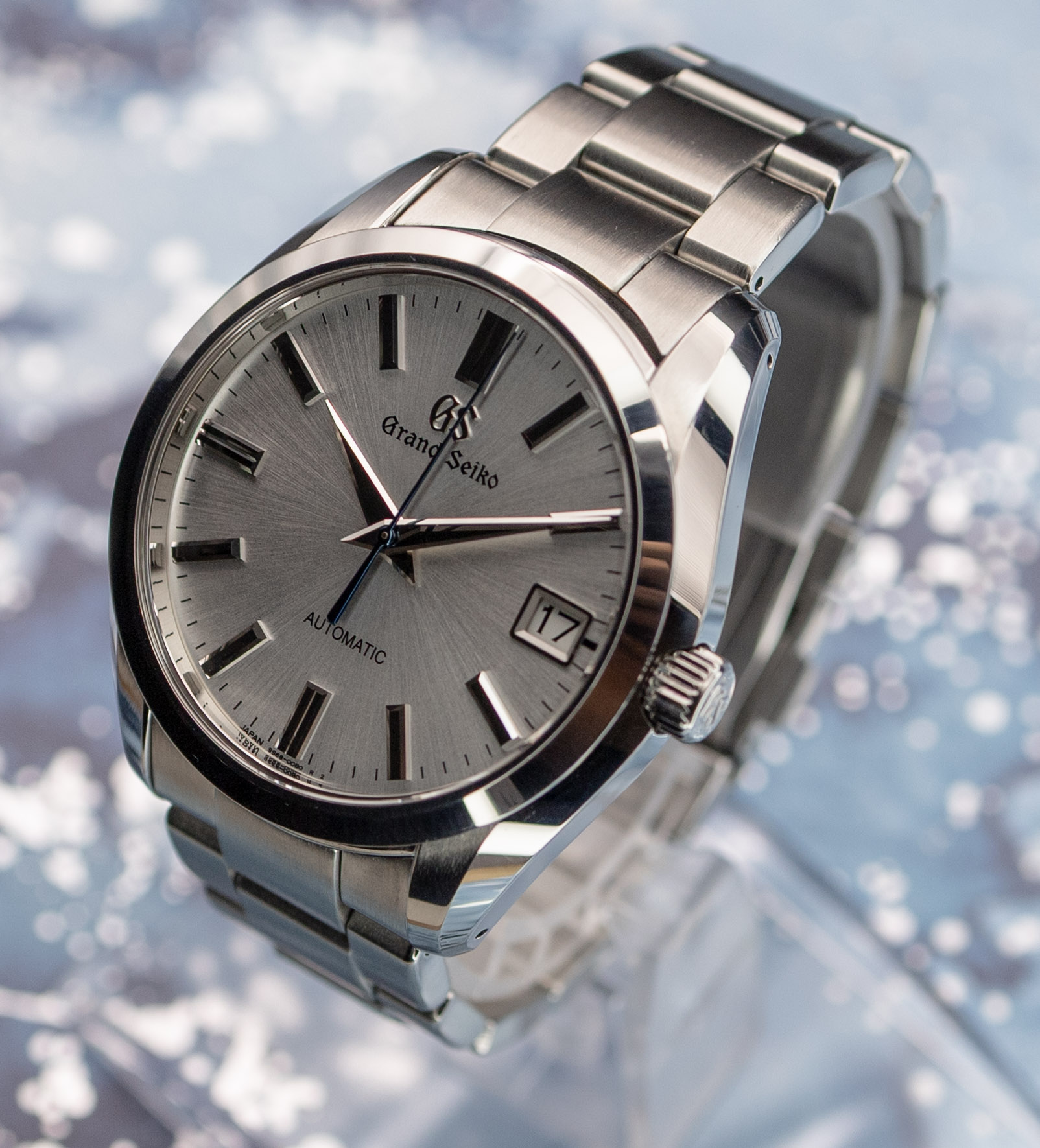
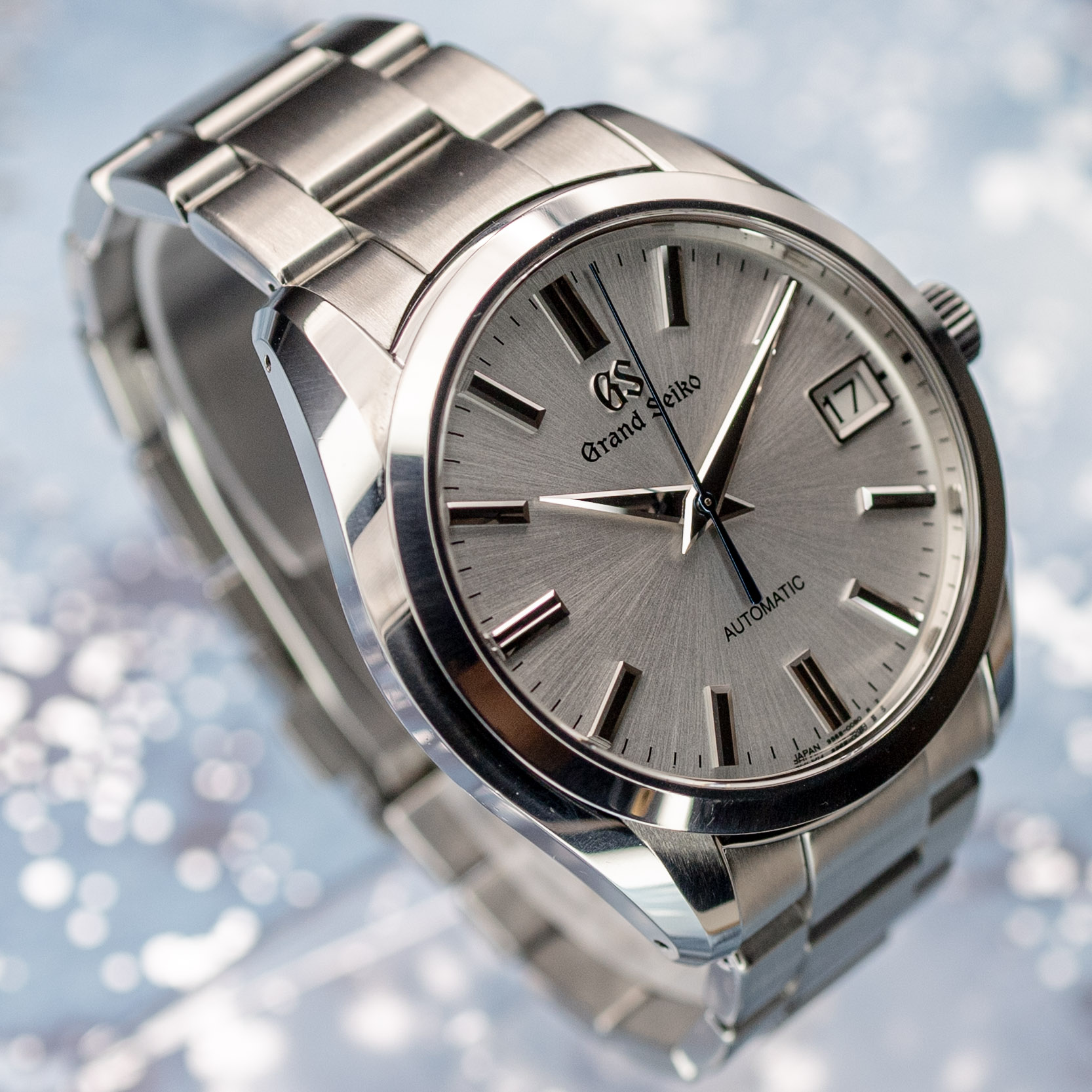
Tilt this dial under a light and the indices flash hard enough that people assume there's a stone set into it.
There isn't. It's polished metal, hand-finished, doing exactly what Grand Seiko built it to do.
That's the whole story of this watch. Nothing dramatic is happening. It's just doing the basics better than most watches at this price bother to.
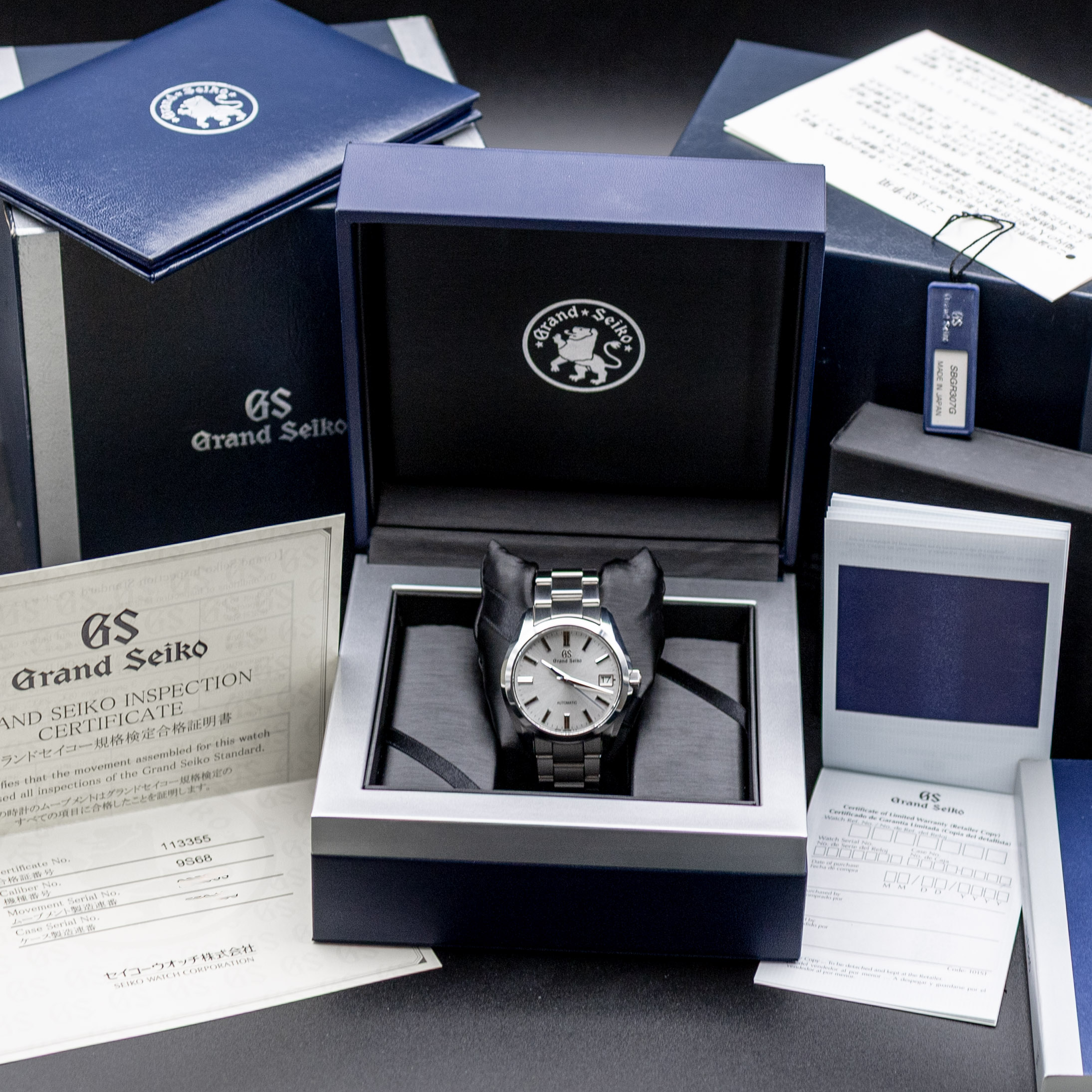
What the Grand Seiko Heritage SBGR307 actually is
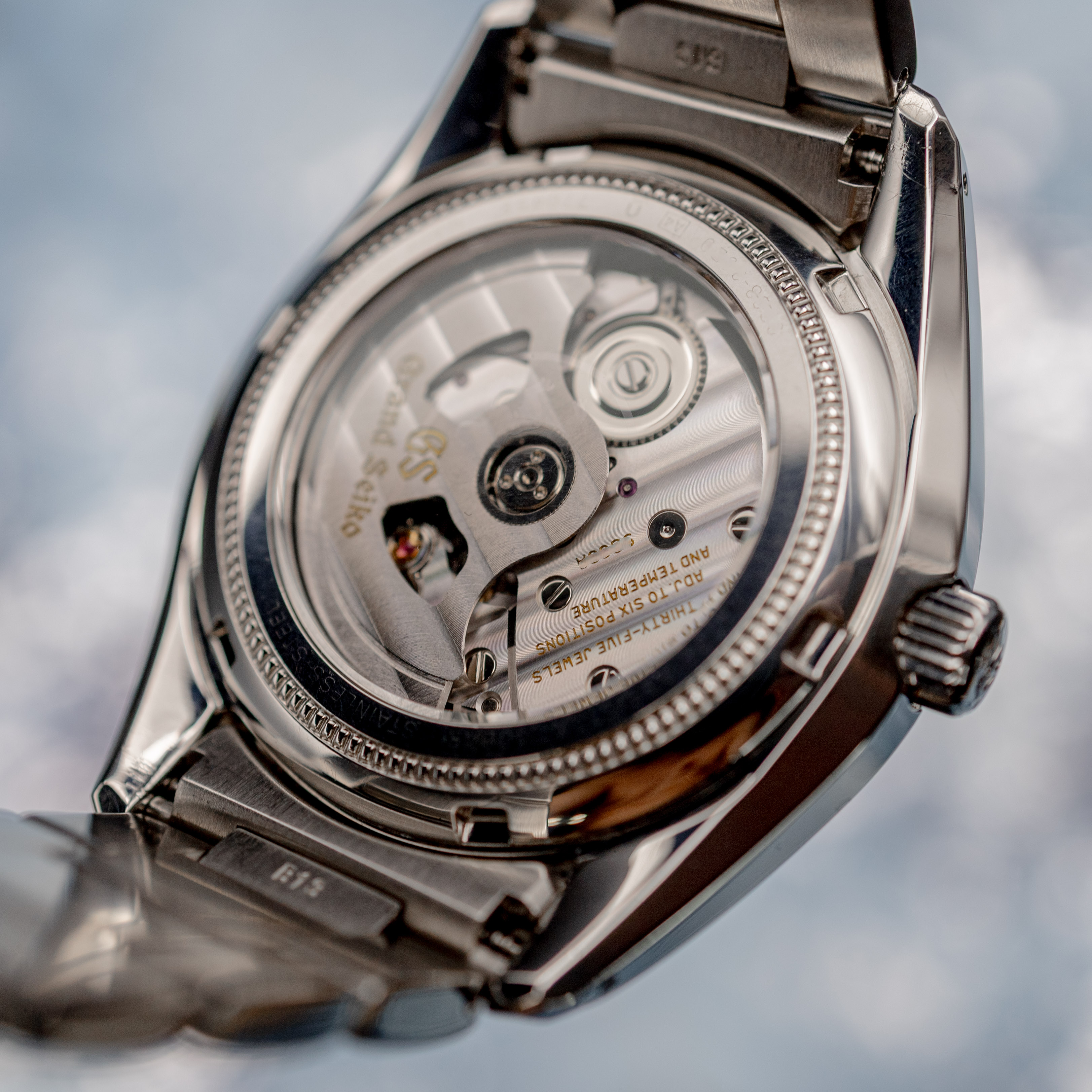
Full name: Grand Seiko Heritage Collection, 42mm, automatic, silver sunburst dial, reference SBGR307. It runs the caliber 9S68, Grand Seiko's in-house mechanical movement, with a 72-hour power reserve and 100 meters of water resistance.
This sits in the core of Grand Seiko's mechanical lineup. It's not the entry point, that's the no-date 9S65 pieces, and it's nowhere near the flagship stuff, the high-beat Evolution 9 line or the Spring Drive references. This is the watch that represents the brand day to day without being the showpiece.
Retail on this one runs around $4,600. Used, it typically trades in the $2,800 to $4,000 range depending on condition and box and papers.
Is this watch actually as rare in the US as people think?
I went into this thinking there was almost no real sales data on this reference in the US. That's not quite true, and it's worth correcting.
There's more completed sales data out there than it looks like at first glance, on Chrono24 and WatchCharts both, mostly in that $2,800 to $4,000 band. It's not a Rolex with thousands of comps. But it's not the ghost watch it first appears to be either. If you're shopping one, don't assume you have no leverage just because you can't find ten identical listings.
What is genuinely true: you will not find nearly as many of these in the US as you would in Japan or Europe. Grand Seiko's US presence is still much smaller than its home market presence. That part holds up.
The dial, and why the indices do all the work
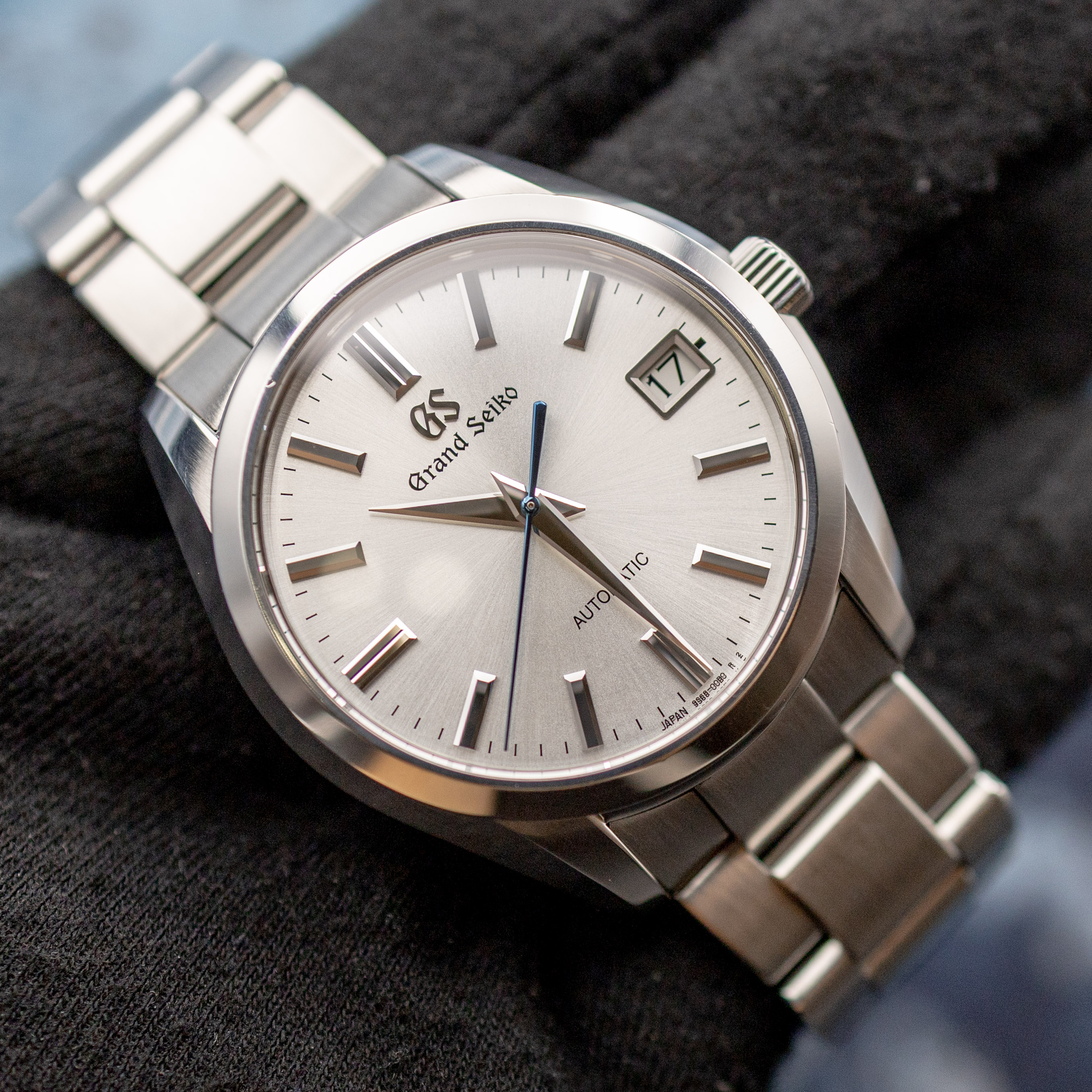
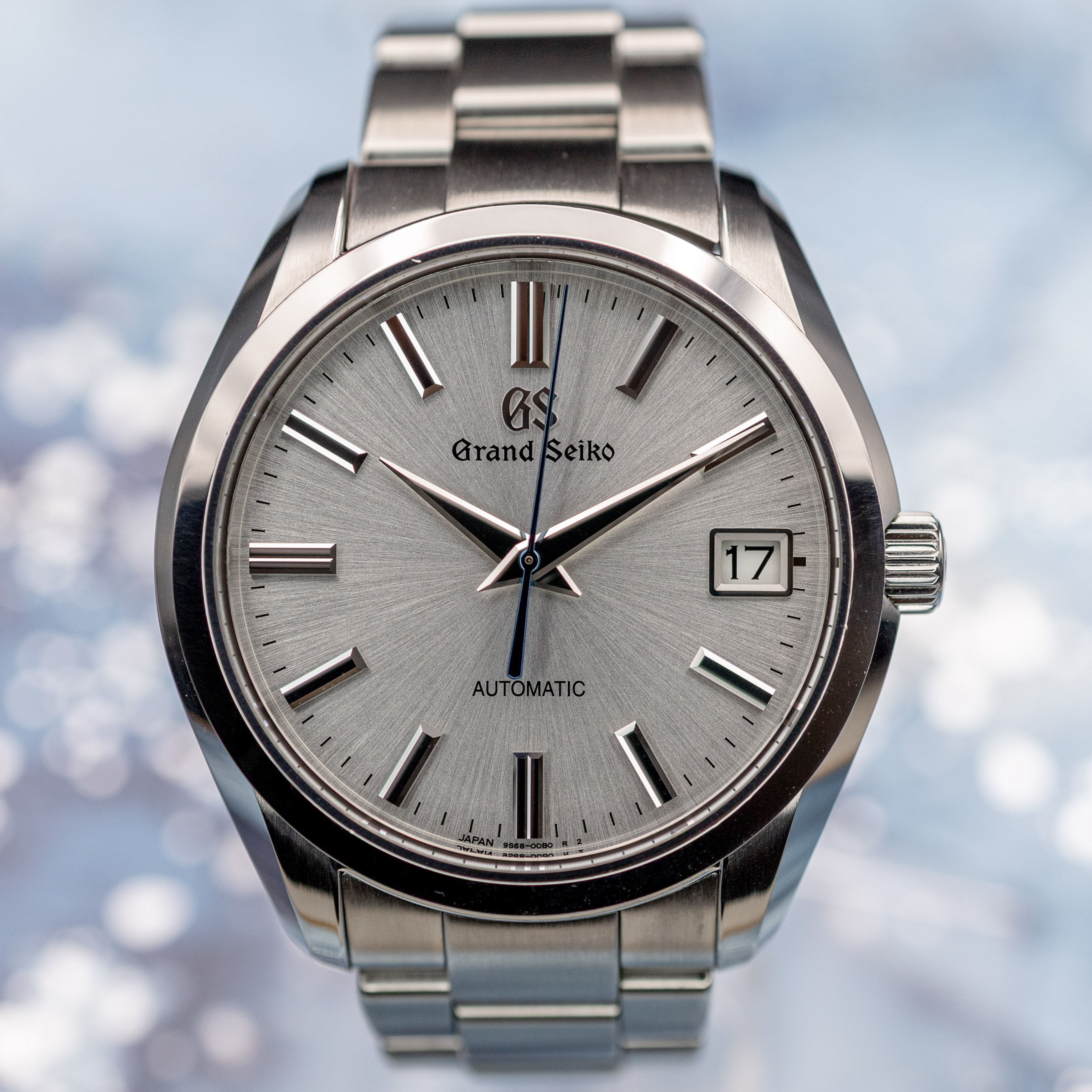
The dial is a silver sunburst finish, which is the thing Grand Seiko built its whole reputation on. The applied indices aren't printed, they're separate pieces of polished metal set into the dial, and that's what throws the light. Tilt your wrist and they genuinely flash.
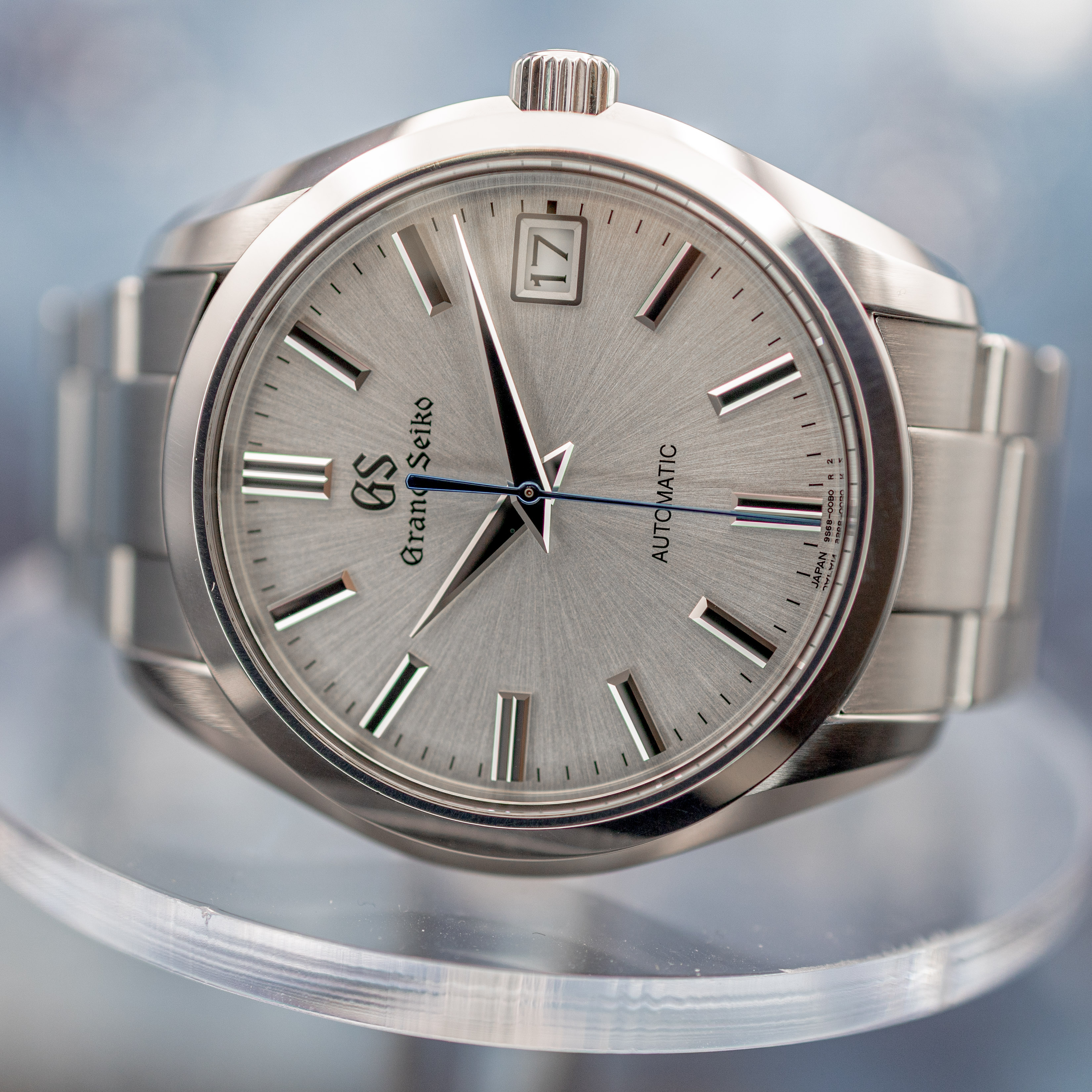
The blue seconds hand is doing more work than it looks like it should. Take that hand away and the whole dial goes flat. It's the one color break on an otherwise all-silver face, and it's exactly enough.
Clean, simple, nothing crammed in. That's the whole design philosophy here, and it works.
The Zaratsu polishing myth
You'll see this everywhere: Zaratsu polishing is described as a technique rooted in Japanese sword sharpening. It isn't.
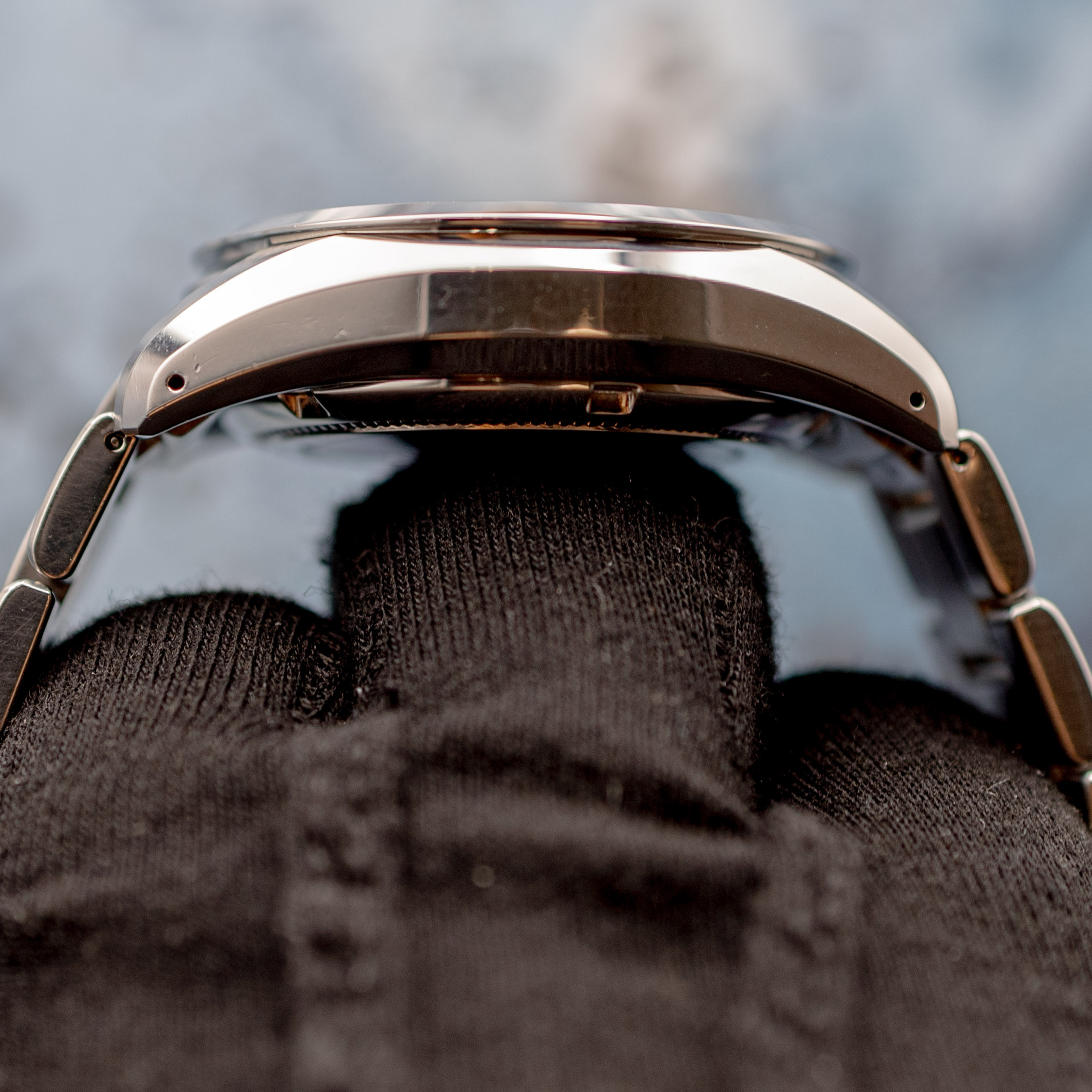
Zaratsu is a Japanese pronunciation of "Sallaz," a German company that made the flat-polishing machine Seiko bought in the 1950s. That's the actual origin. No swords involved. It's a good story, it's just the wrong country.
What Zaratsu actually does is real, though. It's how Grand Seiko gets those mirror-flat, distortion-free bevels on the case, the kind that reflect a straight line without any waviness in it. The myth is fake. The technique behind it is not.
The honest tradeoffs
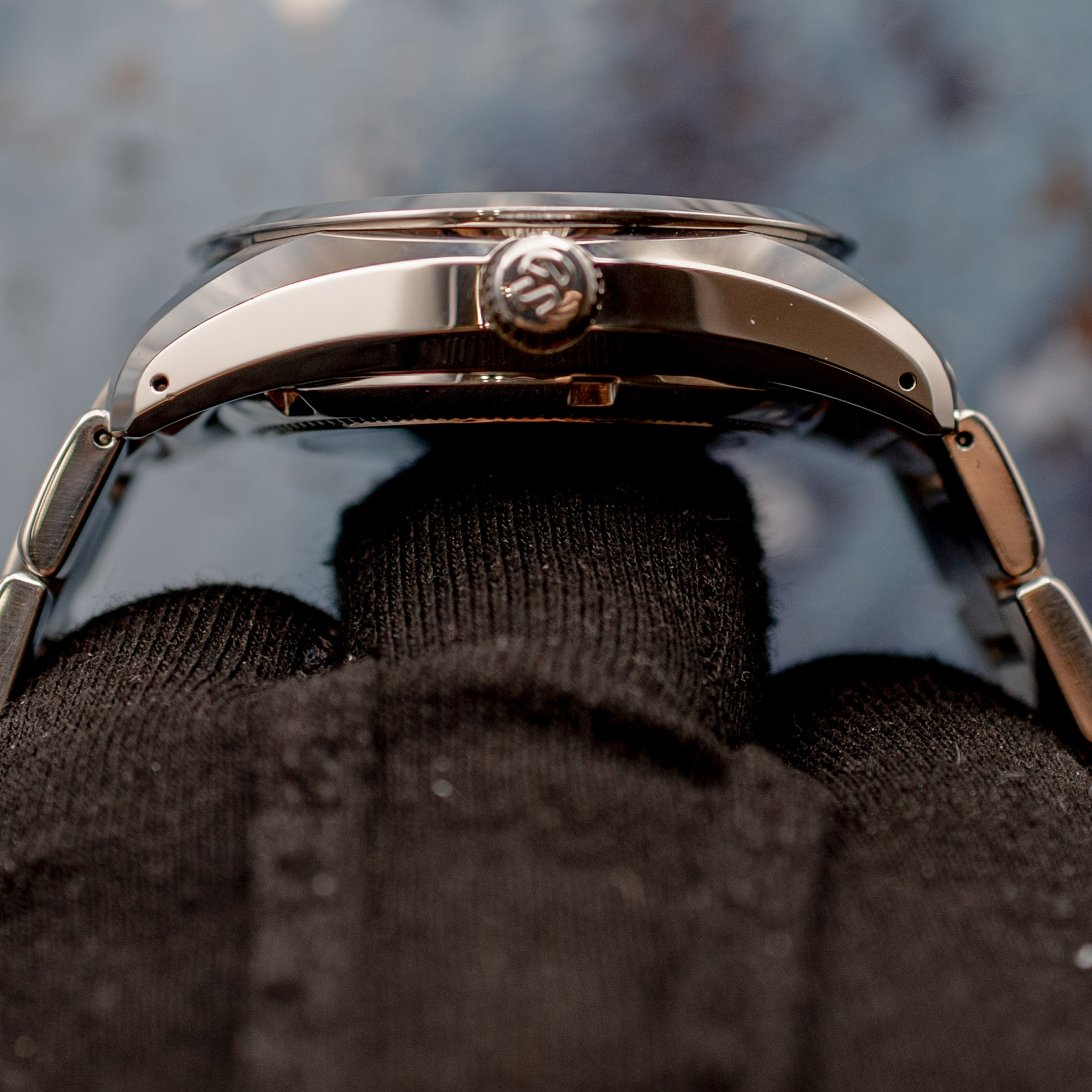
It's got a screw-down crown, and I'm not a fan of screw-down crowns on any watch, I say that every time. This one at least catches clean going back in, and setting the date is a normal crown pull, nothing fussy.
Where it loses me a little is the case shape. It's clean, but it doesn't grab you the way something like the Omega Aqua Terra's case does. That's a small knock on an otherwise well-built watch.
Grand Seiko SBGR307 vs Omega Aqua Terra
I'd put this right next to the Aqua Terra lineup. Same philosophy: clean dial, exhibition case back, quiet confidence over loud branding. Neither one is trying to be a conversation piece from across the room.
Where they differ is in the details. Grand Seiko wins on dial finishing, nobody does sunburst and applied indices quite like they do. The Aqua Terra's case shape has a bit more presence on the wrist. It's close, and which one you'd pick probably comes down to whether you want the dial or the case to be the star.
Wearing it
On my 7.25 inch wrist, the 42mm case sits well. Not oversized, not shy either.
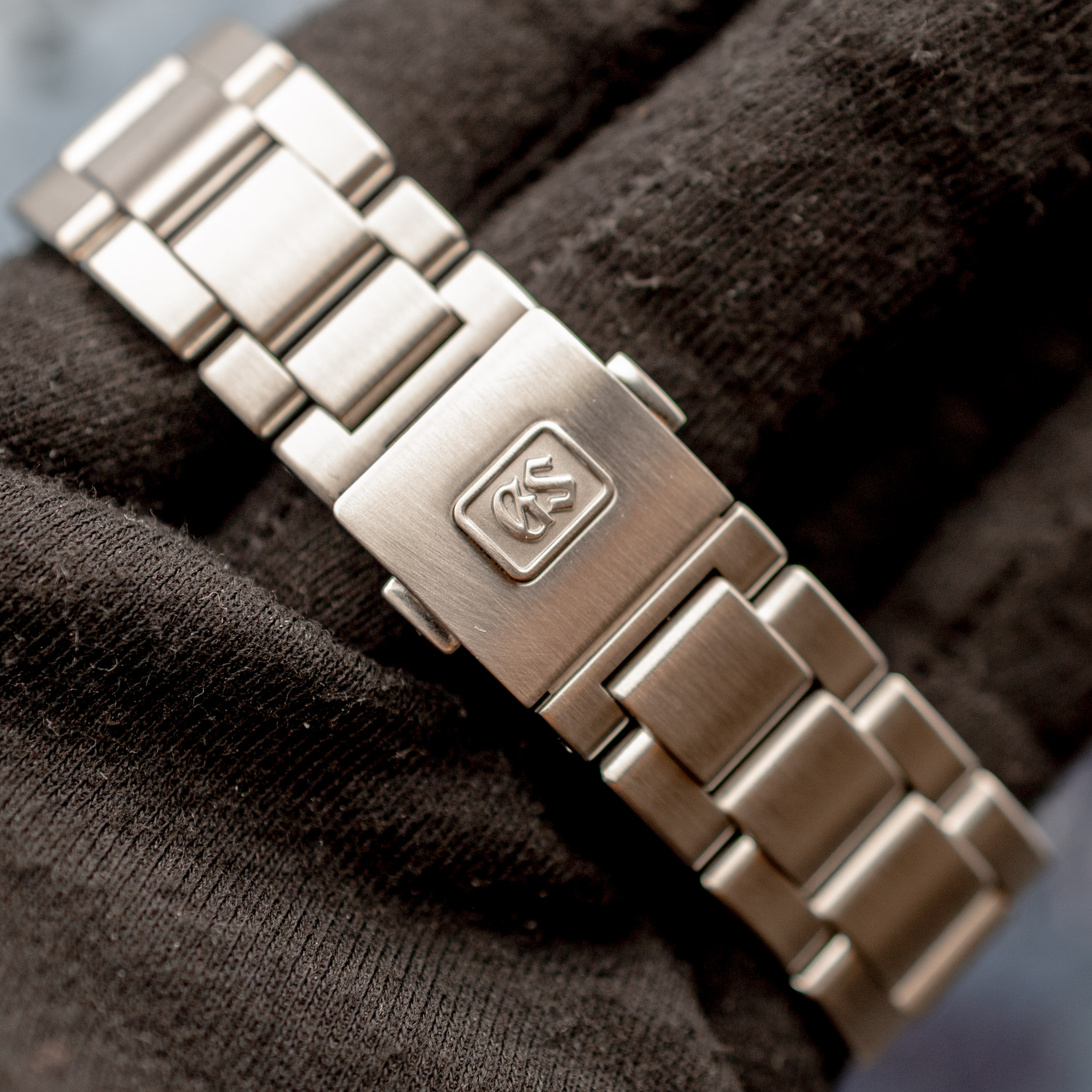
The bracelet clasp is decent, latches into place, easy to take on and off. The exhibition case back matches the overall clean design, nothing about it feels like an afterthought.
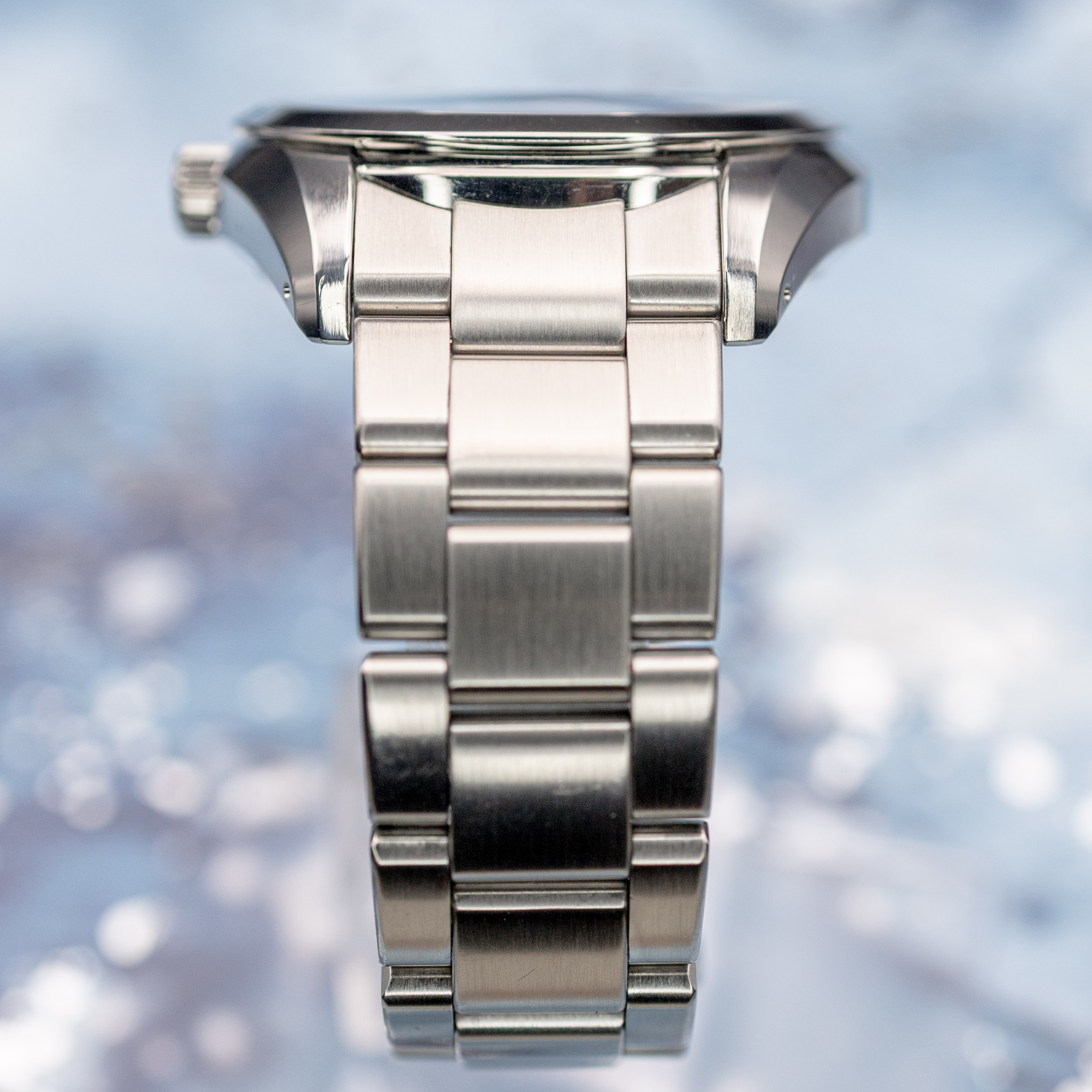
There's real weight to it without ever feeling heavy. Nothing over the top, nothing that fights you day to day.
The 5D Score
Aesthetics & Heritage: 28 / 50
Wearability & Utility: 32 / 50
Total: 60 / 100
That places it fourth on the leaderboard, one point below the Omega Aqua Terra Captain's Watch, and ahead of the Breitling Superocean.
It loses to the Aqua Terra almost entirely on styling, the case shape doesn't have the same presence. But it holds its own everywhere else, and the dial finishing is arguably the best thing on the whole board right now.
See the full 5D Score leaderboard →
Frequently asked questions
Does Zaratsu polishing come from Japanese sword sharpening?
No. Zaratsu is named after Sallaz, the German company that made the flat-polishing machine Seiko bought in the 1950s. The technique itself is real and produces Grand Seiko's distortion-free case bevels, but the sword-sharpening origin story is a myth.
How rare is the Grand Seiko SBGR307 in the US?
Rarer than in Japan or Europe, since Grand Seiko's US presence is still smaller than its home market. But there's more completed sales data out there than it first appears, mostly in the $2,800 to $4,000 range.
What movement is in the SBGR307?
The Grand Seiko caliber 9S68, an in-house automatic movement with a 72-hour power reserve.
How big is it and will it fit my wrist?
42mm across, 13.1mm thick. On a 7.25 inch wrist it wears well, neither oversized nor undersized.
What is the Grand Seiko SBGR307 worth?
Retail runs around $4,600. Used examples typically trade between $2,800 and $4,000 depending on condition and whether box and papers are included.
How does it compare to the Omega Aqua Terra?
Close. Both lean into a clean dial and understated case design. The Grand Seiko has the edge on dial finishing and indices, the Aqua Terra's case shape carries a bit more presence on the wrist.